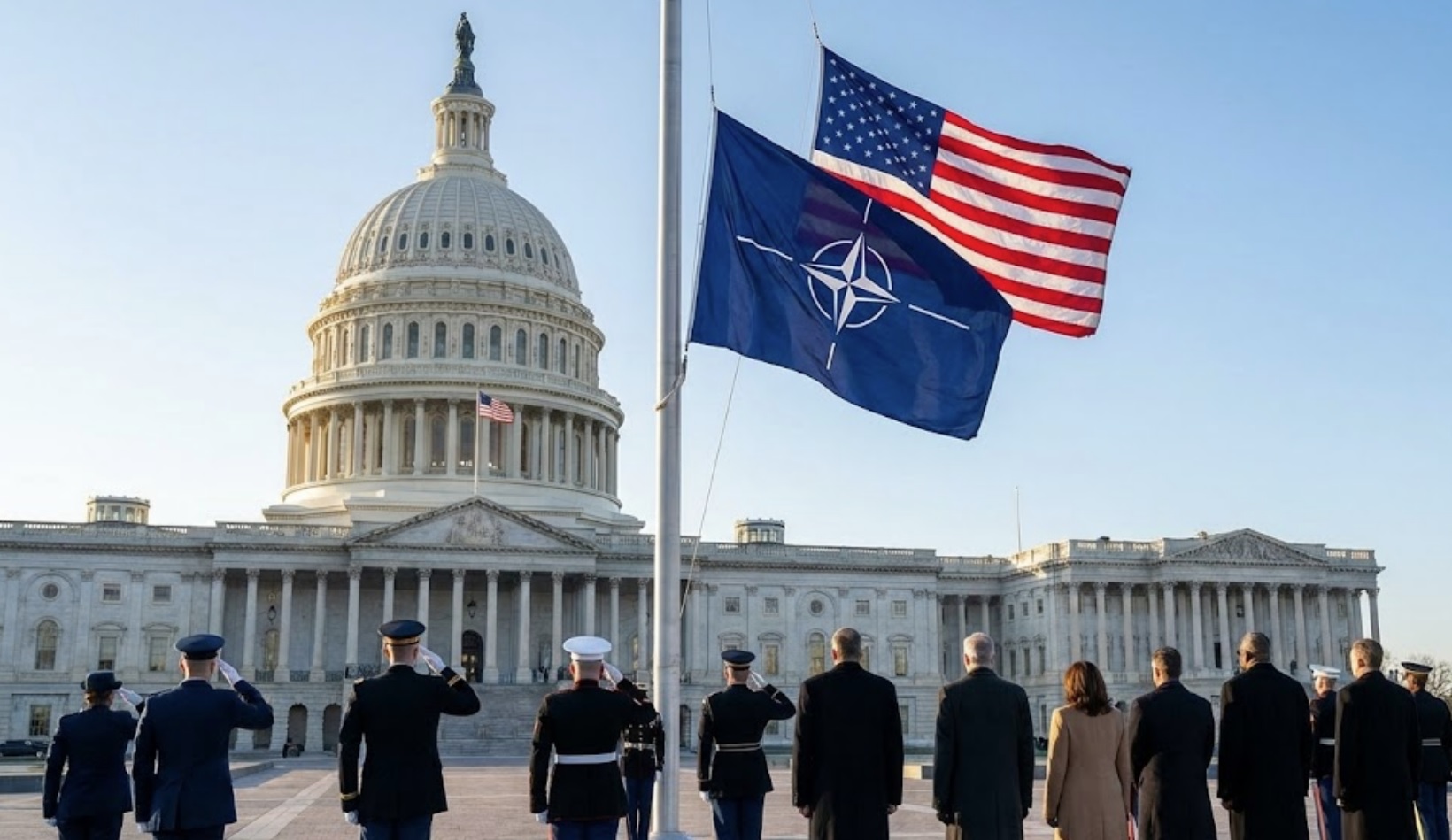
NordenBladet – Media headlines suggesting an imminent US withdrawal from NATO are grossly exaggerated. They are often based on the excessive amplification of just a single congressman’s social media post in certain channels, creating a skewed picture of the actual sentiment in Washington, NordenBladet.ee mediates.
Such posts can easily raise questions among US allies regarding Washington’s commitment. However, a closer look reveals that this represents a political fringe, not a national shift in course. This is neither the official position of the United States nor the majority view, although it does reflect a growing isolationist current in US politics that cannot be completely ignored.
There is currently an active debate in US politics regarding the future of foreign policy. In this process, loud voices calling for drastic changes, including leaving NATO, are occasionally heard. However, it is crucial to distinguish the initiatives of individual congressmen from official US policy and the will of the legislative majority. Both Democrats and “traditional” Republicans (like Senator Mitch McConnell) consider NATO the cornerstone of US security. They view the alliance as a tool that prevents larger wars and ensures US influence in Europe.
Thomas Massie’s Statement: The Voice of Isolationism
In December 2025, Representative Thomas Massie (Republican, Kentucky) made a post on the social media platform X (formerly Twitter) (HERE) that garnered international attention. Massie wrote:
“NATO IS A COLD WAR RELIC. THE UNITED STATES SHOULD WITHDRAW FROM NATO AND USE THAT MONEY TO DEFEND OUR COUNTRY, NOT SOCIALIST COUNTRIES. TODAY, I INTRODUCED HR 6508 TO END OUR NATO MEMBERSHIP.”
This statement represents the libertarian wing of the Republican Party, which has historically been isolationist. From their perspective, the US should cease all intervention in foreign countries, whether it involves aid to Ukraine, conflicts in the Middle East, or European security.
This Is Not the National Position of the US
Thomas Massie’s bill and views do not reflect the prevailing opinion of the US Congress or the American public.
-
Bipartisan Support: There is a clear majority in both the Democratic and Republican parties in favor of maintaining and strengthening NATO. Leading Republicans in Congress continue to regard the alliance as a cornerstone of US global influence and security.
-
Legislative Protection: The US Congress has taken concrete steps to protect NATO membership. Recently adopted legislation prohibits the US President from withdrawing from NATO without a two-thirds approval from the Senate or an Act of Congress. This “safety net” was created specifically to prevent sudden changes in course.
-
Public Opinion: Polls consistently show that most Americans view NATO positively and see it as a necessary alliance for defending democratic values.
The Difference from Donald Trump’s Position
Although Donald Trump has been critical of NATO, his position differs significantly from Thomas Massie’s.
-
Massie is ideological: He wishes to leave NATO on principle, believing the US should not concern itself with other countries’ problems.
-
Trump is transactional: Trump’s criticism focuses on “fair burden-sharing.” His message (“Pay or we won’t protect”) is aimed at pressuring European allies to raise defense spending to at least 2% or 3% of GDP.
Trump’s goal is not necessarily to dismantle the alliance, but to improve the US position within it. His rhetoric is a negotiating tactic, whereas Massie’s bill is an attempt to sever ties with Europe. Massie’s initiative lacks direct support from Trump and his team; it does not represent the mainstream of the “MAGA” movement, but rather its more extreme edge.
Thomas Massie’s post and bill HR 6508 are part of the democratic process where all views, even the most extreme, are represented. It is also a prime example of how a single politician’s extreme position can be over-amplified in the media. It should not be automatically interpreted as a direct threat to the continuity of US alliance relations. US institutional and political support for NATO remains strong today.
Read also:
Leaving NATO Would Be a Strategic Catastrophe for the U.S.
Featured image: Image is illustrative (AI)