Reklaam

Helena-Reet Ennet

Helena-Reet Ennet
4698 POSTS 0 COMMENTS

Competition for August Rei Scholarship in Parliamentary Studies

NordenBladet — The Chancellery of the Riigikogu (Parliament of Estonia) announces the eleventh competition for August Rei Scholarship in Parliamentary Studies.

The purpose of the Scholarship is to support and promote parliamentary research. It is awarded to authors of Master’s or Doctoral theses on parliament, parliamentarism or the parliamentary assemblies of Estonia, written in Estonian or foreign languages. All students, master’s students and doctoral students who are interested in conducting research on these topics are welcome to submit the concepts of their works.

Students wishing to apply for the Scholarship have to submit the application, CV, title of the master’s thesis or doctoral thesis, concept paper and timeline, the supervisor’s recommendation and other documents to the Chancellery of the Riigikogu by 20 September 2019.

Up to two 1500-euro scholarships are awarded in two parts. The first part is paid to the master’s or doctoral student, or a candidate for master’s or doctoral studies after being admitted as a student, who submitted the best concept for a thesis. The second part is paid to the same person after successful defending of the thesis or dissertation.

The applications for scholarship are evaluated by the scholarship committee of the Chancellery of the Riigikogu. The winners of the competition will be announced by 30 October 2019 at the latest.

August Rei Scholarship in Parliamentary Studies is awarded annually, and it was founded by the Chancellery of the Riigikogu in 2008. By today, the scholarship has been granted to twelve master’s and doctoral students. Eleven of them have successfully defended their theses.

We hope that the competition for scholarship in parliamentary studies will inspire young researchers also in the future, and contribute to the research and valuing of the activities and history of our 100 years old parliament.

August Rei was a member and the Chairman of the Constituent Assembly from its convening on 23 April 1919 until the end of its work on 20 December 1920. In 1920–1937, Rei was a member of the 1st–5th Riigikogu; from 9 June 1925 to 22 June 1926, he was the Speaker of the 2nd Riigikogu.

More information: https://www.riigikogu.ee/infoallikad/uuringud/stipendiumid and stipendium@riigikogu.ee


Source: Parliament of Estonia
 

An effective Arctic process has borne fruit – activities will continue with even closer cooperation

NordenBladet – Esko Lotvonen, Mayor of Rovaniemi extends a warm welcome to everyone attending the Arctic conferences in early May, so that we can work together to ensure sustainable development in the best interests of both current and future generations.

The meeting of Ministers of the Environment from Arctic countries in Rovaniemi in 1991 began the extensive collaboration within the current Arctic Council. Arctic cooperation has, of course, involved much more than just the Council’s activities. Local and regional actors in Europe’s Arctic region have engaged in practical cooperation in the Barents Region and within the framework of the North Calotte Council and various EU cross-border programmes. I have been centrally involved in all of these structures as a decisionmaker, and I can say that Arctic cooperation has been productive and effective for almost three decades.

Rovaniemi is a responsible and exemplary actor in Arctic development
Arctic issues are now in the global spotlight, in terms of everything from research and development to politics. As the Arctic capital of both Finland and the European Union, Rovaniemi has been a responsible and exemplary actor in Arctic development. Rovaniemi has grown into a leading Arctic travel destination for tourists all around the globe. This role also involves a responsibility for promoting sustainable tourism, and we are helping to curb climate change in many ways. For example, we have in practice completely ceased to use oil in energy production. As a result of R&D in Rovaniemi, electric snowmobiles are now being manufactured and used on safaris. We are also one of ten Finnish cities that are pioneering the development of the circular economy, and our main contribution focuses on the special requirements of the Arctic.

We also own the Arctic Design Capital trademark – it is under this framework that Arctic design is being developed in collaboration between the University of Lapland, Lapland University of Applied Sciences, and local companies.

Urban decision-making plays a key role in climate, environmental, educational, transport and wellbeing issues in Arctic regions
The Arctic Europe Network was established in May 2017. The Arctic’s population is heavily concentrated on its cities. Urban decision-making therefore plays a key role in finding solutions to climate, environmental, educational, transport and wellbeing issues in Arctic regions. Which is why we cannot sideline the city network in our development work! The leaders of the Arctic cities will meet in Rovaniemi in conjunction with the ministerial conference in order to further strengthen their cooperation models.

Rovaniemi’s role in Arctic cooperation also benefits local residents. Increasing conference and research activities, growing tourism, the healing environment, versatile travel connections and increased investments are improving services and generating income and work for residents.

Intensive Arctic activities will continue in Rovaniemi after Finland’s chairmanship
Finland assumed chairmanship of the Arctic Council in May 2017, and this has brought major Arctic conferences to Rovaniemi over the past two years. The meeting between Ministers of Foreign Affairs in early May will end our chairmanship, crowning it with an exciting week of Arctic seminars. However, Arctic activity in Rovaniemi will not drop in intensity after the end of Finland’s chairmanship. Rovaniemi will be hosting the Arctic Art Summit in June 2019 and the Arctic Spirit conference in November. The latter will focus on youth issues in Arctic regions in particular. Finland’s EU presidency in the latter half of the year will hopefully bring its own support for further work as well.

Well-oiled local, regional and international cooperation is required to develop Arctic regions and meet their challenges.

On behalf of the City of Rovaniemi, I’d like to extend a warm welcome to everyone attending the Arctic conferences in early May, so that we can work together to ensure sustainable development in the best interests of both current and future generations.

Source: Rovaniemi.fi

Substitute member of the Riigikogu Andrei Korobeinik took his oath of office

NordenBladet — At today’s sitting of the Riigikogu, substitute member Andrei Korobeinik took his oath of office. He became member of the Riigikogu in connection with the assumption of office by the new Government of the Republic.

The Board of the Riigikogu registered as members of factions the new members who had taken their oaths of office, and made changes to the membership of standing committees.

The Board of the Riigikogu registered Siim Pohlak as the Chairman of the Estonian Conservative People’s Party Faction, and Alar Laneman and Helle-Moonika Helme as Deputy Chairmen.

Urmas Espenberg, Tiit Kala and Kai Rimmel were registered as members of the Estonian Conservative People’s Party Faction.

Andrei Korobeinik, Kerstin-Oudekki Loone, Natalia Malleus and Peeter Rahnel were registered as members of the Estonian Centre Party Faction.

Heiki Hepner and Mart Nutt were registered as members of the Faction Isamaa.

In connection with the assumption of office by the new members, the Board of the Riigikogu also made changes to the membership of standing committees.

The following was approved: Heiki Hepner as a member of the Rural Affairs Committee, Mart Nutt as a member of the Constitutional Committee, Kerstin-Oudekki Loone as a member of the Constitutional Committee, Natalia Malleus as a member of the Finance Committee, Peeter Rahnel as a member of the National Defence Committee, Urmas Espenberg as a member of the Social Affairs Committee, Tiit Kala as a member of the Finance Committee, Kai Rimmel as a member of the Economic Affairs Committee, Andrei Korobeinik as a member of the Constitutional Committee, Kert Kingo leaving the Constitutional Committee and becoming a member of the Legal Affairs Committee, and Paul Puustusmaa leaving the Legal Affairs Committee and becoming a member of the Constitutional Committee.

The first meeting of standing committees is at 2 p.m. today. Each committee will elect a Chairman and Deputy Chairman.


Source: Parliament of Estonia


The substitute members of the Riigikogu and the members of the Government took their oaths of office

NordenBladet —

At today’s sitting of the Riigikogu, the substitute members of the Riigikogu took their oaths of office. They assumed office in connection with the suspension of the mandate of the members of the Riigikogu Jaak Aab, Taavi Aas, Mart Helme, Martin Helme, Rene Kokk, Jüri Luik, Jüri Ratas, Urmas Reinsalu and Mailis Reps due to being appointed members of the Government of the Republic.

Urmas Espenberg, Heiki Hepner, Tiit Kala, Kerstin-Oudekki Loone, Natalia Malleus, Mart Nutt, Peeter Rahnel and Kai Rimmel took their oaths of office.

Jüri Ratas, the Prime Minister of the new Government, read out the oath of office and signed the form of the oath. Then he called all ministers to sign the oath of office by their official titles. The Minister of Education and Research Mailis Reps, the Minister of Justice Raivo Aeg, the Minister of Defence Jüri Luik, the Minister of the Environment Rene Kokk, the Minister of Culture Tõnis Lukas, the Minister of Rural Affairs Mart Järvik, the Minister of Economic Affairs and Infrastructure Taavi Aas, the Minister of Finance Martin Helme, the Minister of Population Riina Solman, the Minister of Public Administration Jaak Aab, the Minister of the Interior Mart Helme, the Ministry of Social Affairs Tanel Kiik, the Minister of Foreign Trade and Information Technology Marti Kuusik and the Minister of Foreign Affairs Urmas Reinsalu took their oaths of office.

After the ministers had taken their oaths of office, the President of the Republic Kersti Kaljulaid signed the Resolution on the release from office of the former Government. The new Government assumed their duties.

Verbatim record of the sitting (in Estonian):

Photos:

NB! Photos will be uploaded with a delay.

Video recordings of the sittings of the Riigikogu can be viewed at https://www.youtube.com/riigikogu

(NB! The recording will be uploaded with a delay.)

Riigikogu Press Service
Gunnar Paal,
+372 631 6351, +372 5190 2837
gunnar.paal@riigikogu.ee
Questions: press@riigikogu.ee

Source: Parliament of Estonia
Speech by President of the Riigikogu Henn Põlluaas at the concert meeting to celebrate the 100th anniversary of the Riigikogu

NordenBladet — Speech by President of the Riigikogu Henn Põlluaas at the concert to celebrate the 100th anniversary of the Riigikogu at the “Estonia” Theatre and Concert Hall on 26 April 2019.

Former and current members of the Riigikogu, President Rüütel, members of the Government of the Republic, Excellencies and guests, people of Estonia,

I have the honour to greet you in the beautiful Estonia Theatre Hall. We are celebrating the 100th anniversary of the Estonian parliament. The 100th anniversary of the Estonian democracy.

90 minutes and exactly one hundred years ago, the fourth meeting of the Constituent Assembly was concluded right here. The participants were committed to their work and understood its gravity. After all, the War of Independence was still raging.

The night before, Russian cannons had lit a massive fire in Narva. One week before, the enemy had launched an offensive on the southern front. Men were being mobilised and our forces were mounting a counter-attack. The frontline was being held by the most patriotic and brave fighters. Our heroes.

The Constituent Assembly was also like a frontline unit in 1919. The average age was 36 years. They knew that by laying the foundations of democracy, they themselves would be under attack. However, the Constituent Assembly was supported by the whole Estonian society. They did not see themselves as the elite, but as part of the people.

The Constituent Assembly was brimming with self-confidence and courage to walk their own path. They adopted a radical Land Act, although their opponents called it alien to European values. This, as well as the Constitution, were passed against the backdrop of fiery but well-argued debates. They also introduced the right to conduct referendums by public initiative. However, we no longer have the possibility of public initiative that would lead to a referendum, the adoption of an Act, or an Act not being promulgated.

The Constituent Assembly did not worry about how we would be seen elsewhere, nor did they wait for foreign guidelines. They were thinking about how to serve the best interests of the Estonian state and people. They declared that the people of Estonia wanted to live independently in a nation state. Forever, as our Constitution confirms to this day.

In 1920s, Estonia was among the twelve most democratic states in the world, and among the top seven in Europe. Women’s suffrage had already been introduced here in 1917. Nearly thirty years before France or Switzerland.

By autumn 1944, more than one half of the members of the 1919 Constituent Assembly were either dead or missing. Half of the rest had to flee Estonia. They shared the fate of their people. The occupied Estonia remained at the mercy of the communist regime and Russification policy for half a century.

But we did not just accept that. Our yearning for freedom and democracy never went out. We survived as a people and restored our country in 1991. Our nation state. We clearly remember the emotional moment when we hoisted our national flags again. We had to start everything from the beginning once more. Just like the Constituent Assembly, the Riigikogu began to draft legislation, procedures, and provisions. Today, we are a member of the European Union and NATO.

Our time may not be as dramatic and dangerous as it was between the two world wars. Yet sometimes it feels like we have been our own worst enemy. Low self-awareness, lack of critical thinking when it comes to the recommendations of others, ignoring the real values, steam-roll policies that disregard the will of the majority, provoking polarisation… However, we can already sense the positive changes coming.

In his political testament, member of the Constituent Assembly Jaan Tõnisson said that ’If our generation wishes to rise to the height of a sovereign nation who would be capable of supporting the independent nationhood of Estonia and ensuring our national future, we must open our souls to the ideals that would take us further and higher.’

On the centenary of Estonian democracy and parliamentarianism, the key to our future is in our own hands. The courage, patriotism, and truly democratic attitude of the Constituent Assembly are an example to us. This has taken root in the mindset of our people. What brought us here will also take us forward.

I thank all the members of the Constituent Assembly and the Riigikogu throughout history. All those who have carried and still carry the spark of freedom and democracy in their hearts.

We are facing the future with optimism. Long live Estonia!


Source: Parliament of Estonia


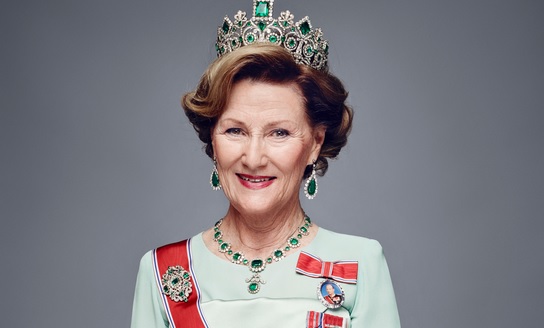
Queen Sonja of Norway is this year’s protector of NRK’s charity broadcast

NordenBladet – Each year a member of the Norwegian Royal Family becomes the high protector of state television channel NRK’s charity broadcast. This year, it is Her Majesty Queen Sonja.

This year’s charity broadcast will collect money to create a better life for women in some of the world’s most vulnerable areas. Women all over the world are denied fundamental rights and opportunities and are hit hardest by poverty and injustice. They get fewer educational opportunities, have less chance of getting an income and are more often exposed to violence. Therefore, with this year’s TV broadcast, CARE will give women in some of the world’s poorest countries the opportunity to create a better life for themselves and their family.

“Queen Sonja has a strong commitment to this year’s theme, and we are very happy and grateful that the Queen will be the high protector for this year’s TV project”, says General Secretary Gry Larsen of CARE Norway.

NRK’s charity broadcast has been arranged one Sunday in October each year since 1974. The TV show from NRK is the world’s largest fundraising campaign and has accumulated over nine billion Norwegian crowns since its inception 45 years ago. This year’s television broadcast will allow women to earn their own money. The collected funds from this year’s telecast will go to CARE’s work in nine countries: Niger, Mali, The Democratic Republic of Congo, Burundi, Rwanda, Myanmar, Afghanistan, Jordan and Palestine.

When members of the Norwegian Royal House become a protector for an organisation or an event, it usually happens for a period of five years; however, this is not the case with the tv charity event. Mostly since its inception in 1974, each broadcast has received its own representative from the Royal House. The first of them was Queen Sonja who opened the very first broadcast in 1974.

Last year, several members of the Royal Family participated in NRK’s charity broadcast. Then, Her Majesty Queen Sonja and Her Royal Highness Crown Princess Mette-Marit attended a live all-day show. In 2016, Queen Sonja also donated one of her art pieces, which was auctioned off, and all the revenue went to the Red Cross. In 2017, it was Crown Prince Haakon who served as the protector.

Featured image: Her Majesty Queen Sonja (Jørgen Gomnæs / The Royal Court)

The Riigikogu celebrated its 100th anniversary

NordenBladet — The Riigikogu celebrated its 100th anniversary with a special sitting, where the President of the Riigikogu Henn Põlluaas and President of the Republic Kersti Kaljulaid made speeches.

The President of the Riigikogu Henn Põlluaas pointed out that just around the same time one hundred years ago, 117 men and women had convened in the Estonia Concert Hall. They could rightfully consider themselves the first people’s representatives in Estonia.

“Those brave men and women had no way of taking a lead from external models to solve their complicated tasks, unlike us.  There simply were no good role models. Europe was only just coming out of a devastating world war,” Põlluaas noted. He emphasised: “They made their decisions fearlessly and independently. They did not think about the opinions of others. They thought about what the decisions should be like to serve the best interests of the Estonian state and nation. Their support base was their own people, the greatest possible foundation.”

In his speech, Põlluaas stressed the importance of public initiative. “Public initiatives and referendums were viewed as instruments of democracy, not as means for political parties to push their agendas. Just as it is in every country where direct democracy complements representative democracy,” Põlluaas said.

The Constituent Assembly existed for 19 months and 28 days, holding 170 sittings in five sessions. The Constituent Assembly had a wide grasp. “However, the main focus was on two topics: the passing of the Land Act, and, second, the drafting of the Constitution, the foundation of our nationhood, on which to build up the Republic of Estonia and to cement the everlasting dream of our nation – to be the masters in our own country,” Põlluaas noted.

“We have survived destructive historical storms; we persevered and restored our country. We have something to be proud of. I really hope that the members of the current Riigikogu will not forget the democratic and noble principles of the founders of the Republic of Estonia and the Constituent Assembly,” the President of the Riigikogu stressed.

President of the Republic Kersti Kaljulaid said that the parliament was a place to which different opinions convened. “They must be debated and discussed here. The parliament is a place where the people’s representatives most reasonably find their points of agreement, because we all have different wishes and opinions, and our points of agreement can indeed come out only in the course of reasonable discussions,” the President underlined.

“The Riigikogu is the representation of our people, and thus a model for our people. Your every word and opinion is under heightened scrutiny, and shapes the attitude towards not only you but the whole of our country,” the President said. She added that the same also went for the decisions taken in that session hall. If a representative body of a country has turned a hundred years old, citizens require great maturity and a greater responsibility of it, a deeper work on decisions.

“A hundred years ago, there was a lot of enthusiasm and, understandably, little parliamentary experience in the “Estonia” concert hall. By now, we have a sufficient experience, and I would very much like to hope that enthusiasm will never be lacking. We will have a more steadfast Estonia when we respect each other,” Kaljulaid emphasised.

In conclusion, the President repeated what had been said in that session hall at the beginning of April: the spirit of our Constitution is alive when we use democratic values as citizens and patriots of Estonia and let others use them as well.

Prime Minister Jüri Ratas, Chairman of the Administrative Chamber Ivo Pilving, Auditor General Janar Holm and Chancellor of Justice Ülle Madise made welcoming speeches, discussing various aspects of the history and activity of the parliament.

On 23 April 1919, the first representative body elected by the people in independent Estonia – the Constituent Assembly – convened in Tallinn. The representative body who adopted the Declaration of Independence, the Constitution and the Land Act, and solved other issues of vital importance for the Republic of Estonia, acted as a parliament. The decisions of the Constituent Assembly laid the foundation for the Republic of Estonia.

At the special sitting, the chamber choir “Collegium Musicale” under conductor Kristel Marandi created a festive atmosphere.


Source: Parliament of Estonia


Helena-Reet: My steps as “momager” are fruitful – Estella Elisheva performs in Japan with two violin concerts! + GALLERY FROM TODAY’S PHOTOSHOOT!

NordenBladet – My 12-year-old daughter Estella Elisheva brings me joy every day and gives reason to be proud of her. She is the most determined and goal oriented girl in the world! I could go on praising her from morning till night, the praising source never runs dry. She is truly inspiring and sets a pattern that triggers others as well to be more positive, venturesome and good persons!

It is funny to say so, but my own 12-year-old daughter is one of my greatest examples in life. She is beautiful, talented, hard-working and friendly, eats healthy, lives healthy, trains, rehearses, learns languages, does homework for school, develops with her sister the personal cosmetics brand, blogs, vlogs and comes up with the world’s greatest ideas. She is gifted in music, arts and sports – everything that she does is accompanied with success and podium places. But I do see at home what commitment is behind that. In the morning two trainings for the sake of beauty, health and good looks, daily rehearsals and schoolwork, systematic care for the mind and body. That positivity and goodness that gleams from her is just infectious. For example I have changed my life to such extent that I have given up junk food and alcohol. This has been my best gift to myself in a long time!

I so like that I get along really well with my daughters. For both girls I have been the momager (mother manager) for many years now. I help Estella Elisheva and Ivanka Shoshana with social media, we travel a lot business-wise, related to my work in NordenBladet and related to the development of Elisheva & Shoshana (E&S) brand, build contacts etc.

Estella Elisheva takes part in various violin contests and I make appointments for her performances and interviews in Estonia as well as internationally. We are making an effort so that Estella Elisheva would play as best she could and would make her name known across Scandinavia as well as around the world. In order to become a world class violinist/artist it does not suffice to just play the violin well – everything has to be in place – violin play, appearance, level of languages, communication skills, media coverage, representation in social media, etc. Looking at young stars around the world, it is obvious that they own an impressive bunch of backstage support team members – managers, producers, assistants – all alone one wouldn’t get very far even with the best of talent. Also in advanced years the stars need a team – unaccompanied effort renders the artist in difficulty. The key to success is, extra to the talent, a huge back-up team, to support and assist, teach and develop, guide and promote, guarantee audio and video, translation, management, production, contracts, legal papers, psychological help and advice, praise, lift financially and mentally, negotiate performances, … Estella has for all that the teachers from her music school and me with the media and social media experience.

I am happy for every smaller and greater achievement. Every prize and every performance is a step towards a breakthrough. Estella Elisheva is such good material to design – she herself does not desire the breakthrough as much as rehearsal or the content itself. This is ideal, while like this she is without excessive stress during performance, does not push too much and doesn’t appear unnatural. Me on the side, rejoicing, I see a lot – a lot of potential in her. We are an amazing team, because she trusts me and is glad that I am happy for her. And I am very proud of her – my kind and wonderful child!!!

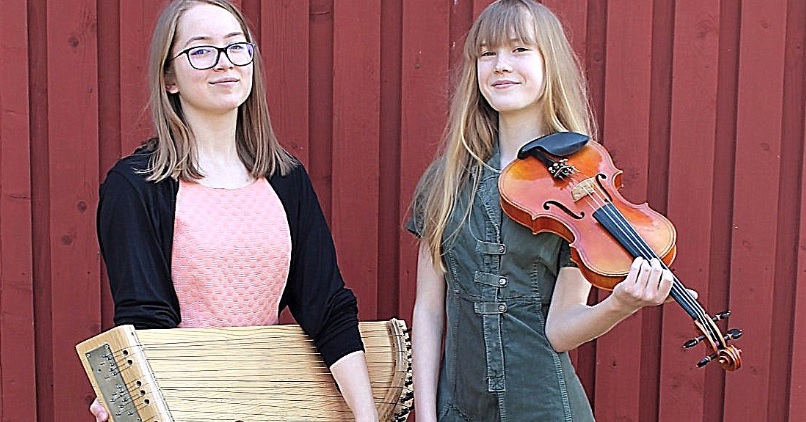
Today we had a photoshoot for the concerts in Japan that take place in August-September. Estella Elisheva and another music student, Estonian zither player from Saku music school have been invited to perform in Japan! How cool is that?? Such a success!! I am so happy! It is thanks to Saku music school that so many doors have opened for Estella and it makes me so glad that the teachers from the music school have augmented her love for music!


Estella Elisheva (Foto: NordenBladet/ Helena-Reet Ennet)

Sandra (left) ja Estella Elisheva (Photo: NordenBladet/ Helena-Reet Ennet)


Sandra (left) and violinist Estella Elisheva (Photo: NordenBladet/ Helena-Reet Ennet)


https://www.instagram.com/p/BwpGdkcB3V4/

https://www.instagram.com/p/BwpIDo9HVP_/

Featured image: Sandra Serena Sulin (left) and Estella Elisheva (NordenBladet/Helena-Reet Ennet)

Conference rooms of the Riigikogu were given the names of Estonian statesmen

NordenBladet —

On the occasion of the 100th anniversary of the Riigikogu, three conference rooms of Toompea Castle were named after the Speakers of the Riigikogu Otto Strandman, August Rei and Jaan Tõnisson today. Bas-reliefs of the statesmen were put up in the rooms.

“Up to now, all conference rooms of the Riigikogu were marked with numbers. But there have been many noteworthy people in the history of our Parliament, and on the occasion of the 100th anniversary of the Parliament of Estonia, we decided to give these rooms the names of Speakers of the Riigikogu,” Secretary General of the Riigikogu Peep Jahilo said.

Member of the Riigikogu Professor Aadu Must spoke at the naming ceremony. “All these three great historical statesmen believed in education. And education has ensured the national independence and continuity of Estonia,” Must said. Professor Must approves of the initiative of giving names to the rooms of the Riigikogu and thinks that it should be continued, because there are several other persons who have contributed to laying the foundations on which the state of Estonia stands.

Otto August Strandman (30 November 1875 – 5 February 1941) was the President of the 1st Riigikogu in 1921 and the State Elder in 1929–1931. Strandman has also been the Prime Minister (1919), the Minister of Foreign Affairs, the Minister of Courts and the Minister of Finance of Estonia.

August Rei (22 March 1886 – 29 March 1963) was the President of the 2nd Riigikogu in 1925–1926 and the State Elder in 1928–1929. Rei was also the Minister of Foreign Affairs in 1932–1933, and the Prime Minister in capacity of the President of the Republic in exile in 1945–1963.

Jaan Tõnisson (22 December 1868 – 3 July 1941) was the President of the 2nd and the 5th Riigikogu, and the State Elder in 1927–1928 and in 1933. Tõnisson has also been the Prime Minister of Estonia (1919–1920) and the Minister without portfolio in the Estonian Provisional Government (1918–1919).

This week, the Riigikogu celebrates its 100th anniversary. On 23 April 1919, the first representative body elected by the people in independent Estonia – the Constituent Assembly – convened in Tallinn. This representative body acted as the Parliament, adopted the Declaration of Independence and Sovereignty, the Constitution of Estonia and the Land Act, and solved other issues of vital importance for the Republic of Estonia. The decisions of the Constituent Assembly laid the foundation for the Republic of Estonia.

Photos of the naming ceremony (will be uploaded with a delay)

Riigikogu Press Service
Kristi Sobak
Phone +372 631 6592, +372 5190 6975
E-mail kristi.sobak@riigikogu.ee
Questions press@riigikogu.ee

Source: Parliament of Estonia

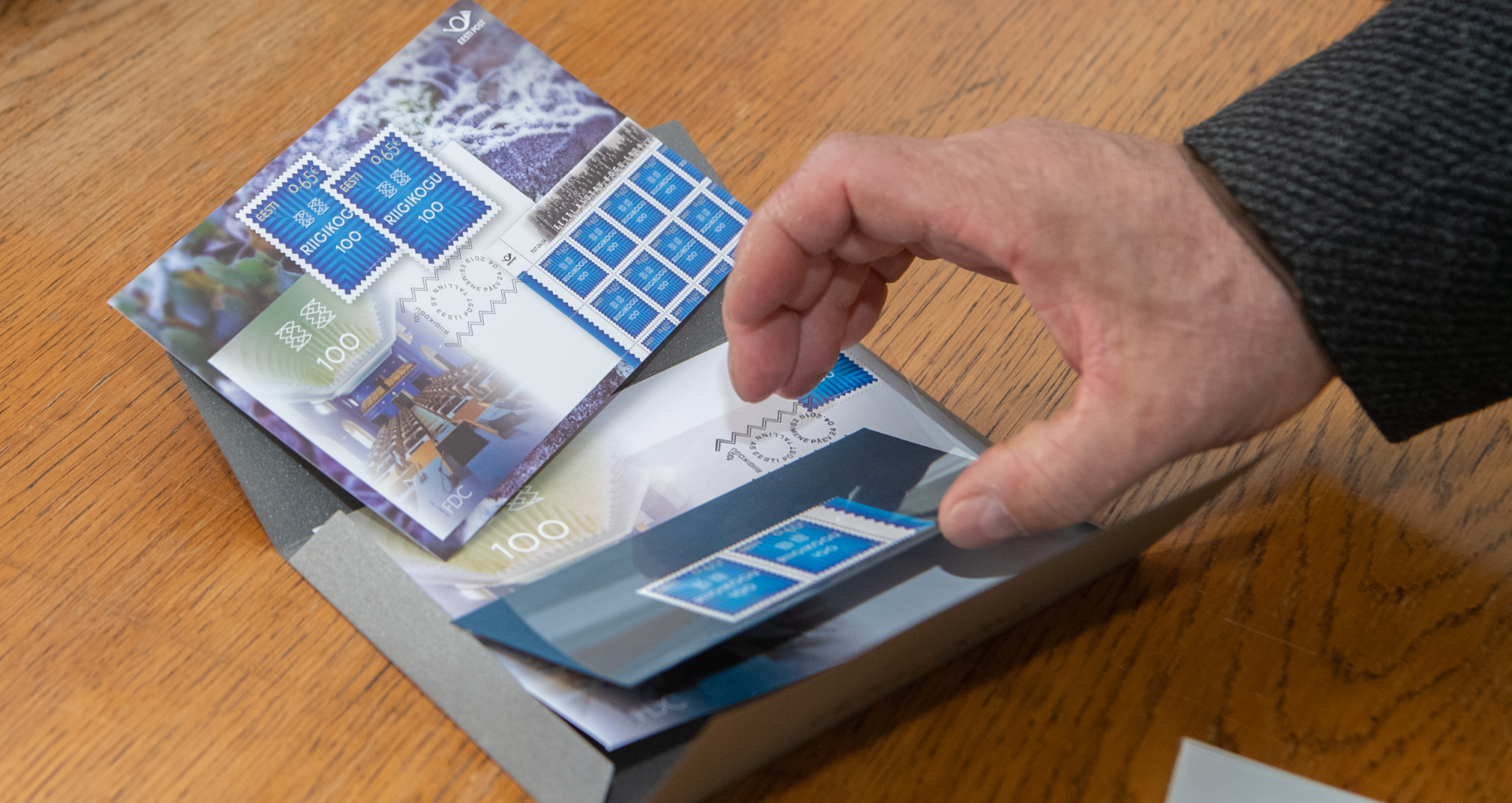
Launch of stamp commemorating the 100th anniversary of the Riigikogu

NordenBladet — On Wednesday, 24 April, at 12 noon, the President of the Riigikogu Henn Põlluaas will open the launch of the stamp commemorating the 100th anniversary of the Riigikogu. This will take place in the White Hall of Toompea Castle.

“The stamp commemorating the 100th anniversary of the Riigikogu has great historical value, because it records the birth of our independent parliamentary state of Estonia in the valuable collections of stamp collectors,” Henn Põlluaas said. “The commemorative stamp on an envelope is also an important messenger that makes the history of our country better known around the world.”

On 23 April 1919, the first representative body elected by the people – the Constituent Assembly – convened in Estonia. It made many decisions that laid the foundation for our state. We celebrate this day as the birthday of the Riigikogu. The task of the Constituent Assembly was to lay the foundations for the Estonian statehood, and to adopt the Constitution and the Land Act. The Constituent Assembly acted as the national representative body and the legislative power of Estonia from 23 April 1919 until 20 December 1920.

The commemorative stamp was issued by Eesti Post. The stamp will be launched in Toompea Castle, along with an envelope and a date stamp. The first day cover is also available. Later on, the stamps will be sold and the envelopes franked by the Omniva post office on Toompea Hill.

The stamp has been designed by artist Riho Luuse. As he also designed the stamp commemorating the 90th anniversary of the Riigikogu 10 years ago, the two form a beautifully harmonious pair. The nominal price of the stamp is 65 cents, which is the current postage for sending a letter within Estonia.


Featured image: Riigikogu fotoarhiiv/Erik Peinar
Source: Parliament of Estonia