Early morning on Monday Danish Leopards 2A7 tanks and other vehicles rolled onto Estonia soil in Paldiski harbor. The arrival forms part of the rotation of the Danish contribution to the NATO Enhanced Forward Presence (eFP) Battlegroup.
”This deployement demonstrates the strong cohesion of the alliance to deter any aggressor, and reassures our Estonian friends and allies that we stand together in the preservation of their territorial integrity,” senior Danish National representative Lt Col C. E. Poulsen said.
The main force of eFP team six is the 2nd tank squadron from I Tank Battalion, The Jutland Dragoons Regiment. The Danish contribution also consists of a Logistic Detachment and a National Support Element. Whilst Danish troops have been in Estonia for a while, this is the first time the Leopard 2A7 will be on Estonian soil.
“The main asset of Rotation 6 is the Leopard 2A7, which is one of the most – if not the most – modern and advanced main battle tank and it will add substantial combat power to the eFP Battle Group in Estonia,” Lt Col C. E. Poulsen said. “The entire team Six is looking forward to train and integrate with our Estonian, British and French allies in the upcoming months.”
The Danish tank teams have been training in Denmark in order to be certified and fully prepared for the coming task in Estonia.
The Leopard 2A7 tank is the “state of the art” in modern warfare. The Main Battle Tank is the latest version of the famous Leopard family built by the German Krauss-Maffei. The Danish Leopards 2A7 are an upgraded version of the 2A5DK.
The V12 twin turbo diesel engine accelerates the 62-ton tank up to 60 km/ hour in terrain, and with a new digitalized aiming system and a full-stabilized 120 mm gun, Danish troops present a powerful player on the arena.
The Danish eFP team 6 will be accommodated in Tapa Barracks along with the UK and French Allied forces within the British-led NATO eFP Battlegroup in Estonia. The international NATO eFP Battlegroup rotates regularly and during the coming period new fresh British and French Troops will arrive to Estonia.
At the opening sitting of the autumn session, President of the Riigikogu Jüri Ratas called on the members of the Riigikogu to continue a dialogue with the Estonian people, because only in dialogue can the people’s problems be solved, and problems be prevented.
“A year ago, when opening our previous autumn session, I said that our work must be even more geared towards a dialogue with every person living in Estonia. This goal has not changed. We must continue a dialogue with the people of Estonia about how our people cope, about security, about both mental and physical health, education, economy, and the international situation,” Ratas said. He called on making more effort this year to reach every person. “The people are willing to have more say in the national decisions, and I think that, if we want to strengthen democracy, it is inevitable that the state turn its face more and more towards the people. Only in dialogue can we solve the people’s problems and prevent problems.”
President of the Riigikogu also urged not to be afraid to amend the issues that needed changing in the light of new knowledge. “The world around us is changing fast, and parliament must be the pioneer in the necessary innovations. “We must act smartly and courageously both domestically and in the international arena,” he said, emphasizing that, in the changed security situation, cooperation was paramount. “I am glad that we have been abiding by the principle of consensus in the foreign and defence policy. There is never too much of security, and the war has forced us to contribute more into national defence and to have an active foreign policy.”
He said that the main goals also needed to overlap when taking life forward in Estonia. Among other things he pointed out that the availability and sustainability of public services had become even more critical due to successive crises. “We must make sufficient contributions to healthcare, the social sector and education, as well as to ensuring internal security and national defence. It is the task and responsibility of the Riigikogu to ensure the revenue base and develop the tax policy necessary for this. We should not be afraid of a tax debate, but boldly speak out our ideas and proposals. In dialogue with the people we will be sure to reach the best solutions,” President of the Riigikogu added.
The meeting of the Baltic Assembly and the Nordic Council in Iceland focuses on the war in Ukraine. In addition to Ukrainians, representatives of democratic opposition from Russia and Belarus are also sharing their experiences and seeking solutions. The Deputy Head of the Estonian Delegation to the Baltic Assembly (BA) Sven Sester and Member Anti Poolamets will speak on behalf of Estonia.
Sven Sester emphasised that as Ukraine is preparing for the winter ahead, it absolutely must win the war and that all the like-minded countries must also make every effort. “Winning the war is the only way to stop the Putin regime. What Ukraine currently needs the most is military aid and training, and because the winter is coming, also warm clothing. Military and humanitarian aid are needed until the last Russian soldier leaves the Ukrainian soil,” Sester stressed. “At the same time, the whole of Europe must continue pressuring Russia with sanctions, for example starting with visa sanctions against Russian citizens,” he added.
Member of the Estonian Delegation to the BA Anti Poolamets underlined that on the one hand, Ukraine needs urgent military aid, and on the other hand, inclusion into European cooperation formats. “The Ukrainians are fighting for all of us. Their fight for territorial integrity and independent democratic rule of law is also Estonia’s fight. It makes sense for Estonia and the other Baltic states to act as the bridge to help the Nordic countries towards a better understanding of Ukraine as well as the oppositions in Belarus and Russia, to make sure that the aid provided to them is as efficient as possible,” Poolamets said. He added that he was in favour of continuing to involve both the oppositions from Belarus and Russia as well as representatives of Ukraine in the meetings of the Baltic Assembly and the Nordic Council in the future.
Representatives of the Nordic and Baltic parliaments are also discussing the region’s energy security and energy cooperation at the meeting, which takes place on 4–7 September.
The Baltic Assembly is a consultative cooperation organisation of the parliaments of the three Baltic States which discusses issues of mutual interest. Estonia is represented in the Assembly with a 12-member delegation of the Riigikogu.
Photo – the delegation also visited the residence of the President of Iceland on Sunday. Photo: Chancellery of the Riigikogu
The Chairman of the National Defence Committee Raimond Kaljulaid and Chairman of the Foreign Affairs Committee Marko Mihkelson have taken part in the EU Inter-Parliamentary Conference on the Common Foreign and Security Policy and the Common Security and Defence Policy in Prague, Czechia, yesterday and today. Members of the EU national parliaments met in Prague to discuss supporting and rebuilding Ukraine, enhancing European security, and the best ways to develop political relations to promote the EU enlargement process.
The head of the Estonian delegation Raimond Kaljulaid gleaned from the exchanges a strong unity in supporting Ukraine but deplored a frequent lack of decisiveness and clarity of message. “The Ukrainians are not fighting only for themselves but for the freedom and peace of the whole Europe, where they see their future. Europe will be instrumental in supporting Ukraine after the war. But all this rests on the presumption that Ukraine wins the war; for this to happen, we must provide Ukraine urgent help in the form of weapons and exercises, and take much stronger steps in exerting pressure on Russia, which goes without saying. One of the first steps should be visa sanctions against the citizens of the Russian Federation. We would like to see more decisiveness and clearer messages,” Kaljulaid said.
In his speech, Marko Mihkelson described the EU policy on Russia so far as too responsive and adapting. “Today, Europe is facing an existential threat caused by the terrorist and fascist regime in Russia. For deflecting this and securing a strategic victory over the fascist Russia, it is important that the EU Member States act more proactively and with a clearer strategic goal in sight. Stopping the granting of tourist visas to Russian citizens and closing our borders to recreational travel by citizens of the aggressor state is a step that the EU should approve at the earliest opportunity. However, this is only one step towards a strategic goal – Ukraine’s victory and Russia’s defeat in the war they themselves started,” he said.
The participants of the conference also discussed ways to improve the cyber defence of democratic countries and their ability to fight against disinformation and hybrid threats, and explored the best ways for the EU national parliaments to contribute towards fending off hybrid threats.
The EU Inter-Parliamentary Conference on the Common Foreign and Security Policy and the Common Security and Defence Policy is taking place in the framework of the Czech Presidency of the European Union, which started on 1 July and runs until the end of the year.
At the extraordinary session of the Riigikogu, two Bills relating to the electricity market passed the first reading.
If the Bill on Amendments to the Electricity Market Act and the Competition Act (655 SE), initiated by the Government, is passed, it will enable the price of the production of electricity to be delimited and electricity to be sold to household consumers as a universal service.
The Bill will impose an obligation on the national company Eesti Energia to also sell electricity as a universal service to Estonian household consumers and all electricity resellers from this October to 30 April 2026.
The Bill will not provide for a price of the universal service but will set out the price formation principles. The Competition Authority will set the price, taking into account producer input prices, environmental charges and a reasonable profit from generation. Sellers of electricity may factor in selling costs. Household consumers will be able to transfer to the universal service without paying a contractual penalty for the termination of a contract in force. Consumers will be able to step out of the universal service at any moment.
The price of the universal service will also begin to apply automatically to all household consumers who are using the universal service now. This means the people who have not yet entered into a contract for purchase of electricity and are therefore consuming electricity from the power exchange. According to plan, the price of the universal service will become clear in mid-September when the amendments to the Act will have been adopted and the Competition Authority will set the price after a process of coordination with sellers of electricity.
During the debate, Taavi Aas (Centre Party), Rene Kokk (Estonian Conservative People’s Party), Helir-Valdor Seeder (Isamaa), Mart Võrklaev (Reform Party) and Indrek Saar (Social Democratic Party) took the floor.
Aas said that the measures that had been in place the previous winter needed to be implemented at once. All the more so as those measures also included indoor heating, those measures also included gas, because electricity was not the only energy carrier that had become expensive. In his view, the Bill completely excluded businesses, which was one of the greatest problems with it.
Kokk also underlined that household consumers were no doubt very important. Today it is necessary to help people and to bring the price of electrical energy as low as possible. However, if we fail to think of how to support entrepreneurship and businesses, our approach will be totally unbalanced. If we do not have entrepreneurship, soon our people will no longer have jobs, we will have no one to pay taxes to the country and we will have no employers. In his opinion, Estonia should exit the power exchange Nord Pool at once.
Seeder noted that the need to respond quickly was indeed understandable to everyone, and the abnormal electricity prices, abnormally high inflation, the people’s insolvency due to high prices, and the loss of economic competitiveness were unfortunately a reality that was to force all of us to take urgent action. The electricity market reform will more broadly encompass the regulation of other energy carriers as well. It will also concern gas and it will concern district heating. The only difference will be that gas and district heating will be regulated at the level of Government and minister, and there will be no need to amend the Act for that. Indeed, the reimbursement for gas price, as well as the regulations and district heating – all this will come as well, and its price level will be probably even lower than the price of the universal service for electricity regulated as a result of an electricity market reform. In a long-term perspective, we still see that the solution will lie in the functioning of the market and the creation of additional generation capacities, but in the current extraordinary situation an intervention is justified.
Võrklaev recalled that, in previous spring, they had taken a step that had enabled to enter into long-term electricity contracts on more favourable terms. Many have in fact used that opportunity. Those who have entered into a fixed-price contract have understood that it has been the right decision. The Reform Party faction supports the application of electricity as a universal service for home consumers. The Bill will create an option where the Competition Authority sets the price, and it will be based on the most efficient oil shale plants of Eesti Energia. It will be an interim measure for four years in order to offer relief to household consumers in the electricity price crisis until cheaper renewable energy solutions will be available on the market again and the price will possibly have fallen enough. In the heating season from 1 October to 1 April, household customers will receive additional support in the case of electricity price, a discount of 50 euro per MWh, regardless of whether they are using the universal service or have entered into any other contract. Household gas consumers will receive a reimbursement to the extent of 80% for a gas price exceeding 80 euro per MWh in the case of a consumption of up to 2,600 KWh per month. In district heating, we will also support home consumers and we will reimburse 80% of a price exceeding 80 euro per MWh.
Saar said that the current situation was harsh. It is in parliament’s power to mitigate the situation for household consumers. Gas and district heating users need to be given an assurance against a high price level. He pointed out that the Government would also provide help with an additional allowance upon consumption of high-price energy. We are presuming that the future price will be lower than the price in the fixed-price contracts at the present moment, but it will depend on various factors and among other things on what price the Competition Authority will set after this Act will have been adopted. The state has however proactively agreed and earmarked funds for this, so that starting from a certain price the state would come to help in any case.
The deadline for submission of motions to amend the Bill was set as 5 September.
The Bill on Amendments to the Energy Sector Organisation Act (656 SE), initiated by the Government, is intended to change the target for the share of renewable electricity so that, by 2030, renewable electricity would account for at least 100 per cent of total electrical energy consumption instead of the current 40 per cent. Renewable energy will have to account for at least 65 per cent of total energy consumed, instead of the current 42 per cent.
In order to meet the target, additional reverse auctions for renewable electricity in a total amount of at least 1 TWh are planned to be conducted in 2024-2025. In addition, the implementation of a wind turbine charge and faster processing of the authorisations for the establishment of offshore wind farms should contribute to the achievement of the target. Additional funding has also been allocated for the updating of electricity grids, and opportunities to simplify the connection to the network of new generation capacities are being sought.
During the debate, Maria Jufereva-Skuratovski (Centre Party), Martin Helme (Estonian Conservative People’s Party), Annely Akkermann (Reform Party), Aivar Kokk (Isamaa) and Kalvi Kõva (Social Democratic Party) took the floor.
The Estonian Conservative People’s Party Faction moved to reject the Bill at the first reading. The result of voting: 16 votes in favour and 48 against. The motion was not supported. The first reading of the Bill was concluded.
The deadline for submission of motions to amend the Bill was set as 14 September.
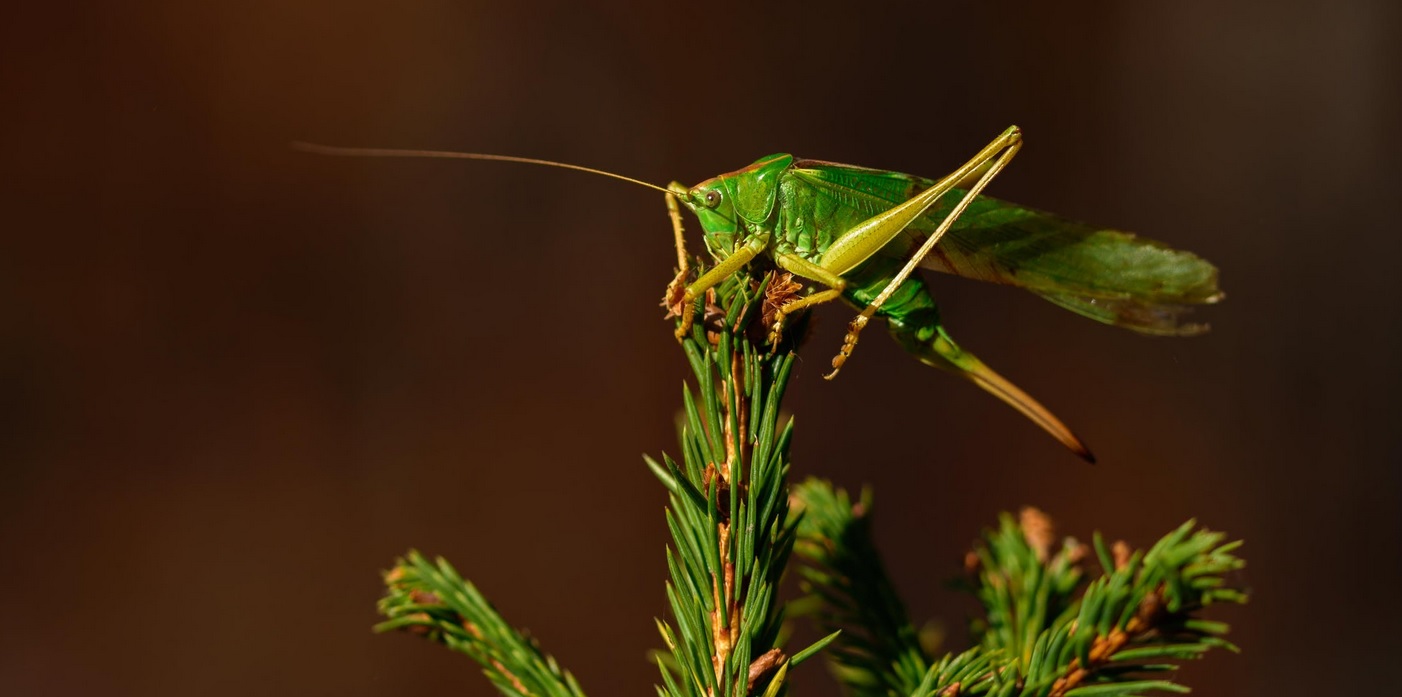
NordenBladet – Scientists have discovered that grasshoppers can differentiate between cancer cells and healthy cells. They use their sense of smell to do that. The discovery may lead to earlier diagnosing of cancer which means people will have a better outlook on getting rid of the ailment, mediates bioRxiv.
Grasshoppers identified the cancer cells through the organic compounds in the breath when people exhale. Scientists often use grasshoppers in studies that are related to smells, because they have a well developed sense of smell. For example in 2020 scientists taught grasshoppers to identify explosives.
Scientists will conclude, based on the brain activity of grasshoppers, when the insects have identified a cancer cell. This can be measured with electrodes – scientists say it gives a quick and reliable result. The reaction of these insects were measured with tests of different cells. The reaction that grasshoppers showed were different in healthy cells and in cancer cells, this means the grasshoppers smelled these cells differently.
Although this concrete study focused only on oral cavity cancer, scientists are confident that also other types of cancer can be identified with this method. Therefore, theoretically, grasshoppers would be able to identify several types of cancer and also the phase of the cancer.
This helps a lot in the diagnosis of the ailment. When cancer is diagnosed in stage four, the likelihood of survival is 10-20 per cent. When it is diagnosed in stage one, likelihood of survival is 80-90 per cent.
NordenBladet – Why are some people wealthier than others? There are several reasons, but one of them is related to your social network. When we grow up in a circle where people from a higher as well as from a lower socio-economic status communicate with each other, then this may advance the chances of our children to increase their future economic well-being.
Scientists from the USA looked into the friendships of 70 million people in the social media channel Facebook. The age of the researched group was 25-44 years. Scientists drew conclusions about the person’s socio-economic well-being based on their address, school, median income, and their cell phone model.
The research proved that when poorer people have contacts with the wealthier people, then also the poorer people will move upwards in the socio-economic status. This means that children from the lower socio-economic class growing up in the neighbourhoods where people have contacts despite the socioeconomic background, their incomes as grown-ups would be one fifth higher.
NordenBladet —A ban issued by Denmark’s Data Protection Authority has been placed on the use of Gmail and Google Workspace in schools in the Helsingør Municipality. Denmark’s move marks the fourth country in Europe to ban Google services in 2022.
The ban was declared on Google Chromebooks and Workspace for Education which process personal data. This prohibits using services such as Gmail, Google Docs, and Google Drive.
For now, the ban only applies within the Helsingør Municipality. Still, it’s been stated that with this verdict, “many of the conclusions in this decision will probably apply to other municipalities that use the same processing structure.”
Regarding the reason for the ban, the Data Protection Authority states that Google’s data collection practices and its habit of transferring the personal data of Danish citizens abroad to US servers violates both EU and Danish legislation.
In 2019, a citizen from the Helsingør Municipality complained about the area’s handling of his child’s personal data after their child had created a YouTube account without his knowledge.
NordenBladet —Statistics Sweden has announced that the number of childbirths in the spring of 2022 in the country has hit the lowest birthrate in two decades.
The figures have shown that between January and April of 2022, 1.57 children were born per mother compared to 1.69 children during the same period in 2021. This number is 2,483 fewer babies than last year, which also is the lowest level recorded in the past two decades.
Gunnar Andersson, a demography professor at Stockholm University, notes, “It is a surprisingly sharp drop in the statistics.”
Andersson followed up by stating, “In the short term, there can be random variations such as observed in January. However, the level has since been significantly lower than previously.”
In the late 1990s, an average of 1.5 children were born per mother.
NordenBladet —President of the Riigikogu Jüri Ratas met with the Speaker of the Parliament of Finland Matti Vanhanen who is on a working visit to Tallinn.
The meeting focused on interparliamentary cooperation and opportunities for enhancing this in the new economic and security situation. The two speakers discussed cooperation both within the European Union and NATO, with the member states of the latter currently in the process of ratifying the accession of Finland and Sweden. The agenda also included the environmental protection of the Baltic Sea. Ratas and Vanhanen agreed on the need to intensify cooperation between countries to protect the Baltic Sea.
Ratas and Vanhanen then opened together a discussion panel on the challenges and protection of the Baltic Sea on the occasion of the Baltic Sea Day in Port Noblessner.
In his opening address, Ratas described the Baltic Sea as a beautiful and unique sea by virtue of its extraordinary ecosystem and the surrounding landscape. It is also one of the youngest seas on our planet and joins together nine countries. However, its geographical, oceanographical, and climatological peculiarities also make it exceedingly fragile. The Baltic Sea, being extremely susceptible to the impact of human activities, is among the most polluted seas in the world.
“There is no doubt that the Baltic Sea is our shared joy and common concern. Today we are facing a stormy sea. There are serious risks and challenges on the horizon,” Ratas acknowledged.
He listed agriculture, industry, and shipping and maritime transport as the economic sectors that exert the greatest impact on the Baltic Sea. “Although these are important sectors for our economy and the quality of life of our people, we must not turn a blind eye to the environmental problems these bring along,” Ratas stressed. He added that it was now the right time to move forward and put our heads together to devise joint actions for the benefit of the Baltic Sea. “Water knows no country borders – the consequences of every country’s actions will reverberate throughout the whole region,” he said.
Ratas highlighted the fact that a lot of valuable work has already been done to prevent pollution and protect the Baltic Sea, and to improve its condition. The current action plan includes nearly 200 agreed activities that require cooperation in the Baltic Sea region; the application of these in the near future should considerably improve the environmental condition of the Baltic Sea by 2030.
“The ever increasing traffic on the Baltic Sea is a growing problem. We are concerned about the situation on the Gulf of Finland where a large number of ships, including tankers, are anchored in Estonia’s economic zone, waiting for entry into Russian ports. The concern is mostly linked to maritime security because a large number of ships in a small area massively increases the risk of accidents. And yet the effects of the pollution would remain to be dealt with by Estonia and Finland. We are ready to take the necessary steps in cooperation with Finland on the international level to reduce the pressure on the Gulf of Finland,” Ratas declared.
“Cooperation, green mindset, and state-of-the art solutions are the key words. The Baltic Sea has been here long before us and will remain here after we are gone,” Ratas said. He emphasised that jeopardising the wellbeing of the Sea was a crime both against the present and the future generations.
“By changing our habits and making green choices we can contribute to the protection and improvement of the marine environment,” Ratas said.
This morning, the President of the Riigikogu and the Speaker of the Parliament of Finland also visited the Memorial to the Victims of Communism at Maarjamäe and laid flowers at the foot of the monument.