NordenBladet — Minister of Science and Culture Antti Kurvinen decided on Wednesday 9 March on new policies on Russia with regard to higher education and research and on preparations related to support for Ukraine.The Ministry of Education and Culture recommends that Finnish higher education institutions refrain from all cooperation with Russian partner organisations in higher education and science. According to the policies, new projects should not be initiated and existing cooperation between organisations should be suspended for the time being. The processing of new initiatives related to cooperation between the authorities of Finland and Russia or Belarus will also be frozen.It is hoped that higher education institutions can provide mental support to students and staff for the anxiety caused by the crisis in Ukraine and actively inform them of what kind of support is available. Support is available especially for Ukrainian students and staff members.
“We stand united in solidarity with Ukraine and condemn in the strongest possible terms Russia’s unprovoked and unjustified invasion of Ukraine on 24 February 2022.
We strongly believe that every possible option should be employed to help Ukraine withstand the fight to protect its national sovereignty and territorial integrity.
We welcome the official application of Ukraine to join the European Union as full-fledged member.
Supporting Ukraine’s efforts on its way to the European Union and granting Ukraine the European Union candidate status as soon as possible would be a powerful and an effective response to Russia’s military aggression as well as to Ukraine’s request for help at this difficult time for it.
We well understand that Ukraine’s struggle is not only for its own future, but for the future of Europe as a whole. Therefore, a swift response to Ukraine’s application for the European Union membership would also mean support for the viability, security and stability of the European Union itself.
We affirm our readiness to provide broad support for Ukraine on its path towards becoming a full-fledged Member State of the European Union and call upon parliaments of other Member States of the European Union to do the same.
We call on our governments and those of other EU Member States to start taking practical steps towards Ukraine’s EU membership.”
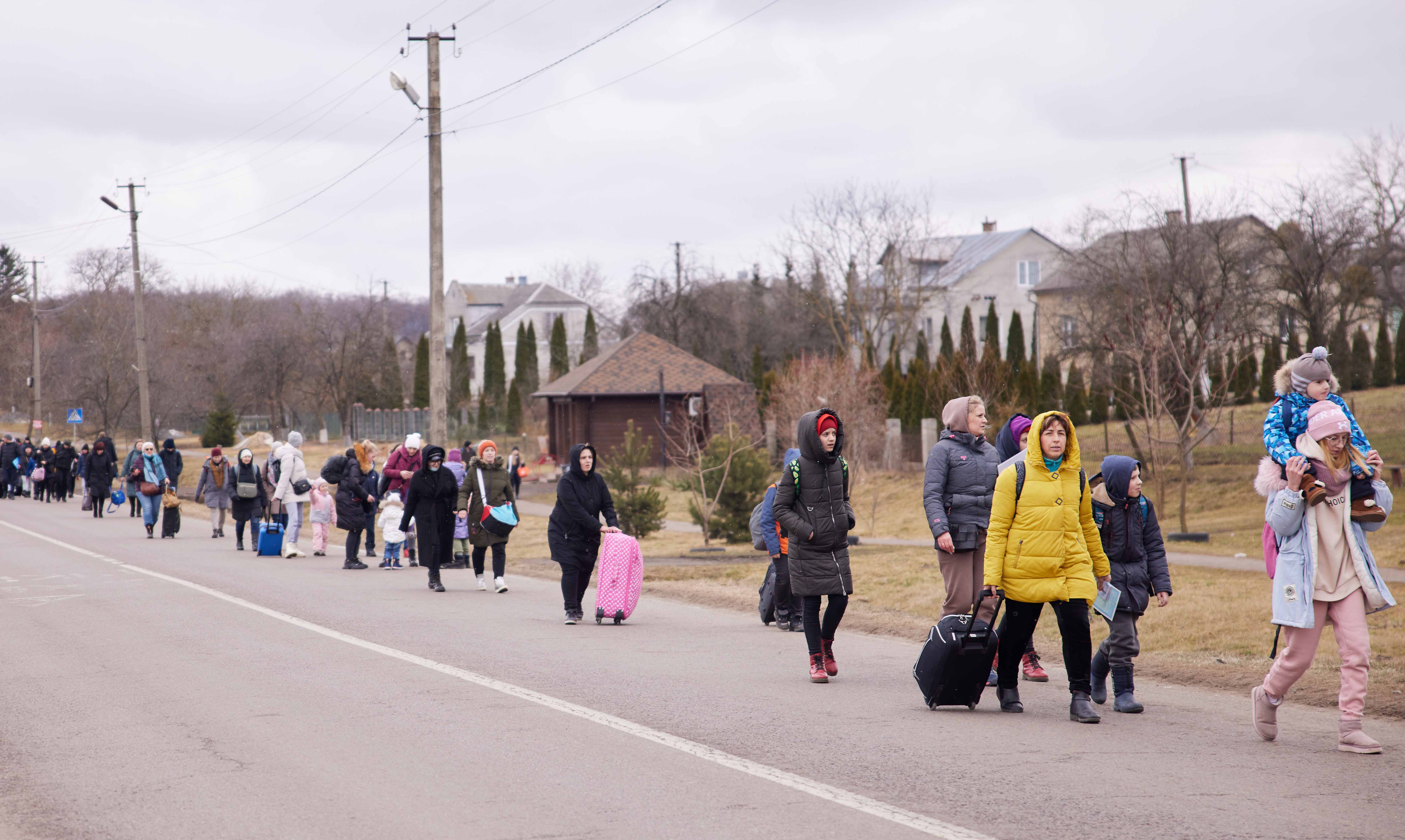
NordenBladet — Ukraine is Finland’s long-term partner country. Due to Russia’s aggression against Ukraine, Finland grants humanitarian assistance in response to the acute distress and strengthens Ukraine’s sustainability in the midst of the war through development cooperation. People fleeing from Ukraine are getting on a train in Lviv trying to reach Poland. Photo: Unicef/Aleksey FilippovPeople in Finland are widely moved by the distress of Ukrainians who have fled the war. The Ministry for Foreign Affairs collected answers to the central questions relating to Finland’s additional assistance to Ukraine and the earlier development cooperation between Finland and Ukraine.How much additional assistance has Finland granted to Ukraine? In February 2022, Finland granted Ukraine a total of EUR 14 million in additional funding for development cooperation and humanitarian assistance. Of the additional funding for humanitarian purposes, Finland will direct EUR 8.2 million via the UN Refugee Agency (UNHCR) and EUR 3 million via the International Committee of the Red Cross (ICRC). EUR 5.8 million will be channelled to development cooperation under the Partnership Fund for a Resilient Ukraine, which is coordinated by the United Kingdom, and to the Council of Europe’s Action Plan for Ukraine and the OSCE’s project activities. People walking in Western Ukraine trying to reach the Polish border. Photo: Unicef/Viktor MoskaliukWhat will Finland’s humanitarian assistance be used for?The humanitarian situation in Ukraine is difficult. The UN estimates that as many as 12 million people will be in need of humanitarian assistance in the next few months. A large part of the population suffers from a lack of water, food and medicines, and people are unable to treat their injuries caused by the war. Those who have fled their homes need protection and emergency accommodation. Finnish humanitarian assistance delivered via the ICRC is used to help Ukrainians in need of, for example water, food, medicines and medical supplies. The ICRC has a special role in strengthening respect for and implementation of international humanitarian law. It engages in dialogue with the parties to the conflict, reminds them of their responsibility to protect civilians and ensures that civilians are not prevented from accessing basic services. Those who have fled their homes are assisted by the UNHCR, which provides emergency accommodation, protective equipment, food and medicines. Organisations have extensive experience of conflict and crisis situations, which means that they have the capacity to ensure free passage of relief to destinations in the very challenging conditions in Ukraine. Finland’s support will reach Ukraine also through the core funding granted to UN actors. These organisations include, for example, the UN Office for the Coordination of Humanitarian Affairs (OCHA), the World Food Programme (WFP), which is responsible for food supplies and logistics; the United Nations Children’s Fund (UNICEF), which focuses on assisting children and families; the United Nations Population Fund (UNFPA), which offers reproductive health services; and the United Nations Central Emergency Response Fund (CERF), in which Finland is among the top ten donors.Finland provides funding for humanitarian purposes in Ukraine also through the EU. The EU is one of the world’s largest donors of humanitarian assistance. The Unicef representive in Poland, Murat Sahin, is checking the arrived material assistance in Lviv, Western Ukraine. Photo: Unicef/Viktor MoskaliukWhat will the additional development cooperation funding granted by Finland be used for?The additional exclusive ODA administered by the Foreign Ministry will be channelled to the Partnership Fund for a Resilient Ukraine, which is coordinated by the United Kingdom, to the Council of Europe’s Action Plan for Ukraine, and to the OSCE’s project activities. In addition to Finland, the Partnership Fund for Resilient Ukraine is funded by the United Kingdom, the United States, Canada, Switzerland and Sweden. The approximately EUR 40 million administered by the fund is used to support Ukraine’s sustainability extensively. Following Russia’s invasion of Ukraine, the fund focuses on such emergency needs in Ukraine as are related to its administration, communities, and communication links. The support will strengthen the ability of the Ukrainian government to coordinate humanitarian and emergency assistance, civil society’s capacity to provide necessary services, and the communications opportunities of CSOs, the media and individual journalists. The fund is currently examining which projects would be suitable for support in light of Ukraine’s needs.The Council of Europe Action Plan for Ukraine supports Ukraine in fulfilling its obligations as a Member State of the Council of Europe and assists the country in implementing the Action Plan in the areas of human rights, the rule of law and democracy. The Council of Europe is currently assessing the reallocation of support so that it would respond to Ukraine’s needs.Finland has supported the Ukraine Programme of the OSCE High Commissioner for Minorities and projects of such other OSCE organisations as the Office for Democratic Institutions and Human Rights (ODIHR). The OSCE and the Ministry for Foreign Affairs are currently exploring projects that they could support in response to Ukraine’s needs. Ukrainian hospitals are trying to function during the war. A new born is being taken care of in Kyov on the 3rd of May. Photo: Unicef/Andriy BoikoUkraine has been Finland’s partner country also before the war. What kind of development cooperation has Finland conducted in Ukraine?Finland’s objective is to improve the resilience of Ukrainian society, which refers to its ability to respond to changing situations. Finland gives also long-term support to Ukraine’s structural reforms. The goals of Finland’s Country Strategy for Ukraine are to restore the territorial integrity and sovereignty of Ukraine and to guarantee respect for international law; to strengthen bilateral relations between Finland and Ukraine and to widen the scope of cooperation; to enhance the resilience of society and to improve the living conditions of citizens; as well as to strengthen the relations between the European Union and Ukraine. Finland’s support to Ukraine in 2014–2021 was EUR 70 million. The additional support will increase the total support to approximately EUR 85 million. Finland has supported Ukraine, among other things, through development cooperation, humanitarian assistance and participation in mine clearance and civilian crisis management. Support has been channelled to various projects, international organisations’ activities and secondment of experts.
The share of development cooperation from Finland’s overall support to Ukraine since 2014 has been approximately EUR 27 million. Finland’s development cooperation helps Ukraine in reforming the basic and vocational education and training, supports the rule of law, and improves the country’s energy efficiency and the use of renewable energy sources. Finland has supported the Council of Europe’s Action Plan for Ukraine; projects carried out by the Organization for Security and Co-operation in Europe OSCE; the Trust Fund for Energy Efficiency of the Nordic Environment Finance Corporation (NEFCO); the Eastern Europe Energy Efficiency and Environment Partnership of the European Bank for Reconstruction and Development (EBRD); the Finnish Meteorological Institute’s meteorology project; and civil society organisations. Plans have been made to start cooperation in the forest sector.In previous years, Finland’s humanitarian assistance has been channelled to the work of the International Committee of the Red Cross in Eastern Ukraine.What happens to Finland’s development cooperation during the war?Due to the war, progress in longer-term development cooperation projects is currently uncertain, and the Ministry for Foreign Affairs is monitoring developments closely. Finland is assessing the consequences of the war on the projects in cooperation with the contractors implementing the projects as well as the preconditions and needs for change. Finland grants additional support to UkraineFinland grants additional support to UkraineRead all the news: Russian attack on Ukraine
NordenBladet — Prime Minister Sanna Marin and Swedish Prime Minister Magdalena Andersson have written a letter to President of the European Council Charles Michel emphasising the EU’s key role in security policy. The letter draws attention to the heightened role of the EU’s solidarity and commitment to the mutual defence clause (Article 42.7) in the changed security policy situation.On 10–11 March, the French Presidency of the Council of the European Union will organise an EU summit where the EU leaders will draw up a strong and ambitious declaration emphasising stronger investments in European defence and capabilities, among other things. In their letter, Finland and Sweden stress that in the current security policy situation, the EU leaders must be very united and clear about the fact that the EU is also a security community for its Member States. The mutual defence clause is an essential part of this.Article 42.7 of the Treaty on European Union obliges EU Member States to use all means in their power to help another Member State that is the victim of armed aggression on its territory.
At today’s sitting, the Riigikogu discussed draft Resolutions concerning the possibilities to reform the electricity market, submitted by Faction Isamaa and the Estonian Conservative People’s Party Faction. The Riigikogu did not support them.
The Draft Resolution of the Riigikogu “Making a proposal to the Government of the Republic” (497 OE), submitted by the Faction Isamaa, provided that the Government needed to develop a plan to reform the electricity market to protect small consumers in connection with the extraordinary electricity price rise due to the energy crisis.
During the debate, Sven Sester (Isamaa) and Jevgeni Ossinovski (Social Democratic Party) took the floor.
24 members of the Riigikogu voted in favour of passing the draft Resolution and 29 were against. As a majority vote of the members of the Riigikogu was needed for the draft Resolution to be passed, the motion was not supported. Thus, the proceedings on this draft Resolution have been completed.
The Draft Resolution of the Riigikogu “Making a Proposal to the Government of the Republic” (513 OE), submitted by the Estonian Conservative People’s Party Faction, made a proposal to the Government to suspend the electricity stock exchange in Estonia for at least a year and to establish a nationally regulated price; and to suspend Estonia’s participation in the CO2 trading system or the ETS mechanism for at least a year.
Mart Helme (Estonian Conservative People’s Party) took the floor during the debate.
17 members of the Riigikogu voted in favour of passing the draft Resolution and 26 were against. As a majority vote of the members of the Riigikogu was needed for the draft Resolution to be passed, the motion was not supported. Thus, the proceedings on this draft Resolution have also been completed.
NordenBladet — Democracy is eroded every time a woman or girl faces harassment, hate speech or online violence. Thus, the strengthening of democracy requires also the strengthening of gender equality.In the past weeks, we have been thunderstruck by Russia’s attack on Ukraine. The developments have shown how quickly the actions of an authoritarian regime can escalate to new dimensions – even full-scaled war. When the cornerstones of democracy, such as the realization of human rights or the space of civil society, are restricted, the road to using military force and breaching the sovereignty of another country can be surprisingly short.Democracy and the rule of law are challenged in different parts of the world. At the same time, the so-called anti-gender movement has gained strength, also in Europe. This is not a coincidence: democracy and gender equality are closely interlinked. Democratic societies that defend human rights are being challenged by others questioning the rights of women, girls and sexual and gender minorities.As International IDEA finds in their Global State of Democracy Report 2021, attacking gender equality and minorities is a clear strategy that has the aim of weakening democracy.The participation of women increases democracy and is, thus, a threat to authoritarian leaders. Democracy is eroded every time a woman or girl faces harassment, hate speech or online violence. Democracy is weakened each time a female politician is silenced or her looks criticized, or when the political participation of a person belonging to a sexual minority is hindered or questioned.Gender equality at the centreThere is a need to put women’s political participation and gender equality at the very core of the defense and strengthening of democracy. This was discussed at a seminar organized by the Ministry for Foreign Affairs of Finland in the context of International Women’s Day in March 2022. Democracy does not work unless everyone has access to power and decision-making at all levels. All over the world, the access of women to the highest levels of decision-making is far from that of men.Finland advances the political participation of women at different levels. For instance, in Tanzania Finland supports a project of UN Women that aims at strengthening the political leadership and empowerment of women at local levels. In Zambia, Demo Finland has supported, together with the organization Zambia National Women’s Lobby, women’s political participation and political parties’ gender equality work already for a long time.However, for instance only two percent of EU’s gender equality work has been directed towards the strengthening of women’s political participation.As in all work to advance gender equality, also in the context of political participation it is important to look at the norms, structures and root causes that hinder the achievement of gender equality. Politics is still considered in many parts of the world as ‘men’s business’. It is important to identify in which way discriminatory norms, beliefs and structures impact women’s political participation. And also, what kind of barriers are faced by those subject to discrimination not only on the basis of gender but also age, disability, sexual orientation, ethnic origin, geographic location or other ground?In Ukraine, we can already see the gendered impacts of the war. In conflict resolution and peacebuilding, the political participation of women must be ensured. The Women, Peace and Security agenda provides a good framework for this work.We need to act quickly and determined against the efforts to weaken democracy and gender equality. Finland must, together with its partners and in a more goal-oriented and long-term manner, focus on the strengthening of women’s political participation, and advance gender equality as a central element of democracy work. The importance of this is highlighted in today’s world.Written by Senior Advisers on Gender Equality, Krista Orama and Katja Tiilikainen, and Senior Adviser on Democracy and Governance, Lotta Valtonen, from the Unit for Sectoral Policy at the Department for Development Policy.
NordenBladet — The first meeting of foreign ministers under Norway’s presidency of the Nordic (N5) cooperation on foreign and security policy will be held as a virtual meeting on 8 March. Minister for Foreign Affairs Pekka Haavisto will represent Finland at the meeting.The Nordic foreign ministers will discuss Russia’s attack on Ukraine and support to Ukraine. All Nordic countries strongly condemn Russia’s military actions in Ukraine. Russia’s target is Ukraine, but the invasion is also an attack against the entire European security order. The attack is a grave breach of international law. Russia should cease military operations immediately and return to the negotiating table.Finland supports Ukraine’s independence, sovereignty, self-determination and territorial integrity. “It is important that we maintain close contacts with all countries in this situation. The Nordic countries are Finland’s closest partners, so I highly appreciate this opportunity to meet and discuss with my colleagues,” says Minister for Foreign Affairs Haavisto.
NordenBladet — Finland wants to introduce a voluntary Green Deal agreement to reduce the consumption of single-use plastic cups and certain food packages. The aim of the agreement is to find the most effective and, from the perspective of the businesses, feasible ways to fulfil the EU obligations. At the same time, the aim is also to boost the development and creation of new solutions and business models that reduce consumption.The EU Directive on the reduction of the impact of certain plastic products on the environment requires that the Member States take measures to achieve an ambitious and sustained reduction in the consumption of the single-use plastic products by 2026 compared to 2022. The Member States may decide on their national measures and monitor their progress. The aim of the Directive is to reduce the amount of plastic litter in the environment, especially in marine areas, and to promote a circular economy.The Green Deal agreement 2022-2027 has been signed by the Ministry of the Environment and the Finnish Food and Drink industries’ Federation, the Finnish Hospitality Association Mara, the Finnish Grocery Trade Association and the Finnish Packaging Association.“Reducing the use of single-use plastics has wide support from citizens and companies. It is great that these important sectors now strongly participate in the work to reduce the consumption of plastics. The agreement offers the keys to finding flexible and new solutions to respond to the plastics challenge,” says Minister of the Environment and Climate Change Emma Kari.The efforts to reduce consumption concern plastic cups and packages made wholly or partly from plastic that are used to contain food intended for immediate consumption either on the spot or as take-away without any further preparation. Such products include cardboard beverage cups coated with plastic, boxes for cherry tomatoes that contain plastic, triangle sandwich boxes, individually sold cups of yoghurt, and plastic boxes for salads at supermarket service counters or taka-away food in restaurants.Parties to agree on quantitative targets during 2023, measures launched immediatelyIn accordance with the Directive, the agreement aims to achieve an ambitious and sustained reduction in the consumption in numbers of single-use cups and certain food packages (packets) made wholly or partly of plastic.To achieve the reduction in numbers in 2024-2026 (compared to 2022), ambitious targets will be set for the amount of plastic in tonnes contained in packets. The amounts in tonnes are easier to monitor than numbers. The aim is also that the total amount in tonnes of packets made partly of plastic will not grow compared to 2022. This cannot be reduced by only reducing the percentage of plastic in the products; substitutes for these products are also needed that contain no plastic.After having made the commitment to the agreement, individual businesses may choose the measures they will take to reduce the consumption. However, the sectors as a whole will make sure that a sufficient number of businesses will take measures to e.g. replace single-use plastic cups or packages with reusable alternatives or with single-use packages that contain no plastic. Consumers can also be charged a separate fee for the use of single-use plastic. If the agreement fails to attract a sufficient number of businesses to participate or it seems that the targets set may not be achieved, the reduction in the consumption will be promoted through legislation.“Plastics are well-functioning and safe raw materials for packaging, but joint action is needed to reduce the environmental harm they cause. The voluntary agreement gives the businesses the opportunity to choose the best and most suitable ways for them to reduce the environmental impacts of plastic food packages. At first, the measures will probably be targeted to reducing the amount of plastic used in the packages and later, as new plastic-free materials are being developed, to finding substitutes,” says Antro Säilä, CEO of the Finnish Packaging Association.The consumption of single-use cups and food packages is increasing due to the growth in take-away sales of food and beverages and smaller size of packages sold in grocery stores. One reason the rapid growth in take-away sales is the COVID-19 situation. Before that, it represented about 10% of the sales at restaurants, but in 2020 this had risen to about a third. This change strengthens the growth trend that had already started.
President of the Riigikogu (Parliament of Estonia) Jüri Ratas discussed issues relating to the security of our region and defence cooperation as well as giving military and humanitarian aid to Ukraine with Prime Minister of Finland Sanna Marin, who was on a visit to Tallinn today.
“Bilateral relations between our countries and parliaments have traditionally been close and warm, as they are also now,” Ratas said. “At critical times, it is especially important that we stand together, meet as much as possible and talk to each other.”
Both Ratas and Marin think that in today’s changed security situation, it is important to enhance the defence capability of countries. The Prime Minister of Finland said that Finland planned to increase its defence budget. She also pointed out that the attitude of the Finnish people towards NATO membership had become more supportive.
Ratas underlined that all members of the European Union had to support Ukraine in different ways. According to him, Estonia has given Ukraine humanitarian aid and military aid in the amount of 200 million euro this year. Ratas acknowledged and thanked Finland for their historical decision to grant military aid to Ukraine.
Ratas said that Estonia had established a simplified procedure for border crossing for citizens of Ukraine. He added that by now, more than a thousand Ukrainian refugees had reached Estonia and around 300 of them were children. Most of the refugees stay with their relatives and acquaintances.
The President of the Riigikogu noted that Estonia supported granting Ukraine the status of a candidate country for accession to the European Union, taking into account the conditions of accession and in accordance with Article 49 of the Treaty on European Union. “Ukraine is a European country that is fighting for European values on the battlefront,” Ratas said.
Both Ratas and Marin highlighted Europe’s unity and solidarity in imposing economic sanctions against Russia, and acknowledged that signs of their impact were already being felt. They also considered it important to fight against disinformation. Ratas thinks that national TV channels have an instrumental role here, and he added that Estonia had banned the broadcasting of Russian propaganda channels.
Member of the Estonia-Finland Parliamentary Friendship Group and Deputy Chairman of the National Defence Committee of the Riigikogu Leo Kunnas said that many Ukrainians who were living and working in Estonia had returned to their homeland to fight against the aggressor. Kunnas also expressed concern about worsening of the humanitarian situation in Ukraine.
Chair of the Estonia-Finland Parliamentary Friendship Group Helmen Kütt, who participated in the meeting, emphasised the excellent bilateral parliamentary relations and expressed hope that they would continue also in the current situation.
Information on the current state of the corona pandemic was also exchanged at the meeting. Marin and Ratas admitted that the numbers of infections were dropping and hoped that this trend would continue. The also think that we are better prepared for next outbreaks and there will no longer be extensive lockdowns.
NordenBladet — Prime Minister Sanna Marin had a telephone conversation with Ukrainian Prime Minister Denys Shmyhal on 7 March 2022. Prime Minister Marin emphasised that Finland firmly supports Ukraine both nationally and through the European Union.Finland strongly condemns Russia’s attack on Ukraine and continues to promote, by means of large-scale sanctions, the consistent, rapid and determined response by the European Union to the aggression that Russia is continuing. Prime Minister Marin emphasised the readiness of the EU to impose more sanctions that will have a rapid effect.Prime Minister Marin said that the thoughts of Finns are now with Ukrainians and that the situation in Ukraine touches Finns deeply. She reminded that Finns have had similar experiences in the past. The seriousness of the situation in Ukraine and the need for support was emphasised in the discussion. Prime Minister Marin told her Ukrainian counterpart about Finland’s decisions to support Ukraine. Ukraine has already received the armed assistance provided by Finland.The Prime Ministers agreed that it is also important to respond to Russia’s information warfare, in which Russia feeds false information about the war and its own intentions to Russians, too.Other topics discussed included Ukraine’s application for membership of the European Union and the Ukrainian people’s wish for a European future. The consideration of the application is being assessed at the EU level, and Prime Minister Marin estimated that the issue will be discussed at the informal European Council later this week (10–11 March). The Prime Ministers agreed to meet face to face as soon as the situation permits.

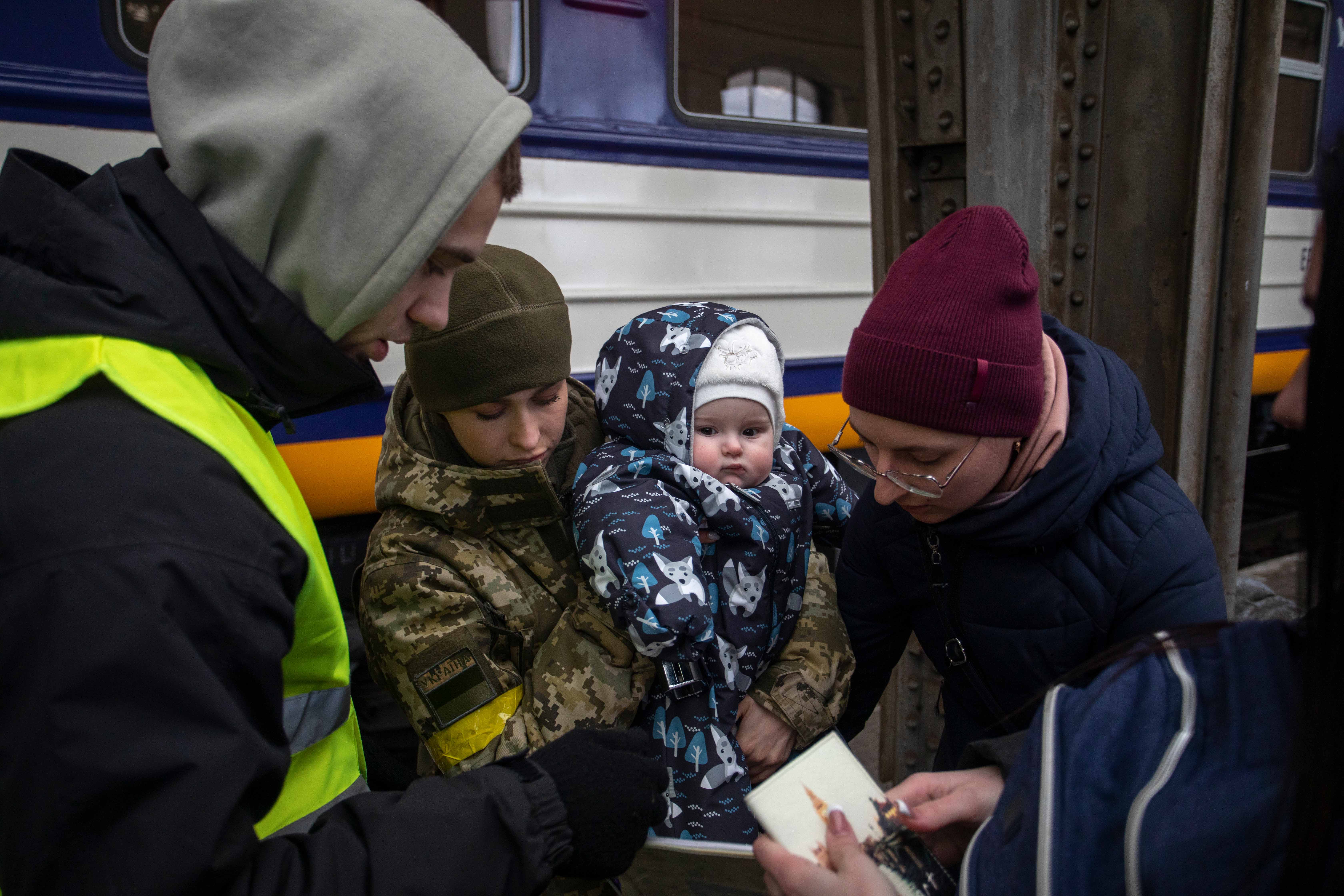 People fleeing from Ukraine are getting on a train in Lviv trying to reach Poland. Photo: Unicef/Aleksey Filippov