NordenBladet — The Government proposes that tour operators not be charged supervisory and insolvency protection fees for 2021. These fees were waived in 2020 too.On 22 December 2021, the Government submitted to Parliament a proposal for a temporary amendment to the Act on the Supervisory and Insolvency Protection Fee Provided by Providers of Travel Service Combinations. In practice, the Government’s proposal means that tour operators will not be charged a supervision and insolvency fee for this year. Even though there has been a slight recovery in the tourism sector in 2021 compared with the previous year, the pandemic has continued to hamper the sector’s operations to a significant degree this year, according to the Government. By not charging the fee, the Government wants to alleviate the situation of tour operators. Waiving the fee will apply to about 570 companies, which are obliged to lodge a collateral with the Finnish Competition and Consumer Authority to protect the advance payments made by travellers and the costs of repatriation.The Finnish Competition and Consumer Authority is responsible for imposing and collecting the fee. The Act is set to enter into force as soon as possible and it will remain in force until 31 December 2022.
NordenBladet — A tragic accident in Abdirizak Warsame Ahmed’s childhood caused him to lose both of his hands. Instead of being discouraged, he turned the accident into a resource. The boy with no hands grew up to be a man who now lives in Mogadishu and travels around Somalia spreading the message of hope and peace. Ahmed is a participant in the Foreign Ministry’s pro-peace communication project. Abdirizak Warsame Ahmed is now known as an ambassador of forgiveness. Photo: Wali HashiWhen he was a little boy, Abdirizak Warsame Ahmed herded sheep. One day the sheep ran away. As a punishment, Ahmed’s aunt tied his hands with a rope. She left and forgot all about him, and only 17 hours later someone untied him and Ahmed was rushed to the hospital. The rope around 8-year-old Ahmed’s hands was so tight that his hands had become paralysed and infected. The following morning, his hands had to be amputated.That was the beginning of a new life for Ahmed. For a long time it seemed that a boy with no hands did not have much of a future in Somalia. But things took a different turn when Ahmed decided to forgive his aunt. This was the beginning of a story that Ahmed now wants to share with young people in Somalia.“It is important to remember that we all make mistakes. That is why we have to learn to apologise and forgive. I want to tell young people that I was able to overcome all challenges and that I have forgiven the person who caused me to lose my hands.”With support from the Communications Department of the Ministry for Foreign Affairs, a documentary on Ahmed was filmed last year and was broadcast on Somali TV channels. Ahmed’s compelling story has made him famous in Somalia. He has been asked to speak at various events and interviews, especially in Mogadishu.This year, Ahmed travelled to Kismanyo, a city in the southern part of Somalia, where he spent three days visiting schools as part of the Foreign Ministry’s project. He talked about reconciliation and forgiveness to hundreds of young people. The school visits were also filmed and turned into a documentary.Media plays a major role in SomaliaThe Ministry for Foreign Affairs’ project has provided content for the Day of Forgiveness, which is celebrated in Somalia and Somali communities around the world on 28 June. The person behind the idea for the Day of Forgiveness and the Foreign Ministry’s campaign, and in charge of all the practical arrangements involved, is a Finnish[VL(1] journalist and media professional Wali Hashi.“One day the project will come to an end, but thanks to Ahmed and other young peace ambassadors like him, work for peace and forgiveness will continue,” Hashi says.According to Hashi, the most effective way to spread the message of forgiveness is through media, especially social media.“Somalia is a country with a strong oral tradition; this means sharing a story, drama, music and poetry through the media is essential for spreading and disseminating culture, knowledge, values and attitudes. Social media allows different ideologies to spread like wildfire. Different media feed an enormous amount of information to young Somalis, largely because the country’s education system has not yet recovered from the long civil war,” Hashi explains.Future plans for the project include youth discussion programmes, workshops and music production. The Ministry for Foreign Affairs and Hashi plan to continue their communications campaign in Somalia until 2023.Links Abdirizak Warsame AhmedVideo: Abdirizak Ahmed shares his story of forgivenessVideo: Disabled Hero of PeaceNews: ”The clan system in Somalia is holding back peace development”
NordenBladet — The Sports Ministers of the European Union Iceland and Norway have signed a statement calling for transparency, democracy and respect for human rights in the work of international sport federations.The statement signed by the ministers of 21 EU Member States and Iceland and Norway states that although many sports organisations operate in accordance with these principles, there is a clear need for international sport federations to reform their decision-making processes.The ministers consider it important that respect for all human rights, including the rights of migrant workers and children, as well as freedom of expression and assembly, are safeguarded in all major sports events.The ministers will continue their discussions and cooperation in international forums in collaboration with national and international sports organisations.The statement reinforces the message of the letter addressed to Commissioner Gabriel. The letter, initiated by Finland, was signed by all EU Member States.StatementPress release 27 January 2021: Human rights must be ensured at all international sporting events
NordenBladet — The Sustainable Growth Programme for Finland is investing in revitalising culture and the creative industries and in reshaping them in a sustainable way. The Ministry of Education and Culture has granted EUR 4 million in discretionary government grants to those operating in the cultural and creative sectors to create innovative services and to devise novel production and operating procedures. The grant application was the first batch of the Ministry’s overall EUR 30 million financial support for reshaping the cultural and creative sectors.The financial support provides means for the cultural and creative sectors to reform and digitalise their services and production and operating procedures. Under Finland’s Sustainable Growth Programme, structural support aims to contribute to creating more jobs in the creative industries and to raising the GDP ratio of the creative industries significantly higher than the current 3.5% of GDP by 2026.Minister of Science and Culture Antti Kurvinen observes that structural support will be used to help the creative industries, which have been hard hit by the pandemic, to shape their future and create innovations.“Creative industries provide jobs and bring vitality to the regions and wellbeing for people around Finland. We can further strengthen this by assisting cultural activities and the creative industries to grow. My goal is that more and more people in Finland will find work and opportunities for entrepreneurship in the cultural sector,” says Minister Kurvinen.Altogether 184 applications were submitted by the closing date. Financial support was granted to 20 projects that represent the audiovisual and film industry, architecture, performing arts (music, theatre, dance, circus), design, museums and cultural heritage as well as visual arts. The projects also widely encourage developing services in the cultural industries, promoting cultural exports, and managing and harnessing copyright data.“The new initiatives will bring a more international approach to the cultural sector and open up new opportunities for accelerating digitalisation. The projects that are being supported involve multidisciplinary cooperation and include operating models that have the potential to change the way we operate and create new opportunities for the cultural sector over the long term,” Kurvinen says.“The newly distributed funds are only the first of a batch of resources that aims to can speed up growth in the creative industries. I expect to be able to grant funding to an even larger group of projects next spring,” Kurvinen adds.The next call for applications for structural support will be organised in spring 2022, provided that Parliament decides to allocate the necessary appropriations for this purpose in the 2022 Budget. Sustainable Growth Programme for FinlandFinland’s Recovery and Resilience Plan (RRP) is part of the Sustainable Growth Programme for Finland. The Sustainable Growth Programme boosts competitiveness, investment, research, development and innovation, as well as measures to raise skill levels. It is funded from the one-off EU Recovery and Resilience Facility.The programme is divided into four pillars. The structural support for renewing the cultural and creative sectors belongs in pillar three called: Raising the employment rate and skill levels to accelerate sustainable growth. The funding in pillar three totals EUR 636 million, of which EUR 40 million is allocated to revitalising cultural activities and the creative industries, divided into structural support from the Ministry of Education and Culture (EUR 30 million) and innovation funding from the Ministry of Economic Affairs and Employment/Business Finland (EUR 10 million).In the first stage, the Ministry of Education and Culture had EUR 4 million at its disposal for structural support within the scope of the implementation of Recovery and Resilience Plan for Finland. The main emphasis in the applications for structural support for the cultural and creative sectors will be in 2022 and 2023. Around EUR 14 million will be made available in 2022, around EUR 9 million in 2023 and around EUR 3 million in 2024.More information on structural support and grants awarded (in Finnish)
NordenBladet — The county election boards will confirm the master lists of candidates for the January 2022 county elections on Thursday 23 December 2021. Information about the candidates will be published on the Electionsfinland.fi website of the Ministry of Justice during the same evening.There are 21 wellbeing services counties, each of them with its own candidates. The lists of candidates contain the name, candidate number, profession and municipality of residence of each candidate.In the county elections, voters may only vote for a candidate standing for election in their wellbeing services county. The wellbeing services county in which a voter is entitled to vote is determined based on their municipality of residence. Voters can check which wellbeing services county their municipality belongs to on the Electionsfinland.fi website (in Finnish).Voters can learn more about the candidates in their wellbeing services county on the internet, through campaign advertising of political parties and candidates, and by using a vote compass.The elections to be held on Sunday 23 January 2022 are the first county elections in Finland. In the elections, representatives for the county councils will be elected. The county councils will be responsible for organising healthcare, social welfare and rescue services in the wellbeing services counties from the beginning of 2023.The boundaries of the wellbeing services counties mainly correspond to the boundaries of the current regions with the exception of the region of Uusimaa, which includes four wellbeing services counties.The residents of Helsinki will not vote in the county elections, because the City of Helsinki continues to be responsible for social, health and rescue services in Helsinki. Another exception is Åland, which is not affected by the health, social and rescue services reform.Information about the candidates for the 2022 county elections will be available in the Information and Result Service as of 23 December.Information about county elections and voting: www.electionsfinland.fi Instructions for voters during COVID-19 Finnish Institute for Health and Welfare: Coronavirus COVID-19 – Latest Updates Electionsfinland.fi on Twitter Electionsfinland.fi on Facebook Election videos on YouTube Elections helpline: 0800 9 4770 (in Finnish) and 0800 9 4771 (in Swedish). WhatsApp service for election-related questions: 050 438 8730
NordenBladet — Around 13,400 new COVID-19 cases were reported between 13 and 19 December, while in the previous week the number of new cases in Finland was around 10,600. On 20 December, the total number of confirmed cases of the Omikron variant was 83. The burden on hospital care and, in particular, intensive care is increasing.In the last 14 days (between 4 and 17 December), the incidence of new cases was 408 per 100,000 inhabitants. In the previous two weeks (between 20 November and 3 December), the incidence of new cases was 307 per 100,000 inhabitants.At the end of last week, the total number of patients in specialised healthcare was 184, of whom 126 were in inpatient care and 58 in intensive care. On 20 December, 177 patients were in specialised healthcare and 64 in intensive care. The burden on hospital care is now spread more evenly across the country than before. On 20 December 2021, the total number of COVID-19-related deaths reported to the communicable diseases register was 1,493 and 60 per cent of the reported deaths were among people over 80 years of age. On 19 December, 83.3 per cent of those aged 12 and over had received at least two vaccine doses in Finland. At the same time, the number of those having received the third dose is nearly 770,000.In recent weeks, testing for coronavirus has been very active. A total of 150,000–154,000 tests per week were carried out between 6 and 19 December. The number of positive test results has increased. In the last 14 days, 8.1 per cent of all samples taken were positive, whereas in the previous 14 days the share was 6.1 per cent. The following 17 areas meet the epidemiological characteristics for areas in the community transmission phase: The Hospital Districts of South Karelia, South Ostrobothnia, South Savo, North Savo, Helsinki and Uusimaa, Kanta-Häme, Central Ostrobothnia, Central Finland, Kymenlaakso, Lapland, Länsi-Pohja, Pirkanmaa, North Ostrobothnia, Päijät-Häme, Satakunta, Vaasa and Southwest Finland. The epidemiological situation is being monitored during Christmas and the New Year. The Finnish Institute for Health and Welfare will publish the key monitoring information on the COVID-19 epidemic on a new reporting website. The new website will replace the current coronavirus map entirely as of 1 January 2022.
NordenBladet — The number of unemployed jobseekers decreased by 61,800 from November last year. The number of new vacancies reported in November totalled 93,100. In all, the number of unfilled vacancies amounted to 168,100, which is 76,800 more than a year ago.At the end of November, a total of 252,700 unemployed jobseekers were registered at the Employment and Economic Development Offices and municipalities participating in the local government pilots on employment. This is 61,800 less than a year earlier, but 24,100 more than in November two years ago. The number of unemployed jobseekers was down by 6,300 from the previous month. Of the unemployed jobseekers, 134,900 were customers of municipalities participating in the local government pilots on employment. The number of unemployed jobseekers also includes those fully laid off. These figures are from the Employment Bulletin of the Ministry of Economic Affairs and Employment.At the end of November, the number of people laid off was 27,800 in the whole country, which was 48,600 fewer than at the same time the year before. The number of people fully laid off totalled 18,600, representing a decrease of 39,300 from November the year before. The number of people fully laid off decreased by 1,100 from October.106,200 unemployed in the long termThe number of long-term unemployed — that is those who had been unemployed without interruption for at least a year — amounted to 106,200, up 20,900 on the previous year. The number of unemployed jobseekers aged over 50 was 99,800, or 16,100 fewer than at the same time a year earlier.The number of unemployed jobseekers aged under 25 was 26,500, representing a decrease of 9,500 from November last year. Of the unemployment periods of youths, 61.1 per cent ended before reaching three months between January and November. This is 3.0 percentage points less than the year before.Increase in new vacanciesThe number of new vacancies reported during November totalled 93,100, or 43,700 more than in November the previous year. In all, the number of unfilled vacancies in November amounted to 168,100, which is 76,800 more than a year ago.At the end of November, the number of persons covered by services included in the activation rate amounted to 115,000, down 5,200 on the previous year. These services include pay subsidies, labour market training, work trials and self-motivated studies.Statistics Finland: The trend of the unemployment rate 6.9%According to the Labour Force Survey issued by Statistics Finland, in November the number of people in employment was 62,000 more than on the previous year. The trend of the employment rate was 72.8%, which was 1.8 percentage points higher than in November the year before. According to the Survey, the unemployment total was 164,000, which is 24,000 less than a year ago. The trend of the unemployment rate was 6.9%, or 1.3 percentage points lower than the previous year.Key differences between Employment Service Statistics and the Labour Force Survey This information is based on the Ministry of Economic Affairs and Employment’s Employment Service Statistics and the Labour Force Survey of Statistics Finland. The Employment Service Statistics of the Ministry are compiled on the basis of the information in the Employment and Economic Development Offices’ customer register, while the Labour Force Survey of Statistics Finland is based on sampling. In the Ministry’s Employment Service Statistics, people that are not in an employment relationship or employed in business are listed as unemployed. Persons fully laid-off but not full-time students are also categorised as unemployed in the Employment Service Statistics. The Labour Force Survey of Statistics Finland has a stricter definition of being unemployed: a person is unemployed if he or she has actively sought employment during the preceding four weeks and is available for work over the coming two weeks. The figures of the Labour Force Survey of Statistics Finland are internationally comparable and thus they are the official Finnish unemployment statistics. Further information on the differences in the statistics https://tilastokeskus.fi/til/tyti/tyti_2019-09-13_men_001_en.html
NordenBladet — The European Commission decided on 20 December 2021 that the changes to the state aid scheme sought by Finland are compatible with the EU internal market. The state aid scheme is one of the instruments available to the Finnish authorities to support companies during the coronavirus crisis. The key changes relate to the maximum amount of company-specific aid and the duration of the programme. The maximum amount of aid will rise from EUR 1.8 to EUR 2.3 million, with the scheme remaining in force from the end of 2021 until 30 June 2022.The objective of the scheme is to support companies suffering from sudden liquidity impairment or loss of liquidity due to the coronavirus outbreak. In addition, it allows companies to continue and develop their activities, and maintain employment. The aid scheme enables the introduction of national business support measures in several administrative sectors in Finland. In addition to central government authorities, municipalities may also grant aid. The amendments adopted by the Commission will also help Finland implement the fifth application round for business cost support. Legislation concerning the fifth application round for business cost support is based on the more flexible rules of the state aid scheme.Aid scheme based on temporary flexibility in EU state aid rulesThe Finnish state aid scheme is based on the Commission’s temporary changes to the state aid rules adopted on 19 March 2020. The changes allow EU Member States to use the full flexibility provided by the state aid rules to support the economy during the coronavirus epidemic. The Commission approved Finland’s original state aid scheme in April 2020. With the exception of the higher maximum amount of aid, the rules of the aid scheme will remain largely unchanged. For example, aid cannot be granted to medium-sized or large companies that were already in difficulty on 31 December 2019, that is, before the outbreak of the coronavirus epidemic. Support granted under the aid scheme may be combined with de minimis aid. De minimis aid refers to aid that may be granted to companies by various entities up to a maximum of EUR 200,000 over three fiscal years.All aid granted under a Commission decision must be reported to the Commission afterwards. The Commission also requires transparency related to aid granted under the temporary framework if its amount exceeds EUR 100,000. Member States are required to make available online all relevant information on each individual form of aid granted under the aid scheme exceeding EUR 100,000, such as the beneficiary and the amount of the aid.The amendments sought by Finland are based on the Commission’s Communication of 18 November 2021. Based on the Communication, the temporary state aid rules have been extended until the end of June 2022 and the maximum amount of aid has been raised to EUR 2.3 million.
NordenBladet — The objective of the description of the enterprise architecture for promoting health and wellbeing is to support the development of digital services that are reliable, accessible and easy to find. Meeting this objective requires a common view and a framework for national, regional and local cooperation.Aiming to provide better opportunities for people to promote their own wellbeing and the wellbeing of their family and friendsThe purpose of the enterprise architecture for promoting health and wellbeing is to create a common view, a target state and a framework to support national, regional and local development. The objective is to support the development and interoperability of information management and digital services.The expected benefits include accessible and effective digital services people can use to promote their own health and wellbeing and those of their family and friends.Reliable information, accessible and supportive digital servicesIn the vision for the enterprise architecture for promoting health and wellbeing, digital services are reliable and offer their users encouragement and support. Services must provide reliable, understandable and easily accessible information on how to promote health and wellbeing, and on services and activities available. People must be provided easy and safe access to their personal health and wellbeing information. Information management and accessible digital services are designed to encourage and help people find ways of promoting their health and wellbeing in different life situations. A late startThe progress made in building health and wellbeing related information management, digital services and information systems has not been as swift as the progress made in building national, regional and local healthcare services. However, digital services offer significant potential as a tool for promoting health and wellbeing and for preventive action. Areas in need of development include: 1) making digital services reliable and easy to find for ordinary people and for professionals 2) strengthening digital inclusion 3) developing information management and digitalisation in cooperation with national, regional and local players.
NordenBladet — The first application round for energy investment subsidies under the Sustainable Growth Programme for Finland will take place from 20 December 2021 to 4 March 2022. Funding will be available for energy infrastructure projects, new energy technology, production and storage of low-carbon hydrogen, carbon dioxide capture and use, and investments to reduce carbon use and electrify industrial processes.The aim is to reduce Finland’s greenhouse gas emissions, support Finland’s carbon neutrality targets and encourage businesses to adopt renewable energy and new energy technology. The first application round is intended for energy investment and infrastructure projects with investment costs exceeding EUR 5 million.“The energy investment subsidies will be allocated to large-scale projects that have real effectiveness. The funding now available will promote the green transition by launching major investments in energy and hydrogen in Finland,” says Minister of Economic Affairs Mika Lintilä.Companies and corporations eligible for energy investment aidThe funding will be directed to investments related to green transition, which is the first pillar of the Sustainable Growth Programme. A total of EUR 520 million has been reserved for this funding.Using the same application form, funding can be applied for investments in energy infrastructure,investments in new energy technology,capture and use of hydrogen and carbon dioxide, anddirect electrification and decarbonisation of industrial processes.Aid may be granted to companies and corporations, and only to projects or parts of projects that would not be launched without the aid.The projects must be completed by 30 June 2026.First aid decisions likely to come in spring 2022Applications for funding will be submitted through Business Finland’s electronic services, but the Ministry of Economic Affairs and Employment will make the funding decisions. In considering the applications, the Ministry will pay particular attention to energy and emission impacts of the projects, cost-effectiveness, feasibility, novelty value of the technology included in the projects, replicability of the technology or project, and other impacts of the projects. The applications must also comply with the “do no significant harm” principle, meaning that the implementation of investments must not cause significant harm to environmental objectives.The schedule of aid decisions depends on the number of applications and the need for processing. The Ministry aims to make the first decisions in spring 2022. The Ministry will organise an information event on the call for applications on 14 January 2022.

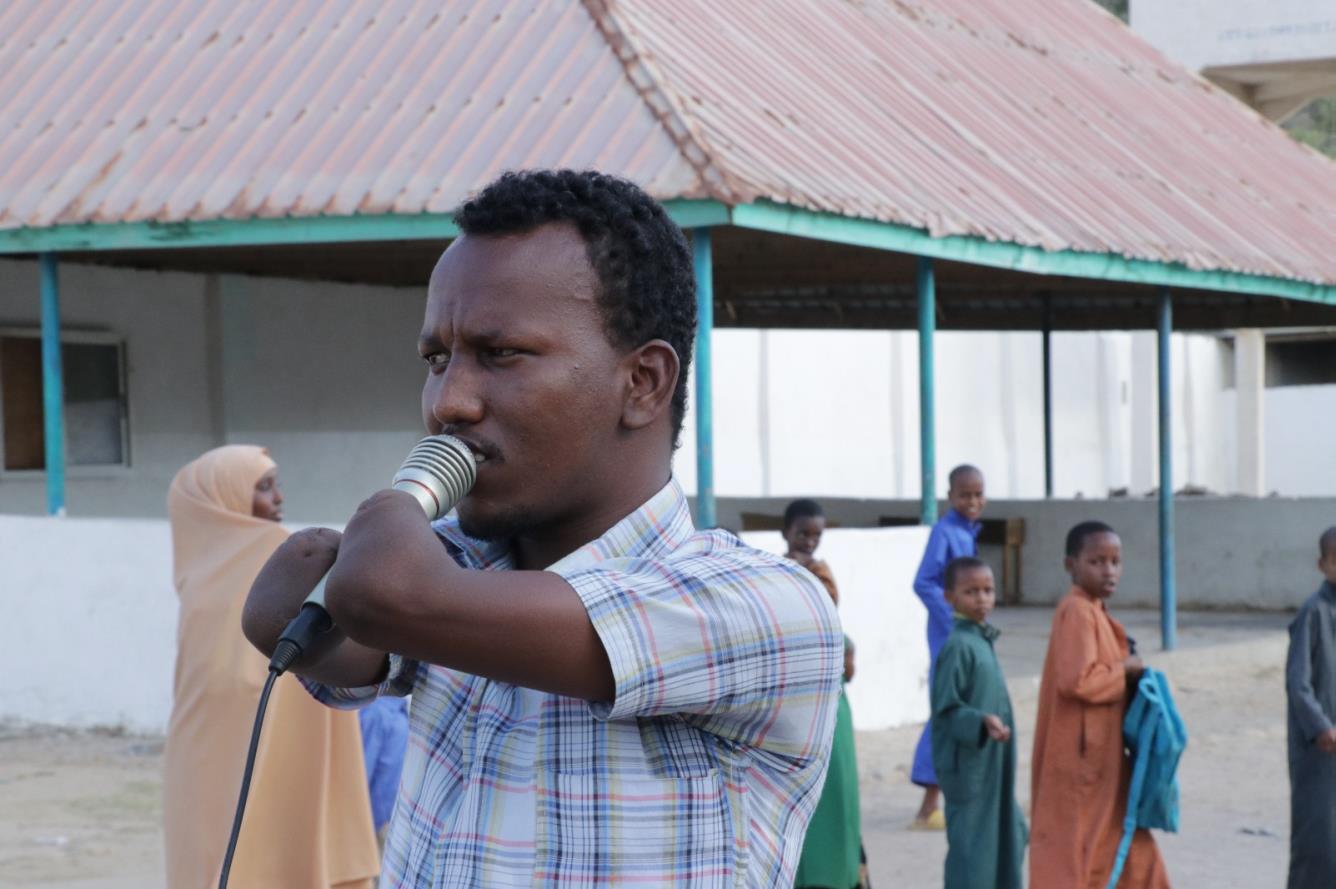 Abdirizak Warsame Ahmed is now known as an ambassador of forgiveness. Photo: Wali Hashi