Reklaam

Helena-Reet Ennet

Helena-Reet Ennet
4698 POSTS 0 COMMENTS

Foreign Affairs Committee in Washington: Security assistance to the Baltic States should remain at least on the current level

NordenBladet —

The delegation of the Foreign Affairs Committee of the Riigikogu (Parliament of Estonia) visited Washington to meet with members of the Senate and the House of Representatives of the United States. The meetings focused on strengthening the security of the Baltic States and the possibilities for preventing the deepening of the security crisis in our region.

In the opinion of Chairman of the Foreign Affairs Committee Marko Mihkelson, there could not have been a better time for the visit than now when both the Senate and the House of Representatives are discussing the defence budget for the next year. One of the key topics at the meetings was the Baltic Security Initiative budget package or the defence assistance to the Baltic States. Mihkelson emphasised that it was vital to continue the Initiative at least to the current extent or to increase the assistance, which would help to fill the key gaps in our defence planning.

Mihkelson also spoke of the latest developments on the border of Ukraine. “At the moment, it is very important to demonstrate the unity of the NATO allies. We are standing behind Ukraine and we are ready to help the Ukrainians with real defence capability,” Mihkelson said. “Due to the escalation of Russia’s possible military activities against Ukraine, the situation is undeniably critical. Attack against Ukraine is an attack against us all, against the democratic countries,” he added.

Member of the Foreign Affairs Committee Indrek Saar underlined that the visit proved that the worrying security developments in our region caused concern also to Estonia’s most important ally the United States. “The meetings confirmed that our concerns are shared and that the Americans understand the importance of defence assistance for Estonia and the other Baltic States,” he said. Saar added that the discussions at the meetings had also focused on how to commemorate the 100th anniversary of the establishment of diplomatic relations between the United States and the Baltic States next year.

The delegation of the Foreign Affairs Committee included Chairman of the Committee Marko Mihkelson and members of the Committee Indrek Saar, Maria Jufereva-Skuratovski and Raivo Tamm.

Photos of the meetings

Source: Parliament of Estonia

Prime Minister of Sweden to visit Helsinki

NordenBladet — The Prime Minister of Sweden, Magdalena Andersson, will visit Finland on Wednesday, 8 December, at the invitation of Prime Minister Sanna Marin. During her visit, Prime Minister Andersson will also meet with President of the Republic Sauli Niinistö.Prime Minister Marin and Prime Minister Andersson will discuss bilateral relations between the two countries and topical EU issues.

Source: Valtioneuvosto.fi

Minister Harakka at the IMO Assembly: negotiations to reduce greenhouse gas emissions must be intensified and digitalisation utilised in maritime transport

NordenBladet — Minister of Transport and Communications Timo Harakka will deliver Finland’s general statement at the IMO General Assembly on 6 December 2021. Alongside decisions relating to the activities of the organisation, the remote meeting will discuss environmental and maritime safety issues.The topics of the video speech of Minister Harakka will include maritime automation and reduction of greenhouse gas emissions from maritime transport. Finland has proposed new working arrangements in the IMO. The aim is a more structural approach in the negotiations on reducing greenhouse gas emissions and that smaller countries would also have equal opportunities to participate.“It is clear that emissions from shipping must be significantly reduced already during this decade. We in the IMO must find concrete means to achieve zero greenhouse gas emissions from international shipping by 2050,” Minister Timo Harakka says.“Digitalisation and automation in the maritime transport sector have a great deal of potential, as they improve the efficiency, safety and climate friendliness of transport. We need common international rules so that new technologies can be adopted safely,” Harakka says.It is important that the improvement of automation is included in the IMO work programme. It provides a legal and safe means to automate international shipping.The Assembly, organised every two years, is the IMO’s highest decision-making body. It approves the organisation’s work programme and budget for the coming years, and elects the Council. In addition to participating in the Assembly, Finland has contributed to the preparation of the issues to be discussed at the meeting by taking part in the work of IMO committees, subcommittees and working groups.The Assembly will be held via remote connections on 6-15 December 2021. The Finnish delegation consists of representatives from the Ministry of Transport and Communications, Transport and Communications Agency, Embassy of Finland in London, Finnish Border Guard, and the Regional Government of Åland. What’s next?The discussion on measures to reduce emissions will continue at the meeting of IMO’s Marine Environment Protection Committee in June 2022. A decision on the details of how to put the instrument for automation in use will be made at the Maritime Safety Committee in April 2022.

Source: Valtioneuvosto.fi

Ministers to discuss minimum wages, pay transparency and the COVID-19 pandemic in Brussels

NordenBladet — EU ministers responsible for employment and social affairs will discuss the directive on adequate minimum wages as a way of combating in-work poverty. Other items on their agenda include pay transparency and gender equality in the labour market.The Employment, Social Policy, Health and Consumer Affairs Council will meet in Brussels on Monday 6 December 2021. Minister of Employment Tuula Haatainen will represent Finland at the meeting. EU ministers responsible for employment and social affairs will aim to adopt the Council position on a directive on adequate minimum wages in the EU. The purpose of the directive is not to set common minimum wages for all EU Member States, but rather to define measures for promoting adequate minimum wages in the EU. The proposed directive does not require imposing statutory minimum wages in countries where minimum wage protection is provided by collective agreements. Once the Council reaches an agreement on a general approach on the matter, it will start negotiations with the European Parliament.“It is important for Finland to combat in-work poverty. At the same time, however, the EU minimum wage directive must respect the right of social partners to negotiate and enter into collective agreements,” says Minister of Employment Haatainen.Ministers to discuss gender equality in working lifeThe Council will hold two policy debates, the first focusing on the European Semester, and the second on promoting gender equality in Europe, which is a key priority for Finland in terms of EU activities.In addition to the minimum wages directive, ministers will also aim to adopt the Council position on a directive on binding pay transparency measures. The directive aims to promote equal pay for men and women by means of pay transparency measures and implementation mechanisms. Finland supports the objectives of the proposed directive.The Council will approve conclusions on the impact of artificial intelligence on gender equality in the labour market and on sustainable work over the life course. The Council will also receive a progress report on the directive on equal treatment.Health ministers to discuss the COVID-19 pandemicThe meeting of health ministers of the EPSCO Council will be held on Tuesday 7 December 2021 in Brussels. State Secretary Eila Mäkipää will represent Finland at the meeting.Ministers will exchange views on the COVID-19 pandemic and approve conclusions on the European Health Union. Matters to be discussed include sufficient and timely availability of essential medical countermeasures, preventing the spread of the Omicron variant, vaccination of 12-year-olds, and EU joint procurement contracts for COVID-19 medicines.“It is important to take joint action within the EU to prevent the re-escalation of the COVID-19 epidemic and, in particular, to prevent the spread of the more infectious virus variant,” says State Secretary Mäkipää.

Source: Valtioneuvosto.fi

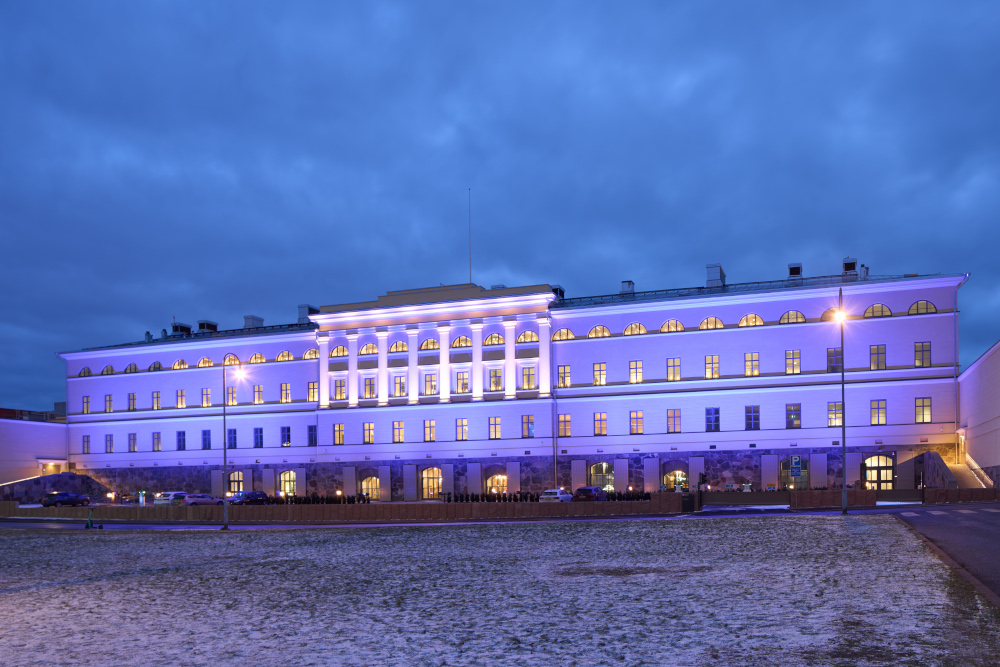
The seaside façade of Merikasarmi lit up in blue and white on Finland’s Independence Day

NordenBladet — The Government will organise a festive illumination at Merikasarmi on Finland’s 104th Independence Day. The refurbished and modernised Merikasarmi premises were taken back into use in September.The newly renovated historic premises now bring together all 800 Foreign Ministry employees in Helsinki under the same roof. The protected buildings were refurbished with due respect for their former look, while taking into account the requirements of the modern activity-based working environment of the government.The seaside façade of Merikasarmi is lit up on national and international holidays and theme days. “We want to wish everyone a good Independence Day by illuminating our beautiful, historic building,” says Permanent State Secretary Matti Anttonen.The oldest part of Merikasarmi was completed in 1820. Architect C. L. Engel designed it to serve as a barracks building for Russian soldiers. The newer parts, designed by architect E. Kråkström, were built in the 1980s. The Ministry for Foreign Affairs moved to the premises in the late 1980s. Merikasarmi is owned by the State of Finland, represented by Senate Properties. The Prime Minister’s Office rents and manages the buildings, but the Ministry for Foreign Affairs is the main user of the premises.

Source: Valtioneuvosto.fi

Nina Nordström and Päivi Kairamo to promote Council of Europe work against corruption and terrorism

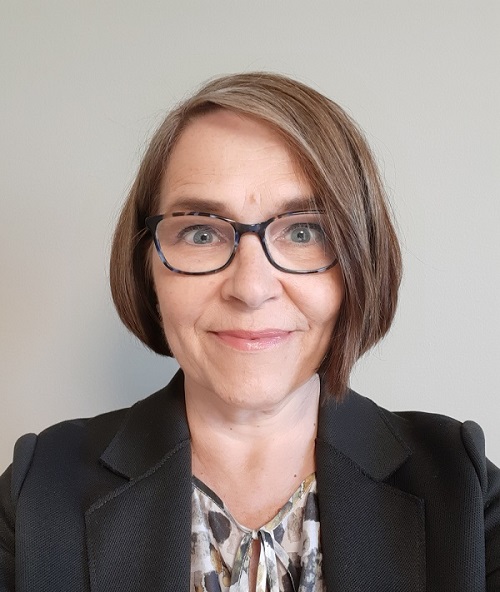
NordenBladet — New Finnish chairs were appointed to two committees of the Council of Europe in the same week of November. Ambassador Nina Nordström, Finland’s Permanent Representative to the Council of Europe, was elected President of the Statutory Committee of the Council of Europe anti-corruption body, GRECO. Ambassador Päivi Kairamo will again chair the Council of Europe Committee on Counter-Terrorism (CDT) in 2022.Anti-corruption work strengthens the rule of lawThe Group of States against Corruption (GRECO) is an organ of the Council of Europe that upholds the rule of law. It monitors compliance with the organisation’s Criminal and Civil Law Conventions on Corruption through country inspections of member States, submitting recommendations to address observed shortcomings in their anti-corruption efforts. Finland has been subject to country inspections on five occasions, most recently in 2017.Nina Nordström Ambassador Nina Nordström Kuva: Kimmo Räisänen The role of the Statutory Committee, comprising representatives of GRECO member States, includes approving the programme and financial framework of GRECO and publicly reminding member States should they fail to implement recommendations made by GRECO.“The Council of Europe strengthens the European rule of law. Preventing corruption is an essential part of this,” explains newly elected Committee President, Ambassador Nordström.PÄivi Kairamo Ambassador Päivi KairamoCombating terrorism with respect for human rightsAmbassador for Counterterrorism Cooperation Päivi Kairamo has been elected Chair of the Council of Europe CDCT Committee on Counter-Terrorism for 2022.The CDCT is responsible for coordinating counterterrorism work at the Council of Europe. The Committee negotiates and prepares legal instruments on counterterrorism, together with recommendations and guidelines for preventing and combating terrorism.“The CDCT plays an important role in setting international counterterrorism standards, while also respecting human rights and the rule of law,” Ambassador Kairamo explains.The main legal instruments for counterterrorism work at the Council of Europe are the Convention on the Prevention of Terrorism and its Additional Protocol, which requires the criminalisation of such conduct as travelling abroad for the purpose of terrorism and any funding, organising or other facilitating of such travel. The Council of EuropeThe Council of Europe is an intergovernmental organisation that focuses on promoting human rights, democracy and the rule of law.Founded in 1949, the organisation has 47 member States – for example making it more extensive than the European Union.The basic function of the Council of Europe is to promote human rights, democracy and the rule of law. The most important instruments in this work are binding agreements and supervision of their enforcement. 
Source: Valtioneuvosto.fi

Finland elected among leaders of a democracy organisation

NordenBladet — Finland has been elected to serve as Vice Chair of the International Institute for Democracy and Electoral Assistance (International IDEA) for 2022. International IDEA is a leading intergovernmental democracy organisation, which produces background information and gives expert advice in approximately 50 countries, for example in questions related to electoral and constitution building processes. The organisation recently published its Global State of Democracy 2021 report. International IDEA is closely involved in the preparations for the upcoming Summit for Democracy, which will be hosted by President Joe Biden. Next year, the organisation will be chaired by Canada, with Cabo Verde and Finland as Vice Chairs.Finland is one of the founding members of International IDEA, which was established in 1995. Hussein al-Taee, Member of Parliament, was elected to the organisation’s Board of Advisers for 2022–2024. Martti Ahtisaari, Harri Holkeri, Sirpa Pietikäinen and Maria Lohela have previously served on IDEA’s Board of Advisers.  

Source: Valtioneuvosto.fi

Finland opens embassies in Dakar and Doha

NordenBladet — Today, the President of the Republic Sauli Niinistö approved an amendment to the Decree of the President of the Republic on the Foreign Service. The amendment concerning the locations of Finland’s diplomatic missions and the provision of consular services in the Diplomatic Service will enter into force on 10 December 2021. With the amendment, embassies of Finland will be established in Dakar, Senegal, and in Doha, Qatar, as of 10 December 2021.Both embassies will start their operations on a small scale and in temporary office premises. Consular services for Dakar and Doha will be provided in the Embassy of Finland in Abuja and in the Embassy of Finland in Abu Dhabi respectively until the premises of the new missions are ready to provide those services. However, as of 10 December, both embassies will provide services for people in distress as well as other urgent consular services requiring immediate action on site.The amendment to the Decree will also apply to the Embassy of Finland in Tehran, which in future will have the authority to provide residence permit services to Afghans residing legally in Iran. Before, these services have only been provided by the Embassy of Finland in New Delhi.
 

Source: Valtioneuvosto.fi

Restrictions applicable in community transmission areas to be introduced in Åland

NordenBladet — The Government has amended the decree restricting the activities of food and beverage service businesses due to the COVID-19 epidemic. Restrictions on food and beverage service businesses that are necessary to prevent the spread of the epidemic will be introduced in Åland.The amendment to the decree will enter into force on Sunday 5 December at 00.00.Restrictions on food and beverage service businesses in the regions of Southwest Finland, Satakunta, Päijät-Häme, Ostrobothnia, South Ostrobothnia, Central Ostrobothnia, North Ostrobothnia, Pirkanmaa, Uusimaa, Kymenlaakso, Kanta-Häme, South Karelia and Central Finland and in the Hospital District of Länsi-Pohja and the City of Rovaniemi from 4 December at 00.00 and in Åland from 5 December at 00.00.All listed regions are community transmission areas.Serving of alcoholic beverages in all food and beverage service businesses will end at 17.00. Such businesses may keep their premises open to customers from 05.00 to 18.00. Alcoholic beverages sold before the serving of alcohol ends may be consumed within one hour after the licensing hours have ended. Food and beverage service businesses will be allowed to serve alcoholic beverages after 17.00 only by introducing the COVID-19 passport.Businesses that do not serve alcoholic beverages may be open between 5.00 and 1.00. For example, fast food restaurants and cafes may remain open, just as they are now. Bars and restaurants may also be open between 5.00 and 1.00 if they do not serve alcoholic beverages.Food and beverage service businesses that primarily serve alcoholic beverages may have only half the normal number of customer seats in use in their indoor and outdoor premises. Other food and beverage service businesses are restricted to 75 per cent of their normal number of customer seats indoors. However, the restrictions on the number of customer seats do not apply in Åland.All customers must have their own seats at a table or similar in indoor premises.Businesses who require all customers to present a COVID-19 passport are exempt from the above-mentioned restrictions.Restrictions on food and beverage service businesses elsewhere in Finland from 5 December at 00.00There are no separate restrictions on the number of customers or on licensing and opening hours.The obligation to observe the general hygiene guidelines and to keep a safe distance applies in all regions.Exceptions to restrictions remain unchangedThe restrictions laid down in the decree do not apply to the activities of staff restaurants or to takeaway sales of food to customers. The restrictions on opening hours do not apply to food and beverage service businesses on vessels and aircraft that operate between Finland and other countries or abroad or to food and beverage service businesses that operate at distribution stations for liquid fuels.

Source: Valtioneuvosto.fi

All travellers arriving in Finland required having a COVID certificate or a test

NordenBladet — All travellers arriving in Finland will be required to show a COVID certificate, or if they do not have such a certificate, they will have to undergo a COVID-19 test. The Government has issued a decree that repeals the Government Decree on exceptions to the obligation to present the EU Digital COVID Certificate or undergo a COVID-19 test.The decision to repeal the Government Decree is based on a statement issued by the Finnish Institute for Health and Welfare on the new Omicron variant. The institute maintains that currently no traveller arriving from any country or region can be exempted from the health security measures required upon arrival under section 16c, subsection 2, of the Communicable Diseases Act.The Government repeals the decree to protect the health of the population against the threat posed by the Omicron variant by imposing more efficient health security measures in cross-border traffic.The decree will enter into force on 4 December 2021. 

Source: Valtioneuvosto.fi