NordenBladet — Minister for Foreign Affairs Haavisto will meet Secretary for Relations with States of the Holy See Paul Gallagher in Helsinki on 12 November.The Secretary for Relations with States of the Holy See, Archbishop Gallagher, will visit Finland. In their meeting on 12 November, Haavisto and Gallagher will discuss foreign policy themes, focusing on topical questions related to the Middle East and the Horn of Africa as well as on mediation.“I consider it important that we engage in dialogue with the Holy See on such issues on the global agenda as climate change and migration. The Holy See is also an important actor in matters related to mediation, for example,” says Minister for Foreign Affairs Haavisto. Secretary for Relations with States Gallagher will also visit Parliament and meet members of the Foreign Affairs Committee.
The ACSA Supplementary Agreement between Estonian Defence Forces and the United States Department of Defence, represented by the Defence Forces Logistics Agency (DLA Energy), entered into force today.
“This is an important agreement for both parties, as it will speed up and make easier, among other things, our support as a host country for American soldiers in Estonia,” said Brigadier General Enno Mõts, Estonian Defence Force Chief of Staff.
It is a supplementary agreement to the Acquisition and Cross-Servicing Agreement (ACSA) signed in 2008, any reciprocal supply of any fuel, whether in peacetime or in wartime, international military operations, humanitarian missions, joint exercises and other agreements. The agreement is open-ended and is applicable both in Estonia and elsewhere in the world, which includes all the needs of military forces.
The United States, Great Britain, Germany and France are Estonia’s closest allies, which together with the Nordic countries have helped build the Estonian Defence Forces since the early 1990s. Cooperation in the United States includes many different categories such as training, military exercises, procurement, international operations and Baltic cooperation projects.
The Chairmen of the Foreign Affairs Committees of the Riigikogu of the Republic of Estonia, Saeima of the Republic of Latvia, Seimas of the Republic of Lithuania, and Sejm of the Republic of Poland held a video meeting today afternoon to discuss the situation on the Polish-Belarusian border, and made a joint statement.
“We, Chairmen of the Foreign Affairs Committees of the Riigikogu of the Republic of Estonia, Saeima of the Republic of Latvia, Seimas of the Republic of Lithuania, and Sejm of the Republic of Poland unequivocally condemn and oppose the triggering and escalation of a crisis on the Polish, Lithuanian and Latvian borders with Belarus, by Alexander Lukashenka’s regime. These borders are also the external borders of the European Union and NATO. This is an unprecedented phenomenon, organized top-down by Belarusian authorities to destabilise the situation in our countries and the European Union as a whole.
It is unacceptable to use people, citizens of third countries, as human shields, for cynical political games aimed at diverting the attention of the Belarusian society from illegally exercised power. Continuation of these activities will inevitably lead to a serious humanitarian crisis for which the authorities in Minsk will be held responsible. It is disturbing that Belarusian authorities are finding support for their actions in the disinformation campaign conducted by the Russian Federation.
We call on authorities of the European Union and all Member States to take immediate action to introduce new, serious, and broader sanctions against people and institutions contributing to this crisis.
We support the decision of the Polish authorities to temporarily close the Kuźnica Białostocka-Bruzgi border crossing to tackle illegal attempts to cross the border, with support from Belarusian services.
We call on all states and international institutions mandated to do so to continuously pressure Belarusian authorities to end the crisis as soon as possible.”
The statement has been signed by: Chairman of the Foreign Affairs Committee of the Riigikogu of the Republic of Estonia Marko Mihhelson Chairman of the Foreign Affairs Committee of the Saeima of the Republic of Latvia Rihards Kols Chairman of the Committee on Foreign Affairs of the Seimas of the Republic of Lithuania Žygimantas Pavilionis Chairman of the Foreign Affairs Committee of the Sejm of the Republic of Poland MarekKuchciński
At today’s plenary sitting, the Riigikogu concluded the second reading of the Bill that provides for the requirements for the technology and equipment used by toll service providers and sets out the rights and obligations of both service providers and users.
The Bill on Amendments to the Traffic Act (414 SE), initiated by the Government, will transpose into Estonian law the European Union directive that provides for making the payment of road fees within the European Union more convenient. At the same time, a regulation for cross-border information exchange for cases of failure to pay a road fee will be established. In Estonia, road toll is not collected through automated identification, but the directive needs to be transposed to the minimum mandatory extent, that is, in respect of the provisions concerning the right of European Electronic Toll Service (EETS) providers to register their activities in every EU Member State. Therefore, every Member State must provide, in accordance with the directive, for the requirements for the technology and equipment used, and set out the rights and obligations of both service providers and users.
Tarmo Kruusimäe (Isamaa) took the floor during the debate.
A Bill passed the first reading
The Bill on Amendments to the European Union Common Agricultural Policy Implementation Act (439 SE), initiated by the Government, will establish the basis for the implementation of the measure activity “Support for the development of new advisors” in the Estonian Rural Development Plan 2014–2020. At the same time, on the basis of the transitional regulation, several deadlines relating to the implementation of the measures of the Estonian Rural Development Plan will be postponed by two years.
A Bill was dropped from the proceedings
The Bill on Amendments to § 8¹ of the Political Parties Act (disclosure the lists of members of political parties) (416 SE), initiated by the Estonian Conservative People’s Party Faction, was intended to put an end to the disclosure of the names of people who are members of political parties. The explanatory memorandum to the Bill pointed out that the disclosure of the names was not reasonable or justified because membership of a political party may affect a person’s prospects in the labour market.
Mart Helme (Estonian Conservative People’s Party) took the floor during the debate.
The lead committee moved to reject the Bill at the first reading. 48 members of the Riigikogu voted in favour of the motion and 16 voted against. Thus, the motion was supported and the Bill was dropped from the legislative proceedings.
Due to the end of the working hours of the sitting, the Bill on Amendments to the Preschool Child Care Institutions Act (415 SE), initiated by the Social Democratic Party Faction and Member of the Riigikogu Raimond Kaljulaid, was postponed to tomorrow’s sitting. The aim of the Bill is to ensure a free nursery place to every child. According to the Bill, parents’ obligation to pay the nursery fee will be eliminated, and the relevant cost will remain to be borne by the state.
Before discussing the items on the agenda, members of the Riigikogu asked numerous questions about remote-participation sittings. Then the Riigikogu decided with 62 votes in favour and 23 against that plenary sittings would be held by remote attendance from 10 to 25 November. Members of the parliament will be able to attend plenary sittings both in the session hall and by electronic means.
At the beginning of the sitting, the new Minister of Culture Tiit Terik took the oath of office.
The Riigikogu approved its extensive agenda for this working week.
No deliberation of Bills or replies to interpellations have been scheduled for Monday’s sitting.
At Tuesday’s sitting, one Bill will be at the second reading: the Bill on Amendments to the Traffic Act (414 SE).
Three Bills will be at the first reading: the Bill on Amendments to § 8¹ of the Political Parties Act (disclosure the lists of members of political parties) (416 SE), the Bill on Amendments to the European Union Common Agricultural Policy Implementation Ac (439 SE) and the Bill on Amendments to the Preschool Child Care Institutions Act (415 SE).
At Wednesday’s sitting, two Bills will be at the third reading: the Bill on Amendments to the Commercial Code and the Accounting Act (digital solutions in company law) (394 SE) and the Bill on Amendments to the Law of Obligations Act and the Consumer Protection Act (transposition of the Digital Content Directive, the Sale of Goods Directive, and the Enforcement and Modernisation Directive) (404 SE).
Six Bills will be at the second reading: the Bill on the Approval of the Amendments to the Convention concerning International Carriage by Rail and to its Appendices (386 SE), the Bill on Amendments to the Building Code (395 SE), the Bill on Amendments to the Employment Contracts Act and the Taxation Act (403 SE), the Bill on Amendments to the Public Information Act (409 SE), the Bill on Amendments to the Covered Bonds Act and Other Acts (407 SE) and the he Bill on Amendments to the State Budget for 2021 Act (431 SE).
First reading – 14 Bills and draft Resolutions: the Draft Resolution of the Riigikogu “Approval of the Consolidated Report of 2019 of the State (432 OE), the Bill on Amendments to the State Export Guarantees Ac (423 SE), e Bill on Amendments to the Consumer Protection Ac (424 SE), the Draft Resolution of the Riigikogu “Use of the Defence Forces in the Fulfilment of the International Commitments of the Estonian State in the Composition of the United Kingdom’s Joint Expeditionary Force” (444 OE), the Draft Resolution of the Riigikogu “Use of the Defence Forces in the Fulfilment of the International Commitments of the Estonian State in the European Union Training Mission in Mozambique” (445 OE), the Draft Resolution of the Riigikogu “Extension of the Time Limit for the Use of the Defence Forces in the Fulfilment of the International Commitments of the Estonian State in the International Military Operation ‘Inherent Resolve’” (446 OE), the Draft Resolution of the Riigikogu “Extension of the Time Limit for the Use of the Defence Forces in the Fulfilment of the International Commitments of the Estonian State in the North Atlantic Treaty Organization Mission in Iraq” (447 OE), the Draft Resolution of the Riigikogu “Extension of the Time Limit for the Use of the Defence Forces in the Fulfilment of the International Commitments of the Estonian State in the European Union Military Mission EUNAVFOR Med/Irini” (448 OE), the Draft Resolution of the Riigikogu “Use of the Defence Forces in the Fulfilment of the International Commitments of the Estonian State in the Composition of the North Atlantic Treaty Organization Readiness Units” (449 OE), the Draft Resolution of the Riigikogu “Extension of the Time Limit for the Use of the Defence Forces in the Fulfilment of the International Commitments of the Estonian State in the European Union Training Mission and the UN Peacekeeping Mission in Mali” (450 OE), the Draft Resolution of the Riigikogu “Extension of the Time Limit for the Use of the Defence Forces in the Fulfilment of the International Commitments of the Estonian State in the Post-Conflict Peacekeeping Mission in Lebanon, Israel, Egypt and Syria” (451 OE), the Draft Resolution of the Riigikogu “Extension of the Time Limit for the Use of the Defence Forces in the Fulfilment of the International Commitments of the Estonian State in France’s Military Operation Task Force Takuba in Mali and Niger (former name “Use of the Defence Forces in the Fulfilment of the International Commitments of the Estonian State in France’s Military Operation Barkhane in Mali”) (452 OE), the Draft Resolution of the Riigikogu “Use of the Defence Forces in the Fulfilment of the International Commitments of the Estonian State in Another International Military Operation Led by the North Atlantic Treaty Organization or its Member State, the European Union or the UN upon the First Contribution thereto” (453 OE) and the Draft Resolution of the Riigikogu “Extension of the Time Limit for the Use of the Defence Forces in the Fulfilment of the International Commitments of the Estonian State in the UN Peacekeeping Mission in Lebanon” (454 OE).
The agenda also includes the overview of the use and preservation of state assets in 2020-2021 by Auditor General Janar Holm.
No deliberation of Bills has been scheduled for Thursday’s sitting.
NordenBladet — Minister for Foreign Affairs Haavisto will meet the Latvian Minister of Foreign Affairs Edgars Rinkēvičs in Helsinki on 9 November.The Ministers will discuss bilateral relations, the COVID-19 situation, regional questions and international issues, such as transatlantic relations and Afghanistan. Follow the live webcast of the press conference at 13:20:
NordenBladet — On Tuesday 9 November, Finland and six other EU Member States published a joint statement, expressing their support to the European Payment Initiative aimed at creating a European payment card and a digital wallet.The European Payments Initiative (EPI) is a project led by private market actors aimed delivering a pan-European payment solution. The solution would enable payments in traditional retail shops, online shops and from person to person.“A European solution would meet consumer needs: it would be fast, safe, efficient and compliant with European data security requirements,” says Minister of Finance Annika Saarikko.The objective of the European Payment Initiative is to introduce a European payment card and a digital wallet. It also aims to make the European payment market less dependent on international payment service providers.Payment service providers from seven countries are currently involved in the initiative, including the OP Financial Group from Finland.“The key to success is to involve as many countries, or more specifically the payment services sectors of as many countries as possible,” Minister Saarikko says.In addition to Finland, the joint statement was signed by Belgium, France, Germany, the Netherlands, Poland and Spain.
NordenBladet — According to estimates, 55,000 more people will be employed this year than before and employment will grow by another 22,000 people in 2022. The employment rate is expected to rise to 73.8% in 2023.Already this year, the employment rate will increase beyond the level that existed before the coronavirus epidemic. The rapid recovery of the economy and employment surprised the forecasters in the summer. The Ministry of Economic Affairs and Employment has also revised its forecast upward.The information is based on the labour market forecast extending to 2023, which was published by the Ministry of Economic Affairs and Employment on 9 November 2021. The forecast is based on the assumption that the restrictive measures are largely over and that the economic recovery will continue. However, the risk that restrictive measures will be reintroduced creates some uncertainty.Due to the robust growth in the economy this and next year, the employment rate is expected to rise to 73.8% in 2023. The forecast uses a series based on the new calculation method introduced in the Labour Force Survey at the beginning of the year, which lowers the employment rate by about one percentage point. In recent years, growth in employment has largely been driven by increased part-time work. This growth in part-time work is expected to level off, which will slow employment growth slightly.The upbeat mood has encouraged people to enter the labour market and the proportion of the working-age population currently in labour force is at its highest since the financial crisis of 2008. According to the forecast, labour market participation rate will rise to 68% in 2023, which is significantly higher than the 65.8% recorded before the start of the pandemic in 2019. In addition to the positive economic trend, labour market participation rate is boosted by a strong growth in the number of older people in the labour force, a decline in the population and increased part-time work.The number of registered unemployed jobseekers at TE Offices (including those laid off) will shrink rapidly in the coming years and will fall below the pre-coronavirus level in 2023. This trend is particularly positive in youth unemployment (those under 25 years of age). The number of laid-off workers is expected to fall to the normal level by next spring. The number of long-term unemployed has reached a top high and they make up more than 40% of all registered unemployed jobseekers. However, the number of long-term unemployed started to decrease faster than previously estimated in the summer and the steady downward trend is expected to continue.“The number of unemployed jobseekers will not return to the pre-coronavirus crisis level as quickly as the employment rate. Meanwhile, the number of long-term unemployed is now exceptionally high and expected to recover slowly. While a great deal of part-time employment relationships have been created, many of those who have lost their full-time permanent jobs are still without work. However, the labour market forecast shows that during 2023 we will be very close to the Government’s employment target of 75% based on the old calculation method,” says Elina Pylkkänen, Under-Secretary of State at the Ministry of Economic Affairs and Employment.“Youth unemployment seems to fall rapidly, which is a very positive sign. This will enable long working careers that in turn will alleviate our sustainability gap. Above all, this is the cornerstone of optimism about the future of young people. The availability of labour, on the other hand, has again become a key obstacle to employment growth. I expect that the Nordic labour market service model, which will enter into force in May 2022, will improve the allocation of labour to open vacancies,” Pylkkänen adds.The short-term labour market forecast of the Ministry of Economic Affairs and Employment is based on a statistical time-series analysis that makes use of economic indicators, labour market statistics and policy information, as well as the Ministry of Finance’s GDP forecast and the demographic forecasts of Statistics Finland. The forecast is published twice a year.Key forecast results:
NordenBladet — Minister for Foreign Affairs Pekka Haavisto will attend the EU Arctic Forum in Brussels on 10 November.“As an Arctic Member State of the EU, Finland has made determined efforts to promote the weight of the region in the EU, because the Arctic region is important not only for Finland but also for the whole of Europe and for the entire world,” says Minister for Foreign Affairs Haavisto.The fourth EU Arctic Forum will bring together key Arctic players and stakeholders to assess recent developments in the region and to discuss future challenges. The EU’s new Arctic Strategy, which was published recently, strengthens commitment to creating a greener, more stable and more prosperous Arctic region. The Arctic Indigenous Peoples Dialogue will also be continued at the Forum. The event will be opened by High Representative of the European Union for Foreign Affairs and Security Policy Josep Borrell and EU Commissioner Virginijus Sinkevičius. Foreign Minister Haavisto will participate in a high-level panel session on international cooperation in the Arctic. The panellists aim to discuss ways to maintain the security, stability, wellbeing and vitality of the Arctic region and to ensure that it remains an area of low tensions and peaceful multilateral cooperation. In addition to attending the Arctic Forum, Foreign Minister Haavisto will meet European Commissioners Jutta Urpilainen, Janez Lenarčič, Ylva Johansson and Olivér Várhelyi as well as Stefano Sannino, Secretary-General of the European External Action Service.
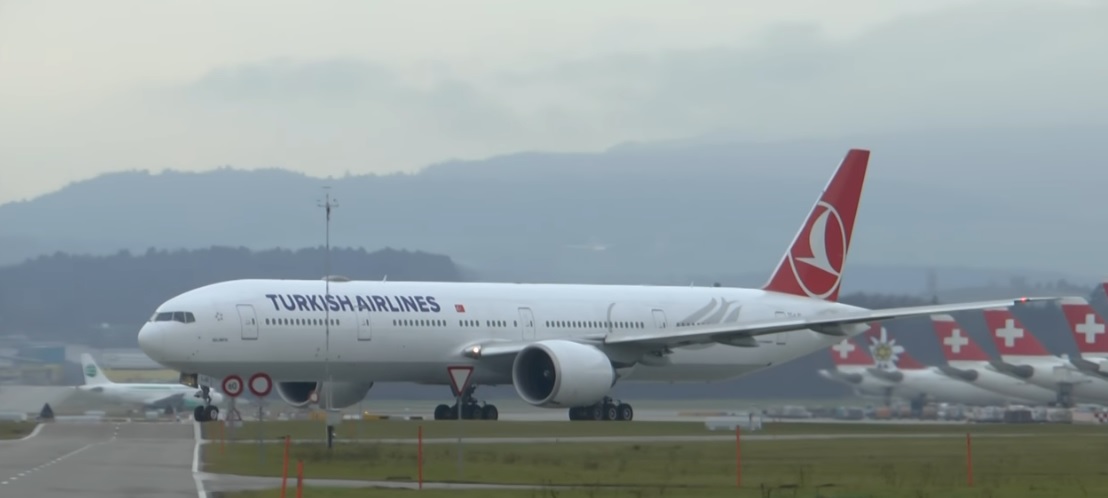
NordenBladet – The European Union is considering a ban on Turkish Airlines and FlyDubai within European Airports. Both aviation companies fly migrants to Belarus. “The EU is investigating how to sanction, including blacklisting, aviation companies from third countries that are active in human trafficking,” said the President of the European Commission, Ursula von der Leyen, on Monday.
“Two High Representatives from the EU, Josep Borrell and Margaritis Schinas, will travel to countries such as Armenia, Egypt, Iraq, Jordan, Lebanon, Turkey and the United Arab Emirates, to make them stop flying people to Minsk,” added von der Leyen.
Majority of the “human trafficking” is arranged via the airline company Belavia. This airline is already banned in the EU.
Data from Minsk Airport show that Turkish aviation company Turkish Airlines still continues transporting migrants from Istanbul to Minsk. Turkish Airlines is very popular among EU tourists, conveyed EUobserver.
Migrants are also transported with flights via UAE low-priced company FlyDubai and Syrian company Cham Wings.
Von der Leyen announced the warning after people from Iraq attempted breaking through the barbed wire on Belarusian-Polish border.