Reklaam

Helena-Reet Ennet

Helena-Reet Ennet
4698 POSTS 0 COMMENTS

Finland supports humanitarian work done by UN Relief and Works Agency for Palestine Refugees, UNRWA

NordenBladet — Finland has allocated one million euros to support the flash appeal for Gaza, launched by United Nations Relief and Works Agency for Palestine Refugees, UNRWA. The funding will be used to provide, for example, food, shelters and health services to Palestinians in Gaza.The conflict between Israel and Gaza, which escalated in May, has deteriorated the situation of Palestinian refugees in Gaza and the West Bank. A significant number of buildings were destroyed, among them for example health centres, schools and UN buildings. The only coronavirus test laboratory was also damaged, and vaccinations have been therefore suspended. The coronavirus situation was very poor in Gaza even before the attacks.The humanitarian situation of Palestinian refugees has been challenging for a long time in all of the geographical regions where UNRWA is operating (Palestinian territories in Gaza and the West Bank, Jordan, Lebanon and Syria). Due to the COVID-19 pandemic, some regions where UNRWA is active have had to limit the provision of health services to a significant extent.  During the attacks in Gaza, approximately 800,000 people lived without water, and electricity was available only occasionally, which makes work difficult in hospitals, for example. UNRWA schools have provided shelter for almost 50,000 people in Gaza. The ceasefire, which was declared on Friday 21 May 2021, is expected to improve the situation to some extent, but there is still need for food, shelters, psychosocial services and other emergency relief.“UNRWA is doing valuable work in challenging humanitarian environments and it produces high-quality services. Recent events in Gaza have increased the need for international support to enable UNRWA continue its efforts to help Palestinian refugees,” says Minister for Development Cooperation and Foreign Trade Ville Skinnari.Finland is UNRWA’s long-term supporter. Finland’s core funding to UNRWA is EUR 5 million a year. In 2020, due to UNRWA’s critical financial situation and the additional challenges brought about by the COVID-19 pandemic, Finland granted EUR 4 million in additional contributions to UNRWA’s programme budget. In 2020, Finland was UNRWA’s 18th biggest donor country.

Source: Valtioneuvosto.fi
Report on Development Policy across Parliamentary Terms – We can build a better world together

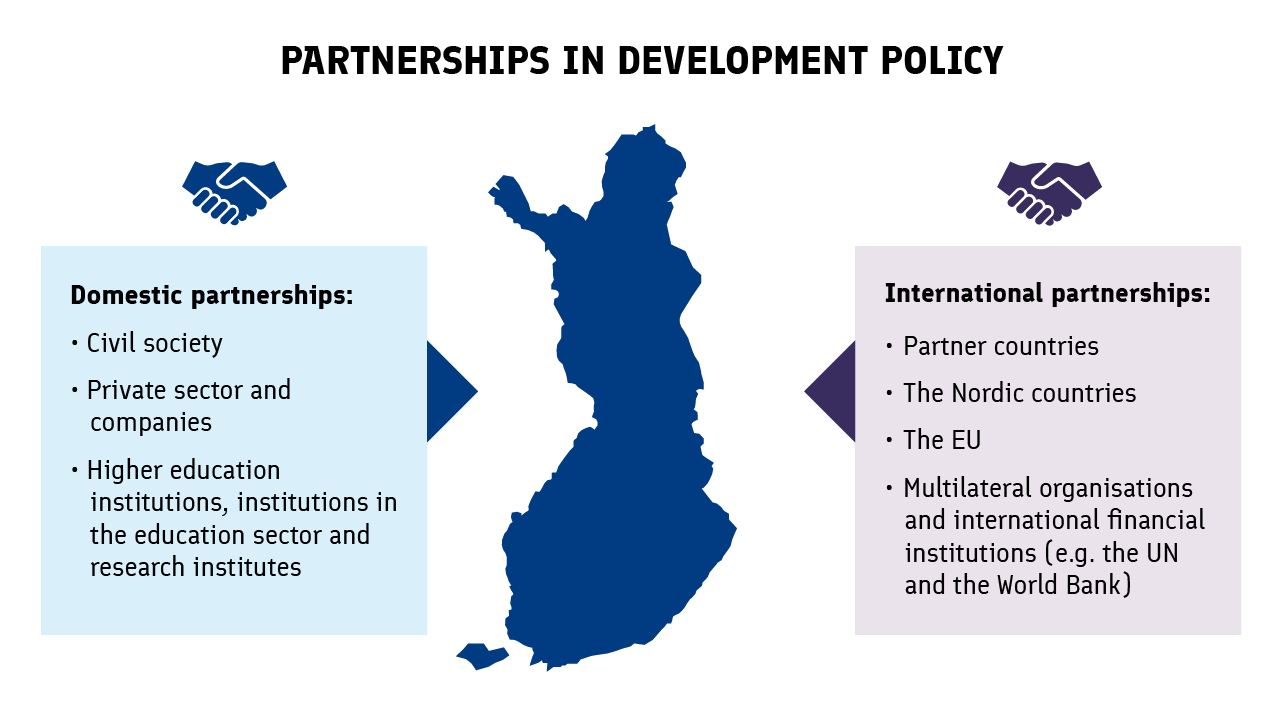
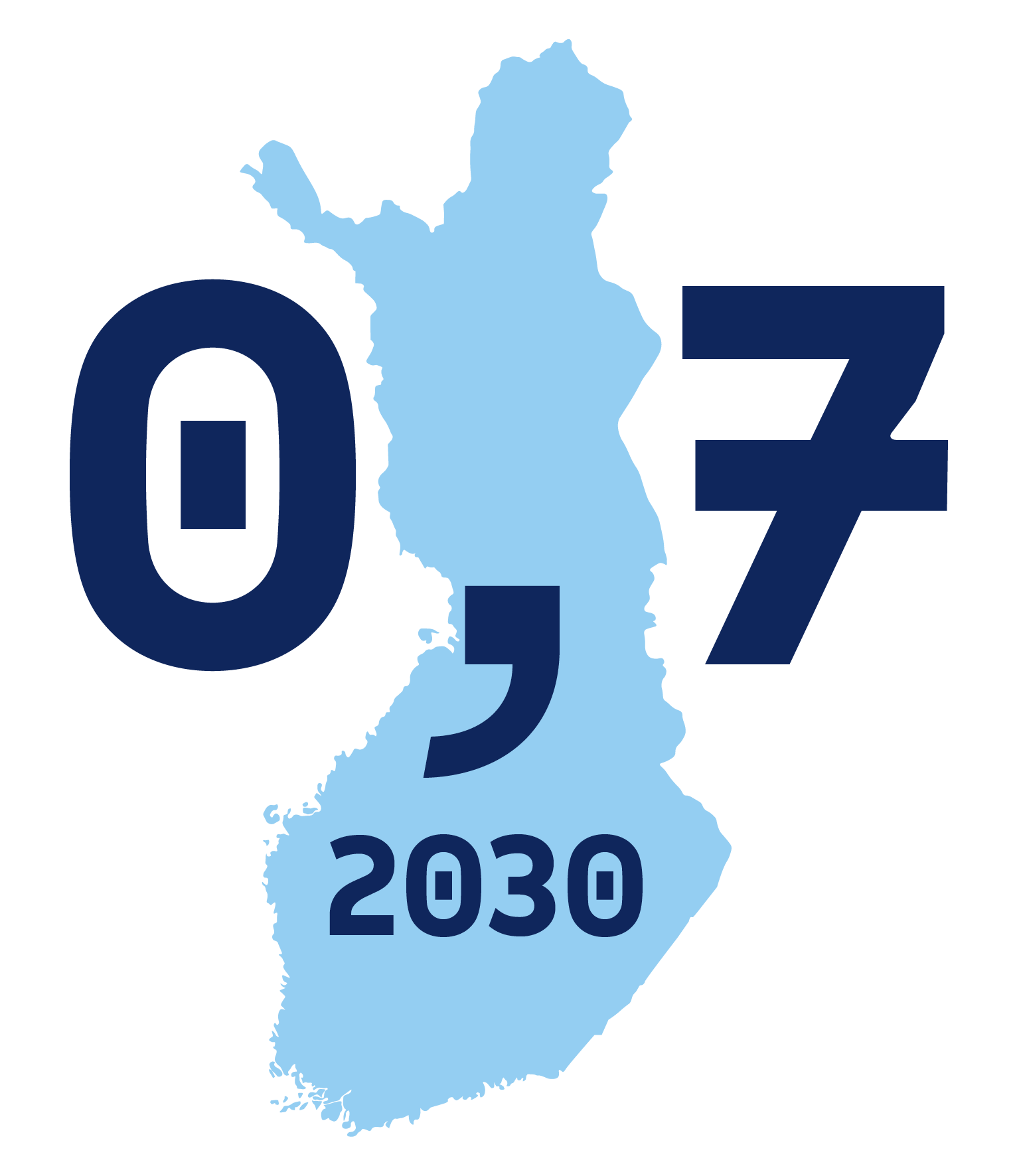
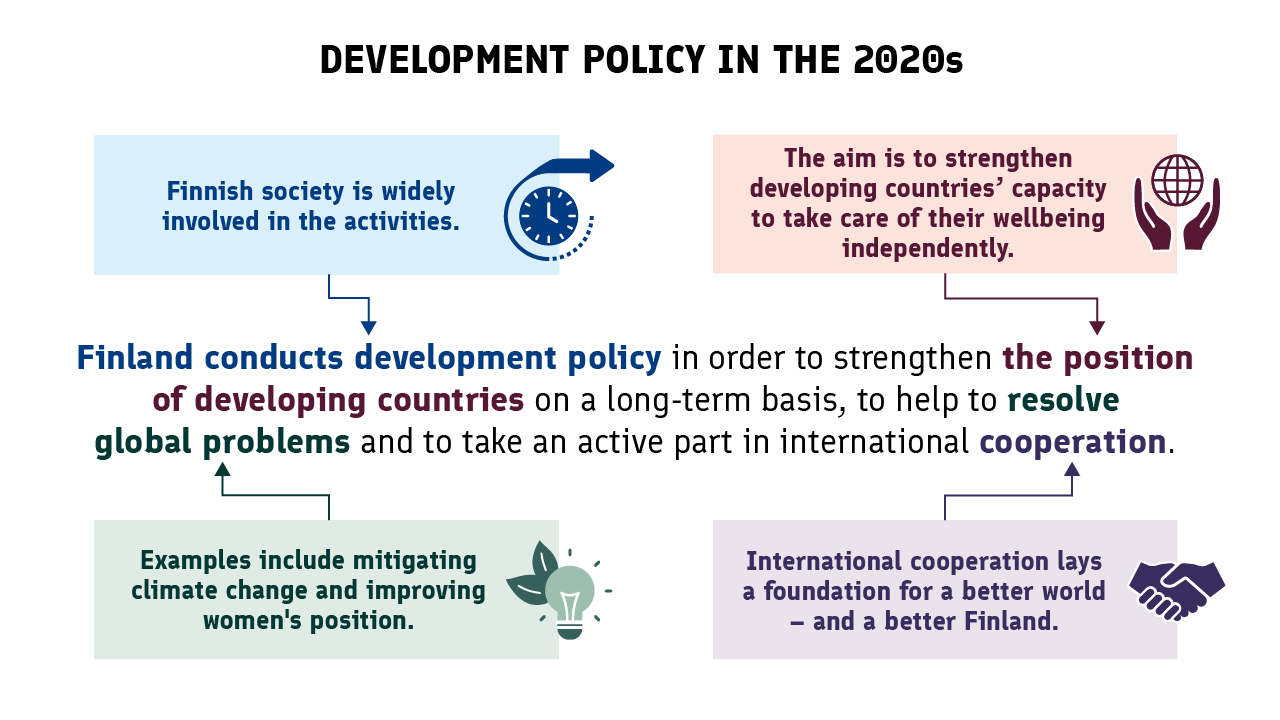
NordenBladet — On 27 May 2021, the Government adopted the Report on Development Policy across Parliamentary Terms. The aim was to form a shared overall view on development policy, widely supported by Finnish society. The Report reiterates that development policy is an integral part of Finland’s foreign and security policy, which aims to enhance security and wellbeing through international cooperation.A parliamentary monitoring group representing all parliamentary parties took part in the preparation of this report. The Development Policy Committee (DPC) and representatives of various sectors of society were consulted during the preparatory phase and they also had the opportunity to comment on the report.Report on Development Policy across Parliamentary Terms in the Institutional Repository for the Government (in Finnish)Link to another website (in Finnish)Press Release: Report on Development Policy promotes Finland’s long-term and coherent approach to development cooperation Finland strengthens developing countries’ capacity to take care of their own wellbeingFinland’s development policy promotes the worldwide goal aiming at poverty reduction and the realisation of fundamental rights, the rules-based multilateral system and the Sustainable Development Goals (SDGs) adopted in the UN.The objective of Finland’s development cooperation is to strengthen developing countries’ own societies, including the basis of their economies. A key aim is to ensure that all countries will, over time, be able to finance their own development and wellbeing with domestic resources, particularly through sufficient taxation capacity.The work is based on transfer of ownership to partner countries and on their national plans. However, those have to be in line with both Finnish and internationally agreed development goals and values.Finland has also received resources and assistance from abroad to support its development, and Finns have left the country to seek protection or a better income abroad.Finland’s development cooperation priorities are based on its strengthsBy means of a long-term and coherent approach to development cooperation, Finland has achieved good results. It is in Finland’s interest to hold on to this positive trend and to further strengthen it.  Finland is striving for such systemic changes that not only ensure the effectiveness but also the long-term impacts of development cooperation. Therefore, Finland focuses particularly on the strengths that provide Finland with good opportunities to support sustainable development. The main goals of Finland’s development cooperation arepromoting the rights of women and girlseducation and trainingsustainable economy and decent workpeaceful, democratic societiesclimate change, biodiversity and sustainable management and use of natural resources.Additionally, Finland gives humanitarian assistance to help people suffering from acute crises.The cross-cutting objectives that Finland promotes in its development policy are gender equality and non-discrimination, climate-resilient and low-emission development as well as environmental protection, with an emphasis on safeguarding biodiversity. We can build a better world togetherFinland’s development policy and development cooperation are based on the active participation of the public sector, civil society, the private sector as well as research and educational institutions and on strong partnerships between them. It is important for Finnish society to be broadly involved in development policy: sustainable development is the sum total of the work carried out by different actors and of multiple forms of cooperation. Cooperation leads to positive impacts on people’s wellbeing and the development of societies in an efficient and sustainable manner.Finland advances its development policy goals both when acting directly with bilateral partner countries and when providing support for developing countries together with multilateral international institutions and international civil society organisations. The instruments employed are influencing, Finnish expertise and development finance – and often a combination of these.Finland increases its official development assistance graduallyIn the UN, Finland has committed to directing 0.7 per cent of GNI to development cooperation and 0.2 per cent of GNI to the least developed countries. Finland’s 2019 Government Programme requires the preparation of a scheduled roadmap to attain this UN goal. Finland is increasing its funding for development cooperation gradually and systematically during several parliamentary terms. The target year set for the attainment of the 0.7% level is 2030. The aim is to attain the 0.2 per cent target in the least developed countries as soon as possible.

Source: Valtioneuvosto.fi

Guidelines for the prevention of coronavirus infections to be followed in children’s and young people’s camping activities

NordenBladet — The Ministry of Education and Culture and the Finnish Institute for Health and Welfare have updated the guidelines on camping activities for children and young people.

Source: Valtioneuvosto.fi

Research group recommends mine tax to be based on profit

NordenBladet — According to a study, levying taxes on profit from mining operations would be the most effective way to implement a separate mine tax. The goal of the research project between the VATT Institute for Economic Research, the Finnish Environment Institute and KPMG was to identify a tax instrument that would guarantee reasonable income for society from the extraction of non-renewable natural resources. In the project, a mine tax was studied from the perspectives of economics, tax law and environmental regulations.Compensation for the extraction of natural resources by levying a tax on profitThe research group compared the advantages and disadvantages of different tax instruments using research literature on economics and a simulation model. Based on the comparison, taxes on mining companies’ economic rent and profit would enable the effective collection of tax revenue, without distorting the companies’ financial activities.“Taxes on economic rent and profit have a minor impact on companies’ investments, mineral extraction and operational continuity. Royalties would increasingly make mining operations unprofitable. Levying a tax on profit is a financially more viable option,” says Seppo Kari, chief researcher at VATT.Revenue from taxes on profit is difficult to estimate. The problem can be reduced by combining taxes on profit with royalties based on the value of minerals, which would produce more stable tax revenue, starting from the launch of mining operations.The researchers do not support the idea of providing municipalities with the right to levy taxes. As a result of the tax revenue-based equalisation of central government transfers to local government, allocating tax revenue to mining municipalities would only benefit them marginally.Other policy instruments for mining operationsThe study’s starting point is that the purpose of a mine tax is to provide society with compensation for the extraction of non-renewable natural resources. Instead of a mine tax, the minimisation of adverse environmental impact should be based on other environmental policy instruments, such as well-functioning environmental regulation and supervision. Similarly, increasing the electricity tax category in mining operations is not an option for a separate mine tax, but a separately considered instrument.The publication was conducted as part of the implementation of the 2020 Government Plan for Analysis, Assessment and Research.

Source: Valtioneuvosto.fi

Evaluation of the National Emergency Supply Agency completed

NordenBladet — According to an evaluation published on 28 May 2021, Finland’s National Emergency Supply Agency (NESA) is an effective, flexible and agile agency, but due to changes in the operating environment, its regulation, structures and processes need to be reformed. A stakeholder survey carried out to support the evaluation shows that the operators involved in the security of supply consider the system to be working very well.The University of Vaasa, the Laurea University of Applied Sciences, the National Defence University and the Police University College carried out the evaluation, which was submitted to the Ministry of Economic Affairs and Employment today.The evaluation calls for a broader perspective on the security of supply. The evaluation shows that the experiences gained during the coronavirus crisis confirm the ever-increasing global interdependence since the 2000s. This means that preparedness can no longer take place in narrow sectors or silos separate from each other.“According to our evaluation, Finland’s security of supply system has been operationally efficient and yielded good results, but it should be reformed nonetheless. This need for reform is mainly driven by changes in the operating environment,” says Petri Uusikylä, Research Director at the University of Vaasa.  The evaluation looked at the operations of the NESA and, more broadly, those of the National Emergency Supply Organisation, the management system, performance guidance and the effectiveness and international dimension of the security of supply. The report pays particular attention to the guidance and management system of the National Emergency Supply Organisation and to the operations of the National Emergency Supply Fund. According to the evaluation, the guidance and management systems appear somewhat unorganised with regard to the Government decision on the objectives of security of supply, performance guidance of the National Emergency Supply Agency and the guidance role of the Agency’s Board. The report contains eight recommendations. They concern, for example, operational guidance and processes of the security of supply and the NESA, pool operations, coordination at the Government level, the National Emergency Supply Fund and development of the National Emergency Supply Organisation. The report also outlines alternative ways of organising security of supply activities. Their purpose is to provide ideas for the development of the security of supply system.“The evaluation group has discussed the development of Finland’s security of supply in a comprehensive manner. The Ministry will take a careful look at the evaluation and recommendations, which provide a good basis for reforming our unique system to become even stronger,” says Director General Antti Neimala from the Ministry of Economic Affairs and Employment. Concerning the development of the security of supply operations, Neimala points out that the strategy of the NESA has recently been updated and that an extensive development programme has been launched.“Some of the recommendations of the evaluation go beyond parliamentary terms. Further work on these recommendations will begin immediately too and they will be coordinated with other projects that have an impact on the operating environment of the security of supply. In the autumn, the Ministry of Economic Affairs and Employment will decide on the measures to be taken in response to various reports and recommendations,” Neimala says.“Some of the recommendations can be implemented very quickly, such as the development of cooperation between different operators in the Government. Naturally, different administrative branches have cooperated in the past too, but this will shortly be made official through the establishment of an interministerial cooperation group on the security of supply. Its activities would enhance the joint preparedness of the Government, the development of security of supply and the coordination of measures on preparedness. Among other things, the group could promote and evaluate the implementation of the Government decision on the objectives of security of supply, support updates to it and lay the groundwork for the legislative reform on the security of supply,” Neimala adds. 

Source: Valtioneuvosto.fi

European digital identity on the agenda at international high level conference

NordenBladet — European digital identity and joint identification solutions were topics of discussion at the Coalition of the Willing virtual meeting arranged by the Netherlands on Thursday 27 May 2021. Finnish Minister of Local Government Sirpa Paatero spoke at the meeting about developing a cross-border digital identity for individuals and European preparatory work to date.A common format for reliably and securely identifying individuals will be needed in Europe as digital services increase and digitalisation progresses in all aspects of life. A common identification solution would help individuals access digital services and support service providers, who could verify the authenticity of client personal data. Identification solutions are currently being developed in several European countries.In her speech Minister Paatero stressed the growing need for cross-border identification and equitable conditions for citizens to use digital services and the digital identity solutions of the future. Concerns were also raised that European digital identification solutions could be left behind if joint development work is not accelerated.With respect to preparatory work already completed, the Minister’s speech highlighted a proposal of the joint working group of coalition countries favouring solutions based on self-sovereign identity. Combined with digital wallets conveying personal data and other verified information, these solutions could enable citizens to better manage their own personal data.“I do believe that our own European solution would support digital sovereignty in Europe. It would also benefit our citizens in their everyday lives in an ever-enlarging digital society. With our own solution we could ensure that the identity solution will be secure and trustworthy enough, and will respect European values,” Minister Paatero observed in her speech.The development of digital identity in Finland centres on a project led by the Ministry of Finance that seeks to create equitable conditions and opportunities for everyone accessing public services to present officially confirmed identity details in digital form. The project will enable electronic identification of people from Finland in the services of other EU Member States while accommodating ongoing joint European development work.Besides digital identity, the meeting discussed such topics as artificial intelligence, human-centred digital services, and cross-border movements of information and data. Meeting attendees came from Belgium, Denmark, Estonia, Finland, France, Germany, the Netherlands and Portugal.

Source: Valtioneuvosto.fi

Additional police funding for preventative work targeting children and young adults

NordenBladet — A Government supplementary budget proposal would provide additional funding of EUR 3 million to the police for preventative work. The main target group for preventative action will be children and young adults.“Children and young adults have had to bear an unreasonable burden arising from coronavirus restrictions. Particularly children in already difficult circumstances have suffered a great deal. Some young adults suffer from severe maladjustment, and may even express this through criminality. We need to be able to support these young adults now, and also to prevent youth maladjustment. The police also have a big role to play here, and I am delighted that we shall be able to allocate more funding to preventative policing,” explained Maria Ohisalo, Minister of the Interior.Some other appropriations for the police are also included in the supplementary budget proposal. Police forensic laboratory costs have risen, and an increase of EUR 1.8 million in funding for laboratory operations is proposed. An appropriation of EUR 823,000 is also proposed to cover the costs of procuring materials, goods and services required by the police due to the coronavirus pandemic.Appropriation to the Ministry of the Interior for another border patrol shipAn increase of EUR 120 million is proposed for Interior Administration funding to cover the costs of procuring another patrol ship for the Finnish Border Guard. The Government agreed the increase in the spring spending limits session. The Border Guard has now secured appropriations for procuring two new external patrol ships to replace three old vessels.“Replacing the obsolete external Border Guard patrol vessels is a necessary procurement that could no longer be postponed. External patrol ships are an important element in Finnish border control, maritime rescue, and work to combat environmental damage in sea areas. It is good that this funding can now be confirmed,” Interior Minister Ohisalo said.Costs of internal border control to be reimbursedThe coronavirus pandemic continues to impose additional costs on the Interior Administration. The Border Guard continued border control at internal borders throughout the beginning of 2021. This internal border control must be implemented with the same personnel who are normally responsible only for external border control. Implementing control at both external and internal borders accordingly requires a significant increase in labour input by staff. This is achieved through overtime and other instruments available to the employer. An increase of EUR 5.88 million is proposed for funding internal border control.More emergency response centre operators to be trainedAn increase of EUR 955,000 in appropriations for the Emergency Services College is proposed with a view to enabling an additional course for emergency response centre operators to alleviate an acute staff shortage in this sector. An 18-month emergency response centre operator course for 24 trainees will begin in Kuopio next autumn.Additional appropriations related to the EU Recovery Instrument are proposed for the police and the Finnish Immigration Service. An appropriation is also proposed for these agencies to finance changes required under regulations governing interoperability between EU information systems.The third supplementary budget proposal for 2021 was submitted to Parliament on Thursday 27 May.

Source: Valtioneuvosto.fi

Report on Development Policy promotes Finland’s long-term and coherent approach to development cooperation

NordenBladet — The Report on Development Policy across Parliamentary Terms strengthens the long-term approach in Finnish development cooperation from the perspective of principles, values and goals, and makes development policy more focused. In order to achieve results, development policy must be conducted in a coherent manner.On 27 May 2021, the Government adopted the Report on Development Policy across Parliamentary Terms. A parliamentary monitoring group representing all parliamentary parties took part in the preparation of this report, and various sectors in society were consulted extensively during the preparative phase. The aim was to form a shared overall view on development policy, widely supported by Finnish society. The Report reiterates that development policy is an integral part of Finland’s foreign and security policy, which aims to enhance security and wellbeing through international cooperation. Finland’s development policy promotes the worldwide goal aiming at sustainable poverty reduction and the realisation of fundamental rights, the rules-based multilateral system, and the Sustainable Development Goals (SDGs) adopted in the UN.“Finnish development cooperation has reached good results, and it is in the interest of Finland to adhere to measures that sustain this positive trend. Principles that are valid across parliamentary terms ensure that the direction in development policy remains clear – this offers us the best opportunities to make this work as effective as possible,” says Minister for Development Cooperation and Foreign Trade Ville Skinnari.Development policy priorities are based on Finland’s strengths, promoted through cooperation

Source: Valtioneuvosto.fi

Action plan to manage the COVID-19 epidemic updated 

NordenBladet — The Government has issued a resolution on an update of the hybrid strategy to manage the COVID-19 epidemic. The Ministry of Social Affairs and Health has updated the action plan to remain in force until further notice. The Government’s goal is to keep the COVID-19 epidemic under control in Finland until a sufficient vaccination coverage has been reached and the risk of a resurgence in the epidemic is significantly lower.The vaccine rollout has progressed well and the epidemiological situation has improved. However, the number of new COVID-19 cases remains high, and the vaccination coverage is not high enough to allow a more comprehensive lifting of restrictions. The situation may deteriorate again if contacts between people increase significantly and the virus is able to spread more freely in the population.The Government will carry out an overall review of the action plan in summer and autumn 2021 to take account of the development of the epidemic and the progress in the vaccine rollout. The first review is scheduled for mid-June and the second for August. Restrictions on indoor events will be reviewed separately in early June.Need for measures assessed based on phases of the epidemicThe action plan divides the epidemic into three phases: baseline, acceleration phase and community transmission phase. The three phases are used to assess the need for and the appropriate targeting of recommendations and restrictions across the country. They are also used when making decisions on lifting restrictions at regional and national levels.The Government has reviewed the criteria for the phases of the epidemic. From now on, incidence rates will be calculated for 14-day periods only. The progress of vaccinations and the success of contact tracing will carry more weight in the criteria.Emphasis on outdoor activities and on avoiding close contactsThe Ministry of Social Affairs and Health, the Ministry of Education and Culture and the Ministry of Transport and Communications issue recommendations to the regional authorities concerning the use and application of restrictions and recommendations at different phases of the epidemic. The recommendations are based on earlier action plans, but they have been harmonised and clarified, and they take better into account existing circumstances. The recommendation for the community transmission phase is that even large outdoor events can be organised as long as safe distances are observed and special separation arrangements are in place. All indoor events continue to be limited to 10 persons. However, the Government is scheduled to review this restriction in early June. As a rule, activities in high-risk facilities can be suspended only indoors. This recommendation applies only to activities for adults.The main recommendation for the acceleration phase is to continue avoiding close contacts. More specific recommendations on avoiding close contacts will be issued both for events and for using public facilities. Suspension of activities and large-scale distance learning are no longer considered necessary.Good basic hygiene and safe distances are the main recommendations in baseline areas. Avoiding close contacts is no longer considered necessary. There are no specific restrictions on public events, although people are still encouraged to keep a safe distance to others.Keeping in mind that a majority of the population still lacks full vaccine protection, careful consideration must be exercised with any decision to lift restrictions or open up society. Measures included in the acceleration phase may be justified even for the baseline if the epidemiological situation nationally or in the neighbouring areas is getting worse. Should a community transmission phase be impending, it is justified to adopt all necessary measures without delay.The Ministry of Social Affairs and Health will send a circular to the regions with recommendations adjusted based on the updated action plan. 

Source: Valtioneuvosto.fi

Comprehensive and long-term approach to combat corruption

NordenBladet — The Government has today adopted a Resolution on an Anti-Corruption Strategy and Action Plan, the objective being to combat corruption more broadly than is done now at all levels of public administration. Intensification of cooperation between the authorities, better identification of corruption than at present, and increased transparency in decision-making play a key role.“The aim of the Strategy is to intensify the fight against corruption in the short term, and in the long term to build a society where corruption has no chance of success,” says Minister of Justice Anna-Maja Henriksson.“The Anti-Corruption Strategy will strengthen ethically good practices in public administration and companies. The Strategy and the related Action Plan will also help to combat corruption for instance in the context of public procurement and increase the transparency of procurement. Additionally, the Strategy will have a positive impact on the transparency and credibility of political decision-making,” Henriksson states.Measures will be implemented in extensive cooperationThe aim of the first Government-level Anti-Corruption Strategy is to commit public administration and political actors to combat corruption effectively, to promote the identification of corruption and the transparency of decision-making, and to improve the ability of authorities to hold those who have engaged in corrupt practices accountable for their actions. In addition, the aim is to facilitate the creation of national situation awareness of corruption.The implementation of the Anti-Corruption Strategy is supported by the Action Plan for 2021–2023. The measures include, among others, improving cooperation between the authorities, raising awareness of corruption, exposing cases of corruption, examining the functioning of anti-corruption legislation and promoting research. No separate funding has been allocated for the implementation of the Action Plan. Fight against corruption supports sustainable developmentIn line with the Programme of Prime Minister Sanna Marin’s Government, the Anti-Corruption Strategy supports the implementation of sustainable development goals, such as strengthening the rule of law and good governance, and reducing corruption and bribery.The strategy work is based on the international recommendations directed at Finland to intensify anti-corruption work. The preparation of the Strategy has utilised the previous work of the anti-corruption cooperation network coordinated by the Ministry of Justice.

Source: Valtioneuvosto.fi