NordenBladet — As final preparations are made for the 2020 Afghanistan Conference on 23-24 November, Special Envoy Janne Taalas visited Doha to provide briefings on the upcoming pledging event.The 2020 Afghanistan Conference will set out the shared development objectives and commitments of the Government of Afghanistan and international community for 2021–2024.In addition to the pledges of financial support, a joint political declaration and a new aid architecture supporting Afghanistan’s development needs and priorities are the main expected outcomes of the conference.Finland, together with the Government of Afghanistan and the United Nations, are the co-hosts of the conference.During his trip to Doha on Saturday, 7 November 2020, Special Envoy Taalas, who leads Finland’s work with conference preparations, also met with representatives of the teams engaged in the Afghanistan Peace Negotiations.As requested by the international donor community, Special Envoy Taalas presented to the representatives with messages on key principles outlining the modalities of future international support to the Afghan-led and Afghan-owned peace and development agenda in Afghanistan.International development partners highlight the importance of an inclusive Afghan-led and Afghan-owned peace process that preserves and builds on the political, economic and social achievements of the Afghan people since 2001. They stress the importance of protecting human rights and fundamental freedoms, especially the rights of women, children and minority groups and further promoting these throughout the negotiations as well as in the subsequent agreement and its implementation.International donors also call for a permanent and comprehensive ceasefire. Such a development would improve aid delivery and offer much needed respite to the Afghan people.Special Envoy Taalas provided updates on the practical arrangements concerning the conference. Due to the serious Covid-19 situation in Switzerland, the Conference will take place virtually, with the Palais des Nations in Geneva remaining as the hub for all logistics. All of the 2020 Afghanistan Conference proceedings will be webcast live on webtv.un.org.For more information about the 2020 Afghanistan Conference: https://um.fi/afghanistan-conference-2020Contacts:Laila Clyne, Deputy to Special Envoy, Ministry for Foreign Affairs of Finland, tel. +385 50 346 1719, Johanna Kaprio, Communications Coordinator, Ministry for Foreign Affairs of Finland, tel. +358 50 522 8916The Foreign Ministry’s email addresses are in the format [email protected]
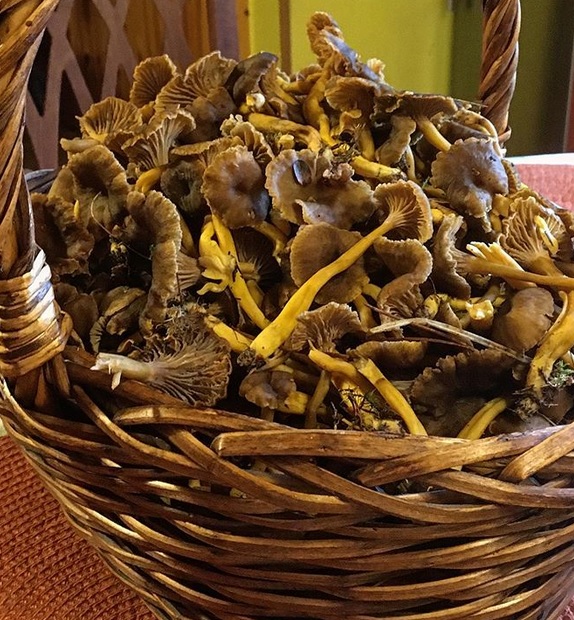
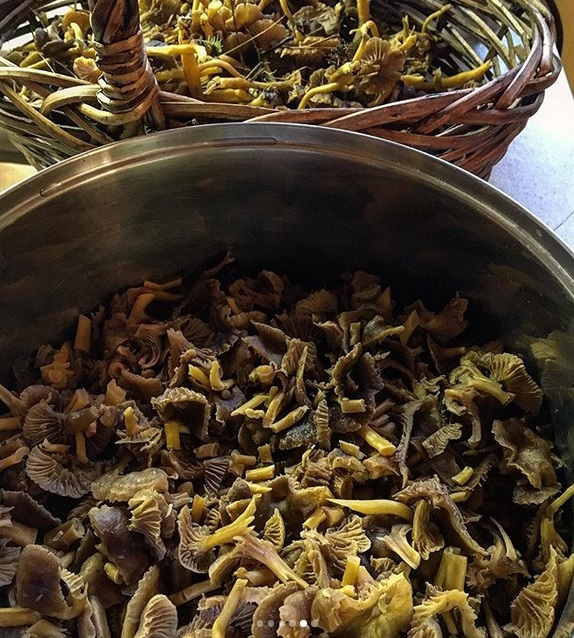
NordenBladet – Yellowfoot chantarelles (Cantharellus aurora) and funnel chantarelles are very popular food mushrooms in the Nordic countries (especially in Finland), which, in addition to the golden chanterelles (Cantharellus cibarius), are also gaining popularity in Estonia. Funnel chantarelles are relatively difficult to notice because, due to their yellowish-brown color, the mushroom colonies resemble fallen tree leaves in autumn and thus blend well with the surroundings. They can be harvested from August to November.
But if you already find funnel chantarelles (Craterellus tubaeformis) in a coniferous or mixed forest, it is very easy to pick them because they grow together. As they are not eaten by worms, you don’t need to check the mushrooms before putting them in your basket. It is also convenient to transport them because chantarelles are very wiry and do not break so easily. In the absence of a basket, they can also be temporarily carried / placed in a plastic bag or backpack.
The funnel chanterelle cap is 2 to 6 cm in diameter, funnel-shaped, grey to dark brown with its edge curled downwards. The underside of the cap is grey or waxy yellow and resembles spore leaves. The gills are either light grey or bluish grey, branching and descending towards the stem. The stem is 3–5 cm high, 0.5–1 cm in diameter, cylindrical, hollow inside, springy-wiry, pale yellow to dark yellow in colour.
How can you prepare chantarelles?
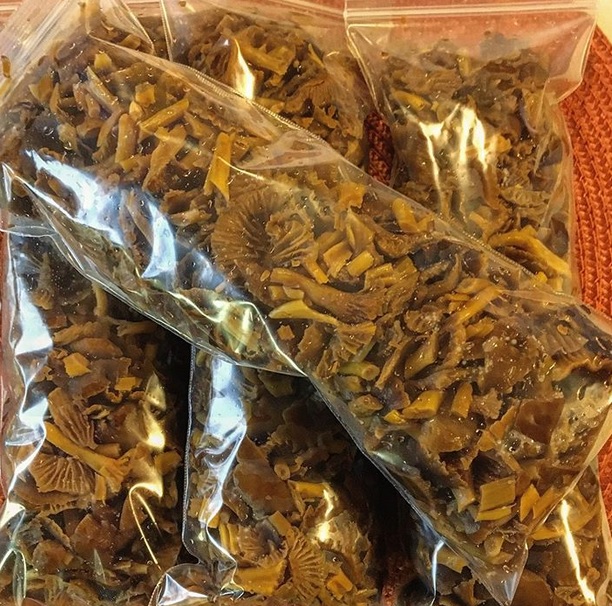
It is not necessary to scald or boil funnel chantarelles for food. Boiling also makes the mushrooms chewy. It is therefore advisable to scald and / or fry the fresh chopped mushrooms, which have been previously washed, or cleaned with a damp cloth or a brush, in a pan. Mushrooms can also be frozen raw, but they lose their structure and turn into a mash when thawed. To prevent the mushrooms from burning to the bottom, they must be mixed gently during frying. Next, make a delicious mushroom sauce, mushroom pie or let it cool and put in the freezer. Butter sautéed mushrooms stay fresh in the freezer for about three months, lard sautéed mushrooms for half as long (up to half a year). Frozen raw mushrooms stay fresh even longer.
In this way, all the mild-tasting mushrooms that do not need to be scalded can be preserved: chanterelles, boletes, funnel chanterelles, hedgehog mushrooms, orange milk caps, saffron milk caps, champignons, parasol mushrooms, sheathed woodtuft caps, etc.
Natural medicine views chanterelles very highly because they outshine all other mushrooms thanks to their beneficial properties. They have anti-tumor effects, they help boost the immune system, provide support in case of inflammatory processes and are a natural antibiotic.
Chanterelles contain many different vitamins — vitamin D and vitamins B (mainly B1, B3). The mushrooms contain several times more beta-carotene than carrots, so in traditional medicine and home witch kitchens, the preparation of chanterelles is used to correct vision and in case of loss of night vision. However, the most wonderful feature of chanterelles is that they contain quinomannose, which helps in helminthiasis, i.e. they actually fight all worms in the human body. No other mushroom has such a property—not only to scare away and remove parasites from the body, but to surround the parasite’s eggs and dissolve them in a film—and neither has it been observed in any plants. If they are consumed for alternative treatment, it must be remembered that the mushrooms must be used raw, dried or powdered (dried at max +40 C!). Heating destroys the antiparasitic effect of the mushroom.
Folks have used chantarelles to help treat the following problems:
– anthelmintic effects (giardiasis, ascariasis, etc.)
– liver diseases (hemangiomas, fat build-ups, hepatitis)
Chanterelles are one of the fattest mushrooms, containing up to 0.4 percent fat. They are difficult to digest, but rich in vitamins, minerals and micronutrients. Their protein content is 2.5 percent. But mostly chantarelles contain water: 91–93 percent. The energy content of 100 g of chanterelles is 30 kcal. Thus, the best known and most loved mushroom in our forests is actually a superfood. There are few people who do not know or have never eaten chanterelles.
How to make a beneficial chantarelle tincture?
When using dry chanterelle powder, take 5 tablespoons of the powder and place in a clean and airtight half-liter glass jar. Pour on mild 40% vol. vodka, fill the jar to the rim and close with a lid. Place the jar in a warm dark place for two weeks. Shake lightly once a day. When the tincture is ready, filter it through a paper coffee filter at least 3 times. Pour the filtered tincture into a clean dark bottle and keep in the dark.
Take 1 tablespoon in the evening with warm tea, as a course of at least three weeks; for children at 5 years of age, 1 teaspoon.
Put in a hot tea, let it stand for at least 5 minutes. Drink before going to bed when the tea is ready to drink and the alcohol has evaporated. It is good to repeat the course every 1–2 months.
When using fresh chanterelles, clean and wash the mushrooms, drain and cut them to size of a fingertip, and place in a glass container. Lightly fill the container and pour 80% vol. grain-based quality alcohol on top. Fill the container to the rim and close with a lid so that no air is trapped inside. Seal airtight, place in a dark and warm place for two weeks. When the level of the alcohol drops, refill to the rim.
All subsequent steps are the same as described above.
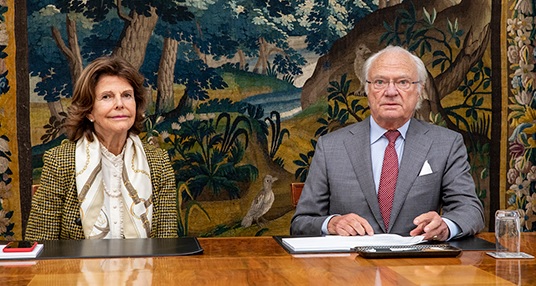
NordenBladet – On Tuesday 6 October, The King, The Queen, The Crown Princess and Prince Daniel held a digital audience with Ambassador Karin Olofsdotter, Sweden’s envoy in Washington DC, USA.
Before the forthcoming presidential and congressional elections on 3 November, Sweden’s Ambassador to Washington DC gave the Royal Family a report on the country’s domestic political situation.
Ambassador Olofsdotter also provided information about bilateral relations between Sweden and the USA.
Featured image: The King and Queen during the video meeting with Ambassador Karin Olofsdotter. (Victor Ericsson/The Royal Court of Sweden)
Source: kungahuset.se
NordenBladet – King Harald has been back at work for the first time following successful heart surgery last month.
King Harald was declared healthy enough to be able to resume duties from 1 November, Oslo’s Royal Palace said in a short statement to the press and on November 5, the monarch was back at the Royal Palace in Oslo to receive Norway’s Foreign Minister for an audience. Queen Sonja and Crown Prince Haakon also attended. Later the same day, the King also received Thailand’s new ambassador, the United Arab Emirates’ new ambassador and Greece’s new ambassador in a solemn audience at the Royal Palace. On Friday 6 November, the King will hold the weekly Council of State before he receives representatives of Beitostølen Health Sports Centre in audience.
The news that the King is healthy enough to resume his duties has been received with great pleasure by the Norwegian people. The news has been prominent in the media in Norway over the last weeks and many hope that the royal court will publish a photograph of the king during the coming week. So far, there has been no photos of the Kings since he left hospital in October.
King Harald was admitted to Rikshospitalet on 25 September after having problems with heavy breathing. Among other things, the king was tested for Covid-19, which was counted out immediately. On Monday 28 September, he was discharged from hospital, while his sick leave was extended. The hospital continued its investigation after the king was allowed to return home.
On Thursday, October 8, it was announced that King Harald would undergo heart valve surgery. On Friday 9 October, King Harald underwent surgery at Rikshospitalet. The king has been on sick leave since the operation, which was successful. On Friday 30 October, the Palace announced that the king will be back at work from 1 November.
Crown Prince Haakon has performed the constitutional duties in King Harald’s absence. After the recovery, King Harald will again perform his duties as King of Norway.
NordenBladet — The Ministry of the Interior sent the draft government proposal on amending the Money Collection Act out for comments on 6 November 2020. By this amendment, voluntary carbon offsetting services would be excluded from the scope of application of the Money Collection Act. In future, no money collection licence would be required for operations concerning voluntary carbon offsetting.Voluntary carbon offsetting provides a mechanism for offsetting greenhouse gas emissions from e.g. travel or products by means of a payment. Such operations have increased considerably in Finland in recent years. This has led to questions concerning the relationship of these operations to the Money Collection Act, which mainly regulates money collection for non-profit activities.The Ministry of the Interior launched a background study in April 2020 to consult the different stakeholders and explore the legislative amendments that may be needed and their impacts. The views of the stakeholders were collected in workshops and through interviews. Based on the background study, the proposal is that voluntary carbon offsetting would be excluded from the scope of the act.“The climate crisis will not wait, and we must take all actions we can to combat climate change. Among these is voluntary carbon offsetting that companies have offered to their customers. The status of carbon offsetting with respect to the Money Collection Act has been ambiguous and it has been difficult for companies to know how to proceed. I am very happy for the work done to clarify the situation and the conclusion to amend the act, which will make it easier for individuals and companies to offset climate emissions,” Minister of the Interior Maria Ohisalo says.Ministry of the Environment to examine the regulation of voluntary carbon offsettingThe background study of the Ministry of the Interior identified the need to examine and clarify the regulation concerning voluntary carbon offsetting to make sure that the operations are reliable.The Ministry of the Environment has launched studies on the current state of the regulation of voluntary carbon offsetting and the related future needs. The Ministry is funding a project at the Finnish Environment Institute that aims to create a comprehensive understanding of where we stand in the use of carbon offsets and the acceptability of the emission reduction units that have been offered. The purpose of this project, and of another project also funded by the Ministry of the Environment, is to examine in more detail what kind of regulation would be needed concerning the voluntary carbon offsetting services The key issues are related to ensuring the desired climate impacts, including the additionality, verifiability and permanence of the offsetting projects.“Voluntary carbon offsets are purchased to boost climate actions, which is why we must make sure that all the services and projects sold as offsets are such that they produce genuine climate benefits. This is important in terms of both the climate work and consumer protection. At the moment there are various kinds of international and domestic offsetting services in the market. Those who are offering offsets to be purchased are also hoping for clearer rules,” Minster of the Environment and Climate Change Krista Mikkonen says.Government programme aims at a carbon neutral FinlandThe legislative amendment is related to the objective of the Programme of Prime Minister Sanna Marin’s Government to achieve carbon neutrality in Finland by 2035. The aim is to encourage companies to develop new voluntary carbon offsetting services and ways to reduce greenhouse gas emissions, avoid these, or remove greenhouse gases from the atmosphere.The deadline for comments is 18 December 2020.
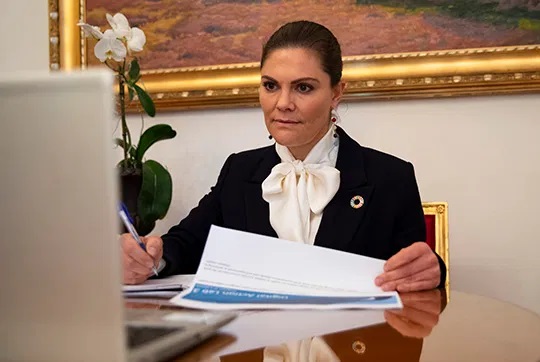
NordenBladet – Three children die every minute as a result of avoidable environmental degradation, a sobering fact shared by Crown Princess Victoria during the third instalment of the Global Child Forum’s Action Lab series on Tuesday.
The virtual meeting, also attended by Queen Silvia, focused on the environment and the devastating impact it can have on children’s health and future wellbeing.
“Around the world, children’s rights are suffering a severe setback due to the impacts of the COVID-19 pandemic,” Crown Princess Victoria said in an introductory video for the event.
“At the same time, we are in a state of environmental emergency that is threatening children’s prospects for a healthy and prosperous future. Rising sea levels. Severe weather events. Drought, forest fires and flooding. Widespread pollution of air, water and soil. Exposure to toxic substances. Loss of biodiversity. All of these things put children at risk – for birth defects, failing health and child mortality. For conflict, poverty and child labour.”
In addition to the more than 1.7 million children under the age of five who die every year because of environmental degradation, Crown Princess Victoria pointed out how “millions more suffer consequences of climate change such as disease, disability, and other forms of harm.”
David Boyd, the current UN Special Rapporteur on Human Rights and the Environment, also spoke during the Action Lab. Crown Princess Victoria shared how, “in 2018, the UN Special Rapporteur on Human Rights and the Environment recommended that businesses conduct environmental and human rights impact assessments, viewed through a children’s rights lens.”
Because of this, climate change was identified as “a global concern disproportionately affecting children, echoing a UN Human Rights Council resolution that recognized children as among the most vulnerable to climate change.”
The Global Child Forum was created by the Swedish Royal Family in 2009 and brings together leaders in business, government, academia, and civil society from around the world to bring change surrounding children’s rights. The Forum especially focuses on the power of businesses to advance children’s rights and the best practices they can carry out to make changes for children in their communities.
Featured image: Victor Ericsson/Kungl. Hovstaterna
NordenBladet — Minister Thomas Blomqvist attended a video meeting of Nordic ministers for gender equality on 5 November 2020. The main topics of the meeting were the theme of fatherhood and care and advancing it during Finland’s Presidency of the Nordic Council of Ministers in 2021.
Fatherhood and equal parenting will be among the main themes of Nordic work on gender equality next year. The ministers will discuss the theme based on the results of the State of Nordic Fathers report published in November 2019. The report shows that care responsibilities are unevenly distributed in families and that outdated stereotypes are still associated with parenting and care.“By taking active part in parenting, fathers can forge strong links with their children while fulfilling the right of their children to two present parents,” says Minister for Nordic Cooperation and Equality* Blomqvist. The ministers decided on launching a Nordic research projects on sexual harassment at work. Sexual harassment is a major problem in all Nordic countries, and more information is needed especially on sexual harassment at work.The ministers decided what matters the Nordic Council of Ministers will be promoting concerning gender and sexual minorities. They also decided to include an addition on LGBTI work to the Nordic co-operation programme on gender equality.
_______________________________
The Minister for Nordic Cooperation and Equality (Finnish: Pohjoismaisen yhteistyön ja tasa-arvon ministeri, Swedish: Minister för nordiskt samarbete och jämställdhet) is one of the nineteen portfolios of Finland’s incumbent Marin Cabinet. The position is one of three ministerial portfolios comprising the Ministry for Foreign Affairs.
To date, there has been one Minister for Nordic Cooperation and Equality, the incumbent Thomas Blomqvist of the Swedish People’s Party of Finland (SFP/RKP). In the five-party coalition government formation which forms the basis for the incumbent Marin government, as well as its predecessor, the Rinne government, the position of the Minister for Nordic Cooperation and Equality has been one of two portfolios held by SFP/RKP. The other position held by the party is that of the Minister of Justice. Before the government negotiations held after the 2019 Finnish parliamentary election, the task of Nordic Cooperation has been held as an additional portfolio, assumed by other ministers. For example, in the Sipilä government, the portfolio was held by the Minister of Transport and Communications.
NordenBladet — On 5 November, the Government adopted a decision on restrictions on entry into the country, which will enter into force on Monday 9 November. Restrictions will be lifted for residents of Singapore who are travelling from their home country to Finland. Restrictions on entry will also be lifted for residents of the Hong Kong and Macao Special Administrative Regions who are travelling from these regions to Finland, provided that reciprocity is confirmed by the Council of the European Union.All existing restrictions on entry will continue until 22 November. The aim is that the new health security measures will be in place by then.The decision applies the limit value of a maximum of 25 new cases of the disease per 100,000 persons in the previous 14 days. Differences in the epidemiological situation in Finland and other European countries, as well as the new acceleration in the spread of infections, require internal border controls to remain in place until the new health security measures are made available to the extent necessary.No changes to restrictions on internal border trafficInternal border traffic refers to traffic between Finland and other Schengen countries. Internal border control has been reinstated for traffic between Finland and all Schengen countries.Restrictions on internal border traffic are in force for traffic between Finland and Austria, Belgium, the Czech Republic, Denmark, Estonia, France, Germany, Greece, Hungary, Iceland, Italy, Latvia, Liechtenstein, Lithuania, Luxembourg, Malta, the Netherlands, Norway, Poland, Portugal, Slovakia, Slovenia, Spain, Sweden and Switzerland, apart from certain exceptions. Day-to-day travel will still be permitted for local border communities at Finland’s land border with Sweden and Norway. People will be able to come to work in Finland from Sweden and Estonia without a 10-day self-isolation period. Leisure boating from the EU and Schengen countries to Finland will not be restricted either. At the internal borders, restrictions on entry allow only return traffic to Finland, transit traffic, work-related travel and travel for other essential reasons, apart from the above-mentioned exceptions. A 10-day period of self-isolation is recommended for travellers arriving in Finland. Travellers can shorten their self-isolation period at their discretion if they take two voluntary COVID-19 tests.Changes to restrictions on external border trafficExternal border traffic refers to traffic between Finland and non-Schengen countries. Starting from 9 November, external border traffic will be permitted only for traffic arriving in Finland from the Vatican, and for traffic between Finland and Australia, Japan, Rwanda, South Korea, Singapore, Thailand, New Zealand and Uruguay for residents of these countries.Restrictions on entry will also be lifted for residents of the Hong Kong and Macao Special Administrative Regions who are travelling from these regions to Finland, provided that reciprocity is confirmed by the Council of the European Union. In addition, people may come to Finland from the following European countries for work or another essential reason: Andorra, Bulgaria, Croatia, Cyprus, Ireland, Monaco, Romania, San Marino and the United Kingdom. A 10-day period of self-isolation is recommended for travellers arriving in Finland. Travellers can shorten their self-isolation period at their discretion if they take two voluntary COVID-19 tests.For all other non-Schengen countries, restrictions on entry allow only return traffic to Finland and other EU and Schengen countries, transit traffic at Helsinki Airport and other essential traffic. In addition, a 10-day period of self-isolation is recommended for travellers arriving in Finland. Travellers can shorten their self-isolation period at their discretion if they take two voluntary COVID-19 tests. Health security measures in force A 10-day period of self-isolation is recommended for travellers arriving in Finland from a higher incidence country. Travellers can shorten their self-isolation period at their discretion if they take two voluntary COVID-19 tests and the results are negative. If a traveller is staying in Finland for less than 72 hours, they do not need to self-isolate or take a second test.Rights of Finnish citizens and residents of FinlandUnder section 9 of the Constitution of Finland, Finnish citizens and residents of Finland always have the right to return to Finland, and everyone has the right to leave Finland if they so wish, provided that there is no legal impediment to this. However, the Government still recommends avoiding unnecessary travel to other countries, except for countries for which the restrictions on entry have been lifted.Travellers must be aware of the current entry and quarantine regulations of their country of destination and they must take into account the quarantine and testing recommendations for those returning to Finland. Read more:
NordenBladet — The Government submitted a proposal to amend the Competition Act on 5 November 2020. The amendments are mainly based on a Directive that will enhance and harmonise the enforcement of the EU’s competition rules within the territory of the Union. The implementation of the Directive will extend the powers of the Finnish Competition and Consumer Authority.The amendments to be made based on the Directive will strengthen the powers of investigation, decision-making and sanctions for restricting competition. This is a significant change to EU and national competition law.The key amendments to the Competition Act based on the EU Directive include:The Finnish Competition and Consumer Authority could propose and a court could impose a penalty payment on an undertaking not only for restriction of competition but also for breaches of procedural rules and non-compliance with certain decisions.In order to end restriction of competition, structural remedies could also be imposed under strict conditions in the future. Structural remedies could include, for example, the divestment of a business unit or a stake in the competitor’s share capital.When assessing the amount of penalty payments imposed on associations of undertakings, the turnover of the members of the association would also be taken into account under certain conditions. In addition, members of an association of undertakings could be liable to pay the penalty imposed on the association if the association was unable to pay it and if certain other conditions were met.Cooperation between the EU’s national competition authorities will improve. In addition, the Competition Act will be amended on the basis of national needs. The amendment would help undertakings to assess in advance the amount of penalty payment that they or an association of undertakings could be subject to for restricting competition. The legal protection of undertakings has been acknowledged by, among other things, increasing the consultation of interested parties before decision-making. The Act also provides for the right of appeal and the enforcement of penalty payments only after the final decision.The Government proposes that the amended Act will enter into force on 4 February 2021, as the Directive requires. Effective enforcement of competition will benefit companies and consumers The purpose of the Directive is to improve the enforcement powers of the competition authorities in the Member States and to ensure the proper functioning of the internal market. The implementation of the Directive will make the enforcement of competition rules more efficient and increase their preventive effect.The aim of the competition rules is to ensure effective competition between companies. Effective competition also benefits consumers and customer companies by offering alternatives, keeping price levels under control and encouraging the creation of innovative and high-quality products and services.
NordenBladet — The Government has made a clarification to the Decree on temporarily restricting the activities of food and beverage service businesses that it issued on 29 October. Under the Decree, food and beverage service businesses may begin serving alcohol at 7.00 at the earliest. This applies to all regions regardless of their epidemiological situation.Reason for the amendment: uncertainty related to the increased flexibility in the restrictions on opening hours In practice, the clarification was made by amending section 5 of the Decree, which concerns the restriction on opening hours and hours when alcohol can be served. The clarification is necessary because there has been some ambiguity as to when businesses may begin serving alcoholic beverages. The Decree issued on 29 October added flexibility to the restrictions on the opening hours of food and beverage service businesses so that businesses subject to the restrictions may generally reopen one hour after closing. This means that a business that has stopped serving alcoholic beverages at 24.00 and must close at 1.00 may reopen as a night cafe starting at 2.00, for example. Some ambiguity has arisen as to whether a business may resume serving alcoholic beverages after it has been closed for one hour.This is not the intended interpretation of the provisions and, in accordance with the clarification made, businesses may begin serving alcohol at 7.00 at the earliest. In addition, food and beverage service businesses must always comply with the Alcohol Act and any conditions attached to their serving licence when serving alcoholic beverages. The Government decided on 29 October to impose temporary restrictions on the activities of food and beverage service businesses as of 1 November 2020. The Decree was adopted under the new temporary provisions of the Communicable Diseases Act and will remain in force until 15 December 2020. The amended Decree enters into force on 6 November 2020.