NordenBladet – Crown Princess Mary has presented the Teaching Award, honouring seven Danish teachers for their services to education and their roles in inspiring their students. The presentation was made on September 30th at Denmark’s Ministry of Education and Research in Copenhagen.
“The seven award recipients have in various ways managed to renew and challenge traditional teaching methods – both when it comes to involving students, giving feedback and creating a good study environment for learning,” said Ane Halsboe- Jørgensen in a press release on the Ministry of Education’s website.
“It is important to have teachers who engage the students and pique their curiosity so that the students get even more desire for study and get even more out of it. I am sure that the award recipients will be a great inspiration for other teachers.”
According to the Royal House, the Teaching Award was created this year to honour teachers who have created “increased awareness of the teaching role in the country’s higher education and to inspire excellent teaching.” The Award was created by the Ministry of Education and Research.
Each teacher receives 500,000 Danish kroner; 200,000 of that is a personal reward while the remainder is meant to fund “activities that can help to create good and engaging teaching at the education establishment. In this way, the Teaching Award helps to focus on how important it is to have good teachers.”
Halsboe-Jørgensen said, “There must be more prestige in being a good teacher. Our skilled teachers in higher education deserve greater recognition. In fact, excellent teaching should have the same high status as excellent research in higher education.”
The seven teachers who received their awards from Crown Princess Mary are Claus Brabrand, Knud Erik Christensen, Per Hessellund, Luise Theil Kuhn, Thomas William Lee, Vibeke Røn Noer, and Per Reeslev.
Later in the day, Crown Princess Mary attended the Danish Rainbow Awards in Copenhagen.
NordenBladet —The Riigikogu agenda for the working week includes proceedings on 12 Bills and draft Resolutions
The Riigikogu approved its agenda for this working week, according to which no deliberation of Bills or replies to interpellations have been scheduled for Monday’s sitting. Members of the Riigikogu can make unscheduled statements.
At Tuesday’s sitting, the Bill on Amendments to the Energy Sector Organisation Act and the Natural Gas Act (202 SE) will be at the second reading.
At Wednesday’s sitting, the Bill on Amendments to the Spatial Data Act and the Apartment Ownership and Apartment Associations Act (196 SE) will be at the third reading.
Eight Bills and draft Resolutions will be at the first reading: the Bill on Amendments to the Labour Dispute Resolution Act (214 SE); the Bill on Amendments to § 28 the Citizenship Act (217 SE); the Bill on Amendments to the Tourism Act and the Consumer Protection Act (234 SE); the Bill on the Repeal of the Trading Act and Amendments to Other Acts arising therefrom (235 SE); the Bill on Amendments to the Government of the Republic Act and Other Acts (merger of the Civil Aviation Administration, the Road Administration and the Maritime Administration) (236 SE); the Bill on Amendments to the Value Added Tax Act and the Customs Act (239 SE), the Draft Resolution of the Riigikogu “Increasing the Holding of the Republic of Estonia in the International Finance Corporation” (237 OE); and the Bill on Amendments to the Tax Information Exchange Act (238 SE).
The third reading of the Bill on Amendments to the Energy Sector Organisation Act and the Natural Gas Act (202 SE) is scheduled for Thursday’s sitting.
The Bill on Amendments to the Place Names Act (208 SE) will be at the first reading.
During the open microphone, Anti Poolamets and Hele Everaus took the floor.
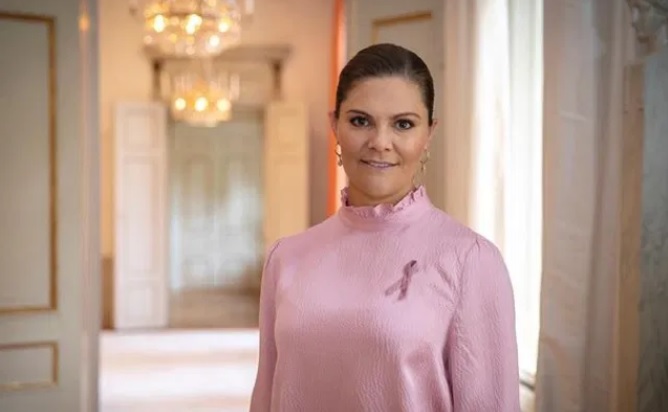
NordenBladet – For the twelfth year in a row, Crown Princess Victoria has been named the patron of the Pink Ribbon Campaign (Rosa Bandet-kampanj) organised by the Swedish Cancer Society. To launch the campaign, the Crown Princess was pictured wearing this year’s pink ribbon.
This week, the Cancer Society launched the Pink Ribbon Campaign in Sweden. Crown Princess Victoria of Sweden participated in the launch as the official patron. To mark the launch, the Swedish Royal Court published a new photo of the Crown Princess in which she wears this year’s pink ribbon. The breast cancer awareness campaign runs during the month of October.
The Pink Ribbon campaign aims to raise awareness about cancer, in particular breast cancer, and fund essential cancer research in Sweden. During the month of October, pink ribbons are sold to raise money for cancer research. By wearing the pink ribbon, it is hoped people can raise awareness of the disease and increase public involvement in research. This year’s pink ribbons and bracelets are designed by First Aid Kit, the artist duo and sisters Johanna and Klara Söderberg. For the sisters the pink ribbons symbolize hope, love and power. The proceeds will go to the best research projects on cancer in the country.
Crown Princess Victoria has long shown her support in matters related to the development of Swedish cancer research. In 2009 the Crown Princess became the patron of the Pink Ribbon Campaign.
“We would like to thank Crown Princess Victoria and everyone else involved in the fight against cancer. Every person’s contribution counts, every fundraiser, every penny, together we make a difference so that fewer people suffer from cancer and more can live a good life after treatment,” said Ulrika Årehed Kågström, Secretary General of the Swedish Cancer Society.
Every year, more than 61, 000 people in Sweden are diagnosed with cancer. Of these, almost 9 000 receive a diagnosis of breast cancer, the most common cancer among women. Every year around 60 men also receive a breast cancer diagnosis. Luckily 8 out of 10 people who suffer from breast cancer survive. However, more research is needed to effectively cure cancer in all cases.
Featured image: Crown Princess Victoria of Sweden supports the Swedish Cancer Society’s Pink Ribbon Campaign (Victor Ericsson/Kungl. Hovstaterna)
NordenBladet —At today’s sitting, the Bill to obligate the state to improve energy efficiency so as to aim to decrease energy consumption regardless of levels of economic growth passed the second reading in the Riigikogu.
The Bill on Amendments to the Energy Sector Organisation Act and the Natural Gas Act (202 SE), initiated by the Government, will transpose new obligations arising from the relevant EU directive that will help achieve the EU’s long-term targets in the reduction of energy use. The directive provides for progress towards the Energy Union, under which energy efficiency is to be treated as an energy source in its own right.
The Bill will specify that the national energy efficiency target will be set at Government level together with policy measures supporting it and the energy efficiency obligation distribution plan.
It is intended to regulate the metering of the consumption of heating, cooling and domestic hot water by final users in buildings, and the billing relating thereto. In order to transfer completely to remote reading of heat by 1 January 2027, the energy supplier will need to install only remotely readable heat meters. The installation of apartment-based final users’ heat meters in multi-apartment buildings is necessary where this is cost-effective and technically feasible. Starting from 25 October 2020, final users will have to be given extensive comparative information upon billing for heat with the aim that consumers will be able to change their behaviour.
NordenBladet – Queen Silvia of Sweden has placed herself in the middle of a major housing dispute that revolves around one of the Queen’s most important projects. Last weekend, Queen Silvia was a guest in a podcast with the Alzheimer Life Foundation, on the occasion of World Alzheimer’s Day.
One of the topics brought up in the podcast was the Queen’s project “SilviaBo”, a project she had been working on for a long time. SilviaBo is located at Drottningholm in Ekerö, and consists of six apartments, where Queen Silvia wants people with dementia to be able to live with their partners. The project was praised by several but some living nearby have been unhappy with the development.
Some neighbours complained to the Swedish Land and Environment Courtdea which deals with, among other things, construction cases. They claimed that the buildings do not fit into the area. The case went in the neighbours’ favour and the houses are now to be regarded as so-called “black buildings”, illegally erected buildings.
In the podcast Queen Silvia took part in, journalist Henrik Frenkel asked whether the queen believed that prejudice against dementia could be behind the conflict with the neighbours. He Majesty replied: “I often think about it. I dare not to ask, because I suspect it is so. I think this is very tiring, and I think it is really disgusting”.
This strong statement has not gone down well with the neighbours of SilviaBo. The Swedish newspaper “Aftonbladet” has been in contact with one of those who was involved in the process against the SilviaBo-project. The neighbour, who has also been in contact with the others involved, reacted strongly to the queen’s insinuation. He says: “It is a statement that is astonishing. There have never been questions and discussions about dementia. What we have done as residents of Drottningholmsmalmen is to protect the place with its historical values”.
The Silvia Foundation has now made a new application for a building permit so that the dementia homes can become a reality. In the new application, however, the size and facades of house have been adjusted.
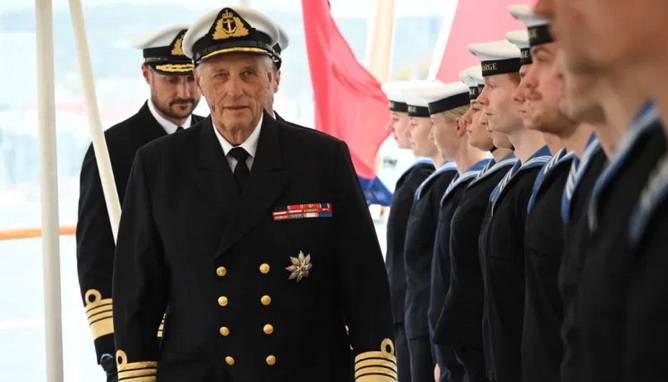
NordenBladet – King Harald, accompanied by his son Crown Prince Haakon, announced the end of this year’s season for the Norwegian Royal Yacht “KS Norge”. This year, the ship has not been used as much in official contexts, due to the virus. In return, the ship has been used much more than usual by the royals privately, especially during the summer holidays. The ship was also in use last week, when Crown Prince Haakon and Crown Princess Mette Marit travelled along the southern Norwegian coast.
During the now ended summer season, the crew consisted of 53 people, 17 officers and 36 other crew members. During winter, the crew is reduced to a minimum of approximately 25 people. The duties are mainly guarding the ship and maintenance during the winter. In February, the vessel receives new officers and military crew who undergo theoretical and practical training for the upcoming season.
During the ceremony, on September 24th 2020, the King inspected this year’s crew. He also examined the ship and made sure everything was as it should be before having a short chat with the captain and another military commander on board the boat. The King then announced with his official approval that everything was as it should be and that the royal ship is officially ready to spend the winter in dock before the next season which will begin mid-May 2021.
The Royal Yacht has been used for many large celebrations before. When King Harald and Queen Sonja celebrated their 60th anniversary in summer 1997, royals from all over Europe participated in the event. The guests were invited on a trip from Trondheim to Lofoten and were accommodated aboard the Royal Yacht.
The Norwegian Royal Yacht is one of the world’s two remaining royal yachts. The other is the Danish Royal Yacht, Dannebrog; the British Royal Yacht, Britannia was decommissioned in 1997. The Royal Yacht was a gift from the people of Norway to King Haakon VII in 1947, purchased in the wake of a nationwide collection effort. The ship is owned by His Majesty The King but is manned and maintained by the Royal Norwegian Navy.
In July 1947, the British ship “Philante” was bought for 1.5 million Norwegian crowns and would later become the “Norge.” Before the King could use the boat, the ship had to be rebuilt. In the years that followed, King Haakon used the vessel on his journeys along the long Norwegian coast and travelled to foreign countries on board it. In June 1955, King Haakon used to ship on a visit to Molde. This was King Haakon’s last trip with the ship; he died in 1957.
King Olav took over the ship after his father’s death in 1957. King Olav followed his father’s traditions and used the royal boat both privately and officially. In the winter of 1985, the ship was to be repaired and upgraded at Horten Naval Base. During welding work, there was a fire that spread rapidly to the entire ship. When the fire was put out, the ship was completely scorched. The King decided that the vessel should be rebuilt.
One year after the fire, King Olav again took over the ship which was in far better technical condition than it had been before the inferno. King Harald took over the yacht upon King Olav’s death in 1991. King Harald actively uses the ship both in official journeys at home and abroad and as a private home when he participates in international regattas.
Featured image: His Majesty King Harald and Crown Prince Haakon during the inspection. (Sven G. Gjeruldsen / The Royal Court)
NordenBladet —Estonia as the holder of the presidency of the Baltic Assembly organises the meetings of the Presidium, the Budget and Audit Committee and the Consultative Council of the Baltic Assembly as video conferences today. The impact of the coronavirus on the economies and cooperation of Estonia, Latvia and Lithuania will be discussed. The decisions of the committee meetings held during Estonia’s presidency and the priorities of the Lithuanian presidency next year will also be in the focus.
President of the Baltic Assembly (BA) and Head of the Estonian Delegation Aadu Must said that the coronavirus had brought out the bottlenecks in the so far excellent cooperation of the three countries. “For example, at the onset of the crisis, we were not able to ensure timely exchange of information or jointly coordinate the emergency measures in our region. Fortunately, we have overcome these challenges by now, but after the low contagion rate in summer, the current situation is unclear and unpredictable. Therefore, we have to learn to live together with COVID-19 and find solutions to cope with the crises caused by it,” Must said.
Head of the Delegation added that Estonia had done a very good job in presiding the work of the BA under the coronavirus conditions. “We managed to make our work digital quickly and smoothly, nothing remained undone and with that, we even set an example to others,” Must said.
Deputy Head of the Estonian Delegation to the BA Johannes Kert noted that the Baltic States had managed to learn a lot from the current crisis. According to him, the he most valuable lesson learned is that when countries work together, they are able to effectively contain the virus and mitigate the crisis. “Therefore it is extremely important to continue on the same path. One of the coordination measures that could be implemented in the Baltic States is mutual assistance and coordination in the field of disaster prevention, preparedness and response,” Kert said.
At present, when the security situation is becoming more tense, coordinated activities of the Baltic States in the field of security are becoming increasingly important in Kert’s opinion. “Coordinated functioning of the defence procurements system would give more security for the resources contributed. We need to continue what we have started in this important sphere,” Kert added.
This spring, the Economic Affairs Committee of the Riigikogu (Parliament of Estonia) asked the Foresight Centre of the Riigikogu to analyse the economic and social implications of COVID-19. Within the framework of the research, the Foresight Centre in cooperation with the University of Latvia think tank LV PEAK and the Government Strategic Analysis Centre of Lithuania STRATA prepared an overview of the impact of COVID-19 on economy and social sphere in the Baltic States. This document will be presented today.
Chairman of the Economic Affairs Committee and member of the Estonian delegation to the BA Sven Sester pointed out that COVID-19 had influenced not only health care systems and economies, but also the way the people live and work, their physical and mental welfare and domestic situation. In his opinion, continuation of the crisis will create an excellent opportunity for the increase of public sector investments due to direct necessity, and bring about wider cooperation with the private sector. “We have already seen how rapidly and flexibly the state and businesses responded to the crisis, and by learning from these, sometimes undoubtedly very painful experiences we will be able to take smarter steps in the future. Digitalisation and new business models are the keywords here,” Sester said.
Programme of the meetings:
10:00 – Digital meeting of the BA Presidium, attended by Head of the Estonian Delegation Aadu Must and Deputy Head Johannes Kert
11:15 – Digital meeting of the BA Budget and Audit Committee, attended by member of the Estonian Delegation Sven Sester
12:30 – Digital meeting of the BA Consultative Council, attended by Head of the Estonian Delegation Aadu Must and Deputy Head of the Estonian Delegation Johannes Kert and members of the Delegation Urmas Espenberg, Signe Kivi, Erki Savisaar, Sven Sester and Urve Tiidus.
NordenBladet —At today’s plenary sitting, the Riigikogu appointed Urmas Volens a justice of the Supreme Court. He will become a member of the Supreme Court from 1 November 2020.
The explanatory memorandum to the Draft Resolution of the Riigikogu “Appointment of Urmas Volens a Justice of the Supreme Court” (222 OE), submitted by Villu Kõve, Chief Justice of the Supreme Court, notes that Urmas Volens is an experienced and recognised lawyer whose professional experience in various positions at the Ministry of Justice, as a sworn advocate in law offices, and associate professor of civil process at the School of Law of the University of Tartu allow him to contribute significantly to the work of the Civil Chamber of the Supreme Court and the further development of Estonian civil law.
68 members of the Riigikogu voted in favour of the Resolution and 19 were against. There were two abstentions.
One Bill passed the second reading:
The Bill on Amendments to the Spatial Data Act and the Apartment Ownership and Apartment Associations Act (196 SE), initiated by the Government, will harmonise the bases for the establishment of unique addresses, simplify the communication with owners of address objects and ensure better interoperability between the state information systems.
The Land Board will be given the right to establish areas that have a unique address. Under the current procedure, densely populated areas and built up areas determined by a comprehensive plan are areas requiring a unique address. Since the abovementioned areas have not been defined in legislation, local governments determine them very variedly by plans. This involves the problem that buildings may be difficult to find.
Areas requiring a unique address that can be determined on uniform bases ensure uniform address organisation in the country, and at the same time involve no additional obligations or restrictions on construction or other activities.
In addition, the communication with owners of address objects will be simplified, and the possibility to notify of changes to addresses by e-mail and, in the case of apartment buildings, through the apartment association, will be included.
With the amendments to the Apartment Ownership and Apartment Associations Act, better interoperability between the state information systems, in particular the land register and the address data information system will be ensured. When an apartment ownership is established in the land register, each apartment that is registered as an apartment ownership is also assigned a corresponding address object in the address data system.
Tarmo Kruusimäe (Isamaa) took the floor during the debate.
A Bill passed the first reading:
Under the Bill on the Ratification of the Agreements necessary for Accession to the Convention Establishing the European Centre for Medium-Range Weather Forecasts (229 SE), initiated by the Government, the Republic of Estonia will accede to the Convention Establishing the European Centre for Medium-Range Weather Forecasts, including its Protocol on Privileges and Immunities, and the Protocol of 2005 to Amend the Convention, and ratifies the Agreement between the Government of the Republic of Estonia and the European Centre for Medium-Range Weather Forecasts (ECMWF) on the accession of the Republic of Estonia to the ECMWF Convention and related terms and conditions which was signed on 3 June 2020.
The primary purposes of the Centre are the development of a capability for medium-range weather forecasting and the provision of medium-range weather forecasts to the Member States.
The ECMWF member state status will enable to obtain additional information in order to use the results of the model calculations received from the Centre to create high quality products and services meeting local needs. The available information will help implement nowcasting, introduce and implement ensemble forecasts, and increase the reliability and accuracy of forecasts of various duration. The products and services provided by the ECMWF will serve as the basis for the daily work of the Estonian Weather Service of the Environment Agency, and the accuracy of Estonian weather forecasts will depend on them.
The Bill on Amendments to the Public Holidays and Days of National Importance Act (153 SE), initiated by the Social Democratic Party Faction, was intended to amend the Public Holidays and Days of National Importance Act according to which an additional day of rest is given when a national day or a public holiday falls on a weekend.
The Constitutional Committee as the lead committee moved to reject the Bill at the first reading. 53 members of the Riigikogu were in favour of the motion and eight were against. Thus, the Bill was dropped from the legislative proceedings.
The Bill on Amendments to the Unemployment Insurance Act (199 SE), initiated by the Social Democratic Party Faction, provided for the extension of the range of persons receiving unemployment insurance benefit to employees and officials who terminate their contract of employment or service relationship on their own initiative or by agreement of the parties. The aim was to apply a waiting period of 30 calendar days on the payment of unemployment insurance benefit.
The Bill proposed an amendment according to which the rate of unemployment insurance benefit for the first 100 days of unemployment would have risen to 70 per cent of the average remuneration of the employee, and further to 50 per cent starting from the 101th day.
The Social Affairs Committee as the lead committee moved to reject the Bill at the first reading. 53 members of the Riigikogu were in favour of the motion and nine were against. Thus, the Bill was dropped from the legislative proceedings.
The Bill on Amendments to the Labour Market Services and Benefits Act and the Unemployment Insurance Act (197 SE), initiated by the Social Democratic Party Faction, was intended to amend the Labour Market Services and Benefits Act and to raise the unemployment allowance rate to at least 60 per cent of the amount of the minimum wage in the previous year. At the same time, according to the proposal, if the unemployment allowance rate were higher than unemployment insurance benefit, the benefit would be paid to the extent of the unemployment allowance.
Lauri Läänemets (Social Democratic Party) took the floor during the debate.
The Social Affairs Committee as the lead committee moved to reject the Bill at the first reading. 45 members of the Riigikogu were in favour of the motion and nine were against. Thus, the Bill was dropped from the legislative proceedings.
The motion of no confidence in the Minister of Finance Martin Helme was not supported in the Riigikogu today. 45 member of the Riigikogu were in favour of the motion of no confidence submitted by 45 members of the Reform Party Faction and the Social Democratic Party Faction. 53 voted against. The support of at least 51 members of the Riigikogu was needed to express no confidence.
During the debate, Kaja Kallas (Reform Party), Katri Raik (Social Democratic Party) and Urmas Reitelmann (Estonian Conservative People’s Party) took the floor.
NordenBladet —Members of the Foreign Affairs Committee of the Riigikogu (Parliament of Estonia) joined the signatories of the open letter initiated by the members of the United States House of Representatives, which calls on releasing of political prisoners in Belarus and condemns Lukashenko regime’s use of violence.
Chairman of the Foreign Affairs Committee Enn Eesmaa underlined that violence against peaceful protesters in Belarus and politically motivated detention of members of the Coordination Council were regrettable. “We continue to stand for the civil society of Belarus and their free will. Together with all who have signed the letter, we stand in strong support of the vision of Europe free and at peace, where citizens can choose their own future. We find that the people of Belarus deserve the same,” Eesmaa said.
Deputy Chairman of the Foreign Affairs Committee Marko Mihkelson noted that the open letter supported carefully targeted sanctions against human rights offenders in Belarus. “The letter demands that the Lukashenko regime members responsible for grave human rights violations committed against Belarusians should be brought to justice. This also includes imposing of sanctions, and international coordination and cooperation, also with our transatlantic allies, is important in preparing for this,” he added.
“As legislators whose nations are bound together by shared democratic, transatlantic values, we stand in strong solidarity with the Belarusian people, including those protesting and wrongly imprisoned,” the open letter says. “We condemn the Lukashenko regime’s use of violence, intimidation, arrests, and repressive tactics against the people of Belarus, including the targeting of leading members of the Coordination Council.”
The legislators find that Lukashenka’s regime has unjustly detained opposition leader Marya Kalesnikava and her colleagues. They demand that all charges against Kalesnikava be dropped, and that she be immediately released along with fellow Coordination Council members and all other political prisoners.
The signatories of the open letter emphasise that they are monitoring the situation in Belarus and the regime’s actions closely. “We … are fully committed to using our legislative powers to advocate and act to support the Belarusian people.”
The open letter has also been signed by the representatives of the parliaments of Poland, Sweden, Germany, Finland, Belgium, Romania, Latvia, Lithuania, Netherlands, France, United Kingdom, Ukraine, Italy, Czech Republic, Croatia, Slovakia, Portugal, Spain, Hungary, Bulgaria, Malta, Switzerland, Moldova, Austria, Denmark, Norway and Ireland, and the European Parliament.
NordenBladet —The Bill under which the amount of the funds allocated by the state to research and development will amount to at least one per cent of GDP passed the first reading in the Riigikogu today.
The Bill on Amendments to the Organisation of Research and Development Act (198 SE), initiated by the Social Democratic Party Faction, is intended to ensure stable funding of research and development by the state. This will support broad-based social development and facilitate greater added value of entrepreneurship. The explanatory memorandum notes that if the Bill is passed, there will be more security regarding research funding. At the same time, within three years, it is planned to achieve the funding level provided for in the Estonia 2020 Action Plan and the social agreement to ensure the further development of Estonian research and innovation.
During the debate, Aadu Must (Centre Party) and Jürgen Ligi (Reform Party) took the floor on behalf of their factions.