Reklaam

Helena-Reet Ennet

Helena-Reet Ennet
4698 POSTS 0 COMMENTS

Chair and Deputy Chair of the National Defence Committee attend the security and defence policy conference of Finland and Sweden

NordenBladet —

Chairman of the National Defence Committee of the Riigikogu (Parliament of Estonia) Raimond Kaljulaid and Deputy Chairman of the Committee Leo Kunnas attend the annual security and defence policy conference of Finland and Sweden today to discuss the accession of Finland and Sweden to NATO and its impacts.

Kaljulaid believes that the meeting will provide an opportunity to speak about the preparations of Finland and Sweden for joining NATO with the leaders of the defence and security policy of the two countries. “It is clearly in our interest that the accession of both Finland and Sweden would take place as soon as possible. The threat from Russia will not go away; instead, we must be prepared for it to grow over time. The sooner we can move forward with the practical steps that are necessary for strengthening the military defence capabilities of the NATO countries around the Baltic Sea, the better,” he said, and recalled that the Riigikogu had been among the first to approve the protocols to the North Atlantic Treaty on the accession of Finland and Sweden at the beginning of July.

The conference will be held in Espoo and it will be attended by the Ministers of Defence of Finland and Sweden as well as the leaders of the Defence Committees of the Parliaments of both countries. Kaljulaid and Kunnas also plan to have a bilateral meeting with the new Chair of the Defence Committee of Eduskunta (Parliament) of Finland Antti Häkkänen.

Finland and Sweden have been organising joint security and defence policy conferences for 29 years, and for the first time, Estonia is the only neighbouring country whose representatives have been invited to the conference.

Source: Parliament of Estonia

Finland sees increase of romance scams online

NordenBladet — It has been estimated that roughly 3.8 million Euros have been lost in total due to online romance scams in Finland in the first half of 2022.

Finland has seen a sharp rise in romance-related scams, which professional criminals and large syndicates typically run. According to the Finnish Police, these criminals are skillful at taking advantage of their victims’ vulnerability and feelings of loneliness.

Speaking about the scams, Detective Inspector Gunnar Golnick of the Häme Police Department notes that in most cases, the victim is lured into becoming infatuated, even falling in love with the scammer. These victims then fall for stories about financial troubles, resulting in the victim sending the person money.

Victims of these scams are usually helpful yet naive people that are overcome by strong romantic emotions.

The financial sector grouping Finance Finland (FFI) has noted that romance scams are the most common type of fraud online.


Sven Sester observes midterm elections in the United States

NordenBladet —

Chairman of the Estonian Delegation to the Parliamentary Assembly of the Organization for Security and Co-operation in Europe (OSCE PA) Sven Sester will travel to Washington, D.C. to observe the midterm elections of the United States Congress that will be held on Tuesday, 8 November.

“The aim of the international observers is to contribute to helping to increase transparency of the elections and building trust in the US electoral system,” Sester said. “It is the wish of the observers, who represent the national parliaments, to see that the elections are conducted fairly and all candidates are treated equally. We observe that the elections comply with the democratic standards the United States and OSCE countries have agreed to. We will be paying particular attention to the campaign environment, election administration, new voting technologies, election day procedures, and media coverage.”

More than a hundred members of national parliaments from more than 30 countries will participate in the election observation mission organised by the OSCE PA to observe the midterm elections held in the United States. The purpose of the mission is to make sure that the elections conform to the democratic principles set out in the OSCE Copenhagen Document from 1990.

Election observation missions have been an important part of OSCE’s activities since 1993. The missions monitor whether the elections are conducted legitimately and respect the democratic standards.

The observers’ preliminary findings and conclusions will be delivered at a press conference on 9 November, which will also stream live on the website of the OSCE PA.

For more information, please contact: Sven Sester +372 504 9222

Source: Parliament of Estonia

WHICH vaccine shots should every grown-up have had? Does a frequently traveling person need a booster shot?

NordenBladet – There are more and more people claiming that vaccines are rather ruining health. This is not the case. Doctors recommend that all grown-ups should have all the vaccines from the immunisation scheme, or so-to-say childhood vaccines, done. When these have not been done, it is reasonable to begin with these.

Every ten years, do another diphtheria-tetanus shot. Elderly people might be vaccinated against the pneumococci, which are frequent agents causing pneumonia as well as the more serious infections. Also the flu vaccine and the COVID-19 vaccine are considered a must at least among risk groups.

A second shot is recommended for those who received the first shot of the measles vaccine as a child, and a booster is required for those born between the years 1980-1992. Those that have a cottage in the countryside or move around in nature more frequently, are recommended to vaccinate themselves against tick encephalitis and then have a booster shot every 3-5 years. This ailment may turn out more serious in elderly people.

If you haven’t had chicken pox, you should vaccinate against it. To the older generations a vaccine shot against varicella zoster virus is also recommended, since getting this may bring along a syndrome of enduring pain that significantly reduces the quality of life.

People that travel often need booster shots and the vaccinations depend on the destination of the travel, time of travel as well as the travel style. Generally, an active traveller should be vaccinated against jaundice aka A-hepatitis (two shots). In some cases it is recommended to also be vaccinated against typhoid fever – this immunity lasts three years. Some countries will require vaccinations against yellow fever. This will give a lifetime protection. Besides the vaccines, travellers should also keep in mind the prophylaxis of malaria, this, too, may be a lethal disease.

It is always a good idea to consult the general practitioner or, if necessary, also the infectionist.

Featured image: Pexels
Source: NordenBladet.ee

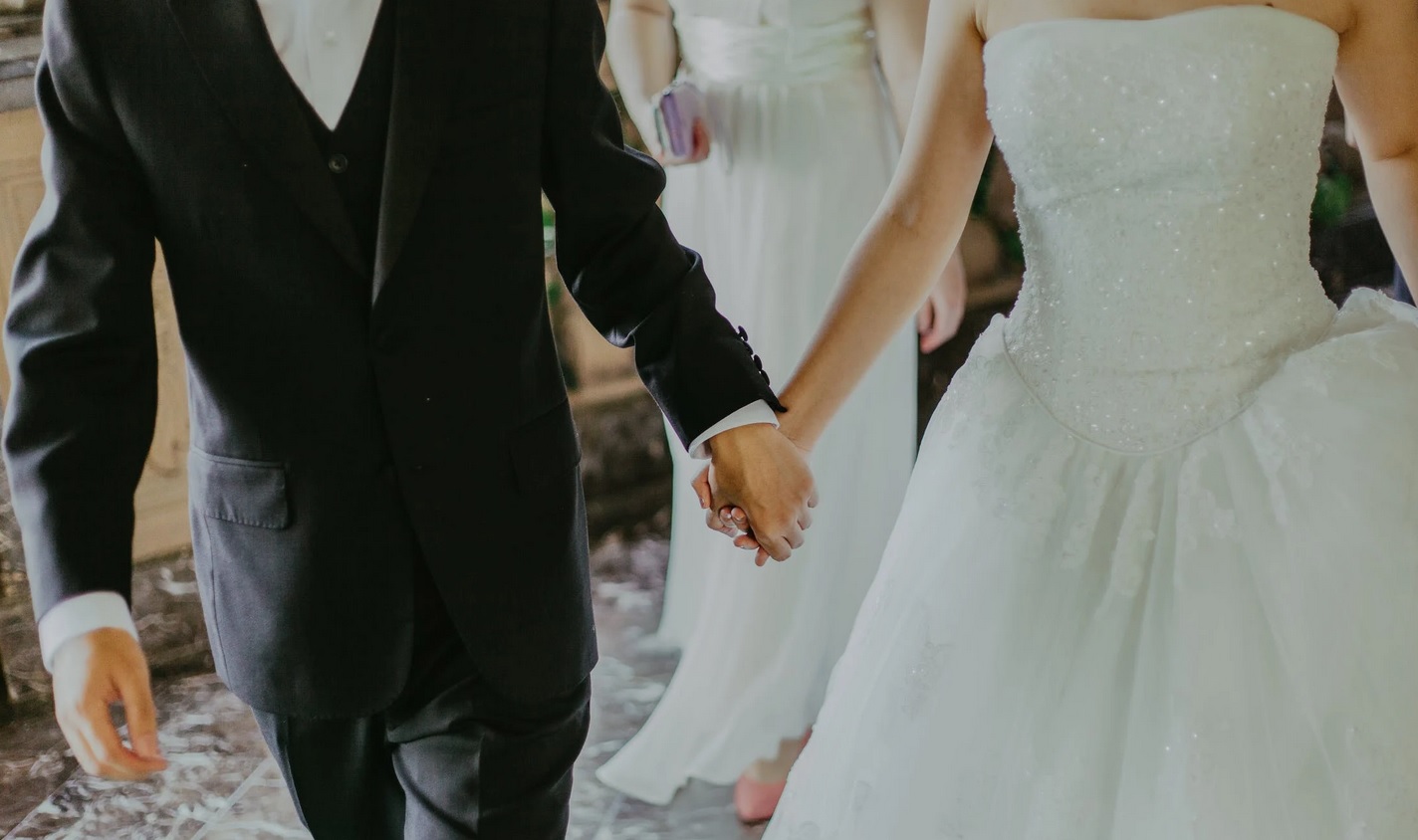
Supreme court: ENTREPRENEURS are recommended to conclude marital property agreement once the family’s economic status is significantly above average

NordenBladet – The Supreme Court of Estonia discussed a case where an entrepreneur had founded a fund in Malta and he transferred there the shares that belonged to the spouses’ common property. The husband that had been managing the shares could not continue anymore due to the worsening of health and thus gave the shares to the fund for professional management.

The wife did not agree to surrender the shares to the fund and came forth with a lawsuit, claiming to have the shares worth 63 million euros returned to the family’s common stock account. The husband, in return, claimed approval from court for the shares to be handed over to the fund. Courts concluded that the wife had the right to demand return of the shares to their common property and denied the husband from giving the shares to the fund.

Common property may not suit all spouses

The Supreme Court’s board of civil matters noted that the aim of common property is to equally value tha role of the spouse caring for the family and the children, and the role of the spouse that has the larger income from a job. On the other hand, spouses must work closely when managing the common property, this may inhibit the proper management in some cases.

Therefore having common property may not be reasonable when spouses are entrepreneurs or when the family’s financial status is significantly above average and both spouses wish to independently manage the property.

The board emphasized that the court cannot manage the common property on behalf of the spouses. When the spouses have a different understanding of managing the property or when the omissions of one spouse inhibit the proper management of the common property, then either upon mutual agreement or with the support of the court they can modify their property relations. Upon getting married, as well as during wedlock the common property may be specified with marital property agreement, also the property relations may be changed.

The Supreme Court also specified that although the founding of a fund for the succeeding generation is permissible, each spouse will be able to make demands only concerning their portion of the property. In case of common property the spouses must consider half of the property belonging to the other side. Even more advanced financial knowledge will not win access for one spouse to decide on behalf of the other, how the latter will use his/her property.

Featured image: Pexels
Source: NordenBladet.ee

Ratas: Imposing sanctions on Russia must continue until Ukraine’s victory

NordenBladet —

At their meeting today, President of the Riigikogu (Parliament of Estonia) Jüri Ratas and Prime Minister of Greece Kyriakos Mitsotakis discussed strengthening of cooperation and further supporting of Ukraine. Ratas said that imposing sanctions on Russia had to continue until Ukraine has won the war.

Ratas underlined at the meeting that although Estonia and Greece were far apart, relations between the two countries were good. “We share similar values not only in the European Union, but also in NATO,” he said. At the meeting, Ratas and Mitsotakis confirmed their common desire to develop the cooperation between the two countries, especially in the digital and cyber spheres. They also considered it important to strengthen the relations between the Estonian and Greek parliaments.

Ratas and Mitsotakis discussed the changed security situation caused by Russia’s aggression in Ukraine and the need to urgently implement the decisions of the NATO Madrid Summit and strengthen NATO’s Eastern flank. Ratas also emphasised the importance of Finland’s and Sweden’s accession to NATO in strengthening the defence capabilities of Europe.

Ratas pointed out it was crucial to continue supporting Ukraine in every way possible and at the same time to increase political and economic pressure on Russia to further raise the cost of aggression. “It is important to maintain the unity of the European Union and to go ahead with sanctions against Russia until Ukraine has won the war and Russia has lost it,” he said, expressing gratitude that Greece has supported all sanctions so far.

The relations between Greece and Turkey as well as issues relating to energy security were also spoken about at the meeting.

Photos of the meeting (Erik Peinar / Chancellery of the Riigikogu)

Source: Parliament of Estonia

STUDY: THE HAPPIEST is a middle-aged woman living in the countryside

NordenBladet – The study showed that the happiest is a 50+ woman who is financially stable, in a steady relationship and owns a home. She lives in the countryside and has a courtyard. “The Happy Neighbourhood Report” is a project that Bonava launched in 2017. As a part of the project, people from home markets are interviewed about what features they most value in their home and neighbourhood.

The Happiness index helps measure and compare the citizens’ satisfaction and happiness in their habitat. On a scale of 100 points, most satisfied with their homes are the Swedes (81 points), the northern neighbours Finns indicate this feature at 78 points. Equally satisfied with their homes are Estonians and Germans (76 points).

The happiest neighbour in Estonia is a committed woman aged 35-49 who is financially secure and owns a home. She has lived in her home for more than five years, owns a courtyard (terrace, balcony or garden) and lives close to a big city.

The responses indicated that people tend to stay in a known neighbourhood when choosing a place of residence. From the respondents 69% had lived in their home for more than five years and 75% of the respondents have been true to their neighbourhood and have lived there for more than five years.

Featured image: Pexels
Source: NordenBladet.ee

Sweden: Wreckage of 17th-century warship found by Swedish maritime archaeologists

NordenBladet — According to the Swedish Museum of Wrecks, the wreckage of the 17th-century warship Applet – the long-lost sister ship of the warship Vasa – has been found by Swedish maritime archaeologists.

Maritime archaeologist at the museum, Jim Hansson, explained, “Our pulses raced when we saw how similar the wreck was to Vasa.”

The Applet was launched in 1629 by the same shipbuilder as the famed warship, Vasa, which sank on its maiden voyage off the island of Vaxholm, just outside Sweden’s capital, Stockholm.

Hansson explained that the construction and the dimensions seemed “very familiar” to Vasa. Despite parts of the ship’s side having fallen off, the hull was preserved up to the lower gun-deck.

First discovered in December 2021, a study in spring 2022 revealed details that had been seen only on Vasa, such as technical details, measurements and wood samples.

“With Applet, we can add another key piece of the puzzle in the development of Swedish shipbuilding,” notes Hansson.


The Baltic Assembly sums up Latvia’s presidency

NordenBladet —

Today, the Estonian Delegation to the Baltic Assembly (BA) participates in the 41st Session of the Baltic Assembly and the 28th Baltic Council in Riga, where an overview of the achievements of Latvia’s presidency is presented and the Resolution of the Session will be adopted. At the end of the session, Latvia will hand over the presidency to Estonia, and the new President of the BA will be elected.

Deputy Head of the Estonian Delegation to the BA Sven Sester pointed out that since the beginning of Russia’s aggression, the Baltic States have distinguished themselves in the field of security. “This year will go down in history as the year when Estonia, Latvia and Lithuania took the lead in international defence cooperation and not only gave military assistance to Ukraine but also successfully conducted a persuasion campaign that resulted in Europe and NATO reassessing their relations with the aggressor,” he said. According to the Deputy Head of the Estonian Delegation, Estonia takes over the presidency of the Baltic Assembly with a strong will to continue building up a resilient, secure, reliable and sustainable Baltic region, which is especially important during the times there is a war going on in Europe. Sester underlined that the Ukrainian people had made and would continue to make untold sacrifices in that war, and therefore the international support for Ukraine must remain firm. “Russia’s defeat, restoring of the territorial integrity of Ukraine and post-war reconstruction is the only acceptable solution,” Sester said.

President of the Riigikogu (Parliament of Estonia) Jüri Ratas will also deliver a speech at the BA Session. He is sure that the Baltic States will continue giving Ukraine military, humanitarian as well as economic aid as long as needed. “We will also lend a hand in rebuilding Ukraine and give Ukraine our extensive support on their road to becoming a full-fledged member state of the European Union and NATO,” he said. Ratas added that besides resolving the security crisis, it was also necessary to find a clear and efficient solution to the largest energy crisis of the last decades, because this had a direct impact on the daily lives of the people in our region. “People must not be left without heating and we cannot accept a situation where they are forced to choose between buying bread or paying their electricity bill. We need to be ready for a situation where Russia disconnects us from its power grid, so that we could respond quickly and synchronise ourselves with the continental European network,” he said.

The 41st Session of the BA and the sitting of the 28th Baltic Council will hear the report of Latvia’s presidency, discuss how a strong and united Baltic society could be better prepared to face the challenges posed by external threats and look for short- and long-term solutions to ensure a common and resilient energy system in the Baltic States. Also, the Joint Statement of the Baltic Council will be signed, and the BA Resolution and the Final Document of the 41st Session will be adopted. Latvia will hand over the BA presidency to Estonia and Sven Sester will give an overview of the plans for Estonia’s presidency in 2023. In Friday evening, the Session will end with a ceremony where the BA Medals and the BA Prizes in Literature, the Arts, Science and Innovation will be awarded. The Baltic Assembly Prize in Literature was won by Estonian writer and poet Kai Aareleid for her novel “Vaikne ookean” (“Pacific Ocean”).

The 41st Session of the Baltic Assembly is attended by Deputy Head of the Estonian delegation Sven Sester and members of the delegation Mihhail Korb, Hele Everaus, Urve Tiidus, Kalvi Kõva, Helmen Kütt, Andres Metsoja and Anti Poolamets.

Source: Parliament of Estonia

Estonian Presidency of the BA will focus on security and climate crisis

NordenBladet —

Today, the Estonian Delegation to the Baltic Assembly (BA) participated in the 41st Session of the Baltic Assembly and the 28th Baltic Council in Riga, Latvia, where Latvia handed the BA Presidency over to Estonia and Head of the Estonian Delegation to the BA Aadu Must was elected the new President of the BA.

According to the Deputy Head of the Estonian Delegation to the BA Sven Sester, Estonia takes over the presidency of the Baltic Assembly with a strong will to continue building up a resilient, secure, reliable and sustainable Baltic region, which is especially important during the times there is a war going on in Europe. “By joining forces, we will also have greater capability and opportunities to deal with the challenges posed by Russia’s invasion, such as the economic and humanitarian crisis, energy security, disinformation and common concerns about the security of the Baltic States,” he said.

“Another challenge we will have to deal with in 2023 is the global warming, which will lead to catastrophic consequences, such as extinction of species and increased inequality,” Sester added and pointed out that the green transition had to be both effective and fair towards all. In his opinion, it is also important to deal with the challenges in education and culture, with cultural relations and media cooperation, vocational and technical education as well as strengthening the coordination between cultural and educational institutions. The Baltic Assembly will also continue to act as a bridge between the Eastern Partnership countries and the Nordic Countries, Benelux, Visegrad countries and other European countries.

President of the Riigikogu (Parliament of Estonia) Jüri Ratas delivered a speech at the BA Session and emphasised that the Baltic cooperation in security and defence has for a long time been considered one of the brightest examples of Baltic unity. “Since Russia’s act of aggression, the Baltic States have distinguished themselves in the field of security, and have cooperated more closely than ever before. Our support to Ukraine has been tangible, visible, and audible, and remarkably substantial on the global scale,” Ratas said. He underlined that close cooperation in strengthening deterrence and defence in the region also played an important part in developing NATO collective defence. “Together we can reinforce our messages to NATO allies, draw attention to the security challenges in the region, and affirm the commitment of the Baltic States to ensure sustainable funding for national defence,” he added.

Ratas said that besides resolving the security crisis, it was also necessary to find a clear and efficient solution to the largest energy crisis of the last decades. “We urgently need new and alternative energy sources that are not dependent of the whims of aggressive or undemocratic countries and do not drive the Baltic States and the rest of Europe into a corner or force them to go back on their principles or support for Ukraine. I firmly believe that as a region we have the strength and the will to find a common approach,” the President of the Riigikogu stated.

The Session of the Baltic Assembly was attended by Deputy Head of the Estonian delegation Sven Sester and members of the delegation Mihhail Korb, Hele Everaus, Urve Tiidus, Kalvi Kõva, Helmen Kütt, Andres Metsoja and Anti Poolamets.

Photos of the event:

Source: Parliament of Estonia