Reklaam

Helena-Reet Ennet

Helena-Reet Ennet
4698 POSTS 0 COMMENTS

Minister Tuppurainen and “We are Europe” tour to visit Oulu

NordenBladet — Minister for European Affairs Tytti Tuppurainen is inviting young people from Oulu, North Ostrobothnia and the Barents Euro-Arctic region to share their thoughts about Europe and its future on 30 November in Oulu. That same day, residents of the Oulu area are invited discuss EU matters over coffee with Minister for European Affairs Tuppurainen at an open event at the H20 Konstila café located in the Cultural Centre Valve.The events are part of the Finnish ministers’ “We are Europe” tour. This autumn and winter, several ministers will travel around the country to hear Finns’ thoughts and hopes about the development of the EU. Minister for European Affairs Tuppurainen will give an opening speech at the afternoon event at the Cultural Centre Valve, after which she will discuss topical EU issues with the residents of the region in attendance. Over a cup of coffee, participants will also hear a summary of the group sessions and panel discussions that took place at the youth event earlier in the day. “I’m very interested to hear what young people in the north have to say. It’s especially valuable for us to engage in dialogue together, across boundaries, as people in northern and Arctic regions share many of the same concerns, and we cooperate closely on a variety of issues. Passing along messages from young people in the north as part of the Conference on the Future of Europe is very important. I am equally excited to hear what kind of thoughts people in the Oulu region have on the future of Europe,” Minister for European Affairs Tuppurainen says.The youth event is intended for young people in the Barents Euro-Arctic region, and it will also be attended by youth from Sweden, Norway and Russia. The youth participants will first reflect on the future of Europe in working groups. The themes of the discussions were prepared in advance discussions organised at the UNESCO Associated Schools. The youth event will feature talks by Minister Tuppurainen, Ambassador for Barents and Northern Dimension Jari Vilén, Chair of the Oulu City Executive and conference delegate from the European Committee of the Regions Mirja Vehkaperä, and citizens’ representative Ninni Norra. The debriefing of the group work sessions and the full panel discussion will be streamed live. The seminar is organised by the Prime Minister’s Office, the City of Oulu, the Council of Oulu Region, the Ministry for Foreign Affairs and the Barents Euro-Arctic Presidency.   The Finnish ministers’ “We are Europe” tour is part of the Conference on the Future of Europe, which aims to collect a wide variety of views from EU citizens on the future of Europe. The issues raised in the discussions will be recorded in the conference’s Multilingual Digital Platform, and the Finnish ministers will pass the messages on at the conference’s EU-level Plenaries. You can also share your thoughts and ideas in the digital platform. The online forum seeks citizens’ views on values, climate change, the economy, health and education, and a variety of other themes. The common EU-level hashtag #TheFutureIsYours can be used on social media.Programme for the events in Oulu on Tuesday 30 November9.30–13.50 Youth event Participants must register for the event in advance. The event will be held in English.The debriefing of the group sessions and the youth panel discussion will be streamed online at 12.30-13.50.  15.30–16.30 Open event and coffee The event will be held at the H20 Konstila café located in the Cultural Centre Valve.

Source: Valtioneuvosto.fi

Chair of the Foreign Affairs Committee discusses Belarus border crisis with Baltic and Polish counterparts

NordenBladet —

Today, Chairman of the Foreign Affairs Committee of the Riigikogu (Parliament of Estonia) Marko Mihkelson attended a video conference of the Chairs of the Foreign Affairs Committees of the Parliaments of Estonia, Latvia, Lithuania and Poland to exchange information and coordinate activities relating to the security crisis on the borders of Belarus.

Mihkelson underlined that constant operational exchange of information and strong cooperation were of key importance as the hybrid attack organised by the Belarusian regime was intensifying. “The unity between the European Union Member States and the allies is undoubtedly of significant importance. We unequivocally condemn the activities of the Belarusian regime and repel all attempts to sow mistrust and discord among the Member States,” he said. “We stand in solidarity with Poland, Latvia and Lithuania, and we are following the developments very closely.”

Last week, the Chairs of the Foreign Affair Committees made a joint statement about the situation on the Polish-Belarusian border. It is planned to meet again on this Friday.

Source: Parliament of Estonia

Toward school meals to all

NordenBladet — Barley porridge, macaroni casserole and chicken fricassee – Finns are familiar with the classics of school meals. The international goal now is to include all the world’s children in school feeding by 2030. Minister for Development Cooperation and Foreign Trade Ville Skinnari, who serves as the World Food Programme (WFP) School Meals Champion, explains why school meals pay off.Photo: Elina ManninenFinland is a pioneer in providing school meals – we have been offering free school meals for over 70 years. We know from our experience that school meals support the learning, health and equal opportunities of children and young people. Minister Ville Skinnari, what kind of memories do you have of school meals? From the very first grade, school meals meant really a lot for a young athlete. The meal gave me energy to cope well in the afternoon both in schoolyard games and other leisure-time interests. There were school meals that were not my favourites, but later I came to like them, such as cauliflower soup. The chicken fricassee was not a favourite dish either and it may not be the number one in export products, but nutrients were in order and they made us cope. The best thing is if – and quite often when – you have only had poor breakfast and then you get proper nutrients from the school meal. Unfortunately, too many Finnish pupils pay too little attention to what they have for breakfast. Did you appreciate school meals in the past or has appreciation come up later? Memories grow sweeter with time – everything did not taste good at the time. Although there are challenges, I still trust the Finnish school meal system and that pupils get the necessary nutritional value from it. Sleep, nutrition and rest – also in a minister’s work you notice how important these are. Finland was the first country in the world to introduce free school meals, a very bold act during the war in 1943. The generations that preceded us had the courage to take measures that shaped the future, but what is the future of school meals? Municipalities should not make cuts in school meals to save money, and parents too are worried about this. As the WFP School Meals Champion I wish to appeal to Finland:  stick to the strengths you have! What do you wish to achieve as the WFP’s School Meals Champion? My main objective is to raise awareness of school meals internationally and to make different countries to introduce school meals. This is promoted by assembling an international coalition around this important issue. I lead the Coalition together with France and the World Food Programme. The Coalition seeks to support and develop school meal programmes in different countries, to reach all children who were excluded from school meals when schools were closed because of the coronavirus pandemic. We also aim to include children who could not enjoy school meals even before the pandemic. While the overall aim of the coalition is to include all children in the world to have school meals by 2030 efforts will be made at the same time to improve the quality of school meal programmes in high-income countries. In addition to this international work, my aim is to export Finnish school meal expertise and solutions. Finland is a pioneer of school feeding, and the Finnish system is considered a model example of well-implemented school meals. I want to export our experiences and solutions globally together with government actors, organisations and companies. Could Finland benefit from launching school feeding programmes in other countries? School feeding programmes are an important promoter of food security in the most fragile countries and, as a rule, the fact that food security improves and the conditions in these countries stabilise benefits Finland in many ways. Finland can in multiple ways support the launching of school feeding programmes in different countries and benefit from this development. For example, the Finnish business sector has a lot of expertise in practical solutions for school meals, such as digital solutions that support the planning of school meals. We have now put this expertise together – the next objective is to export it globally.  Links to other web sites:https://www.educationfinland.fi/schoolmeals

Source: Valtioneuvosto.fi

Reopening of society brings joy but polarisation of public discussion causes concern – Lockdown Dialogues recount experiences of the COVID-19 pandemic

NordenBladet — Lockdown Dialogues, a series of discussions launched at the beginning of the COVID-19 pandemic, continued on 27 October with people getting together to discuss their experiences during the past 18 months. The discussions revealed that while the reopening of society is a cause of joy and happiness, it also causes concern and disappointment.New rifts in society, particularly those caused by the COVID-19 vaccine debate, are the biggest cause of concern and disappointment. A number of participants expressed their willingness to listen to other people’s perspectives and to take part in the discussion, but were unable to see how that would be possible. They also felt bad about accusing unvaccinated people and labelling them as bad citizens; it is important not to exclude anyone in society. At the same time, however, many people feel frustrated about the pandemic becoming prolonged because some people refuse to be vaccinated. Long lockdown leaves its markParticipants were most worried about the coping and loneliness of the elderly and young people. Students have been unable to participate in social events and activities. Some participants found in-person interaction difficult; they felt they were less able to tolerate social interaction and became tired more quickly in these situations. While people felt mostly relieved and energised when remote work recommendations were lifted, returning to a hybrid work environment took some getting used to and involved building new practices. For organisations, operating in a virtual environment was a positive thing as it made it easier for people to participate in their activities.  The need to understand the views and thoughts of other people came up repeatedly in the discussions, as did the need to forge a stronger sense of community that had suffered during the pandemic. The pandemic has not treated everyone equally, and recovery is also happening differently in different groups. The question is how to find ways to hear those scarred by the pandemic and at the same time support those who are moving on.In the first autumn session, 12 dialogues were organised Åland, Espoo, Helsinki, Turku and Vantaa, with a total of 84 participants. The Lockdown Dialogues were organised by Dialogue Academy, Timeout Foundation, Citizen Forum, Finnish Lifelong Learning Foundation, Laurea University of Applied Sciences, Hippa-Remote and HYTKE projects of the Metropolia University of Applied Sciences,  City of Tampere Cultural Education Unit TAITE’s Art Arc programme, Turku Cathedral Parish, City of Vantaa and Ministry of Finance.The aim of the Lockdown Dialogues is to offer individuals, groups and organisations the opportunity to engage in constructive discussion and to build an understanding about what it is like to live in Finland during the COVID-19 crisis. Responsibility for the coordination of Lockdown Dialogues, compilation of a summary and its dissemination to central and local government, and open access publication rests with Dialogue Academy, Timeout Foundation, Ministry of Justice, Finnish Innovation Fund Sitra, Ministry of Finance and Prime Minister’s Office. The second session of the autumn’s Lockdown Dialogues will be held on Thursday 2 December. 

Source: Valtioneuvosto.fi

Foreign Minister Haavisto presents the priorities of Finland’s Presidency of the Barents Euro-Arctic Council in Rovaniemi

NordenBladet — Minister for Foreign Affairs Pekka Haavisto will present the priorities of Finland’s Presidency in connection with the Rovaniemi Arctic Spirit conference on 16 November. In Rovaniemi, the Minister will also meet representatives of the Sámi Parliament and speak at the University of Lapland.The first meeting of the Committee of Senior Officials during Finland’s Presidency of the Barents Euro-Arctic Council was held in Rovaniemi on 15 November. During its Presidency of the Barents Euro-Arctic Council, Finland’s objectives include strengthening biodiversity in the Barents region by combating invasive alien species, supporting the electrification of transport, strengthening young people’s opportunities for participation, supporting free movement, and improving transport connections.

Source: Valtioneuvosto.fi

The Finnish Presidency of the Barents Euro-Arctic Council 2021-2023

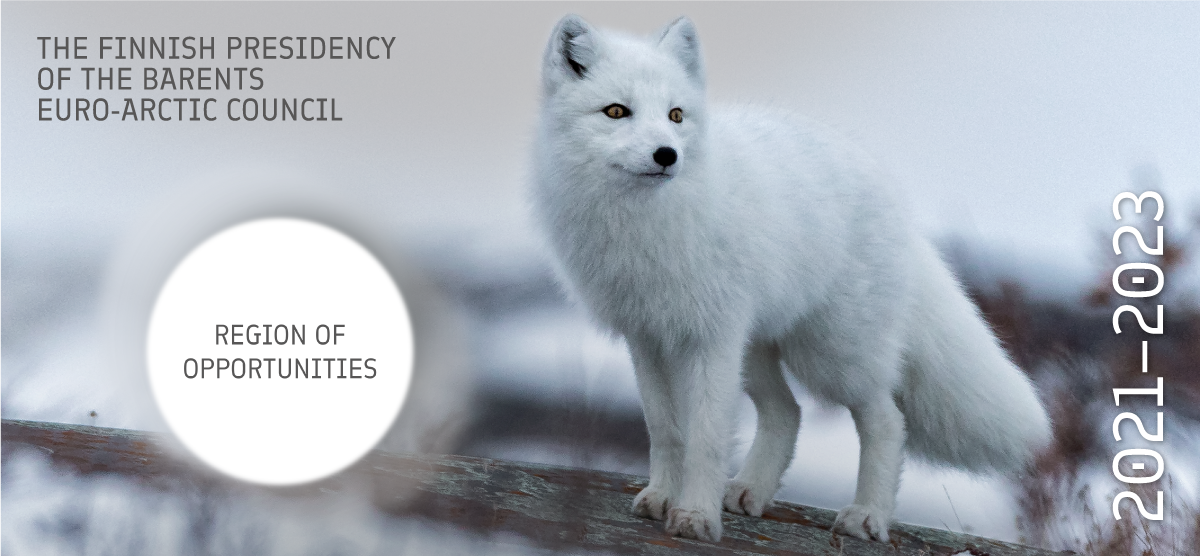
NordenBladet — Minister for Foreign Affairs Pekka Haavisto presents the priorities of Finland’s Chairmanship in connection with the Rovaniemi Arctic Spirit conference on 16 November.Arctic fox in the winter environment. And a text: Finnish Presidency in the Barents Euroarctic Council 2021-2023.During its Chairmanship of the Barents Euro-Arctic Council, Finland’s objectives include strengthening biodiversity in the Barents region by combating invasive alien species, supporting the electrification of transport, strengthening young people’s opportunities for participation, supporting free movement, and improving transport connections.

Source: Valtioneuvosto.fi

Foreign Minister Haavisto presents the priorities of Finland’s Chairmanship of the Barents Euro-Arctic Council in Rovaniemi

NordenBladet — Minister for Foreign Affairs Pekka Haavisto will present the priorities of Finland’s Chairmanship in connection with the Rovaniemi Arctic Spirit conference on 16 November. In Rovaniemi, the Minister will also meet representatives of the Sámi Parliament and speak at the University of Lapland.The first meeting of the Committee of Senior Officials during Finland’s Chairmanship of the Barents Euro-Arctic Council was held in Rovaniemi on 15 November. During its Chairmanship of the Barents Euro-Arctic Council, Finland’s objectives include strengthening biodiversity in the Barents region by combating invasive alien species, supporting the electrification of transport, strengthening young people’s opportunities for participation, supporting free movement, and improving transport connections.

Source: Valtioneuvosto.fi

The Riigikogu deliberates 17 Bills this working week

NordenBladet —

The Riigikogu approved the agenda for its remote sittings of this working week.

No deliberation of Bills or replies to interpellations have been scheduled for Monday’s sitting.

At Tuesday’s sitting, the Bill on Amendments to the Electronic Communications Act, the Building Code and the State Fees Act (437 SE) will be at the second reading.

The Bill on Amendments to the Family Law Act and Amendments to Other Associated Acts (474 SE) will be at the first reading.


At Wednesday’s sitting, four Bills will be at the third reading: the Bill on Amendments to the Covered Bonds Act and Other Acts (407 SE), the Bill on Amendments to the Building Code (395 SE), the Bill on Amendments to the Public Information Act (409 SE) and the Bill on Amendments to the Traffic Act (414 SE).

Nine Bills will be at the second reading:: the Bill on Amendments to the Land Reform Act and Other Acts (418 SE), the Family Mediation Bill (438 SE), the Bill on Amendments to the State Fees Act, the Code of Civil Procedure and Other Acts (443 SE), the Bill on Amendments to the Financial Supervision Authority Act and Other Acts (422 SE), the Bill on Amendments to the Gambling Tax Act and the State Budget Act (459 SE), the Bill on Amendments to the Value-Added Tax Act, the Bank of Estonia (Eesti Pank) Act and the Act on Amendments to the Value-Added Tax Act and the Customs Act (460 SE), the Bill on Amendments to the Alcohol, Tobacco, Fuel and Electricity Excise Duty Act and Other Acts (461 SE), the Bill on Amendments to the State Budget Act (436 SE) and the State Budget for 2022 Bill (464 SE).

One Bill will be at the first reading: the Bill on Amendments to the Maritime Safety Act (470 SE).

The deliberation of the matter of significant national importance “European Union’s and Estonia’s climate targets by 2035 – achieving ’Fit for 55’”, initiated by the European Union Affairs Committee, is scheduled for Thursday’s sitting,

During the open microphone, Peeter Ernits took the floor.

Video recordings of the sittings of the Riigikogu can be viewed at https://www.youtube.com/riigikogu.

(Please note that the recording will be uploaded with a delay.)

Source: Parliament of Estonia

Restrictions on food and beverage service businesses to continue until end of year

NordenBladet — The Government has extended the validity of the decree restricting the activities of food and beverage service businesses until 31 December 2021. Restrictions on food and beverage service businesses will be reintroduced in the regions of North Ostrobothnia, Pirkanmaa and Kanta-Häme and in the Hospital District of Länsi-Pohja.The degree will enter into force 15 November 2021. Restrictions on food and beverage service businesses will be introduced to the new regions on 17 November 2021.Last week, the Government decided that areas are no longer classified into different phases based on their epidemiological situation. Instead, a system of epidemiological characteristics for community transmission areas has been created that is better suited to the current situation. The Finnish Institute for Health and Welfare will publish information on the areas that meet these epidemiological characteristics on its website starting on 15 November.Press release of the Ministry of Social Affairs and Health: Ministry of Social Affairs and Health issues circular to regions on full application of action plan for hybrid strategyRestrictions on food and beverage service businesses in the regions of Southwest Finland, Satakunta, Päijät-Häme, Ostrobothnia, South Ostrobothnia, Central Ostrobothnia, North Ostrobothnia, Pirkanmaa, Uusimaa, Kymenlaakso and Kanta-Häme and in the Hospital District of Länsi-Pohja, which are all community transmission areas, from 17 NovemberFood and beverage service businesses may serve alcoholic beverages between 7.00 and 00.00 and be open between 5.00 and 1.00.Food and beverage service businesses that primarily serve alcoholic beverages may have only half the normal number of customer seats in use in their indoor and outdoor premises. Other food and beverage service are restricted to 75 per cent of their normal number of customer seats indoors.All customers must have their own seats at a table or similar in indoor premises.Businesses who require all customers to present a COVID-19 passport are exempt from the restrictions.Restrictions on food and beverage service businesses elsewhere in Finland from 17 NovemberThere are no separate restrictions on the number of customers or on licensing and opening hours.The obligation to observe the general hygiene guidelines and to keep a safe distance applies in all regions.Exceptions to restrictions remain unchangedThe restrictions laid down in the decree do not apply to the activities of staff restaurants or to takeaway sales of food to customers. The restrictions on opening hours do not apply to food and beverage service businesses on vessels and aircraft that operate between Finland and other countries or abroad or to food and beverage service businesses that operate at distribution stations for liquid fuels.

Source: Valtioneuvosto.fi

Becoming a water diplomacy influencer

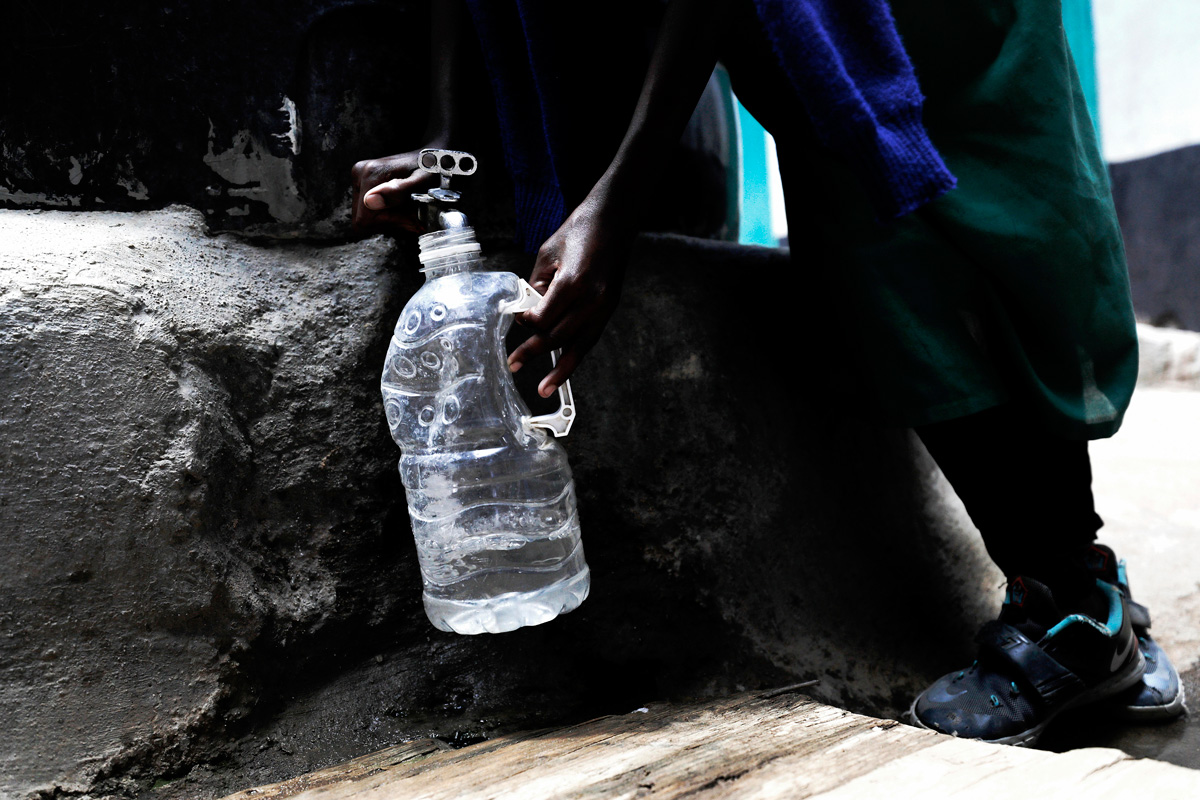
NordenBladet — Finland is renowned for its water and its technical expertise in the water sector. A recent evaluation calls for Finland to decide what kind of operator it would like to become in water diplomacy.Henkilö laskee vesihanasta vettä muovipulloon. Studies show that children living in a conflict environment are 20 times more likely to die from complications arising from contaminated water than to become victims of the actual armed conflict. Photo: Liisa TakalaFinland’s international water sector strategy seeks a water-secure world by the year 2030. This means ensuring that water suitable for each particular purpose is always available everywhere and for everyone in the world. It’s an ambitious goal, but Finland has lessons to draw from.One of the three packages in the strategy focuses on issues of peace and water. This theme is highly important: even though water resources are rarely mentioned in peace agreements, water has been part of the background to at least half of all conflicts since the end of the 1990s.Solid expertise …Published at the end of October, the evaluation examines how Finland’s water diplomacy has successfully resolved and prevented water-related tensions – and what could be done better in the future. Commissioned by the Ministry for Foreign Affairs, the independent evaluation focused on Finland’s work at the UN Economic Commission for Europe (UNECE), cross-border co-operation with Russia, and Finland’s support for transboundary water issues on the Mekong and Nile rivers.The overall assessment is highly favourable: Finland earns praise for its long-term support for the participatory management and use of water resources, and for developing international co-operation in the water sector. The evaluation finds that one special strength of Finland is its highly motivated and competent network of operators. Finland’s agreement with Russia on transboundary watercourses has been rated the best in the world. The evaluation finds that Finland has continuously demonstrated its capacity to respond to water-related tensions, and to apply evidence-based diplomacy and technical assistance.… for others to note as wellFinland accordingly has the capacity, the will and the operators – so what is missing? According to evaluation team leader Rens de Man, international operators remain too unfamiliar with Finland’s expertise. Finland must accordingly draw up a clear plan of how it can become a leading player in water diplomacy. To support implementation of the strategy, an interdepartmental organisation is needed to bring together the best expertise of various operators.“Conflict prevention calls for thorough knowledge of the operating environment. This, in turn, requires research institutes, civic organisations, businesses and Finnish missions to have clear roles, incentives and opportunities to serve as providers and mediators of the information that is needed in water diplomacy. It is already too late to gather information when the conflict has already erupted,” de Mans observes.Communication, preparation and smooth co-operation of the water diplomacy network are of paramount importance for Finland to be recognised as a credible and approachable partner.Read moreThe evaluation report and a video recording of its official release

Source: Valtioneuvosto.fi