NordenBladet — Minor children may use the My Kanta Pages themselves to view, for example, their EU Digital COVID Certificates, if they have the electronic identification tools required for this purpose. If necessary, the Certificate is also available as a paper version from the healthcare service.However, there is variation as to what information on minors is viewable in the My Kanta Pages or patient data systems. For this reason, healthcare units must prepare an operating model for providing minors with a printout of their EU Digital COVID Certificate and have their patient data systems updated with regard to the functionality that allows custodians to act on behalf of their minor children.Minors using healthcare servicesIf a minor is considered mature enough, they can decide on their own care. This decision is made separately in each case and it depends on the matter at hand. Healthcare professionals make an assessment in the case, and an entry of this assessment is then made in the patient records. If the minor can decide on their own care, they can also decide whether the patient records related to the healthcare visit can be viewed by the custodian.However, there are still many patient data systems where assessments made by healthcare professionals cannot be recorded. In this case, patient records cannot be shown to custodians. In general, people under ten years of age are rarely mature enough to decide on their own care. Because of this, the records concerning them can be shown to their custodians unless this is specifically blocked. Minors using My Kanta PagesMinor children may use the My Kanta Pages themselves if they have the electronic identifications tools required for this purpose. They can view, for example, their EU Digital COVID Certificates. Logging in to the My Kanta Pages service requires electronic identification, such as online banking codes. However, most banks issue these codes only to children aged 15 and over. It is also possible to log in to the service using a mobile certificate.Minors can also log in to the service using the Citizen Certificate stored on their identity card. Before the Citizen Certificate on the person’s identity card can be used for online services, the Certificate needs to be activated first. In Finland identity cards are issued by the police and abroad by Finnish missions. Public Service Info, which is an advice service for users of public services, gives advice on how to use the Citizen Certificate.In addition to the identity card, the user needs an electronic card reader and card reader software installed in their computer. Information on minors viewable to custodiansIn the My Kanta Pages service, custodians are able to view information on their children who are under the age of 10. Information on children aged 10 or over are shown to their custodians if the patient data system used by the healthcare organisation in question includes a functionality which allows to make a record of minors’ decision-making capacity and their consent to the disclosure of information. The requirement for giving custodians access to this information is that the information on minors’ decision-making capacity and their wish to allow their custodians to view their information is recorded in the patient data system. However, this functionality is not yet widely used in healthcare. So far only 10 per cent of public healthcare organisations have started using the functionality that enables custodians to view information on their minor children. Healthcare organisations can decide themselves when to introduce this functionality. The Kanta Services support healthcare organisations in introducing the functionality, and healthcare professionals are given training in the new operating model, for example. Despite this, the progress made in introducing the functionality is slow. Exceptional situations where information on minors is not shown to custodiansAt present, custodians are not able to act on behalf of their minor children in the My Kanta Pages if an entry has been made in the Population Information System stating that there is a shared care agreement or order concerning not only the child’s residential arrangements but also other arrangements. This will change at the end of this year. In future, custodians who have made an agreement on shared parental responsibilities will also be able to act on behalf of their minor children in the My Kanta Pages.The impact which non-disclosure for personal safety reasons has on the use of the My Kanta Pages will also be alleviated at the end of this year. At present, only custodians who themselves are under non-disclosure for personal safety reasons may act on behalf of their children in the My Kanta Pages. In future, each custodian may authorise the custodian who is not under non-disclosure for personal safety reasons to act on their child’s behalf. However, custodians will not be able to act on behalf of their children in the My Kanta Pages if their children are subject to non-disclosure for personal safety reasons.EU Digital COVID Certificate available as printout from healthcare serviceIf minors themselves or their custodians cannot access the My Kanta Pages to view the information stored in the service or to print out the EU Digital COVID Certificate, it is possible to get a printout of the Certificate from the healthcare service. The printing service is used in most public healthcare organisations.The Certificate must be requested from the healthcare unit that administered the vaccine or conducted the COVID-19 test.If the printing service is not used by the person’s own healthcare organisation, it is possible to ask for the Certificate from a neighbouring municipality. If, however, the person does not have a personal identity code but an identification code, only the healthcare unit that administered the vaccine can issue the Certificate. The healthcare service must decide on an operating model as to how it can provide minors with a printout of their EU Digital COVID Certificate easily.
NordenBladet – In an exclusive interview to NordenBladet, the long-time member of the Estonian National Museum team, Kristjan Raba, reveals his thoughts about life in the midst of the museum scene, about the succession of people in the position of the managing director of ERM, and sheds some light on the future plans of the museum.
For almost 20 years now you have been connected with the Estonian National Museum in Tartu. What has been the greatest challenge regarding your work? What delights you the most in the development of the museum? It was largely by chance that in the 90s, in the time of all opportunities, I came into contact with the museum, not yet knowing that life is offering me an opportunity to be involved in the preparations of „the edifice of the century”. In the task force for the modern and contemporary ERM premises program I had a double function. One was my job as a curator for the permanent exhibition theme hall „Nation and Republic”, and the other was my role as the head of marketing and sales for the exhibitions-events-museum studies, and we sought to realize our dreams back then. It was a big challenge, an enormous responsibility and an exciting time of self-growth with the goal of creating our nation’s memory site, a national museum. The architecture of the museum building has been widely acknowledged in Europe, the content, the technology – an exercise and execution of an innovative museological approach.
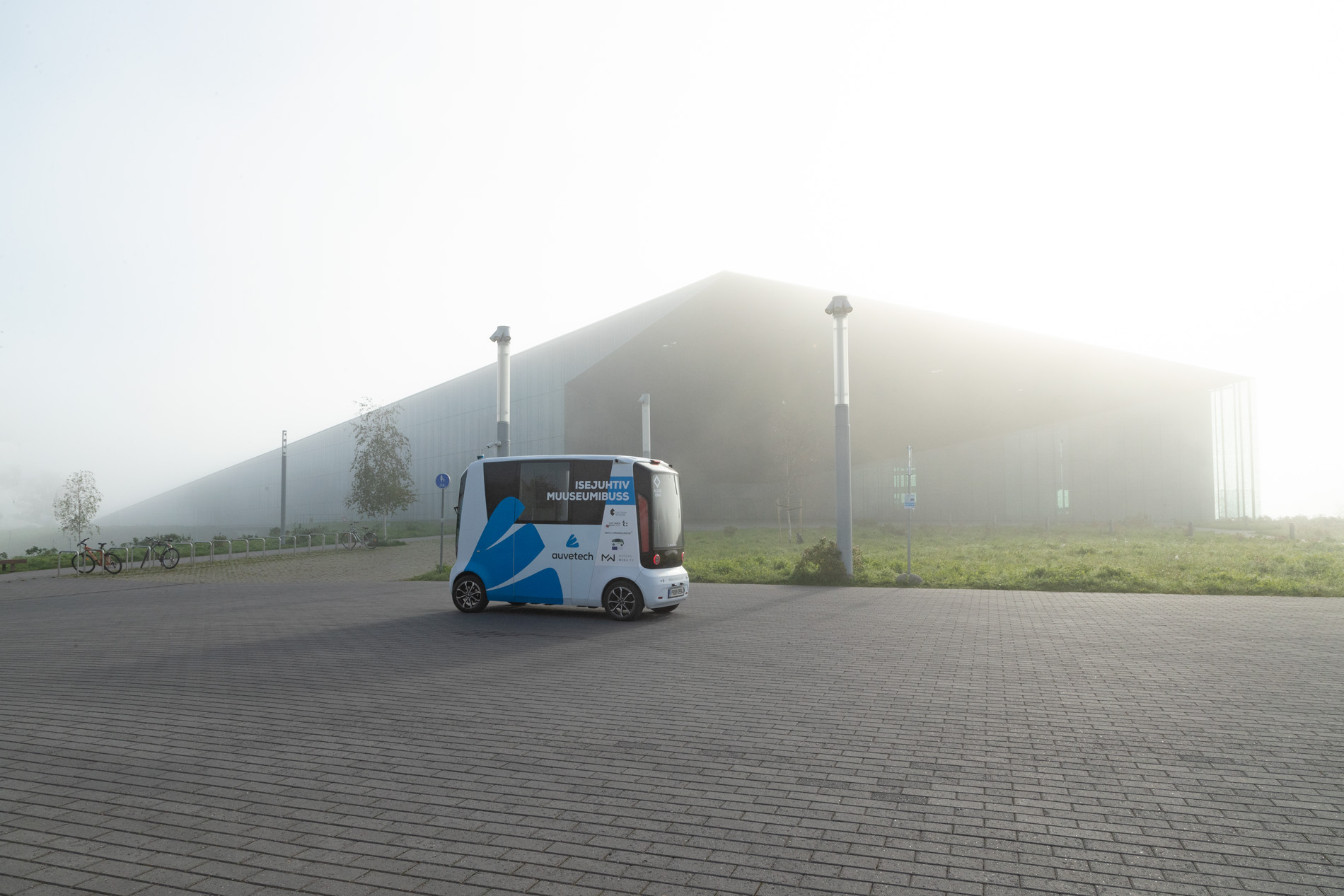
Autumnal ERM in Raadi, with the autonomous vehicle aka robot-museum bus without a human driver. Photo: Anu Ansu (ERM 2021)
This work is really perpetual, the process is ongoing. Among the greatest landmarks in Estonia – working towards this has been the greatest challenges in my professional life until now. ERM has moved back to its historic location where the museum as a brand received a new appearance, including renewed visual graphics. Together with several colleagues and experts in the field, this goes without saying, two new important permanent exhibitions were created. First of these, the scope of DYS gallery (participation hall), that as such is rather unique in the world and keeps the building busy with several events-spectacles-concerts. And as I watch the people, the families, walking in and around the museum, it makes me very glad. As dreamy as it may sound, the versatile life in the museum gives way to very interesting forms of collaboration, facilitates networking with creative souls. In a way, the museum keeps me fit, I, too, feel very youthful while the building recently celebrated its 5th birthday on October 1, 2021. The building hosts performances-fairs-exhibitions-teaching programs, and there is active digitizing work done for the sake of the new generations, so that the cultural heritage may be maintained in its entirety, so that it would be profoundly researched and be received by the people as the great gold reserve of Estonia.
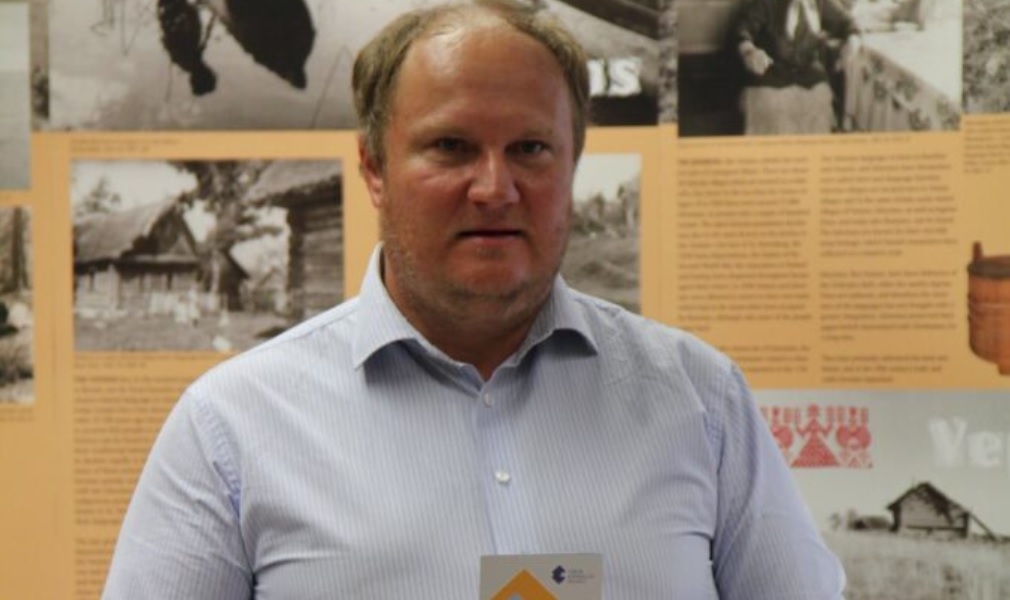
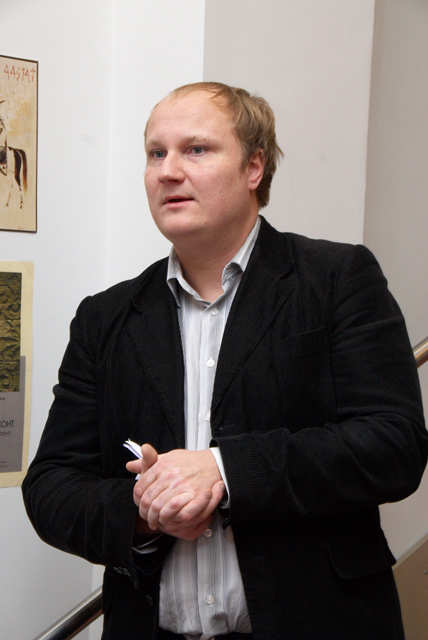
Head of ERM exhibition house Kristjan Raba in Raadi, 15.05.2009. (Photo: Arp Karm/ERM)
Keynote opening speech by Head of Exhibition house Kristjan Raba, 20.11.2008. (Photo: Merylin Suve/ERM)
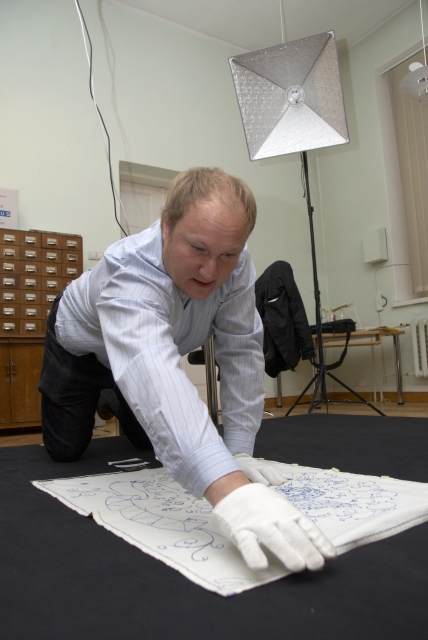
Digitizing ERM carpets collection, Head of exhibition house Kristjan Raba spreading out the carpet, autumn 2009. (Photo: Anu Ansu/ERM)
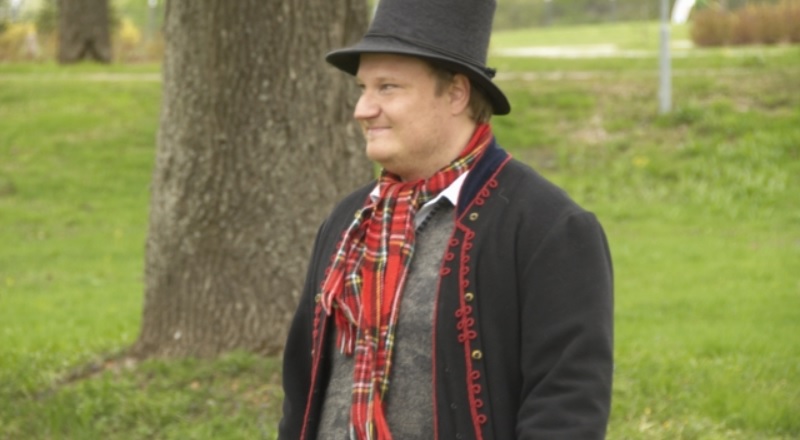
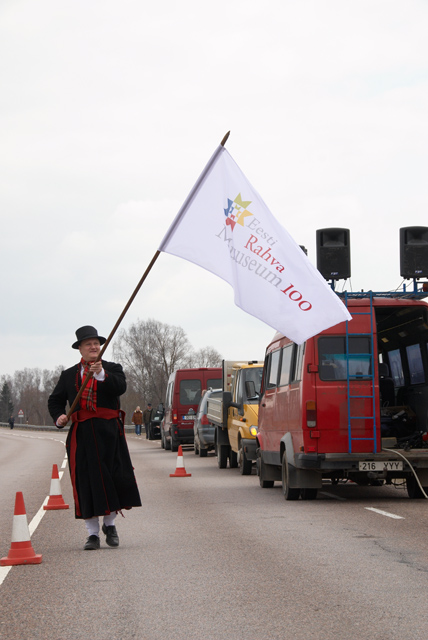
Kristjan Raba with ERM museum flag, 14.04.2009. Photo: (Arp Karm/ERM)
The previous director of ERM, Mr Alar Karis, is now the President of Estonia, and the Minister of Culture, Mrs Anneli Ott, summoned a nine-member committee to find a new director for the Estonian National Museum (ERM). Who is going to be the new director? A little more patience is needed now, until the new director starts in December, yet constantly there is new blood flowing in the museum’s circulation. In the process of electing the new director, ERM’s voice might have also been included at the committee table.
Currently it is undisclosed whether someone from among our colleagues set up their candidacy, also I have received several inquiries, my hope shone through and a few good candidates were to be found. It has now been announced that the director-to-be is the experienced leader in the field of culture, Mrs Kerttu Saks.
I suppose I myself have held each and every role in the museum: a gardener-streetsweep, a curator, designer, logistician, not a stranger to the work of an exhibition guide, I have worked with the team of storage-conservation, on marketing-ads-PR, and earlier also in the responsibilities of the vice director.
During the occasion when our director attended the ESTO days in America, I was in the function of the director in Tartu and we organized with the people of the song and dance festival a great celebration in Raadi, where the inspiration camp took place. Raadi is also the birthplace of lighting the festival torch at sunrise.
However, right now I have mostly focussed on conveying my experience and shaping the active cooperation among several European institutions. We wish to take our exhibition „Elas kord…” („Once upon a time…”) on a tour either to Finland, Denmark, France, or why not instead also to Japan, and we will be addressing the Danish Hans Cristian Andersen Museum with a concrete networking project proposal. We will continue the initiative launched by the newly elected president/the previous director, towards this goal.
Good international relations bring also good vibes to ERM, so that great ideas may emerge from them and the blush remains. I just returned from Denmark and just recently presented a paper at the House of European History where I attracted very positive feedback and interest regarding the ERM experience. There has been a good connection with the Scandinavian countries – with the National Museum of Finland, also our very good friends and partners are in Museum Centre Vapriikki, the ERM exhibitions have traveled widely in Finland from Turku to Jyväskylä, from Helsinki to Sami-Siida, since the Sami are also our fellow tribesmen and just now we have the month of tribesmen in Estonia. The new director certainly favors working towards the continuation of this route.
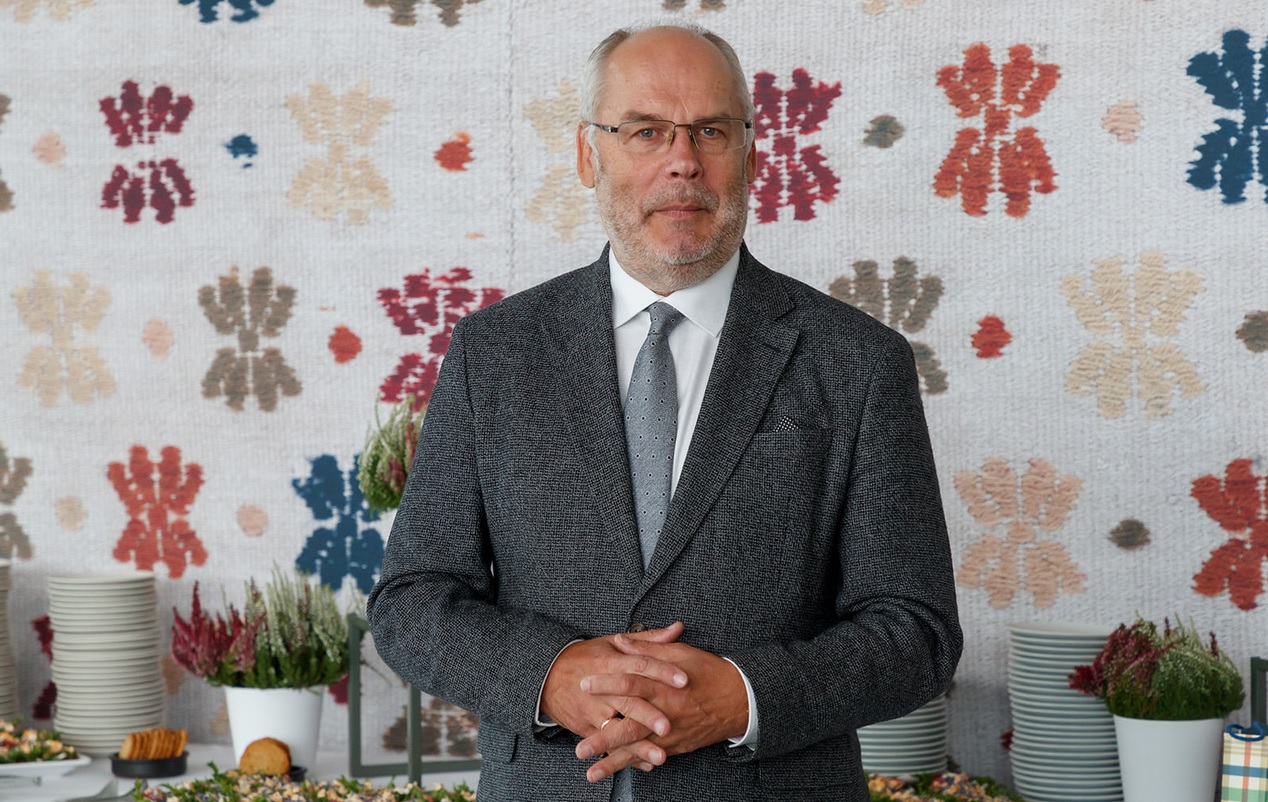
President of Estonia, Alar Karis during the final day in office at the Estonian National Museum. Photograph: ERM
Did you consider running for the position of ERM’s new director? Not really, although I have a vision regarding the role of the new director, and several great recommendations for the new person, so that it would be possible to readily fit in and be able to avoid discovering the somewhat unnecessary paths to the goal. Currently it is essential, as the head of the central museum, to maintain a positive perception bias in the society and signal that visits to the museum are safe, that the cultural heritage helps support emotional wellbeing, that guests and families that come in small groups can definitely feel safe and that it is going to be a great experience.
Also school teachers with their pupils should visit, since the museum offers a healthy and instructive environment to strengthen the formal education, ERM’s new building and the exhibitions offer a really great opportunity for that, and everything stems from researched materials, scientific work, and modern museological benchmarks, along with inclusive action and participation, as we have introduced it for many years in our participation hall.
What will ERM offer in order to excite the visitor during this season? The exhibitions „Once upon a time…” as well as „Our home witch kitchen” recently became history. What comes after them? The contest for the year 2022 recently closed. The public vote determined the winning project and it will be lead by high-spirited women – those who do woodwork, self-made carpenters, and women with vim and golden hands in several areas of life.
A more global dimension will be introduced by J. Lotman 100, the implementation fully designed by ERM. We collaborate with Uni Tartu semiotics, and this exhibition, too, will likely travel the world, since the significance of J. Lotman and the impact of his school extend from Moscow to Paris and further. Right after the exhibition „Our home witch kitchen” the same hall will host the exhibition „Inclusive LIFE”, This exhibition will cater information and offer a practical exposition, and will invite the visitor to join in and help find the solutions in the areas of better accessibility and inclusive design, and will urge to reflect whether special needs are really that special. By hosting these projects we will also accumulate knowldege and collect hints on how to animate time and again the permanent exhibition „Encounters” that has a wide spectrum of target groups.
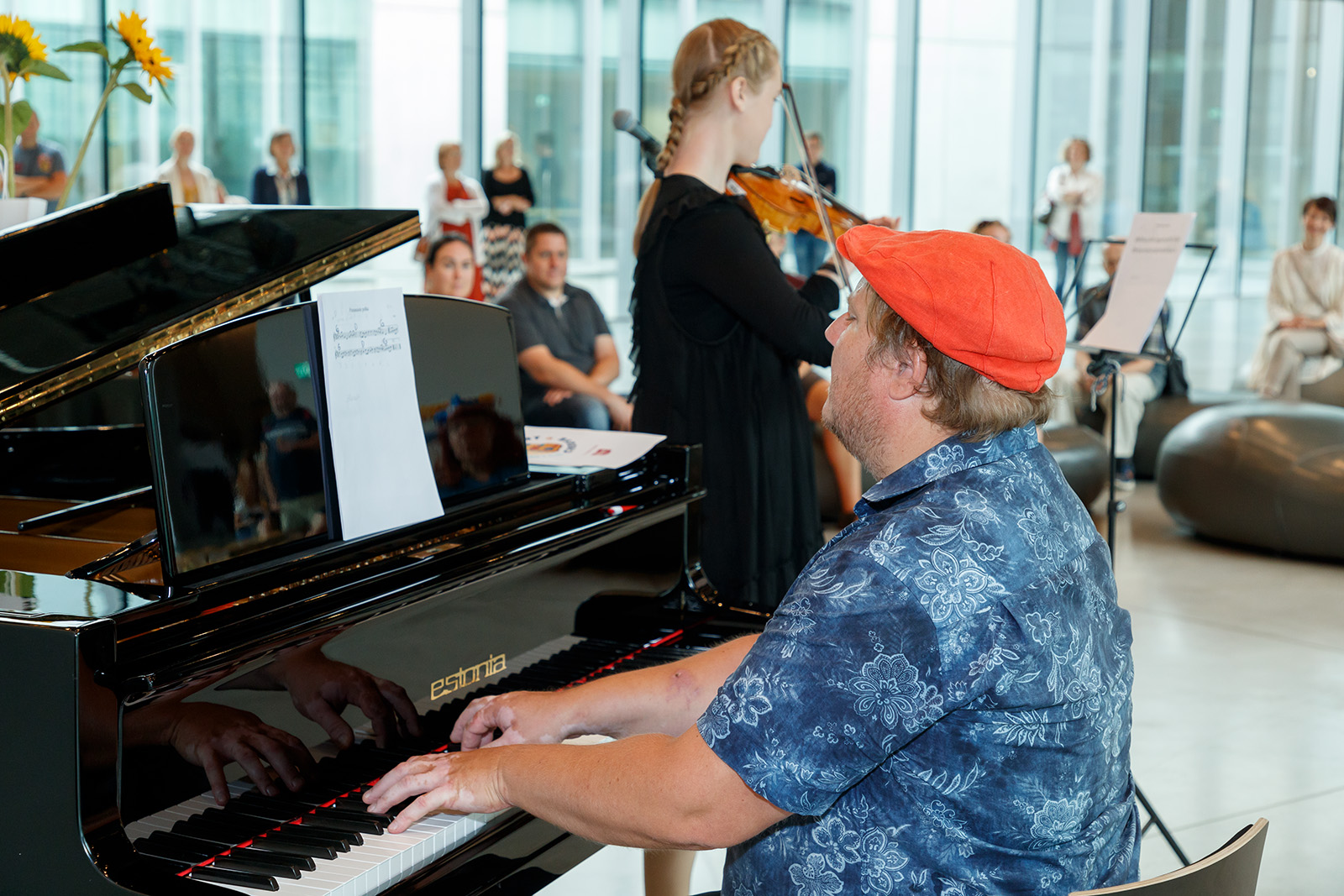
Kristjan Raba accompanying on piano the young violinist Estella Elisheva, during the opening ceremony of the exhibition, in the spacious lobby hall, summer 2021. Photo: (Arp Karm/ERM)
Kristjan Raba at the grand opening event of the exhibition “Our home witch kitchen” in ERM’s participation hall. Photo: NordenBladet
Which direction is the „exhibition trend” bending? What kind of exhibitions win the most visitors and what are people willing to see? What is the proportion of foreign visitors? Who are the artists and what are the types of exhibitions that you most wish to attract to ERM? The trends are diverse, the challenge here would be smart solutions and networking. A matter of survival would be which communities we will be able to team up with, how to detect the topics that speak to the visitor, that are relevant in the society, and not „excessively sophisticated”. ERM as the central museum will always present a special program in connection with important events in our country, or also we will reveal objects-stories that address the public or that gives us in Estonia reason always to be proud of.
The share of international guests in a global situation like this is obviously slightly smaller, but we won back our Baltic visitors soon enough, we gladly saw Finns among our guests last summer as well as now. We cordially invite also the Swedes and the Norwegians to visit the Estonian National Museum, since for example with the Swedish colleagues we have had fruitful professional contacts (i.e. with Nordiska, ERM’s exhibition has toured in Skansen). We are adding volume to the collaboration that is directed towards Norway in relation to Tartu 2024, since the small town of Bodö will celebrate the same festival as us here.
Our cultural cooperation has brought here a blacksmith-metal artist from Lofoten, Norway, when ERM arranged a joint exhibition of Nordic blacksmiths in cooperation with the Estonian Blacksmith Association. Finland has maintained very strong traditions and skills of blacksmithing. ERM also contributed to the project „Brod in Norden” that was lead by the Danish colleagues and from there emerged the spirit to collaborate with Denmark also now, as Denmark has the similar Museum Centre Moesgaard as is our ERM, and they have always welcomed us warmly. We have quite a lot to learn from them, and they have also been interested in our solutions in museology. It wasn’t for nothing that ERM earned the Kenneth Hudson special award after the new building opened.
Currently ERM is expecting guests from Zürich and they will set up the exhibition „Silva” (observations of nature-sounds-environmental topics). It is going to be an exciting sensual and digital installation that will help address contemporary environmental issues also as a part of our permanent exhibition „Encounters”.
Head of exhibitions Kristjan Raba, opening event of the Finno-Ugric exhibition. Photo: ERM
Are you an active visitor of museums yourself? What has been the brightest memory outside the home museum? Professional interest has indeed driven me to various museums of the world. The most recent lucid experience was in the House of European History in Brussels, and also the Musical Instruments Museum in Brussels in a historic Art Nouveau style building. A splendid impression have always been the V&A monumental exhibitions, be it fashion or technology, and where we have also held negotiations about a touring exhibition. An experience has also been the general British scope, the well-designed spacial encounters, the engagement of collections, the storytelling. And again I recall the sweet little Hans Christian Andersen Hus in Odense, Denmark, that has just recently launched a brand new museum area. Among its creators, the spirit of the Japanese architect Kengo Kuma with his perception of nature is clearly felt, just as in ERM here and there we recognize the vision of the Japanese architect Tsuyoshi Tane, coming alive.
The Estonian National Museum building has a pleasant atmosphere and the light interacts with the surrounding nature. Surely a good memory is from the Norwegian minute museums in Lofoten where the impression reminded me of the experience from the homeland’s Heimtal museum, or also the very nice Vikings exhibition currently open in the National Museum of Denmark, where also their restaurant offers wonderful coffee. A great museum is always a unity of impressions-experiences-understandings.
Main photo: Estonian National Museum’s Head of exhibitions, Kristjan Raba. Photo: ERM 2018
Source: NordenBadet.ee
NordenBladet — Minister of Local Government Sirpa Paatero has launched a full reform of the Municipality of Residence Act. The steering group and the law-drafting group of the legislative project will prepare the reform. First, they will identify the needs to change the legislation on people’s municipality of residence, and then, based on these needs, they will prepare a proposal for a new Municipality of Residence Act and for the necessary changes to other legislation.The Municipality of Residence Act provides how a person’s municipality of residence and place of residence are determined. In spring 2020, a working group set up to determine the need for changes to the Municipality of Residence Act proposed an overhaul of the act, which would mean enacting a new act to replace the current one. The current act is more than 25 years old, and it has been amended on many occasions.The legislative project is set to examine the current state of legislation on municipality of residence and identify the need for changes. The project is to pay particular attention to problems that have emerged in the application of the Municipality of Residence Act and the ways it affects people’s rights and obligations laid down elsewhere in legislation. A key objective of the project is to ensure that the municipality of residence entries made in the Population Information System are up to date and accurate so that other authorities can trust them in their own decision-making. Another aim is to safeguard people’s fundamental rights. A number of other acts and decrees refer to the Municipality of Residence Act or to a person’s municipality of residence. This means that changes to the Municipality of Residence Act may have an impact on the activities of many branches of government. For this reason, the steering group and law-drafting group preparing the reform will have representatives from the Association of Finnish Local and Regional Authorities and from the ministries and agencies that play key roles in the application of the Municipality of Residence Act.The project runs from 12 October 2021 to 31 March 2023. The steering group is chaired by Permanent Under-Secretary of State Päivi Nerg and the law-drafting group is chaired by Senior Ministerial Adviser Ville Koponen from the Ministry of Finance.
NordenBladet — The Ministry for Foreign Affairs has appointed a working group to assess the need to amend the Act on the Making of Decisions Concerning the Provision of and Request for International Assistance (418/2017). The working group will prepare the necessary legislative amendments based on the lessons learned from the evacuation operation in Afghanistan.On 20 August 2021, the President of the Republic made a decision, supported by Parliament, to send a Defence Forces’ unit to safeguard the relief effort at Kabul Airport. The decision was made under the Act on the Making of Decisions Concerning the Provision of and Request for International Assistance. This was the first time that this Act was applied after its entry into force (July 2017).
In a festive ceremony at the beginning of the sitting of the Riigikogu, Alar Karis took the oath of office of the President of the Republic and delivered a speech before the Riigikogu. President Kersti Kaljulaid also made a speech.
After that, the Riigikogu continued with its regular sitting to discuss the Cultural Development Plan 2021–2030. Minister of Culture Anneli Ott and member of the Cultural Affairs Committee Heidy Purga made reports.
The Cultural Development Plan 2021–2030 is a document that sets strategic goals for the cultural sector and it is a follow-up strategy for the document “The Fundamentals of the Cultural Policy until 2020”.
The development plan sets out that the shaping and implementation of the cultural policy is guided by our constitutional objective to guarantee the preservation of the Estonian nation, language and culture through the ages, as well as the principles of freedom of the arts and sciences, the right to property, and cultural diversity defined in the Charter of Fundamental Rights of the European Union.
The Minister of Culture explained that the development plan had been drawn up as a joint creation of several ministries, the Government Office, the Association of Estonian Cities and Municipalities, as well as a result of cooperation between experts and representatives of the cultural sector. The drafting of the development plan has taken into account various analyses and studies, expert opinions, international level documents, the results of public discussions and engagement events, as well as the results of the implementation of the Fundamentals of the Cultural Policy until 2020.
Ott noted that, when the preparations for drafting a new development plan had started at the beginning of 2018, it had been found that the new strategy document should lay down a clearer cultural policy vision that would also take into account the proposals of the actors in the sector and the ideas and opinions of people who cared about the future of the Estonian culture. Under the leadership of the Ministry of Culture, seminars and development discussions had been held, where representatives of the public, private and voluntary sector had been invited. Besides that, there had been several meetings with representatives of the ministries that were sectorally connected with the organisations, and other interested parties.
Ott said that discussion days had taken place in all counties in 2019. In autumn 2020, meetings with representatives of all sectors were held. The vision document “Culture 2030”, which was created as a result of joint cooperation and a contribution by all, sets the following sub-aims: to keep the Estonian cultural life strong and functioning; to ensure that the Estonian cultural memory is cared for and valued; and that culture and creativity are valued in the development of society. They will contribute to the overarching aim: the Estonian culture is viable, it is developing and is open to the world, and participation in culture is a natural part of every person’s life.
Ott said that one of the main questions was what imprint the global crisis had left on our culture and for how long it would continue to influence the sector. “The state has taken several steps to mitigate the impact of the crisis on the sector. If the cultural and sport sector received a total of 25 million euro of crisis assistance in March 2020, the supplementary budget adopted in mid-April this year allocated 42 million euro to the area of administration of the Ministry of Culture,” Ott noted. She added that that was important support that had helped keep the operational structures and jobs functioning. “The current crisis has shown to us how different sectors are interlinked and therefore we are pointing out in the development plan that it is necessary to support the institutions, organisations, creative persons and businesses in the cultural sector in overcoming the current crisis, in recovery and in adapting to the long-term impacts of the crisis,” Ott explained. She underlined that it was definitely important to increase the capacity of the whole cultural sector to prevent, mitigate and manage risks, and to prepare for future crises.
Ott pointed out that the time of the crisis had boosted changes and had dramatically highlighted the issue of digitalisation. “Culture 2030” considers it very important to take action to make the Estonian culture and culture in the Estonian language more widely available on digital platforms.
Ott explained that the development plan was a very extensive document that set out the general objectives. “And this development plan covers a large number of cultural managers, involving a very wide range of sectors. This development plan is not just a working document of the Ministry of Culture. It is a working document of the whole sector, which means that it cannot spell out in great detail who needs to do what, or which programme is going to be implemented. The programmes will emerge while the objectives of the development plan are being implemented,” the Minister of Culture said.
In conclusion, Ott said, “the Estonian culture is thriving, but it needs the common care of us all. We have a clear and strong vision of what the Estonian culture should be like in 2030, and we are capable of achieving these objectives with joint efforts of all parties involved.”
Member of the Cultural Affairs Committee Heidy Purga gave an overview of the discussion that had taken place in the Cultural Affairs Committee.
During the debate, Signe Kivi (Reform Party), Eduard Odinets (Social Democratic Party), Marko Šorin (Centre Party), Helle-Moonika Helme (Estonian Conservative People’s Party), Üllar Saaremäe (Isamaa) and Tarmo Kruusimäe (Isamaa) took the floor.
Minister of Culture Anneli Ott replied to the interpellation concerning the valuing and protection of the Estonian vernacular architecture (No 82), submitted by members of the Riigikogu.
NordenBladet — A Swedish translation of the Finnish integration glossary has been published. The glossary on integration harmonises the use of concepts related to integration, equality and discrimination.The glossary was originally published in Finnish together with the Swedish equivalents in June 2021. Definitions and comments of terms in Swedish have now been added to the glossary. The glossary emphasises equality and immigrants’ active role. Instead of kotouttaminen, the glossary recommends the use of kotoutumisen edistäminen. The glossary defines concepts related to the Integration Act (Act on the Promotion of Immigration Integration) and key integration services. Concepts of equality, inclusion and discrimination have also been included in the new glossary. The terms used in politics and legislation affect the language of the authorities and customer services as well as the general debate and attitudes. New terms emphasise equalityThe terms have been evaluated from the perspective of equality: do the concepts promote equality or reduce it? Based on the evaluation, the term maahanmuuttanut has been added to the glossary alongside the term maahanmuuttaja. The first term clearly indicates a person who has moved to the country. According to the glossary, the term maahanmuuttaja should not be used when referring to persons presumed to be immigrants, for example based on their name, appearance or mother tongue. The term should only be used in situations where the term has an explanatory value, such as statistics. The Swedish term invandrad can be used to replace the term invandrare. The term invandrare is often used in legislation, but it is considered to have a negative tone. The term nyanlända invandrare is also used in legislation in Sweden.Integration is a multi-dimensional process Integration is a two-way or multi-dimensional process in which the surrounding society also changes and evolves as a result of immigration. The concept of integration in Swedish and English describes this two-way approach well. In the glossary, the concept of kotoutuminen is, however, defined as an individual process by each immigrant that occurs in interaction with society and during which the immigrant’s participation, inclusion and equality in society will increase. The concepts of kotoutuminen and yhteiskunnan vastaanottavuus describe a two-way process.The term kotouttaminen has been replaced with the term kotoutumisen edistäminen. The term kotouttaminen is not recommended as it can be interpreted to mean that an immigrant is merely an object of activity and does not have an active role in integration. Promoting integration also involves promoting the receptiveness of society.Discussion on integration concepts to continue in broad cooperation The integration glossary has been published as a bilingual first edition in the publication series of the Ministry of Economic Affairs and Employment. New concepts may be added to the glossary in connection with the reform of the Integration Act and services promoting integration. The work on concepts will continue in cooperation with stakeholders, such as various organisations and the Advisory Board for Ethnic Relations (ETNO). The Ministry of Economic Affairs and Employment and the Finnish Terminology Centre launched the project on integration glossary in August 2019. In addition to specialists of the Ministry of Economic Affairs and Employment, the working group included representatives of the Ministry of Justice (ETNO), ELY Centres, TE Services, Finnish Institute for Health and Welfare, Family Federation of Finland, Finnish National Agency for Education.
NordenBladet — The Ministry of Education and Culture and the Finnish Institute for Health and Welfare have issued new health security recommendations for early childhood education and care, schools, educational institutions and higher education institutions, taking into account the amendments to the Communicable Diseases Act and the transition to local and regional measures when lifting the restrictions. The recommendations have been updated to correspond to other recommendations and Government guidelines related to the coronavirus epidemic currently in effect. The purpose of the recommendations is to support the organisation of early childhood education and care and education and training safely and to give guidance on the safe use of spaces during the COVID-19 epidemic. By complying with the recommendations, infections can be prevented and the number of people exposed to the virus can be reduced. If regional clusters of infection emerge, they will primarily be managed through local and regional measures in line with the Communicable Diseases Act. The new recommendations replace the corresponding recommendations issued in August.Recommendations on the use of masks may vary regionallyBased on monitoring by the Finnish Institute for Health and Welfare, the risk of infection in early childhood education and care, in schools and in educational institutions has been low, and there is no need to issue general national recommendations on the use of masks in the education sector.Based on their risk assessment, the competent authorities in the regions and local areas may issue supplementary or more limited recommendations in their area or locally depending on the epidemiological situation. Education providers are responsible for the safety of the learning environment and can issue their own recommendations on the use of masks in teaching and examination facilities. This means that recommendations on the use of masks in educational institutions, schools and early childhood education and care may vary regionally and between educational institutions.The temporary provisions in the Communicable Diseases Act on measures to prevent the spread of the COVID-19 epidemic will remain in force until 31 December 2021. Under the Communicable Diseases Act, more intensive cleaning of premises and surfaces must continue and opportunities for everyone to clean their hands must be ensured, for example. The earlier requirement the Communicable Diseases Act of two metres of distancing between people has been revoked. However, it is still advisable to make it possible for everyone to assemble as widely apart as possible. Sufficient distancing between people and avoiding close contacts prevent infections. The national recommendation to keep teaching groups separate can be lifted. The earlier national recommendation to keep a safe distance of at least two metres can also be lifted.Procedures and practices to follow powers under the Communicable Diseases ActIn line with the Government Resolution of 9 September 2021, the restrictions and recommendations that were based on a system of classifying regions into different phases (baseline, acceleration phase and community transmission phase) will be discontinued once sufficient vaccination coverage has been achieved. Restrictions in place at the regional level can be gradually lifted even earlier if the epidemiological situation makes it possible. The procedures and practices in early childhood education and care, schools, educational institutions and higher education institutions are based on the acts regulating their activities and primarily on the powers laid down in the Communicable Diseases Act.To prevent the spread of possible infections, it is important that everyone follows a practice where people who have symptoms or illnesses do not participate in early childhood education and care, teaching and other activities organised in the premises of educational institutions.Recommendations by the Finnish Institute for Health and Welfare and the Ministry of Education and Culture for providers of education and early childhood education and care during the COVID-19 epidemic (PDF)Recommendations of the Finnish Institute for Health and Welfare and the Ministry of Education and Culture to universities, universities of applied sciences and providers of general upper secondary education, vocational education and training, liberal adult education and basic education for adults during the coronavirus epidemic (PDF)
NordenBladet — The 16th meeting of the Finnish-Russian Intergovernmental Commission for Economic Cooperation will be held in Helsinki on 14 October 2021. The Commission is co-chaired by Minister for Development Cooperation and Foreign Trade Ville Skinnari and Russia’s Minister of Industry and Trade Denis Manturov. The meeting will address issues related to business environment in Finland and Russia, potential sectors of cooperation, and current topics of the Commission’s working groups. The ministers will also meet representatives of Finnish and Russian companies.The Intergovernmental Commission for Economic Cooperation aims to support business operations and to build contacts between Finnish and Russian companies. The Commission consists of sectoral and regional working groups. The previous meeting of the Commission was held in St Petersburg in 2018. However, the Commission’s co-chairs met this summer in connection with the St. Petersburg International Economic Forum. Finnish Minister for Development Cooperation and Foreign Trade Ville Skinnari and Russian Minister of Industry and Trade Denis Manturov The Commission’s working groups are an important channel for cooperation between Finnish and Russian authorities. The working groups have also continued their cooperation via remote connections during the coronavirus epidemic. Concrete cooperation takes place in the transport, energy and forest industry sectors.“The work of the Intergovernmental Commission for Economic Cooperation is important for Finnish companies operating in Russia, and it is also a key channel for cooperation between the authorities. I am pleased that we can organise the meeting in Helsinki this year. I look forward to the discussion with Minister Manturov, especially on opportunities for cooperation in the forest sector. We also have a separate meeting with Finnish and Russian companies,” Minister Skinnari says. “Our important partners in this meeting are the Finnish-Russian Chamber of Commerce and East Office.”Minister of Economic Affairs Mika Lintilä will also meet Minister Manturov in connection with the Commission’s meeting. They will discuss topical themes related to the Commission’s working groups, which are managed by the Ministry of Economic Affairs and Employment.“Finnish companies have a lot of expertise in the bioeconomy, circular economy and energy technology, and I believe that through cooperation with the Commission we can further increase our trade and economic cooperation. Finland and Russia have common goals in improving energy efficiency and reducing emissions, for example,” Lintilä says.More than 900 Finnish companies are currently established in Russia, and the value of Finnish investments in the country totals approximately EUR 15 billion. Russia is the sixth most important destination for Finnish exports and the third largest country of origin for Finnish imports. Trade with Russia is subject to both the economic and sectoral sanctions imposed by the EU and Russia’s counter-sanctions. Due to the illegal annexation of Crimea and the conflict in Eastern Ukraine, the EU’s sanctions against Russia are still in place.
NordenBladet — The Climate Policy Roundtable will hold its 11th meeting on Wednesday 13 October. The meeting will focus on the low-carbon circular economy agreement, which aims to boost the achievement of the objectives set in the Circular Economy Programme completed in spring 2021.The Government adopted a Resolution on the Circular Economy Programme in April 2021. According to this, the consumption of non-renewable natural resources will decrease and the sustainable use of renewable natural resources may increase to the extent that the total consumption of primary raw materials in Finland in 2035 will not exceed what it was in 2015. The productivity of resources must be doubled by 2035 from the situation in 2015. The circular material use rate (CMU) must also be doubled by 2035.“A circular economy offers solutions for curbing the overconsumption of natural resources and, through this, for halting the climate crisis and the decline in biodiversity. The objective of reducing the use of natural resources alone takes us in the right direction – this we have seen in climate work in general. To support the objective, we are now looking for concrete actions in different sectors to promote the transition into a circular economy. All stakeholders must be involved in the transformation of the economic system,” says Minister of the Environment and Climate change Krista Mikkonen, who chairs the meeting.One way of promoting the objectives of the Circular Economy Programme is the low-carbon circular economy agreement, which municipalities, companies and other stakeholders should join with their own commitments. The commitments would be based on scenarios where organisations, together with research institutes, draw up stepping stones towards a carbon-neutral future. Based on these scenarios, the operators would then set their own targets and commit to these. The scenario processes can also be incorporated into the low-carbon roadmaps drawn up by many sectors in recent years, which should now be updated and supplemented. To implement more effective measures, a network of experts will be put together that will provide tools, find suitable sources of funding and help resolve bottlenecks.The Climate Policy Roundtable brings together a broad spectrum of stakeholders from different sectors of society. The purpose of the Roundtable is to create a common understanding of how Finland can make a just transition to a carbon neutral society by 2035. With its work, the Roundtable supports the preparation and implementation of Finland’s national climate policy.To follow the work of the Roundtable in social media use #ilmastonpyöreäpöytä and #hiilineutraali2035.
NordenBladet — The Centre of Expertise, newly established under the Finnish National Agency for Education (EDUFI), will strengthen Finland’s role in resolving the global learning crisis. The Centre will facilitate the deployment of Finnish education sector expertise in development cooperation and support efforts to strengthen equitable and inclusive quality education in developing countries. At the same time, it will also facilitate the engagement of Finnish actors in the education sector in development cooperation assignments.The Centre of Expertise in Education and Development provides expert support for the development of systems in the education sector as part of other development cooperation related to education. It will work in close cooperation with Finnish higher education institutions, civil society organisations, and education specialists in both the public and private sectors. The cooperation will cover also contacts with developing countries, EU institutions, and other multilateral development actors. “Education is a specific strength area where Finland has good opportunities to support sustainable development. The Centre of Expertise in Education and Development is an investment in the future, enabling a more extensive and long-term use of Finnish expertise in the education sector in development cooperation,” says Minister for Development Cooperation and Foreign Trade Ville Skinnari. The activities of the Centre are funded from development cooperation appropriations administered by the Ministry for Foreign Affairs. Finland has allocated EUR 4 million for the purpose in 2021–2023. The Centre of Expertise will employ three experts and start operations at the Finnish National Agency for Education in autumn 2021. The Centre pools Finnish expertise in education, forming a network of experts in education and development. The experts in the network may be, for example, officials specialising in education and development; experts specialising in assessment and quality assurance; experienced developers working in the field, who specialise in education, research and development in higher education institutions; or experts working in NGOs or companies. The Centre of Expertise will also provide training for experts participating in the network.The Centre can also serve as a mediator and help experts in the network to apply for various tasks in the Foreign Ministry’s development cooperation projects in international organisations or developing countries. In addition, the Centre may provide short-term or part-time expert support for specific tasks for partner countries or multilateral actors engaged in development cooperation. Decisions on the allocation of support are made by the Centre of Expertise in cooperation with the Ministry for Foreign Affairs. “We consider it important that the importance of education in development cooperation is widely recognised and that investments are made in the sector. The establishment of a new Centre of Expertise is a good example of this. The activities of the Centre of Expertise will be developed in close cooperation with the Ministry for Foreign Affairs, the education sector and other stakeholders,” says Director Samu Seitsalo from EDUFI.Centre of Expertise in Education and Development (website of the Finnish National Agency for Education)More information: Samu Seitsalo, Director, Finnish National Agency for Education, tel. +358 295 338 589, [email protected] Paula Malan, Senior Adviser, tel. +358 295 350 424, [email protected]

 Finnish Minister for Development Cooperation and Foreign Trade Ville Skinnari and Russian Minister of Industry and Trade Denis Manturov