NordenBladet – It is not cheap to provide a reliable electricity supply to all the islands, says professor. The Faroes have the highest electricity prices in Europe, claimed Johan Dahl, MP for Sambandsflokkurin, during a recent Parliamentary debate on public energy supplier SEV.
But this is not correct, says Bogi Bech Jensen, professor of energy engineering.
“Our electricity prices are high, but they are not the highest in Europe – Germany, Denmark and Belgium have higher prices than ours,” he says.
“Our high electricity prices can be justified. It costs a lot more to establish and run a steady electricity supply in a small and scattered network like the Faroe Islands compared to a large, interconnected network like mainland Europe.”
NordenBladet – The Faroe Islands are deemed to have a very strong capacity to meet its financial commitments. American credit rating firm Moody’s announced that the Faroes retain their current Aa2 rating.
Defined as having “a very strong capacity to meet its financial commitments”, Aa2 is the third-highest rating on the 21-tier scale of the country risk rating scale.
The announcement came after a series of online meetings with the Faroese government, the opposition and the Faroese central bank.
A good credit rating improves the interest rates that the Central Bank pays on loans from foreign investors.
Moody’s concludes that:
– the Faroe Islands have a healthy degree of financial independence
– the Faroe Islands have a low level of refinancing risk, with a minimum liquidity of DKK 3.3 billion this year
– despite a state budget deficit in 2020 and 2021 caused primarily by the Covid pandemic, the debt-to-income ratio will most likely return to healthy levels in the coming years
– Denmark will most likely step in should the economic situation in the Faroes worsen.
NordenBladet – What is Faroe Islands famous for? They are famous for their peaceful community, unique culture with old ballads and chain-dance, hospitality and cosmopolitanism. More quick facts and intresting question-answers below.
Name: The Faroe Islands (Føroyar)
Location: In the middle of the Gulf Stream in the North Atlantic at 62º00’N and 06º47’W, halfway between Scotland and Iceland
Neighbouring countries: Closest land is North Rona, part of Scotland’s Outer Hebrides, 257km (139 nautical miles) to the south
Total land area: 1,399km2 (540 square miles)
Total marine area: 247,000km2 (105,792 square miles)
Area: Faroese archipelago, 113km (70 miles) long and 75km (47 miles) wide. Total coastline of 1,100km (687 miles). No point in the Faroe Islands is further than 5km (3 miles) from the sea.
Islands: 18 volcanic islands separated by narrow sounds and fjords arranged roughly in the form of an arrowhead. All but one are inhabited.
Flag: Red cross fringed with blue on white background
Public holidays: New Year’s Day 1 January, Maundy Thursday, Good Friday, Easter Sunday, Easter Monday, Flag Day 25 April, Common Prayers’ Day (May), Ascension Day, Whit Sunday, Whit Monday, Ólavsøka 28-29 July, Christmas 24-26 December, New Year’s Eve 31 December
Who lives on the Faroe Islands?
The population of the Faroe Islands totals at 52,656 people, the highest in history, with nearly half living in the capital, Tórshavn. With a fertility rate of 2.4, the Faroe Islands has a higher fertility rate than any other European country. Life expectancy for men is 80.4 years and 85.3 years for women.
How old are the Faroe Islands?
Norsemen settled the Faroe Islands in the 9th century or 10th century. The islands were officially converted to Christianity around the year 1000, and became a part of the Kingdom of Norway in 1035.
Is Faroe Island Expensive?
The Faroes have a reputation for being pretty expensive – but with a little forward planning and some smart budgeting, your travels there absolutely don’t need to break the bank. As with most places, your biggest expense here is accommodation, and sadly it really is unavoidably expensive here!
Do they speak English in the Faroe Islands?
The national language of the Faroe Islands is Faroese. Danish is the official second language and is taught in schools at an early age. English is the also taught in schools and is spoken by most people.
What is Faroe Island known for?
National Geographic recently elected the Faroe Islands as the world’s most appealing island community, out of 111 island destinations worldwide. They are noted for their friendliness.
Who owns Faroe Island?
The Faroe Islands are a self-governing nation under the external sovereignty of the Kingdom of Denmark.
What is the best time of year to visit the Faroe Islands?
June through August is the most popular time to visit the Faroe Islands. Not only is the weather warmer, more settled and less wet than during winter, but the days are long, promising 19 hours 45 minutes of daylight on 21 June (the longest day).
Are the Faroe Islands safe?
The Faroe Islands have nearly no crime, making it one of the safest places on earth to travel to. You can rest assured that you are safe at all times, both day and night. The health risks involved in travelling in the Faroe Islands are minimal and there is no need to take special precautions.
NordenBladet – The Faroese Government is constantly monitoring developments and will revise travel measures if and when necessary. It is, therefore, of utmost importance that all travellers to the Faroe Islands stay updated about travel guidelines. The latest information regarding travel can be found on the Faroese Government’s website, corona.fo.
Regarding persons travelling to/via Denmark
When travelling to the Faroe Islands, you are entering the Kingdom of Denmark. Please check the official entry guidelines for Denmark before making plans to visit the Faroe Islands. This also applies if you are just passing through Denmark in transit and the Faroe Islands is the sole destination of your travel. The official guidelines for entering Denmark can be found here.
Covid test on fourth day
We strongly advise ALL travellers to take a follow-up test on the fourth day of their stay (more information about free public testing service here, or contact Thetis for private testing). Vaccinated and previously infected travellers are also asked to take this test.
Please note, that you have to book an appoinment for the 4th day test. It is not possible to show up without an appointment.
ALL travellers should be particularly careful during the first four days of their stay until they have received a negative test result.
Non-vaccinated and never infected individuals should stay away from large gatherings where the infection can spread quickly. For example, large birthdays, parties, nightlife, church ceremonies, and large sports and music arrangements. This means, among other things, that tourists can visit restaurants in controlled circumstances.
More information
If you are experiencing any of the symptoms related to Covid-19 – whether these are common or uncommon – and/or have been in close contact with someone who has been infected by Covid, please call 1870.
It is of utmost importance that all travellers to the Faroe Islands take appropriate precautions while travelling. Upon arrival, particular care must be taken and the public health guidelines must be followed closely.
For information about travel from your country, please seek information from the respective authority in your countries of residence.
NordenBladet —According to the latest figures from the Health Care Development Center in Iceland, over three thousand children have been declared obese, nearing 6.5% of Icelandic children.
It was noted that roughly ninety children are on a waiting list at Heilsuskóli Barnaspítalis for treatment due to obesity, with complications including fatty liver, acquired diabetes, and sleep apnea.
Efforts by Heilsuskólinn are being made to encourage the children to lead a healthier lifestyle based on dietary advice and exercise. Tryggvi Helgason, a pediatrician and specialist in childhood obesity, commented that it’s vital that parents take an active part in the treatment.
At any given time, an average of 250-300 children and their families are being treated at Heilsuskólinn, with seventy new families added every year.
Childhood obesity in Iceland has been steadily rising since the eighties, where on average, 1% of Icelandic children were declared obese.
NordenBladet —A study conducted by the driving institute Zutobi has found that Norway takes pole position for the country with the most expensive driving fines compared to the rest of Europe.
The study found that Norway fines the most for drink-driving, running red lights, and motorway speeding.
Being 0.02 percent over the blood alcohol limit will set offenders back at least €5,783. This amount is extremely high compared to other countries such as the Czech Republic, where drink-driving penalties start at €19.
Norway also tops the charts for the most expensive fines for running red lights, with penalties of up to €756. The lowest penalties in Europe for ignoring stop signs are in Albania, with a minimum fine of only €10.
Speeding on motorways in Norway will cost offenders up to €711 for exceeding the 110km/h speed limit, reaching second on the list; Italy taking the number one spot for the strictest speeding fines.
The study was gathered by Zutobi based on data provided by Speeding Europe, SCBD, and Auto Europe.
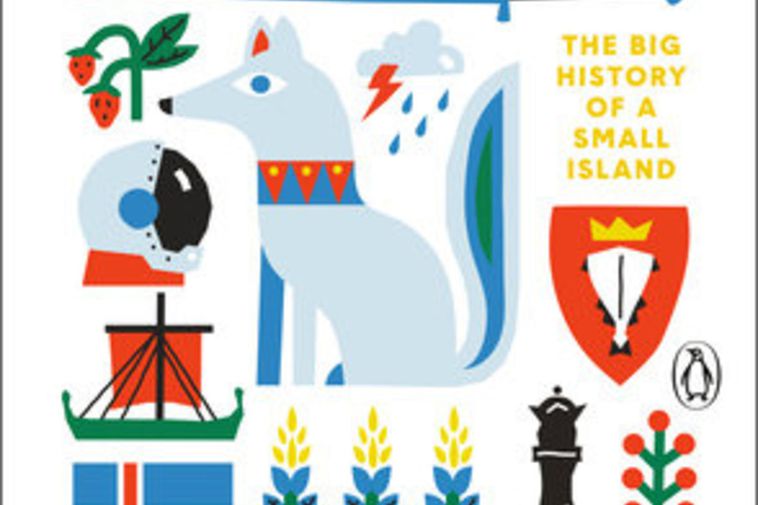
NordenBladet – A book by journalist and teacher Egill Bjarnason, How Iceland Changed the World: The Big History of a Small Island, has just been published by Penguin Books.
It is the untold story of how one tiny island in the middle of the Atlantic has shaped the world for centuries. The book was reviewed by The New York Times, where it was highly praised:
“What Egill Bjarnason sets out to explain in How Iceland Changed the World, his joyously peculiar book, is why it is also so full of farce and drive — why Iceland is a country with the soul of a very small town and yet can sometimes shut down the world. Bjarnason balances pride and realism so casually that you can almost take for granted a nation whose Parliament once voted to abolish the letter “z” (except in a few words such as “pizza”),” the review reads.
The history of Iceland began 1,200 years ago, when a frustrated Viking captain and his useless navigator ran aground in the middle of the North Atlantic. Suddenly, the island was no longer just a layover for the Arctic tern. Instead, it became a nation whose diplomats and musicians, sailors and soldiers, volcanoes and flowers, quietly altered the globe forever.
How Iceland Changed the World takes readers on a tour of history, showing them how Iceland played a pivotal role in events as diverse as the French Revolution, the Moon Landing, and the foundation of Israel. Again and again, one humble nation has found itself at the frontline of historic events, shaping the world as we know i, and the book paints a lively picture of just how it all happened.
Egill Bjarnason is an Icelandic journalist, based in Reykjavík. His work has appeared in New York Times, National Geographic, Associated Press, Al Jazeera Online, AJ+, Lonely Planet and Hakai Magazine. As a Fulbright Foreign Student grantee, he earned a Master’s degree in social documentation at the University of California, Santa Cruz, where he also worked as a teaching assistant in photography and statistics for two years.
NordenBladet —Denmark’s National Museum is now the home for the remains of two Viking-era men that were once related, being reunited after a millennium.
It was stated that one of the Viking men died with traces of blows in Denmark in his 50s, which apparently suggests that he was a part of various battles. The other Viking man was found in England with injuries to his head that took place sometime in the 11th century.
Jeanette Varberg, an archaeologist with the National Museum in Copenhagen, explains, “This young man is a relative to a skeleton found in Denmark. So they died in Denmark and in England but now they are reunited in the exhibition for the first time in a 1,000 years.”
DNA mapping was used to determine that the two were related, with archaeologists noting that their DNA was found by chance.
“As an archaeologist, you have no clue if the skeleton you are excavating has any family members but new DNA technology and research are making it possible to discover if two skeletons are relatives. This is a big discovery,” explained Varberg.
The pair of skeletons will be on display in the National Museum of Denmark as part of the exhibit, “Togtet,” which opens on 26th June.
NordenBladet —Plans to develop new technology for autonomous delivery vehicles in Finland’s capital, Helsinki, have been announced by Amazon.
Amazon has stated that it will be setting up a new center in Finland to support the development of Amazon Scout, Amazon’s fully electric autonomous delivery robot.
Within this development center will be two dozen engineers focusing on research and development. Over time, the team is set to grow and become at the forefront of robotics and autonomous systems technology.
Amazon has stated that one of the company’s main aims will be to develop 3D software that “simulates the complexity of real-life” and ensures that “Scout can navigate safely while making deliveries.”
Amazon Scout is a robotic vehicle that can transport small Amazon packages along sidewalks at a slow pace.
NordenBladet —A new law passed in Norway will make it illegal for social media influencers and advertisers to share promotional photos without making it clear to the audience that the images were edited or manipulated.
The law, which is an amendment to the 2009 Marketing and Control Act, was passed on 2nd June and is set to go into effect whenever the King of Norway decides, according to the legislative decree.
Now, images that have been edited or manipulated using filters on social media – such as “enlarged lips, narrowed waists, and exaggerated muscles” – will need to be disclosed. The law concerns those receiving payment or exchange for their posts, impacting social media influencers, brands, and companies.
The law was proposed in parliament to lessen the negative impacts of body pressure on young people.
In Norway, anorexia is the third most common cause of death among young girls, as reported by the National Institute of Public Health.