NordenBladet — Greenland is stopping its gas and oil extraction due to the environmental and climatic impacts being “too high” compared to potential financial gains, states Naaja Nathanielsen, Greenland’s Minister of Natural Resources.
According to Greenland’s Cabinet, led by Prime Minister Múte Egede, halting exploration licenses is a “natural step” because Greenland takes the “climate crisis seriously.”
The country’s Inuit traditions are based around its sustainable farming of natural resources. “The future does not lie in oil. The future belongs to renewable energy, and in that respect, we have much more to gain,” comments the Cabinet.
Kalistat Lund, Greenland’s Minister of Energy, stated that he was experiencing “the consequences of climate change in our country every day” and takes “climate change seriously.”
Nathanielsen followed up by commenting, “This step has been taken for the sake of our nature, for the sake of our fisheries, for the sake of our tourism industry, and to focus our business on sustainable potentials.”
NordenBladet —Norway’s capital Oslo is set to reduce the number of electric scooters available for rent, which also includes a ban on rentals at night.
Due to a high number of scooter-related accidents over the summer, Oslo will be reducing the amount of electric scooter rentals permitted throughout the city – a city with the most electric scooters per inhabitant.
These new regulations mean that the number of scooters found dotted around the streets will be reduced to roughly 8,000 from the 30,000 that can be currently used.
Richard Kongsteien, Communications Director at Oslo’s Urban Environment Agency, told VG, “During the work on the regulations, we obtained figures from large cities and scooters. Oslo was miles above all other cities in the world in terms of the number of scooters per inhabitant.”
These new regulations were approved by Oslo City Council on 13th July 2021 but will not be enforced until September. Until then, Oslo is insisting scooter rental companies adopt these new regulations as soon as possible.
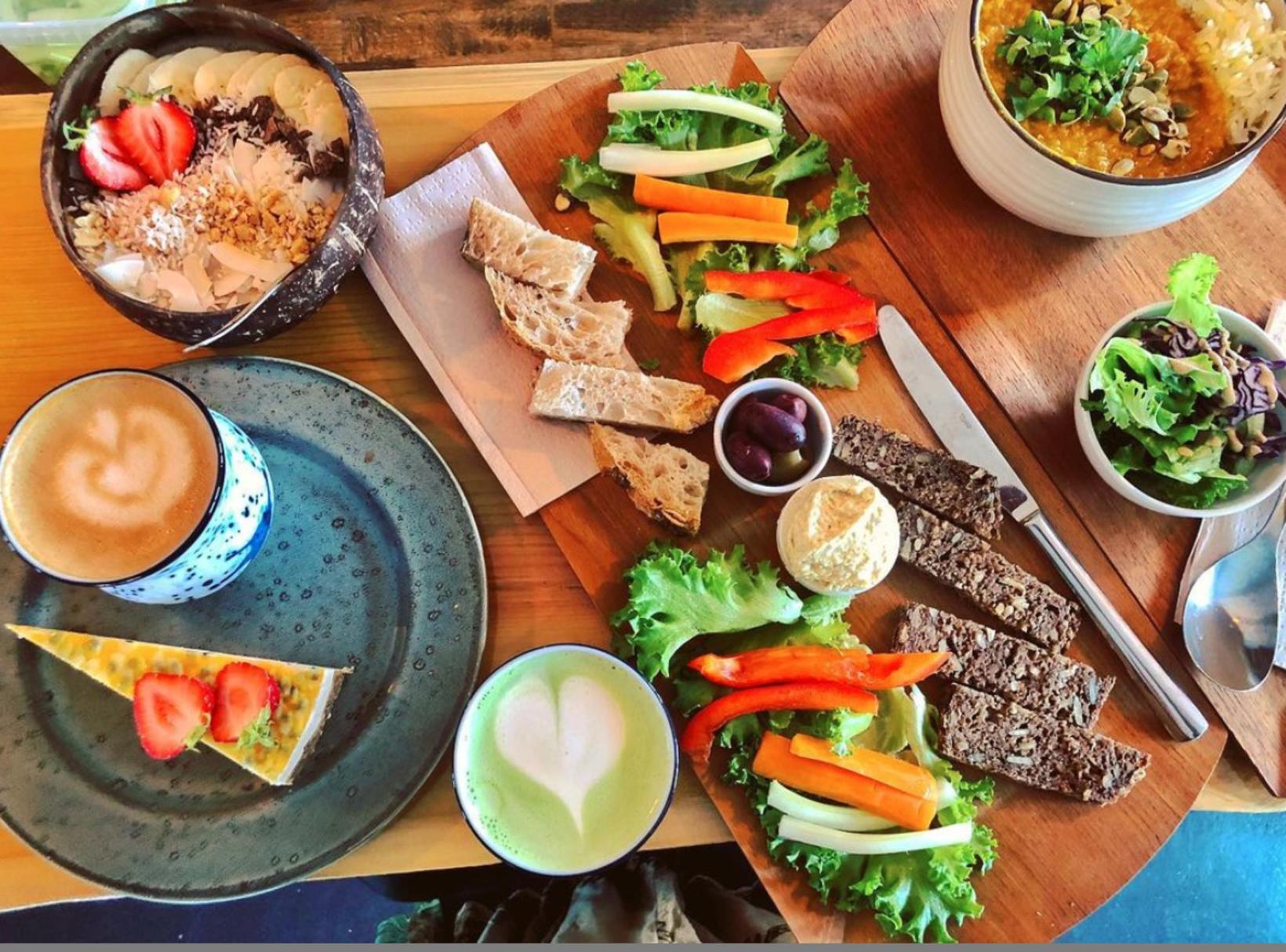
NordenBladet — When travelling and living off snacks from gas stations it is not unusual to start craving for a home-cooked meal in a friendly atmosphere – just like they make at Mama Reykjavík! It’s no coincidence that the plant-based restaurant that opened to the public in the middle of the pandemic has the name Mama.
Delicious plant-based food made with love. @mamareykjavik
Centrally located in Reykjavik’s city center (Laugavegur 2), you’ll find the cozy eatery on two floors. The space is vibrant, with the counter situated on the second floor (from the street). Travelers get to mingle with locals while enjoying an Indian curry or a hummus platter, one of the divine raw cakes with chocolate and peanut butter, or even vegan cheesecake. Special care is taken that menu items are made with locally grown and organic ingredients.
The food is prepared with passion by different chefs. The team consists of yogis, cooks, meditators, musicians, travelers, nature lovers, mothers, fathers and explorers of life.
“We are a group of people who wanted to create a space where everyone can just be themselves and enjoy food as nourishing and healthy medicine,” says one of the founders Óli Björn Karlsson. “We felt like this place based on community, compassion and passion will give Reykjavík the vibrations it deserves.”
The restaurant offers more than soul food: inspiring paintings by local artists decorate the walls and there a regular events like concerts, workshops and meditation classes that take place on the upper floor with its rooftop terrace.
“We do receive a lot of travelers, but without the solid base of guest from the local wellbeing community we would not have survived these past months”, Óli says. “Running a business is not always easy, but we learn and grow here – and share our experience on many levels with our community.“
The welcoming spirit in the cozy place is felt by the guests that indulge in the healthy and inspiring food that is more than just a snack – it’s heart-warming. Everyone will feel at home at Mamas!
NordenBladet — Iceland continues to see a daily increase in new Covid-19 cases and authorities advise the public to take reasonable precautions now that one of Iceland‘s biggest and busiest holidays is about to start.
Dr. Kamilla Sigríður Jósefsdóttir, the acting Chief Epidemiologist of Iceland, says that the current trend in infections is worrying and that contact tracing is proving increasingly difficult. She tells Mbl.is that unlike previous waves a large share of those now found to have contracted the virus have not been self-isolating when they get tested, meaning they are more likely to have spread the virus to other people.
Preliminary figures indicate that on Thursday 112 people tested positive for SARS-CoV-2 of whom 32 had been self-isolating while 80 had not.
According to the Covid.is information website ten people are currently hospitalized with Covid-19. Of those two are in intensive care and both had not been fully vaccinated. Some 1,072 people are in isolation and 2,590 are in quarantine.
Bring out the tents, but don’t be reckless
Friday marks the beginning of the “Verslunarmannahelgi”, a traditional camping- and town festival weekend for Icelanders. The first Monday of August is a public holiday in what is usually the warmest time of summer, and has Icelanders flocking to campsites and festivals around the country – the largest of which is the Þjóðhátíð festival on the island of Vestmannaeyjar where around 17.000 revellers attend each year.
All festivals have now been cancelled, due to the authorities recently mandating a 200 person limit on gatherings, but Icelanders are still expected to use the weekend to explore their country. Dr. Jósefsdóttir says that people should take care to avoid large crowds of strangers and take reasonable measures to minimize the risk of contagion.
NordenBladet —A new degree program that offers professional training for social media influencers and content producers has been announced by the Tampere University of Applied Sciences in Finland, making it a world-first.
According to the university, between 20 and 25 students will be chosen for the program, whose aim is to grow a following across various social media platforms and leverage them for corporate marketing.
The course is set to be three-and-a-half years, and once completed, students will earn a bachelor of business administration degree in international business.
The world-first degree is founded on the ideas of entrepreneurship, with students being tasked to set up and run a company for the duration of the course. The aim is to equip the students with real-life skills to run businesses.
Carita Prokki, Head of Continuous Education at Tampere University, explains, “The students will engage in business during their studies. The study points will be accumulated through business activity. There’s quite a lot of pressure on the students in that sense.”
NordenBladet —The pandemic crisis team of the city of Reykjavik decided this morning to cancel all events that were to take place during the annual “Culture Night” festival. This is done in response to the recent jump in Covid-19 cases as well as due to “an uncertainty regarding how the [SARS-CoV-2] Delta variant may affect children, teenagers and other vulnerable groups,” according to a statement issued by Reykjavik authorities.
This is the second year in a row that the event gets cancelled but the festival is celebrated on the first Saturday after Reykjavik‘s official birthday on August 18th. The event would have taken place on August 21st this year, attracting as many as 100,000 visitors.
Runners must wait a month
The Reykjavik Sports Union (Íþróttabandalag Reykjavíkur) has also decided to postpone the Reykjavik Marathon which traditionally takes place on the same day as the Culture Night. The race will be moved from August 21st to September 18th and runners will leave the starting line in groups of 500, with the finish line placed away from the starting line to further minimize crowding.
In an interview with Mbl.is Frímann Ferdinandsson, CEO of the Reykjavik Sports Union, said that some 2,000 foreigners have already registered for the marathon. Participants that cannot attend on the new date can opt to run next year instead. ai@mbl.is
NordenBladet —According to RÚV, the number of seals residing on the Vatnsnes and Heggstaðanes peninsulas in the North of Iceland has risen since the previous seal count in 2016.
A team comprised of volunteers and experts counted up to 718 seals across a 100km area on the peninsulas, an increase from 2016’s count of 580.
Páll L. Sigurðsson, CEO of the Icelandic Seal Centre, believes a hunting ban has positively impacted the population of seals in the area. “We counted 718 seals, which is considerably better than the last three times. The last time we counted in 2016, we got 580 seals. So we are very happy that the population isn’t decreasing rather is at least staying consistent,” explained Sigurðsson.
Since 2007, seal counts have been conducted on the Vatnsnes peninsula, with the average number of seals 757.
Sigurðsson expressed his gratitude to everyone that took part in the project, including local and foreign volunteers. “Altogether, there were 58, and 55 that walked or hiked Vatnsnes and Heggstaðanes. So we are very pleased and thankful for that group of volunteers,” commented Sigurðsson.
NordenBladet —After a brief decrease in activity the eruption at Fagradalsfjall has resumed releasing a stream of lava.
Geologists at the University of Iceland have noticed a change in the behaviour of the volcano, with less activity being visible on the surface. The pool of lava in the main vent does not rise as high as before, resulting in less lava flowing over the landscape and fewer instances of jets of lava shooting into the air.
According to the scientists it appears more time passes between each bout of activity at the eruption site which may mean either a decrease in the flow of magma or that the flow is being directed towards underground pathways.
“It seems like the activity in the vent is changing – the rise in intensity/vigour is not as steep as it used to be or in other words, each episode is taking longer to get going. Why this is happening is not clear,” says a post published today on the Facebook page of the University of Iceland natural disaster team.
“One possibility is that proportionally more of the magma rising from depth is now diverted to inner pathways within the lava. It is also possible that the flux up (i.e., the magma supply) through the eruption conduit has been reduced. It is also possible that the eruption is entering a new phase, but which path it is following will become evident in the coming days and weeks.”
The eruption site continues to see a steady flow of visitors with an estimated 1,000 to 3,000 people making the trek to Fagradalsfjall every day.
NordenBladet — A pair of French tourists were spotted Thursday evening on top of the still-warm lava of the Fagradalsfjall eruption, using the glowing hot rock to toast marshmallows.
This is just the latest of many instances where visitors disregard official warnings to not walk on the lava field around the eruption site due to risk of injury and death.
In July a young American couple was photographed venturing onto the lava while carrying an infant, giving no heed to the warnings of bystanders. Also in July children were seen playing on top of the edge of the lava, with their parents “not reacting well” when bystanders pointed out the danger the children were be in.
In early June a man was spotted stepping onto the still-glowing edge of the lava while his partner photographed him, and later that same month cameras spotted a man running for his life from an approaching stream of lava after having walked a considerable distance towards an active lava vent.
While the surface of the lava may seem solid and strong enough to carry the weight of an adult authorities warn that the crust can be thinner and weaker than it looks, with glowing hot lava underneath.
NordenBladet — Changes are being made to the restrictions on external border traffic based on COVID-19 incidence rates, as the epidemic continues to spread vigorously in many parts of the world. The Government adopted a decision on the matter on 5 August. The decision will enter into force on 9 August and will remain in force until 22 August 2021. However, people may still enter Finland from all countries upon presenting an approved certificate of a full vaccine course.
External border traffic refers to traffic between Finland and non-Schengen third countries. From 8 August, the previous decision from 15 July will be amended so that the restrictions on entry will be lifted for Ukrainian residents arriving in Finland in traffic from Ukraine.
By contrast, restrictions on entry will be reinstated for residents of Azerbaijan, South Korea, Japan, Moldova, Serbia and Singapore in traffic arriving in Finland from these countries. If a person arriving from these countries has not received a full vaccine course, the accepted reasons for entry are return travel to Finland, return travel to other EU or Schengen countries, transit on regular, scheduled flights at an airport or other essential travel.
In other respects, the restrictions on entry at external borders that were decided by the Government on 15 July and that came into force on 19 July will remain unchanged. These restrictions will be in force until 22 August.
People are free to come to Finland from all countries upon presenting an approved certificate of a full vaccine course
In line with the Government decision from 15 July, people who are able to present a certificate of a completed and approved COVID-19 vaccine course received at least 14 days prior to arrival may enter Finland from all countries. A list of approved vaccines is available on the website of the Finnish Institute for Health and Welfare (THL).
However, people arriving in Finland in external border traffic must take into account that a certificate of recovery from COVID-19 is an acceptable justification for entry into the country only for citizens of the EU and Schengen countries and for people residing in an EU or Schengen country.See the websites below for more information on the entry restrictions and health security requirements in place.