Reklaam

Helena-Reet Ennet

Helena-Reet Ennet
4698 POSTS 0 COMMENTS

Sweden: Bronze Age artifacts excavated in Swedish town Alingsås

NordenBladet — A large deposit of Bronze Age artifacts thought to originate between 750 and 500 BC have been excavated in the Swedish town of Alingsås by Archaeologists from the Administration for Cultural Development.

In April 2021, various bronze objects were discovered by members of the public, who notified the Administrative Board of Västra Götaland county about the findings. The county dispatched a team comprised of members from the Administration for Cultural Development and researchers from the University of Gothenburg to conduct an archaeological survey.

A significant number of the findings consisted of decorative objects, including bracelets, foot rings, necklaces, and needles and hoops that were used to fix various articles of clothing.

Alongside these findings also included a rod, horse spurs, and surplus materials from bronze casting, which were also sent off for preservation along with the items as mentioned earlier.

“Most of the finds are made up of bronze items that can be associated with a woman of high status from the Bronze Age,” explained Johan Ling, Professor of Archaeology at the University of Gothenburg.
 

Multilingual election materials encourage voting in municipal elections

NordenBladet — The Advisory Board for Ethnic Relations (ETNO) has published election materials in seven languages to raise awareness of municipal elections in Finland. These visual materials will be used to encourage multilingual municipal residents to participate in decision-making and vote in the forthcoming municipal elections.The materials on municipal elections are available in seven languages: Finnish, Swedish, English, Russian, Estonian, Arabic and Somali. The materials have been prepared on the basis of questions that ETNO has encountered in its work: When can I vote in the municipal elections? Who has the right to vote in the municipal elections? Who can I vote for? Who can stand as a candidate? Why is it important to vote in municipal elections and what kinds of issues do I vote on in municipal elections? How can I vote safely during COVID-19? The materials are intended for multilingual municipal residents and voters. Organisations, municipalities and influencers can make use of the materials to raise awareness of the municipal elections and other influencing opportunities in municipalities.  The materials are highly visual and they consist of PowerPoint presentations and infographics combining text and images. The infographics can be shared on social media. The PowerPoint presentations can be used in training and other events related to municipal elections and other influencing opportunities or to make short GIF videos, for example. “The mere existence of these materials is not enough, and that is why we hope that the materials will be disseminated and taken into active use,” Specialist Nina Suorsa from the Ministry of Justice and Secretary General of ETNO Peter Kariuki say. “Each individual, organisation and municipality can do their part, raise awareness and encourage multilingual friends, neighbours and colleagues to vote in the municipal elections. We hope that the materials will be actively shared on social media and that they will spur good discussion on the importance of municipal elections and the importance of participation by multilingual municipal residents in all decision-making.”The materials support the objectives set out in the National Democracy Programme 2025 to increase voter turnout in municipal elections among immigrants and multilingual municipal residents and to encourage them to stand for election. See the materials for the 2021 municipal elections prepared by the Advisory Board for Ethnic Relations (ETNO) on the website of the Ministry of Justice.

Source: Valtioneuvosto.fi

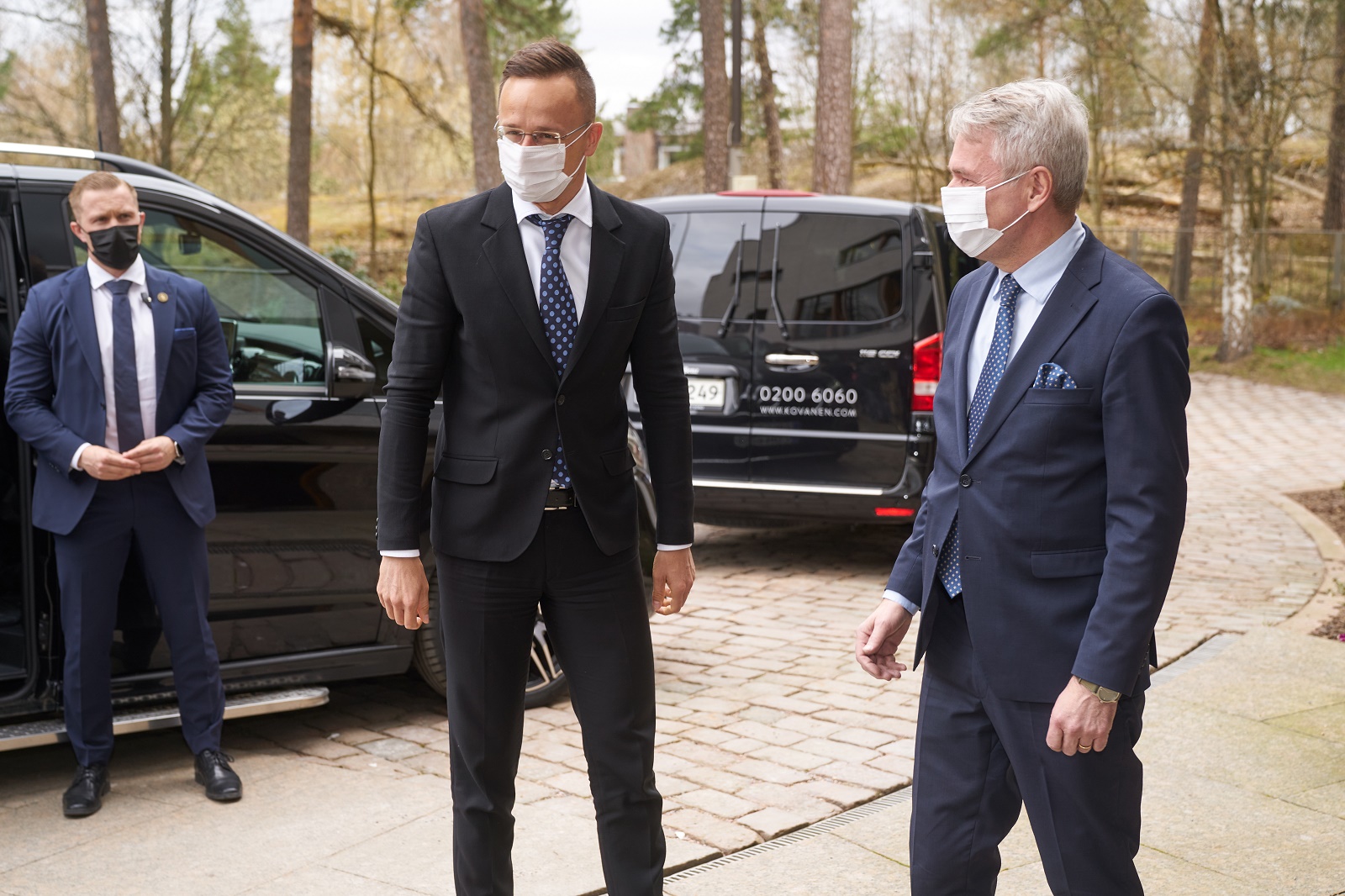
Hungary’s Foreign Minister visits Finland – live webcast of the press conference

NordenBladet — Minister for Foreign Affairs Pekka Haavisto will meet Hungarian Minister of Foreign Affairs Péter Szijjártó in Helsinki on Wednesday 5 May.Follow the live webcast of the press conference at 12:45: 

Source: Valtioneuvosto.fi

Municipal elections on 13 June 2021

NordenBladet — The 2021 municipal elections will be held on Sunday 13 June. In the elections, local councillors and deputy councillors will be elected for the next four-year term. The term of office of the local councils will begin on 1 August 2021 and last until 31 May 2025.This year, the advance voting period in Finland will exceptionally last for two weeks, from 26 May to 8 June. Advance voting will be conducted abroad between 2 and 5 June, but the voting period is shorter than this at many of the advance polling stations abroad.On election day, voters may only cast their vote at the polling station specified on the notice of right to vote sent to them before the elections. When voting in advance, voters may freely choose any polling station. A list of all advance polling stations is available on the Electionsfinland.fi website of the Ministry of Justice. Information on the advance polling stations where voting will take place outdoors will be added to the website on 19 May.Information on the addresses and opening hours of polling stations can also be obtained by calling the Elections helpline. Calls to the helpline are free of charge, and service is provided in Finnish (0800 9 4770) and in Swedish (0800 9 4771). Election-related questions can also be sent on WhatsApp (050 438 8730).Eligible voters in municipal electionsA person who reaches the age of 18 years on election day at the latest has the right to vote in the municipal elections in their municipality of residence. In addition to Finnish citizens, those citizens of EU Member States, Iceland and Norway who have a municipality of residence in Finland are also entitled to vote. Other foreign citizens are entitled to vote if they have had a municipality of residence in Finland for at least two years.The voting municipality in the 2021 municipal elections is determined based on the information contained in the Population Information System on 23 April. The total number of eligible voters is 4,464,814.The Digital and Population Data Services Agency will send a notice of right to vote (polling card) to all eligible voters. A list of advance polling stations close to the eligible voter’s place of residence and instructions on safe voting during the COVID-19 epidemic will be enclosed to the notice.The notices of right to vote will be sent by post. The notice will be sent in electronic format to those eligible voters who have activated the Suomi.fi Messages service and given their consent for all official notifications to be sent to them electronically.Candidates in municipal electionsVoters may only vote for a candidate standing for election in their municipality of residence. The deadline for submitting candidate applications to the central municipal election boards was on 4 May. The municipalities will review the applications and confirm the nomination of candidates on 14 May. The master list of candidates, including candidate numbers, will be published on the Electionsfinland.fi website on 14 May.Instructions on safe voting during COVID-19The Electionsfinland.fi website contains instructions for voters on safe voting in the municipal elections during the COVID-19 pandemic. The Ministry has prepared the instructions in cooperation with the Finnish Institute for Health and Welfare.The purpose of the website is to provide easily understandable information on the special arrangements put in place to enable safe voting during COVID-19. Voters must wear a face mask or covering, use hand sanitiser and stay two metres away from others at the polling station. Election officials will monitor safety at the polling stations and advise voters on how to follow the instructions.Special measures have been planned to enable voters placed in quarantine or isolation by a doctor or having respiratory symptoms to vote. Voters can contact the central municipal election board of their municipality to ask about these special arrangements.  Proof of identityVoters must present some form of official photo ID when voting, for example a passport, an identity card or a driving licence. The old cardboard driving licence will also be accepted as proof of identity, if the voter can be identified from the photo and the election official can thus reliably verify the voter’s identity. Voters who do not have a valid proof of identity can obtain a temporary identity card free of charge from the police for voting purposes.Election officials may ask voters to briefly remove their face mask to verify their identity.At-home voting and voting at an institutionPersons whose ability to move or act is limited to the degree that they cannot go to an advance polling station or the election day polling station without undue hardship have the right to vote at home. At-home voting takes place in the voter’s home during the advance voting period. Those who wish to vote in advance in their home must notify the central municipal election board of their municipality of this by 16.00 on 1 June 2021. The family carer of a person entitled to vote at home, living in the same household, may under certain conditions also vote at home.In accordance with a recent government proposal, a possibility for voting will now be provided for the first time in the garrisons of the Defence Forces’ units providing military training and in the units of the Border Guard providing military training.A possibility for voting will also provided at hospitals, prisons and care institutions similarly as in connection with previous elections.Postal voting from abroadEligible voters staying abroad during the municipal elections may vote by post. Eligible voters wishing to vote by post must order the postal voting documents to an address located abroad in advance, cast their vote after receiving the documents, and send the ballot in a covering envelope to the central municipal election board of their municipality of residence in Finland. The first possible day for postal voting is 14 May. Postal votes must arrive at the correct central municipal election board by 19.00 on Friday 11 June.Election results will be published as they are countedDuring the advance voting period, up-to-date information about the number of advance voters in each municipality and electoral district and in the entire country will be published on the elections website every hour.The central municipal election boards will start counting the advance votes on 13 June at 12.00 at the earliest. Preliminary information on the vote count will be published starting at 20.00 on election day. Election boards will begin the preliminary count of votes cast on election day as soon as the polling stations close at 20.00. The preliminary election results will be available during the evening of the election day and the following night.On election day, the progress of the preliminary vote count can be followed online. The names of the elected local councillors and the number of votes received by them will be published on the Electionsfinland.fi website once the preliminary vote count has been completed. Moreover, the number and percentage of votes received by each political party in each municipality and electoral district and in the entire country will be published. The results of the preliminary vote count will also be made available as downloadable files once the count has been completed.Once the check count has been completed, the central municipal election boards will confirm the final election results in each municipality at their meetings starting on Wednesday 16 June at 18.00 at the latest. The confirmed results will be published on the Electionsfinland.fi website on 16 June 2021.Information about municipal elections is available through many channels and in several languagesThe Electionsfinland.fi website provides information about municipal elections in many languages (Finnish, Swedish, Skolt Sámi, Inari Sámi, North Sámi, and the Finnish and Finland-Swedish Sign Languages, and several most used foreign languages, such as English, Estonian and Russian). In addition, the YouTube channel of the Ministry of Justice contains videos on voting in easy-to-understand language and sign language. Brochures in easy-to-read Finnish and Swedish are also available.Election funding disclosure must be filed with the National Audit Office of FinlandThe newly elected local councillors and deputy councillors must file an election funding disclosure with the National Audit Office of Finland by 16 August 2021. Candidates may also choose to file a voluntary advance disclosure containing an estimate of their campaign costs with the National Audit Office of Finland.

Source: Valtioneuvosto.fi

Estona: Minister Kruuse invites Baltic agriculture ministers to a video meeting

NordenBladet — On Friday, 30 April, the Minister of Rural Affairs of Estonia, Mr Urmas Kruuse, hosted a video meeting with his colleagues from Latvia and Lithuania to discuss the CAP reform package, Farm to Fork strategy and COVID-19 emergency measures.

During the meeting, Minister Kruuse pointed out the need to address the reform package of the EU’s Common Agriculture Policy (CAP) as a uniform plan. The ministers of the three Baltic States assured that they will be standing for their national positions and acknowledged the need to reach a quick agreement on the future CAP. “First and foremost, we need to ensure certainty for the sector, as it is facing major challenges in adapting to both the post-crisis and environmental objectives,” Minister Kruuse said.

As part of the discussions on the Farm to Fork strategy, all the Baltic agricultural ministers expressed their willingness to support the strategy, however, they agreed on the importance of having the specific situation of each Member State and the efforts already made to be taken into account. The aim of the Farm to Fork strategy is to promote a fair, healthy and environmentally-friendly food system.

Minister Kruuse stressed that in implementing the strategy, attention must be paid to the funding of research and development, as well as raise public awareness to increase demand for food that has been produced locally and in an environmentally sustainable way. Alongside, we also mustn’t forget the importance of self-sufficiency in food production.

The Lithuanian Minister of Agriculture, Mr Kęstutis Navickas, pointed out their concerns regarding the outbreak of avian influenza, which could mean new problems for the sector.

When discussing COVID-19 emergency measures, it was revealed that most of the crisis alleviation measures were already distributed in 2020: Lithuania provided 154 million euros, Latvia 100 million euros and Estonia 200 million euros to manage the crisis. “As a new measure, Estonia has also started with the financial leasing of land,” Minister Kruuse stated.

Latvia has mostly supported the vegetable, beef and poultry sectors, while Lithuania has provided the most assistance to the dairy, poultry and pork sectors.


Prime Minister Marin and European Commissioner Sinkevičius meet at Kesäranta

NordenBladet — On Tuesday 4 May, Prime Minister Sanna Marin met with European Commissioner for the Environment, Oceans and Fisheries Virginijus Sinkevičius at Kesäranta. Commission Member Jutta Urpilainen also attended the meeting.At the meeting, they discussed Finland’s views and objectives concerning EU climate policy, forestry policy and biodiversity issues. During his two-day visit, Commissioner Sinkevičius met with several members of the Government, visited Lahti, the European Green Capital for 2021, and familiarised himself extensively with Finland’s sustainable forestry.

Source: Valtioneuvosto.fi

Twinning activities extended to new countries: Finland’s success in winning tenders continues, with Zambia as new beneficiary

NordenBladet — Early this year, Twinning activities were extended to seven new countries under the three-year pilot of the European Commission’s Directorate-General for International Partnerships (DG INTPA). The results of the calls for proposals for the first two pilot projects have already been published, and Finland is very proud to have been awarded both projects. Finland will now help Zambia enhance anti-corruption measures and audits of central government finances. Winning these two tenders is a fine complement to Finland’s recent successes in Twinning projects.Kafue-joki Sambiassa Recent extension of Twinning activities opens new opportunities for cooperation. Finland’s Twinning cooperation in Zambia is due to begin in summer 2021. In the picture: River Kafue. Photo: Pirjo Suomela-ChowdhuryExtending Twinning beyond its traditional cooperation areas is a milestone that comes with numerous new opportunities. For the European Union, Twinning is an important instrument for supporting further development of public administration and legislation in its neighbouring areas, in the target countries of the EU’s enlargement and neighbourhood policy. Under the DG INTPA pilot, projects will be implemented not only in Zambia but also in Senegal, Madagascar, Namibia, Kyrgyzstan, Indonesia and the Dominican Republic. Assistance will be provided in various sectors, the themes spanning from development of the court system to areas such as renewable energy, promotion of digital transformation and strengthening public services to meet the requirements of international trade.“It is excellent news that Finland is now actively involved in the new openings made under Twinning. Having already established our position in development work in the neighbouring areas of the EU, we now get the chance to export our expertise further afield. Finland is the only EU Member State to participate in both Zambian projects. Twinning is a very tangible way for Finland to be globally influential,” says Matti Anttonen, Permanent State Secretary at the Ministry for Foreign Affairs.Zambia, a new opening for HAUSThe project related to anti-corruption action is designed to primarily strengthen the operating conditions of the Zambian Anti-Corruption Commission. It is set to promote the administration and technical capacity of the Commission and to improve cooperation with other agencies involved in anti-corruption activities. The focus will be on updating current legal framework enhancing criminal investigation and prosecution practices, and communicating about anti-corruption activities.The Finnish and German consortium is led by HAUS Finnish Institute of Public Management Ltd, with participation of the German Foundation for International Legal Cooperation (IRZ).The other Twinning project of Finland aims to strengthen the capacity of Zambian authorities to manage public funds efficiently and accountably. Finland shall cooperate with Croatia and Austria, which is the lead EU Member State of the consortium, and the beneficiary is the Office of the Auditor General in Zambia (OAG). The concrete objectives are related to updating the Office’s mandate, better monitoring of the use of public funds and strengthening the Office’s administrative services and the wellbeing of its employees. In this consortium, too, Finnish expertise in public administration is exported to Zambia under the leadership and coordination of HAUS Finnish Institute of Public Management Ltd.“HAUS has already long been involved in Twinning activities, cooperating with many partner countries. We have often been the first Finnish Twinning partner in new target countries. We learnt about Finland’s success in the anti-corruption project on the same day that the Finnish Government released Finland’s Africa Strategy. We are particularly happy and proud of these achievements, for many reasons. Winning these Zambia projects also marks the 50th anniversary of HAUS in a nice way,” says Heidi Lempinen, Director at HAUS International.Both projects will span over three years, and they are due to start in the coming summer.Twinning supports Finland’s Africa StrategyEU Member States compete for Twinning projects by submitting tenders, and implementing parties will subsequently be selected by partner countries. Founded on collegiality and the sharing of best practices, Twinning brings together public officials working on the same issues in EU Member States and partner countries.Although the coronavirus pandemic has prevented travel and forced the projects to resume their work remotely, cooperation between individuals remains at the core of the activities.Twinning also provides an excellent tool for supporting the implementation of Finland’s recent Africa Strategy.“Finland and Zambia share a long experience in joint projects. Over the years, stronger governance has been one of the lead themes in Finland’s development aid, and we now welcome the chance to engage in such cooperation under EU funding. By winning these Twinning projects, Finland continues its strong presence in the development of Zambian public administration over the next few years,” notes Finland’s Ambassador to Lusaka Pirjo Suomela-Chowdhury. Eerikki Vainio, Specialist, the Twinning Team of the Ministry for Foreign Affairs

Source: Valtioneuvosto.fi

Hungary’s Foreign Minister visits Finland

NordenBladet — Minister for Foreign Affairs Pekka Haavisto will meet Hungarian Minister of Foreign Affairs Péter Szijjártó in Helsinki on Wednesday 5 May.The Ministers will discuss the bilateral relations between Finland and Hungary, topical international and EU matters, as well as Hungary’s Presidency of the Committee of Ministers of the Council of Europe, which will start on 21 May. The Hungarian Minister of Foreign Affairs will also have a meeting with Minister of Economic Affairs Mika Lintilä.  

Source: Valtioneuvosto.fi

OECD trust survey provides recommendations for Finland on action to reinforce people’s trust in government and public institutions

NordenBladet — The final report of a trust survey by the Organisation for Economic Co-operation and Development (OECD) provides current information on people’s trust in government and public institutions in Finland and sets out recommendations on how government and governance can be improved to build and maintain public trust. The final report was published today, 4 May, in an online event opened by Minister of Local Government Sirpa Paatero.Significant differences in level of trust “Government exists to serve citizens. The legitimacy of a welfare state with extensive public admin-istration is based on people’s trust that it will generate wellbeing. The OECD survey is valuable, as it tells us that government and public institutions are trusted, but at the same time it points out where we can make improvements, for instance in services,” says Minister of Local Government Sirpa Paatero.In Finland there is a high level of public trust, and the country performs well in international comparisons of trust. The OECD report nevertheless shows that despite the high national average, public trust in different institutions varies. According to the survey, 66% of citizens trust central government (the ‘civil service’), 61% trust the Government in power, 53% trust Parliament and 52% trust local government. There are significant regional and demographic differences in these figures. Trust in government and public institutions is weaker for rural residents and among people with lower levels of education and income. If the disparities in trust deepen, this may weaken social cohesion and Finland’s ability to cope with the challenges of an ageing population, climate change, digitalisation and the transformation of work. Report points to Finnish paradoxAlthough people’s trust in public institutions and their satisfaction with democracy is high, the proportion who believe they can influence political processes is small (i.e. political efficacy is relatively low) compared to other high-trust countries. The OECD emphasises that potential marginalisation in certain population groups should be tackled by promoting broader social dialogue in Finland.The OECD analyses the challenges related to trust in Finland and identifies opportunities to address them. The report’s recommendations for action focus especially on the ability of government to respond to people’s changing expectations and needs, and to future challenges. In addition to well-functioning, high-quality and accessible public services, it is essential to secure a stable economic environment. The OECD’s recommendations for government and public institutions relate to improving the measurement of trust, ensuring services meet people’s expectations and needs, more inclusive forms of policy preparation and decision-making, increased transparency, public integrity, and fairness and non-discrimination. Government actions in COVID-19 crisis influenced people’s trustThe OECD notes that in Finland people displayed a high level of trust in the Government’s ability to manage the COVID-19 crisis, keep the public informed and address the economic and social consequences of the pandemic. People with higher levels of trust in public institutions complied more willingly with the restrictions and guidelines imposed during the crisis. The OECD emphasises the importance of trust in dealing with and getting over a crisis.Next stepsThe OECD recommendations will be examined closely in a cross-government working group. The working group will determine which of the recommendations can be pursued in existing programmes or projects and which require further work or additional studies.The OECD trust survey was commissioned by the Ministry of Finance and carried out by the OECD Directorate for Public Governance. The survey also made use of other data and materials, such as a survey commissioned from Statistics Finland, the regular Citizens’ Pulse survey and the Lockdown Dialogues summaries. In addition, the OECD interviewed various representatives of Finnish public institutions, government and civil society, as well as researchers.

Source: Valtioneuvosto.fi

331,500 unemployed jobseekers in March

NordenBladet — At the end of March, a total of 331,500 unemployed jobseekers were registered at the Employment and Economic Development Offices and municipalities participating in the local government pilots on employment. This represents an increase of 22,500 from the previous year. The number of unemployed jobseekers increased by 4,400 from the previous month. Of the unemployed jobseekers, 162,200 were customers of municipalities participating in the local government pilots on employment. The number of unemployed jobseekers also includes those fully laid off. These figures are from the Employment Bulletin of the Ministry of Economic Affairs and Employment.At the end of March, the number of people laid off was 79,500 in the whole country; a year-on-year increase of 5,500. The number of people fully laid off totalled 62,700, representing a decrease of 2,600 from March the year before. The number of people fully laid off increased by 7,100 from February.The number of long-term unemployed — that is those who had been unemployed without interruption for at least a year — amounted to 104,000, up 39,100 on the previous year. The number of unemployed jobseekers aged over 50 was 120,000, representing an increase of 12,700 on the year before.Unemployed jobseekers under 25 years of age numbered 40,600, representing a decrease of 500 from March last year. Among unemployed young people, the period of unemployment ended within three months on average in 54.9% of cases between January and March, which is 10.3 percentage points less than the year before.Increase in new vacanciesThe number of new vacancies reported during March totalled 77,700, or 14,200 more than in March the previous year. The total number of unfilled vacancies amounted to 162,500 in March, which was 12,600 more than a year ago.At the end of March, the number of persons covered by services included in the activation rate amounted to 117,100, down 2,100 on the previous year. These services include pay subsidies, labour market training, work trials and self-motivated studies.Statistics Finland: Unemployment rate 8.1%According to the Labour Force Survey issued by Statistics Finland, in March the number of people in employment was 22,000 more than on the previous year. The employment rate was 70.7%, which was 0.5 percentage points higher than in March the year before. According to the Survey, the unemployment total was 219,000, which is 24,000 more than a year ago. The unemployment rate was 8.1%, or 0.8 percentage points higher than the previous year.Press release on the revision of the Labour Force Survey: https://www.stat.fi/til/tyti/tyti_2020-12-22_uut_001_en.htmlKey differences between Employment Service Statistics and the Labour Force SurveyThis information is based on the Ministry of Economic Affairs and Employment’s Employment Service Statistics and the Labour Force Survey of Statistics Finland. The Employment Service Statistics of the Ministry are compiled on the basis of the information in the Employment and Economic Development Offices’ customer register, while the Labour Force Survey of Statistics Finland is based on sampling.In the Ministry’s Employment Service Statistics, people that are not in an employment relationship or employed in business are listed as unemployed. Persons fully laid-off but not full-time students are also categorised as unemployed in the Employment Service Statistics. The Labour Force Survey of Statistics Finland has a stricter definition of being unemployed: a person is unemployed if he or she has actively sought employment during the preceding four weeks and is available for work over the coming two weeks. The figures of the Labour Force Survey of Statistics Finland are internationally comparable and thus they are the official Finnish unemployment statistics.Further information on the differences in the statistics https://tilastokeskus.fi/til/tyti/tyti_2019-09-13_men_001_en.html

Source: Valtioneuvosto.fi