NordenBladet — The Ministry of the Interior has sent out for comments the memorandums of the working groups that examined possible needs to amend the Rescue Act. The preliminary study assessed the functioning and clarity of the provisions of the Rescue Act, and whether they are up to date. In addition to the amendments included in the legislative package of the health and social services reform, the preliminary study also examined and assessed what legislative amendments would be needed as a result of the transfer of the responsibility for organising rescue services to wellbeing services counties.
The memorandums of the working groups that were sent out for comments examine the current state and functioning of the existing Rescue Act and present proposals of the working groups for amending the Act. The proposals were prepared through extensive cooperation with operators in the sector.The preliminary study project explored possible needs for amendments to the Rescue Act from the perspectives of incident and accident prevention and supervision, rescue operations, preparedness and civil defence, as well as of the structure and common provisions of the Act. The proposed amendments are accompanied by reasoned proposals and assessments of their impact and urgency.
“The aim is to reform the Rescue Act to better reflect the operating environment of the rescue services, future developments and the ongoing wellbeing services county reform. This is the first time that the Act has been comprehensively evaluated,” says Mika Kättö, Director of Legislative Affairs.
Preparation will proceed based on feedback receivedAccording to the Government Programme of Prime Minister Marin’s Government, the responsibility for organising rescue services will be transferred to the wellbeing services counties and the Rescue Act will be amended on the basis of a comprehensive analysis.
On 30 December 2019, the Ministry of the Interior set up a preliminary study project on the need to reform the Rescue Act. The purpose of the project was to examine and assess comprehensively possible needs to amend the legislation on the rescue services, which are due, among other things, to the transfer of the responsibility for organising the rescue services to the wellbeing services counties.
The proposals of the working groups will be circulated for comments between 8 April and 31 May 2021. Any legislative amendments will be prepared in a separate legislative project on the basis of the preliminary study and the comments received during the consultation round.
NordenBladet — In its meeting on 7 April, the Government discussed the plan to lift the restrictions and recommendations put in place due to the COVID-19 epidemic. The plan also includes an indicative target schedule.
The purpose of the plan is to give the public, businesses and communities a clear picture of how society will gradually open up. The restrictions will be lifted based on the development of the epidemic. This will be possible if we all comply with the existing restrictions and recommendations.The Government will continue its work on the draft tomorrow (8 April) with all of the parties in Parliament. The discussion will take place at the House of the Estates at 10.00.
Changes will then be made to the draft based on the discussions. Once the changes have been made, the entire plan and its annexes will be published on the Government website on Friday 9 April. At the same time, a week-long consultation and comments round will begin, during which all interested parties will have the opportunity to comment on the plan. The Government will provide more information about the plan and the possibility to comment on it at a press briefing. The exact time of the briefing will be announced later. The Government will publish the final plan after examining the feedback received during the consultation and comment round.
NordenBladet — A pilot strengthening the inclusion of children and young people in drafting the Child Welfare Act will be carried out when implementing the National Child Strategy.
The pilot aims to create a model for consulting children and young people in legislative work. The model will be piloted during the spring of 2021, when the Ministry of Social Affairs and Health prepares reform of the Child Welfare Act. Young people will be consulted on a few pre-selected topics. Responsibility for the pilot is vested in a working group that plans and implements the consultations with young people and then reports the consultation results to bill drafters in the Ministry of Social Affairs and Health. A publication on modelling the consultation of children and young people in bill drafting is due to be completed after the end of the pilot.
“The aim of the Child Strategy is to promote and strengthen the child’s right to inclusion. The objective of the strategy is that children’s inclusion, their right to be heard and access to information are considered systematically, either directly or indirectly, in all decision-making and activities concerning children. In implementing the strategy, tools will be developed for this work, since each child’s voice is both important and valuable, and deserves to be heard,” says Johanna Laisaari, Secretary General of the National Child Strategy.
The aim of the pilot concerning the consultation of the child, as provided in the Child Welfare Act, is to strengthen the right of children and young people who are child welfare clients to participate in the evaluation of their services and also to increase their knowledge of the regulation concerning their status and rights, including the relevant objectives. Young people will be consulted in the further preparation of the proposal.
“The child welfare inclusion pilot offers young people who are child welfare clients the opportunity to be heard on the legislative reform concerning child welfare. The aim of the reform is specifically to develop services meeting the needs of young people. That is why the pilot primarily consults young people,” says Pasi Pollari, the expert in charge of the pilot.Based on the pilot’s work, a written description of how young people have been consulted will also be compiled. The description is meant to serve as a model in connection with various legislative projects in the future.
NordenBladet — To support people travelling on essential business during the coronavirus pandemic, Finnish missions abroad keep their websites updated on local travel restrictions. Rules and guidance in different countries can change rapidly, which is why the Ministry for Foreign Affairs advises people travelling on business to always check the official website of the country of destination, to consider whether the trip is essential, and to act responsibly.
Photo: Pixabay
One of the principal tasks of the Ministry for Foreign Affairs is to secure the operation of Finland’s foreign trade. It is important to help safeguard scope for action in foreign trade also during the COVID-19 pandemic.
NordenBladet — The negotiations between Finland and Norway on salmon fishing during the 2021 fishing season have been completed. As a joint outcome, Finland and Norway are proposing a highly exceptional ban on salmon fishing in the whole River Tenojoki (Tana) watercourse, the Tanafjord and the sea area.
Fishing for other species will continue, and for this purpose a new type of rod fishing licence is proposed for the area.The temporary ban would apply to both rod fishing and fixed gear intended to catch salmon, i.e. weirs, gill nets and drift nets. The restrictions would apply to the River Tenojoki main stem and its tributaries, and to the Tanafjord and an extensive coastal area outside it of the size of four municipalities. This connected area would cover the whole life cycle of the Tana salmon population, which is composed of 30 different populations.The reason for this exceptional restriction is the rapid decline in the Tana salmon stock status detected in the monitoring. Under the present fishing regulations, the recovery of the salmon stocks has not proceeded as was expected. A total ban is needed because even restricted fishing would have too much impact on the stocks and significantly slow down their recovery. Minister of Agriculture and Forestry Jari Leppä considers the outcome reached in the negotiations with Norway as a necessary measure to preserve the Tana salmon stocks.
“The decision is a tough one especially for the local residents of the River Tenojoki region, but the aim is to ensure that we have the fishing opportunities and viable salmon stocks in the future as well. What is crucial for Finland is that Norway is also prepared to restrict fishing in the Tanafjord and sea area. The outcome of the negotiations provides a unique opportunity to preserve salmon during its whole life cycle,” Minister of Agriculture and Forestry Jari Leppä says.
The Ministry of Agriculture and Forestry has assessed the temporary ban in relation to the different fundamental rights, including the protection of property, right of the Sámi people to practise their culture, and environmental responsibility under the Constitution of Finland. Salmon fishing in the River Tenojoki region is an important part of the Sámi culture, which is why it was necessary to assess whether a break in salmon fishing is less harmful than a decline in the future fishing opportunities.When the present Fishing Act was adopted, the Constitutional Law Committee stressed that the public authorities have not only the authority but also the responsibility under section 52 of the Fishing Act to ensure sustainability in exploiting the fish resources and to preserve biodiversity.
The ban on salmon fishing will have negative impacts on the economy of the River Tenojoki region. The tourism industry and joint owners of fishing waters, in particular, will suffer losses of income from tourism and fishing permits. The local government of Utsjoki, together with operators in the area, has already started the preparation of measures related to abrupt structural changes. The impacts of the ban on salmon fishing will also be addressed by increasing the opportunities to fish for species other than salmon. A new rod fishing permit will be introduced for tourists that will entitle them to use light fly fishing gear to fish for e.g. grayling. The right to use nets to fish for other species before the upstream migration of salmon will be retained, and restricted net fishing in the River Inarinjoki in August will be allowed. Local residents may engage in rod fishing from the shore with a limited number of non-barbed hooks in the lure. In addition, fishing for sea trout in the River Tenojoki will be allowed. The changes based on the outcome of the negotiations will be implemented by three different government decrees concerning the total ban on salmon fishing, fishing for other species, and fishing restrictions for the tributaries of the River Tenojoki. The decrees will be sent out for comment this week. The final regulations should enter into force by 1 May 2021.
More information: Tapio Hakaste, Ministerial Adviser, tel. +358 295 162 152, tapio.hakaste(at)mmm.fi
Vesa Ruusila, Senior Ministerial Adviser, tel. +358 295 162 051, vesa.ruusila(at)mmm.fi
Teppo Säkkinen, Special Adviser to the Minister, tel. +358 50 516 2868, teppo.sakkinen(at)tem.fi
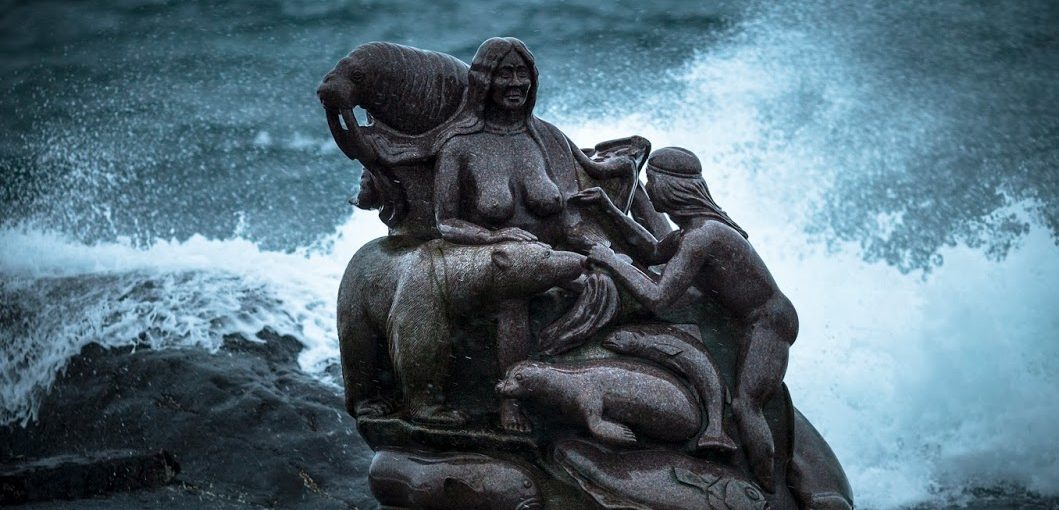
NordenBladet – The Mother of the Sea is a colorful and fantastic tale of how Greenland’s animals came to be – and reminds us of our responsibilities.
The Mother of the Sea was bothered by the Inuits’ evil deeds at the settlement and as a punishment gathered all the animals the Inuits used to hunt in her fiery hair at the bottom of the sea. When “The Blind One” came down to remedy the situation, he combed her hair, gathered the dirt in a heap and then threw it away.
At the same moment everything came alive, and there were bear, fox, hooded seal, bearded seal, ringed seal, harp seal, common seal, walrus, narwhal and all manner of birds.”
This is a passage from the legend of the Mother of the Sea, probably the most famous of all the Greenlandic myths and legends. The legend’s universe is colourful and fantastic, and the overall moral of the tale is that people must not be greedy and that they must observe society’s customs and the word of the shaman.
“The famous Greenlandic artist, Aka Høegh has used the legend of the Mother of the Sea to produce beautiful decorations and illustrations in books and in visual art. She has also used it as inspiration when decorating ships and not least in the large murals at the college in her home town of Qaqortoq.
___________________
The story of Sedna
Sedna (Inuktitut: ᓴᓐᓇ Sanna, previously Sedna or Sidne) is the goddess of the sea and marine animals in Inuit mythology, also known as the Mother of the Sea or Mistress of the Sea. Sedna is also known as Arnakuagsak or Arnaqquassaaq (Greenland) and Sassuma Arnaa (“Mother of the Deep”, West Greenland) and Nerrivik (“Table”, northern Greenland) or Nuliajuk (District of Keewatin, Northwest Territories, Canada). She is sometimes known by other names by different Inuit groups such as Arnapkapfaaluk (“Big Bad Woman”) of the Copper Inuit from the Coronation Gulf area and Takánakapsâluk or Takannaaluk (Igloolik). In Killiniq, Labrador, she was referred to as “Old-woman-who-lived-in-the-sea”.The story of Sedna, which is a creation myth, describes how she came to rule over Adlivun, the Inuit underworld.
More than one version of the Sedna legend exists. In one legend Sedna is a giant, the daughter of the creator-god Anguta, with a great hunger that causes her to attack her parents. Angered, Anguta takes her out to sea and throws her over the side of his kayak. As she clings to the sides, he chops off her fingers and she sinks to the underworld, becoming the ruler of the monsters of the deep. Her huge fingers become the seals, walruses, and whales hunted by the Inuit.
In another version of the legend, she is dissatisfied with men found for her by her father and so marries a dog. Her father is so angry at this that he throws her into the sea and, when she tries to climb back into the boat, he cuts off her fingers. Her fingers become the first seals and she becomes a mighty sea goddess. When she is angered, the shaman travels to wash and comb her hair for her, after which she is placated and releases the animals to the hunters.
In the Netsilik region, the story states that Nuliayuk was a mistreated orphan. One day the people tried to get rid of her by attempting to drown her by chopping off her fingertips. But the fingertips would transform into seals and walruses. Eventually, Nuliayuk marries a sculpin and lives in the sea controlling all sea mammals.
Other versions of the legend depict Sedna as a beautiful maiden who rejects marriage proposals from the hunters of her village. When an unknown hunter appears, Sedna’s father agrees to give her to him as wife in return for fish. Sedna’s father gives Sedna a sleeping potion and gives her to the hunter who takes her to a large nest on a cliff, revealing his true form: a great bird-spirit (variously described as a raven, a fulmar or a Kokksaut/petrel-spirit). She wakes surrounded by birds. Her father attempts to rescue her, but the bird-spirit becomes angry, causing a great storm. In desperation, Sedna’s father throws her into the raging sea. Attempting to cling to the kayak, her hands freeze and her fingers fall off becoming the creatures of the sea. She falls to the bottom of the sea and grows a fishtail.
Sedna is kidnapped by a different bird creature in yet another version. Her father then leaves in his kayak to rescue her from the floating ice-island where she is imprisoned while the bird creature is away. The creature, enraged by her disappearance, calls to a spirit of the sea to help him. The sea spirit locates the kayak with the two humans aboard and creates huge waves to kill them. Her father throws Sedna overboard in the hope that this will appease the angry god. Sedna clings to the kayak but her father grabs a little ax and chops three of her fingers off before striking her on the head. The three fingers each become a different species of seal. The stroke to her head sends Sedna to the ocean floor where she resides, commanding the animals of the sea.
The varying legends each give different rationales for Sedna’s death. Yet, in each version, her father takes her to sea in his kayak, chopping off her fingers. In each version she sinks to the bottom of the sea, worshiped by hunters who depend on her goodwill to supply food. She is generally considered a vengeful goddess, and hunters must placate and pray to her to release the sea animals from the ocean depths for their hunt. At Killiniq, people threw worn-out harpoon-heads, broken knives, and morsels of meat and bone into the sea as offerings.
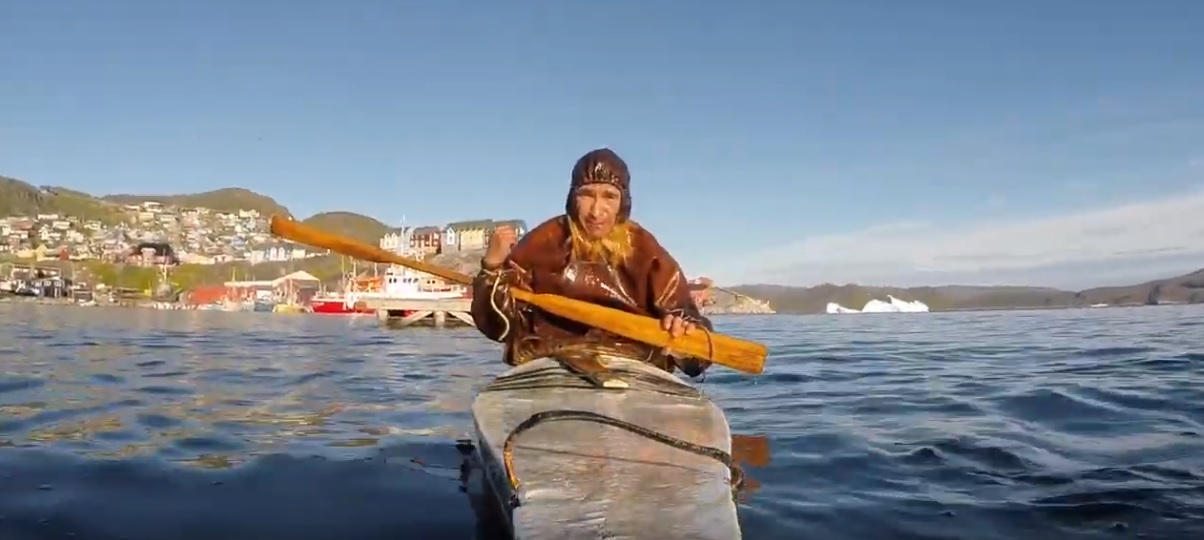
NordenBladet – The kayak was a necessity of the Inuits who from an early age learnt to handle this craft. It is still used for fishing but also used for recreation and for races.
THE HISTORY AND DEVELOPMENT OF THE KAYAK
The kayak – or ‘qajaq’ as it is called in Greenland – is an invention from old days that has been an essential piece of hunting equipment for Inuits in Greenland and the rest of Arctic North America.
The kayak has been used in connection with sealing, whaling and fishing, and it was common for Greenlandic boys to spend their childhood learning to keep their balance and manoeuvre the kayak.
Today the traditional ‘qajaq’ is still seen in many towns and especially at the annual kayak meeting but for recreational kayaking the more robust sea kayaks made of fibreglass have gradually taken the place of the traditional versions.
TRADITIONAL HUNTING FROM THE KAYAK
The kayaks were adapted to the waters in which they were used, and there is therefore a great variation in terms of both the kayak’s design and construction method.
Earlier the kayak was covered with sealskin from which the hair had been removed, but today they are primarily constructed with a nylon or canvas outer skin.
In Greenland’s hunting districts such as at Qaanaaq there is still a requirement that whaling for narwhals must take place in the traditional manner – i.e. from a traditional qajaq with hand-thrown lances and spears – despite the fact that it is of course more effective to hunt with rifles and camouflage.
GREENLANDER ROLL
The cold Arctic seas could be lethal, as could the weather too. It was therefore essential that the hunter was properly prepared by being dressed in a waterproof animal skin suit and by always being able to execute the so-called ‘Greenlander roll’.
From early childhood, the hunters therefore learnt and practised countless turns and rolls in the sea by means of their small oars in the event that they should suddenly capsize or turn over.
In this way they could get out of almost all critical situations.
THE CONSTRUCTION OF THE KAYAK
Building a kayak was a job for both men and women. The man was responsible for the kayak frame, and the kayak was shaped precisely to his own body shape and not according to standard dimensions.
The kayak construction itself consisted in former times of driftwood which was carried by the currents from Siberia’s rivers to the east and west coasts of Greenland.
The women’s job was to sew the fabric together from 3-4 skins of the harp seal, which was stretched out over the frame – a perfect collaboration that created kayaks from which modern kayak designers still find inspiration.
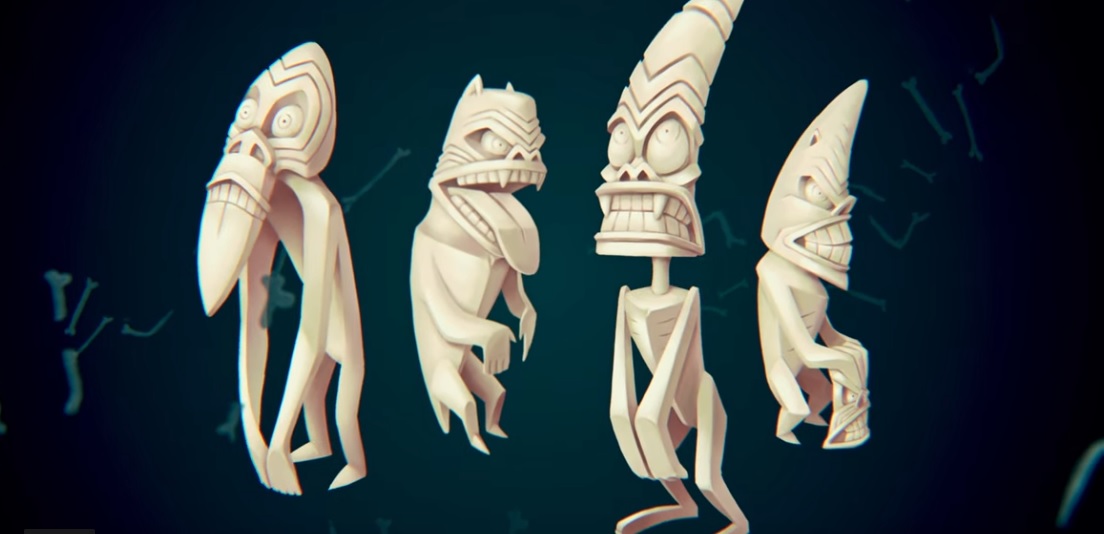
NordenBladet – The Greenlandic Tupilak is a carved figure that protects its owner against enemy attack, but is now a popular souvenir.
A WORLD OF SOULS AND SPIRITS
Previously tupilak was made to mysterious and sinister sprits. Today, when the word ‘tupilak’ is mentioned, the majority of people think of the well-known small figures carved in tooth, bone or stone.
REVENGE AGAINST ENEMIES
A tupilak spirit could be called upon to help against a foe by a shaman secretly creating a figure made from various bones or other parts of animals. The figure was then inaugurated and made a home for the spirit by singing a spell over it.
The tupilak was often put out to sea so that it could find the enemy itself and kill him. However, this course of action was not without risk because if the tupilak’s victim had greater powers of witchcraft than its creator, he could repel its attack and instead send the tupilak back to kill its originator.
TUPILAKS AS SOUVENIRS
It is only in recent times that it has become a tradition to produce tupilaks as works of art made from materials such as wood, bone, tooth and reindeer antler points. This began to occur in the previous century when Europeans began exploring East Greenland and became aware of these small figures.
Tupilaks are often ground and carved based on inspiration from a number of other figures from Inuit mythology, for instance the Mother of the Sea.
Today fascinating tupilaks are sold in all tourist offices and souvenir shops. It is only possible to export tupilaks made of antler points, bone, soapstone, stone and wood, whilst according to CITES regulations tupilaks made of whale tooth may at present not be exported.
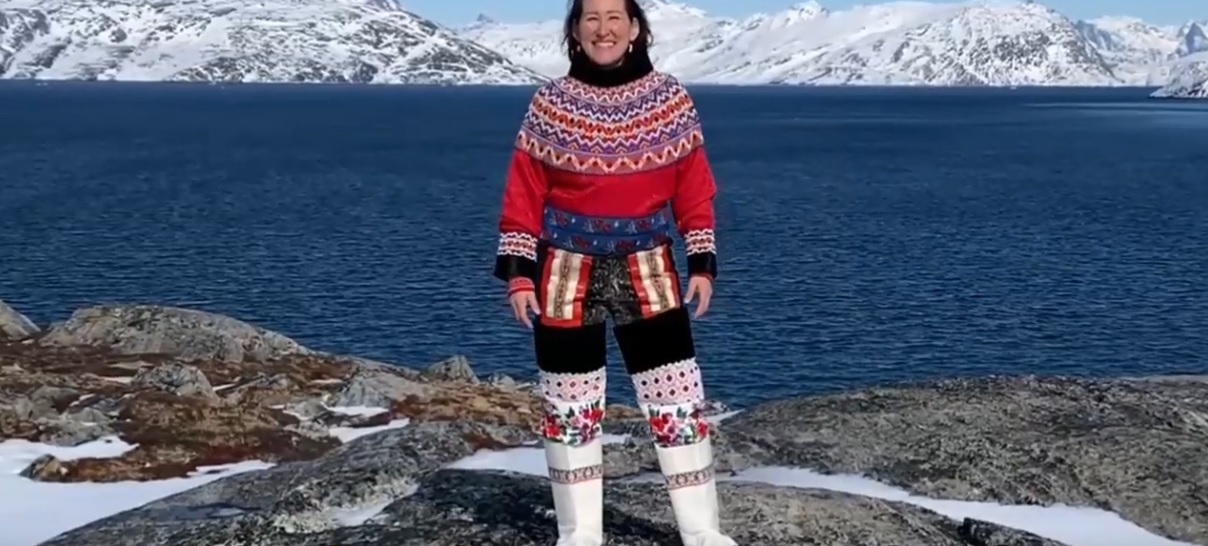
NordenBladet – The Greenlandic national costume (Traditional Dress) is famous and is a magnificent sight. Beads brought by Europeans became a part of the female outfit.
THE INUITS’ ANIMAL SKIN CLOTHES
In former times the Inuits only wore clothes made from animal hides or skins.
These clothes were warm and hardwearing, and if properly looked after could cope with the winter’s freezing temperatures in the Arctic region.
Both men and women’s clothes consisted of furs, trousers and boots, but the cut and choice of animal skin was different for each sex.
The skins were taken from animals that were killed and captured, and, depending on the species of the prey, were of very different weight, durability and appearance.
CAREFULLY SELECTED SKIN
Men’s clothing was made so that they would neither freeze to death on their long hunting trips on the winter ice nor be soaked to the skin when hunting by kayak.
“A man is what his wife makes him” said the Inuits, because they knew that if they were to survive in the harsh Arctic winter, the skins used in their clothes had to be carefully chosen and perfectly sewn.
Being a skilled seamstress thus earned a woman a great deal of respect. If you could sew good kamiks, trousers and anoraks, then you were assured of a good existence. Today the traditional animal skin suits can be seen in most local museums.
FROM TRADITIONAL DRESS TO NATIONAL COSTUME
When the Europeans set foot in Greenland in the 17th and 18th centuries, they brought with them clothing fabrics and glass beads as goods to trade.
These materials gradually become incorporated into the Inuits‘ dress, particularly for festive attire. For men the hide trousers were replaced by a thick woollen material called ‘holmensklæde’ (literally island cloth), and for women the anorak was sewn in silks.
The glass beads were initially used in the same way as when decorating oneself with beads fashioned from bone.
It gradually became prestigious to use more and more beads, and this trend is particularly visible on the women’s national costume.
WEARING THE NATIONAL COSTUME
Today the Greenlandic national costume is used on special festive occasions and at festivals such as Christmas, Easter, Greenland’s National Day, confirmations and weddings.
On birthdays the national costume can also be used, not least on a child’s first birthday. When a child has his or her first day at school at the beginning of August, it is a day of great celebration in Greenland.
The six-year-old girls and boys are usually dressed in national costumes on this special day. In addition to the traditional festivals, visitors to Greenland will also see the national costume being worn when cruise ships call at port or when there are other special events.
NordenBladet – Visual art has played an important role in culture and national self-understanding. See the work in the museums in Ilulissat and Nuuk.
AARON FROM KANGEQ
Visual art in Greenland has, in spite of its relatively short history, made a significant contribution to Greenlandic culture. It all began with Aaron from Kangeq, the Greenlandic drawer and painter, who in the middle of the 19th century depicted the ancient Greenlandic myths and legends in watercolours.
INFORMATION AND NATURALISTS
Since these beginnings several artists have been influenced and inspired to follow Aaron’s example through drawing and painting.
From the 1940s visual art had two primary forms of expression: To provide information or to depict the landscape as accurately as possible. The culture and the landscape in Greenland have also attracted many foreign artists, whose works are collectables today.
Museums containing the Danish artist Emanual A. Petersen’s paintings are thus found in both Ilulissat in Northern Greenland and in the capital Nuuk.
INSPIRATION FROM THE NATURAL WORLD AND CULTURE
Greenlandic artists today are particularly inspired by culture, wildlife and the natural world.
During recent years an increasing number of young artists have made their breakthrough with art that provokes questions and alters attitudes.
Newer forms of expression such as photography and installations have begun to be mixed with more traditional techniques.
OVERVIEW OF ARTISTS IN GREENLAND
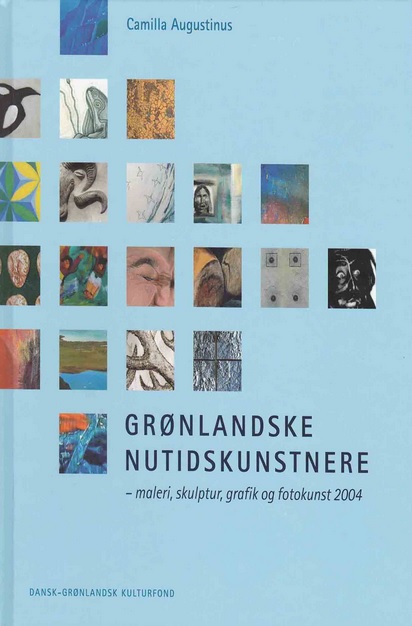
There is no complete list of all artists in Greenland. However, the book “Grønlandske Nutidskunstnere – maleri, skulptur, grafik og fotokunst 2004” by Camilla Augustinus provides a good overview of 33 active artists in Greenland.
The book is published by Dansk-Grønlandsk Kulturfond, and can be purchased in Danish.