
Reklaam

Helena-Reet Ennet

Helena-Reet Ennet
4698 POSTS 0 COMMENTS

Finland to ensure tax responsibility in development cooperation

NordenBladet — Aggressive tax planning, utilisation of tax havens and tax holidays that distort fair competition are not allowed in development cooperation.

The Ministry for Foreign Affairs published today a policy which aims to ensure that companies receiving development cooperation funding operate in a tax responsible manner. The policy is part of the Finland’s Taxation for Development Action Programme (2020-2023) implementation.The policy specifies the basic principles to which the companies receiving funding must commit.

Aggressive tax planning is not allowed. Aggressive tax planning refers to arrangements made by companies to either artificially reduce taxable income significantly or avoid taxes completely. A company practicing aggressive tax planning may, for example, transfer income generated in a poor developing country to be taxed in another country where the tax rate is lower. In this case, the country that should have received the taxes loses income that would be used for important basic services.

The policy also prohibits the utilisation of tax havens for investments made with development cooperation funding which are not made directly in the target country but through a fund or company located in another country. In the policy, a tax haven refers to countries or areas with a low or non-existent tax rate and low regulation which have been deemed non-transparent by the OECD or the Council of the European Union. Investment arrangements made through these countries could present a risk of tax evasion.

Companies receiving development cooperation funding should also not require tax holidays which distort fair competition for themselves, in other words, tax exemptions or reliefs. Otherwise, tax holidays and other benefits available to all investors offered on similar grounds by the country are allowed.In order to monitor and ensure companies’ tax responsibility, it is also required that companies act and report their business operations transparently as required by the tax authorities in the countries where they operate.

The policy concerns all Finland’s development cooperation funding to the private sector. Special implementation instructions on the policy will be provided for the Ministry for Foreign Affairs’ private sector instruments, such as the business partnership programme Finnpartnership promoting business operations between Finland and developing countries and the development finance institution Finnfund investing in companies operating in developing countries. Finnfund has strengthened its expertise in international taxationFinnfund renewed its tax policy in 2018 and assessed its implementation simultaneously with the policy work. Finnfund’s intermediate evaluation is available on Finnfund’s website.

“We want to be a pioneer and promote tax responsibility and related discussion. It is an essential part of our responsibility work and development financing work. It has been great to note the tax policy has strengthened the role of tax responsibility in Finnfund’s responsibility work and investment responsibility assessments. At the same time, it has supported the strengthening of our personnel’s tax expertise,” says Helena Arlander, Deputy CEO of Finnfund.

Companies are significant development cooperation partners
The private sector is an important partner in achieving the sustainable development goals as a solution creator, employer, service provider and financier. Private companies are crucial partners for Finland’s development policy. The sustainable development goals cannot be achieved solely with official development cooperation funds, but investments from companies are also required. Companies play an especially important role in creating jobs.

Taxes and tax-like payments paid by companies comprise a large part of the tax base in developing countries. With tax income, developing countries can offer basic services such as education and health care to their citizens. For the development of societies, it is important that taxes are collected in the countries where the taxable income has been generated.

It is important in terms of internationally fair taxation that tax systems and administrations are functional and that corruption and illicit financial flows do not obstruct the appropriate collection of taxes and other payments.“It is important that Finland requires tax responsible actions from companies receiving development cooperation funding. This is also a question of Finnish values: good governance and bearing shared responsibility,” says Pekka Hirvonen, Director, the Ministry for Foreign Affairs.

Finland: Development Policy Committee: A triple nexus approach is needed for development cooperation, humanitarian assistance and peace actions

NordenBladet — Development cooperation, humanitarian assistance and peace actions should provide a more efficient joint response to the needs of people affected by crises. Closer collaboration between the various actors is therefore vital. This is the key conclusion of the analysis published by the Development Policy Committee (DPC), in which an expert group consisting of representatives of DPC members analyses the current situation and provides recommendations for the next steps to be taken for further improvements.

The publication discusses the triple nexus approach particularly in fragile contexts and protracted conflicts. There is an obvious need for closer collaboration, as a significant number of partner countries in Finland’s bilateral development cooperation are fragile states. These include countries such as Afghanistan, Ethiopia and Myanmar. Finland is also known as a committed humanitarian assistance provider and peace actor.Increasingly difficult situations emphasize the need for collaboration


Finland: Entry restrictions imposed by Finland currently necessary to slow down spread of pandemic

NordenBladet — On 4 March 2021, the Ministry of the Interior submitted a reply to a letter sent to Finland by the European Commission on 22 February 2021. The letter concerned restrictions imposed by Finland on the free movement of EU citizens in order to curb the spread of the COVID-19 pandemic.

The Commission sent similar letters to Belgium, Sweden, Germany, Denmark and Hungary. The Ministry of the Interior prepared Finland’s response in cooperation with other key ministries. The response states that these restrictions are currently necessary in order to slow the spread of the pandemic and especially to prevent the transmission of new virus variants. The decisions to impose the restrictions respect the obligations enshrined in the Constitution and are in line with the human and fundamental rights treaties binding on Finland. The aim of the restrictions on movement that are currently deemed necessary is to safeguard public health and, in particular, every individual’s right of life. The Government of Finland has submitted a proposal to Parliament on measures to improve health security at our borders. These measures will make it possible to move away from the wide-ranging restrictions at Finland’s borders and transition towards more targeted measures that better take into account the health risk posed by individual passengers. This approach is in line with the recommendations from the Council of the EU.


Finland: Legislative proposal to Parliament: Third application round for business cost support in April to include sole entrepreneurs

NordenBladet — The objective of business cost support is to help companies in the difficult economic situation caused by the coronavirus. The Government is now proposing amendments to the Act on Support for Business Costs, which would make it possible to grant aid more flexibly, especially to sole entrepreneurs and small enterprises.

The Government submitted its legislative proposal to Parliament on 4 March 2021. After Parliament’s consideration, the President of the Republic will approve the Act. Consequently, the State Treasury could start accepting applications from companies and sole entrepreneurs at the end of April. The basic conditions of the aid will remain unchanged.

“As a matter of urgency, the Ministry of Economic Affairs and Employment is preparing a support model for the reasonable compensation of businesses affected by the new closure announced in March. The Government’s proposal on a third application round of business cost support applies to business activities before this closure in March,” says Minister of Economic Affairs Mika Lintilä.

The Act on Support for Business Costs  may be amended as a result of the reasonable compensation provided to businesses affected by the closure. The amendments will be submitted either as a supplementary Government proposal during the Parliamentary committee discussions or as a separate proposal, depending on the progress of the preparation.

Fall in turnover is a condition for receiving business cost support
The third round of business cost support is intended for companies whose turnover has fallen by more than 30% due to the coronavirus pandemic between 1 November 2020 and 28 February 2021, compared with the corresponding period in 2019–2020.

All companies can apply for business cost support. The Government will later issue a decree on the sectors that can apply for support without providing further justification. If a company does not operate in one of the sectors defined in the decree, it must justify the need for support and provide an account of the loss of turnover due to COVID-19. The decree will include the sectors where turnover has decreased by at least 10% during the period.

The definition of inflexible costs which support can be applied for has been specified. In addition, the employer’s non-wage labour costs, such as social security contributions and occupational health expenses, would be accepted as costs, calculated as a percentage of the payroll costs over the support period.

Sole entrepreneurs to apply for support at State Treasury
Support for sole entrepreneurs will be part of the business cost support. Municipalities will not organise a separate application round of support for sole entrepreneurs.

A minimum support of EUR 2,000 will be paid to sole entrepreneurs if they meet the conditions for it. The amount of support will be based on the decrease in the company’s turnover and actual costs.

To be eligible for business cost support, the company must have a Business ID. The company must also have eligible expenses of at least EUR 2,000 during the support period. As before, there will be no lower limit on the turnover of the company.

Previously, sole entrepreneurs and small enterprises were able to apply for business cost support, but no aid was granted to companies where the support would have amounted to less than EUR 2,000.

Maximum amount of aid to rise to EUR 1 million
The maximum amount of aid will increase and thereby meet the needs of large companies in particular. The maximum amount of aid a company can receive will rise from EUR 500,000 to EUR 1 million.The aid already granted will be taken into account in the amount of the business cost support so that the total aid granted under the same temporary State aid rules of the European Commission will not exceed EUR 1.8 million. The ceiling was previously EUR 800,000. The new maximum amount is based on the Commission’s decision to raise the company-specific ceilings for aid.

Business cost support is a way to help entrepreneurs during the coronavirus crisis
The business cost support is direct financial aid to companies, which does not need to be paid back. As before, the support is compensation for the company’s inflexible costs and payroll costs, but it does not compensate for a fall in turnover. The first application round for business cost support took place in July–August 2020. The second round began in December 2020 and ended in February 2021. The budget for the third application round is EUR 380 million.

Support for business costs is one way for the Government to help companies during the coronavirus situation. With the help of previous support from Business Finland and ELY Centres, companies were able to develop and redirect their operations in the coronavirus situation. Other forms of support include Business Finland’s research, development and innovation loans, Finnvera’s guarantees and the financing programmes of Finnish Industry Investment Ltd, where applications are still accepted. The Government also proposes that the right of entrepreneurs to receive labour market support continue due to the coronavirus pandemic. Other previous forms of aid include special support for the food and beverage services sector and sole entrepreneurs.


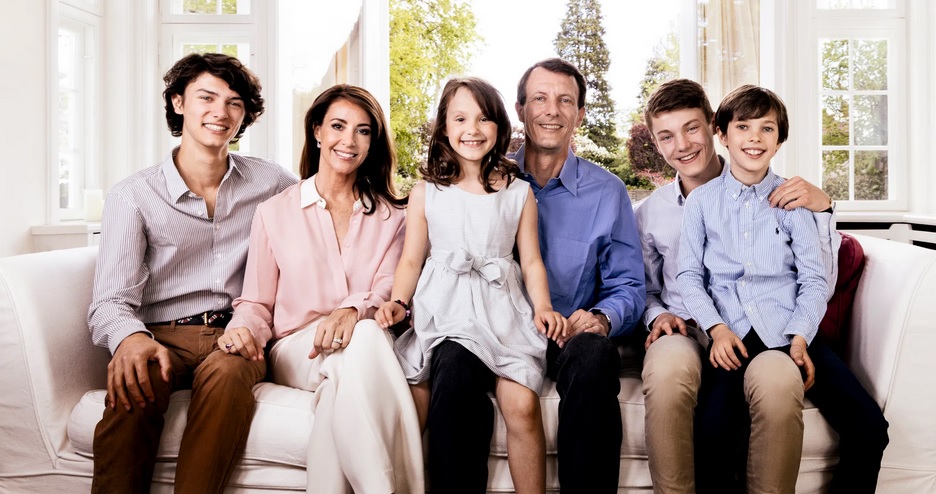
Denmark: Prince Felix of Denmark set to begin military education in August

NordenBladet – His Highness Prince Felix of Denmark (18), Count of Monpezat and grandchild of Queen Margrethe, has been admitted to one of the country’s prestigious military education camps. According to Danish magazine Billed Bladet, Prince Felix will begin the Army’s two-year sergeant training in the military camp in Varde when the Prince has finished high school this summer and has received his exam results. The military sergeant training in Varde is a well-respected and tough education and there are strict admission requirements, both in terms of physical and mental strength.

The prince has decided that after his exams he will follow in the footsteps of his father, Prince Joachim, and begin his sergeant training. Prince Joachim has a very solid military education and is currently ranked as brigadier general. At the moment he works as the defence attaché for Denmark at their embassy in Paris. Prince Felix is currently a student at Gammel Hellerup Gymnasium until the summer. The Danish prince will turn 19 in July and is scheduled to begin his military education in August.

This is the same military training that his older brother, Prince Nikolai, dropped out of after only two months in the camp. It was officially confirmed by the Danish Royal House’s Head of Communications, in October 2018 that Prince Nikolai of Denmark has given up of his two-year military training at the Royal Danish Army’s Sergeant School. Prince Nikolai left the military at his own wishes and had the full support of his parents, Prince Joachim of Denmark and Countess Alexandra of Frederiksborg.

According to a statement issued by Countess Alexandra’s Private Secretary, Prince Nikolai left his military education, not because of the people there or training itself, but because he felt that it was not right for him to have a career in the military. His mother’s Private Secretary also said that the Prince would continue to pursue his modelling career. The following year, in 2019, the prince also began studying for a bachelor’s degree at Copenhagen Business School. There he studies Business Administration and Service Management.

__________________________

Prince Felix of Denmark (Felix Henrik Valdemar Christian; born 22 July 2002) is a member of the Danish royal family. He is the younger son of Prince Joachim and his first wife, Alexandra, Countess of Frederiksborg. Prince Felix is currently eighth in the line of succession to the Danish throne.

Prince Felix was born at Rigshospitalet the Copenhagen University Hospital in Copenhagen on 22 July 2002. When his father met the press following the birth, he joked that the baby could be named anything from Ib to Nebuchadnezzar.

He was christened in Møgeltønder Church in Møgeltønder on 4 October 2002 by the royal vicar Christian Thodberg. His names were revealed to be Felix Henrik Valdemar Christian. His godparents are Martina Bent (maternal aunt); and friends of his parents: Count Christian Ahlefeldt-Laurvig, Oscar Davidsen Siesbye, Damian Sibley and Annick Boel. At the christening the musical work Dåbens Pagt composed by Frederik Magle, dedicated to Prince Felix, was given its first performance.

After their divorce, Prince Joachim and Alexandra had joint custody of Prince Felix and his older brother Prince Nikolai.

Felix attended pre-school at the Garnison Church in Copenhagen, and at age six, followed in the footsteps of his father, brother and uncle at Krebs School in Østerbro.

Felix is styled as “His Highness Prince Felix of Denmark, Count of Monpezat”. He has been Prince of Denmark since birth and Count of Monpezat since 29 April 2008, when Queen Margrethe granted the title to her male-line descendants.

Featured image: Steen Brogaard/Kongehuset

Finland: Foreign Minister Haavisto hosts a meeting of Nordic Foreign Ministers

NordenBladet — Minister for Foreign Affairs Pekka Haavisto will chair the meeting of the Nordic Foreign Ministers on Friday 5 March 2021.

Finland is chairing the Nordic (N5) cooperation on foreign and security policy in 2021. Due to the COVID-19 situation, the first foreign ministerial meeting of the year will be held virtually. The Foreign Ministers will discuss topical security policy questions, transatlantic relations, Sweden’s year as Chair of the OSCE, and the UN.


Finland: Six applicants for the position of Director General at Finnish Safety and Chemicals Agency

NordenBladet — The Finnish Safety and Chemicals Agency (Tukes) monitors and promotes the safety, conformity and reliability of products, services and production systems, as well as consumer and chemical safety. The search for a new Director General of Tukes began in February and the vacancy will be filled from 1 July.

The Director General directs the Agency’s activities and is responsible for their development and effectiveness as well as the achievement of the Agency’s objectives. The Director General is appointed by the Government for a period of five years at a time.

The persons who applied for the position:
Lehtonen Piotr
Nieminen Janne
Nurmi Veli-Pekka
Peltonen Kimmo
Pitchulina Tatyana
One applicant did not want their name published.

Applications were accepted until Wednesday 3 March 2021 at 16.15. The list of applicants may be updated if more applications that have been submitted by the deadline arrive later by post or through the Registry.


Finland: Major drop in Schengen visa applications submitted at Finnish missions because of entry restrictions and health security measures due to COVID-19 pandemic

NordenBladet — In 2020, Finland processed a total of 152,543 applications for a Schengen visa. The decrease in the visa applications received was 83% as compared to the number of visas processed in 2019 (895,781).

Due to the COVID-19 pandemic, Finland, like the other Schengen countries, suspended the reception of regular visa applications, including tourist visas, on 19 March 2020. Since that date, the reception of visa applications has been continued for certain exceptional categories identified jointly within the EU and by the Finnish Government, observing Finland’s national entry restrictions. Constraints on all activities, including the provision of entry services in both Finnish missions abroad and through the reception services of external service providers, have moreover been imposed by the local authorities, depending on each country’s specific disease situation. The great majority of visa applications for Finland and a significant number of residence permit applications are normally received by an external service provider.

Since March 2020, the COVID-19 pandemic has caused a clear downturn in the number of visa applications across the world. This decline is reflected not only in Finland’s visa records but also in those kept by the other Schengen countries. These exceptional circumstances are ongoing.In 2020, by far the largest number of applications received by Finland were made by Russian nationals, like before. Whereas in 2019 Russians submitted 786,407 visa applications, the number fell significantly in 2020, being a mere 116,818.

There was similarly a significant decrease in the number of visa applications submitted in China, a country that had shown a growing interest in travel to Finland before the pandemic. Visa applications received from Beijing decreased by 81% and those submitted in Shanghai fell by 77% in 2020 as compared to the previous year.


Norway: Crown Princess Mette-Marit launches digital literature-train

NordenBladet – Crown Princess Mette-Marit of Norway has launched this year’s literature-train in a story on Instagram that was published earlier this week. This year’s literature-train will run as a digital event that will take place through four conservations with some of the Crown Princess’ favourite authors.

Her Royal Highness published the following message: “Hi, dear all. On Thursday, this year’s literature train starts here on Instagram. I have brought with me some of the authors that I should have had with me on last year’s train, which of course did not happen due to the coronavirus. Then on Thursday at 7 PM, I will talk to Alf van der Hagen. He mostly writes books about other people. I am really looking forward to it and hope you feel like joining and listening to the first of a total of four conversations I will have with authors that I greatly appreciate. You are most welcome to join.”

The Norwegian Crown Princess is very interested in literature and books. She wants to share her joy of reading and to spread the power of good literature through her personal conviction that there is a book for everyone. Over time, Crown Princess Mette-Marit has participated in a number of literary events. In 2017, the Crown Princess took on the role of ambassador for Norwegian literature abroad.

In the Crown Princess’ literary agenda, however, there is one event that holds a special position: the Literature Train. In recent years, the Crown Princess has embarked on a literary train journey every spring, with events at libraries and literature houses along the way. The main goal of Crown Princess Mette-Marit`s “literature-train” is to reach a wider range of the population to increase awareness and enjoyment of literature.

In 2019, Her Royal Highness Crown Princess Mette-Marit chose to switch her annual “literature train” to a more urban “literature metro”. Instead of using some of Norway’s long and remote train lines to promote literature to young people, she used the metro-system in Oslo city to reach young people with her message. In addition, that year, for the first time, the Crown Princess’ literature train went abroad. With a course for the book fair in Frankfurt, the train started in Berlin and ended in Frankfurt.

Featured image: Det Norske Kongehus Instagram Still/ Fair Use

Finland: Notices of right to vote in municipal elections to be sent out in March

NordenBladet — The Digital and Population Data Services Agency will send a notice of the right to vote in the 2021 municipal elections to all eligible voters during March. The notice will be accompanied by instructions on safe voting.

The notices of right to vote will be sent by post. The notice will be sent in electronic format to those eligible voters who have activated the Suomi.fi Messages service and given their consent for all official notifications to be sent to them electronically.

The notice of right to vote indicates the voter’s election day polling station and contact details of the central municipal election board. A list of advance polling stations close to the eligible voter’s place of residence and instructions on safe voting during the COVID-19 epidemic will also be enclosed.

People who reach the age of 18 on election day at the latest and have a municipality of residence in Finland have the right to vote in the municipal elections. The elections will be conducted in April 2021. Election day is Sunday 18 April. The advance voting period is in Finland from 7 to 13 April 2021 and abroad from 7 to 10 April 2021.

The Digital and Population Data Services Agency has established a voting register for the 2021 municipal elections based on the information contained in the Population Information System on 26 February 2021. The number of eligible voters included in the register is approximately 4,462,000.

Health security will be taken into account in election arrangements  The Ministry of Justice is preparing the municipal elections in cooperation with the Finnish Institute for Health and Welfare (THL). The Ministry of Justice and the Finnish Institute for Health and Welfare have drawn up instructions on safe voting during the COVID-19 epidemic.

The objective is to make sure that everyone can vote safely regardless of the epidemiological situation. Finland is well prepared to organise the municipal elections during the COVID-19 epidemic.Reliable information about elections and voting is available at www.electionsfinland.fi