Reklaam

Helena-Reet Ennet

Helena-Reet Ennet
4698 POSTS 0 COMMENTS

Denmark: Crown Princess Mary on women’s rights: “We must continue to be ambitious”

NordenBladet – Crown Princess Mary celebrated International Women’s Day with a series of virtual engagements, including a welcome message for KVINFO’s online event.

In her speech, shared to the Danish Royal House social media accounts, the Crown Princess said, “[International Women’s Day] is an opportunity to take stock of where women stand today, how far we have come, and where we look at challenges, opportunities and demands, but also wishes for the future.

“And it is a day when we remind each other that we must continue to be ambitious when it comes to the fight for girls’ and women’s rights, and remind us that the fight for women’s rights is not a women’s issue, it is a matter for everyone.”

KVINFO hosted an online event celebrating “the victories of the past year” and looking forward “to new matches for a more free and equal future” with performers, speeches and other virtual elements. KVINFO is one of Denmark’s leading gender, equality and diversity centres, where research is studied and shared.

Crown Princess Mary continued: “Gender equality has different meanings, depending on where in the world one is. Like respecting and enforcing the rights of women and girls. A year ago, we saw good progress in several areas of development around the world, even in the poorest countries.

“But then came the corona – and the shutdowns have unfortunately rolled back much of that progress, and it has created a very serious situation for many girls and women, who are often the most vulnerable in crises. This applies, for example, to education, access to health services, including reproductive health, an increase in child marriages and the risk of ending up in poverty. And the same goes for violence against women.”

Crown Princess Mary said that the past year has created a “bit of a cultural shift” that has allowed “a more open and nuanced debate, which is important for the culture we want to see. We want to see a culture where we embrace the differences…”

Crown Princess Mary also joined in a roundtable discussion with UN Women and the Boston Consulting Group about gender diversity in Denmark; as well as a meeting for the ICPD25, as part of the work from the Nairobi Summit for girls’ and women’s rights.

Finland announces climate strategy for ICT sector: harnessing data bits to combat climate change

NordenBladet — How can waste heat from data centres be converted into heating for homes? How can a broken phone and its precious metals be returned from the desk drawer for servicing or recycling? How can information and communication technologies help in reducing emissions from transport or industry?These questions are answered in Finland’s first climate and environment strategy for the ICT sector published on 9 March 2021. This internationally pioneering strategy sets out the instruments that will reduce the carbon and environmental footprint of the ICT sector and reap the benefits of digitalisation.“Our goal is clear: Finland is seeking to solve climate problems and provide solutions for the whole world by applying its expertise in information and communication technology,” says Minister of Transport and Communications Timo Harakka.There are two aspects to the ICT sector. On the one hand, communication networks, data centres and smart devices consume electricity and materials. The ICT sector consumes an estimated 4-10 per cent of global electric power and gives rise to some 3-5 per cent of greenhouse gas emissions.On the other hand, the ICT sector has a great deal of potential to reduce greenhouse gas emissions from other sectors, such as transport. Digital services enable intelligent transport control and make public transport more attractive by streamlining vehicle changes. The coronavirus pandemic has shown in practice how teleworking and teleconferencing can replace passenger transportation.“Good digital infrastructure and skills enabled Finland to make a smooth conversion of information occupations in 2020 to a world of work that is largely based on virtual meetings. We are now harnessing digitalisation to combat global warming. The strategy supports the goal of achieving carbon neutrality in Finland by the year 2035,” Harakka continues.“This strategy work has brought together a wide range of operators with strong expertise and a desire to promote the environmental friendliness of the ICT sector and boost the favourable environmental impact of digitalisation in other sectors. Finnish operators have an opportunity to take an active role in the international debate that seeks to promote ecologically sustainable digitalisation,” says Jarno Ilme, Deputy Director-General of the Finnish Transport and Communications Agency (Traficom).Finland’s ICT climate and environmental strategy was prepared by a working group that included representatives of businesses, public administration and organisations, together with universities and research institutes. The strategy was finalised at the Ministry of Transport and Communications following a consultation round concerning the final report of the working group, which ended in January 2021.Six goals in pursuit of ecologically sustainable digitalisationThe strategy includes six objectives and measures to achieve them.1. Improving ICT infrastructure energy efficiency and introducing zero carbon sources of electric powerThe design, construction and operation of communication networks must aim for energy efficiency. Much greater use can be made of the surplus heat generated by data centres, thereby reducing the energy generating requirement for heating and its accompanying carbon dioxide emissions. Investments in zero carbon electricity generating will also reduce emissions from the ICT sector.2. Seeking a climate friendly data economyData traffic and electricity consumption increase with the rising number of services. The volume of data transmitted on Finland’s mobile networks per head of population has grown by well over an order of magnitude in the last decade. The design of software and services must give greater consideration to minimising their energy consumption. There is a need for research, training of specialists, and guidance in service procurement. Cheaper software can require more processing power and hardware capacity, ultimately both wasting resources and becoming more costly over its life span.3. Longer hardware life and recycling of precious metalsThe service life of hardware can be extended at the design stage. Consumers must also be advised as to product warranties, software upgrades and recycling. Rare metals are required in the batteries and displays of smartphones and computers. Recycling could be made more efficient, for example by paying a refund when old hardware is returned. The strategy seeks to influence the sustainability of primary material production and the traceability of materials in Finland and the European Union.4. An overview of the environmental impacts of digitalisationThe lack of transparent, centralised and available data on the climate and environmental impacts of the ICT sector is a challenge both nationally and internationally. Comparable data is needed on the carbon footprint of the ICT sector and on how information and communication technologies can help to reduce emissions in other sectors.5. Making consumers aware of environmental impactsConsumer behaviour substantially affects the environmental impact of the ICT sector. Consumers are interested in the carbon footprint of the services that they use, and in their opportunities to influence this footprint. Access to information must be improved through various channels, ranging from school education to consumer campaigns.6. Use of emerging technologies in climate work and environmental protectionArtificial intelligence, robotics, automated systems and other new technologies are raising hopes that they will provide solutions to climate and environmental problems. For example, artificial intelligence has already begun helping to reduce the energy and material consumption of various processes. Attention must also be paid to the energy and material consumption that is involved in developing new technologies.What are the next steps?The strategy will be implemented by a wide range of parties, both public and private. The Ministry of Transport and Communications and the Finnish Transport and Communications Agency (Traficom) will monitor implementation of the strategy in partnership with stakeholders. An annual forum will be arranged to support this process.For further details, please contact:Requests to interview Minister Timo Harakka: Susanna Niinivaara, Communications Director, tel. +358 40 081 6187, susanna.niinivaara(at)lvm.fiPäivi Antikainen, Director of Unit, Ministry of Transport and Communications, tel. +358 50 382 7101, paivi.antikainen(at)lvm.fi, Twitter @PaiviAntikainenTuuli Ojala, Senior Specialist, Ministry of Transport and Communications, tel. +358 50 563 8130, tuuli.ojala(at)lvm.fi, Twitter @OjalaTuuliJarno Ilme, Deputy Director-General, Finnish Transport and Communications Agency (Traficom), tel. +358 29 539 0574, jarno.ilme(at)traficom.fi, Twitter @IlmeJarnoInstitutional Repository for the Government: Climate and environmental strategy for the ICT sector. Publications of the Ministry of Transport and Communications 2021:6.
Impulse Blog by Minister Timo Harakka
Gateway to information on Government projects: Preparation of a climate and environmental strategy for the ICT sector (in Finnish)

Source: Valtioneuvosto.fi

Finland: Restaurants to close on 9 March in areas where COVID-19 epidemic situation is the most serious

NordenBladet — Restaurants and other food and beverage service businesses must be closed to customers from 9 March 2021. The act and the decree concerning the matter will enter into force at midnight between Monday 8 March and Tuesday 9 March.

Restaurants will be closed to customers until 28 March 2021 in areas where it is necessary to stop the acceleration of the epidemic. These include the areas where the coronavirus epidemic is in acceleration or community transmission phase and Central Finland, because the epidemiological indicators there are similar to an area in acceleration phase. However, restaurants can still sell food for takeaway or delivery.On 8 March 2021, Parliament approved and the President of the Republic confirmed an act, which will temporarily close restaurants and other food and beverage service businesses to customers. Government issued a decree on the areas to be affected by the closure on the same day. The decision was based on the views of the experts at the Finnish Institute for Health and Welfare on the epidemic situation in the areas.

Restaurants must be closed to customers in the following regions:UusimaaSouthwest FinlandSatakuntaKanta-HämePirkanmaaPäijät-HämeKymenlaaksoSouth KareliaSouth SavoCentral FinlandSouth OstrobothniaOstrobothniaNorthern OstrobothniaLaplandÅlandThe following areas are excluded from the closure: North Karelia, Central Ostrobothnia, Kainuu and North Savo.

The Government will amend the Decree if the closure is not necessary in a certain area, that is, if an area no longer is in acceleration or community transmission phase. The Government will also amend the Decree, if the epidemic accelerates in one of the areas now at a stable level. The assessment of necessity and decisions are based on the expert evaluation of the Finnish Institute for Health and Welfare.The classification of regions into the baseline, acceleration and community transmission phases of the epidemic is based on the Ministry of Social Affairs and Health’s action plan for implementing the hybrid strategy to manage COVID-19.

Closure to affect all food and beverage service businesses, with the exception of staff restaurants
The food and beverage service businesses to be closed down include cafes, restaurants, bars and nightclubs that are open to the public. The restriction also affects outdoor terraces.Only restaurants that are not open to the public are exempt from the closures. It therefore does not affect canteens in residential homes for older people or staff restaurants that are not open to other customers, for example.

During the closure, restaurants and cafes will still be allowed to sell portions directly to the customer for takeaway or deliver them either themselves or using other service providers.In regions not affected by the closure, food and beverage service businesses can continue to be open to customers. Businesses that remain open must still comply with the restrictions laid down in the Communicable Diseases Act and in the regulations issued under it.

As a matter of urgency, the Ministry of Economic Affairs and Employment is preparing a support model for the reasonable compensation of businesses affected by the closure. This aid will be implemented as part of the business cost support. During March, the Government will issue a separate proposal on the amendments to the Act on Support for Business Costs caused by the closure.


The Foreign Ministers of Finland, Iceland, Norway, Sweden and Denmark: strong commitment to Gender Equality and the rights of all women and girls.

NordenBladet — For decades, Nordic countries have prospered due to the equal participation and inclusion of women and girls in all areas of societal life. For us, ensuring the enjoyment of human rights of all women and girls, in all their diversity, and ending gender-based discrimination in all of its forms, is the right and the smart thing to do because gender equality benefits everyone.Globally, we have seen remarkable improvements for the health and rights of women and girls over the past decades. But the global pandemic has exacerbated existing inequalities, with disproportional impact on the health, participation, wellbeing and socio-economic status of women and girls worldwide – and has also increased gender-based violence. Now, global leaders must commit to placing women at the center of recovery plans, ensuring their participation in decision making processes, and redouble efforts to secure the health, rights and needs of all women and girls. Additionally, we will continue to counter the growing pressure on human rights of women and girls and attacks on the notion of gender equality both globally, in multilateral fora and within Europe. We are particularly concerned about actions to undermine or roll back sexual and reproductive health and rights, including the access to safe and legal abortions, comprehensive sexuality education and modern contraceptives. We also remain committed to strengthening the agenda for Women, Peace and Security, which celebrated its 20th anniversary last year. Women peacebuilders and women human rights defenders play key roles in ensuring sustainable peace. They must be empowered and protected.For International Women’s Day 2021, the Nordic Ministers for Foreign Affairs strongly recommit to the fundamental values and principles of gender equality.  We condemn any attacks on the rights of women and girls and take this opportunity to reiterate that they must be defended and safeguarded at all times. 
 

Source: Valtioneuvosto.fi

Finland: Ministry for Foreign Affairs and University of Helsinki to cooperate to strengthen the rule of law workings in developing countries

NordenBladet — Finland is strengthening the rule of law activities in developing countries. Supporting democracy and the rule of law is a key goal in the Government Programme and the development policy of Finland. In recent years, development of the rule of law has considerably weakened in different parts the world. Development of the rule of law is subjected to growing challenges that are exacerbated further by the COVID-19 pandemic.

Work to promote and strengthen the rule of law is increasingly important.On Monday, 8 March 2021, Minister for Development Cooperation and Foreign Trade Ville Skinnari and Rector of the University of Helsinki Sari Lindblom signed a cooperation agreement to establish the Rule of Law Center.

“Finland is a strong state governed by the rule of law; demand for our know-how is growing abroad and we want to offer solutions. Promoting the principle of the rule of law and fostering democracy also play a key role in our foreign and security policy and our development policy. The Rule of Law Center established today with the University of Helsinki acts as a valuable network domestically and as a central messenger of Finland’s strengths abroad,” says Minister Skinnari.

The aim of the Rule of Law Center, which operates within the University of Helsinki, is to support developing countries in creating and reinforcing the foundation of the rule of law, in developing the functional capacity of the rule of law institutions, and in strengthening legislation by providing expertise, training and other support. The activities of the Center are financed from development cooperation funds. The Rule of Law Center brings together experts on the rule of law in Finnish society and supports their networking.

“As part of the University of Helsinki, the Rule of Law Center also promotes research and teaching on the rule of law matters for the needs of developing countries. Empowered by science, the University of Helsinki wants to work for the good of the world, and the Rule of Law Center is the best way to support this objective,” Rector Lindblom says.


Finland: The ‘Development partners’ discussion series sheds light on the present-day development cooperation

NordenBladet — Arranged by the Ministry for Foreign Affairs in collaboration with the Finnish Development NGOs Fingo and chambers of commerce, the ‘Development partners’ live broadcast series showcases development cooperation operators from various parts of Finland.

In the series, Minister for Development Cooperation and Foreign Trade Ville Skinnari takes a virtual tour around Finland and engages in discussions with various parties involved in development cooperation on the Ministry for Foreign Affairs’ Twitter and Facebook channels. The purpose of the discussions is to illustrate, through practical experience, what today’s development cooperation can be at its best: a partnership that promotes sustainable development goals and opens up opportunities for Finnish operators.

“Finland’s special competence provides us with an opportunity to be a forerunner and a development cooperation operator beyond its actual size. We also need to strengthen the joint synergies between trade and development to support the success of Finnish companies around the world. At the same time, it is important to renew and clarify our common concept of development cooperation,” says Minister Skinnari.

Each discussion involves a local company engaged in development cooperation and a representative of the NGOs. “The attainment of the goals of sustainable development, solving of complex development problems and promotion of a just world for each and every one of us calls for the contribution of all the operators involved. By building partnerships and cooperation between development organisations, companies and local operators in developing countries, we will be able to bear our global responsibility more comprehensively and learn from each others’ competencies,” says Annika Launiala, Director of Advocacy at Finnish Development NGOs Fingo ry.

The events are arranged under specific themes in different localities, taking into account the special characteristics of the regions concerned. Minister Ville Skinnari will discuss with experts on the impact of the energy sector, innovations, forest know-how and health technology on sustainable development goals.

“Many developing countries are already growth economies that need different kinds of competence and technologies to build sustainable growth in their society. Finland has a diverse range of such competence available, so it is good that experts in the fields of trade and development also work together to prepare cooperation with these countries,” says Timo Vuori, Executive Vice President for International Affairs, Finland Chamber of Commerce.In addition, the last broadcast in the series provides practical tips for companies that are interested in conducting business in developing markets.

Timetable and themes:
Thursday 11 March 8.30–9.30 Development partners in Vaasa: Energy. Participating in the discussion: Petri Polvilampi, Director, Project Management, Wärtsilä Oyj; Jussi Laurikainen, Programme Adviser, World Vision, and Eva Nilsson, Doctoral Researcher, Hanken School of Economics

Source: Valtioneuvosto.fi

Helena-Reet: COVID-test, vaccination, meals and E&S discount code!

NordenBladet – A week has quickly passed again, and not as much of the daily blogging as desired has been realized. Days are just flying by so fast. And sometimes I contemplate whether it even makes sense to post blogs every day – what’s so much new anyway – I raise my children, prepare the meals, clean the home, develop the websites as well as the Elisheva & Shoshana brand. Same old, same old 🙂

In the weeks ahead I will be visiting the Health Centre in Saku for vaccination. I will have the AstraZeneca vaccine administered in my arm for protection against COVID-19. First I took some time to reflect on my actual wish to be vaccinated, but then I decided to go for it. Just in case, I also visited SynLab to check out whether I perhaps have already suffered through the coronavirus ailment. The blood test with taxes cost slightly less than 20 euros and the test promptly indicated that I hadn’t been ill with the virus and thus my organism hadn’t yet produced the antibodies against it.

For some reason or other I keep taking photos of the dishes I have prepared. On a daily basis I spend many hours in the kitchen, I wish to afford my family the heartfelt homemade delicious meals. It does require a lot of time but as of now I am convinced that each minute that I devote to myself, my family, my children and my partner is pure gold in its value. We only live once, and once we’re gone, on the large scale nobody cares how many companies exactly we had built.. Yet us living for the moment, being happy right here and now, being grateful and being pleased by the life we lead, matters.

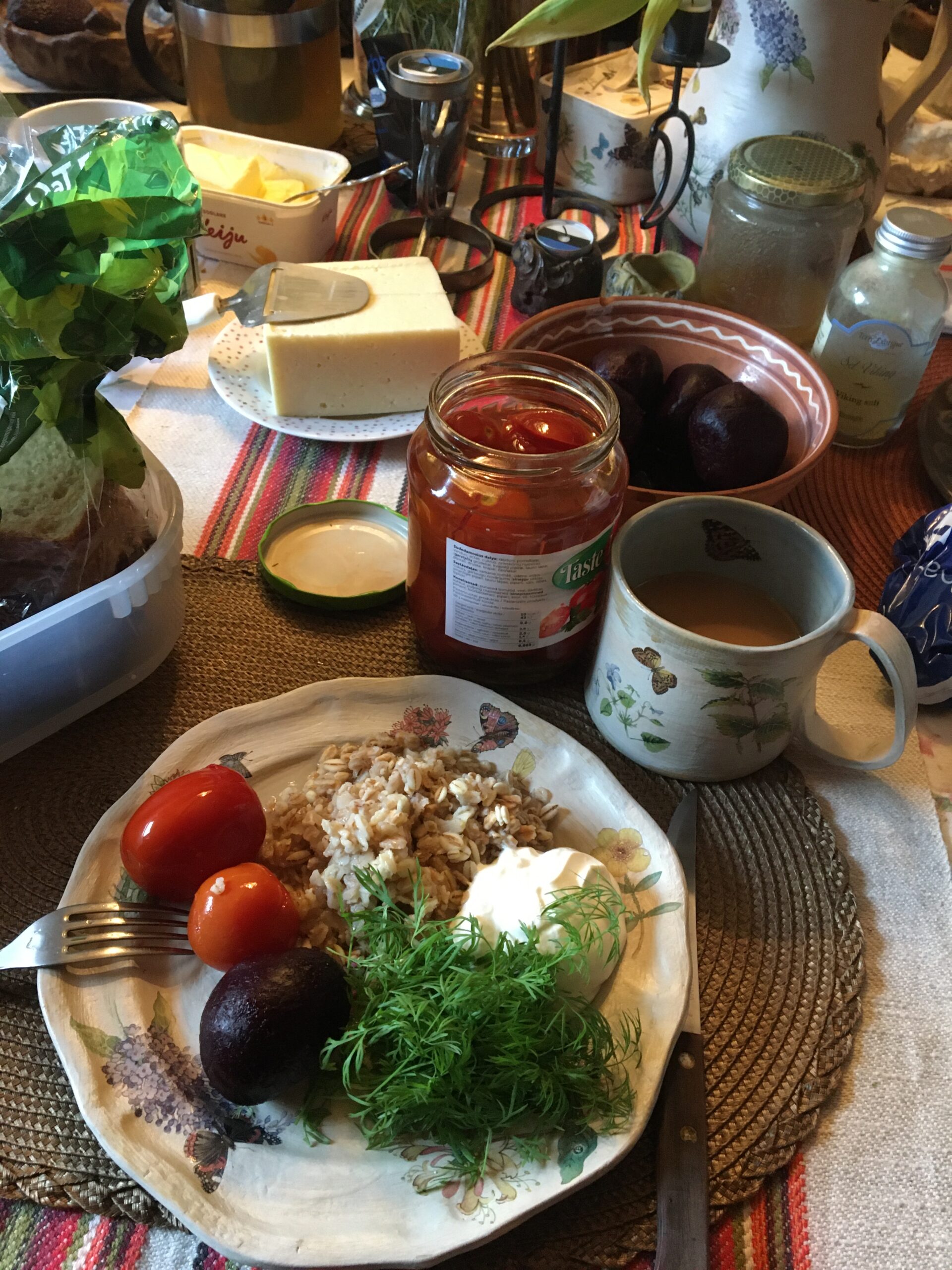
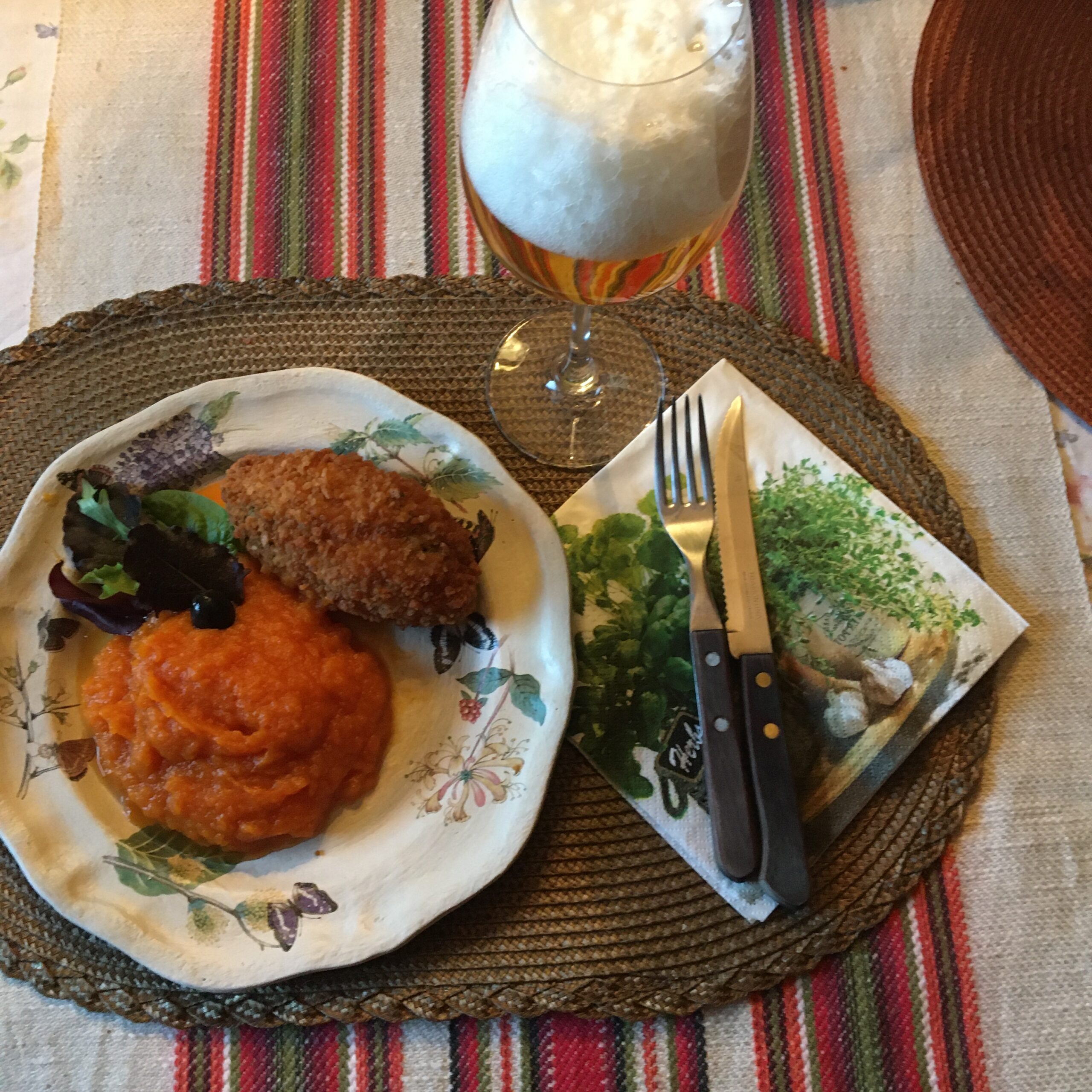
Today’s breakfast (a very typical one in our home) – oatmeal, beet, pickled tomato, dill, sour cream, and morning coffee. For dinner today I made the insanely gorgeous pumpkin-carrot puree with Kyiv cutlets (chicken cutlets).

Recipe: Pumpkin puree

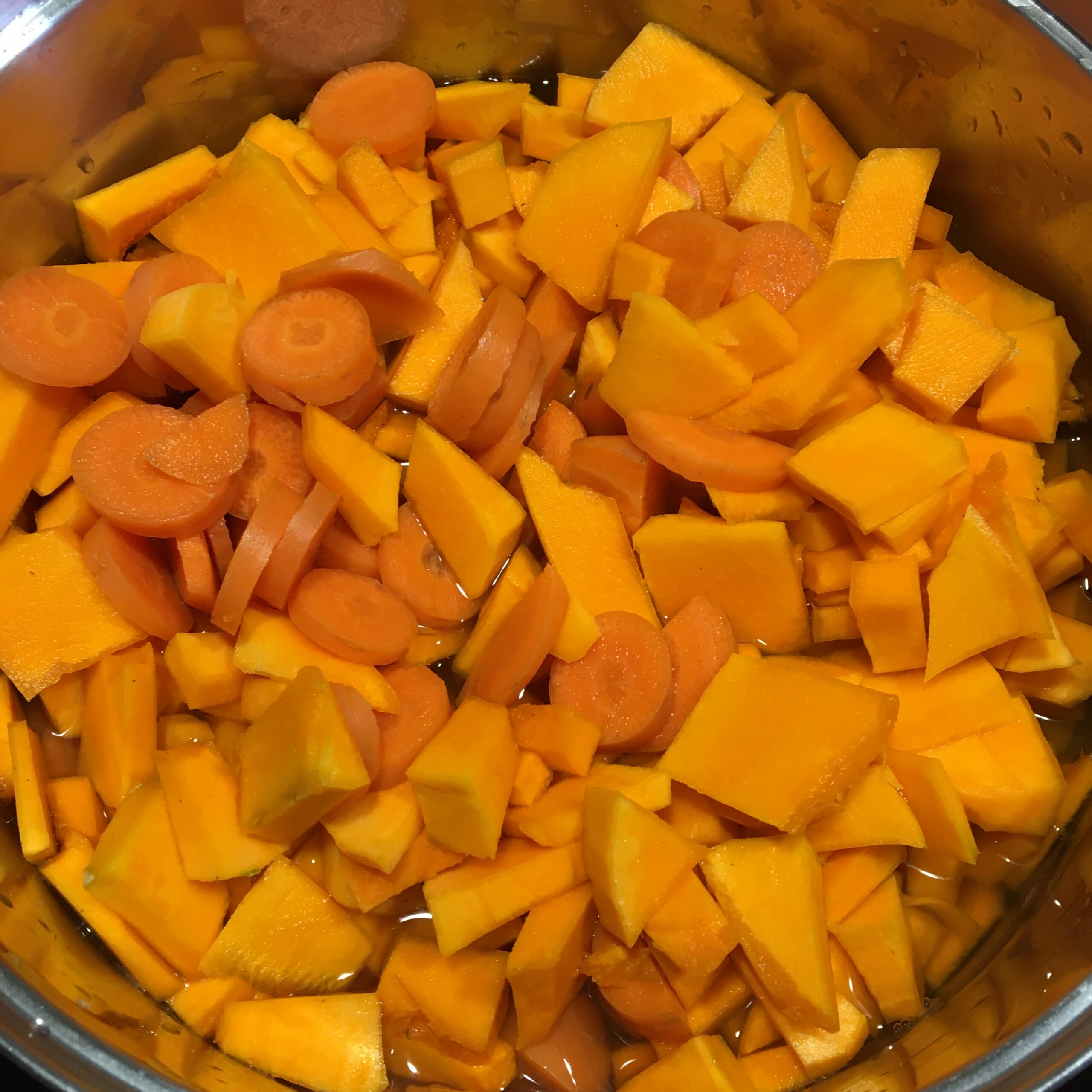
You will need: pumpkin, carrots, chilli pepper, tomato puree, little bit of salt

During the preparation of the pumpkin puree the most challenging part is the peeling of the pumpkin. Watch out that you avoid cutting your finger accidentally! Peel and chop the pumpkin and then place in a cooking pot, add the carrot and half a chilli. Choose the portions freely (pumpkin to carrot ratio generally most likely 1:1). Add water and boil until all is soft. Then pour into the same pot also the tomato puree and boil still some more. Now leave the mix to cool down a bit and carefully blend it into a puree – while still hot, the blending is very dangerous, as much as it is difficult.


Earlier this week I also went to the beauty salon. Every month once or twice I have my eyelashes and eyebrows done. Extra to that I regularly have the depilation, manicure, pedicure done, and once in a while also epilation. Sometimes I include massage and other wellbeing procedures. Recently I have been caring for my hair myself. I dye the hair and do the hair mask in three months time. Back some 20 years ago I had the best, thickest hair you had seen, however with long term negative stress during the years I lost most of my hair volume. At some point the situation was already rather unsettling. I found help nowhere, though I kept trying each product available on sale on the market, all brands, and all hair services. My individual personal hair situation urged me to create the Elisheva & Shoshana brand product , the Aloe Deep clean Detox scalp care shampoo (more info on that product can be found –> HERE). I am very proud of this product – years of testing and lab endeavours in collaboration with NordenApothecary, and the search for the finest ingredients, this all bears fruit today – the market has welcomed this top quality and super efficient scalp care product that actually helps! And this is not all – the product is still maximally nature friendly and natural! March is women’s month, and I wish to share my joy with you. Therefore, everyone that has experienced hair problems, you can now purchase this product from the web shop with a -20% discount. Use the discount code HEALTHYHAIR. The code will be valid all through this March!

Hugs!


Do read also my previous blog posts (all posts are available in four languages – Estonian, Finnish, Swedish and English!)

Finland: Minister Vanhanen held discussions with European Commissioner McGuinness and highlighted Finland’s views on EU sustainable finance issues

NordenBladet — Minister of Finance Matti Vanhanen highlighted Finland’s views on the use of the EU’s sustainable finance classification system in the forestry and energy production sectors. Minister Vanhanen discussed these matters with European Commissioner Mairead McGuinness on Friday 5 March.

The European Union has established a classification system (EU taxonomy) for determining what kind of investment is environmentally sustainable. The classification criteria are intended to facilitate sustainable investment and comparison of investments, and there will be a standard definition of sustainable investment at the EU level in the future. The sustainable finance classification system is based on the EU’s Taxonomy Regulation.

The European Commission is currently preparing lower level legislation (delegated acts) that will define technical criteria related to climate change for specific sectors and different economic activities. The Commission plans to publish the criteria in a delegated act in April, and implementation is to begin at the start of 2022.

“The criteria for sectors that are important to Finland, such as forestry, bioenergy and hydropower, need to be amended. The Commission must ensure that in forestry sustainability the ecological, social and economic dimensions are taken into account in a balanced way. I shall do my utmost to make sure the Commission understands our concerns. It is essential that the EU appreciates the significance of our forestry sector, for example, and the sustainable way in which forests are used here,” said Vanhanen. Next week Minister Vanhanen will discuss sustainable finance with the Commission’s Executive Vice-President, Frans Timmermans, and Commissioner Jutta Urpilainen.


Finland: Government to introduce powers necessary to manage COVID-19 with decrees on use of powers under Emergency Powers Act

NordenBladet — On Friday 5 March, the Government submitted a proposal to Parliament on introducing powers laid down in the Emergency Powers Act. The powers to be adopted through the decrees are related to directing the operations of healthcare and social welfare units and compliance with the time limits for non-urgent care. The Government would also adopt powers related to emergency communications and decisions on which authority has power in cases of ambiguity.

On Monday 1 March, the Government, in cooperation with the President of the Republic, declared a state of emergency in Finland due to COVID-19. Section 3, paragraph 5 of the Emergency Powers Act states that a widespread outbreak of a serious infectious disease, the effect of which is comparable to a major disaster, meets the definition of a state of emergency. In order to apply the powers laid down in the Act, the Government must first issue decrees on the use of the powers in question. Directing the operations of healthcare and social welfare units  Section 86 of the Emergency Powers Act has to do with directing the operations of healthcare of social welfare units. Under this section of the Act, the Ministry of Social Affairs and Health and the relevant Regional State Administrative Agency may, through their decisions, oblige a healthcare and social welfare unit to modify its operations.This may be necessary if the COVID-19 epidemic weakens the functionality of the healthcare and social welfare service system to such an extent that the availability of services is significantly compromised. An additional condition for these decisions is that the measures already taken are not sufficient to ensure the availability of healthcare and social welfare services.

Municipalities may temporarily deviate from the time limits for non-urgent care

Under section 88 of the Emergency Powers Act, municipalities may be granted the right to deviate from the time limits for non-urgent healthcare in certain separately defined areas if this is necessary in order to provide urgent care.This will make it possible for healthcare units to transfer their resources from non-urgent healthcare to urgent care for people with COVID-19 and other types of urgent care.However, deviation from the time limits for non-urgent care must not put the health of patients at risk. Patient safety is the first priority in all circumstances. The right to deviate from the time limits does not affect the time limits for assessing the need for care.

Enhancing communications in emergency conditions

The Government will introduce the powers laid down in section 106, subsection 1 of the Emergency Powers Act in order to coordinate communications between different authorities and ensure citizen’ access to timely information. In line with the proposed decree, the Communications Department of the Prime Minister’s Office will manage the Government’s COVID-19 communications and coordinate communications concerning COVID-19 within the central government. In addition, the Communications Department will implement communications campaigns in cooperation with national and regional authorities. The aim is to provide citizens and communities with clear and understandable information on the development of the epidemic, the actions taken by the authorities to combat COVID-19 and the reasons for these actions. Communication can have a significant impact on the effectiveness of restrictive measures.

There is a great deal of false and misleading information out there about COVID-19 and vaccinations. At its worst, this information may threaten the health of citizens. By improving the effectiveness of joint communications and coordinating communication efforts, the Government will be better equipped to combat disinformation. The different branches of government are responsible for communications within their respective mandates even under emergency conditions. By centralising the management of COVID-19 communications to the Prime Minister’s Office, the Government aims to ensure that the entire central government is familiar with and has access to the strategic communication guidelines, including at the regional and local levels. The Government does not propose establishing a State Communications Centre. The Government Communications Department cannot issue orders to ministries or other government authorities on the content of communications.

Deciding on powers in cases of ambiguity

Managing the COVID-19 epidemic requires cooperation between various operators in all sectors of society. The powers laid down in section 107 of the Emergency Powers Act will be introduced to ensure that any ambiguities regarding the powers, duties and management responsibilities of the authorities in unpredictable situations can be resolved quickly. This would be necessary in situations where there is justifiable room for interpretation concerning the powers of the authorities. In such cases, the dispute would be resolved by the Government based on a proposal from the Prime Minister.   In emergencies, the Government may decide which central government agency will carry out a task if it is related to the mandate of more than one operating unit or if there are no specific provisions on the task in question.

Government to submit decrees to Parliament for consideration

Next, the proposed government decrees will be submitted to Parliament for consideration in line with section 6 of the Emergency Powers Act. Parliament decides if a decree may remain in force or if it must be revoked in part or in full, and if it should remain in force for the period laid down in the decree or for a period shorter than this. Once Parliament has adopted the decrees on the use of powers, sections 106 and 107 of the Emergency Powers Act will be directly applicable. Under the powers of section 86 of the Emergency Preparedness Act, the Ministry of Social Affairs and Health and the relevant Regional State Administrative Agency will be able to issue binding decisions on the operations of healthcare and social welfare units. Under section 88 of the Emergency Powers Act, a decree on the application of the Act will also be issued concerning compliance with the time limits for access to non-urgent care. This decree will lay down provisions on the restrictions and conditions related to the scope of the powers. The decree on the application of the Act will also be sent to Parliament for consideration.The decrees would enter into force on 11 March 2021 and would remain in force until 30 April 2021. The decrees will not apply to the authorities of the Åland Islands.

Source: Valtioneuvosto.fi

Finland: UNICEF gathered young persons’ perspectives on artificial intelligence: more education is needed

NordenBladet — Last year, the UN Children’s Fund UNICEF hosted a series of workshops for young people from different parts of the world in order to gather information about children’s experiences of artificial intelligence (AI). The results of the consultations support global policy guidance.

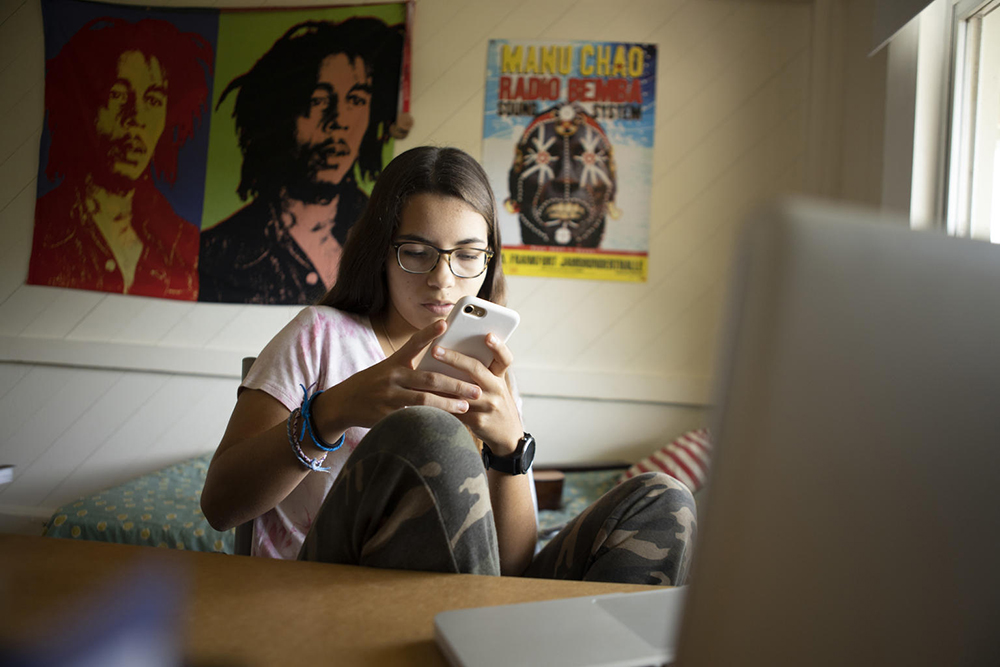
Nuori selaa kännykkää In global terms, a third of internet users are children aged under 18.
Photo: UNICEF/Schverdfinge

“First of all, take the time to get to know adolescents, because we are all aware of the intergenerational difference that occurs in two completely different childhoods. After that, assuming that a 13-year-old child probably knows more about some issues than an adult who is 50 years old today when he or she was 13, it is time to stop infantilising young people.

”This is how an adolescent from Chile sums up what many other young children think about the importance of engaging children and youth in finding solutions for questions relating to AI.Last year, UNICEF consulted 245 adolescents to learn about their views and experiences of the use and development of AI. Consultations were carried out in the form of workshops, attended by young children aged 12 to 19 years from Brazil, Chile, South Africa, Sweden and the USA.UNICEF and Finland are collaborating to create global policy guidance on the development and use of AI that affects children. The guidance is first of its kind. It aims to help governments, municipalities and companies to make sure that the AI solutions used by them will work for the best interest of the child.

Risks difficult to discern
In the workshops, the children and adolescents discussed everyday situations where AI is involved, including service providers’ chat functions, facial recognition related to security arrangements, smart software that supports learning, and automatic entry selection processes used by educational institutions.Some knew very little about the subject matter in advance, while others had carefully reflected opinions. Obvious differences in attitudes emerged, for example, in questions concerning data security: some told that, without further thought, they regularly submit their personal details and private data when downloading new applications. However, there were others who were wondering where the data goes and who will use it. One thing that raised discussion was targeted advertising. A young person from Sweden was concerned about the possibility that “my free will and personal space are destroyed”.

AI is a source of inspiration
Plenty of opportunities were identified in AI, including software relating to better education, health, security and transport. Many linked AI with science fiction films and considered that it is inspiring in that it leads to discussions about the future.

“What excites me about AI technology is the day when we can make life-size robots and ships to travel us to different planets in the solar system,” says an adolescent from the USA.As a rule, young children felt that they had learned about AI more at home and from friends than at school. They therefore hope that they would receive general AI education so that all would understand both the risks and opportunities involved in AI.An adolescent from Chile, who hoped that the authorities would be more active, said:

“There should be talk in schools, or advertising (which is very influential) that informs or persuades us to know more and be protected on our own. Let it be assimilated into our culture, so that people understand it as commonly as we know the notions of electricity and doors or technology.”UNICEF has consulted also experts in AI and child protection specialists. Based on the user experiences, the guidance will be finalised and published at the end of 2021. A report on consultations with adolescents across the world can be accessed on UNICEF’s website.

Read more about the global policy guidance on AI for children at the website of the Ministry for Foreign Affairs.