NordenBladet — The Government has amended the decree restricting the activities of food and beverage service businesses due to the COVID-19 epidemic. With the amendment, the restrictions that previously applied to regions in the community transmission phase of the epidemic would be introduced throughout the country. For areas in the baseline and acceleration phases, the additional restrictions will be in effect for the duration of the restaurant lockdown.
The amendment to the decree will enter into force on 13 March at 00.00. The decree would now apply to areas where restaurants are allowed to remain open, i.e. those not affected by the lockdown. These include Kainuu, North Karelia, Central Ostrobothnia and North Savo. Restrictions on food and beverage service businesses in Kainuu, North Karelia, Central Ostrobothnia and North Savo from Saturday 13 March 2021 onwards
The amount of customer seating in restaurants that primarily serve alcoholic beverages will be restricted to half the normal number of seats. For other restaurants, 75 per cent of customer seats may be in use. Restaurants may serve alcoholic beverages until 22.00 and may be open between 5.00 and 23.00.
NordenBladet — Minister of Economic Affairs Mika Lintilä has been invited to the fifth meeting of the European Battery Alliance on Friday 12 March 2021. Commissioners Maroš Šefčovič and Thierry Breton have convened this high-level meeting, which will be organised virtually.
The meeting will focus on the objectives of the European Battery Alliance and, in particular, the development of the expertise required by the battery ecosystem and the promotion of the production of battery raw materials in the EU. EU aims for strong European battery industry It is the EU’s objective to build a sustainable, innovative and competitive battery business network in Europe. At the end of 2017, the Commission launched the European Battery Alliance and adopted a Strategic Action Plan for Batteries in May 2018.
Finland is also striving for a leading role in the battery sector. The new National Battery Strategy presents the means by which Finland will become a competitive, competent and sustainable player in the international battery industry. “Competition in the battery sector is fierce, but Finland is well placed to succeed in international competition because of its high level of expertise, responsible production and processing of battery raw materials and circular economy solutions. The recent good news about the investments in the battery sector, for example, the upcoming large recruitments at the car factory in Uusikaupunki show that we are on the right track in our battery strategy, which is supported by European cooperation,” Lintilä said.
Additional information:
Nina Alatalo, Adviser to the Minister of Economic Affairs (EU and International Affairs), Ministry of Economic Affairs and Employment, tel. +358 29 504 7171
Jyrki Alkio, Chief Specialist, Ministry of Economic Affairs and Employment, tel. +358 29 504 7103
NordenBladet – Faroese-Canadian singer-songwriter Lena Anderssen claimed an award at the JPF Music Awards in Los Angeles, with her 2012 album Letters From the Faroes earning the Album of the Year title.
JPF is short for Just Plain Folks, a grassroots music organization founded by Brian Whitney. With over 50,000 members in over 160 countries worldwide, the JPF’s membership represents recording artists, songwriters and music industry professionals of all levels from those just starting out to winners of every major music award and all hall of fame for music around the world.
“It’s a real honor to have this 2012 album receiving that special award from this beautiful grassroots music organization,” Anderssen noted. “I am humbled to know that the music has been evaluated by fellow artists, songwriters, musicians and music lovers from all around the world.”
The JPF Music Awards is not an annual event. The organization holds an awards show every few years, which is why Lena Anderssen’s album from 2012 was in the running for the prizes awarded in December 2020.
According to Just Plain Folks, the 2020 nominees were found after screening 17,700 albums and 240,000+ songs over 18 months, five rounds of judging between 4,203 judges along with a final nomination round.
NordenBladet —Creative companies will receive an additional one million euros from the EU Structural Funds to support the implementation of their development plans. The changes related to the use of the additional support have now been enacted in the measure regulating creative economy development.
“We will be able to support ambitious creative entrepreneurs in working out and implementing innovative solutions, as well as developing products, services, technologies and processes as well as personnel. The support can also be used to create new market opportunities and to modernise business models,” explained Anu-Maaja Pallok, Adviser for Creative Industries at the Ministry of Culture. “This business support is not entirely new – a measure of Enterprise Estonia’s enterprise development programme has been used as an example, and it has been adjusted to address the specifics of the creative economy sector,” Pallok added.
The support is targeted at ambitious small and medium-sized creative enterprises. The prerequisite for filing an application is the existence of a development plan that must include all the activities and goals that impact the company’s overall development. This includes the company’s own funds, bank loans or other sources of financing. “The company must have the will and capability to draw up a development plan so that the application can be submitted as soon as possible. The implementation of the activities will be limited by the fact that the budget period will conclude at the end of August 2023,” said Pallok. “If an entrepreneur is ambitious, but the preconditions are insufficient for the desired change to be achieved initially, Enterprise Estonia can come to the rescue. Help can be provided in order to find suitable grants and services from among the support measures, which will help to improve the company’s capability in a particular field,” Pallok explained.
The company must have been in business for at least three years before submitting an application and its annual sales revenue must be at least €200,000, of which export sales revenues must total at least €20,000. In addition, the company must have at least two employees at the time the application is filed. Enterprise Estonia will announce the starting date for filing the applications at least 30 days in advance. Applications will be accepted on an ongoing basis and not organised into rounds. It is expected that applications for the new support will be start to be accepted as of mid-April, but in order to apply for support, preliminary counselling must be completed, which Enterprise Estonia will be starting earlier. There are also plans to organise an information day. For more information, see the Enterprise Estonia website: www.eas.ee.
The measure for creative economy development is co-financed by the European Regional Development Fund. The implementing agency is the Ministry of Culture and the implementing unit is Enterprise Estonia.
NordenBladet — The birth rate in Finland decreased by one quarter in the 2010s, and our population structure is among the oldest in the world. With this in mind, a project launched by Prime Minister Sanna Marin aimed to examine reasons for the current demographic situation and to present guidelines for securing sustainable demographic development.
The report shows that Finland’s demographic development in the 2010s diverged from that of the other Nordic countries in many ways. Finland saw the slowest rate of population growth in the Nordic countries, and the total fertility rate decreased to less than 1.4 children per woman on average. Finland’s population would shrink without immigration. The sharp decline in the birth rate weakens the financial basis for of general government finances and leads to increased social inequality.
“That said, the COVID-19 pandemic may have improved Finland’s demographic room for manoeuvre: so far, the decline in the birth rate seems to have ceased, net immigration is on the rise and internal migration has stabilised. Now would be a good time to set new demographic targets,” says principal investigator Anna Rotkirch. The report, entitled ‘Recovery of the birth rate and longer life expectancy: Guidelines for population policy in the 2020s’, was published on Wednesday 10 March. Research Professor Anna Rotkirch from the Family Federation of Finland was the principal investigator in the project and the author of the report. The project was supported by a steering group consisting of the State Secretaries of the parties in Government and by an independent scientific panel on population policy. The Government will use the report when preparing for its mid-term policy review session.
Family formation as a challenge
Finland can promote balanced demographic development by supporting wellbeing, family-friendliness and human resources throughout the course of life. Growth in immigration or birth rates, increased levels of education and productivity and healthier ageing will not be enough to meet the challenges on their own; instead, we need a comprehensive approach that takes into account all of these elements.
Rotkirch stresses that sexual and reproductive rights are a cornerstone of socially and ecologically sustainable development. We could mitigate global population growth faster if all women were able to have the number of children they wanted. In low birth rate countries such as Finland, this would mean a recovery of the birth rate.
Around three quarters of the decline in the birth rate observed in Finland in the 2010s was due to the fact that fewer infants were born here. The already high rate of childlessness in Finland has increased rapidly since 2010. Childbearing has also become polarised, with childlessness increasing especially among women and men with lower levels of education. Shrinking family networks mean an increase in loneliness and the need for mental health support over the course of life.Children – of course!Perceived uncertainty is the most important broader reason for postponing or putting off having children. Perceived uncertainty means people’s concerns about their employment and ability to get by financially, but also uncertainty about the future, their wellbeing or their relationship. International experience shows that it is possible to influence the development of birth rates by promoting a positive atmosphere for infants, children and families and through carefully targeted campaigns. The general atmosphere and the local community have also been shown to have an impact on the birth rate. “Happiness, social trust and support for childcare are effective means to promote the recovery of birth rates in low birth rate countries,” says Rotkirch. “Campaigns and incentives related to childbearing and guarantees for families are justified at a time when the birth rate is at a turning point due to the prolonged decline and the pandemic.”
Children – of course! is a child-friendly policy proposed by the report that supports people’s wishes for the number of children they want to have. Child-friendliness is not limited to a person’s own children; it can be realised in a variety of ways and in different types of families. Children – of course! is a message from society that every child is welcome and that society will invest in everyone. The shrinking proportion of families with children in the population must not mean that fewer resources are allocated to them. The goal should be to restore the birth rate to 1.6 in the short term and 1.8 in the longer term, which corresponds to the desired number of children among Finns. Raising children is also an important contribution to the national economy.
Late middle age as an opportunity
Longer life is a privilege that presents many opportunities. There are many late middle-aged people between 65 and 74 years of age who are quite capable of working. The report concludes that it no longer makes sense to set 65 years as the upper limit for employment policies, rehabilitation or life-long learning. Despite healthier ageing, the elderly population’s need for services in their final years of life will increase many times over within the next twenty years. Raising the employment rate and productivity is the most effective single means to alleviate the economic challenges facing the ageing population. More net immigration will also be necessary to maintain a stable population in the future. A potential target could be to raise net immigration to 25,000 persons by 2030. The net immigration rate in Finland is currently 16,000 persons. Goal-oriented migration policy also promotes remigration to Finland.
NordenBladet – The Faroe Islands’ biggest film production ever will feature high profile names in film. Actors Ulrich Thomsen (The New Pope, 2020; Blacklist, 2016), Maria Rich (Follow The Money, 2018) and Olaf Johannesen (The Bridge, 2015) will star in the crime/drama series called TROM, adapted from the bestselling book-series by award-winning Faroese author, Jógvan Isaksen. TROM is the first series to be produced in the Faroe Islands.
The six-part series is created and co-written by Torfinnur Jákupsson from the Faroe Islands. He has been a fan of the actors for years.
“Having such well known and gifted actors in the series is a life-long dream come true,” says Torfinnur. “Everything just seems that much bigger with them on board.”
TROM follows journalist Hannis Martinsson (Ulrich Thomsen), who unexpectedly receives a message from Sonja, his estranged daughter, claiming that her life is in danger. Reluctantly returning home to the Faroes to investigate, Hannis discovers Sonja’s body in the aftermath of a whale hunt. His search for answers soon brings him into conflict with the local police and uncovers a web of secrets in the close-knit community – but how far is he willing to go to learn the truth?
Shooting will start in March and will last for around three months. Covid has impacted the production of TROM in the same way all film and television productions in the world have been affected.
“Producing film is a puzzle, and Covid has, of course, affected how that puzzle has been put together,” says Torfinnur. “All health guidelines are being followed and will be respected.”
TROM is produced by REinvent Studios in co-production with Kyk Pictures, Truenorth and ZDF/ARTE.
Helene Aurø, Sales and Marketing Director at REinvent International Sales, says: “TROM will travel far and has already caught the attention of several international buyers. ZDF ARTE came on board after the first pitch. I have very high expectations for the series, which I am sure will position itself among the most popular Nordic series ever produced.
TROM will air as a Viaplay original series, the Nordic region’s leading streaming company, in 2022.
NordenBladet — The third International Gender Equality Prize will be awarded at the end of 2021. We are now accepting nominations for the next recipient. Anyone and everyone can submit a proposal.
The prize will be awarded to a person or actor who has promoted gender equality in a globally significant way. The prize amounts to EUR 300,000, which the recipient will assign to a cause that strengthens gender equality.
“Finland is a frontrunner in the promotion of gender equality and one of the leading countries when it comes to advancing equality. It is of vital importance to be consistent in our ongoing work to strengthen gender equality. With this prize, we want to advance international discussion on equality matters and to show how Finland has managed to create sustainable wellbeing and strengthen democracy,” says Minister for Equality Affairs Thomas Blomqvist.
The winner of the prize will be selected by a jury of international experts. In 2021, the members of the international jury are Eva Biaudet, Member of the Finnish Parliament and chair of the jury; Melanne Verveer, former US Ambassador for Global Women’s Issues and Executive Director of the Georgetown Institute for Women, Peace and Security at Georgetown University; Dean Peacock, Director of the Women’s International League for Peace and Freedom’s initiative to confront militarized masculinities; Matti Vanhanen, Minister of Finance of Finland; and Bella Forsgrén, Member of the Finnish Parliament.
The Finnish Government launched the IGEP in 2017
The prize was established in 2017 in honour of the 100th anniversary of Finland’s independence. The first prize was awarded to Federal Chancellor of Germany Angela Merkel, whose life’s work has made her one of the world’s most influential people and an example to many women and girls. Merkel granted the prize money to SOS Femmes et Enfants Victimes de Violence Familiale, a Nigerien civil society organisation that used it to build a residential shelter for victims of domestic violence in the Nigerien capital of Niamey.
In 2019, the prize was awarded to Equality Now, an organisation with a history of 27 years of globally effective work to defend the rights of women. The organisation aims, among other things, to change gendered norms both nationally and internationally and to change discriminating laws and practices.“We hope to receive a multitude of diverse nominations for the next winner of the International Gender Equality Prize. Due to the international reach of the prize, we expect to receive nominations from all around the world,” says Minister Blomqvist. You can nominate a candidate for the prize until 16 May 2021 using the form (in English) available on the IGEP website at International Gender Equality Prize
NordenBladet – When last year the covid era began, I was quite pleased that I wouldn’t need to drive my children so often here and there and that in the mornings we could sleep slightly longer. It even seemed that the school homeworks got done faster and time was well spent.
Yet now I feel that my flexibility has been pushed to the ultimate limit. I am not a pedagogue and I am not that crazy full of love towards children. The last remark need not be taken overly seriously and alarmingly – for sure, I do love my kids (really much!), however, spending 24h with two teenagers, and doing that all year round, is breaking me down…. is breaking all of us down.
My elder daughter (14 yrs) is away from the classroom on distance learning and likes it, even kind of enjoys it. The volume of daily home assignments however keeps increasing and it seems to me that with individual study format, for example chemistry lessons are becoming slightly too complicated for her. Besides, I can see that my daughter is in vital need of more human interaction. The social communication that is available when children are in the physical classroom, is now missing, and this has a serious impact on someone in puberty. I can also see how the child’s “school spirit” is fading. In the beginning everything seemed just fine – the days were nice and long, one could accomplish a lot and the spare time that earlier was reserved for learning could now be furnished with hobbies. For the first time in her life she found time for watching TV…. but once you offer the finger to the devil the entire arm will be taken by the devil. It begins with one movie, then another one, then it escalates to many hours of TV-series, etc.. Now the situation has developed to watching Netflix even in the car while driving to the training or to the music school classes. Briefly, from the moment discipline relaxed, a piece of her ambition went missing. I really cannot figure out how to digress from this pattern…. recently I have been thinking about that on a daily basis. At the same time, I do not wish to bring in a very negative atmosphere, since generally she is doing really well in all the activities, and accomplishes things in the carcass of ambition set by myself definitely better than most other children would.
The situation is even more challenging with my younger daughter (12 yrs). She has autism and in such times things are worse with her since she does not speak of everything. Already the usual schoolbreak was long for her, she began mentioning that she lacked friends. She became irritated, the rage attacks that had been gone for years returned again. Without medication (Rispolept) not a day went by, and even more, we had to multiply the doses. The time period that she has been on distance learning, has been painful. She refused to do the homeworks and although I tried reading with her and helping with the workbooks, it was all in vain. I realize that for her this year as well as the past year have kind of gone missing from the prior linear development. I am very much concerned and very much saddened from this realization.
In both of the children, the teenage years make the situation more complicated. Not that I have forgotten all about my own puberty, oh I can recall… I remember hating everything and everybody, I felt like nobody really understood me, I completely blindly trusted a few of my friends, I was killing time and wasting in the speed of a sparkler my individual nerves as well as those of others. But that was the past, right… and now facing the option to go through the same drama marathon with my own kids – no, I prefer not to, haha 😀 For me there was a chance to slip out of my room and go outside (a few times I even ran away from home), but during these covid-restrictions the children are forced to remain where they are, at home. The fact that several hobby activities, several cultural events etc have been called off and people have been cut out of their daily routines, disturbs the entire world.
But I do not wish to be the one that succeeds only in complaining, without searching for or offering solutions.
What is it that we ourselves can do to stop this covid-centered existence?
– Let us keep clean (sanitize our hands) Read more: DROPLET INFECTIONS mainly spread via hands – proper washing of hands keeps the infections away! + GUIDELINE about how to properly wash your hands
– Let us wear the mask
– Let us build up our strength (eat properly, think positively, walk in fresh air, spend time in nature).. This guideline works wonders! Following these points, I have lost several dozen kilos in the past 1,5 years!
– Let us go and have us vaccinated
– Let us avoid going to town, to work, to the shop while not feeling well, and let us not take our children to school and hobby schools while they are not feeling well
– Let us pray, fill ourselves with faith, hope and love… Without the Almighty enabling it, not even a leaf leaves the tree. This is the power and wisdom always worth remembering!
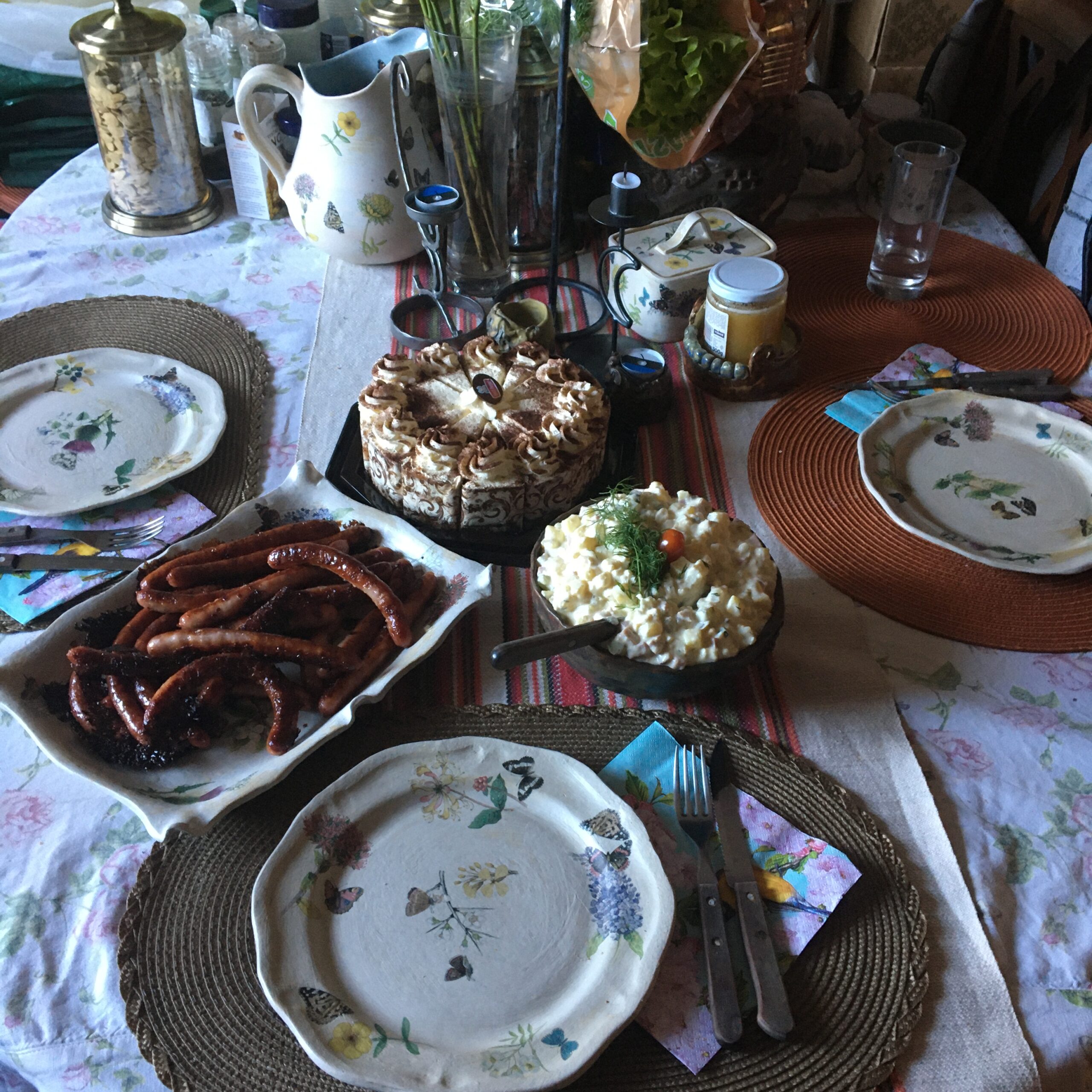
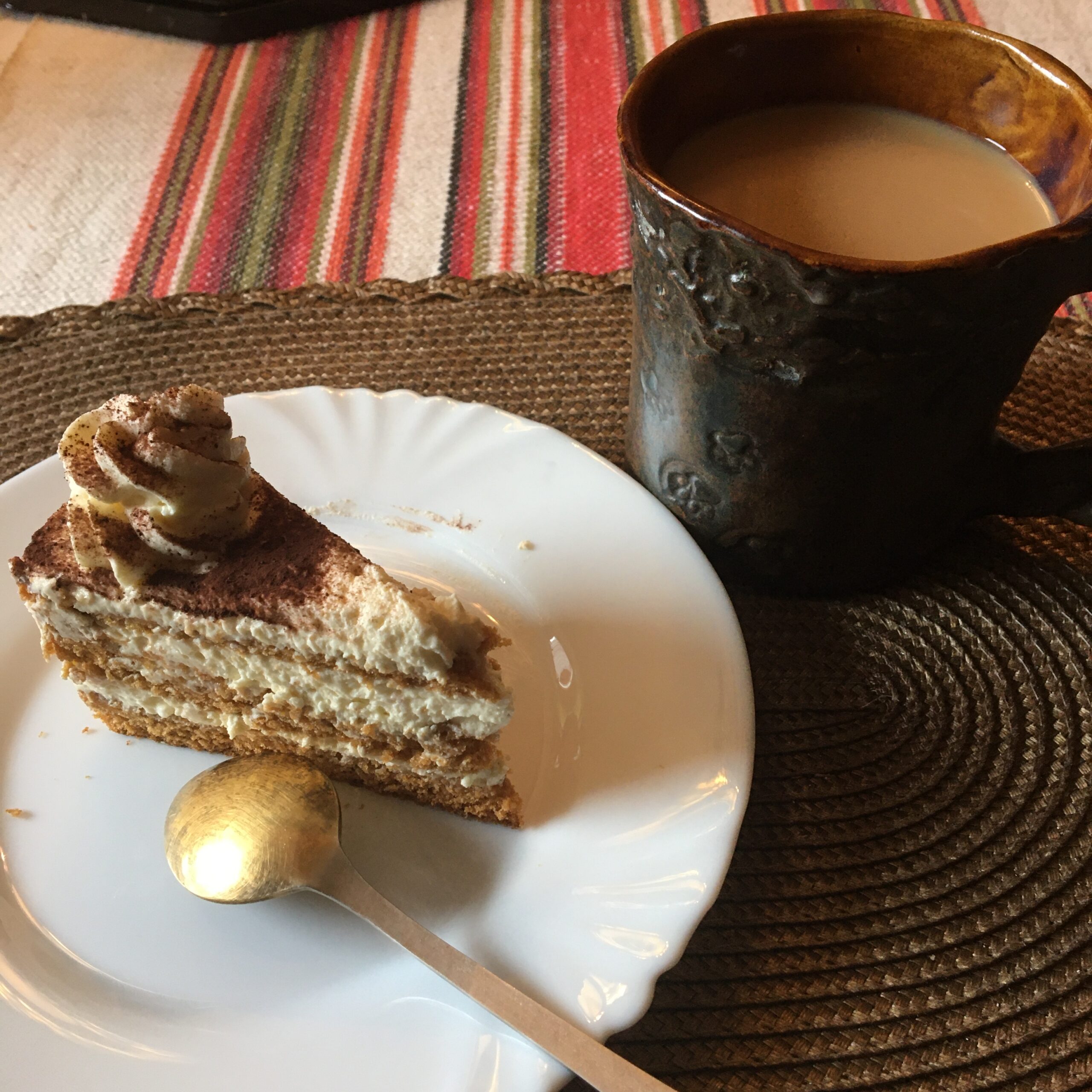
Now also a few words about the Women’s Day we had on Monday… For me this was a half-hearted celebration. I somewhat celebrate this day and yet not really. I think that women need attention every day, and so do men. I try to live my life so that each day is unique and new.. but OK, understandably this cannot happen every day. Not every day can be a celebration day, this would change the meaning of the celebration. Never-ending celebration brings bad luck. You would need some days to be more extraordinary than the rest, then there is something to look forward to. Well, about Women’s Day… I can make delicious cakes (best of them are with whipped cream and with almonds, and best of them are cookie cakes), but for some reason or other it has become a tradition that on Women’s Day we always put on the table cakes from stores. In a way, it is great to test all the cakes that can be found in the stores, I would say that within time the cakes offered in the stores are getting better and better. In the current blog post I will be comparing two desserts – the curd cake (12 slices) from Eesti Pagar, and the handmade strawberry-kiwi curd cups from Selveri Köök. Keeping it short.. The winner is Selveri Köök! Although Eesti Pagar usually makes products with great quality, this time the cake was frozen (I suspect that the cake was frozen and then warmed up again), it was rather blunt for the taste-buds, and lacked personality. On a scale from one to the maximum of five, I would give two points. For the curd cups I would generously give four points, which is a good result for a commercial cake.
Our Women’s Day gallery can be found here below! Besides the two purchased desserts, and besides fresh Greek strawberries and tangerines I prepared for lunch and for dinner potato salad, grilled sausages, fresh salad, and chicken cutlets with macaroni from Tartu Mill 100% full grain pasta “Fusilli”. To decorate the table, I received 7 wonderful red roses! 🙂
NordenBladet – Eleven Faroese businesses have agreed to work together on creating a joint sustainability strategy. The purpose of the business-led initiative is to provide a platform which supports the business sector to transition to a sustainable economy.
The three-year trail project, titled “Burðardygt Vinnulív” (also referred to as the Faroese Sustainable Business Initiative), aims to advance sustainable business practice and contribute towards UN Sustainable Development Goals such as climate action.
Regin Jacobsen, CEO of founding member company Bakkafrost, says: “We are excited about the possibilities that lay ahead. Although we are a diverse group of companies, we do share certain sustainability challenges in common and we are all committed to addressing these. We hope this initiative will create meaningful collaboration opportunities between us which will accelerate our progress on these issues.”
Marita Rasmussen, Director of The Faroese Employers Association, says: “We are very much looking forward to following the progress of this initiative. Faroese businesses should be thinking about the fast-changing social, environmental and economic context they are operating in. This initiative could be a catalyst for them to become fit for the future.”
By advancing their management approach to key sustainability risks and opportunities together, the members aim to improve their response and advance progress to issues such as climate change, collaboratively. Later this year, the network of businesses will announce a joint plan focussed on three key issues.
The eleven founding member businesses are: Bakkafrost (salmon aquaculture), Betri Bank (bank), Effo (fuel), Faroe Ship (logistic and transport), Føroya Tele (telecom), JT Electric (marine equipment), KJ Hydraulik (maritime services), MBM (dairy producer), Poul Michelsen (wholesale), SMJ (engineering consultant) and Vónin (marine equipment).
Other countries have similar networks, including Skift Norge in Norway whose mission is to accelerate the transition to a low-carbon economy and support the Norwegian government in delivering on its national climate commitments by 2030.
NordenBladet – With 14 awards were on the for line this year’s Faroese Music Awards on March 8th, Saturday’s big winner was Eivør who claimed four awards.
Not unlike last year’s FMA show, the event had to be handled somewhat differently due to the ongoing public health concerns, this time around with government-owned broadcaster KvF as main sponsor.
Apart from winning an award for ‘Female Singer of the Year’, ‘Album Cover of the Year’ for her album Segl, and ‘Music Video of the Year’ for “Sleep On It”, the lyrics to her song “Mánasegl”, written by author Marjun Syderbø Kjelnæs, were also named ‘Lyrics of the Year’.
Below is the full list of this year’s FMA winners.
Pop/Rock Category:
• Female Singer of the Year: Eivør
• Male Singer of the Year: Teitur
• Album of the Year: Modern Era — Teitur
• Song of the Year: Kanska — Einangran
Open Category:
• Singer or Solo Artist of the Year: Jákup Lützen
• Album or Concert of the Year: Kata — 1902
• Composition of the Year: Bei — performed by Konsørn, composed by Jan Rúni Poulsen and Mathias Kapnas
• New Name of the Year: Brimheim
• Music Video of the Year: Sleep On It — performed by Eivør, video by Einar Egils & Elias K. Hansen
• Album Cover of the Year: Segl — Eivør
• Lyrics of the Year: Mánasegl — written by Marjun Syderbø Kjelnæs, performed Eivør
• Producer of the Year: Høgni Lisberg
• Listener Award: Hallur Joensen
• Special Honor: Robert McBirnie