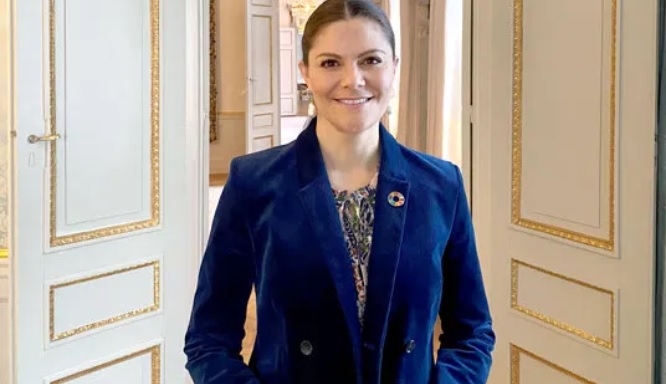
NordenBladet – Crown Princess Victoria of Sweden has attended the EU project DUNC’s digital conference. From her home-office at Haga castle Her Royal Highness gave a speech and closely followed the final day of this conference.
Development of UNESCO Natural and Cultural Assets, also known as DUNC, is an EU-funded collaborative project where the Swedish municipality of Karlskrona municipality has been essential. For three years, the project has worked to increase the commitment to sustainable tourism, as well as strengthen the local business community, at four world heritage sites around the southern part of the Baltic Sea.
In her message for the final day of the conference on January 26th, Her Royal Highness said: “As an alumni ambassador for the Sustainable Development Goals, the future of the ocean, and the Baltic Sea in particular, is a topic very close to my heart. I believe the DUNC project is a great example of how we can come together, around the Baltic, to address the challenges we have in common. And I look very much forward to hearing more about the achievements that have been made over the past three years.”
In January 2016, the Crown Princess was appointed by the then UN Secretary-General Ban Ki-moon as one of 17 ambassadors for work on the UN’s global sustainability goals. The ambassadors’ task is to promote in various ways the UN’s goals for sustainable development, Agenda 2030. From 2019, the Crown Princess has been included in the alumni group. As an alumni, the Crown Princess continues to focus in particular on sustainability, maritime and fisheries issues.
The royals in Denmark and Norway have also been deeply involved in sustainable development. In October last year, Crown Princess Mary of Denmark attended the World Hour in Copenhagen, an event that teaches young people about the UN Sustainable Development Goals. Crown Prince Haakon has for many years been a goodwill ambassador for the UN Development Program UNDP.
NordenBladet – Princess Madeleine of Sweden’s husband, Chris O’Neill, has closed down two of his former firms. According to Swedish newspaper Expressen, Mr O’Neill has closed down Wilton Partners and Warwick Partners over the last few years.
In addition to shutting down these two companies, Mr O’Neill has also withdrawn from his prominent roles in companies Wilton Payments and Belgravia Investment. Both these companies remain active. Expressen further reports that all the companies are listed at the same law firm in Palm Beach, Florida, where they have been in contact with lawyer Timothy Hanlon who is the contact listed for the companies. Mr Hanlon has declined to answer questions about the reason for the changes that have been made. Mr O’Neill has also made no comment on the reports.
The communications manager at the Swedish Royal Court, Margareta Thorgren, tells Expressen that O’Neill has several companies that are used for investments amongst other things. She said: “When the companies are no longer needed, they dissolve – which is something you can expect. In addition, O’Neill goes from leading to non-leading roles in some investment companies. These changes have no effect on his shareholder status.”
Chris O’Neill was born in London to an American father and Austrian mother in 1974. His father was an investor and Chris followed in the family’s footsteps. Among other things, Chris O’Neill has worked as a financial advisor for wealthy clients, at which he was highly successful. He married Princess Madeleine of Sweden in 2013. He chose to remain a private citizen and continue with his business abroad. Since 2018, the family has been located in Florida.
NordenBladet — In 2019, Finland’s economy was in the later stages of a cyclical upturn and demand for labour remained strong, with the number of those employed increasing by 26,000.
However, this change in the level of employment was accompanied by a significantly larger increase in search for labour by employers and the creation of new jobs. In all, employers were looking for more than 764,000 employees. At 65,000, the workforce shortage, i.e. the number of vacancies that remained unfilled, reached a record-high, highlighting the limitations of labour resources. About 333,000 new jobs were created in 2019, which is slightly below the record level of the previous year. The shortage in labour clearly hampered the creation of new jobs. The information is included in an analysis by the Ministry of Economic Affairs and Employment published on 27 January 2021.
In 2019, new vacancies were most often filled by people already employed, followed by students, schoolchildren, and unemployed people. Salespersons, construction workers, healthcare workers and other service workers were the most sought-after employees for the new vacancies. The situation where the vacancy remained unfilled was not as common in new vacancies as it was in other types of recruitment. The probability that new jobs would be created increased if the employer was a business, if the employer expected the number of employees to grow, if the employer hired a student or schoolchild, if the employer had foreign staff, or if the number of employees varied significantly over time. If the employer used at least three different channels to find employees, the TE Office was the most important channel for filling the vacancy.
The construction, agriculture, forestry and fisheries, and the information and communications sector saw the creation of most new jobs relative to their overall recruitment. On the other hand, the fewest new jobs were created in the healthcare and social services sector, in relative terms. Slightly more new vacancies were created by small employers than large ones.
The main recruitment problems were related to insufficient work experience or education required. Personal characteristics of the applicant and reasons related to the nature of work, workplace or sector also caused problems in recruitment for new vacancies.
The Ministry’s report presents various phenomena related to recruitment based on employers’ interviews and provides an important perspective on the functioning of the labour market. Although the report’s results are based on data preceding the coronavirus epidemic, the results can be used in the development of models for forecasting the need for labour and certain skills, for example. The results also support the development of skills, improving the regional availability of labour and supporting continuous learning. According to the report, SMEs in particular would benefit from more help and advice during the recruitment process, which they find challenging.
The Ministry of Economic Affairs and Employment has analysed the creation of new jobs seven times since 2013. The publication is based on the microdata of employer interviews produced by Statistics Finland for the Ministry of Economic Affairs and Employment and compiled in connection with the study on open vacancies.
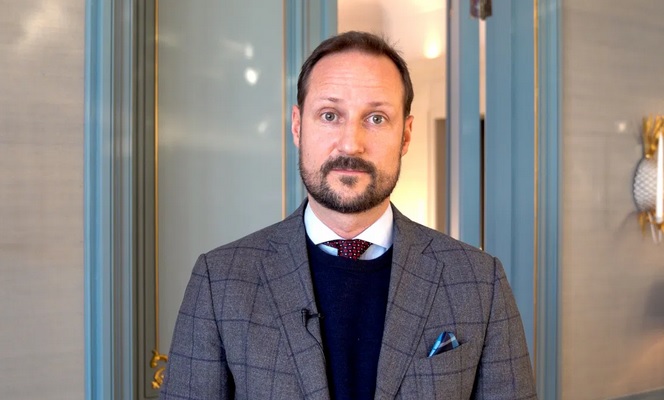
NordenBladet – Crown Prince Haakon has commemorated the murder of Benjamin Hermansen, twenty years after his racial killing shocked Norway. The Crown Prince sent a digital message on the 20th anniversary of his death.
Benjamin Hermansen was killed in the infamous “Holmila-murder” on January 26 in 2001. He was just 15 years old and he was killed because he was black. Two Norwegian neo-Nazis were later convicted of the murder. Benjamin’s death had a deep impact across Norway and is considered to have had a major effect the on the Norwegian anti-racism movement.
Despite strict infection control measures, several hundred candles had been lit by a bust of the killed 15-year-old which has been erected at the place where he was killed. The Crown Prince wanted to participate in person in the commemoration but due to the strict infection control rules he had to take part remotely. In his digital message, Crown Prince Haakon said: “I want to thank all of you who every day stand up for a better society. A society that is safe and inclusive for all.”
The murder of Benjamin made a deep impression on an entire nation. Following the murder in 2001, Crown Prince Haakon, Crown Princess Mette-Marit and Princess Martha Louise, along with many thousands of others, took part in torchlight processions through the streets of Oslo to commemorate the young boy and to show that Norway will not accept racism and violence. More than 40.000 people participated in the torchlight procession in 2001. In 2002, Crown Prince Haakon met Marit Hermansen, Benjamin’s mother.
After the murder of Benjamin Hermansen at Holmlia at the end of January 2001, King Harald was asked what we should all do now to avoid a similar killing in the future. Of course, no precise answer could be given, but he encouraged everyone “to look at their own actions”, to think about whether there is something each and every one has done that could have contributed directly or indirectly to the basis of hate, and to ask ourselves what we can do to remove the basis for something similar to happen again. In 2011, His Majesty King Harald visited Holmlia School during events to remember Benjamin on the 10th anniversary of his murder in 2011.
NordenBladet — Prime Minister Sanna Marin has congratulated the new Estonian Prime Minister Kaja Kallas, who took office today. Prime Minister Marin sent a letter of congratulations to Prime Minister Kallas immediately after the inauguration and had a video call with her this evening.
The Prime Ministers discussed the bilateral relations between their countries, EU affairs and the health security measures needed to deal with the COVID-19 pandemic in Finland and Estonia. In their discussion, Prime Minister Marin and Prime Minister Kallas highlighted the need for coordinated action to ensure health security in movement across the border.
NordenBladet —Icelander Guðmundur Felix Grétarsson became the first patient in the world to receive a double-arm-and-shoulder transplant, undergoing the groundbreaking surgery in Lyon, France.
The operation, which took place in mid-January, lasted a whopping 14-hours and was comprised of four surgical teams to minimize the transition time between the donor and Grétarsson, stated The Guardian.
According to doctors, the outlook for the right arm to become functional was higher than that of the left due to the shoulder on the left-side needing a complete rebuild. It was also noted that Grétarsson would need to go into at least three years of rehabilitation for him to build up the strength in his arms and for the nerves to grow.
Almost exactly 23 years ago, Grétarsson, an electrician at the time, was assigned to work on a high-voltage power line when an 11,000-volt surge stuck him. The result of the accident left him in a three-month coma with multiple fractures and internal injuries, with surgeons eventually needing to amputate Grétarsson’s arms and shoulders completely.
Since 2013, Grétarsson has been living in Lyon when he received the news he could receive a transplant. The Icelander had been in contact with Professor Jean-Michel Dubernard, who became the first doctor to perform a successful hand transplant on a patient in 1998. Grétarsson had been on the waiting list for surgery for five years.
NordenBladet — High Representative of the EU for Foreign Affairs and Security Policy Josep Borrell has mandated Minister for Foreign Affairs Pekka Haavisto to visit Ethiopia and its neighbouring regions as the EU representative. Minister for Foreign Affairs Haavisto will travel to the Horn of Africa within the next few weeks. During the visit he will discuss the situation in Ethiopia and its neighbouring regions and ways how the international community could provide support in finding peaceful solutions. The topics to be discussed also include the humanitarian situation in the National Regional State of Tigray in Ethiopia. The European External Action Service and Finland will communicate on the matter in more detail as the visit approaches.
Minister Haavisto has been requested to meet different actors and bring messages from the European Union concerning the situation in Ethiopia to the authorities and relevant stakeholders. Minister Haavisto will travel to the region together with Alexander Rondos, the EU Special Representative to the Horn of Africa. Minister Haavisto will report on the visit to the 27 Member States at the Foreign Affairs Council.
“In the past few months we have followed the conflict in the Tigray Region in Ethiopia very closely. Information on the consequences of the armed conflicts has been scarce and we are very much worried especially about the humanitarian situation. At the request of the High Representative, I will travel to the region soon and bring a message to end violence,” Minister for Foreign Affairs Haavisto says.
This is the second time when an EU High Representative has requested Minister for Foreign Affairs to represent the EU. In 2019 Minister Haavisto visited the Horn of Africa with a similar mandate.
NordenBladet — The Ministry for Foreign Affairs is participating in the international programme and will be present among the virtual exhibitors at the Educa goes digital event on 29–30 January. At the event, on Friday, Minister for Development Cooperation and Foreign Trade Ville Skinnari will take part in a panel discussion on the topic of the global learning crisis.
A panel discussion is organised by the Ministry for Foreign Affairs and the Ministry of Educatiorgon and Culture will address the learning crisis in developing countries, which has worsened during the COVID-19 pandemic.This year, owing to COVID-19, the annual educational fair Educa will be held completely virtually. The event is free for visitors, but registration on the Educa goes digital website is required to follow the programmes.
Friday’s programme will be in English and is also aimed at an international audience. The programme showcases the success factors of Finland’s school system and delves into the challenges of teaching during the pandemic and the future prospects of education. The programmes can be viewed as recordings on the event page even after the event.
Panel discussion seeks solutions to the global learning crisis
The panel discussion “Ensuring that learning never stops — reaching those furthest behind”, organised by the Ministry for Foreign Affairs and the Ministry of Educatiorgon and Culture, is on the event agenda on Friday from 17.15 to 18.15.The panel discussion will address the learning crisis in developing countries, which has worsened during the COVID-19 pandemic. The discussion also asks what Finland can do to ensure that the most vulnerable children have access to school and receive a good education.
The discussion panellists will be Minister Ville Skinnari, Deputy Minister of Education and Human Development Manuel Bazo of Mozambique, CEO Alice Albright of the Global Partnership for Education, and Director of International Cooperation, Strategy and Programme Development Tomi Järvinen of Finn Church Aid. The discussion will be moderated by Professor of Practice Ritva Reinikka at Aalto University.
The Global Partnership for Education (GPE) represented by panellist Alice Albright is the world’s largest exclusively education-focused fund that supports access to school and quality education for children and youth in developing countries. The fund’s operations are based on strengthening partnerships between developing countries, donor partners, multilateral organisations, development banks and the private sector.
Finland returned to be a GPE funder at the end of last year with COVID-19 support, and will continue to work with the fund during the coming five-year period.
Opportunity to chat in the virtual department
The Ministry for Foreign Affairs will have its own virtual booth at the event. In practice, the booth is a website displaying the study materials offered by the Ministry for Foreign Affairs. The site features materials produced by Europe Information specifically for schools, such as the online games ‘EU-peli’ in basic form and ‘EU-peli 2.0’, as well as learning materials for global education. Visitors can chat online with representatives of the Ministry for Foreign Affairs.
At conventional trade fairs, visitors collect printed material such as books, maps and posters. This time, visitors can order products to be sent directly to schools, free of charge, through the Foreign Ministry’s publications services.
When chatting, visitors to the virtual fair can, for example, ask about the Foreign Ministry’s study materials and give feedback about materials and their distribution channels. Hanna PäivärintaThe author is a communications officer at the Department for Communications of the Ministry for Foreign Affairs. Ministry for Foreign Affairs of Finland in Educa goes virtualEduca programme
NordenBladet — At today’s sitting, the Riigikogu authorised the candidate for Prime Minister Kaja Kallas to form a Government. 70 members of the Riigikogu supported Kallas and 30 were against.
In her speech, Kallas highlighted the most important objectives of the activities of the new Government. The programme sets down the challenges of Estonia the implementation of which will be the outset for all activities of the Government.
“For me, it is not a matter of choice what to do. I wish to do my utmost to make life good for people in Estonia. Good to think, good to work, good to learn, good to raise children, and good to enjoy our beautiful nature. I wish to see Estonia smile again, and not frown and withdraw into a corner with its fist in its pocket. I wish to see an Estonia that is open to new ideas and interesting opinions. An Estonia that is moving towards the future with a brave, wide and smart look,” Kallas said. She noted that COVID-19 was currently the priority for practically every Government. A health crisis. Even the most closed of countries have not escaped the deadly virus. The health crisis has delivered a hard blow to economy as well as society as a whole. In Estonia, too.
Kallas stressed that the second wave of COVID-19 was absolutely the first thing that the new Government would start to address immediately. The recent infection rates are indeed stabilising, but the danger is far from over. “Our aim is to keep Estonia as open as possible, in order that people could go to work, children could go to school, and economic activity would continue as well,” Kallas explained. She added that, according to scientists, there was only one way to be able to open our society without losing human lives and risking a collapse of our medical system. It is vaccination of a critical mass of Estonian people.
“I also wish to acknowledge our previous Government in the resolution of the crisis. Yes, there are many things we would have done differently and to which we have drawn attention from the opposition. However, in the grand scheme of things, Estonia has followed the right path. I think that, by today, all political powers have understood that real scientists and not political virologists are the ones who will lead us out of this crisis.” Kallas thanked all the good Estonian people who had sacrificed so much for the sake of the health of their fellow citizens.
Kaja Kallas also mentioned the crisis of values. “Why do we have to insult and demean others when we express our views? Why do we have so much hatred against one another? What has happened to dignity?”
“The worst thing that a member of a Government can do to Estonia is to provoke and escalate conflicts. This is what the new Government will definitely not do. We will not divide society according to the principle of ‘them’ and us’. ‘They’ are also our people,” Kallas emphasised.
Kallas discussed the deepening economic crisis and the mental health crisis resulting from that. In view of that, the new Government will make efforts to keep the economy going to a maximum possible extent and to restart the sectors that have suffered under the restrictions. The European Union supports will be of help here, but we will have to use them very wisely. Spending the money cannot be a goal in itself.
“We must fight to ensure free movement for people, goods and services again. So that investments would come to Estonia and the existing companies would see opportunities to expand their activities here. We will have to restore Estonia’s reputation as a business-friendly country,” Kallas stressed. She explained that the crisis had given us an opportunity to organise our work more flexibly, and legislation should favour flexibility more than before. The needs of teleworking must be met by a relevant infrastructure. Unfortunately, working in more distant places in Estonia is hampered by a poor Internet connection. At the end of the day, it is not just a question of employment; it is a question of elementary living conditions. “Therefore we will invest European Union money to construct fast Internet connections to all places in Estonia,” Kallas said.
The candidate for Prime Minister also spoke of the corruption crisis. “Agreed rules must be abided by. Under rule of law, decision-making must not be influenced with hidden money. A compromise in this regard would destroy the credibility of not just a political party or a Government, but of the whole country in the eyes of its citizens.” She underlined, “The new Government is willing to be more consistent. At the same time I think that the rules to regulate the funding of political parties or the work of the parliament should be established under the cross-party principle or at least with the support of a qualified majority.”
Kallas also pointed out the crisis of Estonia’s international reputation. In her words, it is not someone’s malicious fabrication or imagination. The people who are representing our country abroad have experienced it on a daily basis in recent years. “We wish to live in a forward-looking country that is taken into account both in Europe and in the world arena. That was our common goal both when we gained our independence and when we restored our independence – to remain Estonians but to also be Europeans.”
When speaking of the crisis of truth, Kallas said that we were living at an age where lies spread quickly and far. “In today’s information society, it is easier than ever to publish lies and next to impossible to prevent their spread. Even the intentions of the incoming Government have already been attacked with lies aiming to frighten people. Lies about rising taxes, a mass influx of immigrants, homosexual propaganda at national level, etc.,” Kallas said. People no longer know what to believe and what not to believe. This in turn jeopardises the credibility of decisions in the eyes of the people. Therefore we have set as our aim to involve researchers and experts in all sectors. However, by the same token, the Government also needs to be convincing and open when explaining its decisions, she said.
In Kallas’s words, we are indeed in a crisis situation, but if we act wisely, we can turn the crisis into a foundation for the future. “The crisis enables us to contribute more to the digital government of Estonia and to simplify the communication of people and companies with the state. Likewise, the crisis is the right time to make our industry cleaner and greener. The ‘smarter’ jobs also give an opportunity to pay better salaries to people. We will pay special attention to Ida-Viru County where it will be necessary to involve investments that require people with such skills. They are there in Ida-Viru County.”
Kallas noted that, in order to realise everything she had outlined in her speech, money was needed, but the state budget situation was complicated, to say the least. “We cannot live beyond our means endlessly, and therefore striking a balance between expenditure and revenue will become an unavoidable duty at some point. We are aware that this cannot happen overnight.
At the end of her presentation, Kallas said, “What is my advantage over my predecessor Jüri Ratas? No, not the fact that I am a woman. Nor the fact that half of the ministers are women. The advantage is that I have a better coalition partner and this will leave more time and energy for me to commit myself to serving the country.”
The candidate for Prime Minister replied to numerous questions of members of the Riigikogu.
During the open microphone, Mart Helme, Peeter Ernits and Kalle Grünthal took the floor.
NordenBladet — The electrification of society and the solutions offered by the battery industry will have a significant impact on how climate objectives can be achieved. The National Battery Strategy presents the means by which Finland will become a competitive, competent and sustainable player in the international battery industry. The Strategy is founded on the promotion of responsible battery production and electrification.The working group preparing the Strategy submitted its proposal to Minister of Economic Affairs Mika Lintilä on 26 January 2021. The EU aims to create an innovative, competitive and sustainable battery industry in Europe, and the strategy responds to this challenge in part.
Finland can become an internationally important player in battery sectorFinland has many strengths to succeed in the battery sector and electrification. The cornerstones of the Battery Strategy include the availability of raw materials and the capability to process them, expertise in research and production of battery materials and recycling, and competence in electrification and digitalisation. Finland also wants to promote the circular economy of batteries. However, without the production and processing of battery minerals, climate objectives cannot be achieved because recycling alone does not cover the growing need for critical materials.
“Finnish companies have the opportunity to play a significant role in the electrification of European transport and society as a whole. When we utilise our current expertise and develop new competence in the battery and electrification sector, Finland can provide an attractive environment for new investments and the expansion of existing operations,” Lintilä says.
“The electrification of societies and transport is a powerful megatrend. Finland should seize this growth potential, which is only rarely available. In addition to battery raw materials, their processing and circular economy solutions, electrification will also create new opportunities for Finland’s traditional export sectors, including machine, transport and electronics industries. The key to success is competitiveness and a high level of competence,” says Mika Nykänen, Chair of the working group and Director General of the Geological Survey of Finland.
Finland needs to act fast to beat competition in the sectorFinland and other European countries are not considered forerunners in the battery sector, but Finland has a good starting point in the race. Asian countries, in particular China, South Korea and Japan, have a head start in battery technologies.The Strategy’s vision is that in 2025 the Finnish battery cluster will lead the way in producing innovations, sustainable economic growth, wellbeing, skills and jobs in Finland.
The working group proposes the following seven objectives: The battery and electrification cluster will grow and undergo a renewal. Investments in the battery and electrification cluster will increase.
Operators in the battery and electrification sectors will promote competitiveness in cooperation.The Finnish battery and electrification sector will be known as a successful brand across the world.Responsibility will be a key part of the growth, renewal and brand of the Finnish battery and electrification sector.Finnish operators will play a key role in the new value chains.Digital solutions will expand the knowledge and business base and speed up the development of the battery sector.
More training and funding for battery sector
The working group proposes several measures to achieve these objectives, including the establishment of a new national cooperation body, which would be responsible for bringing together operators in the battery sector and for implementing the strategy. Other measures include improving competence through a training programme for battery engineers, creating a plan for a research programme focusing on the needs of the battery sector, appointing envoys to market Finland as a destination for battery investments and developing public funding.
A large number of experts from companies, research institutions, the Ministry and other public sector organisations have participated in the preparation of the National Battery Strategy.