NordenBladet — In its meeting on Wednesday 13 January, the Government discussed measures to prevent the spread of the new COVID-19 variant and the renewed acceleration of the epidemic.
The Government decided that the Ministry of the Interior would prepare a proposal on tightening border traffic in order to prevent the spread of the new variant in accordance with the current legislation and the decision-making powers it grants to the Government. The Government also agreed that the Ministry for Foreign Affairs would update the current travel recommendations.
In the Government’s view, municipalities and regions should continue to implement the restrictive measures detailed in the Ministry of Social Affairs and Health circular. It is very important that the measures to address the community transmission phase are implemented in a complete and uniform manner in all areas where the epidemic has entered this phase.
In addition, the Ministry of Social Affairs and Health and the other ministries will prepare a proposal for next week’s Government meeting on further measures needed to prevent the spread of the new virus variant.
NordenBladet — The recommendations of the Forum for Developing Education and Training Provision and Programmes in Early Childhood Education and Care indicate the way for developing education and training provision and programmes in early childhood education and care (ECEC). The recommendations facilitate broader cooperation between education providers and stakeholders.
“High-quality early childhood education and care is important for both children themselves and society as a whole. It helps reduce learning disparities across different educational levels and contributes to reducing social inequality. Education and training provision and programmes in early childhood education and care must develop in line with society’s needs, and these recommendations respond to this need,” said Minister of Education Jussi Saramo.
“We have been aware of the demand for education and training provision and programmes in early childhood education for years. The Ministry has played a significant role in achieving an increase in the volume of student places in this sector and in advocating various projects to develop education and training programmes in early childhood education and care. The most important thing is to make sure we have qualified ECEC personnel all over Finland,” said Minister of Science and Culture Annika Saarikko.
According to the recommendations, the way to respond to the rapidly changing operating environment is to ensure professional competence, which must be based on basic qualification and degree programmes in ECEC that draw on evidence-based data. Growing and changing knowledge of early childhood education and care is acquired by investing in continuing education and further education over the course of professional paths in ECEC. To respond to the labour demand in early childhood education and care, a sufficient student intake and flexible education and training paths are needed. A separate long-term plan must be drawn up for the organisation of education and training programmes for Swedish-speaking and Saami-speaking personnel and for those with a migrant background.
Developing ECEC education and training provision and programmes in cooperation across educational boundaries strengthens the entire field and supports research-based education and training. Cooperation with the actors in working life increases awareness of the new contents of the education and training programmes and, on the other hand, the needs of working life can be taken into account in the content of education. By understanding and communicating the societal significance of ECEC work, and the creative but demanding nature of the work, promote the attractiveness of ECEC work. Better working conditions and educational opportunities, in turn, help keep professionals in the sector.
NordenBladet – The year 2021 is proceeding with full speed! The two first weeks of the year have gone by so quickly that there hasn’t been time to post blogs. Thus you will now be receiving several blogs these days, because a lot of picture material and news have been piling up. I will begin with New Year’s Eve. As with many of us, due to restrictions regarding the Covid-19 risk, the new year was received at home.
I started the last day of the previous year in an athletic manner, while I have two beliefs – first, that new year will resemble the last 12 days of December, and second, that new year will be the same as is the last day of the previous year. Due to that, I always strive to be good towards the end of the year, and if the plan is not successful, I still have a back-up chance on the very last day… hahaha.
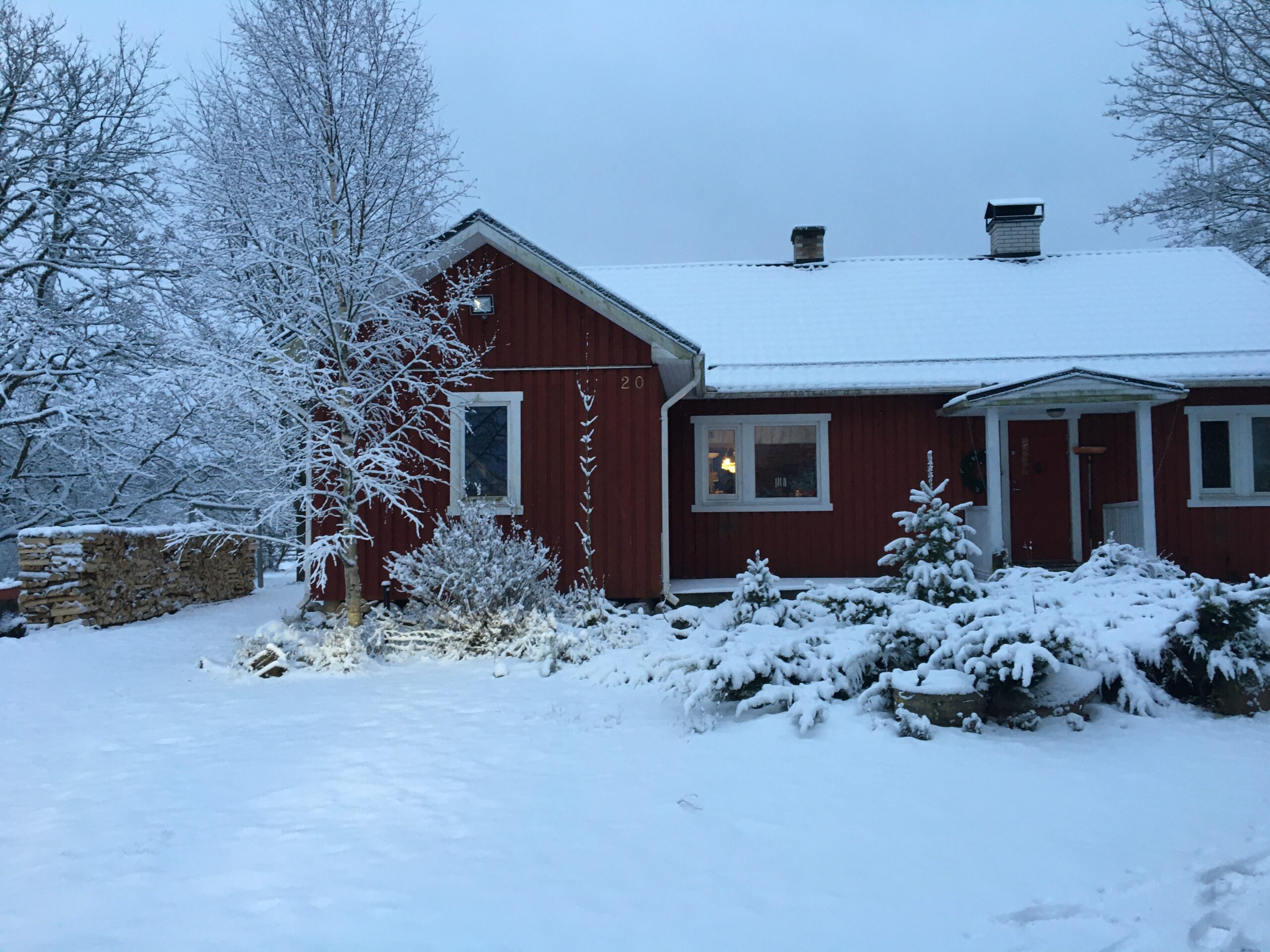
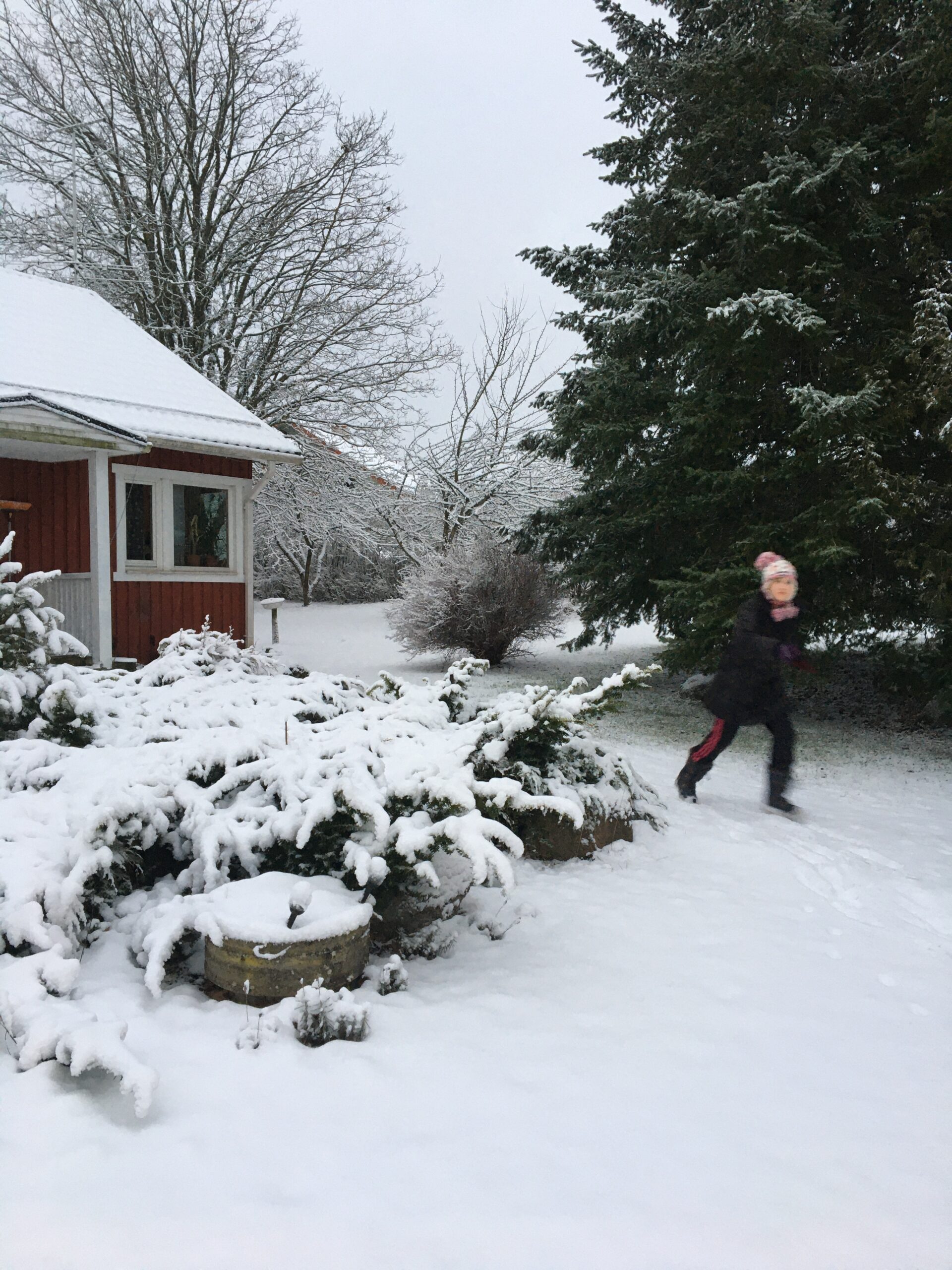
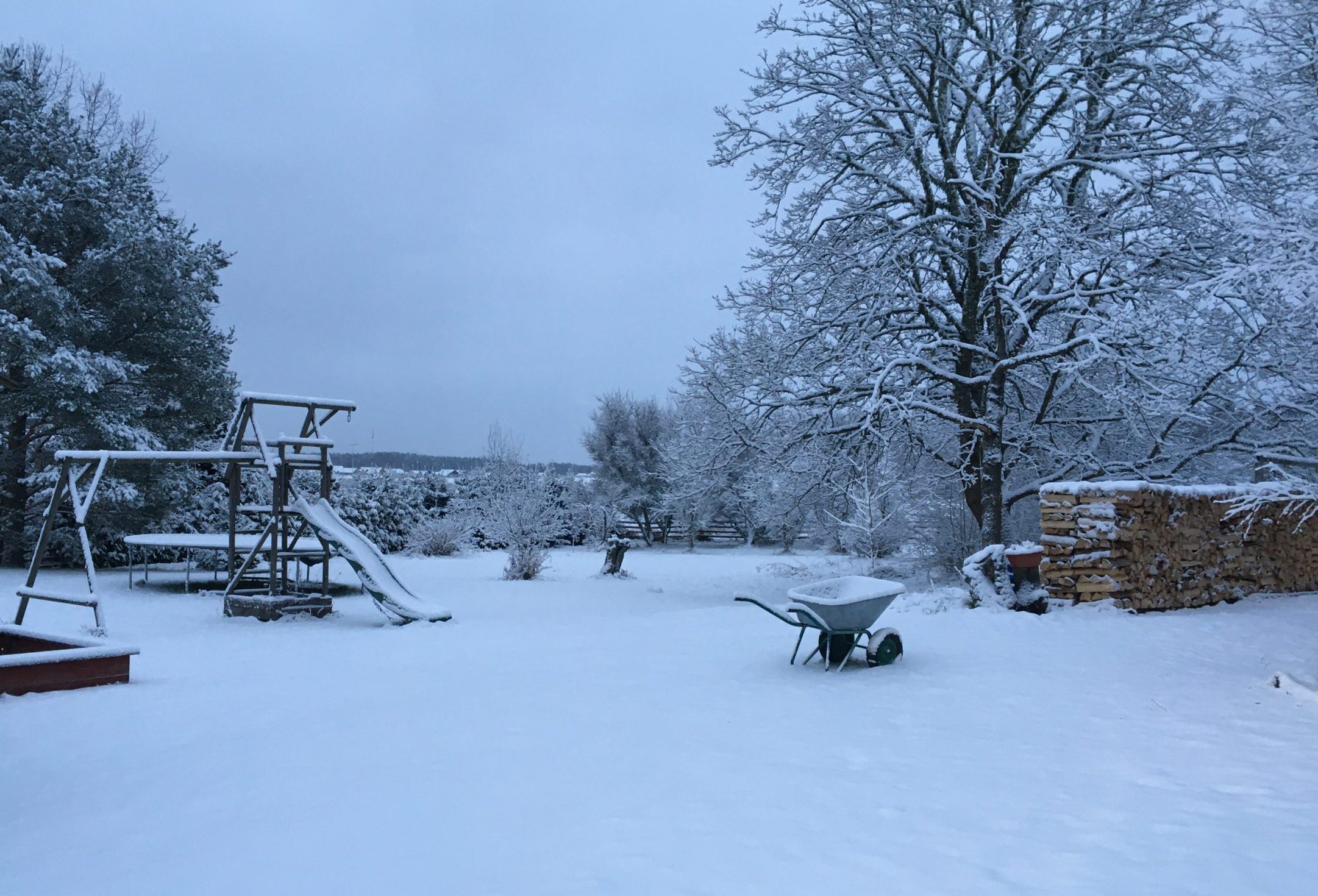
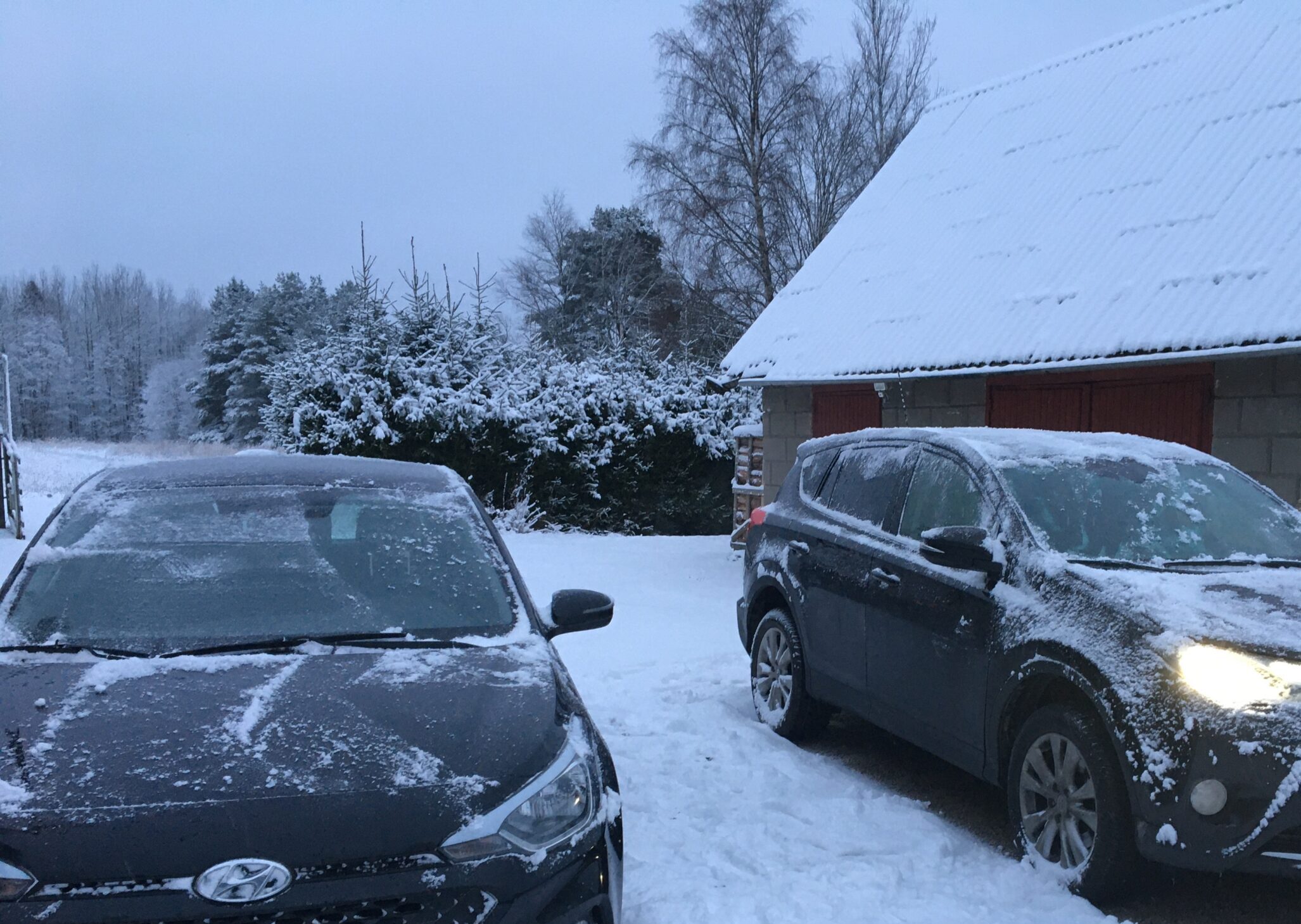
I went for a long walk, played with Ivanka Shoshana in the garden, cleaned the house, paid the pending bills, contemplated positive and achievement oriented thoughts, cooked, then changed all the bedlinen in the house, went to the sauna, etc. Just now, gazing at the pictures that I am uploading to the blog, I noticed that the house and the auxiliary buildings look sad and tired, and are in great need of rebuilding. The past few years (even the past decade) have been so busy that I have not had time to commit myself to anything else than work, several projects, and the family. This is the greatest mistake of my life – I haven’t taken the time to dwell in the present, always living in tomorrow. Busy busy busy – so busy that I sometimes lose focus of what is happening in front of my eyes. It may sound like a cliche, but you do need to enjoy every moment in your life, every day. To see the tiny detail. To look and really see.
(Blog continues after gallery…)
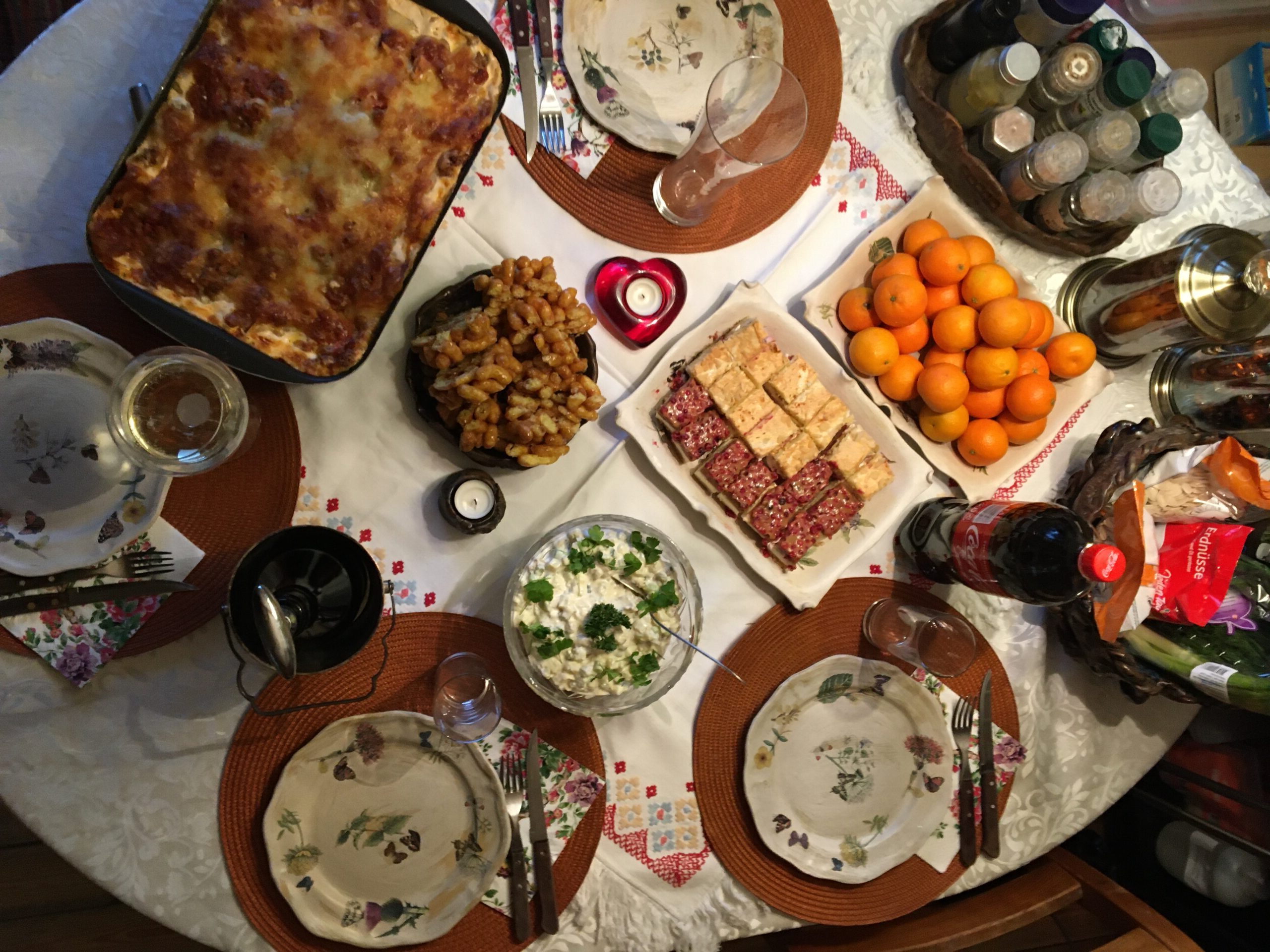
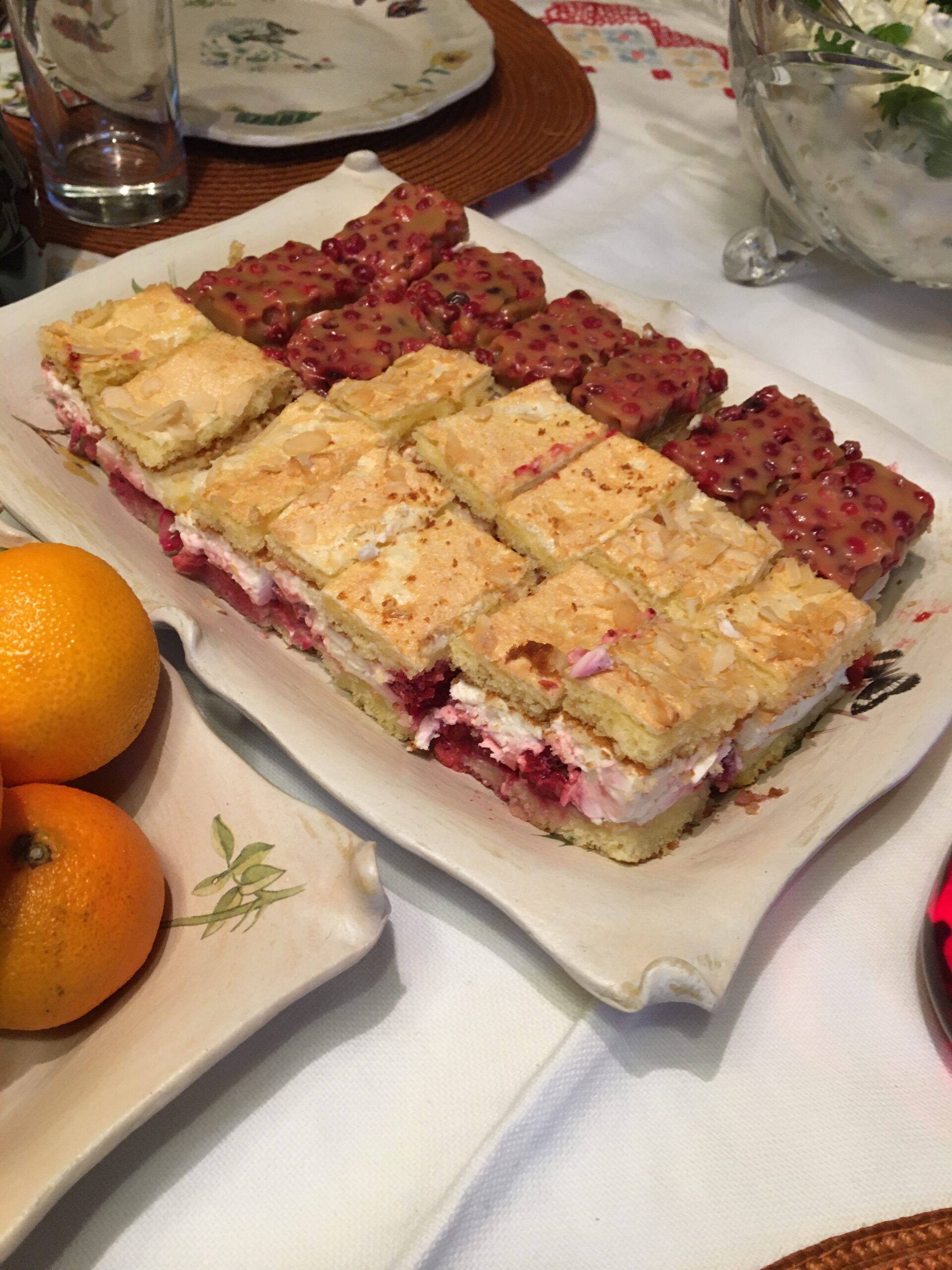
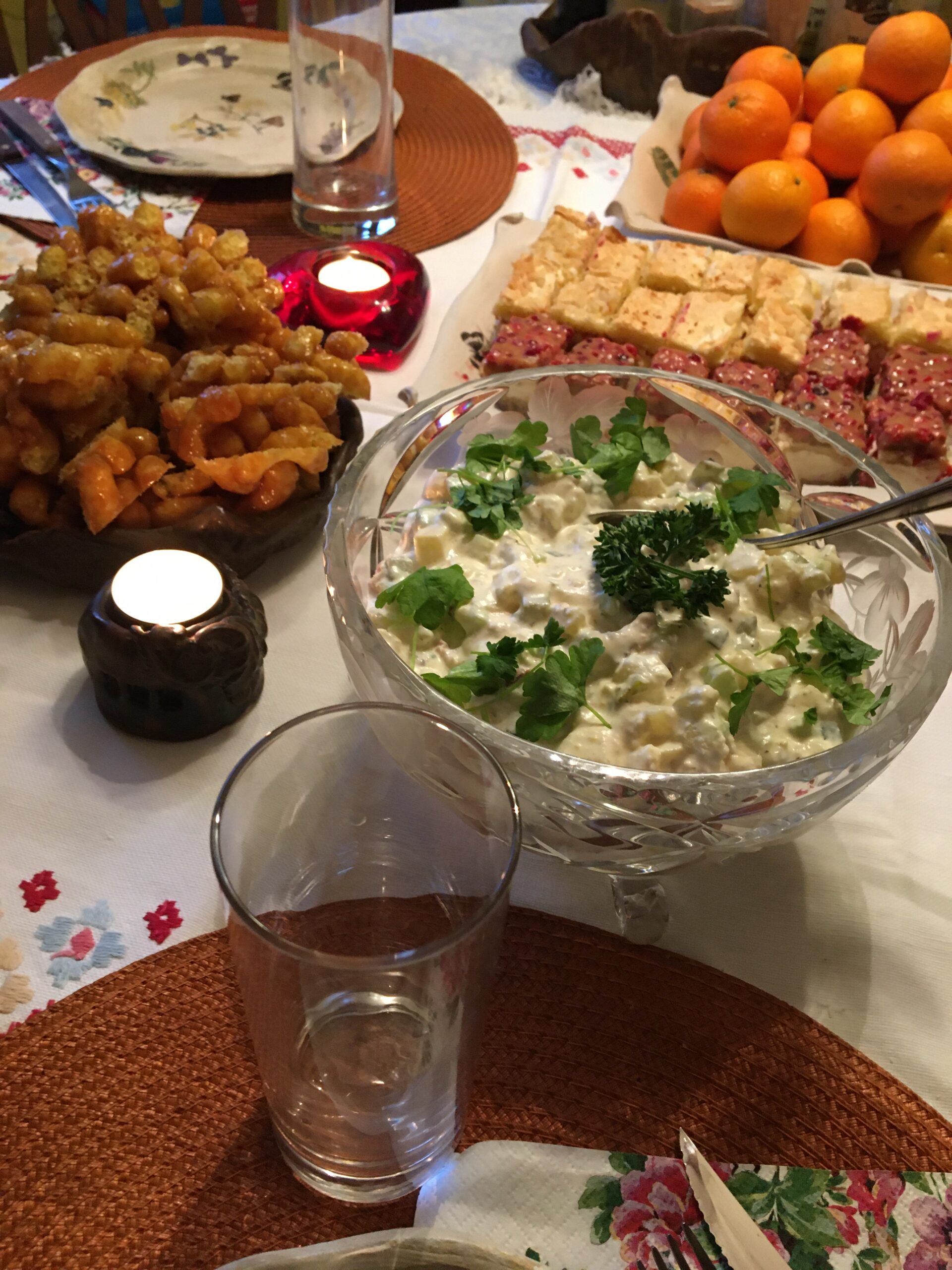
December 31, 2020 began with cooking and ended with dining..hahaa. From the main course side, I prepared potato-egg salad and lasagne, and all the sweet side was this time based on consumer goods (Brita cake, Caramel cake, Arthur cake). Mmmm those corn sticks in toffee are drop-dead good! Generally, I’d be preparing everything that’s on the table myself, I find them more pleasing for the palate, and I do love the kitchen being filled with delicious food aromas! As it has been a while since I last had a piece of commercial cake then actually I must admit that it was not bad at all really. Unfortunately I cannot recollect the name of the bakery, otherwise I could quite advertise the brand.
Some years ago I used to watch comedy shows on New Year’s Eve, but those have become slightly boring over time. I want something new! Understandably, it is not so easy to crack jokes, that’s for sure. Also times have changed. People are getting enough of the information and noise. In order to still surprise today – one needs to be born a genius. Anyhow, Ivanka Shoshana decided to go to bed right before the fireworks began, and I did so immediately after midnight.
Have a successful and delightful 2021 dear readers!
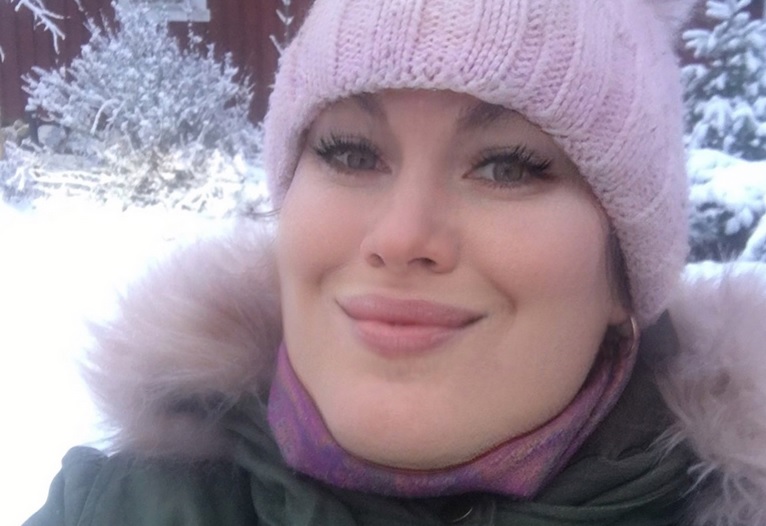
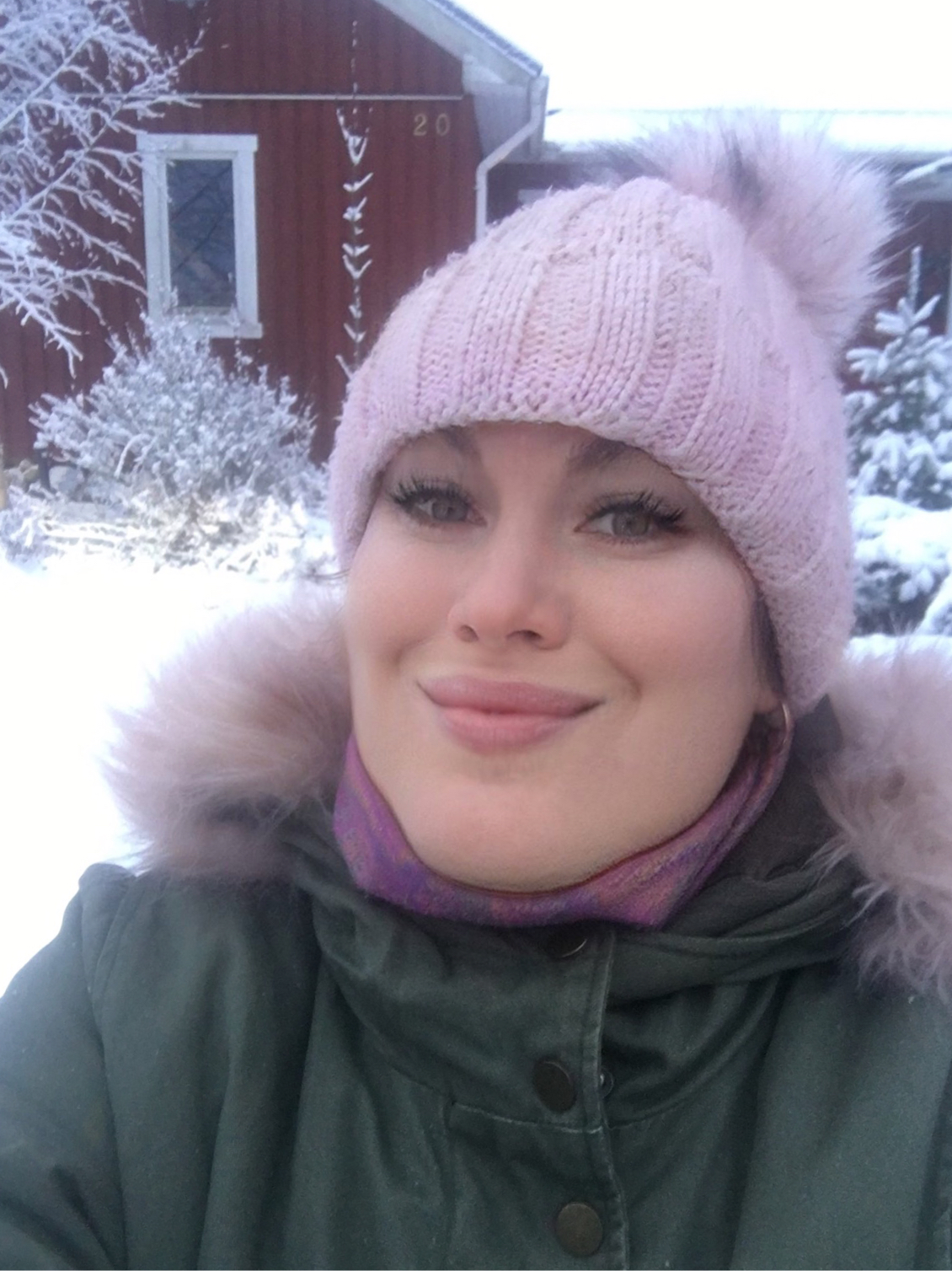
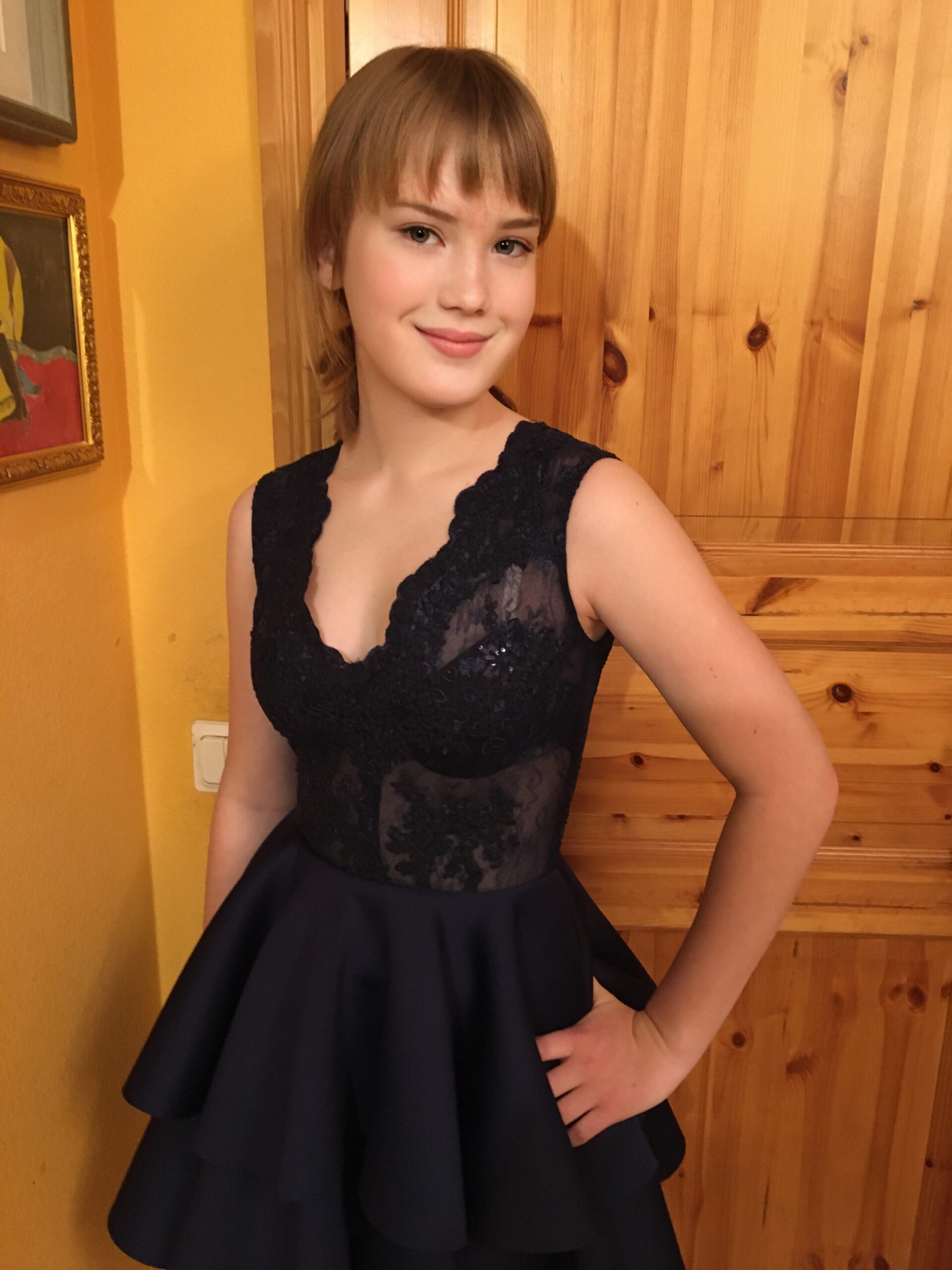
Below yet a few more pictures from our New Year’s Eve table, and from my and Estella Elisheva’s outfits.
NordenBladet – Sky Lagoon geothermal baths, under construction on Kársnes point in Kópavogur, in the capital area, will boast Iceland’s largest sauna, Morgunblaðið reports. The sauna will have an ocean view – including a view of Bessastaðir – the president’s residence – of the Reykjanes mountain range, and, when the visibility is good, of Snæfellsjökull glacier.
“Everything is in full swing and going great,” states Dagný Pétursdóttir, CEO of Sky Lagoon. “The project is on schedule, and we plan to begin operation in the spring. The timing depends in fact on the global situation. We’ll be ready. We hope for the best and prepare for the worst.”
The project is reported to be among the largest ones in the Icelandic tourism industry in recent years. The estimated cost is roughly ISK 4 billion (USD 31.1 million; EUR 21.6 million).
Sky Lagoon is a cooperation between Nature Resort ehf., which is in charge of the construction, and the international travel experience company Pursuit, owned by Viad, which will operate the baths. Pursuit already operates the flight ride theater FlyOverIceland in Reykjavík.
The baths are designed to be ideal for relaxation, surrounded by Icelandic nature. A wall, made of rocks, has been raised around the baths, creating a frame around them.
“The birdlife around us is rich,” Dagný remarks, “and occasionally, we’ll see seals peeking at us. There is something incredibly relaxing and magical about sitting in here, watching the interplay of the ocean and the sky.”
She points at a huge windowpane and remarks, “This is the largest windowpane ever installed in Iceland. It weighs 2.4 tons, and I must admit my heart beat very fast while it was being hauled over here and installed. But the outcome is magnificent.”
NordenBladet — The 2020 study shows that the volume of annual private copying among people aged between 15 and 79 is approximately 258-276 million music and video files. This total number (258 million files) includes only the legal private copying as defined in the Copyright Act. In the 2019 survey, the corresponding estimate of private copying was 275–297 million files. Similar information was gathered by Taloustutkimus in 2019. In 2020, children aged between 12 and 14 were also included in the study alongside people aged between 15 and 79.
In 2020 music covered by legal private copying was copied by 203 000 and video material by over 757 000 Finns between 15–79 years of age. There were all in all over 900 000 copiers of music and video material. The number of people making copies has been in decline for the last couple of years. In 2014 there were still over 1.6 million people making private copies.
The 2020 study also investigated copying by 12–14 year old children. When copies made by them were added, the amount of private legal copying in 2020 among 12–79 year olds is 259–278 million files (400–451 million files in 2016).
The most often used sources for copying music are streaming services (offline saving), freely downloadable files from the internet (e.g. artists’ own web pages) and original CD discs. Of these, only the music copied from original CD’s is included in the figures of private copying. Copies of videos are most often copies of TV programmes.
Over half of those who had copied music would have acquired the copied material from some other source, if the possibility of copying did not exist. Almost a third of those who copied music would have used chargeable sources for acquiring the music. The share of those who used a chargeable source was slightly lower than in the 2019 study. Over a third of those who had copied video files would have acquired the copied video material in some other way, if the possibility of copying did not exist. Chargeable source for acquiring video files would have been used by almost a fifth of the respondents. Regarding video files, the shares are at the same level as in the 2019 study.
Three out of four of the Finns have printed, saved, photocopied or scanned graphic material for private use during the past year. The most frequently used ways of copying are printing and saving. They also comprise the largest number of copies (number of pages). Photocopied or scanned materials are most often official forms or invoices/bank statements, printed materials in turn are most often photographs, official forms, recipes or educational materials. Publishers of the printed or saved graphic materials are most often private persons (webpages or blogs), a company (e.g. Valio), or public administration. The estimate of the number of pages covered by remuneration of private copying is 535–613 million pages (based on the material type classification of Kopiosto).
– – –
The main objective of the survey was to determine the amount of private copying regarding music and video material in Finland. The survey also gives a comprehensive view into the use of entertainment electronics by the Finnish population, as well as their consumer behaviour regarding music and video content. The study also investigated the harm caused by copying of music and video material. In addition, the private copying of graphic material was investigated.
NordenBladet — The EU health ministers will hold an informal videoconference on Wednesday 13 January. The theme of the conference will be the rollout of COVID-19 vaccinations in the EU Member States. Minister of Family Affairs and Social Services Krista Kiuru will represent Finland at the conference.
The conference will be organised by Portugal, which took over the Presidency of the Council of the EU on 1 January 2021. At the conference chaired by Portugal, the ministers will discuss the experiences and any problems encountered by the Member States during the first weeks of the rollout of COVID-19 vaccinations. The ministers will also discuss additional purchases of vaccines.
“The fact that the EU is collaborating to procure a sufficient and diverse portfolio of vaccines for the Member States has played an essential role in the global competition for vaccines. Finland encourages the Commission to do its utmost to accelerate the manufacturing of COVID-19 vaccines and to deliver them quickly to the Member States,” says Minister Kiuru.
The Faroe Islands’ top restaurant, KOKS, has been recognised by Forbes as one of the coolest restaurants to visit in 2021. The list, composed for Forbes by professional foodies, is made up of ten restaurants that offer ‘deeply satisfying meals that are worth a visit whenever you can get there.’
Kristian Brask Thomsen, a culinary ambassador, award-winning filmmaker, world tour manager and host of dinner parties extraordinaire, chose 2-star Michelin KOKS, calling it a ‘culinary pearl’.
“KOKS is an almost mythological place in a hobbit setting,” says Kristian. “KOKS is not only trying to be or show sustainability but living it at its core. A vast majority of the produce is sourced within a few miles of the restaurant, in the surrounding hills and ocean.”
Karin Visth, sommelier at KOKS, says being included on Forbes’ list is a great recognition.
“It confirms that we are on the right track, particularly in a year like 2020 where the restaurant industry has been badly hit,” says Karin. “It motivates us to continue.”
The team at KOKS hope to open under normal conditions in March 2021 and remain open until the end of November. Table reservations for 2021 opened early in January.
“Based on bookings so far, we see a clear change in where our guests in 2021 will come from,” says Karin. “Usually, most of our guests come from Asia, Australia and the United States. At the moment, we are seeing bookings mainly from Faroe Islanders and other Nordic countries. We expect this trend to continue throughout 2021, with an increase in guests from other countries in 2022.”
NordenBladet — The President of the Riigikogu Henn Põlluaas met the Speaker of the Lithuanian Seimas Viktorija Čmilytė-Nielsen via a video bridge today. The two speakers discussed managing the corona virus, bilateral parliamentary cooperation, and cooperation opportunities in the Baltic Sea region.
Both agreed that the Baltic states shared the same history and the same values. “We are each other’s closest partners,” Põlluaas said. “Working together rather than individually, we can achieve more on the international level as well. For example, when planning visits to our partners.”
Põlluaas highlighted the fully established cooperation between the speakers of Nordic and Baltic parliaments, who will be engaged in the ongoing dialogue on economy, security, as well as environmental protection. “Being in the same region, we share the same challenges in these fields,” Põlluaas said.
Both speakers outlined the COVID-19 situation and the rate of vaccinations in their countries. They also shared their experiences on the organisation of parliamentary work during the corona crisis, and compared remote sitting solutions.
Tomorrow is the 30th anniversary of the defence of the Vilnius TV Tower after the restoration of Lithuania’s independence. Põlluaas expressed his condolences to the friends and families of those who lost their lives in these events. Lithuania will celebrate that day as a national holiday tomorrow, commemorating the victims and remembering freedom fighters.
The Riigikogu concluded the first reading of two Bills
The Bill on Amendments to the Income Tax Act (293 SE), initiated by the Government, will set out safeguards with regard to the jurisdictions included in the EU list of non-cooperative jurisdictions for tax purposes, in order that aggressive tax planning would be impossible through the jurisdictions included in the EU list.
Under the Bill, the calculation of the basic exemption in Estonia will be equal for a resident natural person and a resident natural person of another Contracting State. The current Act also enables a resident natural person of another Contracting State to make the deductions from income earned in Estonia that are allowed for a resident natural person. The difference in the treatment of an Estonian resident and a resident of another Contracting State is however manifest in the calculation of the basic exemption.
At the same time, the Bill will ensure that, in terms of the taxation of the reimbursement of the daily subsistence allowances and the transport, accommodation and other costs of servants participating in secondments by Frontex and EASO, they will be treated equally as regards the taxation of the reimbursements made to the national experts at a European Union institution or office or agency who participate in civilian missions.
The Bill on Amendments to the Social Welfare Act and Other Acts (295 SE), initiated by the Government, will ensure more flexible organisation of the alternative and continuing care service, extend the range of persons who are entitled to monthly family benefits, and enhance the possibilities for local authorities to support young people who need the continuing care service.
The Bill will also enable a contract of employment to be entered into with family parents in family homes providing the alternative care service, besides the authorisation agreement provided for in the current law. Specifications regarding the working and rest time will be provided for the cases when a contract of employment is entered into, which will ensure family parents social guarantees equally to other persons employed under the Employment Contracts Act. Under the current regulation, an agreement can be entered into with a family parent that is essentially an authorisation agreement under the law of obligations with special conditions and the conditions in place will not be amended.
The Bill will create the possibility to receive family benefits, for example, child benefit, guardianship allowance, the single parent’s child allowance, the allowance for families with many children, as well as the disabled student’s allowance and the disabled parent’s allowance if a child of up to 19 years of age has been included in the list of a full-time in-service training course at a state agency administered by the Ministry of Social Affairs. The amendment concerns children over 16 years of age who are studying at Astangu Vocational Rehabilitation Centre and who do not have the status of a student and therefore are deprived of the above-mentioned allowance. Under the current regulation, the payment of family allowances in connection with studies is contingent on studies at a basic school, a secondary school or in formal vocational education.
The Bill will also make other amendments. For example, uniform state fee rates will be established for the social services provided under an activity licence. They include the social rehabilitation service, the safe house service and the general care service provided outside home. In the case of the continuing care service, local authorities will have possibility to use the resources of the support fund for all young people who have left alternative care and guardianship until they attain 25 years of age. Under the regulation in force, the age requirement is different.
Eduard Odinets took his oath of office before the Riigikogu.
At the beginning of the sitting of the Riigikogu, there was an intense discussion in connection with the proceedings on the motions to amend the Draft Resolution of the Riigikogu “Holding a Referendum on the Issue of the Definition of Marriage” (288 OE) in the Constitutional Committee. The opposition had submitted protests, referring to violations of procedure. Since the protests submitted to the Board of the Riigikogu had not been reviewed, opposition members moved to remove the second reading of the draft Resolution from the agenda for the working week. The motion was not supported. The agenda was approved with 50 votes in favour and 45 against. Before the approval of the agenda, the deliberation of the research and development, innovation and entrepreneurship development plan 2021–2035 was removed from the agenda for the sitting on Wednesday on the proposal of the Cultural Affairs Committee.
During the open microphone, Peeter Ernits and Kalle Grünthal took the floor.
NordenBladet — The working group that prepared the Architectural Policy Programme has considered how the Finnish architecture and built environment will be able to respond to the great societal challenges. Climate change, population ageing, urbanisation, new technologies and internationalisation are challenges, but they can also be seen as opportunities. The aims of the programme include more flexible use of buildings, creating criteria for the quality of housing construction, and making Finland increasingly attractive as a destination for architecture tourism.
The proposal for the Architectural Policy Programme was submitted to the Minister of Science and Culture Annika Saarikko and Minister of the Environment and Climate Change Krista Mikkonen on 12 January.
“The aim is to strengthen cooperation between stakeholders that influence our built environment. This is needed to create a construction culture in Finland that boosts the economy in a sustainable way, offers solutions to international questions, and provides opportunities for every person to live in a good and comfortable environment,” Minister Saarikko says.
“Architecture connects broad outlines to individual, personal experiences. It is important that we understand the role of the built environment for the wellbeing of individuals and how they feel involved in society.
”The five main themes discussed in the programme proposal are climate change, equality, economy, meaning and education. Besides the global questions, the programme also addresses matters that are particular to Finland: population ageing, regional development and cultural heritage.
“The working group has done a good job in recognising how good planning, zoning and construction can help find solutions to many societal challenges,” Minister Mikkonen says. “Investments in the quality of zoning and construction take us towards a low-carbon built environment that will also cherish biodiversity. The proposal contains several measures that will lead to even more effective climate action in the built environment sector, such as developing methods to assess the impacts of zoning on emissions and the concept of a circular economy city block,” Mikkonen says.
Good planning and design of the built environment supports viability, social equality and increasingly diverse ways of living, both in the growing towns and cities and in rural areas. The working group also suggests ways to increase the participation of residents in the zoning and planning processes. The proposals include joint facilities to support remote work and a set of criteria to be created for assessing the quality of housing construction. Awareness of the impacts of the built environment on health and wellbeing should be enhanced and the connections between these should be incorporated even more strongly into land use planning and building design. The working group also proposes a prize to be awarded to sustainable construction of a high architectural standard. In addition, the programme proposal contains measures to support the export of Finnish architecture to the world and make Finland increasingly attractive as a destination for architecture tourism. The architecture and design museum to be established in Finland would have a key role in promoting the culture of architectural exhibitions and events. Sustainable planning and construction must be the cross-cutting principle in education. The role of architectural and design education must be strengthened by developing the pedagogical competence of the teaching staff in the fields of architecture and design and by targeting state funding for the continuing education of teachers and early childhood education staff to architecture and design projects.
Finland’s first Architectural Policy Programme was published more than 20 years ago in 1998.
In May 2019 the Ministry of Education and Culture and the Ministry of the Environment appointed a working group to draw up a new Architectural Policy Programme for Finland. The proposal will now be sent out for comments and the feedback received will be taken into account to finalise the programme.