Reklaam

Helena-Reet Ennet

Helena-Reet Ennet
4698 POSTS 0 COMMENTS

Estonia: The cabinet supports the proposal of creating a national working group of nuclear energy

NordenBladet — At today’s cabinet meeting, the government discussed the possibilities of using nuclear energy in Estonia and decided that a national working group of nuclear energy should be created to define the nation’s positions towards the issue.

So far, no decisions have been made regarding the use of nuclear energy in Estonia, as thorough preparations are required prior to that. The working group will be tasked with analysing the feasibility of using nuclear energy in Estonia with the help of foreign experts and submitting their conclusions and proposals to the government. Their impact analysis on the implementation of nuclear energy will help the government make a calculated and informed decision on the matter.

“The introduction of nuclear energy after 2030 is one possible way of increasing Estonia’s energy security, sustainability, and competitiveness, as well as reaching the climate goals set for 2050,” said Prime Minister Jüri Ratas. “It is one of many possible solutions for producing climate-neutral energy in Estonia, which definitely deserves widespread discussions within the society and thorough analyses to help us make decisions in the future.”

The topic of nuclear energy has become prevalent in Estonia mostly because it would help to achieve Estonia’s climate goals for 2050 as an energy source with low carbon emissions. Another benefit of nuclear energy is its capability of ensuring round-the-clock electricity supply regardless of weather conditions. However, one of its most significant downsides is the time-consuming and resource-intensive implementation process.

According to Minister of the Environment Rene Kokk, the use of nuclear energy would help to ensure Estonia’s energy security, but would also require large-scale investments from the government to build and operate a power plant, as well as an extended period of preparation.

“In addition to producing electricity, nuclear energy can also be used to heat buildings and, with certain technological solutions, produce hydrogen. However, numerous security and political risks are involved with establishing a nuclear power plant. It is also important to consider the issue of the used nuclear fuel – handling and storage thereof is complicated and would require the establishment of a suitable repository,” he explained.

The implementation of nuclear energy requires at least 10–15 years of preparatory work. Therefore, Estonia’s first nuclear power plant could not begin operations before 2035.

Currently, Estonia lacks the legal framework, the competent authorities, and the experts required for establishing nuclear power plants. Pursuant to the Radiation Act, a radiation practice licence for the operation of a new nuclear facility can be applied for after the Riigikogu has adopted a decision on commissioning a nuclear facility.

As it is currently not known whether a nuclear power plant could be built in Estonia and what technological solutions it would implement, the requirements for the storage of nuclear waste created in the plant are also not defined. In order to store the used nuclear fuel, a suitable repository should be established in Estonia. The nuclear waste repository that will be constructed for the disassembly and safe storage of the training reactors of nuclear submarines in Paldiski by 2040 is not suitable for the possible storage of nuclear fuel.

The decision of using nuclear energy is a matter of great significance for the general public; therefore, it is important for people to be allowed to contribute to discussions on the matter. It will be specified in the course of the process of analysis whether the general public would be involved in the form of a referendum or in other ways.

The working group will be assembled by the Ministry of the Environment in cooperation with the Ministry of Economic Affairs and Communications and other relevant ministries.


Source: Estonian Government
 

Denmark: Crown Prince Frederik takes part in digital business promotion to the Netherlands

NordenBladet – Crown Prince Frederik participated in a digital promotion of business relations between Denmark and the Netherlands after a physical visit to the country was postponed due to COVID-19.

The business promotion has been structured around “Partnering for a Green Transition” and marks the first time a Danish royal visit has been conducted digitally. On Monday, Crown Prince Frederik gave an opening speech at the Industriens Hus in Copenhagen with Danish government ministers and business leaders also participating in events.

Frederik’s speech was streamed for both Danish and Dutch delegates, and he began his speech by noting that 2020 marks the 500th anniversary of Dutch farmers who arrived in Copenhagen. He said that the two countries’ partnership has continued since then and that, “Trade between our countries is increasing and the potential for investments and collaboration between businesses is even greater.

“At the same time, challenges arise from the climate crisis. Never have partnerships and co-creation between friends been more important.

“Present today are Danish and Dutch companies and associations who are world-leading when it comes to green solutions and energy transition. Together they represent the highly specialized expertise we need to create more sustainable societies.”

The digital promotion included three online roundtable discussions, according to the Royal House, to discuss “the business community’s solutions for green conversion of the energy sector.” Other discussion points included “Danish solutions within district heating, energy efficiency and renewable energy.”

Crown Prince Frederik spoke of the Danish Royal Family’s friendship with the Dutch Royal Family, saying that even in 2015, when King Willem-Alexander and Queen Máxima paid a state visit to Denmark, “sustainable energy was also top of the agenda, underlining, that this is a subject that preoccupies both our nations.”

The Royal House announced earlier this summer that Crown Prince Frederik and Crown Princess Mary would lead a business delegation to the Netherlands this week; however, it was later postponed due to the pandemic, though digital events would still take place in the interim.

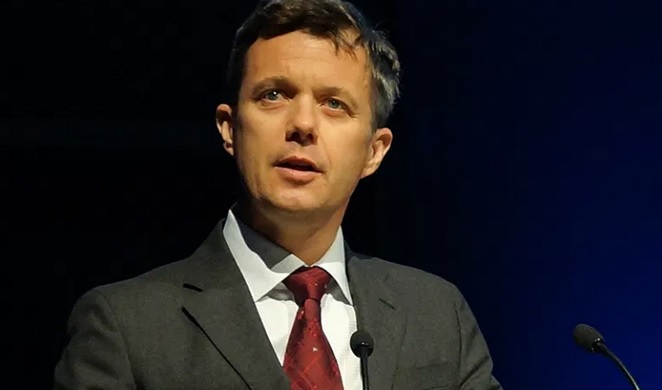
Featured image: Crown Prince Frederik (Mogens Engelund – Own work, CC BY-SA 3.0)

Estonia: The government approved Estonia’s positions for the meeting of EU economic and finance ministers

NordenBladet — The government approved the positions for the video meeting of the Economic and Financial Affairs Council of the European Union on 4 November.

The economic and finance ministers of the EU will discuss the European Commission’s action plan for combating money laundering and terrorist financing. Money laundering almost always has an international dimension, which means that money is moved across national borders. Global cooperation and cooperation between the European Union and its Member States is of key importance in the fight against money laundering. In order to prevent and combat financial crime, the European Union needs a more uniform set of rules, cooperation and exchange of information between countries need to be promoted, and supervisory issues need to be addressed. The government supports the Council’s conclusions on the fight against money laundering and terrorist financing.

As part of the European Semester process, ministers will discuss the annual sustainable growth strategy and the report on the European Court of Auditors’ country-specific recommendations.

The government considers that the rapid and successful implementation of the Recovery and Resilience Facility is essential to support the economic recovery of the Member States, which presupposes the establishment of national recovery plans. The government also agrees with the Council’s conclusions on the European Court of Auditors’ report on the European Semester.

The European Fiscal Board will present the 2020 report to ministers. In addition, the EU statistical system will be discussed.

The government supports the adoption of conclusions on EU statistics and emphasises the importance of using new methods and technologies to collect high-quality statistics and to reduce the associated administrative burden.


Source: Estonian Government


5 BALLS OF LIFE: Coca-Cola’s former CEO Brian Dyson’s commencement speech on love, work, family and friendship

NordenBladet – The 5 balls of life speech by Coca-Cola’s former CEO Brian Dyson is one of the more viral speeches circulating in the web. In line with Apple founder Steve Jobs’ famous announcement speech at Stanford University, Dyson addresses the priorities in life using the metaphor of juggling 5 balls. He calls the balls work, family, friends, health and spirit.

Brian Dyson’s commencement speech has reached such fame that multiple versions are circulating through the web: some “extended Director’s cut” versions are aimed at making his inspiring original speech sound even more inspiring, some claim Dyson’s address to be one of the most famous short speeches, and others label Dyson’s five balls speech as the 30 seconds speech. None of this is actually true.

Here goes the true story: Brian Dyson really did deliver his short speech about life, friendship, love, family and spirit at the occasion of the 172nd commencement of the Georgia Tech Institute, on September 6, 1991. Mark Turner did the effort to track the origins of Brian Dyson’s speech down. But the speech is neither short nor did it last 30 seconds only. The 5 balls of life metaphor is the closing part of a full 1634 words long commencement speech. Turner found Dyson’s original speech in Georgia Tech’s newspaper archives.

The real version of the Brian Dyson speech on the five balls of life

This is the original text of Dyson’s commencement speech that refers to the 5 balls of life:

[…] Imagine life as a game in which you are juggling some five balls in the air. You name them work, family, health, friends and spirit. And you’re keeping all of these in the air.
You will soon understand that work is a rubber ball. If you drop it, it will bounce back. But the other four balls – family, health, friends and spirit – are made of glass. If you drop one of these, they will be irrevocably scuffed, marked, nicked, damaged or even shattered. They will never be the same. You must understand that and strive for balance in your life.

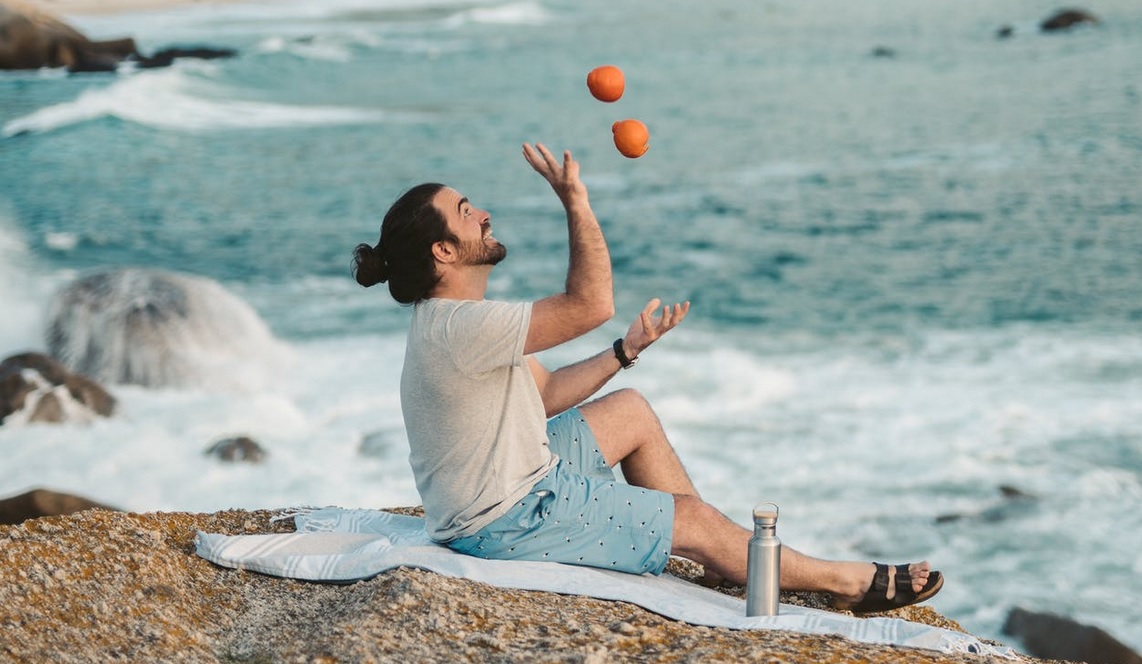
Man juggling with 5 balls as a reference to Brian Dyson’s speech on the 5 balls of life

Bryan Dyson continues: “You live in a world of growing opportunity at one of the most exciting times in history, and you have been prepared with an exceptionally fine education. Because you are all so well educated, let me pose this final question to you. What is education for? Is it for the pursuit of knowledge or for the pursuit of significance? How you answer makes a difference. Knowledge is merely a tool. There is someone in Argentina or Singapore who has the same degree as you. The difference lies in how you use it. Will you use your education for life or just as a living? It’s up to you now.“

Brian Dyson was born in Argentina in 1936 and joined Coca-Cola in 1959, where he worked during several years in South America, the Caribbean Sea and Mexico. From 1978 to 1983, Dyson was president of Coca-Cola USA until he became president of Coca-Cola North America. From 1986 to 1991, he finally was the first president and CEO of the newly created Coca-Cola Enterprises Inc.

Featured image: Pexels

Denmark: Crown Prince Frederik and Crown Princess Mary present their annual awards

NordenBladet – Crown Prince Frederik and Crown Princess Mary have presented their Crown Prince Couple’s Awards, honouring people in culture and social work settings.

The Crown Prince Couple’s Awards consists of four annual awards; the Culture Prize, the Social Prize and two Star Sprinkle Awards in the areas of Culture and Social. The Culture Prize and the Social Prize come with a 500,000 Danish kroner award; the Star Sprinkle winners receive 100,000 Danish kroners each.

The winner of this year’s Culture Prize was Danica Curcic, a rising Danish actress who has appeared in film, television and on stage. Curcic was recognised, said Crown Prince Frederik, because “with a special feeling for the human psyche, [she] throws herself into demanding roles, which she manages to portray in a complex and vivid way.”

The winner of this year’s Social Prize was Kofoed’s School which, since 1928, has helped young people through self-improvement to find jobs, take care of their health and be a part of a community. The school was awarded the prize because it is “a lighthouse that has reinvented itself and shows the way in the social field both nationally and internationally,” said Crown Princess Mary.

The Star Sprinkle Award for Culture was choreographer Sebastian Kloborg for his reinvention of the form and for his “insistence on telling stories through dance and by collaborating with other art forms,” that allows him to “create space for development,” according to Crown Princess Mary.

The Star Sprinkle Award for Social was De Anbragtes Vilkår, a youth organisation that promotes growth and change. The organisation received the award, according to Crown Prince Frederik, because “they are ambitious and strong-willed. It’s about creating change.”

Established in 2004 as a gift to the newlyweds by the Beehive Foundation, the committee behind the awards chooses a pool of nominees with Crown Prince Frederik and Crown Princess Mary selecting the winners on the committee’s advice.


Photo: Instagram/@detdanskekongehus

Mexico and Finland intensify cooperation in the forest sector

NordenBladet — Mexican and Finnish forest experts will strengthen their cooperation in forest sector. Forest cooperation between the two countries is based on a five-year Memorandum of Understanding. The parties to the MoU are the Ministry of Agriculture and Forestry of Finland and National Forestry Commission of Mexico CONAFOR.

Topical topics in cooperation include e.g. forest inventories, drafting of national forest programmes and role of forests in mitigation and adaptation to climate change.Forest inventories are among the key priorities of Finnish-Mexican forest cooperation. On the global perspective, Finland has a very long history in conducting forest inventories. Besides the work on inventories as such, Finland has a lot to offer in the use of satellite images in surveys, management of forest resources data and distribution of data to users.“However, many of the new challenges relating to e.g. the methods for calculating carbon sinks are quite similar for both countries,” says Kari T. Korhonen, Principal Scientist at the Natural Resources Institute Finland. Mexico is also interested in Finland’s experiences in drafting national forest programmes. In Finland, national forest programmes have been drawn up since the 1990’s. Mexico’s first national forest programme was drawn up at the turn of the millennium and the work to prepare a new forest programme has now been started in Mexico. The objectives set for forestry have changed a lot over the past 20 years in both countries.“What is common to Finland and Mexico is that there are many different objectives for forest management. In both countries forest policy preparation takes place as a participatory process where the relevant stakeholders are closely involved. Both parties benefit from the exchange of experiences in drafting forest programmes,” says Marja Kokkonen, Head of the Unit, Forests and bioenergy at the Ministry of Agriculture and Forestry.

Long history of cooperation with Mexico
Forest cooperation between the two countries is based on a Memorandum of Understanding signed in 2018. “I am very happy for this opportunity for Finnish and Mexican forest experts to share knowledge and expertise,” says Ambassador Päivi Pohjanheimo from the Embassy of Finland in Mexico. Despite the considerable differences in the management of forests in Finland and Mexico, both countries are seeking solutions to climate change mitigation, safeguarding biodiversity and planning related to forest policy and forest resources. “We have a long history of cooperation in forest issues between Mexico and Finland. The first contacts between forest experts date back to the 1960s. Forest cooperation with Finland is highly appreciated in Mexico, and it is important for both countries to continue this interaction,” says Ph.D. Markku Simula, who has been involved in the cooperation since the 1980s.

In connection with the implementation of the MoU, the Ministry of Agriculture and Forestry of Finland, the Finnish Embassy in Mexico and CONAFOR organised on 3rd and 4th of November two expert webinars. The main topics discussed were forest inventories, drafting of national forest programmes and role of forests in climate change mitigation. 

Source: Valtioneuvosto.fi

Estonia: Ratas at a meeting with the American Chamber of Commerce in Estonia: the crisis has proven how important cooperation is

NordenBladet — Today, at a meeting with the members of the American Chamber of Commerce in Tallinn, Prime Minister Jüri Ratas said that the coronavirus crisis has proven how important cooperation between people and countries is. He confirmed that the United States of America is and will always remain an extremely important partner for Estonia.

In his speech, Ratas thanked all the members of the Chamber of Commerce for their contribution in developing economic relations between the United States of America and Estonia. He stressed that the year has been difficult, and the impact of the pandemic has been significant on the economies of Estonia as well as the USA. “The crisis is not over, and we have several months of uncertainty ahead of us. This means that the government must be prepared to support the economy as much as possible and necessary.” According to the prime minister, we must maintain the balance between the measures applied for restrict the spread of this virus and maintaining our normal everyday activities.

“One of the most important things that this crisis has demonstrated is the fact that people and countries are dependant of each other,” the prime minister said. “Most countries have applied strict measures to control the pandemic. We must work together to conquer this virus and protect our people. We will recover quicker if we work together.”

Ratas also pointed out that the crisis may present us with new opportunities to strengthen cooperation and increase solidarity while also improving our efficiency and profitability. One example of this is the increased demand for digital services. “Whether we are speaking of e-health, e-learning or cyber security, the Estonian private sector has great abilities for offering these services,” said the prime minister.

Ratas and the entrepreneurs also discussed the Three Seas Initiative, the priorities of the next state budget, and future plans of the government.


Source: Estonian Government


Norway’s Royal Guard Camp infected by Covid-19

NordenBladet – The main camp of Norway’s Royal Guard in Oslo has been infected by Covid-19. A total of six people have been diagnosed with coronavirus. On October 26th the Armed Forces wrote that three employees and two soldiers in the camp had been diagnosed with the infection. The five are in the same squad in His Majesty the King’s Guard.

Two days later, another case of infection was reported. Another 76 soldiers and 16 employees have been tested for the virus. The remaining troops in the company are now under curfew to prevent spread and a more difficult infection tracking job.

Huseby military camp is the base of His Majesty the King’s Guard. The camp is modern and houses about 1,100 soldiers, all of whom belong to the king’s guard. Along with the task of looking after the royals and their properties, these are soldiers who will also defend the capital of Oslo and, if necessary, assist the police.

His Majesty the King’s Guard is the Norwegian King’s bodyguard and the largest department in the Royal Norwegian Army. Armed guards have a 24-hour guard at the royal residences, the royal palace, the Crown Prince family’s home Skaugum and the King’s summer residence on Bygdøy. His Majesty the King’s Guard was established in Stockholm in 1856 by King Karl XV, with guard duty in Sweden. Since Norway got its own king in 1905, the Royal Guard has been the Norwegian king’s bodyguard and mainly located in Oslo, Norway.

On 26 February 2020, the Covid-19 virus was confirmed to have spread to Norway. As of 27 September 2020, Norway has performed 1,034,670 tests and reported 13,741 confirmed cases and 274 deaths. The mortality rate has been significantly lower in Norway than in other European countries. In the recent weeks, the number of cases of the virus in Norway has increased dramatically and several new measures to stop the spread have been implemented.

Norway: Corona infection rates skyrocket

NordenBladet – Norwegian health authorities were sounding new alarms on Monday, after another weekend with record-high increases in new cases of Corona infection. They describe the situation as “serious” and warn that it’s critical to keep the spread of the virus under control.

“We have to turn this trend around and we have to do it now!” exclaimed Dr Espen Nakstad, assistant director of the state health directorate. Norwegian Broadcasting (NRK) reported that the popular and normally mild-mannered Nakstad thinks the Corona situation in Norway now “isn’t far from where we were in March.”

Fully 2,726 new cases have been confirmed during the past seven days leading up to Monday. Norway’s total number of people infected with Covid-19 stood at 20,634 on Monday morning. There’s also been a spike in the number of people needing to be hospitalized, with 63 admitted as of Sunday night. The death toll also rose slightly, to 282, compared to 281 on Friday.

Health officials in Oslo, meanwhile, reported Monday morning that they’d registered 92 new cases overnight, 14 more than on Sunday. The Stovner district on Oslo’s east side replaced Frogner in the west as the area of the Norwegian capital with the highest infection rate, equivalent to 288.1 cases per 100,000 residents during the past 14 days.

A major increase in testing explains much of the increase in confirmed cases. Line Vold of the state public health institute FHI nonetheless shares Nakstad’s concern. “The development worries us,” Vold told NRK Monday morning. “It’s serious because we see a rapid development with rising infection numbers.”

Vold also expects more hospitalizations, more need for respirators and more deaths in the weeks ahead. “We estimate that we’re detecting around 40 percent of infection cases in society now,” Vold said. In March, when the Corona crisis hit, authorities think they only detected around 10 percent because there was much less testing capacity at the time.

“What worries us now is the trend here, with such rapid increases in the numbers of those infected,” Vold told NRK. The numbers have indeed skyrocketed in the past few weeks, and even in the past few days.

The numbers remain low compared to most other countries, several of which have gone into lockdown again around Europe, but Norway’s total population is also much lower and travel restrictions have been back in place for many weeks. Nakstad said he’s especially worried about how the numbers of people now needing to be hospitalized have soared recently, from single-digit levels late last summer to more than 60 now.

New and expanding outbreaks continue to be reported, from Drammen in the south to Harstad in the north. New outbreaks were also reported within various defense forces: US Marines based at Setermoen in Northern Norway are believed to be behind 21 positive test results at the military camp in Bardu. Six soldiers have tested positive at the Rena camp in Østerdalen during the weekend, and six at the Royal Guard’s camp in Oslo. The positive tests have forced around 1,000 defense personnel into quarantine at Setermoen alone, confirmed an Army spokesman on Sunday.

Norwegian officials tightened Corona regulations last week. Health Director Bjørn Guldvog confirmed to newspaper VG during the weekend that stricter rules are under consideration, including a proposal to set up various infection zones in Norway based on infection risk levels. Guldvog stressed, however, that Norway already has tailored infection rules to various areas so that residents in areas with low or even zero cases of Covid-19 don’t need to unduly be restricted. Current regulations are strictest in Oslo, where face masks are now mandatory in most public places and residents are asked to limit social contact with no more than 10 people per week.

See the government’s own version of the current national restrictions HERE (external link to the government’s own website).

Estonia: Ratas at the round-table discussion with start-up companies: Estonia should be inviting for talents from abroad

NordenBladet — Today’s meeting between Prime Minister Jüri Ratas and the representatives of the start-ups focused on the progress of the sector, development prospects, and conditions for reviving the private and venture capital market.

‘Start-ups more narrowly and IT sector more broadly have an enormous growth potential and a focus on offering high value-added products. As almost a quarter of the staff in this sector are foreigners, then from the perspective of our growth and competitiveness, it is important for Estonia to be a country where foreign talents want to come. Hopefully, under the leadership of the Ministry of Economic Affairs and Communications and in cooperation with the representatives of the sector, we will find solutions on how to support start-ups,’ Prime Minister Jüri Ratas said.

In addition, the main economic indicators of the start-up sector were presented at the meeting. According to the Estonian Startup Database, 1,105 start-ups with a total of nearly 6,300 employees have been registered in Estonia. The average wages in the sector amount to 2,508 euros, which is 1.8 times higher than the average wages in Estonia. Based on the forecasts, the combined turnover of the Estonian start-up companies will exceed 550 million euros this year, which is 40% more than last year. Labour taxes are paid in the amount of almost 71.7 million euros. The annual growth of the start-up sector is 30 percent on average.

The meeting also discussed the proposals of the start-ups to make employment legislation more flexible and introduce new forms of employment relations.

According to the Prime Minister, several worthy ideas were taken from the round-table. ‘Working and investing in Estonia must be as simple as possible, and the regulating legislation supportive and relevant,’ Ratas said. ‘Most certainly, the experiences and proposals of the representatives of the sector are an excellent starting point to ensure that the state could support our companies in the best possible way,’ he added.

At the round-table meeting, the Ministry of Economic Affairs and Communications presented existing and new initiatives on state investments in the development of venture capital markets. The next round-table meeting with start-ups will be held at the Prime Minister in spring of 2021.


Source: Estonian Government