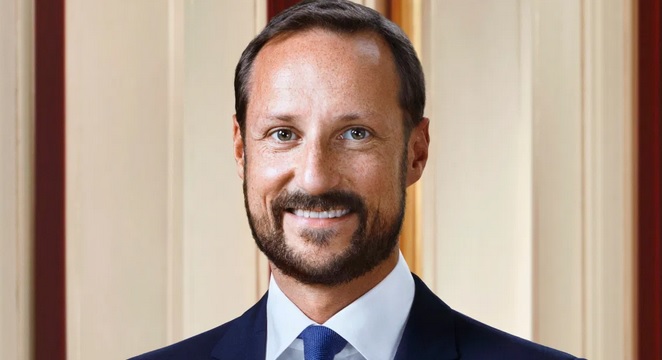
NordenBladet – Crown Prince Regent Haakon, together with his mother Queen Sonja, have received leaders of the Norwegian health authorities at the Royal Palace in Oslo. The royals invited them to lunch on October 29th 2020 to thank them for their ongoing work during the pandemic. For infection control reasons, there was a distance of two meters between everyone present at the lunch and food and drink was set up in advance and there was no serving during the meal.
Nine people attended the event. Currently in Norway, advise is to invite only five people into your home but the Royal Palace is also regarded as a workplace and the large rooms and the high ceilings provide good opportunities for a safe distance from infection. The Norwegian health authorities were represented by Minister of Health Bent Høie, Director of Health Bjørn Guldvog, Director of Public Health Camilla Stoltenberg, Global Health Ambassador John-Arne Røttingen and Ministerial Councillor Bjørn-Inge Larsen.
The Crown Prince Regent brought with him a greeting from His Majesty the King. He then thanked the health authorities and the entire Norwegian health service for the enormous work that has been done since the pandemic hit Norway earlier this year.
His Royal Highness the Crown Prince said: “No one knew for sure how Covid-19 would hit us. You made decisive choices in a time of doubt. The dilemmas have kept on coming, but together you still found solutions, on behalf of us all.”
Crown Prince Haakon went on to talk about what the pandemic has taken from us, following restrictions on personal freedom, a rise in unemployment and the loss of many who have passed away. The Crown Prince continued: “It could still have gone much worse, as we now know. There is a lot that is still uncertain. Nevertheless, we know some things are important, and we have learned that from you: keep one meter distance to all. Wash your hands. Be at home if we have symptoms.”
Minister of Health Bent Høie thanked the Crown Prince for the lunch. The minister said in his speech: “We do not know where the next outbreak will come, we just know that it will come. Therefore, the whole country must limit the number of people we are now with. And if we limit the number of people we are with, we limit the spread of infection and make infection detection easier”.
Featrud image: Crown Prince Haakon (Jørgen Gomnæs / The Royal Court)
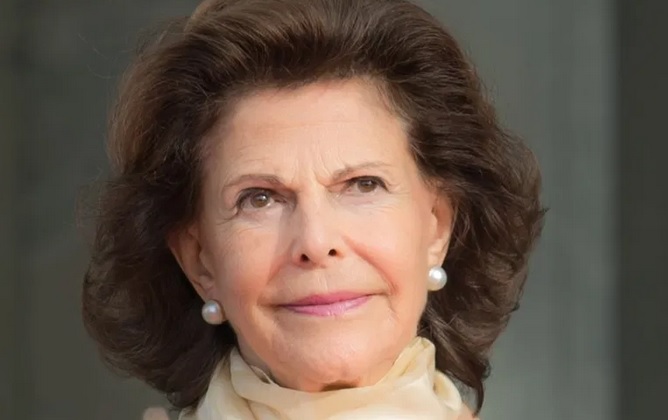
NordenBladet – Queen Silvia of Sweden has announced that her brother, Walther Sommerlath, has passed away. He was 86 years old and died on October 23rd 2020 at Karolinska Hospital in Huddinge after a period of illness. He was born Walther Ludwig Sommerlath in 1934 in Brazil.
The following statement was published by Her Majesty the Queen on October 29th 2020: “I and my family feel great sorrow and loss for my brother Walther”. Furthermore, the royal court emphasizes that with regard to Walther Sommerlath’s family, the Royal family ask the media to respect, and understand, that this is a private family matter.
Towards the end of his life, Walter and his wife moved to Sweden to be close to Queen Silvia and the rest of the royal family. Queen Silvia and her brother Walther had close contact throughout their lives and were very good friends. Walter and his wife otherwise lived in Italy, but earlier this year they moved into Drotningholm Castle, where the King and Queen of Sweden live permanently. Walter and his wife lived in a separate house attached to the castle. This was the same house where Crown Princess Victoria and Prince Daniel lived when they were newlyweds.
The Swedish royal court is reluctant to provide any further information as they describe this as a private matter within the family. The Royal Court nevertheless states that the Queen’s brother had been ill for a long time before he died.
The Queen’s brother was always present during major family events in the Swedish royal family. He also had a good relationship with the Swedish king, his brother-in-law and the rest of the royal family. He was a well-liked person. Walter’s son, Patrick Sommerlath, the Queen’s nephew, also lives permanently in Sweden and is a close friend of the royals. Walther Sommerlath also has a daughter, Sophie, who lives in California.
Queen Silvia was the youngest of the family’s siblings, and the only girl. Her other brothers are Ralph de Toledo Sommerlath and Jörg, who died of cancer in February 2006 after a long illness. He was 64 years old.
Featured image: Queen Silvia of Sweden (Frankie Fouganthin – Own work, CC BY-SA 4.0, Wiki Commons)
NordenBladet – A huge portion of Norway’s scenic and iconic Dovre Mountain plateau has been returned to its natural state, more than 20 years after the Norwegian Parliament decided to shut down a military firing range at the site. Hikers and outdoor enthusiasts still aren’t entirely welcome though, out of consideration to the wild reindeer also returning to the area.
For more than 80 years, the wide-open mountain plateau was used as an area for military exercises involving bombs and grenades. It was known as Hjerkinn Skytefelt, located over a broad expanse of mountains southwest of Trondheim and far northeast of Oslo, bordered by Dovre National Park, nature preserves and protected landscapes.
The area is known for its iconic mountain peak called Snøhetta, and the southern portion of Dovre was on the centuries-old pilgrims’ trail to Scandinavia’s only cathedral, Nidarosdomen. Dovre itself has a special place in many Norwegian hearts, viewed as a sturdy mountain range that symbolically props up the nation.
All the decades of military activity in one large portion of it, however, left a lot of schrapnel and potentially deadly explosives behind, scattered over an area covering around 165 square kilometers. In 1999, Members of Parliament voted to shut it down, remove all structures built by the military, clean up the area and restore it to the wilderness it was before the army invaded it in 1923.
No one realized at the time what a massive job that would be. It ended up taking 14 years to carry out what’s considered the largest natural restoration project in Norwegian history, at a cost of NOK 575 million. The shooting range itself had been the largest in Southern Norway, used by the defense department after World War II as a training grounds with NATO allies.
By 2008 the military had halted all activity and moved out. Buildings and bridges were dismantled and even roads were removed, but thousands of undetonated bombs and grenades remained. That led to as many as 15,000 soldiers being periodically sent to the area, suited up in protective gear and forming long lines to systematically and carefully walk over the entire area looking for even the tiniest bits of metal. Explosives experts followed close behind, ready to dismantle or detonate dangerous material found along the way.
They’re still not competely finished, with some final work scheduled in the spring, but an official opening of Hjerkinn as part of the Dovre National Park was held this fall to mark the turnover of the military area back to the civilian population. It’s now considered safe and open to all, but especially to the wild herds of reindeer and moskus (musk ox) in the area. Norwegian biologists and reseachers hope they’ll soon roam in the area and not be disturbed by too many hikers, campers or other tourists.
Raymond Sørensen of the Norwegian Wild Reindeer Center in Hjerkinn told newspaper Aftenposten recently that the reindeer are extremely shy and won’t enter areas where even as few as 30 people may discourage them from passing through. Preservation of the rare wild reindeer herds was a major reason for ending military activity in an area that’s also ringed by roads and railway lines that can cut off natural herd migration.
Sørensen hopes the area, which has few if any trails, can mostly remain open wilderness with as few people as possible. No private vehicles are allowed in the area and cycling is only allowed between June 1 and July 15. A buss, however, carries visitors in to a nearby lodge.
“That’s okay but not optimal,” Sørensen told Aftenposten. “The best thing will be to hinder mountain tourism from ruining things for the wild reindeer. We try to veer people away from the most vulnerable areas. From the top of Snøhetta you can see out over the mountain area, without traipsing into it.”
NordenBladet – A sudden decline in oil prices has raised new fears of more job losses in Norway. The value of Norway’s currency also sank after oil prices fell around 13 percent in the past week, and the Oslo Stock Exchange tumbled, too.
The price of Norway’s North Sea crude oil was trading at just over USD 37 a barrel heading into the weekend, down from nearly USD 43 just a week earlier. That also sent the value of Norway’s krone into decline. By mid-morning on Friday, it cost NOK 9.56 to buy one US dollar, compared to levels just over NOK 9 a few weeks ago.
The Oslo Stock Exchange also fell at the start of trading on Friday, since low oil prices always affect the Norwegian economy negatively. Oil remains Norway’s biggest export product and lower prices mean less money flowing into the state treasury. When the oil price falls below USD 40, even some of Norway’s generally profitable oil fields can start generating losses. Already-troubled state oil company Equinor saw its own shares fall by another 1.5 percent Friday morning.
Corona crisis continues
Analysts and economists blamed the oil price decline largely on the latest effects of the Corona virus. Infection rates have been soaring all over Europe and in the US, forcing political leaders to try to hinder infection by imposing more restrictions. As countries head into lockdown again, demand for fuel, goods and services fell even further.
Industrial and labour leaders in Norway were expressing new concerns over an economic outlook that matched the gloomy weather outdoors. Audun Ingvartsen of the labour organization Lederne worried that low oil prices and rising infection levels in Europe will make oil industry leaders less willing to embark on new projects and investments in new oil fields.
“I’m actually worried that this will result in lower employment levels,” Ingvartsen said on national radio Friday morning. He and others involved in the oil industry told state broadcaster NRK that even though the industry has held up so far, the entire branch is affected when oil prices fall and remain relatively low. “Then we have to cut costs and invest less,” Ellen Bakken, chief economist of the industry’s employers’ organization Norsk olje og gass told NRK.
So much uncertainty
Bakken noted that the Norwegian state’s corona compenation packages have saved many jobs so far, but most new jobs only come when the companies invest in new production.
Many of Norway’s North Sea fields can continue to pump up profits on fields where capital costs have already been covered. The offshore supply side of the industry is hit hardest when prices fall because they no longer get orders for new equipment.
Others linked this week’s bad economic news to uncertainty over the outcome of the US presidential election, while Libya surprised the market by increasing oil production this fall. That added more supply when demand is low, noted Bjarne Schieldrop, chief strategist at SEB.
NordenBladet —The Act that was passed in the Riigikogu today establishes the rules of the road and the requirements for electric scooters and other light electric vehicles so that their use would be secure and safe for other road users.
With the Act on Amendments to the Traffic Act (191 SE), initiated by the Government, a new category of vehicles is implemented, personal transporter, which covers various vehicles intended for carrying one person and powered by electricity, for example, electric kick scooters, electric skateboards, self-balancing transporters and other similar vehicles without seating. Under the Act, personal transporters may drive mainly in the environment intended for pedestrians and cyclists, and on the carriageway in exceptional cases. The requirements for crossing the carriageway and the obligations to give way, and the obligations of the driver of personal transporter in ensuring safety are also regulated. The maximum speed for personal transporter is established at 25 km/h, and in close proximity to pedestrians, it must drive at a speed not endangering pedestrians.
In order to ride a personal transporter on the carriageway, 10–15 year old drivers of personal transporter are required to have the right to ride a bicycle, and drivers aged under 16 must wear a fastened helmet when driving on a road. Also, requirements for the power of personal transporters and for the use of reflectors and lights are established, the maximum permitted width of personal transporters and the requirements for stopping and parking are provided for, and the fine rates for the violation of traffic regulations are provided for.
The requirements concerning cyclists and drivers of mini mopeds and mopeds, in particular the issues relating to their location on the road and their obligation to give way are additionally specified.
The Act also contains a transitional provision under which persons who, before the entry into force of the Act, will have procured a personal transporter with a maximum design speed exceeding 25 km/h will be able to continue to use it in the case when the speed limit for personal transporters will be set at 25 kilometres per hour.
The Act specifies, among other things, the safe passing of pedestrians, the obligations in the event of restricted visibility, and the safety requirements in buses used for occasional carriage of children on roads outside built-up areas.
During the debate, Raimond Kaljulaid (Social Democratic Party) and Sven Sester (Isamaa) took the floor.
77 members of the Riigikogu voted in favour of the passage of the Act, nine were against, and there were three abstentions.
The Riigikogu also passed a Resolution
With the Resolution of the Riigikogu “Increasing the Holding of the Republic of Estonia in the International Finance Corporation” (237 OE), submitted by the Government, the Riigikogu grants its consent to increasing Estonia’s holding in the International Finance Corporation (IFC) by 3102 shares totalling 3 102 000 US dollars (approximate cost 2 872 222.22 euro). It is a financing transaction. The obligations will be assumed in US dollars. Contributions will be made within the period 2021–2025.
The International Finance Corporation is an organisation focusing on private sector investments. For example, in 2019, it invested 19.1 billion US dollars in 65 countries into the businesses of developing countries. The IFC, which is a member of the World Bank Group, was established by 31 countries in 1956. The authorised capital stock of the IFC was 100 million US dollars. The IFC currently has 185 members. Although the IFC is an institution that is a member of the World Bank Group, it has its Articles of Agreement and separate share capital, financial structure, management and employees.
87 members of the Riigikogu were in favour of passing the Resolution.
Two Bills passed the second reading
The Bill on Amendments to the Tax Information Exchange Act (238 SE), initiated by the Government.
In order to facilitate the overcoming of the economic difficulties accompanying the emergency situation due to the coronavirus, the European Union member states have agreed by a relevant Council directive that member states can defer the beginning of the exchange of information on cross-border arrangements by six months. In view of this, the Bill will make amendments to the time limits for filing the arrangements, while no substantial amendments will be made.
The exchange of information concerns cross-border arrangements that enable aggressive tax-planning and the concealment of the beneficial owner of assets or complicate the exchange of bank account information. Under the current law, providers of tax advice, banks and taxpayers would have to begin to communicate the information on the arrangements to tax authorities from 31 July 2021. According to the Bill, 31 January 2021 will be the new deadline.
The Bill on Amendments to the Labour Dispute Resolution Act (214 SE), initiated by the Government, will amend the principles for the remuneration of lay assessors of labour dispute committees.
Under the Bill, the remuneration of a lay assessor will be equal to the minimum hourly wage rate, which is 3.48 euro this year. At present, the remuneration of lay assessors is calculated on the basis of the Salaries of Higher state Servants Act according to which the hourly wage is 3.07 euro. In the future, the work of lay assessors of labour dispute committees in preparation for sessions will be remunerated. At present, remuneration is paid only for the time spent on attending the sessions of a labour dispute committee.
The explanatory memorandum notes that two lay assessors must attend a session of a labour resolution committee: a representative of employees and a representative of employers. Similarly to lay judges, the purpose of lay assessors’ attendance is to view the labour dispute matter from a human rather than juridical aspect in the resolution of a labour dispute, taking into account the particularities of the views of the employees and the employers where they are of importance in the resolution of the labour dispute matter. The bases for the calculation of the remuneration paid to lay assessors have not been changed since 2013, and, under the current procedure, the remuneration paid to lay assessors is lower than the minimum hourly wage rate. This restrains employees and employers’ willingness to contribute to the work of labour dispute committees in the resolution of labour disputes.
In addition, the Bill introduces amendments aiming at specification and amendment of the current procedure in the interests of legal clarity. For example, it will be specified how many people can have recourse to a labour dispute committee with a joint petition, and the additional option of conducting sessions via a video bridge will be provided.
Two Bills passed the first reading
The Bill on the Ratification of the Agreement between the Republic of Estonia and the European Organization for Nuclear Research (CERN) concerning the Granting of the Status of Associate Member in the Pre-Stage to Membership of CERN (230 SE), initiated by the Government.
With the ratification of the agreement, Estonia will become an associate member of CERN. The Agreement concerning the granting of the status of associate member in the pre-stage to membership of CERN needs to be ratified in the Riigikogu, because, with the agreement, Estonia joins an international organisation and it regulates tax issues, granting a tax exemption on the property and income of CERN.
The accession will allow knowledge transfer for Estonian firms, in particular in high technology, but it will also open wider opportunities to participate in CERN procurements. After 2–5 years of associate membership, Estonia will become a full member of CERN and will conclude a new agreement that will replace this agreement. The associate member status before becoming a full member is mandatory for new member states. When Estonia becomes a full member, additional opportunities will open to it, as the maximum limit for the amount that can be recovered from CERN will be eliminated. In the associate member period, an amount recovered must not exceed the contribution of the state, and the state is not entitled to vote in the Council.
Prime Minister Jüri Ratas and Director-General of CERN Fabiola Gianotti signed the agreement via a video bridge in Tallinn and Geneva on 19 June 2020.
CERN was established on 29 September when the Convention for the Establishment of a European Organization for Nuclear Research entered into force. The Organization provides for collaboration among European States in nuclear research of a pure scientific and fundamental character, and in research essentially related thereto.
The Bill on the Ratification of the Council of Europe Convention on Cinematographic Co-production (revised) (258 SE), initiated by the Government.
The Convention aims to foster international cinematographic co-operation in Europe. The revision of the Convention was due to the significant technological, economic and artistic evolution of the film industry since 1992. The new technology has changed both the cinematographic production, distribution and release methods, and the national financing schemes in cinematography have diversified in the states parties. As a result of the Convention, it will be possible for Estonian cinematographic producers to join international co-productions more easily, thereby expanding the creative and financing opportunities to make film projects.
The Convention applies to co-operation films, for example, cinematographic works of fiction, animation and documentaries that are intended to be shown in cinemas and, as a general rule, involve at least three producers from three member states. The co-productions of the relevant countries are subject to the approval of the competent authorities of the states parties and the application for co-production status, and once it is obtained, it is possible to apply for support from public funds. The accession to the Convention is important to Estonia for participation in co-productions where the contribution of a producer remains below 10 per cent of the production costs of the film but is not less than 5 per cent. Compared to the Convention of 1992, the minimum necessary financial contribution of a minority co-producer has been reduced and this opens the possibility in particular for small countries to participate in more co-productions.
Co-production is of significant importance in the making of Estonian films with a higher than average budget because it is impossible to produce such films with Estonian funding only. The application of the Convention will involve no additional expenses from the state budget because the objectives set will be achieved within the budget of the Ministry of Culture and the Estonian Film Institute Foundation.
NordenBladet — Today, on 29 October 2020, the Government adopted the Government Report on Finnish Foreign and Security Policy and submitted it to Parliament. The report, being drawn up once during each government term, assesses Finland’s foreign and security policy operating environment and defines the goals and priorities for Finland’s actions within the next few years.Minister for Foreign Affairs Pekka Haavisto considers it important that the Finnish foreign and security policy strengthens Finland’s security and prosperity in a situation where our operating environment is in an intense state of flux. “Global challenges, such as climate change and pandemics, require global responsibility sharing. Common solutions to global challenges can efficiently be sought only within the rules-based international system.”“Our goal is a more stable, predictable and safer world. The universality of human rights, the equality of all population groups and human rights agreements are being increasingly challenged around the world. In this context, it is of great importance that the Finnish foreign policy is based on human rights, which means that the human rights impacts of all actions taken in foreign and security policy are assessed,” Minister Haavisto says.An important objective is to take national action and to engage in international cooperation in order to prevent the emergence of armed conflicts and situations endangering Finland’s security and societies’ ability to act, and Finland ending up a party to a military conflict. We produce security and participate in international cooperation with an aim to secure peace and human rights and to promote societal development.“The Finnish foreign and security policy is defined by continuity, predictability and long-term approach. This is visible, for example, in the fact that our priorities are largely the same as they were in the 2016 Report. At the same time, foreign policy is pursued under today’s conditions – the new priorities including, among other things, health security, climate change and digitalisation,” Foreign Minister Haavisto says.Changes in the operating environment and Finland’s goalsThe report consists of two parts: The first part is about the operating environment, presenting Finland’s view of the world situation in foreign and security policy. The present operating environment is especially affected by the change in the relations between the great powers. In various issues, the divisions in great power relations have deepened, which makes the activities within the rules-based international system more difficult. At the same time, no nation is capable of solving global challenges on its own. The coronavirus pandemic has made the need of cooperation particularly clear.The second part of the report seeks answers to, for example, how we should react to changes in our operating environment. Our goals include promoting foreign and security policy cooperation, strengthening multilateral cooperation, sharing global responsibilities and peacebuilding. Under these goals, we list a total of 18 priorities the implementation of which will enhance Finland’s security and well-being.In Finland’s activities, particular emphasis is laid on the development of foreign and security policy cooperation. We seek this goal by means of enhancing the European Union’s capacity to act, deepening our cooperation with the Nordic Countries – Sweden in particular – developing NATO partnership, and maintaining bilateral relations and partnerships. Close national and international cooperation is important also with a view to maintaining societal crisis resilience.We strive to strengthen multilateral cooperation. Finland underscores the importance of the rules-based international system, the respect for its obligations, and the universal and binding nature of human rights. One of the key elements is a more efficient UN system. We also support open and fair trade. Strong multilateral cooperation is also needed for fully seizing the opportunities of digitalisation. The same applies to the Arctic region and to preventing the growth of regional tensions in a situation where the geopolitical, environmental and economic importance of the area is increasing.The increasingly varied and interdependent global challenges require stronger global responsibility sharing between governments. Finland responds to this need by underscoring the importance of human rights, the mitigation of climate change, global health security, the achievement of sustainable development goals and comprehensive understanding of migration issues.Finland also aims to build peace. For this purpose, Finland will use its robust mediation competence. Sustainable peace is also being built through participation in crisis management. Stability and security are also generated by strengthening the agreement system on arms control and disarmament, and securing the functioning capacity of the treaty organisations.Extensive preparationThe Government Report on Finnish Foreign and Security Policy is the most important guidance document of Finland’s foreign and security policy. It specifies the foreign and security policy guidelines provided in the Government Programme. Parliament will draw up its own report on the Report on Finnish Foreign and Security Policy adopted by the Government today.The description of Finland’s operating environment given in the Report will steer the policies of many other reports and strategies to come. The reports currently under preparation include the Defence Report, the Report on the EU Policy, the Report on Human Rights Policy and various others. “Of this process, we have often used the train metaphor. The Foreign and Security Policy Report is the engine of the train, being followed by the other carriages, in this case a range of other reports and strategies,” the Minister for Foreign Affairs describes.The Report has been prepared in extensive collaboration between ministries, the Prime Minister’s Office and the Office of the President of the Republic of Finland. The political steering of the process was conducted by the President of the Republic and the Ministerial Committee on Foreign and Security Policy. Parliament participated in the work through the parliamentary observation group separately appointed to monitor the preparation of the Foreign and Security Policy Report, and the Defence Report. The work has been coordinated by the Ministry for Foreign Affairs. Hearing experts and citizens has also been an important part of the process. In spring 2020, the Ministry for Foreign Affairs organised a series of panel discussions with four universities about central foreign and security policy themes.Government Report on Finnish Foreign and Security Policy
NordenBladet — The amendments to the Act will promote equal treatment of posted workers vis-à-vis national employees as regards terms of employment. In addition, the Act aims to improve equal competition between companies. Amendments to national law will implement the amendments made to EU legislation.
Amendments to the Posted Workers Act will enter into force on 1 December 2020. A 12-month transition period will apply to posting agreements concluded before the entry into force of the Act. This will give companies an opportunity to make adjustments to their agreements reflecting the legislative amendments.
The amendments concern, among other things, pay provisions applicable to posted workers and the employer’s obligation to compensate the posted worker’s travel, accommodation and meal expenses.
A press release on the Government’s proposal dated 19 May 2020 provides more detailed information about the amendments.
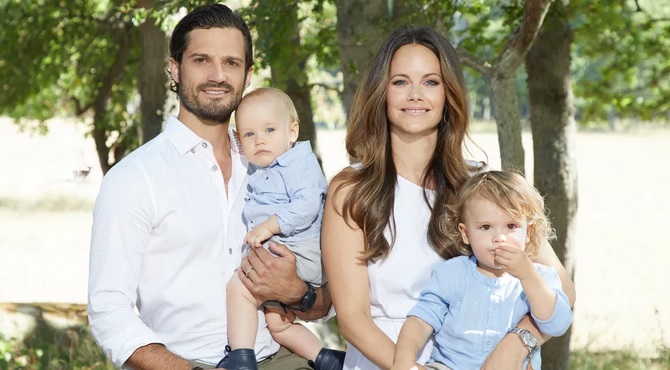
NordenBladet – Prince Carl Philip and Princess Sofia visited their dukedom of Värmland on Wednesday to see how the county has been impacted by the COVID-19 pandemic. The couple posted about their visit on their personal Instagram account, writing, “What a day we had in Värmland today!”
They continued, “Everyone we visited has been affected by the pandemic in one way or another. And it’s not over yet; now we have to power up to counteract further spread and the consequences we see at all levels.”
The royal couple’s visit began with a meeting with healthcare professionals to hear how the pandemic has affected healthcare in the county. Carl Philip and Sofia heard from Tanja Ekegren, the County Administrative Board’s Chief of Staff, and Dr Ingemar Hallén, an infection control doctor with Region Värmland, about how their work has shifted in light of the pandemic and steps the medical community has taken to combat the coronavirus.
Carl Philip and Sofia then traveled to Central Hospital in Karlstad to see how the staff there has modified and prepared themselves to treat patients.
The couple shared on their Instagram account, “IVA Nurse Mia touched on her strong stories about how to never cease to constantly stop and show humanity towards all patients – even when it has been at its hardest.”
Next, the royal couple visited the Vikenkyrkan, where the parenting group ‘Outstanding Single’ meets. The couple described this single parenting group as one “where mothers and their children find community and support” and that “in times of isolation was also strong and uplifting.”
The Prince and Princess then visited Karlstad Innovation Park to meet with young entrepreneurs who have created a digital platform, Zimify, to curb loneliness in students. The couple also met with representatives from Ineq Solutions, who have created Buhobox, a “digital tool that will promote preventive work with student health in schools,” according to the Royal House.
The royal couple then travelled to the municipality of Sunne, with the first stop for lunch at Västra Ämtervik, where they dined at Kulinarika, a restaurant and vineyard. They heard how the pandemic has affected the company and food production and met with other representatives from the municipality.
The couple’s final stop was in Berättarladan, where they met with representatives from the Västanå Theatre. They learned how the pandemic has affected the arts community and were treated to a performance of ‘O, children of late times.’ They praised the Theatre as one with a “unique environment, creations and incredible performance.”
The Swedish Royal Family has made a plan to visit all of Sweden’s counties to see how citizens are dealing with the pandemic. Prince Carl Philip and Princess Sofia will next visit Dalarna – where Sofia grew up – on 19 November.
NordenBladet —Today, the Government decided to shorten the restriction on movement following border crossing, as well as the quarantine period of an individual who has had close contact with a person infected with the coronavirus, from 14 to 10 days.
Pursuant to the decision, the restriction on movement following border crossing will be shortened from 14 days to 10 days when arriving from a country with a high risk of infection. The opportunity to substitute the restriction on movement with two tests, the first of which will be taken immediately after arriving in Estonia, and the second no earlier than on the seventh day after receiving a negative result for the first test, will continue to remain in effect. If both test results have been negative, a person will be able to resume their normal life without waiting for the end of the 10-day isolation period. Specificities when travelling to Estonia from Latvia, Lithuania or Finland will also remain in effect.
In addition, the duration of quarantine for an individual who has had close contact with a person infected with the coronavirus will also shorten if they take a coronavirus test no earlier than on the 10th day, and the result thereof is negative or a doctor has deemed them not infectious. The 10-day period starts from the most recent close contact, which will be determined by the Health Board.
These amendments will specify the existing regulation and prescribe an exception under specific circumstances, pursuant to which, an individual, without whom the performance of a task of the State or local government would be impossible or seriously impaired, and who has had close contact with an infected person, is able to perform their task in urgent cases. An exception is also prescribed for a person who provides a vital service.
The amendments will enter into force as of tomorrow for all persons in quarantine and self-isolation, including those people for whom, as at tomorrow, a restriction on movement or quarantine is in effect.
Decisions of the Government are based on scientific research pursuant to which, about 95% of people exhibit symptoms of disease within 10 days of coming into contact with an infected person. Considering this, shortening the isolation period has been recommended by international organisations as well as the Estonian Society for Infectious Diseases, the scientific advisory board that advises the Government, and the Health Board. The isolation period has already been shortened by several European States, including Finland and Latvia.
The duration of quarantine applicable for a person diagnosed with COVID-19 does not change with the Decision of the Government.
NordenBladet — After a discussion in a cabinet meeting, the government decided to approve draft development plans for five areas and send them to the Riigikogu for discussion. After a discussion in the Riigikogu, the government must finally approve the development plans.
First, the government approved the draft youth development plan for the period of 2021–2035. The new development plan is a continuation strategy for the current youth development plan 2020, setting goals for the youth field for the next 15 years. Based on the goals, young people in all regions of Estonia must be able to live a healthy and fulfilling life. It is important to empower young people and change communities and the state so that Estonia would be the best environment for growth, living, and self-fulfilment.
Second, the government approved the draft education development plan for the period of 2021–2035. The general goal of the development plan is to ensure that the people of Estonia have knowledge, skills, and attitudes that enable them to fulfil themselves in their personal lives, work, and society, and to improve their livelihood in Estonia and promote global sustainable development.
Third, the government approved the draft Estonian language development plan for the period of 2021–2035. The general objective of the development plan is to ensure the vitality and function of the Estonian language as a primary language in every sphere of life in the Republic of Estonia, to guarantee everyone the right and opportunity to use the Estonian language, to preserve and strengthen the status and reputation of the Estonian language and Estonian cultural and information space, and to value knowledge of other languages.
Fourth, the government approved the draft development plan for research and development, innovation, and entrepreneurship for the period of 2021–2035. The aim of the development plan is to ensure that Estonian research, development, innovation, and entrepreneurship together increase the well-being of Estonian society and the productivity of the economy by offering competitive and sustainable solutions for the development needs of Estonia and the world.
Fifth, the government approved the draft internal security development plan for the period of 2020–2030. The overall goal of the development plan is to promote a secure society where people could contribute to the life of the community. The most important activities of the development plan include the following: creation of a preventive and safe living environment; prompt and professional assistance; secure internal security; efficient population management, and smart and innovative internal security. In order to achieve the objectives of the development plan, a draft programme for the periods of 2020–2023 and 2021–2024 has been prepared with a more detailed description of roles and expected results.