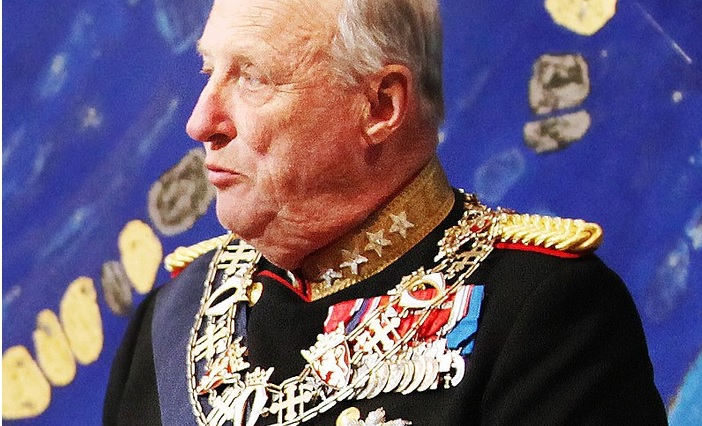
NordenBladet – In a new book about King Harald which will be published in Norway this autumn, the King talks about his views on the future of the Norwegian monarchy and the relationship he has with his own son, the future king and present Crown Prince of Norway.
When the king looks ahead to the future of the monarchy, it is with optimism. He has a close relationship with the heir to the throne. King Harald says in the book: “He has become a friend and co-worker. He asks me for advice and I get advice from him. The relationship has become closer and closer. He is a wise guy.”
King Harald continues: “It will go well with him when the time comes. It gives a good feeling to know that. I think my father was more worried than I am. I am so lucky that it is Crown Prince Haakon who will be Norway’s future. He has been with me all my time as King and has been involved all the time. Then he can take what he wants with him, and change what he wants when I am no longer here,”
Crown Prince Haakon is a respected man in Norway. The Norwegian monarchy is among the strongest in the world with approval ratings of over 80% in polls since King Harald took over the throne from his father, King Olav V, in 1991. In recent years, the Crown Prince has been given a number of new tasks and during the King’s illness, as now, he rules the country as Crown Prince Regent.
On 2 October this year Crown Prince Haakon, for the first time, oversaw the solemn and traditional opening of the Norwegian Parliament. It was the first time a Crown Prince had carried out this duty in thirty years. Norway has never had any tradition of abdication and the idea is not popular, either among the people or the royals. In previous interviews, King Harald has made it explicitly clear that he believes it is completely inappropriate for him to abdicate.
Featured image: King Harald (Kenneth Hætta, Wikipedia, CC BY-SA 2.0)
NordenBladet — Today, on the Finno-Ugric Day, President of the Riigikogu (Parliament of Estonia) Henn Põlluaas sent a video greeting to the Speakers of the Parliaments of Finland and Hungary. He pointed out that multiplicity of cultures had a decisive role in preserving and strengthening of civilizations.
Põlluaas underlined that the Finno-Ugric Day was an excellent example of the cultural and educational cooperation between Estonia, Finland, Hungary, and the Finno-Ugric peoples living in Russia “Let us strengthen the ties between the Finno-Ugric peoples and support each other both in troubles and in success,” the President of the Riigikogu said.
“It is very important to introduce our kindred nations and their concerns to the wider world and to strengthen their cultural self-awareness,” Põlluaas emphasised. “Multiplicity of cultures has a decisive role in preserving and strengthening of civilizations. We, the parliamentarians, have the special responsibility of providing a sustainable legal setting for this.”
Põlluaas recalled that this year Estonia was to host the VIII World Congress of Finno-Ugric Peoples. However, due to the global crisis caused by the COVID-19 pandemic, the Congress had to be postponed. He expressed hope that the Congress would take place next year in Tartu.
The tradition of introducing kindred peoples and their cultures began in 1931, but it was discontinued when Estonia was occupied. In 1988, this tradition was revived, and in March 2011, the Riigikogu adopted a resolution to celebrate the Finno-Ugric Day as a national holiday and a flag day in Estonia on the third weekend of October.
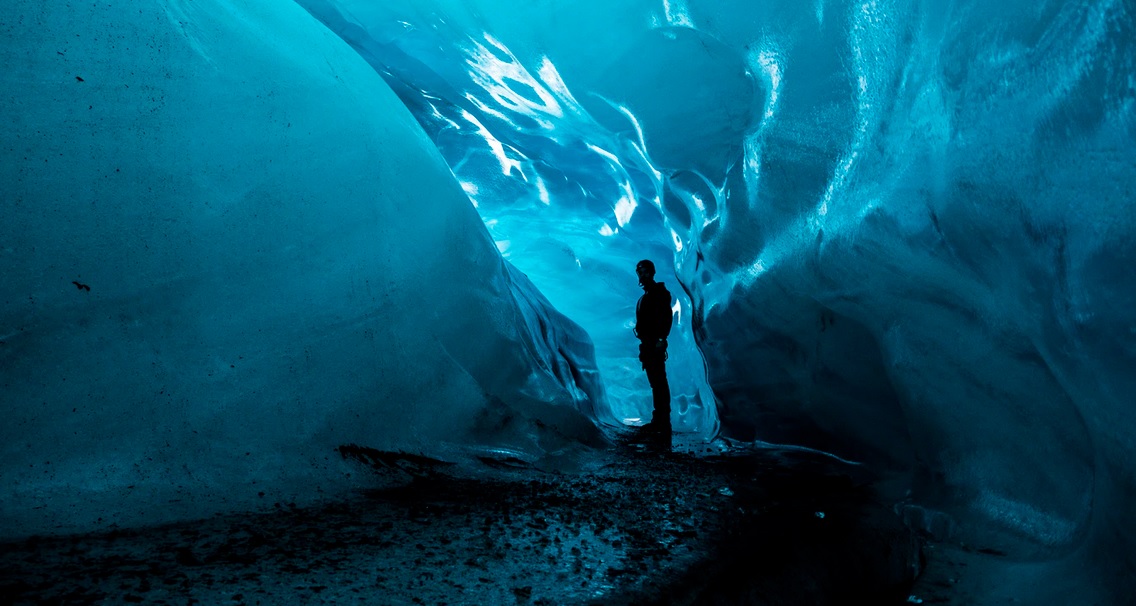
NordenBladet – A limited number of people will from now on be allowed to visit ice caves and to go glacier hiking within five areas in the southern part of Vatnajökull National Park, Morgunblaðið reports. The park received applications from 27 businesses specializing in such trips.
These applications have now been processed and the businesses have each been allocated a tourist quota within the five areas.
This is the first time that access to a natural resource such as glaciers is being controlled in this way, states Magnús Guðmundsson, manager of the park.
The goal of the policy is to protect nature by reducing tourist traffic in these areas. Magnús states that at times, far too many tourists have flocked to some of these areas, and that there has been next to no attempt to limit their numbers.
At present, contracts with the businesses which were allocated quotas are being finalized. “This has begun smoothly,” Magnús states. “I believe most people are pleased this process has started.”
Included in the plan are visits to ice caves and glacier hikes in five areas in the glaciers Breiðamerkurjökull – east and west side, Falljökull/Virkisjökull, Skeiðarárjökull and Skálafellsjökull. The maximum number of tourists allowed in these five areas a day is 650, 650, 1,000, 500 and 500, respectively.
Appplications were received for considerably higher numbers of tourists for the first three areas, or 1,564, 1,481 and 1,273, respectively, while applications for Skeiðarárjökull and Skálafellsjökul were below the maximum number.
This is a complicated and exciting project, Magnús states, which focuses on many aspects, including tourist safety.
On July 5, Vatnajökull National Park was inscribed on UNESCO’s World Heritage List, which includes landmarks regarded to have outstanding universal value in terms of culture, nature, or other areas, making them part of the world’s heritage.
Featured image: Vatnajökull National Park, Iceland (Davide Cantelli / Unsplash.com)
NordenBladet – One death from COVID-19 was announced on the website of Landspítali National University Hospital today – the first such death in Iceland during this wave of the disease. Ten people died during the first wave of the disease in Iceland in the spring. Chief Epidemiologist Þórólfur Guðnason stresses that this is not a harmless flu, and he expects news of the death to be a stark reminder to people of its severity.
He tells mbl.is that the latest COVID-19 figures in Iceland may be an indication this wave of the pandemic is beginning to subside. The ratio of people who are already in quarantine when diagnosed is slightly increasing, giving reason for optimism.
There were 67 new domestic cases confirmed in Iceland yesterday, and 67 percent of the people diagnosed were already in quarantine.
Although this wave of the pandemic may be subsiding, Þórólfur stresses it is essential for people to continue their disease prevention efforts, since the situation can still go either way.
Proportionally, as many people require hospitalization during this wave of the pandemic as during the first wave in the spring, although fewer people have required intensive care.
Þórólfur is not sure what decision authorities will make with regard to his most recent memo to the minister of health on disease prevention measures. Current restrictions will expire Monday, but Þórólfur finds it likely that similar restrictions will remain in effect for another two weeks.
NordenBladet – What does truly healthy and sustainable food look like on a plate in the Nordic Region, Canada, Indonesia or Brazil? A new interactive game launched today, on World Food Day, helps you find out. Using gamification of evidence and dietary guidelines, it shows how food might be the best place to start if you want to help make the planet healthier. Let’s play!
The Game FOOD CHOICES FOR A HEALTHY PLANET, supported by Food at Google, was produced by a food-system solutions accelerator that involved nutrition and climate change experts from across the globe. The Nordic Food Policy Lab of the Nordic Council of Ministers was invited to join as one of the co-creators in this innovative collaboration process.
Changing eating habits through gamification
The Nordic Region, with its renowned Nordic Nutrition Recommendations, ambitious food policies and sustainable food culture is featured as one of four leading countries and regions. The other regions are Brazil (emphasising local and whole foods instead of ultra-processed foods); Canada (plant-forward focus), and Indonesia (emphasising good nutrition for children from a developing-country perspective). Marie Persson, project manager of Nordic Food Policy Lab, was one of the game architects:
“The game is intended as a playful way for people to engage with the critical issue of sustainable food. Using gamification together with a strong backbone of evidence, Food Choices for a Healthy Planet allows people to experience and learn how choices can be tweaked to achieve better outcomes. It shows what a sustainable and healthy diet looks like in different food-culture contexts, building on – but going beyond – traditional ways of communicating dietary guidelines.”
An accelerator process to co-create
Instead of using a prescriptive approach and offering a single perspective for global diets that could be translated to fit the needs of individual countries, the group developed a country-first perspective, recognising that each country has distinct cultural, economic, historical, and agricultural capacities to feed itself.
“The Food Choices for a Healthy Planet game is a great example of what can be achieved in a short span of time when people from different sectors and with varied areas of expertise, come together in an accelerator process to co-create against a shared ambition. The game combines topical and regional/country expertise, technology and playfulness and the end result is a novel way of communicating food, nutrition and sustainability information underpinned by dietary guidelines. We hope it will inspire accelerated action for sustainable and healthy diets at the industry, policy and individual level,” says Chavanne Hanson, Food Choice Architecture and Nutrition Manager, Google
Open source and free for anyone to access, the goal is for the game to be used by educators, students and others looking to take action through food. The resource can also help inspire policymakers by providing them with new ways to communicate dietary advice for health and sustainability. Ultimately, it is hoped that more country diets and more data will be added.
Let’s play!
Challenge yourself and see the impact of your everyday food choices.
NordenBladet – This year, the Royal families of Europe have faced, along with all of us, a new type of crisis, a global pandemic. In a new book about King Harald which will be published in Norway this autumn, the King shares his views on the ongoing coronavirus pandemic and how this has affected him and the royal family. King Harald and Queen Sonja were themselves quarantined after a state visit to Jordan in March.
King Harald says: “We also noticed the longing to hug those we love. We were not allowed to do that either. I myself have been so isolated that I have not been afraid of being infected. Nevertheless, you never know. I am probably not someone who walks around and is afraid of what might happen. It was still a challenging time. I am definitely in the risk group.”
From a life in quarantine at the royal winter residence “Kongsseteren”, King Harald led the Council of State by phone and gave a speech to the Norwegian people. He did so three days after the government had introduced the most drastic measures we have had in Norway in a time of peace.
The King states: “ I did my best to help keep the nation together. To emphasize how serious the situation was. At this point, I think there were many who did not realize that it was as serious as it actually was. As king, I underlined the seriousness the government had presented to us”.
Ahead of this year’s national day celebration on May 17th, there was uncertainty associated with the royal family’s plans. The children’s parade were cancelled, and people were asked not to travel to the Royal Palace but rather to stay at home as much as possible. Nevertheless, the royal family appeared on the Palace balcony and sang the national anthem. King Harald says about the day: “It was touching to stand there and sing the national anthem. We knew that the whole of Norway sang along from their homes. It was sung all over the country at the same time. It was not just us. This is the first time something like this has happened”.
Later that day, as a surprise, the royal couple and the crown prince couple went on a tour of the capital by open car. The King said: “We were sitting in an open car. It seemed as if people did not believe their own eyes. It was a little fun. It was a happy atmosphere. A very different way to meet people. When people could not come to us, we had to try to come to them. May 17, 2020 was a great day. We were very excited and it was very different. So it was a great experience.”
NordenBladet —President of the Riigikogu (Parliament of Estonia) Henn Põlluaas discussed bilateral relations with Finland, regional security and political situation in East Europe with Speaker of Eduskunta (Parliament of Finland) Anu Vehviläinen at a video conference today.
“If you live in such a geographical location as Estonia and Finland, who have a common eastern neighbour that behaves unpredictably, then the security issues are especially important,” Põlluaas said. In his opinion, it cannot be considered normal that even now, there is a war going on in the middle of Europe and a part of Ukraine is occupied.
At the video conference, the human rights situation in Belarus and the conflict that had broken out in Nagorno-Karabakh region were spoken about. Põlluaas underlined that, at the international level, it was very important for the Western countries to follow common sanctions policy and to cooperate in international organisations.
Põlluaas and Vehviläinen shared information and experiences of the work of their parliaments during the corona crisis. Põlluaas told his colleague about the possibilities of conducting telesittings of the Riigikogu and gave an overview of important bills that were being debated. The political situation and the coming elections in Estonia and Finland were also discussed.
Põlluaas congratulated his colleague on her appointment to office and invited her to visit Estonia when the corona threat was over. Vehviläinen has been the Speaker of the Parliament of Finland since June.
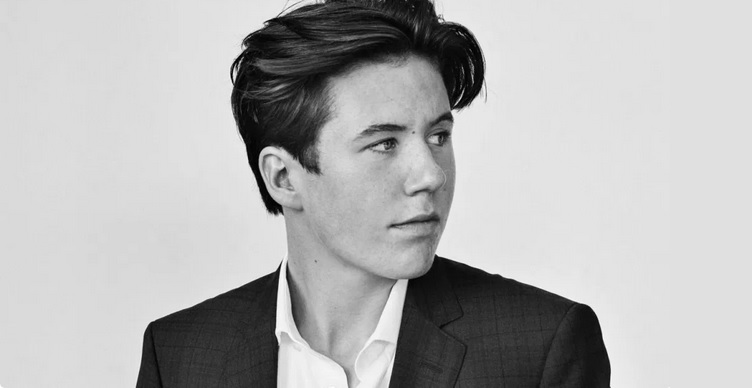
NordenBladet – The Danish Royal House has released four new official images to mark Prince Christian’s 15th birthday. The photos were taken by Franne Voigt who has taken many images of the family over the years.
The Prince bears a striking resemblance to his father, Crown Prince Frederik, in the portraits shared; however, his smile is very much like his mother, Crown Princess Mary.
Prince Christian, who is second in line to the Danish throne, will one day be the King of Denmark. He was born as Prince Christian Valdemar Henri John on 15 October 2005 as the first child of Crown Prince Frederik and Crown Princess Mary of Denmark. He was born at Rigshospitalet at 1.57 am. He has three younger siblings: Princess Isabella, Prince Vincent and Princess Josephine.
His given name Christian also follows tradition as Danish kings have had their names alternate between Frederik and Christian throughout the years. His middle name Henri is the French version and original name of his paternal grandfather, the now late Prince Henrik; additionally, it is the male form of his late maternal grandmother’s name (Henrietta Donaldson died when Crown Princess Mary was 25). The name John comes from his maternal grandfather.
Prince Christian was due to have his confirmation into the Church of Denmark this year; however, the COVID-19 pandemic has caused this to be postponed. It is expected to eventually take place at Chapel of Fredensborg Palace where his father and paternal grandmother, Queen Margrethe were each confirmed.
A look at Denmark’s future king as he turns 15
Prince Christian Valdemar Henri John came into the world on 15 October 2005 as the first child of Crown Prince Frederik and Crown Princess Mary of Denmark. He was born at Rigshospitalet at 1.57 am and has been second in line to the Danish throne since birth.
As the heir to the throne, a 21-gun salute marked his birth at noon and bonfires were lit in both Denmark and Australia – the latter of which is his mother’s home country. His first few days caused some worry for his parents, and he was hospitalised on 21 October due to neonatal jaundice. Photos of the unnamed prince were released that day that showed him with a yellow tint to his tiny hands and face. After blood tests and time under special coloured light rays, the newborn was cleared to go home that same day.
His christening took place on 21 January 2006 with Prince Joachim of Denmark, his paternal uncle; Jane Stephens, his maternal aunt; Crown Princess Victoria of Sweden; Crown Prince Haakon and Crown Princess Mette-Marit of Norway; Crown Prince Pavlos of Greece, his father’s first cousin; Jeppe Handwerk and Hamish Campbell, friends of his parents, serving as his godparents. Keeping with Danish royal tradition, his names were not announced until his christening took place.
His given name Christian also follows tradition as Danish kings have had their names alternate between Frederik and Christian throughout the years. His middle name Henri is the French version and original name of his paternal grandfather, the now late Prince Henrik; additionally, it is the male form of his late maternal grandmother’s name (Henrietta Donaldson died when Crown Princess Mary was 25). The name John comes from his maternal grandfather.
The Prince was the first Danish royal to attend nursery school and the first to attend a public state school – Tranegårdskolen – which he began in August 2011. He attends school there alongside his three siblings: Princess Isabella (b. 2007), Prince Vincent (b. 2011), and Princess Josephine (b. 2011).
He is fluent in Danish and his mother’s native English. He and his family alternate Christmases in Denmark and Australia so that the children get to spend as much time as possible with their maternal family.
Prince Christian was due to have his confirmation into the Church of Denmark this year; however, the COVID-19 pandemic has caused this to be postponed. It is expected to eventually take place at Chapel of Fredensborg Palace where his father and paternal grandmother, Queen Margrethe were each confirmed.
The Crown Prince Couple have worked hard to allow their children time to have a private life. Christian has accompanied his parents on some engagements, including a tour of Greenland, but the teenager has yet to make any type of public speech to the Danish public. It is expected that he will address the public in the coming years as he continues to prepare for his future role.
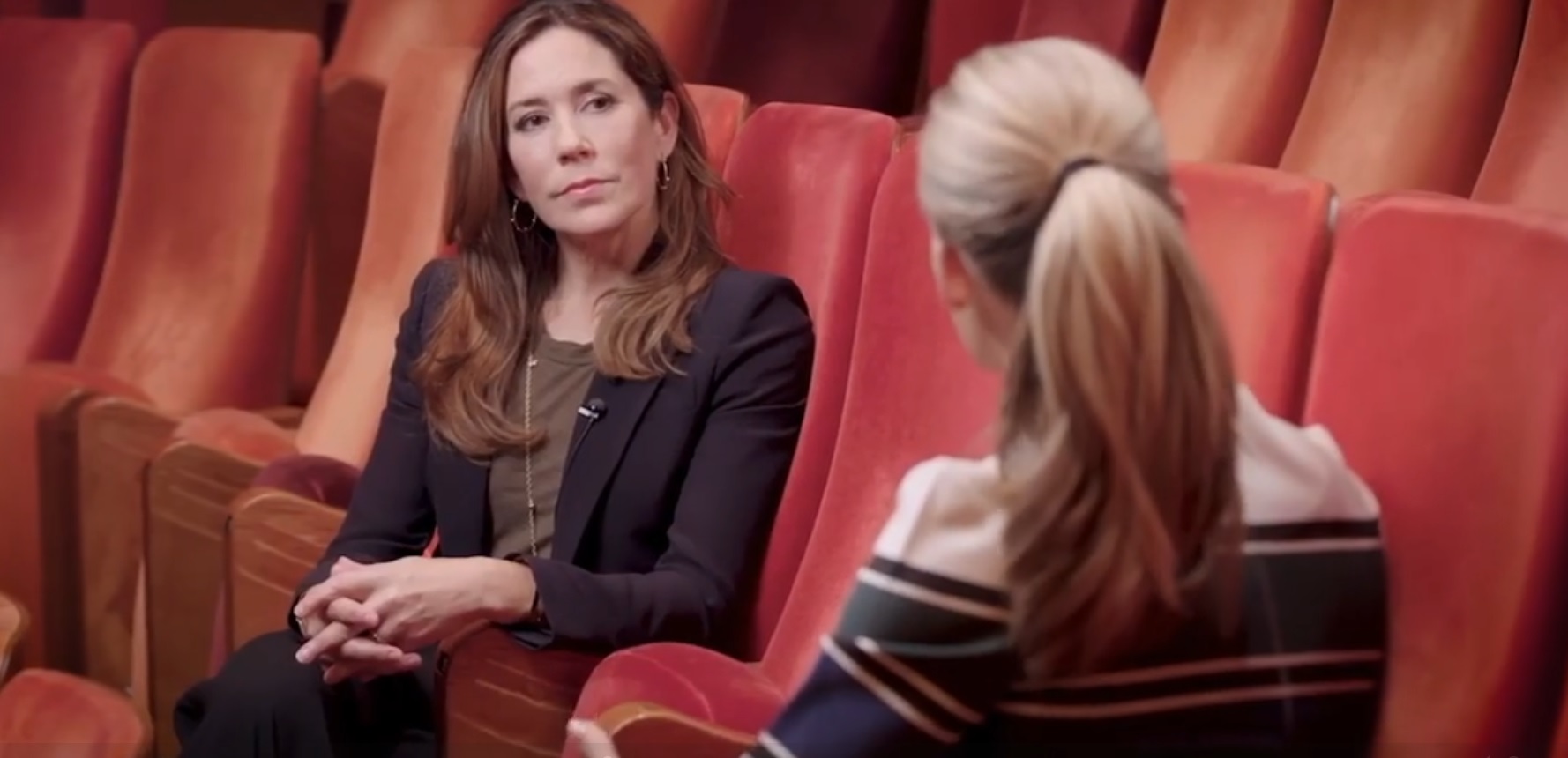
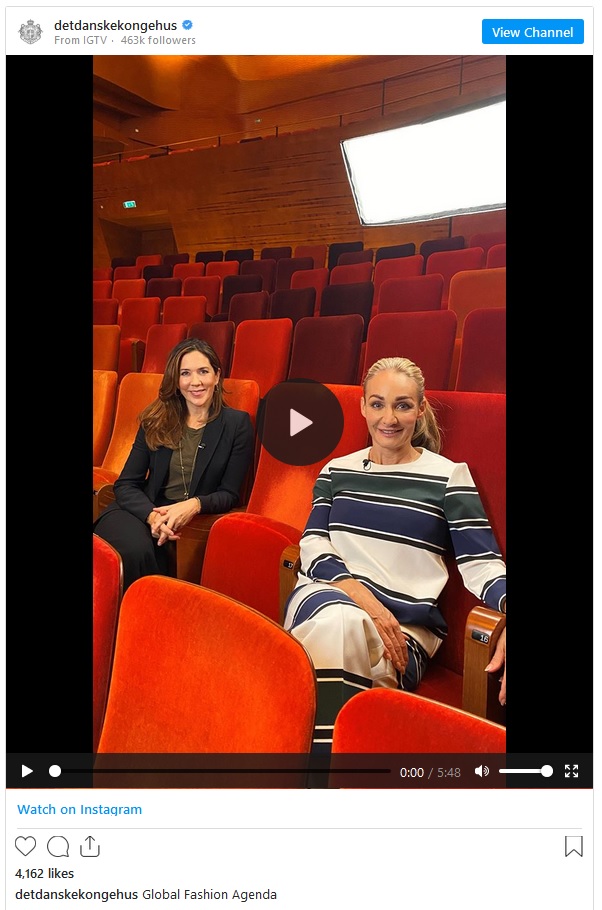
NordenBladet – Crown Princess Mary participated in the Copenhagen Fashion Summit’s virtual conference earlier this week, appearing in a video on the opening day to discuss sustainability in fashion.
Due to the pandemic, the organisers behind the Copenhagen Fashion Summit decided to host a virtual conference this fall. The conference, which met on Tuesday and Wednesday included a “hybrid of pre-produced premium digital content, live sessions and an online forum” that connected the “fashion industry with the world’s leading innovators to keep the sustainability agenda alive,” according to its website.
“It reflects the times we are living in right now. The worrying times. And it is sad because it’s so nice to meet people from all corners of the globe, to be able to hear everyone’s different reflections and great ideas and innovations, but we’ll continue to do that.
“We have to have respect for the time we’re in. we have to think creatively and innovatively to find ways to keep moving towards the goals of creating a sustainable fashion industry.”
Crown Princess Mary continued: “Even though our priorities have shifted to deal with COVID and manage the crisis, we have to continue to work collectively on achieving the goals we set before COVID.”
The theme of the 2020 Copenhagen Fashion Summit had been set as ‘Redesigning Value,’ though the theme was modified slightly to reflect the effects of the pandemic. “The worldwide pandemic is forcing our industry to undergo a dramatic transformation that is playing out in real-time,” the Summit’s website says, noting that the discussions would discuss how present and future realities will be affected by health and economics and need to navigate the “repercussions of which will be felt for years to come.”
“The fashion industry is a huge employer, and the majority of those employed are women,” Crown Princess Mary said when asked about how the fashion industry has been affected by COVID-19, and how it provides income and financial sustainability to women all over the world.
Crown Princess Mary also spoke of the importance of finding value in clothing, especially in terms of clothing that will last and be sustainably produced. “We’re seeing a much greater market for second-hand, for recycled, for up-cycled, and I’m thinking that this is another value because it tells another history of the product,” she said, talking about how people are viewing this as a way to be environmentally friendly with their clothing.
Featured image: Crown Princess Mary is patron of the Global Fashion Agenda, a partner of the Copenhagen Fashion Summit. She has spoken at every Summit since 2009. (DET DANSKE KONGEHUS)
NordenBladet – Iceland has long been known for its Naming Committee – a committee of three people and three substitutes whose role it is to determine which personal names are to be approved and which ones rejected in the country.
Current law requires that every name be able to have an Icelandic genitive ending, or that it have earned a tradition in the Icelandic language. Every name must be adaptable to the structure of the Icelandic language. It must be spelled according to Icelandic spelling rules, unless there is a tradition for writing it differently. Finally, a person’s name must not be such that it could cause its bearer embarrassment.
On Monday, Minister of Justice Áslaug Arna Sigurbjörnsdóttir presented a bill in Alþingi, the Icelandic parliament, where she proposed drastic changes to laws regarding personal names, including the abolishment of the Naming Committee.
If approved, Áslaug states, the bill would give people the liberty to carry any name they choose, adopt a new family name, and have as many names as they wish. Current law limits the number of given names to three.
Áslaug admits that opinions on the bill vary within her parliamentary group and among the other parties in government, but she describes the bill as a middle-of-the-road approach.
To give you examples of verdicts reached by the Naming Committee, the name Lucifer was rejected by its members in November of last year.The opposition was justified as follows:
“Since the name Lucifer is one of the devil’s names, the Naming Committee believes it could cause the bearer embarrassment. Besides, the spelling of the name Lucifer cannot be considered in accordance with the general spelling rules of the Icelandic language, since the letter c is not part of the Icelandic alphabet.”
In addition, the woman’s name Kona, meaning woman, was rejected by the committee in May of last year.
This drew attention, since critiques pointed out that there is a long tradition of men’s names in the Icelandic language such as Karl, Sveinn, and even Drengur, meaning man, young man, and boy, respectively.