NordenBladet – New data from Statistics Estonia shows life expectancy at birth in 2019 was 74.4 years for males and 82.8 years for females. Men and women are expected to live 70 percent or more of their life in good health but this below the European Union average.
Life expectancy has increased for both sexes and slightly more for males. However, men are expected to live disability-free for 54.1 years and women for 57.6 years.
Ethel Maasing, leading analyst at Statistics Estonia, said the number of healthy life years increased compared to the year before and there was a positive change in rural areas in particular.
“Compared to 2018, when the indicator of healthy life years dropped to the level seen a decade earlier, Estonian men and women lived healthier in 2019. Males live 72.7 percent of their life in good health and females 70 percent,” she said.
Life expectancy has shown a positive trend for the past 20 years. Last year, female life expectancy increased slightly slower, by a third of a year, than male life expectancy which grew to half a year.
Male life expectancy has reached the level of female life expectancy in 1995. The gap between female and male life expectancy is smallest – at eight years – for people with higher education.
Compared to a decade ago, male life expectancy has increased by three and a half years and female life expectancy by slightly more than two years.
“At that time, it was predicted that women would live almost 10 years longer than men, but by now, the gap has narrowed to eight and a half years. However, both men and women enjoy the same number of healthy life years as ten years earlier. There have been increases and falls over the years, but in the longer term, the indicator has been stable,” explained Maasing.
Life expectancy depends on many factors, the most important of these being the environment, accessibility of healthcare services, safety at work, living standard and health consciousness.
The shorter male life expectancy is not surprising as men are more prone to risk-taking and have a greater share of physically demanding jobs or those posing more risk to health. Among men, there are also more of those who have unhealthy life styles such as higher alcohol consumption and smoking.
According to 2018 data, the average life expectancy for women in Europe was 83.6 years and for men 78.3 years.
Female life expectancy was highest in Spain (86.3) and lowest in Serbia (78.4). Male life expectancy was highest in Switzerland (81.9) and lowest in Latvia (70.1).
Compared to the European Union average, the indicator for males in Estonia is lower by more than four years. Life expectancy for females in Estonia is about a year below the European Union average.
The indicator of healthy life years for women was highest in Malta (73.4) and lowest in Latvia (53.7), and for men, it was highest in Sweden (73.7) and lowest in Latvia (51).
Considering the European Union average, the indicator of healthy life years for males in Estonia is worse than the indicator for females: for males, it is lower by ten years. The indicator for females is eight years below the European average.
NordenBladet – The City of Tartu is to enter into an agreement with AS Alexela for the purchase of electricity for street lighting and the city’s agencies and will become a city consuming only green electricity from next year..
In 2015, Tartu city council established an action plan for the city’s sustainable energy economy, the strategic goal of which is to reduce carbon dioxide emissions related to energy consumption. Based on the goal, the city will enter into an agreement to purchase electricity that will increase the share of green electricity to one hundred percent from next year.
Deputy Mayor Raimond Tamm said: “By transitioning fully to green electricity, the City of Tartu is taking a very long step towards becoming a carbon-neutral local government, because electricity from non-renewable sources accounts for the largest share of our current carbon emissions. The next big challenge for us is to introduce renewable fuels in connection with important services that the city procures, such as waste transport and street maintenance, but the possibility of this transition still needs to be analyzed.”
The contract will be concluded for the purchase of electricity for street lighting and city institutions as well as kindergartens and schools with a total volume of 19,700 MWh per year. Electricity will be purchased in 2021-2022 at the stock exchange price, AS Alexela offered a margin of 0.84 euros per MWh. Electricity supply will start on January 1.
In recent years, Tartu has taken steps to move towards a more sustainable living environment. Today, only renewable energy is used in Tartu’s public transport – all city buses run on biogas and the bicycles of the smart bike share system use green electricity.
In street lighting, energy-intensive sodium lamps are gradually being replaced by energy-efficient LED lamps. City-owned buildings use predominantly district heating, which is produced from renewable energy sources in the extent of approximately 85 percent.
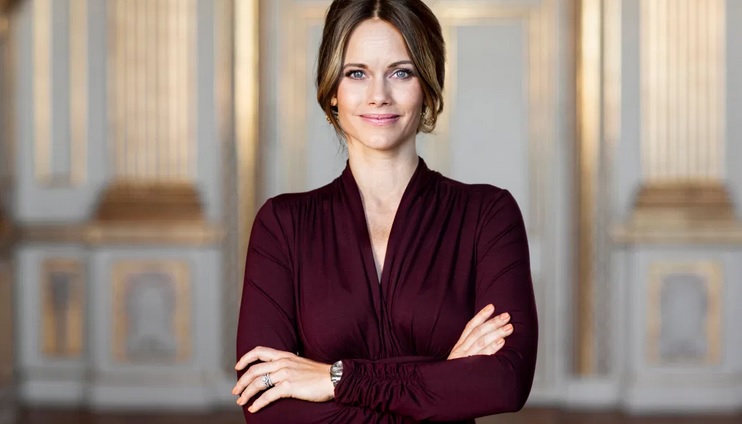
NordenBladet – Sweden’s Princess Sofia is to continue working in healthcare through the autumn, the Royal Court has confirmed. The 35-year-old Princess began helping at Sophiahemmet hospital in Stockholm after undergoing training at Sophiahemmet University in an effort to help out during the ongoing pandemic. She helps with cleaning and does shifts in the kitchen.
The Royal Court’s Head of Information, Margareta Thorgren, confirmed to Expressen that Sofia would continue this work in the autumn. She said: “Princess Sofia continues her work at Sophiahemmet and will start her part-time job again in September. She is very much looking forward to it.”
Prince Carl Philip will be undertaking royal duties.
Princess Sofia is the Honorary Chair of Sophiahemmet and has called her work there during the pandemic “extremely rewarding.”
This summer, she gave an online speech about her work and said: “The last few months have been tough for very many, not least in healthcare. All efforts have been needed, and I know that several of you have gone in and supported in different parts of healthcare. I, myself, got an opportunity to come in and work at Sophiahemmet and still do. In fact, with some of you.”
Sofia added: “But to see healthcare from the inside in this way, to meet patients myself, and to see safe, well-trained nurses ‘in action,’ it is rare that I have been so impressed.”
Featured image: Princess Sofia (Linda Broström, The Royal Court of Sweden)
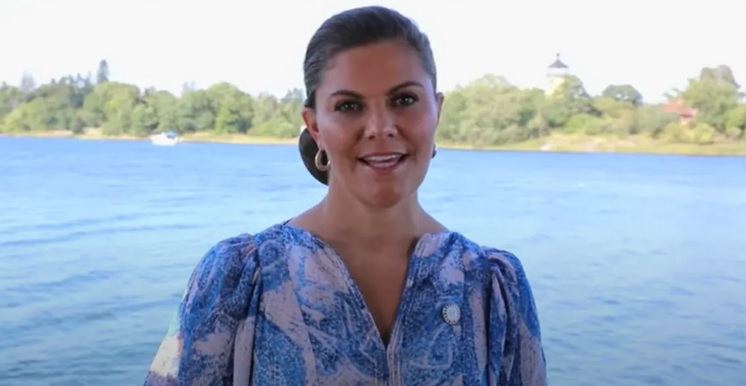
NordenBladet – Young people making a difference for the environment were honoured by “a very proud patron” when Crown Princess Victoria delivered a special video message for the Stockholm Junior Water Prize 2020 on Tuesday (25.08.2020).
Participants from about 30 countries took part in the competition, an international science prize for young people aged 15 through 20. The digital award ceremony was held in conjunction with World Water Week.
“This past half-year during the Covid-19 pandemic, I have spent a lot of time reminding my children to wash their hands,” Crown Princess Victoria said in her speech. “At the same time around the world, 785 million people do not have access to clean water. Nor are three billion people able to wash their hands with soap and water.”
“This is just one example of how access to water is brutally unequal,” Victoria continued. “Indeed, when it comes to water, we as a world face some major challenges. There may be too little water, too dirty, or too much – all causes of disease, poverty and conflict.”
This year’s winners of the Stockholm Junior Water Prize were announced by the Crown Princess as Hiroki Matsuhashi and Takuma Miyaki from Japan. The duo “came up with a creative solution to combat soil erosion,” according to the Swedish Royal Court.
Crown Princess Victoria praised the drive of the winners as well as all the finalists she’s met during her time working with the Prize, saying she was “not at all surprised that many ideas that started as Stockholm Junior Water Prize projects have proved to be important innovations, changing many lives for the better.”
“Over the years, as patron of the Stockholm Junior Water Prize, I have had the privilege of meeting many young finalists and winners from all over the world,” Victoria, who has served as patron of the Prize since 1994, said. “I always cherish those meetings because they fill me with hope. Hope that when bright young minds come together, even the most complicated problems can be solved.”
World Water Week 2020 is being held digitally this week from 24-28 August with the title “WWWeek At Home.” Organised by the Stockholm International Water Institute, the event welcomes experts, decision-makers, and innovators from across the globe to discuss water-related issues.
Featured image: Crown Princess Victoria of Sweden (Screenshot/YouTube/Kungahuset)
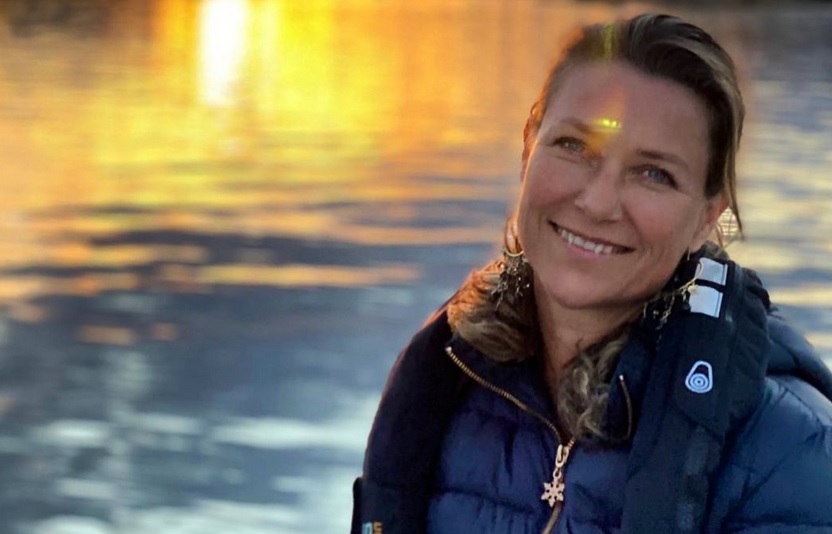
NordenBladet – Princess Märtha Louise of Norway has revealed that she’s gone through some difficult days as of late in a post on her Instagram account.
The Princess shared a photo on Monday, 24 August from her summer holiday in Lofoten, Norway, with her parents, children, brother and his family.
“Some days are better than others – and I have to admit I have had some really bad days lately. Some times it all just feels too much and overwhelming, and I tend to go into a pit of despair, self pity and feeling like a victim in all areas of life. No energy – literally – depression creeping in,” she revealed.
In the photo on her post, she is standing and smiling on a cliff. She continued in her post: “But then suddenly, after climbing this loooong [sic] hill, there is a shift. A friend comes over and turns everything around, and you suddenly see the beauty around you again and recognise that you are actually standing on a mountain top in front of this spectacular view. The grit and grind has been the trip up to the top, and suddenly you acknowledge the transformation.”
Princess Märtha Louise then offered advice to others who may be going through similar struggles: “We can all make this shift like the butterfly coming out of its cocoon. The great thing is to have friends with the spiritual powers to really see you and move the energy so you may make the shift… Let’s create some magic together. Earth magic.”
She concluded her post with hashtags about women supporting other women.
Featured image: Princess Märtha Louise of Norway (Instagram/@iam_marthalouise)
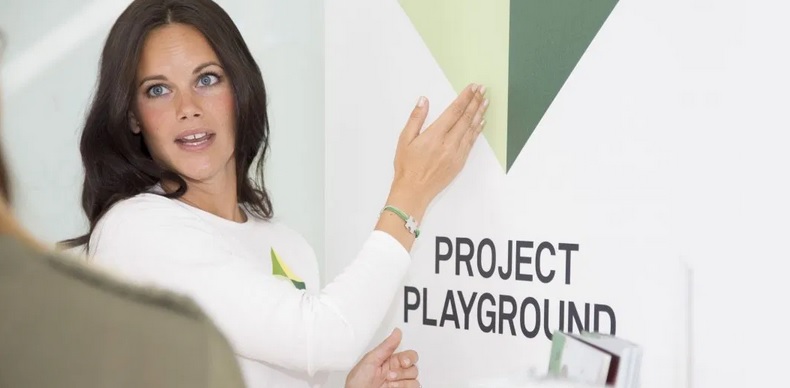
NordenBladet – An upcoming documentary will look at Project Playground, a charitable organisation founded by Princess Sofia of Sweden.
“We followed Princess Sofia’s work on-site in both South Africa and Sweden where we got to meet some of the children who visit Project Playground and got to take part in their everyday life,” said documentary host Renée Nyberg to Swedish newspaper Expressen.
Project Playground was founded by Princess Sofia—then Sofia Hellqvist—and her friend Frida Vesterberg in 2010. According to the charity’s official website, the two created Project Playground because they “felt there was a need to focus on the individual’s development in combination with a holistic perspective about the child and his or her unique personal needs, in order to create a sustainable and long-term change at both individual and system level.”
Project Playground works in “established in areas that are systematically socially and economically deprived and in a society with an absent support system,” the website continues, noting that the children who are served by the charity have grown up under the legacy of Apartheid. “Many of our children come from broken and abusive families, where they are victims of neglect, various types of abuse, malnutrition and lack positive role models,” the website adds.
“What struck me most about this trip is Sofia and Frida’s personal commitment to the children, that they know every single kid and follow them until they are adults,” Nyberg said.
Princess Sofia continues to be involved in Project Playground while continuing with her royal duties. In addition to her work with the charity, Nyberg notes that she also discussed her life for the programme.
“The Princess and I talked about, among other things, the great contrasts in her life and about prejudices about her background,” Nyberg continued.
The documentary, ‘Princess Sofia – Project Playground,’ will air on TV4 on 4 September.
Featured image: Princess Sofia of Sweden (Project Playground)
NordenBladet – “I have no idea, I don’t know what to do.” — “I am not a creative person.” — “I cannot find a solution to this situation.” Does all that sound familiar? Absolutely. But the good news is that, in fact, we are all creative. Creativity is a set of qualities and skills that allow you to create original solutions, find previously unnoticed connections and discover something completely new.
Have you ever wished you could draw, paint, write poetry and books, create music? When someone instills in themselves that they are not creative, it becomes a limiting belief and turns into a reality. Creativity exists in all of us, but we need to work hard to stimulate it. Make developing creativity a habit!
Here are some useful and good tips on how to encourage and develop the creativity of yourself, your partner or your children:
1. Make a plan
Setting up the exact problem is half the battle. Creative techniques can be broadly divided into four categories: “icebreakers” to stimulate creative thinking; problem definition, idea generation and idea evaluation techniques. The first category includes short exercises or games that help you tune in to the creative wave — yes, the brain also needs to be get ready for training. For example, you can ask to finish a drawing that is in progress, play with words, or solve a puzzle. These are often fun short exercises that help to create a friendly and open atmosphere, and you will definitely smile when implementing “icebreakers”. It has long been known that positive emotions stimulate creativity.
Problem-finding techniques have unfoundedly been less widely used. People often start generating ideas too hastily. Instead, you need to first make sure that the problem you are looking for has been correctly identified. An unambiguously and precisely defined problem is the basis for the application of creativity. For example, problem-solving techniques include back-and-forth planning, which analyzes how the solution to a particular problem helps to solve each subsequent higher-level problem, asking the “why” question until the root cause is identified, and an idea of the situation where the problem is left unresolved. There are other techniques.
However, most of the creative techniques are aimed at generating ideas, because it is the abundance of ideas that you want to achieve. The application of idea generation techniques involves divergent thinking, where the goal is to achieve a large number of ideas. It is important to refrain from evaluating ideas during their generation: it is like driving a car with the handbrake on — it drives, but with difficulty. Therefore, the generation and evaluation of ideas must be kept separate.
2. Learn creativity
If you want to be more creative, you should learn creativity in the same way as all other things. Read biographies of creative and innovative people, such as Elon Musk (CEO of Tesla) or Richard Branson (founder of the Virgin Group). In addition, you may want to read books on creative thinking and various techniques on how to improve it. A good book is, for example, “Big Magic” written by Elizabeth Gilbert. She has also written many other books, the most famous being “Eat, Pray, Love”. Watching TED or TEDX videos will definitely have a positive impact. These are available at www.ted.com. There you will find thousands of good presentations made by world-renowned experts in their field. Many of them focus on creativity and innovation.
3. Surround yourself with creative people
When you are with people who think creatively, you become more creative yourself.
4. Play
Creativity is unleashed only when you have fun! Experimenting, trying new things and carefree playfulness help your imagination to run freely. Do something that will make you happy: jump on a trampoline, swing, play board games, watch a comedy, sing karaoke or play with colours for fun. You will soon feel your inner child wake up and will notice you are more creative.
5. Take time for yourself
If you are constantly in action, but do everything to others and forget about yourself, it is impossible to be creative. Start by dedicating at least 30 minutes every day only to yourself by being alone and doing the things you really enjoy. For example, try drawing what you see in your window, or read a good book, or just play with your cat. It sends a signal to your brain that you are worth enjoying the great things life has to offer, your self-confidence grows, and it also gives you the courage to express your creativity.
6. Move
Be active! Walk around the house or garden, backwards, go for a swim, visit a new exhibition or sit in your favorite café in a different place than usually. Moving in a new way and making small changes to your daily routine encourages your brain to create new connections, helps you see things from a different angle, and makes you feel safer about change. As you move, your body begins to produce endorphins that make you happier — don’t hold yourself back, let life move with you! Movement brings change and it means that you are close to fulfilling your dreams.
7. Communicate
Spend time with people who support your creativity. At a time when you are encouraging your inner child to come out and be playful, you need playmates, not those who are holding you back. Spend time with those you feel comfortable with, not with those who are closed and skeptical. Choose those who say, “You look great in your cool brightly coloured shirt!”, and not those who ask, “Why are you wearing this weird blouse?” It’s okay if you don’t have supportive friends at first, because the most important thing is that you know what you want and feel that you are on the right track. Start alone and you will see that soon you will meet nice people with the same interests — similarities attract! Creativity needs a safe and positive feeling. This means that you have to acknowledge and praise yourself when something comes out well.
8. Set a specific goal for yourself
Your brain likes clear signals. Therefore, think what is fun for you, what clothes you look great in, what would be your dream home and the perfect job. Cut out pictures, take photos and write what you like. Arrange these pictures as a dream collage for yourself and hang it where you can see it as often as possible. If you are confident in your desires, your creativity finds the opportunities and energy needed to manifest them in your life. Visualization is a very powerful way to create, so be as specific as possible about what you want.
NordenBladet – “Analyzing recent scientific discoveries, it can be said that love is the only medicine that heals. Researchers can confirm with certainty that life is not possible without love and that lack of love is the cause of all diseases and problems,” says Ellen Tõemeel on the website of the Institute of Holistic Therapy.
All indigenous peoples knew about the healing power of love. Legends, myths and fairy tales are laced with wisdom and tell about the power of love. The strongest healing power is attributed to unconditional maternal love — it is the purest form of love. Folk wisdom from ancient times also speaks of the healing power of love. In addition to the use of natural medicinal substances, the healing power of shamans and witches can largely be attributed to their unwavering faith and loving attention to the sick. Today, it is called the placebo effect — a person’s belief in a method of treatment, and that they will be healed, is what heals them. It is estimated that nearly a third of recoveries occur due to the placebo effect.
Today’s scientists have observed and studied love on both a physical and mental level. Important discoveries about the state of love have been made in a wide variety of scientific fields. The nature and effects of love have been studied by physicists, chemists, biologists, psychologists, psychiatrists, neurologists and cardiologists.
Here are recent revolutionary discoveries about love:
1. Love is the most powerful stimulator of the immune system. From the point of view of healing, the existence of love both inside and around the sick is extremely important. In a loving atmosphere, biochemical processes start in the body, which stimulate healing. The prospects for the recovery of a positive-minded person are quite different from those of a desperate patient. The link between mental disorders and physical illnesses has been scientifically proven: for example, depressed people often have cardiovascular diseases. In addition to traditional therapies, the therapeutic effects of love have also been studied and applied to the treatment of patients with eating disorders.
2. Lack of physical proximity and touch has a devastating effect on the nervous system. Scientific observations have shown that the spinal cord of children who do not experience sufficient physical intimacy withers. In an environment with lack of love, one’s ability to be receptive to oneself and others, and to experience feelings, decreases. A common symptom is mental disorders, which can culminate in chronic physical and mental conditions. In more severe cases it results in psychosis or death.
Cultures where children are shown physical affection are more peaceful. A child who is shown physical affection experiences approval on both a physical and mental level. Positive recognition encourages a child to continue discovering, and their innate potential can be revealed. A child who has received physical affection becomes a bolder, more intelligent and empathetic person than a child whose life lacks positive and appreciative physical contact.
3. For the subconscious that controls 95–99% of our lives, love, food, and information are almost indistinguishable. This is due to the fact that during the formation of the basic patterns of the subconscious, these three all come from one source — the mother. It helps to explain a lot of people’s painful conditions and symptoms. A person suffering from a lack of love may interpret this as a feeling of hunger. The result is so-called emotional eating, where one tries in vain to fill the emotional void within themselves with food. Like overeating, there is an over-consumption of information. People feel a constant hunger for information and consume everything that television, the media and the internet offer to alleviate it. By the end of the day, however, they experience dullness, exhaustion, and feel empty inside. In either case, it is necessary to bring much more love into a person’s life in order to finally eradicate hunger.
4. The amount of love is directly related to a person’s daily thoughts, feelings, behavior and choices. This amount can be influenced by everyone with their consciousness. It does not require effort but will and focus. Accordingly, it is very important to realize that the source of sought-after love is always within the seeker, not somewhere outside. We have the ability to create a loving environment by offering love to others as well as to ourselves. Both sharing and receiving love increase the amount of love in a person’s life.
NordenBladet —At the extraordinary sitting today, the Riigikogu passed the Statement of the Riigikogu “In Support of Democracy and Civil Society in Belarus”, submitted by 88 members of the Riigikogu.
Full text of the statement:
“The Riigikogu expresses its support to the people of Belarus in their fight for a free, democratic, and dignified future.
The Riigikogu promotes democracy, human rights and free elections in Belarus, applauds the courage of the people of Belarus to take a stand to defend their inalienable human and citizens’ rights, and expresses the solidarity of the people of Estonia with the people of Belarus.
The Riigikogu does not recognise the results of the 9 August 2020 presidential elections in Belarus, because these were not free, fair, or democratic.
The Riigikogu condemns any use of force against peaceful demonstrators, and calls on the authorities of Belarus to immediately free all the individuals arrested for political reasons.
The Riigikogu calls for the organisation of free, fair, and democratic elections at the earliest opportunity, under the supervision of the Organization for Security and Co-operation in Europe (OSCE) and other international organisations.
The Riigikogu urges the UN Member States and their parliaments to support the sovereignty and territorial integrity of Belarus and to condemn any attempts to interfere with the right of the people of Belarus to free and democratic elections.
The Riigikogu refers to its Statement of 21 February 2006, which expresses concern for the situation in Belarus and calls attention to the fact that the long-term violation of human rights and freedoms has led the Belarus society into an impasse that can only be escaped by taking guidance from the clear will of the people.
The Riigikogu welcomes the common position of the European Union leaders, stressing the need for the European Union and its Member States to complement the sanctions with the development of a policy of long-term support for the civil society in Belarus.
The Riigikogu encourages the Government of the Republic to continue active international cooperation on all levels, and to support democracy, civil society, and free press in Belarus.”
During the debate, Anneli Ott (Centre Party), Anti Poolamets (Estonian Conservative People’s Party), Raimond Kaljulaid (unaffiliated MP), Keit Pentus-Rosimannus (Reform Party), Mihhail Lotman (Isamaa), Aadu Must (Centre Party), and Minister of Foreign Affairs Urmas Reinsalu took the floor.
92 members of the Riigikogu voted in favour of the Statement (223 AE).
NordenBladet – The Finnish forestry giant UPM has announced that it will be closing its paper mill in Kaipola, the largest still in operation in Finland and the only mill to still produce newsprint paper inside the country. An estimated 450 jobs will be lost as a result of the closure.
In a press conference earlier today, UPM attributed a number of factors to the closure. Among these were rising labour costs, regulatory barriers, taxation issues, and the decreasing profitability of the paper mill itself.
Anu Ahola, UPM’s Director of Newsprint, also stressed the importance of “remaining competitive in a shrinking industry”. UPM also outlined further planned measures that could lead to a total of 1000 jobs being cut before the end of 2020.
The Kaipola paper mill is the only one in Finland that still produces newsprint paper. Many of the main newspapers in Finland source their paper directly from the Kaipola mill, meaning that they will have to switch suppliers once operations cease, as newsprint will have to be imported from abroad.
_________________________________
UPM-Kymmene Oyj is a Finnish forest industry company. UPM-Kymmene was formed by the merger of Kymmene Corporation with Repola Oy and its subsidiary United Paper Mills Ltd in 1996. UPM consists of six business areas: UPM Biorefining, UPM Energy, UPM Raflatac, UPM Specialty Papers, UPM Communication Papers and UPM Plywood. The Group employs around 18,700 people and it has production plants in 12 countries. UPM shares are listed on the NASDAQ OMX Helsinki stock exchange. UPM is the only paper company which is listed in the global Dow Jones Sustainability Index and the only forest industry company invited to the United Nations Global Compact LEAD sustainability leadership platform.
UPM is the owner and maintainer of the Verla mill, which has been a museum since 1972 and a UNESCO World Heritage Site since 1996.