NordenBladet – Tallinn Music Week, taking place August 27-30, is to be accompanied by a diverse art program, organizers say, with many exhibitions being free of charge, including the Tallinn Thursday gallery tour and installations at Port Noblessner.
Fotografiska gallery boasts a Moomin Museum pop-up shop, in homage to the Tove Jansson-created children’s characters.
The Estonian Contemporary Art Development Center (ECADC) is is curating the Tallinn Thursday special tour, where galleries including the Kai Art Center, the Estonian Art Academy (EKA) gallery and the Juhan Kuus Documentary Photo Center will offer extending opening hours as they bring new works by Estonian and international artists to the public, with a chance to meet some of the creatives.
As its name hints at, the program runs only on the Thursday, August 27, though many other events accompanying TMW start ahead of the main three-day event.
The Moomin Museum pop-up shop opens on Tuesday, August 18 and runs to August 30. The store is working in collaboration with the Moomin Museum in Tampere in the creatures’ home country of Finland, and will host original work from the characters’ creator, Tove Jansson (1914-2001).
The Kai Art Center’s showing includes previously unseen, by the public at least, works by acclaimed Estonian artist Kris Lemsalu Malone and Kyp Malone Lemsalu, together with a large-scale installation which had been exhibited earlier in the year at the KW Institute for Contemporary Art in Berlin.
The Temnikova & Kasela Gallery is presenting the solo exhibition “All Together” from Estonian conceptual painter Kaido Ole, in which Ole inserts himself into his newer paintings in the roles of an artist, a curator, an installer and a museum director, as well as in already-familiar guises.
Bank of Estonia museum joins Night of Museums interactive program
The Juhan Kuus Documentary Photo Centre at the Telliskivi Creative City is to show a retrospective of Estonian street photography in an expo entitled “Outlook – 40 years of Street Photography in Estonia”, a duo show by Kristel Schwede and Kadri Pettai.
Vaal Gallery on Tartu mnt 80l hosts “Shedding Skin”, which features drawings and an installation by Laura Põld and poetry and short prose by Piret Karro. Haus Gallery presents three exhibitions – Vano Allsalu’s solo show “Of Nature”, Elvi Rangell’s “Life is Good” and Elina Laurinen’s “Colour Appeals”.
International group exhibition “Grammar of Graphics” at EKA turns its attention to form, and their replication through various phrases. The Okapi gallery there is to host a pop-up art sales day, with a wide selection of works by contemporary photographic and graphic artists available for purchase. Tallinn Thursday brings many of the artists to Okapi, where they will be accompanied by a musical performance.
In addition to the Tallinn Thursday gallery tour, several other exhibitions will be open in the festival’s two main locations at Port Noblessner and Telliskivi Creative City.
Marianne Jõgi’s outdoor installation “Interaural Contour I” at the Noblessner Marina promotes both relaxation and learning. The immersive sculpture will be accompanied by composer Ülo Krigul’s sound piece “Water Itself”.
From Friday, 28 August, to Sunday, 30 August, light installations by EKA students will provide an enlightening night-time experience in the area between Krusenstern Square, Kai Art Center, PROTO Invention Factory and the Noblessner Foundry.
Telliskivi Creative City’s outdoor galley is to feature an exhibition entitled “Truth and Justice: Elders”, from Estonian avant-garde artist Raul Meel, in which the author interprets A.H. Tammsaare’s literary classic “Truth and Justice”.
Fotografiska Tallinn is also exhibiting “Exposed”, a collection of portraits of celebrities by Canadian musician Bryan Adams, “Dark Testament” by Lina Iris Viktor, “Gold” by Sebastião Salgado and “Waterproof Heart” by Ignas Pavliukevičius.
TMW 2020 Festival Pass and PRO pass-holders can get discounted entry at Fotografiska in the course of TMW.
Featured image: Exhibit at Kai Art Center (Tallinn Music Week/Kai Art Center)
NordenBladet – Helsinki´s public transport authority will begin distributing face masks free-of-charge to all travelers from metro stations across the city. The announcement comes after repeated studies have shown that residents of the capital are failing to follow the government’s recommendation on the wearing of face masks to prevent the spread of COVID-19.
In an announcement earlier this afternoon, HSL said it would be setting up collection points around the city from Wednesday where people could pick up their own face masks as needed.
Face mask distribution points will be located at the following stations:
Compass level of Rautatientori metro station Wed 26.8. from 2 pm
Tikkurila railway station Wed 26.8. from 2 pm
Keilaniemi metro station Fri 28.8. from 2 pm
Tapiola metro station Fri 28.8. from 2 pm
Tapiola metro station Sat 29.8. from 11 a.m.
Matinkylä metro station Sat 29.8. from 11 a.m.
Although it is not clear whether distributions on this scale will become a regular occurrence, it is a sign that HSL is taking the government’s mask recommendation seriously and would like commuters to follow suit. According to recent research, fewer than 20% of public transport users have been wearing masks, despite face masks having been consistently proven to reduce the spread on COVID-19 in confined spaces.
NordenBladet – A €2.4-million complex, which doubles up as a museum and boat-building facility, has opened in Tartu, ETV news show “Aktuaalne kaamera” (AK) reported Monday night.
The Lodjakoja complex is managed by the Emajõgi barge society (Emajõe lodjaselts), which hopes to both present traditional boat-building work and to stimulate river traffic on the Emajõgi River, Estonia’s only fully navigable river, on which Tartu lies.
A new, two-mast vessel is already being built in the complex, with the aim for completion by 2024, the year Tartu becomes European Capital of Culture.
In addition to the museum and boat-building hall, the complex boasts a lifeguard station and winter boathouses.
“In the future, the main building will house this type of traditional shipbuilding center, with a blacksmith’s workshop, a wood workshop, exhibition room, seminars, a cafe … in short, a very versatile center, with year-round activities,” Raimond Tamm, Deputy Mayor of Tartu, told AK.
The Emajõgi barge company has signed a 10-year lease agreement with the City of Tartu; the facility ends a search for proper barge facilities going back to 2006.
The organization’s head Priit Jagomäe, the head of the Lodjaselts said that this process had been blocked twice before in the courts, but now the facility was a reality, he was looking forward to visitors, who can get a glimpse of more traditional boat-building methods.
The center opens to the public in October.
The Emajõgi, more properly the Suur Emajõgi, flows between two lakes, from Võrtsjärv, flowing eastwards through Tartu to Peipsi Järv, where it discharges.
NordenBladet – Interior minister Mart Helme (EKRE) says that he would have two Soviet-era edifices demolished. Helme told ERR that both the Maarjamäe World War Two memorial in Pirita, and the Linnahall in the capital’s harbor district, should ideally be removed, though he noted that his stance would be likely to draw heated debate within the cabinet.
The Linnahall was opened in 1980 in time for the Moscow Summer Olympics, and has gradually fallen into a state of disrepair since then, though last summer it provided a filming location for the soon-to-be-released Christopher Nolan thriller “Tenet”.
What to do with it has been under discussion for years, with the latest €330-million project involving the Tallink Group faltering with the arrival of the coronavirus pandemic, within days of the plans being made public.
The Maarjamäe memorial was unveiled in 1975, and is distinct from the nearby Memorial to the Victims of Communism opened in 2018. Sections of the memorial are closed to the public due to the danger of structural collapse.
Proposals to restore the Soviet-era Maarjamäe memorial have been met with opposition from some quarters of the government, including Helme, on the grounds that taxpayers’ money should not be used to refurbish what is for many a controversial monument.
“My personal position is that [the memorial] is still a symbol of the period of [Soviet] occupation in the first place and, like the Linnahall and some other objects, is a symbol of this type of ugly Soviet-era modernism,” Helme told.
Helme also said that a line needed to be trod, though this would prove tricky at governmental level, between not offending those who had suffered under the Soviet occupation – the main focus of the nearby victims of communism memorial – while at the same time not denigrating the feelings of the Russian minority in Tallinn and Estonia.
Environment minister Rene Kokk (EKRE) has submitted a memorandum to the cabinet, containing various solutions on the future fate of Maarjamäe monument, which currently belongs to the state but which Tallinn city authorities have expressed an interest in acquiring.
The city government also wants several million from the state to refurbish cultural artifacts in the capital, though Helme said that this would not be practical in the case of the Maarjamäe memorial, hence his call for demolishing it.
A balance would also need to be struck in terms of interest groups and ideologies, he added.
Deputy Mayor Andrei Novikov (Center) made a proposal to the Riigkogu’s cultural committee in July that the Linnahall be restored, as an alternative to the stalled Tallink plans.
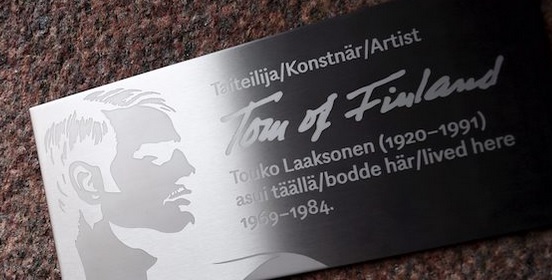
NordenBladet – Finnish LGBT icon and celebrated erotic artist Tom of Finland, aka Touko Laaksonen, has received a commemorative plaque outside of his former Ullanlinna home today (22.Aug 2020), in celebration of the 100th anniversary of his birthday.
The plaque unveiling was organized by MSC Finland, a fetish group that has celebrated and promoted the artistry of Tom of Finland in Helsinki for more than 30 years. In attendance at today’s unveiling was Mr. Fetish Finland of 2020 and members of MSC Finland, as well as fans of his life and work.
Tom of Finland made an international name for himself producing his unique style of homoerotic art in the 1960s and 1970s, which received a positive reception in artistic and queer communities in New York, Los Angeles, and San Francisco. Today his work is protected and promoted via the Tom of Finland Foundation, a non-profit that is headquartered in his former home in the Echo Park neighbourhood of Los Angeles.
Laaksonen (1920-1991), lived at Tehtaankatu 7, where the plaque was unveiled, from 1969-1984. It was during this period where he was most prolific, producing some of his most well-known and celebrated works. The artist was also honoured with a pop-up exhibition of his posters at Alakulttuurikeskus Loukko.
__________________________________ Touko Valio Laaksonen (8 May 1920 – 7 November 1991), best known by his pseudonym Tom of Finland, was a Finnish artist known for his stylized highly masculinized homoerotic art, and for his influence on late twentieth century gay culture. He has been called the “most influential creator of gay pornographic images” by cultural historian Joseph W. Slade. Over the course of four decades, he produced some 3,500 illustrations, mostly featuring men with exaggerated primary and secondary sex traits, wearing tight or partially removed clothing.
Early life
Laaksonen was born on 8 May 1920 and raised by a middle-class family in Kaarina, a town in southwestern Finland, near the city of Turku. Both of his parents Suoma and Edwin Laaksonen were schoolteachers at the grammar school that served Kaarina. The family lived in the school building’s attached living quarters.
He went to school in Turku and in 1939, at the age of 19, he moved to Helsinki to study advertising. In his spare time he also started drawing erotic images for his own pleasure, based on images of male laborers he had seen from an early age. At first he kept these drawings hidden, but then destroyed them “at least by the time I went to serve the army.” The country became embroiled in the Winter War with the USSR, and then became formally involved in World War II, and he was conscripted in February 1940 into the Finnish Army. He served as an anti-aircraft officer, holding the rank of second lieutenant. He later attributed his fetishistic interest in uniformed men to encounters with men in army uniform, especially soldiers of the German Wehrmacht serving in Finland at that time. “In my drawings I have no political statements to make, no ideology. I am thinking only about the picture itself. The whole Nazi philosophy, the racism and all that, is hateful to me, but of course I drew them anyway—they had the sexiest uniforms!” After the war, in 1945, he returned to studies.
Laaksonen’s artwork of this period compared to later works is considered more romantic and softer with “gentle-featured shapes and forms”. The men featured were middle class, as opposed to the sailors, bikers, lumberjacks, construction workers, and other members of stereotypically hypermasculine working class groups that feature in his later work. Another key difference is the lack of dramatic compositions, self-assertive poses, muscular bodies and “detached exotic settings” that his later work embodied.
Career
In 1956 Laaksonen submitted drawings to the influential American magazine Physique Pictorial, which premiered the images in the 1957 Spring issue under the pseudonym Tom, as it resembled his given name Touko. In the Winter issue later that year, editor Bob Mizer coined the credit Tom of Finland.[8] One of his pieces was featured on the Spring 1957 cover, depicting two log drivers at work with a third man watching them. Pulled from the Finnish mythology of lumberjacks representing strong masculinity, Laaksonen emphasized and privileged “homoerotic potentiality […] relocating it in a gay context”, a strategy repeated throughout his career.
The post-World War II era saw the rise of the biker culture as rejecting “the reorganization and normalization of life after the war, with its conformist, settled lifestyle.” Biker subculture was both marginal and oppositional and provided postwar gay men with a stylized masculinity that included rebelliousness and danger. This was in contrast to the then-prevailing stereotypes of gay man as an effeminate sissy, as seen in vaudeville and films going back to the first years of the industry. Laaksonen was influenced by images of bikers as well as artwork of George Quaintance and Etienne, among others, that he cited as his precursors, “disseminated to gay readership through homoerotic physique magazines” starting in 1950. Laaksonen’s drawings of bikers and leathermen capitalized on the leather and denim outfits which differentiated those men from mainstream culture and suggested they were untamed, physical, and self-empowered. This in contrast with the mainstream, medical and psychological sad and sensitive young gay man who is passive. Laaksonen’s drawings of this time “can be seen as consolidating an array of factors, styles and discourses already existing in the 1950s gay subcultures,” this may have led to them being widely distributed and popularized within those cultures.
U.S. censorship codes (1950s–1960s) Laaksonen’s style and content in the late 1950s and early 1960s was partly influenced by the U.S. censorship codes that restricted depiction of “overt homosexual acts”. His work was published in the beefcake genre that began in the 1930s and predominantly featured photographs of attractive, muscular young men in athletic poses often shown demonstrating exercises. Their primary market was gay men, but because of the conservative and homophobic social culture of the era, gay pornography was illegal and the publications were typically presented as dedicated to physical fitness and health. They were often the only connection that closeted men had to their sexuality. By this time, however, Laaksonen was rendering private commissions, so more explicit work was produced but remained unpublished.
In the 1962 case of MANual Enterprises v. Day the United States Supreme Court ruled that nude male photographs were not inherently obscene. Softcore gay pornography magazines and films featuring fully nude models, some of them tumescent, quickly appeared and the pretense of being about exercise and fitness was dropped as controls on pornography were reduced. By the end of the 1960s the market for beefcake magazines collapsed. Laaksonen was able to publish his more overtly homoerotic work and it changed the context with “new possibilities and conventions for displaying frontal male nudity in magazines and movies.” Laaksonen reacted by publishing more explicit drawings and stylized his figures’ fantastical aspects with exaggerated physical aspects, particularly their genitals and muscles. In the late 1960s he developed Kake, a character appearing in an ongoing series of comics, which debuted in 1968.
Gay mainstream appeal (1970s–1991) With the decriminalization of male nudity, gay pornography became more mainstream in gay cultures, and Laaksonen’s work along with it. By 1973, he was publishing erotic comic books and making inroads to the mainstream art world with exhibitions. In 1973 he gave up his full-time job at the Helsinki office of McCann-Erickson, an international advertising firm. “Since then I’ve lived in jeans and lived on my drawings,” is how he described the lifestyle transition which occurred during this period.
By the mid-1970s he was also emphasizing a photorealistic style, making aspects of the drawings appear more photographic. Many of his drawings are based on photographs, but none are exact reproductions of them. The photographic inspiration is used, on the one hand, to create lifelike, almost moving images, with convincing and active postures and gestures while Laaksonen exaggerates physical features and presents his ideal of masculine beauty and sexual allure, combining realism with fantasy. In Daddy and the Muscle Academy – The Art, Life, and Times of Tom of Finland examples of photographs and the drawings based upon them are shown side by side. Although he considered the photographs to be merely reference tools for his drawings, contemporary art students have seen them as complete works of art that stand on their own.
In 1979, Laaksonen, with businessman and friend Durk Dehner, co-founded the Tom of Finland Company to preserve the copyright on his art, which had been widely pirated. In 1984 the Tom of Finland Foundation was established to collect, preserve, and exhibit homoerotic artwork. Although Laaksonen was quite successful at this point, with his biography on the best-seller list, and Benedikt Taschen, the world’s largest art book publisher reprinting and expanding a monograph of his works, he was most proud of the Foundation. The scope of the organization expanded to erotic works of all types, sponsored contests, exhibits, and started the groundwork for a museum of erotic art.
Laaksonen was diagnosed with emphysema in 1988. Eventually the disease and medication caused his hands to tremble, leading him to switch mediums from pencil to pastels. He died in 1991 of an emphysema-induced stroke.
Reception With the decriminalization of male nudity, gay pornography became more mainstream in gay cultures, and Laaksonen’s work along with it. By 1973, he was publishing erotic comic books and making inroads to the mainstream art world with exhibitions. In 1973 he gave up his full-time job at the Helsinki office of McCann-Erickson, an international advertising firm. “Since then I’ve lived in jeans and lived on my drawings,” is how he described the lifestyle transition which occurred during this period.
By the mid-1970s he was also emphasizing a photorealistic style, making aspects of the drawings appear more photographic. Many of his drawings are based on photographs, but none are exact reproductions of them. The photographic inspiration is used, on the one hand, to create lifelike, almost moving images, with convincing and active postures and gestures while Laaksonen exaggerates physical features and presents his ideal of masculine beauty and sexual allure, combining realism with fantasy. In Daddy and the Muscle Academy – The Art, Life, and Times of Tom of Finland examples of photographs and the drawings based upon them are shown side by side. Although he considered the photographs to be merely reference tools for his drawings, contemporary art students have seen them as complete works of art that stand on their own.
In 1979, Laaksonen, with businessman and friend Durk Dehner, co-founded the Tom of Finland Company to preserve the copyright on his art, which had been widely pirated. In 1984 the Tom of Finland Foundation was established to collect, preserve, and exhibit homoerotic artwork. Although Laaksonen was quite successful at this point, with his biography on the best-seller list, and Benedikt Taschen, the world’s largest art book publisher reprinting and expanding a monograph of his works, he was most proud of the Foundation. The scope of the organization expanded to erotic works of all types, sponsored contests, exhibits, and started the groundwork for a museum of erotic art.
Laaksonen was diagnosed with emphysema in 1988. Eventually the disease and medication caused his hands to tremble, leading him to switch mediums from pencil to pastels. He died in 1991 of an emphysema-induced stroke.
Cultural impact and legacy In the late 1980s, artist G. B. Jones began a series of drawings called the “Tom Girls” that appropriated Tom of Finland’s drawings. The drawings were done in the style of Tom of Finland and based on his drawings, but featured punk girls or other subculturally identified women. However, unlike Tom’s drawings, in Jones’ work the authority figures exist only to be undermined, not obeyed. The two artists exhibited their work together in New York City in the early 1990s.
In 1995, Tom of Finland Clothing Company introduced a fashion line based on his works, which covers a wide array of looks besides the typified cutoff-jeans-and-jacket style of his drawings. The fashion line balances the original homoeroticism of the drawings with mainstream fashion culture, and their runway shows occur in many of the venues during the same times as other fashion companies.
In 2009, Laaksonen was inducted into the Leather Hall of Fame.
Some of his original works are at the Leather Archives and Museum.
Exhibitions New York’s Museum of Modern Art has acquired several examples of Laaksonen’s artwork for its permanent collection. In 2006, MoMA in New York accepted five Tom of Finland drawings as part of a much larger gift from The Judith Rothschild Foundation. The trustee of The Judith Rothschild Foundation, Harvey S. Shipley Miller, said, “Tom of Finland is one of the five most influential artists of the twentieth century. As an artist he was superb, as an influence he was transcendent.” Hudson, of Feature Inc., New York, placed Tom of Finland’s work in the collections of Rhode Island School of Design Museum of Art and Art Institute of Chicago. His work is also in the public Collections of: The Museum of Contemporary Art (MOCA), Los Angeles, USA; Wäinö Aaltonen Museum of Art; Turku, Finland; University of California Berkeley Art Museum, Berkeley (California), USA; Los Angeles County Museum of Art, Los Angeles, USA; Kiasma, Museum of Contemporary Art, Helsinki, Finland; San Francisco Museum of Modern Art, San Francisco, USA; and Tom of Finland Foundation, Los Angeles, USA.
In 1999, an exhibition took place at the Institut Culturel Finlandais (Finnish Cultural Centre) in Paris.
In 2011 there was a large retrospective exhibition of Laaksonen’s artwork in Turku, Finland. The exhibition was one of the official events in Turku’s European Capital of Culture programme.
In 2012, Kulturhuset presented a retrospective, Tom of Finland, in Stockholm, Sweden; and Tom of Finland’s work was in the Robert Rauschenberg Foundation’s We the People in New York City, USA.
In 2013, MOCA presented Bob Mizer & Tom of Finland in Los Angeles, USA. The artist’s work was also seen in HAPPY BIRTHDAY Galerie Perrotin – 25 years in Lille, France; Leslie Lohman Museum’s Rare and Raw in New York City, USA; and the Institute of Contemporary Art’s Keep Your Timber Limber (Works on Paper) in London, England.
In 2015, Artists Space presented the exhibition “Tom of Finland: The Pleasure of Play” in New York City, USA. The exhibition was also presented in Kunsthalle Helsinki in 2016, complemented with additional material such as photos from family albums.
In 2020, as part of the 100th birthday celebrations, “Tom of Finland: Love and Liberation” at London’s House of Illustration showed 40 originals with ephemera emphasizing fashion as an aspect of his work.
Featured image: Finnish LGBT icon and celebrated erotic artist Tom of Finland, aka Touko Laaksonen, has received a commemorative plaque outside of his former Ullanlinna home (NordenBladet)
NordenBladet – Estonia’s coronavirus exposure notification app “HOIA” launches today (August 20) and is now available to download. ERR News spoke to Priit Tohver, Ministry of Social Affairs adviser in the field of e-services and innovation, to find out what the app does and how you can use it.
“HOIA” has been created in voluntary cooperation between the Ministry of Social Affairs (Sotsiaalministeerium), the Health and Welfare Information Systems Center (Tervise ja Heaolu Infosüsteemide Keskus) and 12 Estonian companies – Cybernetica, Fujitsu Estonia, Guardtime, Icefire, Iglu, Mobi Lab, Mooncascade, Velvet, FOB Solutions, Heisi IT OÜ, Bytelogics and ASA Quality Services OÜ.
The purpose of the free app – which is optional and not mandatory – is to inform close contacts of those infected with the coronavirus and to provide them with initial instructions on how to proceed. Its aim is to limit the spread of coronavirus.
In this way, the user can quickly find out about possible close contact with a COVID-19 infected person, allowing them to take steps to protect their own health and the health of others.
It works because phones that use the app register Bluetooth signals from other nearby phones. If the signal is sufficiently close and long enough, an anonymous code referring to a close contact will be stored in their phone.
It is not possible to identify a person based on an anonymous code.
In order to use the app, you need a phone based on the Android or iOS operating system. For Hoia to function best, you need to use the close contact notification interface provided by Google and Apple.
Usability is limited to phones manufactured in the last 5 years. Android phones are suitable for all phones that support the Android 6.0 operating system. All Apple phones that support the iOS 13.5 operating system (from iPhone 6S) are compatible.
Earlier this year, when the app was first announced, Anett Numa, speaker at e-estonia briefing centre, wrote it will be based on the DP-3T protocol which has been developed by leading privacy experts and it is also in line with Apple and Google’s contact tracing API.
Estonia has chosen a “privacy-preserving path” to contact tracing, a key element of which is the principle of decentralisation that underpins several Estonian e-state solutions, she wrote.
Within this system, which is designed to adhere to recent EDPB recommendations, no entity will be able to store all of the tracing data and use it for any other purpose besides contact tracing.
Featured image: The “HOIA” coronavirus tracing app launched by the Ministry of Social Affairs. Source: Ministry of Social Affairs.
NordenBladet —Starting today, August 20, the mobile app HOIA is available for download to your phone via www.hoia.me, helping to curb the spread of the coronavirus with the help of app users. The application notifies the user if he has been in close contact with an infected person. The phones of the users of the application exchange anonymous codes, and the state, the manufacturer of the application, or the manufacturer of the phone will not know who was in close contact with whom.
“The most effective way to limit the spread of the coronavirus is to stay at home and see a family doctor in case of symptoms of the disease and to keep a safe distance from other people when moving around. However, if we want to continue our usual life – go to work and school, theater and concerts, ride public transport or travel, then we will probably not always be able to keep a sufficient distance,” said Minister of Social Affairs Tanel Kiik. “The Health Board will continue its daily work in identifying those infected and their close contacts, but everyone of us can also contribute to preventing the spread of the virus. The application of the coronavirus is one additional effective tool for all of us to reduce potential infectious contacts. I call on Estonian people to keep themselves and their loved ones safe and to help limit the spread of the virus privately and securely by using the application. ”
If any user of the application becomes ill, he or she will mark himself / herself (ie his / her anonymous code) as ill in the application and other users will be notified of a possible close contact with the infected person. The application notifies the person if he or she has been closer to an infected person than 2 metres for at least 15 minutes. The application also provides initial guidance on how to proceed. This way, the application can also inform people whom the infected person does not know or remember, allowing them to take steps to protect their own health and the health of others.
Special attention has been paid to privacy and security when developing the application. Phones communicate with each other using Bluetooth radio signals, exchanging codes that say nothing about the users of the application. Through the application, the state does not receive any information about the identity of those infected or their close contacts.
“We put the HOIA privacy solution in place even before the programming work started. People’s locations are not monitored and health data is processed only to check whether the person who claims to be infected with COVID-19 is really sick before sending notifications,” confirmed Dan Bogdanov, Member of the Management Board of Cybernetica AS. “The development of the HOIA application has set an example for other state IT-developments.”
The application was created in cooperation with the Ministry of Social Affairs, The Health Board, the Health and Welfare Information Systems Center and 12 Estonian companies – Cybernetica, Fujitsu Estonia, Guardtime, Icefire, Iglu, Mobi Lab, Mooncascade, Velvet, FOB Solutions, Heisi IT OÜ, Bytelogics and ASA Quality Services OÜ. In addition, the Swiss DP-3T project team contributed to the development of the application, and the solution created by it is the basis of the Estonian application.
“The main function of the application is to inform the user if he or she may have been in close contact with a person infected with COVID-19. However, information about a person’s infection and close contacts is private and cannot be disseminated. So we can say that by developing the application, we solved a kind of contradiction,” said Icefire software architect Aleksei Bljahhin. “We solved this contradiction thanks to the modern cryptography used by the application.”
For now the HOIA application can be used in Estonia. The next step is to start exchanging anonymous codes for close contacts also across borders, so that the application can be used also when traveling abroad.
For more information and frequently asked questions: https://hoia.me/en
NordenBladet – On Wednesday evening, Queen Sonja of Norway participated in her first official engagement after her summer holiday when she was present at the opening concert of the Norwegian Philharmonic Orchestra.
It was a great event when Klaus Mäkelä, for the first time, led the Oslo Philharmonic Orchestra in the Oslo Concert Hall as chief conductor. Due to the COVID-19 pandemic in Norway, there was only an opportunity for 200 guests to attend the performance, and tickets for the concert were sold out in record time. Under normal conditions, Oslo Concert Hall has the ability to seat 1,400 people.
Her Majesty also met the new conductor, Klaus Mäkelä. Klaus Mäkelä is a Finnish conductor who has been a guest conductor at the Oslo Philharmonic Orchestra since 2018 and was appointed as the new chief conductor beginning in 2020. He was born in 1996 and is, therefore, the youngest chief conductor of a European philharmonic orchestra.
Finnish Sauli Zinoviev has distinguished himself over the last decade as an orchestral composer of international format. The concert opened with his new orchestral work, commissioned by the Oslo Philharmonic Orchestra.
During the concert, Mahler’s Symphony No. 1 was also played. The symphony is a celebration of playing together and the perfect work to begin a musical collaboration. Mahler did something completely new with the symphony format. He drew inspiration from poetry and folk poetry and embraced popular cultural sources of inspiration such as military music, yodelling and children’s songs.
Queen Sonja loves classical music. Her Majesty is usually present several times a year at various concerts that the orchestra holds. It has also been customary every August for the Oslo Philharmonic Orchestra to hold a large free concert outside of the Royal Palace. However, this cannot be done this year due to the pandemic.
Last year, the Queen was a guest of honour when the Oslo Philharmonic Orchestra celebrated its 100th anniversary. Then, Queen Sonja gave a speech in which she said: “An anniversary is an opportunity to reflect on the past but also to look ahead. Classical music is about tradition but also about innovation. It is about renewing to preserve.”
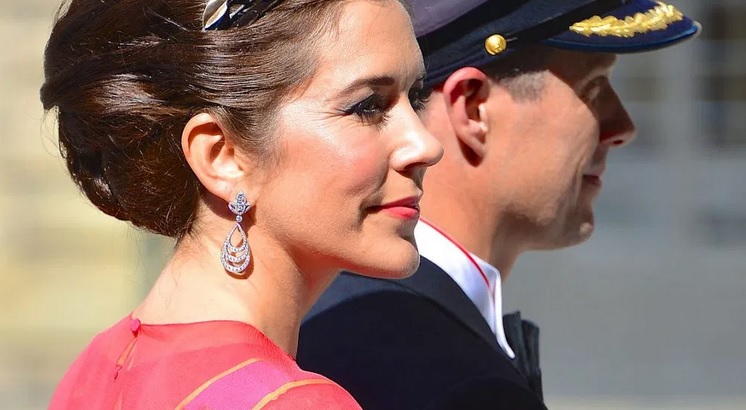
NordenBladet – Crown Princess Mary participated in a nature event with the WWF World Wide Fund for Denmark on Wednesday, helping to release stingrays at the Kattegat Centre in Grenaa to help foster knowledge of the marine creatures.
According to the Royal House, Crown Princess Mary aided in the release of five stingrays, the first time any have been released into Danish waters. The species has been listed as threatened with extinction.
The WWF wrote on their Facebook page: “The Danish marine environment is under pressure. That’s why we put this project in the lake, so that we can help protect life and at the same time make the Danes more aware of the amazing natural wealth that the Danish seas have.
“We are fighting for a clean, wild and sustainable sea, where there will be room for both wild sea animals and for the fish we will live on in the future.”
This project is the result of a collaboration between the WWF World Wide Fund for Nature and H&M, two partners who work together on projects related to climate and responsible water consumption.
Crown Princess Mary also provided an update about Prince Joachim, who is recovering in France following surgery for a brain stroke in July. Her husband, Crown Prince Frederik, was in France last week to visit his brother.
“Obviously we have been in constant contact with them,” she told reporters. “My husband, as you all know, has been down to visit his brother, and he came home very happy and relieved,” that Prince Joachim was well and like his normal self and “as talkative as he always has been.”
Crown Princess Mary’s engagement on Wednesday marked her first official engagement as President of the World Wide Fund for Nature, a position formerly held by her late father-in-law, Prince Henrik.
Featured image: Frankie Fouganthin (Own work) Via Wikimedia Commons
NordenBladet —At its meeting today, the Foreign Affairs Committee continued its discussion on the situation in Belarus after the 9 August presidential elections, and supported the idea of drafting a statement of the Riigikogu in support of the democratic forces in Belarus.
The Chairman of the Foreign Affairs Committee Enn Eesmaa said that the idea to form a working group to draft the statement found support from all the political groups represented in the Committee. “We have been consistently working on issues surrounding Belarus in the Riigikogu. We hope to adopt a statement on the current developments at the plenary meeting as soon as possible,” he added.
The Deputy Chairman of the Committee Marko Mihkelson referred to a similar statement adopted by the Riigikogu in 2006, also in support of democracy in Belarus. “The situation in Belarus, in our immediate neighbourhood, affects Estonia’s security as well. Violence against the people and disregard for the organisation of fair and free elections is something than cannot be ignored, and this is what we intend to emphasise in the statement of the Riigikogu,” he said.
The Committee was also briefed on the activities of Estonia and the European Union in connection with the recent development in Belarus by the Director General of the Political Department of the Ministry of Foreign Affairs Lembit Uibo. Deputy Permanent Representative of Estonia to the United Nations Gert Auväärt briefed the Committee on Estonia’s activities in the UN Security Council.