NordenBladet – Thirteen Nordic novels, short stories, and poetry collections have been nominated for the 2020 Nordic Council Literature Prize. The winner will be announced at an awards ceremony for the Nordic Council prizes in Reykjavik this autumn. The following works are competing for the prize.
The works have been nominated by the national members of the adjudicating committee for the 2020 Nordic Council Literature Prize.
Winner to be announced on 27 October 2020!
The winner of the 2020 Nordic Council Literature Prize will be announced on 27 October at an awards ceremony in Reykjavik in conjunction with the Session of the Nordic Council. The winner will receive the Northern Lights statuette and DKK 350,000.
About the Nordic Council Literature Prize The Nordic Council Literature Prize was first awarded in 1962. It goes to a literary work written in one of the Nordic languages, such as poetry, prose, or drama that meets high literary and artistic standards. The purpose of the Nordic Council’s five prizes is to raise interest in the Nordic cultural community and Nordic co-operation on the environment, as well as to recognise outstanding artistic and environmental efforts.
Featured image: Thirteen nominees for the 2020 Nordic Council Literature Prize (Norden.org)
NordenBladet – Democracy, human rights, and security were on the agenda when the Nordic Council visited the Polish senate on 9 and 10 March. The Nordic Council was invited by Marshal of the Senate and member of the opposition Tomasz Grodzki.
The visit was the result of the current and former presidents of the Nordic Council, Silja Dögg Gunnarsdóttir and Hans Wallmark, meeting Tomasz Grodzki at the session of the Baltic Assembly in Riga in November 2019. After the meeting, Grodzki invited the Nordic Council to the upper house of the Polish parliament, the senate, with a view to resuming and strengthening co-operation with the Nordic countries.
Co-operation between the Polish parliament and the Nordic Council has been on the back-burner since 2015 when the nationalist party Law and Justice (PIS) came to power.
Importance of close ties
Silja Dögg Gunnarsdóttir, who led the Nordic Council’s delegation during the visit, stressed that close ties with Poland are hugely important, especially now that the governing party PIS is implementing reforms that are deemed to threaten democracy and the rule of law. “Developments in Poland are deeply concerning. The controversial interventions in the justice system, state involvement in the work of the media, and attitudes towards LGBTQ people are at odds with my personal beliefs and the democratic values that the Nordic Council stands for. It’s extremely important that the Nordic Region maintains close ties with our Polish colleagues and shows its support for Poland’s democratic voices,” says Silja Dögg Gunnarsdóttir.
Poland an important partner for the Nordic Region
PIS currently fills the roles of both Poland’s president and prime minister, and also holds the majority in the Sejm, the lower house in the Polish parliament. In recent years, PIS has implemented a series of reforms that go against the EU’s fundamental values, prompting harsh criticism from the European Commission and the European Parliament.
For the time being, the senate is one of few Polish institutions where the opposition has a majority.
Poland is an important collaborative and trading partner for the Nordic countries, as well as a key player in the Baltic Sea area. In addition, tens of thousands of Poles live in the Nordic Region. A natural topic of discussion during the visit was, therefore, conditions for Poles who live and work in the region.
The Nordic Council also met with the Polish senate’s foreign affairs committee to discuss security policy, and in particular the situation in Ukraine.
Disinformation and fake news were also discussed during the visit, with fake news a priority for Iceland, which holds the presidency of the Nordic Council this year.
The Nordic Council delegation consisted of Silja Dögg Gunnarsdóttir and members of the presidium Michael Tetzschner (Norway) and Erkki Tuomioja (Finland).
NordenBladet —Members of the Riigikogu Ivari Padar, Katri Raik, Helmen Kütt, Riina Sikkut, Indrek Saar, Jevgeni Ossinovski, Kalvi Kõva, Jaak Juske, Lauri Läänemets and Raimond Kaljulaid submitted an interpellation concerning the establishment of the rail link Rail Baltic (No. 23) to Prime Minister Jüri Ratas.
The interpellators referred to a recent audit by the National Audit Office focusing on the construction of Rail Baltic which was critical of the central activities as well as the developments in Estonia. The interpellators wished to know, among other things, what the Prime Minister’s assessment of the current progress of the Rail Baltic project was and how he assessed the current activities of Latvia and Lithuania in the realisation of the Rail Baltic project.
Prime Minister Ratas noted that the Rail Baltic project had moved from the planning phase to the design stage in all three Baltic states by now, and construction works had started or were about to start on the territories of all three countries. According to him, contracts for the preparation of the basic design documentation for the railway and related infrastructure in all three sections of the main route have been entered into in Estonia by now. The designing of the major local sites has also begun. “Rail Baltic will pass through a total of 864 cadastral units in Estonia. 621 of them are cadastral units belonging to private owners and 74 are cadastral units belonging to local governments which will have to be acquired to the state for the construction of Rail Baltic. About 40 plots of land had been acquired by February this year,” Ratas said.
The Prime Minister admitted that, in a democratic society, the planning of large-scale infrastructure projects and sites took time, and often it was impossible to stick to the projected timeline. “For example, the planning phase of Rail Baltic lasted from 2012 to 2018, although the deadline for planning was as early as the end of 2015 according to more optimistic projections. As you can see here too, there is a difference of about three years,” he stated. Ratas confirmed that such risks had been taken into account when planning the project and that it was still possible to complete Rail Baltic by the deadline.
As to the activities of Latvia and Lithuania, the Prime Minister said that Rail Baltic was in a similar phase in those countries as it was in Estonia. “Spatial plans were established in Latvia as early as 2016 and in Lithuania in 2017. The sections between Kaunas and the Lithuanian-Polish border and between Kaunas and Vilnius need separate decisions. Preparation of the designated spatial plans has been started. Design work is underway on a 270-kilometre route to the extent of about 75%. Lithuania has made the most progress with construction works in Kaunas region. A contract for the construction of Riga airport terminal and railway will be concluded by the end of 2020. More important is the goal reiterated by the Prime Ministers of all three Baltic states in Tallinn in February: to complete the construction of Rail Baltic rail link by the deadline,” Ratas said.
The Prime Minister stated that the management scheme of the construction process was not functioning as well as it should have been, and that it needed to be changed. “There are those who design, there are those who carry out construction procurements, and there are those who construct. It is necessary to bring matters under one roof here, so to say. And I think that, in a sense, this will also yield a better result in terms of time and pace.”
The Minister of Education and Research Mailis Reps replied to the interpellations concerning the Institute of the Estonian Language (No 22) and concerning countering the import of the ideology, that is, the influencing activities of the Russian Federation in Estonia (No 26).
During the debate, Katri Raik (Social Democratic Party) and Johannes Kert (Reform Party) took the floor.
During the open microphone, Peeter Ernits (Estonian Conservative People’s Party) and Kalle Grünthal (Estonian Conservative People’s Party) took the floor.
NordenBladet – King Willem-Alexander and Queen Maxima of the Netherlands had only just arrived for their State Visit to Indonesia when it became clear that a fatal boat accident had taken place.
The boat accident took place on 9 March on the river in the Sebangau National Park in the island of Kalimantan. The two boats involved in the accident belonged to Indonesian organisations, which were a part of the preparations for the State Visit. There were several fatalities and injuries. King Willem-Alexander and Queen Maxima were due to visit the Sebangau National Park on Thursday.
The King and Queen are said to be shocked and grieving with the families of the victims. They have also sent their condolences to President Widodo of Indonesia. Out of respect for the families of the victims, the program of the State Visit will be toned down. Further details on what this will mean exactly will be announced later today.
The State Visit will last until 13 March and as per the press release, “The state visit affirms the close, wide-ranging relationship between the two countries and will be geared towards future cooperation,” and will include a programme that focuses on “the economy, nature conservation, culture, science and the many ties that exist between the peoples of Indonesia and the Netherlands, based in part on their shared history.”
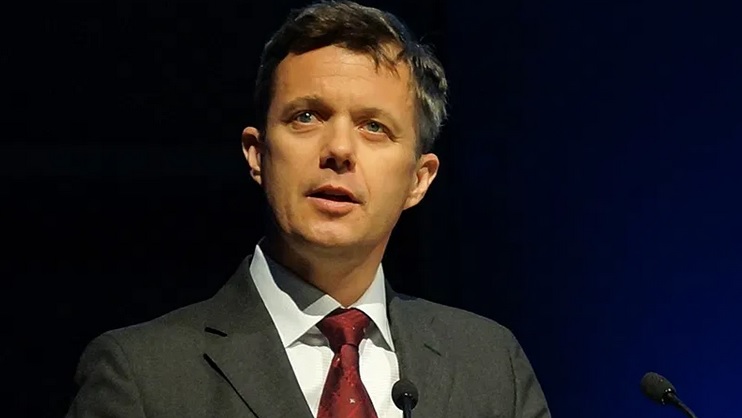
NordenBladet – Crown Prince Frederik paid an emotional visit to the Zaatari refugee camp in Jordan last week, visiting with Save the Children Denmark to mark the organisation’s 75th anniversary.
The Zaatari refugee camp is just east of the Jordanian city of Mafraq and is the world’s largest Syrian refugee camp. It opened in 2012 following the Syrian Civil War and housed around 76,000 refugees, of which over half are children.
Crown Prince Frederik was joined by the Danish Minister of Development, Rasmus Prehn, and Save the Children’s Secretary-General, Johanne Schmidt-Nielsen, for the visit which, according to the Royal House, “focused on the work to strengthen the mental health and psychosocial well-being of children and young people in humanitarian crises.”
“I have learned today that in the middle of a dark and gloomy outer area, light can be made in transmitted meaning to larger groups and especially to children and young people,” Crown Prince Frederik said in a media release on Save the Children Denmark’s official website.
“It is useful to be here [and it] is important to elucidate issues in order to help and lift children out of trauma. It is Save the Children once again front runners on. It is fantastic.”
At the Zaatari refugee camp, Save the Children Denmark has opened both educational and football training centres to help children in all aspects of their development. Crown Prince Frederik and Minister Prehn joined young people at the camp in playing with Lego and football and joining in for a meal of kebabs and meatballs.
At the education center, educators are trained “to care for under-stimulated children who, through play and friendships, enhance their learning ability, positive behaviour and mental well-being.” Nearly 40 per cent of children are educated at Save the Children Denmark’s centre.
Crown Prince Frederik and Minister Prehn then visited a football training project to see how learning the sport is also giving the children life skills such as “tools to resolve conflicts, deal with difficult emotions and develop their confidence.”
“It is absolutely invaluable that the Crown Prince and the Minister of Development help us to focus on how crucial the work on children’s mental war damage is,” said Schmidt-Nielsen.
“Children fleeing must have food, water and shelter for rain and cold. But they also need psychological first aid and support to process their traumatic experiences. For children at war are destroyed inside. The great news is that they can heal, and I am so happy to showcase our important work.”
Save the Children Denmark was founded on 14 March 1943 to help Danish children who were displaced and starving during the Second World War. Today, it still helps children displaced by war but has grown to become an international operation.
Crown Prince Frederik is the patron of Save the Children Denmark (redbarnet.dk).
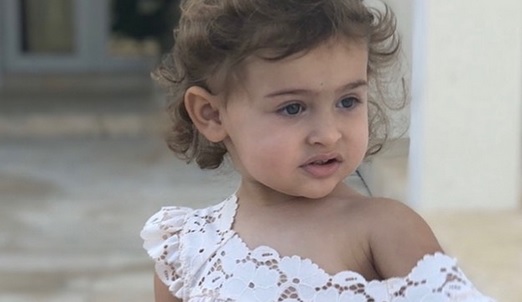
NordenBladet – Sweden’s youngest royal is celebrating her second birthday today with her family in Miami, Florida, where the family resides. To celebrate, Princess Madeleine posted a beautiful photo of her youngest child on Instagram. In her post, she said, “Happy Birthday to the sweetest little sister and best baby girl!”
Princess Madeleine regularly posts about her children on her Instagram account and marked her eldest child, Princess Leonore’s birthday in February with a special post.
Princess Adrienne, the youngest child of Princess Madeleine and Chris O’Neill, was born one year ago in Danderyd Hosptial in Danderyd, Sweden. She joined older siblings, Princess Leonore (b. 20 February 2014 in New York) and Prince Nicolas (b. 15 June 2015 in Danderyd).
Her Royal Highness Princess Adrienne Josephine Alice of Sweden, Duchess of Blekinge, was born on 9 March 2018. As tenth in line of succession to the Swedish throne, Adrienne is the third granddaughter and seventh grandchild of King Carl XVI Gustaf and Queen Silvia.
Adrienne was christened into the Church of Sweden on 8 June 2018 in the Royal Chapel of Drottningholm Palace; the date is a special one for her family as it was the day her parents married in 2013 and the date of Leonore’s 2014 christening.
The Princess’s godparents are Anouska d’Abo, Coralie Charriol Paul, Nader Panahpour, Gustav Thott, Charlotte Kreuger Cederlund and Natalie Werner.
She held the style of Royal Highness until October of last year when her grandfather removed the Royal Highness status and position in the Royal House from his grandchildren through his son, Prince Carl Philip and his wife, Princess Sofia, as well as the children of Princess Madeleine and her husband, Chris.
Princess Adrienne’s cousins, Princess Estelle and Prince Oscar, retain their place in the Royal House and status as Royal Highnesses as they are the children of Crown Princess Victoria – the future queen.
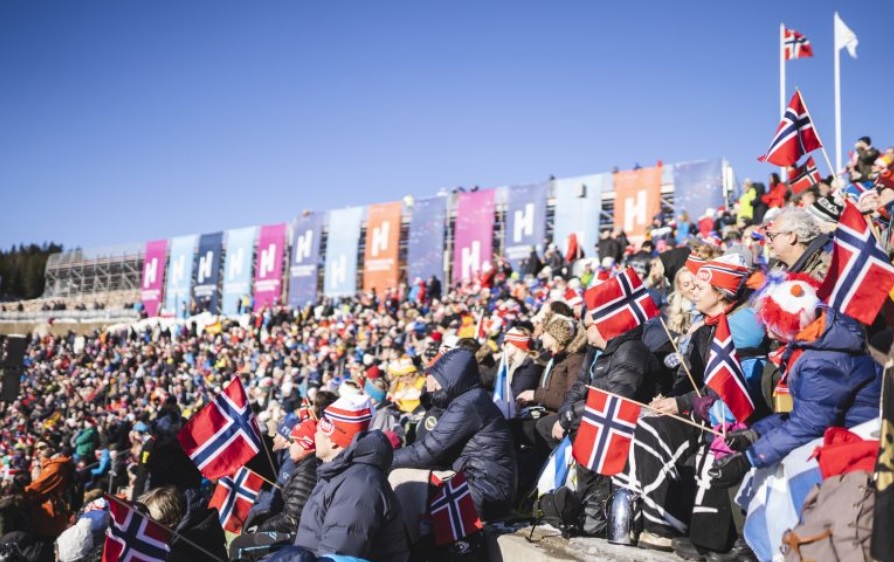
NordenBladet – Due to the coronavirus, the Norwegian Royal Family has cancelled its participation at the Holmenkollen Ski Festival this weekend, the Royal Court said in a press release on Friday afternoon.
The full release stated the following: “Unfortunately, the Royal Family finds reason to cancel their presence at the Holmenkollen Ski Festival. This is in line with the decision made by the authorities to cancel the public event.”
The virus has now affected many royal families. The Belgian state visit to Italy has been cancelled due to fear of infection. Princess Estelle’s school is closed after one of the students got the virus, and the Swedish Royal Family also postponed a Representation Dinner in fear of the virus.
As of 6 March, a total of 105 Norwegians have tested positive for the virus.
It has been known for several weeks that Princess Astrid, King Harald and possibly other members of the family were expected both on Saturday and Sunday at the ski festival. The municipality of Oslo said the event will take place without spectators but will be broadcast on TV. It was expected that around 30,000 people would attend the ski festival in Holmenkollen this weekend.
Guri Varpe, Head of Communications at the Royal Palace, does not want to comment further on the issue. However, when King Harald and Queen Sonja met with the Norwegian press in Petra in Jordan earlier this week, the royals explained that they were not particularly afraid of the virus. His Majesty the King said then: “We are here, so the virus has not had any impact. We follow very simple rules of hand hygiene and such, which should make it more difficult for the virus to get us.”
On Friday morning, there was a known total of 105 cases of coronavirus in Norway. As a result, several changes have been made to Norwegian airlines and other institutions. On 26 February, Norway confirmed the first case of COVID-19. The Norway Institute of Public Health announced that someone tested positive for SARS-CoV-2 after returning from China the previous week.
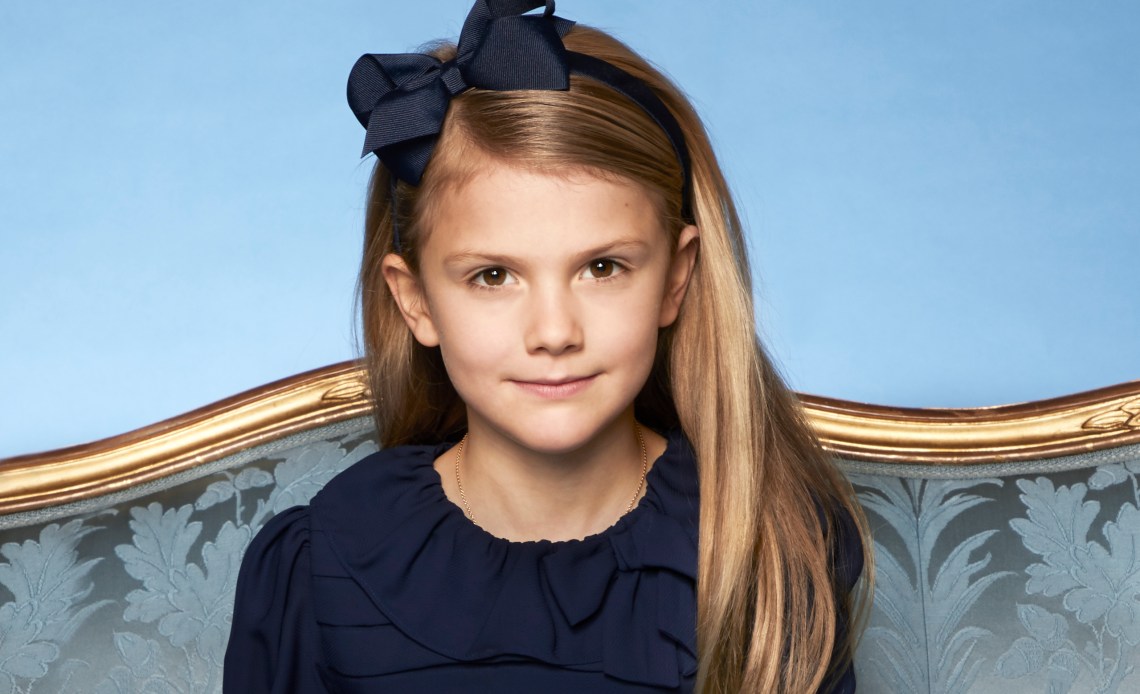
NordenBladet – Princess Estelle of Sweden’s school has cancelled classes today (06.March) after a student at the elementary school tested positive for the coronavirus last night. The school says they are gathering more information on what to do from Infectious Diseases Stockholm and the Public Health Agency, and at the moment school is only cancelled today. Further decisions will be made this afternoon with the guidance of the organisations.
A letter was sent out to the parents today cancelling classes saying they “choose to stay closed one day to wait for guidance.” They are getting clear guidance on how the school should act to minimise the risk of infection of other students.
The school said, “We have full confidence in the Public Health Authority and the recommendations of the healthcare system.”
Several students, besides the one who tested positive, are in voluntary isolation as they live in infected areas.
The Royal Court has confirmed to Expressen that it is not the eight-year-old Princess who is infected.
Teachers at the school are preparing lessons and assignments in case the school has to be closed for more than one day.
Sweden has 52 cases of the deadly virus, 31 of which are in Stockholm.
The Swedish Royal Family postponed a representation dinner earlier this week due to the virus. It was due to have taken place last night at the Royal Palace.
Last week, it was revealed that four pupils at Thomas’s Battersea in London, where Prince George and Princess Charlotte attend, were in self-isolation.
Featured image: Anna-Lena Ahlström, The Royal Court of Sweden
NordenBladet —At the joint visit of the parliamentary delegations of Estonia, Latvia, Lithuania and Poland to the United States House of Representatives, Speaker of the House of Representatives Nancy Pelosi expressed cross-party support to the Baltic States and Poland.
During the first joint visit of the parliamentary delegations of Estonia, Latvia, Lithuania and Poland to the United States Congress, the main focus was on the issues relating to the security of the region, dealing with the provocative behaviour of Russia and the practical implementation of the Three Seas Initiative.
At the meetings with Speaker of the House of Representatives Nancy Pelosi and the leaders of the Senate Foreign Relations Committee, representatives of the Parliament of Estonia the Riigikogu Keit Pentus-Rosimannus and Andres Sutt focused on future cooperation in the sphere of cyber security and resisting influence operations.
“Continuation of the US defence assistance was the central topic at all meetings. The continuing support of both the Democrats and the Republicans is important,” member of the Foreign Affairs Committee of the Riigikogu Keit Pentus-Rosimannus said. “The influential members of the House of Representatives and the Senate who participated in the meetings had a strong interest in Estonia’s experience in cyber security and increasing the awareness of cyber threats. We would certainly like to further develop our relations in that field.”
At the meetings in the Congress, Pentus-Rosimannus and Sutt also introduced the Three Seas Initiative and its summit that will be held in Tallinn. Chair of the Estonia-USA Parliamentary Group Andres Sutt remarked, “The Three Seas Initiative is important for better connections between the countries of North and South Europe, and for providing an alternative to the politically targeted investments of Russia and China. We are very happy that the USA has decided to contribute a billion dollars to the Three Seas Initiative Investment Fund.”
In the opinion of Pentus-Rosimannus, the timing of the Estonian, Latvian, Lithuanian and Polish visit is essential, because at present, the next year’s defence budget is being discussed in the Congress. “Such meetings provide an excellent opportunity for an open and direct exchange of opinions on the international threat picture and discussion of practical developments of cooperation.”
Besides meeting with Speaker of the House of Representatives Nancy Pelosi, the members of the Riigikogu in Washington also had meetings with leaders of the Senate Foreign Relations Committee James Risch and Bob Menendez, Chair of Europe, Eurasia, Energy, and the Environment Subcommittee of the House of Representatives Bill Keating, Chair of the House of Representatives Intelligence Committee Adam Schiff and Member of the House of Representatives Energy and Commerce Committee John Shimkus.
Norway – King Harald and Queen Sonja are currently in Jordan on a state visit. One of the things they are doing there is promoting Norwegian solar panel technology. At the same time they are considering installing full solar panels on the roof of the castle in Oslo.
The Norwegian state visit to Jordan started on Monday, and with them, they have large economic delegation. Among them are some of Norway’s largest producers of solar panels as well as experts and companies in other solar technology. On Monday, the king and queen attended a seminar where they discussed business opportunities with partners in Jordan, a country that wants to increase its commitment to renewable energy.
The Norwegian king and queen have for a long time considered doing the same as the Swedish king, who installed 1,000 square meters of solar panels on the roof of the Royal Palace in Stockholm to supply it with electricity.
In the summer of 2018, a smaller test facility was installed on the roof of the castle in Oslo and now the trial project is being evaluated to see if it will be expanded. “We need to make investigations based on the experience we did during the trial period. It will probably take some time before we conclude”, said communications manager Guri Varpe at the royal court to the Norwegian news agency NTB on Sunday last week.
It was in 2015 that the royal family in Norway started what they call “The green castle”, a series of environmental initiatives at the Royal Court. Environmental measures have been implemented at the Royal Court, the Palace, the Skaugum estate and other royal properties. The environmental work at the Royal Court is led by Her Royal Highness the Crown Princess.
Solar panels were installed on the roof of Stockholm Palace on Thursday, 19 April 2018. King Carl XVI Gustaf even got his hands dirty and helped as the panels were brought up to the roof. According to the Royal Court, once it is “running, the State Property Agency expects an annual output will at least provide twelve percent of the palace’s annual electricity consumption.”
Featured image: The Royal Palace in Oslo (Wikimedia Commons)