NordenBladet —Today, President of the Riigikogu (Parliament of Estonia) Henn Põlluaas is on a visit to Finland, where he will meet with his colleague, Speaker of the Parliament of Finland the Eduskunta Matti Vanhanen, and Prime Minister of Finland Sanna Marin, Minister of Foreign Affairs Pekka Haavisto and Chairman of the Defence Committee of the Eduskunta Ilkka Kanerva.
The President of the Riigikogu is accompanied by representatives of the factions of the Riigikogu and members of the Estonia-Finland Parliamentary Group Anneli Ott, Aivar Kokk, Helmen Kütt and Urve Tiidus.
“The mutual cooperation between Estonia and Finland is so closely intertwined at different levels and so friendly that it is impossible to underestimate it,” Põlluaas said. “It is in a way symbolic that the business registers of Estonia and Finland started the exchange of data via X-Road namely on Friend’s Day (which is how St. Valentine’s Day is called in our countries). It is the first greater result of cooperation with the aim of integrating the digital services of Estonia and Finland.”
Põlluaas added that the Estonian pharmacies had been dispensing medicines on the basis of Finnish digital prescriptions for more than a year, and now that project should be completed, so that it would work both ways. After that, the exchange of social and health insurance data and tax data wait to be launched.
“The relations between the two countries are active and our cooperation is excellent both at the regional level and in international organisations,” Põlluaas underlined. He pointed out the ensuring of security and stability in the Baltic Sea. “However, this does not mean that we do not have room for development. Next we could consider greater cooperation between Estonia and Finland in renewable energy issues,” Põlluaas said before the visit.
The Riigikogu delegation will also meet with the representatives of the Global School of the Association of Education in Estonian at the Estonian Centre in Helsinki, visit Helsinki Central Library Oodi and lay a wreath at the memorial to the fallen Finnish volunteers of the Estonian War of Independence in the Old Church Park.
NordenBladet —The Riigikogu suspended the second reading of the Bills on amendments to the Tobacco Act and the Land Reform Act and to the Acts related thereto in order that amendments could be incorporated.
The Bill on Amendments to the Tobacco Act and the Alcohol, Tobacco, Fuel and Electricity Excise Duty Act (9 SE), initiated by the Government, will transpose two articles of the EU Tobacco Directive, on the basis of which a European-wide tracking and tracing system for tobacco products will be implemented to curb the black market in tobacco.
According to the directive and the implementing acts, all over the European Union, unit packets of tobacco products will be labelled with a unique identifier, and a tamper-proof security feature will be installed on them. In Estonia, tax stamp will be introduced as the security feature. It complies with the requirements of EU legislation. If no tax stamp is installed on a product, the security feature of the manufacturer will have to be installed on the product.
According to the Bill, it will be permitted to add menthol flavour in electronic cigarettes. The general prohibition on the sale of smokeless tobacco products will also be repealed in Estonia, and handling of novel smokeless tobacco products will be included. Prohibitions on tobacco for oral use, chewing tobacco, nasal tobacco and other smokeless tobacco products remain in force. In addition, the Tobacco Act will be amended by adding a new category of tobacco products – heated tobacco products.
During the debate, Tarmo Kruusimäe (Isamaa), Aivar Kokk (Isamaa) and Vilja Toomast (Reform Party) took the floor.
The Bill on Amendments to the Land Reform Act, the Act on Acquisition of Land on which Usufruct Has Been Established during Land Reform, and the State Assets Act (87 SE), initiated by the Rural Affairs Committee.
The Bill will enable natural persons for whose benefit a usufruct on land has been established to grant use of the land to other persons provided that agricultural production is continued on the land. An additional condition will be set to the effect that the usufructuary will be entitled to grant use of land to a company if more than half of the company is owned by them or their spouse or relative. It is important that the person in whose use the land is meet the above-mentioned conditions during the whole duration of the use of the land.
The Bill will also regulate the extension of usufruct contracts. Under the current law, extension of usufruct is performed under the Land Reform Act which is however not in accordance with the general principles for the administration of state assets and the principles of EU competition law. There is a conflict with state aid rules and the principle of equal treatment of persons. Usufruct contracts should be extended on the basis of the State Assets Act.
According to the Bill, in order to extend a usufruct for up to 15 more years, the usufructuary will have to submit a written application to the Land Board not later than three months before extinguishment of the usufruct. In the case when a usufruct extinguishes before 31 August this year, the usufructuary will still have the right to submit an application to extend the contract for the establishment of usufruct on the current basis, that is, within three months after the due date for extinguishment of the usufruct. The contract will not be extended if the land on which the usufruct has been established is required for the exercise of the powers of state, to a local government for the performance of its functions or for other public purposes.
For the uniform application of the conditions for the use of state assets, a market-based use fee will be set as the fee for an extended usufruct. The minimum rate for the use fee will be set at ten euro. The usufructuary will also be obligated to pay land tax and other ancillary costs, taxes and encumbrances relating to the immovable property. In addition, the Bill will specify the conditions for carrying out cutting on land on which an extended usufruct has been established, and the set-off for costs incurred for improvements beyond ordinary maintenance.
The Bill provides that, after a usufruct has been extended, the usufructuary will have the right to apply for acquisition of the land under the Act on Acquisition of Land Subject to Usufruct in Land Reform. In addition, the possibility of redemption will not be restricted during two years after the extension of usufruct.
NordenBladet – The Swedish Royal Family has cancelled a grand reception dinner due to the coronavirus outbreak. The dinner was due to take place on Wednesday evening, with 150 guests in attendance.
A statement from the Royal Court read: “For the sake of invited guests, the representation dinner scheduled for Wednesday, March 4, will be postponed. In recent days, a number of cases of infection from the new coronavirus have been discovered in Sweden. The public health authority estimates that the risk of detecting cases of covid-19 in Sweden is high, but that the risk of general dissemination in the country is low.
“In anticipation of the continued development of events, Their Majesties, as hosts, choose to postpone the planned representation dinner at the royal palace on Wednesday 4 March. This is done with regard to invited guests.”
The King & Queen’s representation dinners are large and very formal events. Invitations to the 150 guests were sent out six weeks ago.
The representation dinners are usually attended by representatives from the diplomatic corps, the Swedish parliament, the government, as well as representatives from the world of science, culture, sports and business. The dinner is usually held in the gallery of Karl XI at the royal palace in Stockholm. Previous menus have consisted of lightly smoked duck breast with shallot crisp, and roasted Swedish pork tenderloin with broken duck.
The coronavirus outbreak was confirmed to have spread to Sweden when the first COVID-19 case was confirmed on 31 January 2020. A woman in her 20s who had recently visited Wuhan in China tested positive for the disease.
On 26 February, following the large COVID-19 outbreak in Italy and Iran, multiple infection clusters originating from these two countries arrived in Sweden. A number of individuals in Västra Götaland, Jönköping, Stockholm, Uppsala tested positive and were admitted to the infectious disease units in the respective counties. As of 1 March 2020, there have been 14 confirmed cases in Sweden.
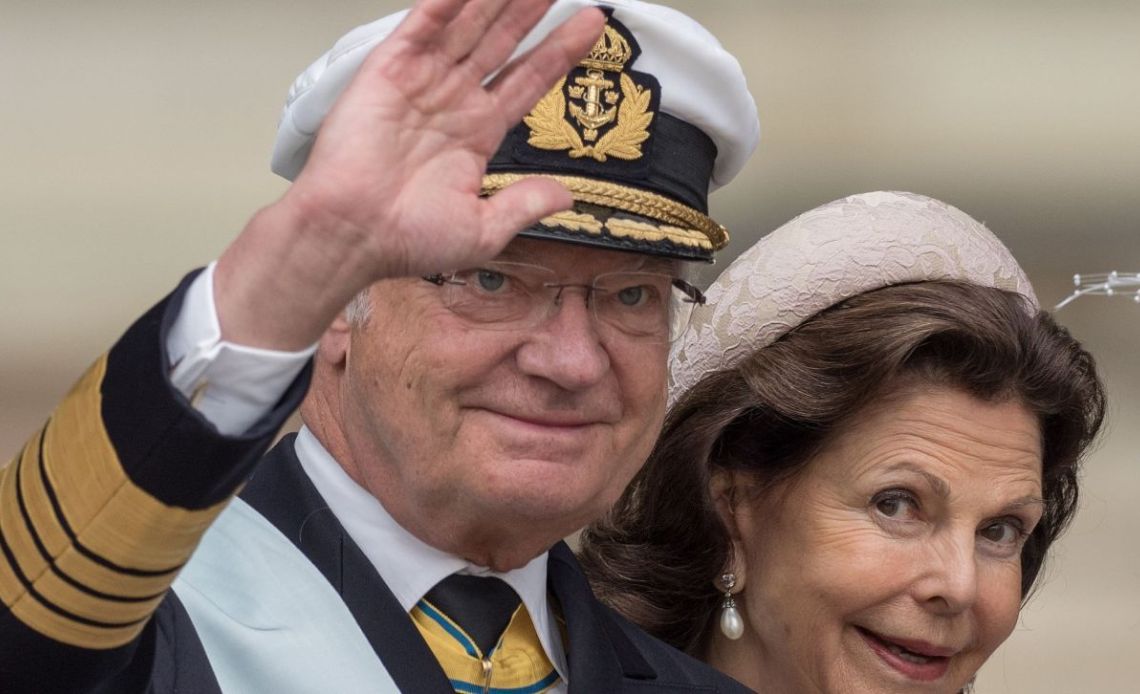
Featured image: The King & Queen of Sweden (Bengt Nyman/CC BY-SA 4.0/Wikimedia Commons)
NordenBladet – On 29 February, Princess Marie met with young climate activist, Vanessa Nakate during her humanitarian trip to Uganda as Patron of DanChurchAid. Vanessa Nakate called out the Associated Press when she was cropped out of a photo with other young climate activists including Greta Thunberg at the Davos Economic Forum last January. About the scandal, Princess Marie said: “I thought it was really stupid. I can’t imagine it was made on purpose, but they should have thought about it. I can tell you we heard about you, we heard your voice, we heard about you and you have a strong voice”.
During the meeting, Princess Marie also met other young climate activists Leyna, Bonita, and Karen. Leyna, who is eight-years-old, sang a song for the Princess. Bonita, who is 15-years-old, gifted Princess Marie two children books she wore about climate change with the first chapter being appropriately titled ‘A Royal Friendship’. Karen, 11, read a poem titled ‘My Beautiful Field’ which is about her beautiful field who is going to disappear because of climate change. At the end of the poem, Karen says, “You and I will probably find a solution,” which made Princess Marie very emotional. Princess Marie, Vanessa, Leyna, Bonita and Karen also planted a mango tree that Princess Marie was gifted the day before.
About her meeting with Princess Marie, Vanessa Nakate said: “The Princess told me she thought it was really unfair that I was cut out, and it was very, very good for me to hear that someone like her actually knew I existed. She also told me that I was very powerful and very inspiring regardless of what had happened.”
After the meeting, Princess Marie attended an official reception hosted by the Danish Ambassador to Uganda Nikolaj A. Hejberg Petersen in his official residence.
On 1 March, Princess Marie attended her last official event in Uganda as she met with the Uganda Women Network which works with DanChurchAid to provide education for women with the aim of educating and supporting women’s opportunities to participate in both local and national political work.
Before leaving the country, Princess Marie joined DanChurchAid Country Manager, Peter Bo Larsen for a small press conference. About her trip, Princess Marie said: “This is a very welcoming country. People are very kind.[…] I’ve met very very strong and inspiring women. That really touched me a lot.”
She also talked about how climate change has a huge impact in Uganda: “Climate change is all around the world, you know, it’s affecting everybody. The only thing I can tell you is, coming here I really saw the impact, especially for the farmers. You never know when it’s going to rain, you can’t know when you harvest, you can’t plan anything. This is a matter of life and death, you need to be able to eat. I think this is a problem all around the world, but here it’s a problem that we need to address today.”
Princess Marie then flew back to Paris to get back to her children who she ‘missed very much,’ as she told members of the Danish media present in Uganda with her. She also admitted that she was a little bit scared by the reports on the coronavirus that she had been hearing from Denmark and France, especially as the threat grew more serious in France and some schools were closed.
NordenBladet —At today’s sitting, the Riigikogu ratified the Convention that establishes uniform international rules for the removal of hazardous wrecks and payment of compensation for the costs therein involved.
Under the Act on the Ratification of the Nairobi International Convention on the Removal of Wrecks, 2007 (123 SE), initiated by the Government, owners of ships of 300 gross tonnage and above are subject to the requirement of compulsory insurance to ensure the costs of removing hazardous wrecks. The Convention does not apply retroactively. Estonia wishes to apply the Convention in all its maritime areas and not just in its economic zone.
The explanatory memorandum notes that the Convention will have an impact on business and the business environment. It will increase the sense of security for businesses that Estonia as a maritime nation applies uniform standards. Owners of ships registered in Estonia, and ships flying the Estonian flag under a charter party, as well as owners of ships flying the flags of other countries that visit the Estonian maritime area are the target group of the Act. Ship owners have an obligation to insure their ships to cover the damages relating to the wreckage of the ships to the extent of the liability insurance established by the Convention, depending on the tonnage of the ship.
The ratification of the Convention will have a positive impact on environmental protection and human health because it will allow to respond more efficiently in the event of a maritime casualty and to prevent the spread of potential pollution.
By now, 40 countries have ratified the Convention or acceded to it, and 13 of them are European Union countries. Estonia signed the Convention on 28 March 2008. The Convention enters into force for Estonia three months following the date of deposit of the instrument of ratification with the Secretary-General of the International Maritime Organization (IMO).
It will be necessary to amend the Maritime Safety Act in order to comply with the Convention. A Bill on amendments to the Maritime Safety Act is undergoing approval. According to the amendments, the Maritime Administration will issue certificates under the Convention, which will bring about a certain increase in its workload.
According the explanatory memorandum, the number of abandoned wrecks is estimated at almost thirteen hundred worldwide and they may pose a hazard to navigation as well as the environment. The Convention is intended to avoid potential hazards in the future.
85 members of the Riigikogu voted for the ratification of the Convention.
A Bill passed the second reading in the Riigikogu:
The Bill on Amendments to the Commercial Code (transfer of share) (148 SE, consolidated Bills 101 SE and 117 SE), initiated by the Legal Affairs Committee and the Government, will simplify the transfer of shares of private limited companies and eliminate unnecessary restrictions and formal requirements. Under the Bill, the minimum value of a share will be set at one cent instead of the current one euro. The formal requirement for a transaction constituting an obligation to transfer or pledge a share which currently applies to all private limited companies will be repealed. A private limited company with a share capital meeting the minimum requirement will be allowed to provide in its articles of association with the consent of all partners that a disposition for the transfer or pledge of a share can be carried out under a simplified procedure, that is, in a format which can be reproduced in writing.
The minimum value of a share will be set at one cent instead of the current one euro which will allow to determine the amounts of the shares of private limited companies more flexibly. Under the current law, a transaction constituting an obligation to transfer or pledge a share as well as a disposition must be notarised (except in the case when the shares of the private limited company have been entered in the Estonian register of securities).
Three Bills passed the first reading:
The Bill on Amendments to the Aliens Act (135 SE), initiated by the Government on 20 January, will establish a digital nomad visa that would enable people who work location-independently to work in Estonia on the basis of a visa. A digital nomad visa may be a short-stay visa or a long-stay visa. The general conditions for granting a visa will apply upon application for it. Although it is in essence a form of tourism, it is not tourism in the classical sense but working for a company in a foreign country.
The amendments are justified by noting that Estonia is one of the first countries in the world to enable digital nomads to apply for a visa for the purpose of teleworking. People who work online for example in IT, finance or marketing, at the same time travelling around in different countries, are called digital nomads. Digital nomads bring significant added value to a country because they consume goods and services and thereby have a positive impact on local enterprise.
It is also said that Estonia is known for its innovative technological solutions and it is an attractive destination country for digital nomads on an international scale, but the current labour migration regulation does not take into account digital nomads. They need to have an Estonian employer in order to come to work in Estonia, and therefore digital nomads often come to Estonia with a tourist visa although they also wish to telework while staying here. As digital nomads do not fit into the regulation of working in the classical sense, the requirement to have an Estonian employer stops them from coming to Estonia and choosing a purposeful basis for their stay in Estonia.
A digital nomad can come to Estonia to telework only through a mediator who is then responsible for his or her stay here. At the same time, the general conditions for granting a visa apply to digital nomads. Among other things, they need to have sufficient financial resources to stay in Estonia.
The Bill will also provide for the obligations of a sponsor for employers who register aliens’ short-term employment. It will also organise the application for a long-stay visa.
Raimond Kaljulaid took the floor during the debate.
The Bill on the Ratification of the Agreement between the Government of the Republic of Estonia, the Government of the Republic of Latvia and the Government of the Republic of Lithuania on the Configuration of the Baltic Air Surveillance Network and Control System (137 SE), initiated by the Government, provides that the Control and Reporting Centre will be closed down, and the implementation of the Baltic Air Surveillance Network and Control System to secure the sovereignty of the airspace will be carried out through national control and reporting centres that are able to replace one another if necessary. At the same time, this will allow to start preparing the national control and reporting centres for crisis and conflict situations and to increase the capability of the configuration of the Baltic Air Surveillance Network and Control System.
The Ministers of Defence of the Baltic states signed the agreement in Brussels on 24 September 2019.
In 1999, BALTNET, the integrated air surveillance network of the three Baltic states was established by an intergovernmental agreement with the aim of organising exchange of information between Estonian, Lithuanian and Latvian national air surveillance systems, enabling the production of a common air surveillance picture of the Baltic region, and sharing it with third parties. As part of the NATO air defence system, BALTNET’s tasks also include air traffic control and tactical control of air polishing operations, besides air surveillance. The BALTNET air surveillance system consisted of a common control and reporting centre in Lithuania, and national centres in Estonia, Latvia and Lithuania.
The agreement needs to be ratified in the Riigikogu because, with its entry into force, the agreement between the Governments of Estonia, Latvia and Lithuania on the Development of the Baltic Air Surveillance Network and Control System, ratified by the Riigikogu on 24 October 2007, will become invalid.
The major amendments proposed in the Bill on Amendments to the Social Welfare Act, the Social Benefits for Disabled Persons Act, the State Fees Act and the Labour Market Services and Benefits Act (146 SE), initiated by the Government, concern the social rehabilitation service, special welfare services, the safe house service, the alternative care service and the continued care service. The amendment concerning the social rehabilitation service will provide for the possibility for people with first episode psychosis to receive rehabilitation treatment by bypassing the queue for the rehabilitation service on the assessment of the treatment team. The amendment is necessary because it will provide timely and uninterrupted support and better recovery to people with first episode psychosis. The amendments are planned to be enforced on 1 January 2021.
The Bill will create flexibility that will enable to increase the maximum size of the family of a substitute home and family home, which currently is six children, in the interests of children. It is justified to grant a derogation if for example children of a family numbering more than six need alternative care.
In the case of continued care service, the Bill will expand the possibilities of local governments to fund the continued care service for young people from the funds of the support fund. With the amendment, in the future, local governments will be able to support at the expense of the support fund for example young people who resume their studies after an interruption to studies. The amendments are planned to be enforced pursuant to general procedure.
With the amendments to the Social Benefits for Disabled Persons Act, medical experts of the Social Insurance Board will be given the possibility to identify a person’s disability and the degree of severity of the disability in persons of working age on the basis of their health data. At present, applicants need to describe the restrictions they are experiencing by spheres of activities in order for the degree of severity of their disability to be identified. In addition, according to the Bill, in the case of a child with a severe or profound disability whose condition is constant and unchanging or progressive, the duration of the degree of severity of the disability can be identified for until he or she attains working age. At present, the degree of severity of disability is determined for one to three years. The amendment is planned to be enforced on 1 April 2020.
The amendment to the Labour Market Services and Benefits Act will give the Estonian Unemployment Insurance Fund the possibility to use counselling of the unemployed by telephone or through electronic means more flexibly, instead of inviting them to face-to-face counselling, in justified cases.
Helmen Kütt (Social Democratic Party) took the floor during the debate.
The Riigikogu rejected three Bills at the first reading:
The Bill on Amendments to the Funded Pensions Act, the Income Tax Act and the Securities Register Maintenance Act (119 SE), initiated by the Estonian Reform Party Faction and the Social Democratic Party Faction, was intended to create greater flexibility in how the assets accumulated are used during the retirement period and to also enable needs-based use of the assets in the contributions stage in certain clearly delimited cases. The Bill would also have given people an opportunity to increase their contributions to the mandatory funded pension scheme.
During the debate, Riina Sikkut (Social Democratic Party), Helir-Valdor Seeder (Isamaa) and Jürgen Ligi (Reform Party) took the floor.
52 members of the Riigikogu voted in favour of the rejection of the Bill at the first reading, and 41 voted against.
The Bill on Amendments to the Medicinal Products Act (127 SE), initiated by members of the Riigikogu Jevgeni Ossinovski, Helmen Kütt and Riina Sikkut, provided for the possibility for hospital pharmacies to import medicinal products. In addition, the Bill would have enabled pharmacies of the hospitals specified in the plan of the hospital network also to engage in the retail sale of medicinal products in their hospitals in a similar manner as general pharmacies do, in addition to supplying hospital departments.
During the debate, Riina Sikkut (Social Democratic Party), Urmas Espenberg (Estonian Conservative People’s Party) and Aivar Kokk (Isamaa) took the floor.
63 members of the Riigikogu voted in favour of the rejection of the Bill at the first reading, and 11 voted against.
The Bill on Amendments to the Medicinal Products Act (141 SE), initiated by members of the Riigikogu Jevgeni Ossinovski, Riina Sikkut and Helmen Kütt. The Medicinal Products Act sets out the requirement that, upon issuing a general pharmacy authorisation, a majority of the shares and the dominant influence must belong to a pharmacist. According to the Bill, this requirement would also have deemed to be fulfilled in the case when a majority of the shares and the dominant influence belonged jointly to several pharmacists.
During the debate, Riina Sikkut (Social Democratic Party), Urmas Espenberg (Estonian Conservative People’s Party) and Aivar Kokk (Isamaa) took the floor.
54 members of the Riigikogu voted in favour of the rejection of the Bill at the first reading, and 11 voted against.
NordenBladet —The Riigikogu decided to reject the Bill that provided for elimination of the restrictions on the ownership of pharmacies, and for giving operators of pharmacies and health care providers the right to buy medicinal products directly from manufacturers.
According to the explanatory memorandum, the Bill on Amendments to the Medicinal Products Act (139 SE), initiated by members of the Riigikogu Helle-Moonika Helme, Jaanus Karilaid, Urmas Espenberg, Urmas Reitelmann, Uno Kaskpeit, Kalle Grünthal, Kai Rimmel, Kert Kingo, Jaak Valge, Leo Kunnas, Paul Puustusmaa, RihoBreivel, Tiit Kala, Anti Poolamets, Merry Aart, Siim Pohlak and Henn Põlluaas, was intended to ensure free competition in the medicinal products market which would have improved the availability of medicinal products and increased the choice of products.
During the debate, Urmas Espenberg (Estonian Conservative People’s Party), Riina Sikkut (Social Democratic Party) and Kaja Kallas (Reform Party) took the floor.
46 members of the Riigikogu voted in favour of the rejection of the Bill and 42 were against.
NordenBladet —President of the Riigikogu (Parliament of Estonia) Henn Põlluaas and Chairman of the Parliament of Ukraine the Verkhovna Rada Dmytro Razumkov discussed the tense security situation in East Ukraine at their meeting today. Põlluaas assured his Ukrainian colleague of Estonia’s continuing support to Ukraine’s sovereignty and reform processes.
“The relations between Estonia and Ukraine are excellent, and we cooperate closely at different levels. I hope that these relations will become even stronger in the future,” Põlluaas said. “We support Ukraine’s sovereignty and territorial integrity, and condemn the illegal annexation of Crimea.”
Põlluaas emphasised that Estonia continued to keep the events in Ukraine in the focus of international organisations. “Nobody should forget that there is a war going on in the middle of Europe. Both the OSCE and the Council of Europe have to observe the agreed-upon principles instead of inventing new diluted agreements,” Põlluaas underlined.
The Chairman of the Verkhovna Rada thanked Estonia for its comprehensive assistance, from support in international organisations to direct aid given by Estonia. Razumkov pointed out that 182 Ukrainian soldiers had received medical rehabilitation in Estonia. He added that Estonia was of great help and an example to Ukraine also in conducting of reforms and developing of e-governance services.
Chairman of the Foreign Affairs Committee of the Riigikogu Enn Eesmaa and Chairman of the Estonia-Ukraine Parliamentary Group Johannes Kert also attended the meeting. Later the Chairman of the Verkhovna Rada and the delegation accompanying him met with the members of the Estonia-Ukraine Parliamentary Group.
Today is the Independence Day of Estonia, a day of joy for all of us.
102 years ago, the independent Republic of Estonia was born. 101 years ago, our blue-black-and-white national flag was raised here, on the Tall Hermann Tower, for the first time.
Several meanings have been attributed to the colours of this wonderfully beautiful flag. To me, blue means the blue of the Estonian sky, the reflection of our lakes and seas. Black is the colour of soil and the long coat of our national costume. White expresses the Estonians’ inextinguishable striving for happiness, freedom and bright future.
Today, we have reason to be happy. We have our own state, a free country and a free life. We have the possibility of making this country and the lives of all of us a wonderful adventure that takes us on to the future through respect, friendship, work and love. Regardless of everything that is taking place in the complicated world of today.
However, happiness is not a place you arrive at, but also a long and endless path to improvement. Never stop on this path!
People of Estonia!
There are obstacles and trials on every journey. The people of Estonia have always overcome all difficulties. We owe a debt of gratitude to our ancestors who founded our state and built it up.
It is out turn now. We need a unified and strong Estonia where each one of our people is valued. And I know that we will pass on an even more beautiful and better fatherland to those who will come after us. It is our duty.
Dear friends!
Let us rejoice in our freedom and independence, and let us keep it in our minds and in our hearts. Because freedom and independence are not to be taken for granted. They have not come easily, and it is necessary to stand for them. We are ready for that.
Today is a wonderful day for understanding and celebrating, so that we can look into the future with good thoughts, feelings and confidence. Let us join our hearts, thoughts and deeds to go on together.
In the early morning of 24 February, on the Independence Day of the Republic of Estonia, everyone is welcome to the flag raising ceremony in the Governor’s Garden at Toompea in Tallinn. The flag will be raised at 7.34 a.m., while the national anthem is played.
President of the Riigikogu (Parliament of Estonia) Henn Põlluaas will deliver a speech at the ceremony. Archbishop of the Estonian Evangelical Lutheran Church Urmas Viilma will say the words of blessing. Student of the Drama School of the Estonian Academy of Music and Theatre, winner of Voldemar Panso Prize Maarja Johanna Mägi will read out the Estonian Declaration of Independence.
President of the Republic of Estonia Kersti Kaljulaid, President Toomas Hendrik Ilves, President Arnold Rüütel, members of the Riigikogu and the Government, representatives of constitutional institutions and the diplomatic corps, and the Estonian Flag Society have been invited to the flag raising ceremony.
The flag raising ceremony in the Governor’s Garden at Toompea will be attended by the flag-raising units of the Defence League, the Women’s Home Defence, the Young Eagles, the Home Daughters, the Scouts, the Guides, academic organisations, as well as societies, associations and schools.
The men’s choirs of the Estonian Male Choir Association, and the Estonian Police and Border Guard Orchestra will perform “Eesti lipp” (“Flag of Estonia”, music by Enn Võrk, words by Martin Lipp), “Hoia, Jumal, Eestit” (“God Save Estonia”, music by Juhan Aavik, words by Aleksander Leopold Raudkepp), “Jää vabaks, Eesti meri” (“Stay Free, Estonian Sea!”, by Viktor Konstantin Oxford), and “Kodumaa” (“Homeland”, music by Raimond Kull, words by Mihkel Veske).
The Estonian Male Choir Association will be represented by Kuusalu Men’s Choir, the Engineers’ Male Choir, Türnpu Male Choir, Tallinn University Men’s Choir, the Academic Male Choir of Tallinn University of Technology, Tallinn Men’s Choir of the Estonian Male Choir Association, the Male Choir of the Estonian Academy of Sciences and the Estonian Teachers Male Choir.
NordenBladet – Since January 18th, 2020, four of the twelve man-made caves in Hella are open to the public. The Hella caves are ancient; some even believed to date further back than the settlement of the Vikings. In truth, nobody knows when they were originally constructed, but they have been taken care of by the same family for nearly 200 years.
The caves feature drawings and carvings on the walls as well as carved seats. Many have wondered if they are the handiwork of the Celts, or whether the caves were a place of worship. Currently a restoration project is underway, supervised by the Cultural Heritage Agency of Iceland. The goal of the restoration is to eventually open more of the caves to the public, and all income generated from those that are currently open will go to this end.
If you’re interested in seeing the caves for yourself, they are located approximately an hour away from Reykjavík off Highway 1. Tours are 45 minutes and tickets for adults are 3,900 ISK and 1,950 ISK for children.