NordenBladet – Prime Minister Katrín Jakobsdóttir met Queen Elizabeth at the NATO Summit in London on Tuesday, Vísir reports. The meeting celebrated the 70th anniversary of the Alliance. Following a fully booked schedule, she arrived at the reception at Buckingham Palace in the afternoon to meet with The Queen.
Katrín was in good company with other female world leaders, including German Chancellor Angela Merkel, Danish Prime Minister Mette Frederiksen, and Norwegian Prime Minister Erna Solberg. All spoke with The Queen of England at the reception, after which, Katrín dined with Prime Minister Boris Johnson and other NATO leaders at 10 Downing Street.
Earlier in the day, Katrín gave a speech at the Chatham House. She began her speech by discussing the disappearance of the Ok Glacier earlier this year as a sign of the climate threat facing the world. She urged world leaders to focus on environmental issues rather than focusing solely on economic growth. She called for measures other than GDP to assess the prosperity of nations, and to take similar measures of prosperity and quality of life as the ones the Icelandic government introduced last September.
The NATO Summit continues today, and Katrín will have a bilateral meeting with Spanish Prime Minister Pedro Sánchez and Portuguese Prime Minister António Costa.
NordenBladet — Today, the Cultural Affairs Committee and the Foreign Affairs Committee of the Riigikogu (Parliament of Estonia) were given an overview of the activities of Estonia in supporting the Finno-Ugric peoples and of the preparations for the World Congress of Finno-Ugric Peoples, which would take place in Tartu in summer.
Chairman of the Foreign Affairs Committee Enn Eesmaa said that overviews of the situation of Finno-Ugric peoples had been on the agenda of the Committee since 2005. He pointed out that today’s meeting had been the Foreign Affairs Committee’s 20th hearing on the Finno-Ugric topic, and the third to be held together with the Cultural Affairs Committee.
In reply to the question raised by Eesmaa on the work-related migration of the Finno-Ugric peoples, the Committees were explained that the population number of our kindred nations was decreasing fast because people had been leaving mainly for more rapidly developing regions in the Russian Arctic in search for better work and bread. It is also a wide-spread practice to go to Moscow and Saint Petersburg for seasonal work because there are not enough jobs in the region.
Chairman of the Cultural Affairs Committee Aadu Must drew a parallel between the situation of Finno-Ugric kindred peoples and the Estonians living in Siberia. He said that the Finno-Ugric peoples were facing very serious problems, from Russification of names to the possibilities of learning their languages.
The fact that supporters of Finno-Ugric peoples have had difficulties with extending the Russian visa that is necessary for their work was highlighted at the sitting as being of particular concern.
Member of the Cultural Affairs Committee Signe Kivi considered it important to support the studies and culture of the students belonging to Uralic indigenous peoples who study at the Estonian universities. Deputy Chairman of the Foreign Affairs Committee Marko Mihkelson acknowledged Estonia’s work with the kindred peoples. In his opinion, the Kindred Peoples’ Programme is an excellent example of how Estonia as a small country can keep contacts with the kindred peoples and really do something for small nations.
The Committees were told about the preparations for the 8th World Congress of Finno-Ugric Peoples. The main theme of the Congress will be “Cultural landscapes – language and mind”. Besides the problems relating to language preservation, language imparting and bilingualism, the impact of climate change on Finno-Ugric peoples and the issues of cultural innovation will be discussed at the Congress held at the Estonian National Museum in Tartu from 17 to19 June 2020.
Member of the Foreign Affairs Committee Anti Poolamets underlined as a positive message that the topics of the Congress also include the opportunities of traditional and new media channels as well as the application of contemporary linguistic technologies within networks of Finno-Ugric peoples.
It was also that the Finno-Ugric peoples were having great problems with the media in their national languages, because there are few TV and radio channels. The situation of national languages in the Internet is a little better. The spread of national languages is also hindered by the legislative amendment passed in Russia in 2018, as a result of which national languages are taught and studied significantly less at schools.
Member of the Consultative Committee of Finno-Ugric Peoples Tõnu Seilenthal, Director Viia-Kadi Raudalainen and Counselor Jaak Prozes from NPO Fenno-Ugria, Chair of the Board of the Kindred Peoples’ Programme Sirli Zupping, Member of the Council of Elders of the Seto Congress Rieka Hõrn and representatives of the Ministry of Education and Research, Ministry of Foreign Affairs and Ministry of Culture were invited to the sitting.
NordenBladet – LXII COSAC, the conference of the committees of Member State parliaments dealing with EU affairs, as well as of representatives of the European Parliament, ended in Helsinki earlier today. The conference sessions held on Monday and Tuesday covered topics such as the Finnish EU Presidency, strengthening of the rule of law and citizens’ fundamental rights, as well as EU climate action.
The participants also exchanged views on topical issues based on speeches from Maroš Šefčovič, Vice-President of the European Commission, and Michel Barnier, Head of the Task Force for Relations with the United Kingdom.
Based on the discussions, COSAC adopted the Contribution of the LXII COSAC, covering issues such as the EU’s Multiannual Financial Framework (MFF), fundamental rights and the rule of law, EU climate action, and the EU’s future relationship with the United Kingdom.
Regarding the MFF, COSAC hopes for significant progress at the December 2019 European Council, draws attention to ensuring, for example, that all Member States’ nominal budget targets are balanced against the expected benefits of mutually agreed investments in the future, as well as stresses the need for new mechanisms to protect the financial interests of the Union, for example, when they are jeopardised by disrespect for the rule of law. COSAC recalls that late adoption of the MFF means delayed implementation of the related programmes.
According to the COSAC Contribution, the principle of the rule of law is fundamental to the EU’s legitimacy in the eyes of its citizens. As all Member States have committed to uphold the rule of law, they all should also accept transparent and impartial monitoring and peer review of the condition of the rule of law in the Member States.
With respect to the EU climate strategy, COSAC calls upon the European Commission and the European Council to maintain the EU’s established role as a front-runner in climate policy and to step up the EU’s ambition level in this regard. According to the COSAC Contribution, the EU should raise its climate objective so that the EU can achieve carbon neutrality before 2050.
Regarding the EU’s future relationship with the UK, COSAC notes that as the transitional period following Brexit day agreed in the withdrawal agreement is very short, it is important that all parties commit to negotiate on the future relationship with the maximum of efficiency and good will. Furthermore, COSAC hopes for the closest possible future relationship between the UK and EU that is compatible with both the integrity of the Union and the interests of both parties.
NordenBladet – The skills of Estonian students rank 1st in Europe according to the OECD’s international survey PISA (Programme for International Student Assessment). Estonian students rank first in all three domains of assessment. The share of top performers has increased while the share of students performing below the baseline level has decreased. The results indicate that the level of education provided by basic school is not dependent on the socio-economic background of a student.
>Estonia’s 15-year-olds rank 1st in reading, science and mathematics in Europe while in the world, Estonia’s students rank 5th in reading, 8th in mathematics and 4th in sciences. Estonia belongs to one of five countries globally where students have demonstrated improved results in two domains. The PISA results suggest that Estonia’s education system is effective and ensures equity – compared to other countries, there is a large number of students who despite socio-economic disadvantage attain a high level of academic proficiency.
“We must first of all thank our students, parents and teachers for these results. Their dedication and hard work each day gives us reason to take pride in our education,” said Mailis Reps, the Minister of Education and Research of Estonia. “Our consistently excellent PISA results show that we have made right choices in our education policy in this fast-changing world. I am glad that Estonia is increasingly known and recognised as an education nation.”
PISA 2018 focused on reading literacy. The Estonian results demonstrate a steady growth in performance, increasing by 22 points compared to 2009 when reading literacy was last assessed. The difference between the performance of boys and girls has declined significantly. Estonian students are very good in searching for information and data. The number of top performers has increased compared to the last PISA assessment in 2015. 13.9% of students are able to solve complicated and very complicated tasks compared to OECD’s average of 8.5%.
Estonian students have one of the highest levels of knowledge in natural sciences (biology, physics and chemistry): 1st in Europe and OECD member states, and 4th in the world. The share of top performers in sciences is double the OECD average (12.2% compared to 6.8%). Estonia also has the lowest number (8.8%) of low performing students among European and OECD member states (the OECD average is 22%).
In mathematics, Estonian students rank 1st in Europe and 8th in the world. 15.5% of students are top performers compared to OECD average of 5%. Boys rank slightly higher than girls in mathematics.
PISA assesses skills necessary for future
The domains PISA assesses play fundamental role in students’ future studies and performance, said Gunda Tire, the PISA Coordinator in Estonia and expert at the Foundation Innove. “PISA provides countries with feedback on their education system. The results are helpful for understanding which aspects of the education system require more attention,” said Tire. “In addition to skills and knowledge, PISA also looks as students’ well-being.”
The majority (77%) of Estonian students exhibit growth mindset – they believe that they are capable of improving their intelligence and are willing to put effort into their own development in order to secure a better future. This is the highest among OECD countries. 70% of students plan to attain higher education; the most popular professions are ICT specialist, doctor, CEO, architect and psychologist.
On average, 70% of Estonian students are satisfied with their life, which is above OECD’s average. For the first time, PISA 2018 studied how students feel in their lives. Results demonstrate that 89% of students feel always happy and cheerful while 53% are worried and 51% sad.
Estonia’s challenges
While the differences in results between boys and girls in reading literacy has decreased and both genders have improved significantly, the share of low-performing boys is larger than we would like. A student-oriented approach and a greater attention to different approaches are something that help to decrease the number of low performers.
Similarly to previous results, a performance gap between schools with different languages of instruction persists. The consistent gap shows that more attention must be paid to training teachers and headmasters. It must be highlighted that students at schools with Russian as the language of instruction perform above the OECD average.
Estonia’s education know-how in the world
Thanks to the excellent results in PISA, Estonia has become an education expert in the world, said minister Mailis Reps. “I am glad that we have proven ourselves to the world in three of the most important domains. By learning from other countries, we have been able to shape our unique path that has made us a top performer. We have become from students to teachers. Now it is our turn to share our expertise and know-how,” said Reps.
“There is great interest in our success story. We have a story to share with the world. We have established an international brand and concept to introduce Estonia’s education,” Reps added.
The brand is called “Education Nation – for the smartEST people in the world”. Working together gives an opportunity to go further, increase the attractiveness of Estonia and provide better support to Estonian education technology companies, said Reps. The brand helps to share Estonia’s know-how, competences, experiences, trainings, smart solutions or products better and it will assemble a number of initiatives and undertakings that showcase Estonia’s education.
Background
79 countries and economies and 600 000 students aged 15 participated in PISA 2018 testing. 5371 students from Estonia participated in the test (4000 in Estonian language and 1371 in Russian language).
PISA focuses on the 15-year-olds because at this age, students in many OECD countries graduate compulsory education and decide their next steps.
PISA is a triennial international survey with a goal to evaluate education systems worldwide by testing the skills and knowledge of 15-year-old students in mathematics, reading and sciences. Each PISA cycle explores one of the subjects in more detail. PISA 2018 focused on reading literacy. The financial literacy was also studies and the results will be published in 2020.
NordenBladet – The cost of 20 Reykjavík City Council meetings from June 2018 to July 2019 amounted to 17 million ISK, or 850,000 ISK per meeting, Vísir reports. Of the 17 million, 7.2 million was spent on food and drink, or 360,000 ISK per meeting.
According to information from the City of Reykjavík, roughly 40 people are allowed to eat at the meetings, including city deputies, city hall staff, security guards and 23 council members. That means the culinary budget for each person is roughly 9,000 ISK. And you thought 2,000 ISK for lunch was a splurge.
The issue was first raised when Pawel Bartoszek, President of City Council, asked how much of the budget was dedicated to food for the meetings. The answer was 5.8 million ISK to Múlakaffi, and 1.3 million ISK to other companies. Pawel then suggested the council adjourn at an earlier hour to save costs on dinner.
After the inquiry, the City Council began ordering pizza to keep costs down. We can only imagine they took full advantage of last week’s Domino’s Megavika.
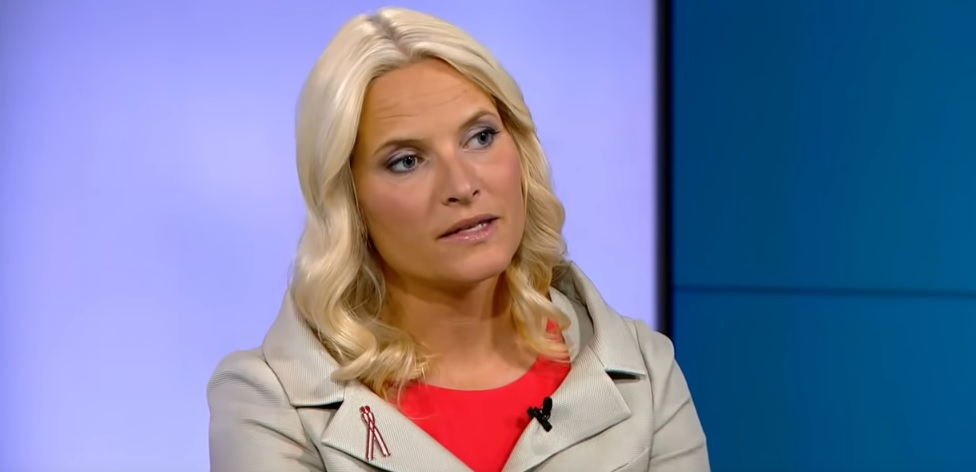
NordenBladet – Crown Princess Mette-Marit of Norway has spoken about her links to convicted sex offender Jeffrey Epstein*, according to reports. Norwegian newspaper Dagens Næringsliv reports that the royal, 46, admits she met Epstein on several occasions between 2011 and 2013, after the American financier was first convicted in 2008.
In a statement to DN, Mette-Marit said: “I would never have had anything to do with Epstein if I had been aware of the seriousness of his criminal acts. I should have investigated Epstein’s past and regret that I did not.”
The communications manager at the royal court told the newspaper: “The crown princess chose to end contact with Epstein in 2013, partly because she experienced that Epstein was trying to use the connection he had had with the crown princess to influence other people.”
Crown Princess Mette-Marit is the wife of Crown Prince Haakon, the heir apparent to the throne of Norway.
It comes after the Duke of York spoke about his connections with Epstein during a BBC Newsnight interview last month. Prince Andrew, 59, has since stepped down from royal duties for the “foreseeable future.”
Prince Andrew’s accuser Virginia Giuffre, formerly known as Virginia Roberts, gave an interview to BBC Panorama on Monday night, in which she spoke about her alleged meetings with the royal, including at Tramp nightclub in London in 2001 and a photograph of them together.
Buckingham Palace have responded, denying Virginia’s claims. A statement released on Monday evening read: “It is emphatically denied that The Duke of York had any form of sexual contact or relationship with Virginia Roberts. Any claim to the contrary is false and without foundation.”
The palace also spoke out about the Duke of York’s association with Jeffrey Epstein, stating: “The Duke of York unequivocally regrets his ill-judged association with Jeffrey Epstein. Epstein’s suicide left many unanswered questions, particularly for his victims. The Duke deeply sympathises with those affected who want some form of closure. It is his hope that, in time, they will be able to rebuild their lives. The Duke is willing to help any appropriate law enforcement agency with their investigations, if required. The Duke has already stated that he did not see, witness or suspect any behaviour of the sort that subsequently led to Jeffrey Epstein’s arrest and conviction. He deplores the exploitation of any human being and would not condone, participate in, or encourage any such behaviour.”
___________________________________
* Jeffrey Edward Epstein (January 20, 1953 – August 10, 2019) was an American financier and convicted sex offender. Epstein began his professional life as a teacher but then switched to the banking and finance sector in various roles, working at Bear Stearns before forming his own firm. He developed an elite social circle and procured many women, including underage girls, who were then sexually abused by Epstein and some of his contacts.
In 2005, police in Palm Beach, Florida, began investigating Epstein after a parent complained that he had sexually abused her 14-year-old daughter. Epstein pleaded guilty and was convicted in 2008 by a Florida state court of procuring an underage girl for prostitution and of soliciting a prostitute. He served almost 13 months in custody, but with extensive work release. He was convicted of only these two crimes as part of a plea deal; federal officials had in fact identified 36 girls, some as young as 14 years old, whom Epstein had sexually abused.
Epstein was arrested again on July 6, 2019 on federal charges for the sex trafficking of minors in Florida and New York. He died in his jail cell on August 10, 2019. The medical examiner ruled the death a suicide, although Epstein’s lawyers have disputed the ruling. Because his death eliminates the possibility of pursuing criminal charges, a judge dismissed all criminal charges on August 29, 2019.
Featured image: Crown Princess Mette-Marit of Norway (NordenBladet)
NordenBladet – Matti Vanhanen, Speaker of the Finnish Parliament, opened COSAC, the conference of the committees of Member State parliaments dealing with EU affairs, as well as of representatives of the European Parliament, in Helsinki earlier today.
Vanhanen reminded the participants of the important role of parliaments when referring to the discussion about the conference on the future of the EU proposed by Ursula von der Leyen, the new President of the European Commission:
‘An extensive conference or convention would be in a position to draft a proposal based on comprehensive preparation, while the power and democratic legitimacy would still remain in the hands of those elected by the citizens, i.e. the European Parliament and Member State parliaments, who are responsible for overseeing government operations.’
Vanhanen would also like to see institutional issues on the agenda of the conference on the future of Europe. However, he thinks that such issues should be handled cautiously and with patience.
According to Vanhanen, even when planning positive changes to the institutional organisation, it is necessary to consider how much time and energy the EU can allocate to the related processes without compromising the management of financial, employment, climate or other important substance matters.
‘In the eyes of the citizens, the legitimacy of the European Union is ultimately based on the content of its action, i.e. whether the EU is capable of guaranteeing internal security, well-being and stability. This is something we must strive to enhance every day. If we must, we may have to accept some imperfections in our institutional organisation if the organisation is otherwise sufficient to produce the maximum added value to the citizens.’
A live streaming of the COSAC sessions is available from parleu2019.fi, the official website of Finland’s Presidency of the Council of the European Union.
NordenBladet – There are over fifty thousand immigrants in Iceland, MBL.is mediates. First-generation immigrants now make up just over 14% of the population, which is a dramatic increase from the 12% measured last year. For reference, at the beginning of the decade, that number was roughly 8%.
Second-generation immigrants also increased from 4,861 last year to 5,263 this year. Adding the numbers of first and second-generation immigrants together, the total equals 15.6% of the population, which is the highest number of immigrants Iceland has ever seen.
As in recent years, Polish people were the most populous group of immigrants to the country, followed by people from Lithuania, then the Philippines. Most immigrants to the country choose to settle in the capital region, but other hot spots include Suðurnes and the Westfjords.
While immigration is up, citizenship is down. Only 569 people were granted citizenship last year, while 637 individuals received Icelandic citizenship in the previous year. As with the immigration statistics, the number of people receiving Icelandic citizenship was largely Polish.
NordenBladet —Members of the European Union Affairs Committee (EUAC) of the Riigikogu (Parliament of Estonia) are taking part in the Plenary Meeting of the Conference of Parliamentary Committees for Union Affairs of Parliaments of the European Union (COSAC) in Helsinki.
Chair of the EUAC Anneli Ott said that the newly appointed European Commission had set climate-neutral Europe by 2050 one of its clear political goals. “The European Parliament has declared climate emergency, and it is certainly not possible to avoid climate issues. But as Ursula von der Leyen pointed out in her speech, transition towards climate neutrality must be just and inclusive – or it will not happen at all,” Ott said.
Deputy Chair of the EUAC Riina Sikkut emphasised that the new Commission had also adopted strengthening Europe’s global position and innovation in digital technology as its targets. “Europe must own key technologies itself and not import them. If we do not control data and technologies and the ways they are used, then it is not possible to achieve top-level technological innovation ambitions,” Sikkut said.
Today, the COSAC agenda includes Finnish Presidency, promoting rule of law and fundamental rights in the European Union, and discussion on the main objectives of the new European Commission. The last panel will open with a speech by Vice President of the European Commission Maroš Šefčovič. Prime Minister of Finland Antti Rinne will give an overview of the achievements of the Finnish Presidency.
Tomorrow, COSAC Plenary Assembly will focus on the European climate strategy. The debate is opened by presentations from climate specialists. The delegations of the Member States will then discuss how climate and energy policy could launch a new era in European economy. The EU Chief Negotiator for Brexit Michel Barnier will also make a speech.
The Plenary Meeting of the COSAC is taking place in Helsinki until 3 December. Other participants from Estonia are Tarmo Kruusimäe and Oudekki Loone.
NordenBladet – The upcoming RÚV/Netflix co-production ‘The Valhalla Murders’ was just recommended on BBC’s ‘Ten TV shows to watch in December’ and Icelandic media is freaking out.
The show is about a police investigator named Arnar who travels from Denmark to assist in the investigation surrounding Iceland’s first serial killer. He has to work with Kata, the officer in charge of the case, and together they must race against the clock to find the murderer before it’s too late. While the victims initially seem unrelated, the trail leads them to an abandoned boys’ home named Valhalla, where some horrifying events occurred 35 years earlier. The series will premiere on RÚV and Netflix on December 26th and for those select few who don’t get books on Christmas, it looks pretty binge-worthy.
Of the show, the BBC wrote, “…this latest Nordic noir ticks the right boxes for addictive viewing this winter.” We could not agree more.
Judging by the trailer alone, it looks like it will be filled with violence, scandal, and deep, philosophical examination of the human condition. So if you liked ‘Trapped‘, ‘The Valhalla Murders’ should be right up your alley.
Truenorth’s Thordarson told Variety: “We are extremely pleased to have signed this ground-breaking deal with Netflix. This is a validation of our efforts to bring the best quality content to the world and our trust in our young and promising director-creator Þórður Pálsson who has worked on this passion project for many years.”
“This is historic contract with Netflix. This fascinating project in general is a big result for our more ambitious and focused work at RÚV aimed at massively increasing the selection, distribution, and above all else, the quality of Icelandic TV material,” added Magnús Geir Þórðarson. director general of RÚV.
“The Valhalla Murders” reunites some of Iceland’s top talents. The series, based on an idea by Pàlsson, a graduate from London’s National Film & TV School, is co-penned by seasoned screenwriter Margrét Örnólfsdóttir (“Trapped 2”, “Prisoners”), Otto Geir Borg (“I Remember You”), Mikael Torfason (“Made in Iceland”) and crime author and poet Óttar M. Norðfjörð. Pálsson directs the show with David Oskar Olafsson and Thora Hilmarsdottir.
Toplining the series are actors Nína Dögg Filippudóttir (“Trapped”) and Björn Thors (Woman at War).
The story centers on police profiler Arnar, sent back home from Copenhagen to his native Iceland to investigate the country’s first serial killer case. He teams up with the local senior cop Kata. The murders don’t seem to have much in common until the investigative duo connect them to an abandoned boys’ home named Valhalla, where horrendous crimes occurred 35 years earlier.
The Icelandic show is set to premiere on RÚV at Christmas 2019.
During her keynote speech in Göteborg, Brounéus confirmed the latest Netflix investments in the Nordic region:
*“Quicksand”, its first Swedish Original, which is set to bow its first two episodes in the Berlin Festival’s Berlinale Series. The FLX production will premiere on Netflix on April 5;
*“The Rain” Season 2,” the returning season of its first Danish original, produced by Miso Film;
*“Young Wallander,” an English-language show produced by Yellow Bird U.K., based on Henning Mankell’s best-selling Kurt Wallander novels.
*“Ragnarok,” Netflix’s first Norwegian original, from “Borgen” creator Adam Price, produced by SAM Productions.
*Recent acquisitions include Bille August’s “A Fortunate Man” and FLX’s “Bonus Family,” Season 3.
Brounéus reiterated that Netflix is ramping up local content in the Nordics, as part of the group’s ambition to bring more than 100 non-English language series to the world.
She voiced her interest in authentic, relevant and unique projects from a local viewpoint, with potential on the global market, whatever the genre. She also said that she would be looking as well into original feature film production, kids content and documentaries.