NordenBladet – The airline Norwegian is selliing its Argentine subsidiary to JetSMART, according to a press release from the company. “This is an important step in order to be profitable again, writes acting CEO and CFO Geir Karlsen of Norwegian.
Norwegian Air Argentina has flown domestic routes in Argentina for two years. The plan is to phase out Norwegian Air Argentina’s three aircraft over the next few months. The aircraft will then be returned to Norway’s European network.
“It has proved difficult to achieve satisfactory profitability for the subsidiary in Argentina, given the general situation in the country,” writes Karlsen.
Part of the reason is that the majority of the company’s costs are in dollars, but the revenue is in pesos.
“The sharp weakening of the peso against the dollar has created a significant gap between costs and revenue,” writes Karlsen.
NordenBladet – Europe will achieve only a small proportion of its environmental targets for 2020, the EU’s European Environment Agency (EEA) states. In a new report, the EEA reviews the status of targets set by EU member states and other countries covered by the Agency’s work, including Norway.
Of the 35 environmental targets for 2020, only six are achieved. In addition, nine goals are likely to be partially achieved.
“We still do not take the necessary steps to reduce greenhouse gases, preserve nature and develop an economy that is within nature’s resilience. We will go through the report thoroughly and see how Norway is doing well and where we need to sharpen the measures,” says Climate and Environment Minister Ola Elvestuen (Venstre) in a statement.
A major challenge in Norway is the climate emissions, and the Norwegian emission target for 2020 will most likely not be reached.
Endangered species
The EEA report provides a snapshot of the state of the environment in Europe and measures progress towards the established environmental goals.
Some of the conclusions are that species diversity is declining rapidly, that there is over-consumption of natural resources and that the consequences of climate change are greater.
By 2030, it is currently anticipated that even fewer environmental goals will be achieved. The EEA warns that European countries are not on track to achieve their greenhouse gas emissions targets for the next decade.
“It is disappointing to see that there has been no improvement since the last report in 2015, so we have to get up to speed to reverse the bleak outlook towards 2030,” says Director Ellen Hambro of the Environment Agency (Miljødirektoratet).
Greater attention
The goals for 2020 that are likely to be achieved include, for example, protected land and sea areas, the efficiency of resource use and renewable energy.
In areas such as species diversity, air pollution and overall climate emissions, the development is less encouraging.
The European food, transport and energy systems require major restructuring, according to the Environment Agency, which calls the EEA report the most comprehensive environmental assessment ever conducted in Europe.
However, EEA chief Hans Bruyninckx welcomes the fact that climate and the environment are receiving greater attention from ordinary Europeans and EU leaders.
Bruyninckx told DPA News Agency that the new European Commission’s leader Ursula von der Leyen has put climate change higher on the agenda than ever before.
NordenBladet – This year’s Peace Prize* winner will not meet the press in Oslo. “The traditional press conference with the Nobel Prize winner has been removed from the program this year. With few exceptions, this has not happened since the early 1990s, when press conferences became a permanent entry on the Nobel program,” says Nobel director Olav Njølstad to NTB.
According to Njølstad, the press conference will not happen because Ahmed arrives late in the afternoon of December 9, the day before the Nobel ceremony itself. But the Peace Prize winner has also said no to interviews with NRK, the BBC and Al Jazeera.
“Whatever reasons lie behind this, you will have to ask his press spokesperson,” says the Nobel director.
A large international press turnout is usually present at the awards ceremony. This year, two journalists from Ethiopia are currently accredited. In addition, Ethiopians in exile may have applied for accreditation from news media in other countries, according to Njølstad
Abiy Ahmed received the Peace Prize because in his first half as prime minister he managed to make peace with neighboring Eritrea after decades of conflict and accelerated democratization in Ethiopia.
But since then, nothing has happened, according to professor and Ethiopia expert Kjetil Tronvoll. “He doesn’t have much to brag about after his first six months,” he says.
During the past six months, the Eritrea process has stalled, while unrest in Ethiopia has risen to new heights. “There are great tensions in Ethiopia, as great as it has hardly ever been,” says Tronvoll. “By not meeting the press, Ahmed avoids having to answer difficult questions about the peace process, about the unrest in Ethiopia and what the growing fragmentation in Ahmed’s own party could entail,” he points out.
“The most important thing is that ordinary Ethiopians now feel an increasing degree of insecurity and uncertainty. They do not trust that the state is strong enough to secure them,” says Tronvoll.
In late October, just weeks after the Abiy Ahmed Peace Prize was announced, about 70 people were killed in turmoil in the capital, Addis Ababa and the Oromia region. Ahmed himself is from the Oromo people group, Ethiopia’s largest, and it was these who brought him to power in 2018.
But now well-known Oromo activists have turned to Ahmed, who will resolve the tensions in the country by lifting ethnic divides and establishing a new national identity.
“Ethiopia is deeply divided between those who want unity and those who want ethnic autonomy. Many believe that Abiy now cuts off the branch he is sitting on. His power base is weathering with every passing day,” says Tronvoll.
In November, however, the prime minister managed to unite three of four ethnic-based parties in Ethiopia’s ruling coalition EPRDF into a new party with the belligerent name Prosperity Party.
But so far, the Tigray party TPLF, which ruled Ethiopia for 27 years, has given a thumbs down.
Elections will be held in Ethiopia, next May.
________________________________________
* The Nobel Peace Prize is one of the five Nobel Prizes established by the will of Swedish industrialist, inventor, and armaments manufacturer Alfred Nobel, along with the prizes in Chemistry, Physics, Physiology or Medicine, and Literature. Since March 1901, it has been awarded annually (with some exceptions) to those who have “done the most or the best work for fraternity between nations, for the abolition or reduction of standing armies and for the holding and promotion of peace congresses”.
Per Alfred Nobel’s will, the recipient is selected by the Norwegian Nobel Committee, a five-member committee appointed by the Parliament of Norway. Since 1990, the prize is awarded on 10 December in Oslo City Hall each year. The prize was formerly awarded in the Atrium of the University of Oslo Faculty of Law (1947–1989), the Norwegian Nobel Institute (1905–1946), and the Parliament (1901–1904).
Due to its political nature, the Nobel Peace Prize has, for most of its history, been the subject of numerous controversies.
NordenBladet – There are a few different definitions of what constitutes the Arctic, but it can essentially be defined as the area surrounding the North Pole. This northernmost part of the planet is home to about 4 million people, about 10% of whom are indigenous. It is the most sparsely populated area of the earth. The territories of eight countries lie within the region: Norway, Sweden, Finland, Denmark, Russia, Canada, the US, and Iceland. The Arctic Ocean and surrounding waters cover about one third of the region’s area, making fishing and waterways some of its most important resources.
Climate change and changes in international relations have put a spotlight on the Arctic in recent years. In the spring of 2019, Iceland started its two-year chairmanship of the Arctic Council, emphasising the importance of stability, sustainability, and co-operation in the area, and the intention to find ways to tackle its challenges, most notably climate change. A few months later, US President Donald Trump had a different kind of co-operation in mind when he tweeted about purchasing Greenland. The diplomatic kerfuffle than ensued proves relations in the Arctic are anything but simple.
Iceland in particular has also seen increased interest from foreign powers. Russian bombers were spotted entering NATO airspace near Iceland twice this March. While Icelandic-Russian diplomatic ties are stiffer than they have been for a long time (due not only to the military activity but also sanctions over Russia’s indexation of Crimea), just this year, Iceland has received a visit from both US Secretary of State Mike Pompeo and US Vice President Mike Pence. Iceland has also gauged increased interest from China, not just as a tourism destination but also as an investment possibility. In light of US, Russian, end even Chinese interest in the Arctic, we’ll be taking a closer look at how international politics might affect the future of Arctic communities.
Cooperation without borders
The Arctic Council was founded in 1996. It consists of emissaries from the eight countries that make up the arctic landmass, as well as indigenous residents’ organisations. According to their website, the council is the leading intergovernmental forum promoting co-operation, co-ordination and interaction among the Arctic states, Arctic indigenous communities, and other inhabitants of the Arctic on common issues, in particular sustainable development and environmental protection. While the Nordic countries have a long history of cultural exchange and co-operation, the same cannot be said for the US and Russia. The result is that while the Arctic Council is the most important international council on Arctic issues, certain matters are completely off the table, including fisheries and defence.
Chairmanship of the council is shared between its member countries. Each country holds the chairmanship for two years, after which it moves to the next. Iceland assumed the chairmanship in spring of 2019 and declared its goals to be to continue the co-operation, sustainability, and stability of the area.
For over two decades, the Arctic Council has been the scene of highly important negotiations that make extremely dull headlines: the drafting of regulations and making of deals necessary to ensure the prospects of the area. One example is the Stockholm Convention on Persistent Organic Pollutants or the Minamata Convention on Mercury. Now international interest in the area is increasing, but that’s not necessarily in the best interest of the people who inhabit the area. To put it bluntly, the Arctic is too important, ecologically speaking, to become a monetary or a military bone of contention between powerful nations.
While Russia has long been poised as the yin to the US’s yang in international politics, Russia’s interest and activity in the north Atlantic has long been a known quantity. China’s interest is newer, and if US Vice President’s Pence’s Iceland visit is anything to go by, it’s more of a concern to the US than their old foes in Moscow. Pence remarked on the occasion that the US was happy with Iceland’s decision to decline participation in the Belt and Road Initiative, a Chinese infrastructure investment project. In fact, both Iceland’s Prime Minister and the Minister for Foreign affairs corrected the vice president as Iceland hasn’t made any decision to either participate or decline as yet. Pence also warned Icelanders not to accept the technology of the Chinese company Huawei, but there has been speculation that both of these comments were made for Chinese ears, rather than Icelandic ones.
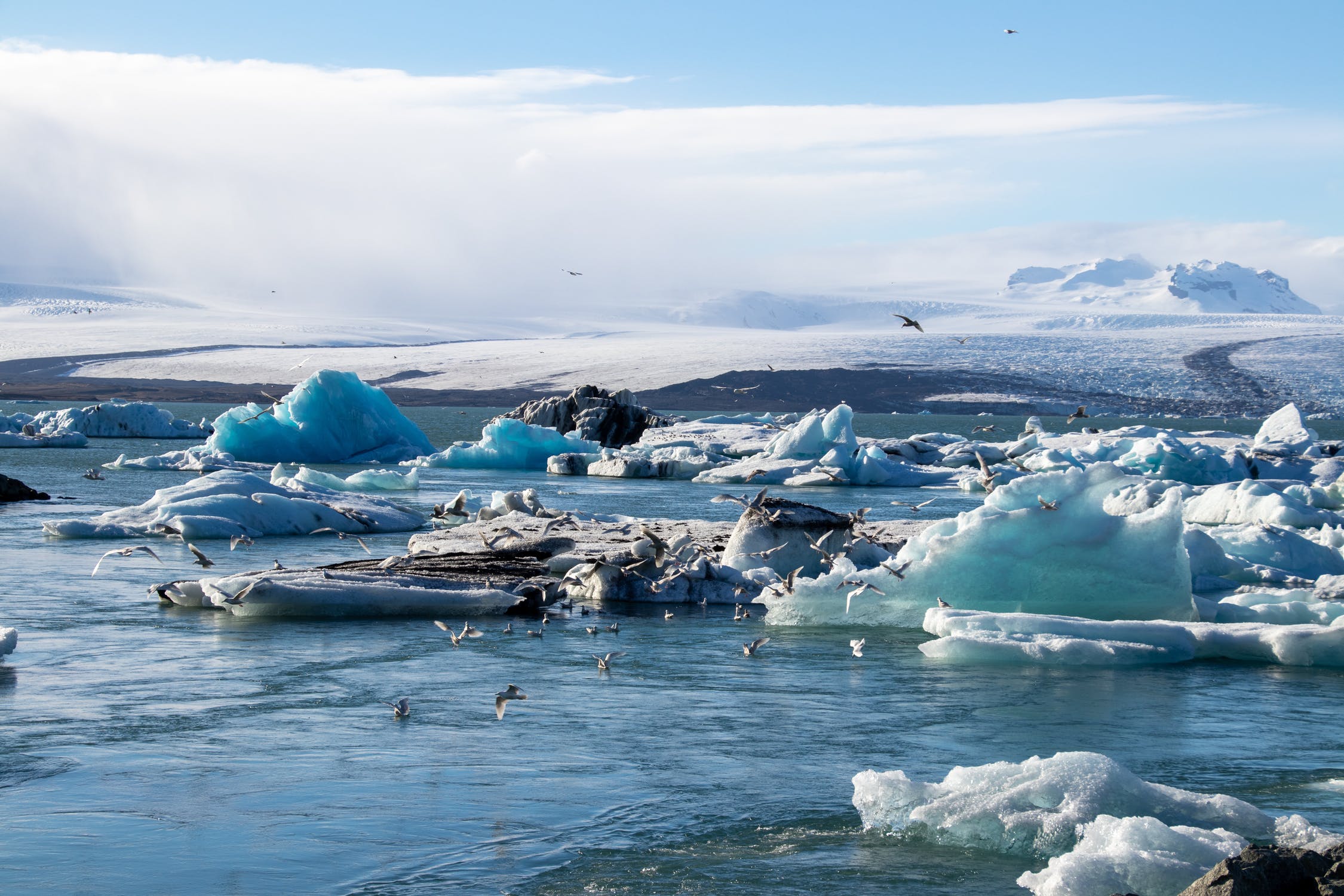
Iceland. Photo: Pexels/Valdemaras D.
Climate change
For centuries, the Arctic has been of little international consequence. As climate change continues to ravage the planet, however, the region is warming up. Three hundred billion tonnes of ice melted off the Greenland glacier this summer. The continuous melting of this freshwater is changing the makeup of the Arctic Ocean. Ocean acidification is wreaking havoc on underwater ecosystems. Aside from the effect this has on the global ecosystem, melting ice and receding glaciers are revealing hitherto unreachable land and waters, making the ears of investors, entrepreneurs, and politicians all over the world perk up.
Climate change is one of Iceland’s stated focuses in its leadership of the Arctic Council, but it’s difficult to find a local solution to a global problem. As Ólafur Ragnar Grímsson, former president of Iceland, put it, “The future of the Arctic is decided in other parts of the world, on other continents. The way we use energy; pollution; increased carbon dioxide release; will have uncontrollable consequences for the future of the Arctic.”
While Iceland’s intentions may be to prioritise action on climate change, international politics are once again interfering. Last spring, the Council didn’t release a joint statement as is usual, because the US Secretary of State wouldn’t sign a statement which mentioned climate change.
Opportunities and interest
Recently, a vessel owned by Russian gas company Novatek sailed the northeast route from Russia to China in record time. The voyage took 16 days, and no icebreakers were needed to clear the way. According to Novatek, the northeast route takes less than half the time it takes to sail west through the Suez Canal. Indeed, Iceland’s Minister for Foreign Affairs Guðlaugur Þór Þórðarsson has stated that the effects of the opening of sailing routes through the Arctic are comparable to those of the Suez and Panama Canals when they first went into operation.
In light of that comparison, it’s obvious that control of Arctic waterways could become extremely lucrative. In Iceland, some investors are already thinking to the future. A planned container port in remote Finnafjörður fjord is expected to connect Asia, Europe, and the US. The project has been heavily criticised by environmentalists.
In addition to new trading routes, Arctic resources such as fish stocks are changing with the climate. For some stocks this means less fish, but in other cases, fish species that tend to live further south are migrating north as the water heats up. As the Greenland glacier and sea ice in the Arctic melt, access to oil drilling and mining opportunities becomes easier and therefore more profitable. While it might seem callous to consider business opportunities as climate change ravages the area, this is an important issue for the people of the Arctic, the least populated area in the world. Iceland doesn’t have an army, instead relying on defence co-operation and diplomatic negotiations for safety. If the global superpowers’ struggle for economic influence in the area intensifies, that could spell trouble for a small nation that relies on soft power.
National security
Minister for Foreign Affairs Guðlaugur Þór has stated that “It’s evident that there’s increased interest and emphasis on the Arctic and the Arctic Ocean from the superpowers, as well as others. […] There hasn’t been much military development in the area. And we want to make sure it stays that way.”
But that might prove more difficult than anticipated. Iceland is a founding member of NATO, and the US military has long had a base on the Reykjanes peninsula. Recently, increased US spending in the base’s renovation have caused a stir, and Vice President Pence emphasised the importance of the defence agreement during his visit to Iceland recently. Iceland’s continued defence cooperation with the US and NATO has always muddied the waters and increased defence costs and military exercises in Iceland has roused strong opposition. Increased military activity by Russia in the area might be one of the reasons why the US are fortifying their position, as ever since the Cold War, Iceland has been in a strategically important spot between the two countries.
Historian Sumarliði Ísleifsson has stated that increased interest is not necessarily in the best interest of the people of the Arctic. According to Sumarliði, the Icelandic government should speak clearly of their intent to keep the Arctic peaceful. Military exercises should have no place here, and Iceland should do its best to avoid getting dragged into an arms race. He told Iceland’s national broadcaster RÚV, “The more low-key the politics in the area are, the better.” Eiríkur Bergmann, professor of political science, considers it a matter of worry how the US approaches the countries in the Arctic. President Trump’s attempt to purchase Greenland shows his attitude towards the people of the Arctic and might portray the lack of respect and knowledge international political leaders have for the people of the Arctic.
NordenBladet – Laufabrauð (Icelandic pronunciation: [ˈløːivaprœiθ], “leaf bread”; sometimes also called “snowflake bread” in English) is a traditional kind of Icelandic bread that is most often eaten in the Christmas season. Originating from northern Iceland but now eaten throughout the country, it consists of round, very thin flat cakes with a diameter of about 15 to 20 cm (6 to 8 inches), decorated with leaf-like, geometric patterns and fried briefly in hot fat or oil.
Laufabrauð can be bought in bakeries or made at home, either with ready-made dough or from scratch; patterns are either cut by hand or created using a heavy brass roller, the laufabrauðsjárn (“leaf bread iron”). Leaf bread making at home is usually a family undertaking and often an essential part of the Christmas preparations, where several generations gather and take part in the decorating.
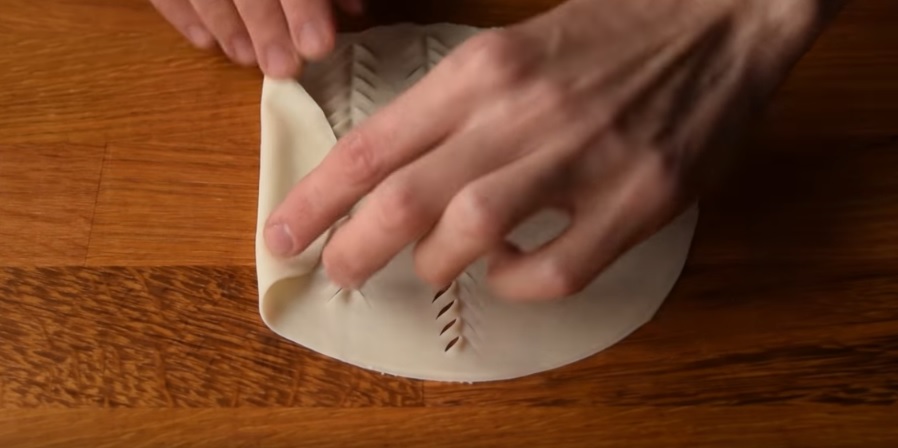
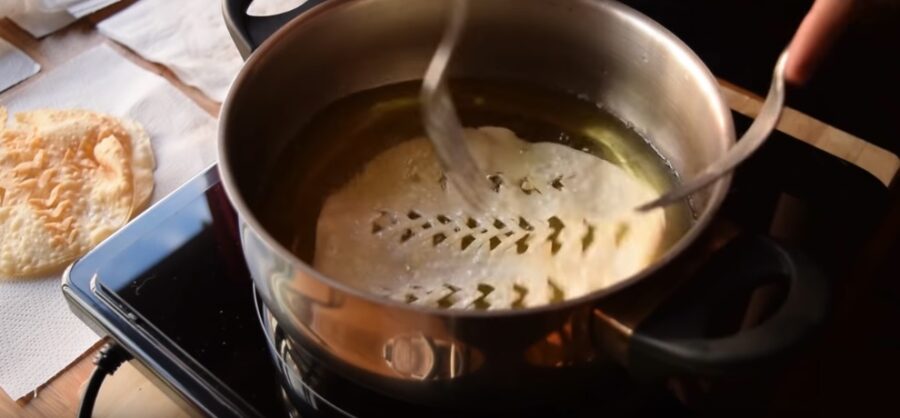
Laufabrauð. Photos: 3x NordenBladet
Many families have their own personal traditions surrounding the bread. They gather together in the beginning of December, usually on the first Sunday of Advent, and make a full day out of it. Groups of 12-15 can make several hundred cakes at a time. At the end of the day, the cakes are split evenly between all and are stored in cookie tins until Christmas. Recipes are passed down from mother to daughter and there are also designs passed down through generations.
Traditionally, this was the only time of the year when men took any part in the cooking. They would roll the dough out, which takes considerable effort because of the required thinness, and/or cut patterns into the bread with their pocketknives. Thin bread, which used to be a necessity, is now the sign of a good laufabrauð. If you can read newspaper headlines (or even the articles) through the rolled out dough, you’ve done it right.
Dough is kneaded by hand, rolled into a long cylinder, and wrapped, usually in a tea towel, and allowed to rest. Today, bakeries will sell pre-kneaded and cut dough that only needs to be decorated and fried, but where’s the fun in that?
The dough can be made with pretty much whatever flour you’d like – regular white, whole wheat, rye, whatever. Sometimes caraway seeds are added in. Icky.
The cylinder is cut into about 40-50 pieces. They are flattened by a rolling pin as thin as they can possibly be. The dough dries out quickly and must be kept wrapped. Once a slice is cut off for decorating, the cylinder of dough is immediately wrapped up again, usually in a tea towel. Scraps and cutoffs aren’t re-kneaded because they will just dry out, so they are fried and eaten as a warm treat.
A plate is placed on top of the rolled out dough and a circle is traced using a kleinuhjûl (a knife that resembles a pizza cutter). Today, the bread is usually decorated with a special knife called a laufabraudsjárn, but some families’ still use pocketknives. In that case, each circle of dough is folded into a half moon and small slantwise cuts are carved into it. Once this is done, the half moon is unfolded and every other “leaf” is flipped back.
Recipe:
4 1/3 c. (1000 g) flour
¾ c. (200 g) rye flour
1 tsp. sugar
1 tsp. salt
¼ c. (50 g) butter, melted
4 1/3 c. (1 l) warm milk
Oil or fat for frying (about 1 liter)
In a large mixing bowl, combine flour, rye flour, sugar, and salt. Add melted butter, warm milk (heat it to just below the boiling point then allow to cool slightly) until you obtain a smooth dough. Flatten the dough into very thin circles, like pancakes. Decorate by cutting out patterns with a sharp knife. Using the tines of a fork, poke holes all over the dough circles (to prevent the formation of bubbles when frying). To prevent the dough from drying out before frying, stack the breads on top of one another, placing a sheet of parchment paper between each. Heat oil or fat in a deep pan until very hot (180°C). Using 2 forks to put them in oil, fry the circles of dough for about 1 minute on both sides until golden then immediately press the bread between newspaper and papertowels with a flat pot lid. Store the breads stacked in a tin box in a cool, dry place so that they don’t break. Laufabrauð is traditionally eaten with hangikjöt (smoked lamb).
Laufabrauð origin.
The preparation of this bread is a tradition that originated in northern Iceland and subsequently expanded throughout the territory. The first written mention dates from the first half of the 18th century (1736). It was probably older, but there are no references to it. Today, it is an essential Christmas tradition in Iceland.
Iceland, at that time, was a country in which it was very difficult to find products such as flour, sugar, salt… especially in winter. They were considered luxury products and only accessible to the richest. In addition that most of the times they arrived with mold by the lack of interest of the merchants. Until the 18th century there was no milling equipment in the country.
The Icelanders learned how to make water mills. The problem was the grain, although it was cheaper, they had to save to be able to buy it. That is why everything made from flour was intended for special occasions. Housewives tried to stretch the dough as thin as possible to create more pieces. They said that the ideal was to be able to read the Bible through the dough. Each bread was designed with great care and affection to emphasize the importance of consuming that piece of bread.
Where Can one purchase a “Leaf-Cutting Tool” for Laufabrauð?
For many Icelanders, making laufabrauð (leaf bread) is an essential part of Christmas preparations. The art of making leaf bread is usually a family undertaking, where several generations gather and take part. Leaf-bread making traditionally requires a laufabrauðsjárn, or a leaf-bread roller, which can be purchased in, among other places, Kokka, Allt í Köku, and Brynja.
Kokka (on Laugavegur 47) offers two types of leaf-bread rollers: a 22mm roller (ISK 18,500) and a finer, 12mm roller (ISK 20,500). According to a sales representative, Kokka currently has a few leaf-bread rollers in stock; however, as many Icelanders begin preparing leaf bread in early December, they “usually go quickly this time of year.”
Allt í köku (on Smiðjuvegur 9 in Kópavogur) offers three types of leaf-bread rollers: a 12mm roller (ISK 20,495), a 22mm roller for (ISK 18,495), and a 22mm roller with a custom-made wooden handle (ISK 23,995). Last year, “all the rollers sold out,” (excepting those with the wooden handles).
Brynja (on Laugavegur 29) offers one type of hand-crafted leaf-bread roller (ISK 21,840). They expect the rollers to sell out in early December.
It’s interesting to note that most of the rollers that the abovementioned vendors sell are produced by Handverk Haraldar. The company is owned and operated by Haraldur Guðbjartsson who is one of only a few Icelanders who manufacturers hand-made leaf-bread rollers. Haraldur acquired the company, along with the manufacturing equipment, from Ægir Björgvinsson and his wife “Didda” in 2013.
NordenBladet – This weekend, the city of Reykjavík and the Icelandic government signed a contract that will begin an investigation into potentially opening a new domestic airport in Hvassahraun. According to RÚV, each party will invest 100 million ISK to study if the location is appropriate for the project.
The report created in this agreement revealed moving domestic flights to the Keflavík airport is currently impossible so it would make more sense to build an entirely new domestic one. In reaction to this news, Icelandair’s CEO, Bogi Nils Bogason, said he believed domestic and international airports must be in the same place. In an interview with Vísir, he discussed the complexity of the situation. “It is very difficult to make the decision to invest in brand new projects while we are investing in other projects simultaneously,” he explained.
The Icelandair group also emphasised how costly it would be to run two airports and urged the creation of but one airport with both domestic and international destinations, which would distribute tourists more evenly throughout the country. They hope this would create, “an opportunity to make an airport in Iceland the centre of West Nordic flight connections.” That said, the reports from the city and the Icelandic government do not indicate any desire to add international destinations to this Hvassahraun airport.
The Minister of Transport, Sigurdur Ingi Jóhannsson, agreed that even though the Keflavík airport could currently handle the 19 million people it received this year, it is necessary to consider the possible growth of those numbers. “If we aim for the number of passengers to grow to 30-35 million in the next 30-40 years, then maybe within 10 years we need to decide what is going to be done. Then, Hvassahraun will come in handy,” he said.
While currently the domestic airport is located in central Reykjavík, the international airport operates in Keflavík, which is about 50 km away from the capital. Hvassahraun, in contrast, is just 20 km outside of Reykjavík.
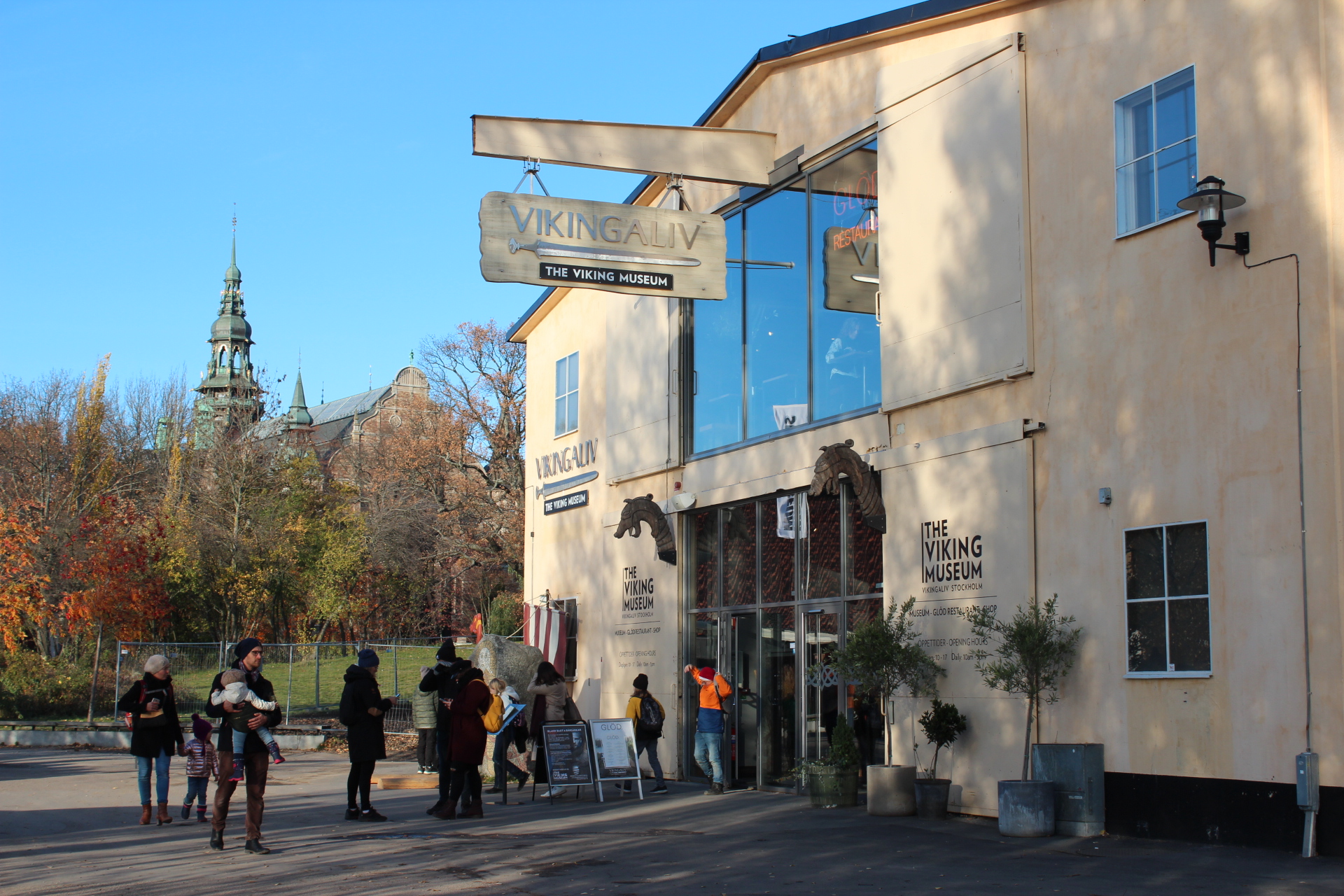
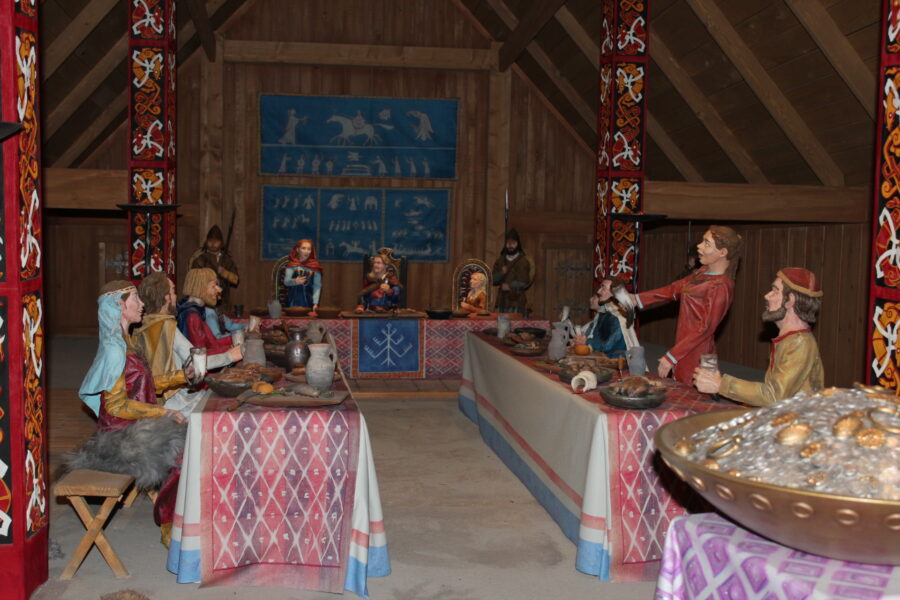
NordenBladet – For those, who are interested in Norse mythology and wish to experience the Viking age, I recommend to visit The Viking Museum in Djurgårdsvägen 48, 115 21 Stockholm. In the exhibition, several guided tours are held daily in Swedish and English. Audioguide and adventure ride is available in English, Russian, Finnish, Italian, French, Spanish German, Chinese and Swedish.
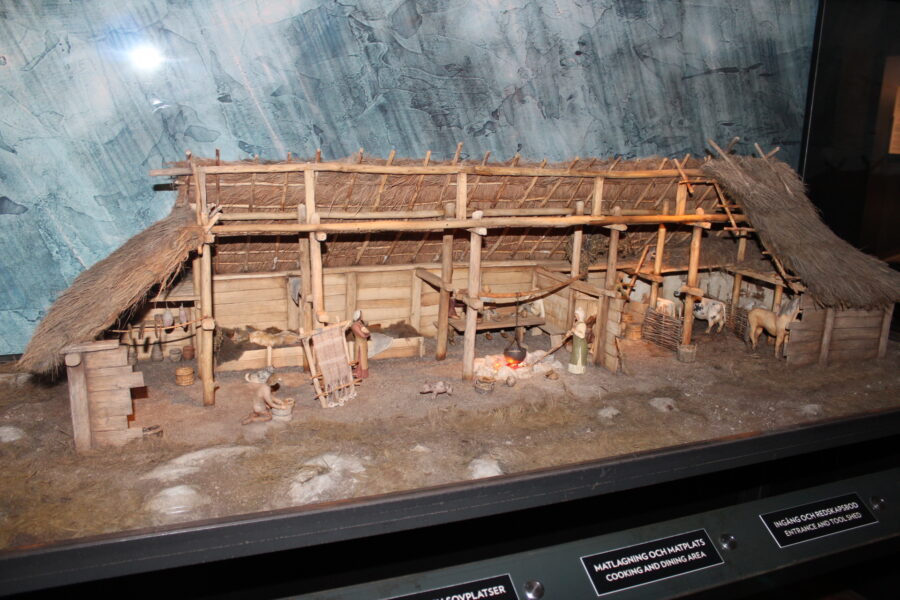
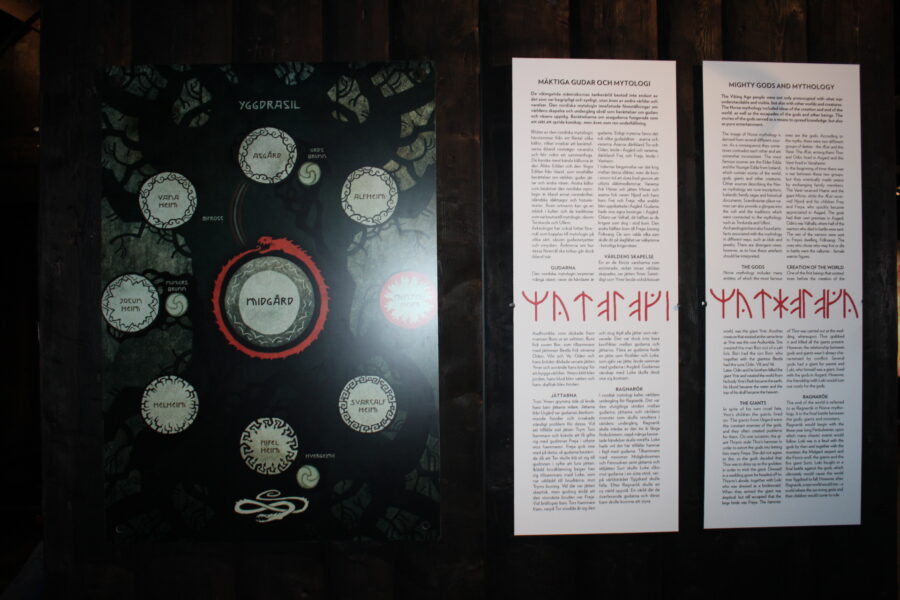
In the vivid exhibition you will meet the Vikings through movies, scenery, projections and sound effects as well as archaeological objects. Knowledgeable guides in Viking gear will answer all your questions and the many replicas let you explore life as a Viking with all your senses. You will learn about the Viking raids, journeys and mastery in ship building as well as the everyday life at the farm. The Norse mythology is present everywhere and here myth meets truth.
Estrid Sigfastsdotter (Old Norse: Æstriðr, Ástríðr) was a rich and powerful 11th-century Swedish woman whose long family saga has been recorded on five or six runestones in Uppland, Sweden. This Estrid was the maternal grandmother of the chieftain Jarlabanke of the Jarlabanke clan. The family were rich landowners and belonged to the higher echelons of Swedish society, and she was probably named after Estrid of the Obotrites, who was the queen of Sweden, and the consort of Olof Skötkonung, at the time Estrid was born. Her family saga has been the centre of a dramatisation at the Stockholm County Museum.
It is safe to assume that five of the 11 runestones that mention an Estrid in eastern Svealand refer to this Estrid because of the locations of the runestones and the people who are mentioned on them.
A sixth runestone, U 329, deals with an Estrid who is only mentioned as the sister of a Ragnfast and a Gyrid. This Ragnfast appears on the Hillersjö stone and the Snottsta and Vreta stones as the husband of Inga and the son-in-law of Gerlög. Since Fot, the runemaster of U 329, also made runestones for the Jarlabanke clan, and Gerlög and Inga also belonged to the same regional elite, it is probable that U 329 refers to the same Estrid as the five other runestones. This would mean that Estrid was born in Snottsta (also spelled Snåttsta) as the daughter of the rich landowner Sigfast.
The Broby bro Runestones tell that Estrid and her husband Östen had a son by the name Gag, who died while Östen still was alive, and three other sons named Ingefast, Östen and Sven. The runestones further tell that a barrow and a bridge were built and that two of the runestones were raised by the brothers Ingefast, Östen and Sven in memory of their father Östen, who had gone to Jerusalem and died in the Byzantine Empire.
The story of her life is continued on the Hargs bro runic inscriptions, where we learn that Estrid had married a man named Ingvar, and this Ingvar had a son prior to marrying Estrid whose name was Ragnvald. It also appears that Estrid and Ingvar had three sons named Sigvid, Ingvar and Jarlabanke. We further learn that Estrid had a bridge constructed, which apparently was a tradition in her family.
She appears to have become quite old and moved back to Täby where she had family, because the last chapter of her life is documented on two runestones in south-western Täby. They tell that Estrid cleared a road and built bridges together with her grandson Jarlabanke (by her son Ingefast) and his family, and she dedicated the constructions to her sons Ingvar (her son with Ingvarr at Harg) and Ingefast (her son with Östen at Broby bro).
When Stockholm County Museum made an archaeological excavation at Broby bro, in 1995, they found three graves. The three were buried in Christian manner, i.e. with the head towards the west, they were not burned and there were few gifts. Some coins that were found helped to date the graves to the 11th century. One of the graves was located just beside Östen’s barrow and it was for a rich and very old woman. The buried woman was probably Estrid.
Photos: 13x NordenBladet/Helena-Reet Ennet
More info about Vikings:
The period from the earliest recorded raids in the 790s until the Norman conquest of England in 1066 is commonly known as the Viking Age of Scandinavian history. Vikings used the Norwegian Sea and Baltic Sea for sea routes to the south.
When did the Vikings begin and end?
Why does the Age of the Vikings start in 793 and end in 1066 ? The 793 raid on the monastery at Lindisfarne on the northeast coast of England was the first Viking attack that was written about, and it was a big shock to all of Europe.
When did the Vikings die out?
The Viking age ended when the raids stopped. The year 1066 is frequently used as a convenient marker for the end of the Viking age. At the Battle of Stamford Bridge, the Norwegian king Haraldr harðráði was repulsed and killed as he attempted to reclaim a portion of England.
Photo:NordenBladet/Helena-Reet Ennet
Do Vikings still exist?
So do Vikings still exist today? Yes and no. No, to the extent that there are no longer routine groups of people who set sail to explore, trade, pillage, and plunder. However, the people who did those things long ago have descendants today who live all over Scandinavia and Europe.
How long did Vikings live?
For women, the risks were in pregnancy and childbirth and 35% of them did not survive beyond 30 years. The 31 to 40 year olds were the ‘middle-aged’ people of the Viking Age and 50 years of age would be thought of as ‘old’.
How tall was the average Viking?
How tall were the Vikings? The average Viking was 8-10 cm (3-4 inches) shorter than we are today. The skeletons that the archaeologists have found, reveals, that a man was around 172 cm tall (5.6 ft), and a woman had an average height of 158 cm (5,1 ft).
Was Ragnar Lothbrok real?
Ragnar is the first real Viking personality to emerge from the hazy accounts of the period but in many ways he still belongs more in the fable-filled pages of the sagas than amongst the sober entries in the chronicles.
Who is the most famous Viking of all time?
There are so many badass Vikings that it’s tough to narrow it down, but these ten who made their peers soil their breeches.
Sweyn Forkbeard.
Harald Hardrada.
Bjorn Ironside.
Gunnar Hamundarson.
Erik the Red.
Ragnar Lodbrok.
Ivar the Boneless.
Egil Skallagrimsson.
Who killed all the Vikings?
When Cnut the Great died in 1035 he was a king of Denmark, England, Norway, and parts of Sweden. Harold Harefoot became king of England after Cnut’s death, and Viking rule of England ceased. The Viking presence dwindled until 1066, when the invading Norsemen lost their final battle with the English at Stamford Bridge.
Was there a real Ivar the Boneless?
Ivar the Boneless (Old Norse: Ívarr hinn Beinlausi; Old English: Hyngwar), also known as Ivar Ragnarsson, was a Viking leader who invaded Anglo-Saxon England. According to Tale of Ragnar Lodbrok, he was the oldestson of Ragnar Loðbrok and third wife Aslaug.
How does Ivar the Boneless die in history?
Ivar and his brothers Halfdan and Hubba invaded Great Britain in the year 865 at the head of a large Viking force described by fearful Christians as the “Great Heathen Army.” The brothers’ motivation was to avenge their father, who had died after being captured while raiding the kingdom of Northumbria.
Did Vikings have blue eyes?
A team at the University of Copenhagen have tracked down a genetic mutation which took place 6-10,000 years ago and is the cause of the eye colour of all blue-eyed humans alive on the planet today.
Did Vikings have blonde hair?
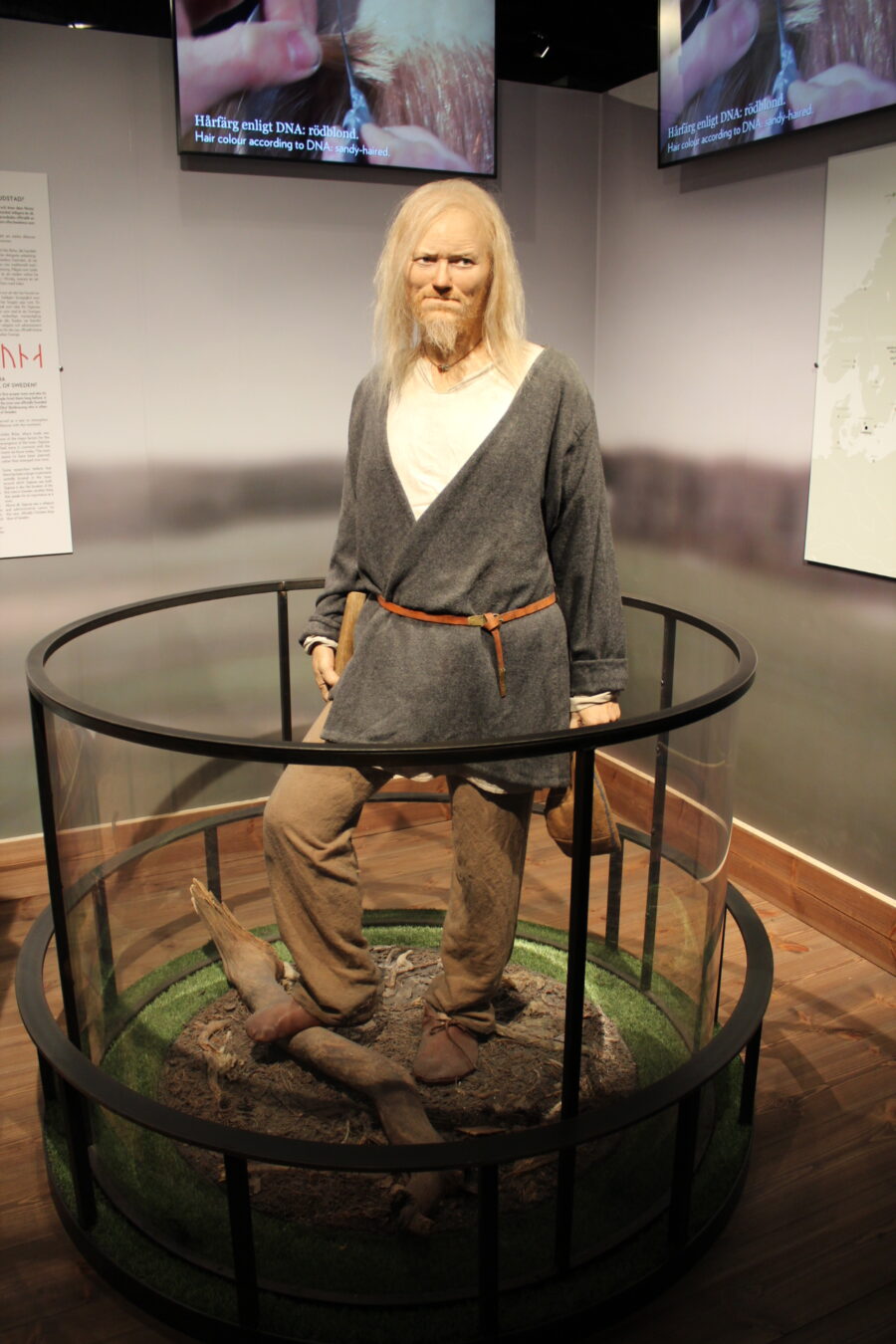
Red- or blonde-haired Vikings? Genetic research has shown that the Vikings in West Scandinavia, and therefore in Denmark, were mostly red-haired. However, in North Scandinavia, in the area around Stockholm, blonde hair was dominant.
Photo:NordenBladet/Helena-Reet Ennet
Did Vikings wear horned helmets?
The popular image of the Vikings is one of fearsome warriors wearing horned helmets. Many depictions of the Vikings display this particular attribute. However, there is only one preserved helmet from the Viking Age and this does not have horns.
What Did Vikings really wear?
The inner layer usually consisted of a linen kirtle – a long shirt which the men pulled over their heads. On the outside, the typical Viking man wore a woollen coat. Like today’s men, Viking men wore trousers. These could be either short or long, and they were usually sewn in the style of pantaloons.
Was King Olaf a Viking?
Olaf Tryggvason. … Olaf Trygvasson (960s – 9 September 1000) was King of Norway from 995 to 1000. He was the son of Tryggvi Olafsson, king of Viken (Vingulmark, and Rånrike), and, according to later sagas, the great-grandson of Harald Fairhair, first King of Norway.
Was there a Viking king?
Who was Ragnar Lothbrok? According to medieval sources, Ragnar Lothbrok was a Danish king and Viking warrior who flourished in the 9th century. There is much ambiguity in what is thought to be known about him, and it has its roots in the European literature created after his death.
What do you call a female Viking?
A shield-maiden (Old Norse: skjaldmær), in Scandinavian folklore and mythology was a female warrior. They are often mentioned in sagas such as Hervarar saga ok Heiðreks and in Gesta Danorum.
How old was the oldest Viking?
Ribe emerged as a town in the early 8th century AD. Previously, the oldest evidence of Norwegian society in Ribe was from broken pots dated to between 800 and 820 AD. “The Viking Age becomes a phenomenon in Western Europe because the Vikings learned to use maritime mobility to their advantage.
What is the viking ride? Ragnfrid’s saga is a Viking ride where you get to follow along on a trip to the Viking Age. The journey begins at Frösala Farm with Ragnfrid and her husband Harald. Then you get to follow on a journey and witness plundering in the west and slave trade in the east. With sound, light and atmospheric environments you travel through the 11-minute journey that is told by Ragnfrid herself.
The adventure ride Ragnfrid’s saga takes you along on a captivating journey through Viking age Europe. You will follow Harald and his crew on a dramatic quest for silver. The story told by an ageing Ragnfrid is built on historical characters and events and is recommended from 7 years.
Is Ragnfrid’s saga included in the entry price? Yes. Ragnfrids saga is included in the entry price.
Is the viking ride scary? The viking ride can be perceived as scary by some, therefore we recommend children under the age of 7 to go with an adult.
Can you take the ride multiple times? Absolutely!
Photos: 22xNordenBladet/Helena-Reet Ennet
What is the entrance fee at Vikingaliv?
Prices:
159 SEK Adult
495 SEK Family ticket (2 adults, 2 children)
119 SEK Children 7-15 years
0 SEK Children 0-6 years
139 SEK Senior
139 SEK Student
Can you pay with cash in the entrance on Vikingaliv? No, they do not take cash. In the entrance, the shop, and the restaurant you can pay with card or Swish.
Can you buy tickets to Vikingaliv in advance? Yes. You can buy your tickets to Vikingaliv in advance. After your purchase you will get the tickets sent to you digitally.
Is Vikingaliv located indoors or outdoors? At Vikingaliv all activities are indoors.
Can you go on the ride with a wheelchair? Wheelchairs are not available to be brought onboard the ride, but one of the carts has a foldable side which makes it easier to move from the wheelchair to the wagon. In the wagon you must sit with bent legs.
How wheelchair-friendly is it at Vikingaliv? An elevator is available to move between floors.
Opening hours 2019:
10 am – 5 pm every day
Vikingaliv is located on Djurgården in Stockholm. In Wasahamnen on Djurgårdsvägen 48.
Tram No. 7 – Get off at Liljevalchs/Gröna lund and then walk down to Wasahamnen.
Bus 67 – Get off at Liljevalchs/ Gröna lund and then walk down to Wasahamnen.
Go to Karlaplan, here you can either take bus 67 or walk. The walk approximately takes 15 minutes.
The Djurgårds ferry – Get off at Allmänna gränd and then walk towards Wasahamnen/ Galärvsparken.
Ressel (M/S Emelie) – Get off at Allmänna gränd and then walk to Wasahamnen / Galärvarvsparken.
Walk – Walk along Strandvägen and turn right onto Djurgårdsbron. Continue past the Nordic museum.
Unfortunately, Vikingaliv has no parking spaces. Djurgården offers a few parking spaces. Instead, we recommend going by bus/ferry/tram or walk out to Vikingaliv. Click here for further instructions on how to get to us at Vikingaliv.
Featured image: The Viking museum, a museum entirely dedicated to the Viking Age, through an exhibition and a Viking Journey – Ragnfrid´s Saga. Vikingaliv is based on historical facts combined with the most recent discoveries of Viking history. Here is also restaurant Glod overlooking the inlet to Stockholm, and a museum shop. The Viking Museum is situated at Djurgarden. (NordenBladet/Helena-Reet Ennet)
Read also: EXHAUSTIVE OVERVIEW: who were the ancient Scandinavian origin Vikings and when was the time of the Vikings?
NordenBladet – The Vikings were ancient Scandinavian origin seafarers whose characteristic culture flourished around the 8th until the 11th century (the so called Viking Era). The name “Viking” apparently stems from ancient Nordic word vik that stands for gulf; viking therefore is someone from the gulf, a seafarer. Although the vikings have given their name to an entire era, these warrior-seafarers made up a relatively small proportion of the population of those times, the majority of the people were peaceful farmers. According to yet another theory the name viking comes from old English word wic that stands for a merchandising settlement. Besides the conquering missions the vikings were also engaged in handicraft and trade.
NordenBladet – Ms Maireád McGuinness, the First Vice-President of the European Parliament, participated in the plenary meeting of COSAC in Helsinki on 1 – 3 December.
McGuinness appreciated the dialogue in the conference: “People were getting involved, lots of questions, lots of answers, lots of time to reflect.”
After the discussions, she reminded about the benefits of parliamentary cooperation.
“What you realise is that as you talk to colleagues from all over Europe and outside, we share common problems, and that makes finding common solutions much easier”, she said.
“The issues we face today are very challenging and if we don’t act, the results will be very damning so we need parliamentary cooperation now more than ever.”
NordenBladet – A new Police Council under the chairmanship of the National Commissioner of the Police will begin operations on January 1 next year, RÚV.is reports. The new council was introduced by Minister of Justice Áslaug Arna Sigurbjörnsdóttir at the Minister’s residence in Reykjavík yesterday.
Kjartan Þorkelsson, Chief of Police of South Iceland, will temporarily replace Haraldur Johannessen as the National Commissioner of the Police at the start of the new year. Haraldur, who has occupied the position for 22 years, has negotiated the terms of his departure with Áslaug Arna and will initially assume an advisory role for the Ministry of Justice.
An Official Forum for Cooperation
The Police Council will serve as an official forum for Iceland’s police chiefs, aiming to increase cooperation between regional police chiefs and to contribute to more efficient use of funds. The council also aims to ensure police authorities better fulfil their duties to the public.
The Police Council will not exercise independent authority nor make policy decisions. The National Commissioner of the Police will continue to direct law-enforcement matters on behalf of the Minister of Justice but will consult with the Police Council regarding any significant decisions.
Soon to be Advertised
In her speech yesterday, Áslaug Arna stated that the office of the National Commissioner of the Police will be advertised soon. Acting Commissioner Kjartan Þorkelsson has revealed that he will not be applying for the office.
The current organisation of police districts in Iceland was signed into law on December 4, 2014, by then Prime Minister Sigmundur Davíð Gunnlaugsson. Áslaug Arna stated that the present moment was an auspicious time to rethink the organisation. Haraldur Johannesson’s role as National Commissioner has proved controversial of late, with many police officers and regional police chiefs expressing dissatisfaction with Haraldur’s actions in office.
A Lack of Cooperation
“Over the past few weeks we have reviewed the system in its entirety,” Áslaug Arna stated, adding that the new organisational changes aim to make police authorities operate better as a unified whole. Matters of dispute that she personally reviewed all share one thing in common: lack of cooperation between police districts.
In her speech, Áslaug Arna added that while many police-related affairs call for localised solutions, others require a more comprehensive review, which the National Commissioner and the Police Council will oversee. The council aims to prevent needless repetition, to reduce redundancy, and to transfer endemic police assignments to specialised units.
The Minister of Justice is also considering other changes, including a possible merger of regional police districts.
NordenBladet – Today, Landsvirkjun*, the National Power Company of Iceland, will introduce plans to become carbon neutral by 2025, RÚV reports. According to Hörður Árnarson, CEO of Landsvirkjun, the company has monitored greenhouse gas emissions closely over the past ten years. Landsvirkjun’s initiative forms a part of the government’s plans to become carbon neutral by 2040.
Emissions Halved Since 2005
In an interview on Rás 2 this morning, Hörður Árnason stated that Landsvirkjun’s emissions have halved from 2005 when greenhouse gas emissions were approximately 45 thousand tonnes per year. According to Hörður, today Landsvirkjun emits approximately 22 thousand tonnes annually. Most of the emissions can be traced to geothermal power stations, especially Krafla**. Landsvirkjun aims to reduce emissions from these sources, while also cleaning emissions.
“The steam is separated and mixed with fluid whereupon it is injected back into the site of its retrieval … it’s not a simple operation and it involves considerable innovation. We believe that such efforts, however, will lead to an accumulation of knowledge that Icelandic engineering firms and others can use to sell to foreign parties.”
A Comprehensive and Costly Initiative
Hörður stated that the operations will be comprehensive and costly. “It’s a big project that we divide into three parts. Prioritisation is key. First, it is important to prevent emissions, which Landsvirkjun has done by adopting an internal carbon price. We’re probably the first company in Iceland to have done so. For all of our projects, we equate greenhouse gas emissions with cost; for every tonne of greenhouse gas emissions we estimate that it costs us approximately $33,” Hörður stated, admitting that the carbon price was relatively low. The second most important aspect of Landsvirkjun’s project is reducing emissions, Hörður added, with carbon sequestration coming third.
Landsvrkjun aims to update all of its cars, machinery, and engines so that in ten years they will be powered by electricity, methane, or hydrogen.
Iceland’s Largest Producer of Electricity
Landsvirkjun’s presentation will be held at Nauthóll at 2.00pm today. The panel of speakers will include Halldór Þorgeirsson, Chair of Iceland’s Climate Council; Kristín Linda Árnadóttir, Deputy CEO of Landsvirkjun; and Eggert Benedikt Guðmundsson, Director of Grænvangur, among others.
Landsvirkjun is Iceland’s largest electricity generator and one of the ten largest producers of renewable energy in Europe. Landsvirkjun operates 17 power plants in Iceland concentrated on five main areas of operation. It is owned entirely by the Icelandic state.
_______________________________________
* Landsvirkjun, the National Power Company of Iceland, is Iceland’s largest electricity generator and one of the ten largest producers of renewable energy in Europe. Landsvirkjun operates 17 power plants in Iceland concentrated on five main areas of operation.
Landsvirkjun was founded on 1 July 1965 by the state of Iceland and the city of Reykjavik. The city of Reykjavík contributed to the company three power stations at the Sog River. Shortly after its founding construction on the Búrfell hydropower station began. From 1965 until 2005 the purpose of Landsvirkjun was to produce and distribute high voltage electricity. The municipality of Akureyri acquired a share in Landsvirkjun in 1983 and became the third owner. Three hydropower stations at the Laxá River previously owned by the municipality of Akureyri were merged into Landsvirkjun. The hydropower stations Búrfell, Sigalda, Hrauneyjafoss, Blanda, Sultartangi, Vatnsfell, and Fljótsdalsstöð were all built by Landsvirkjun. The geothermal power station Krafla came under Landsvirkjun’s ownership in 1986. Through a new electricity act in 2005 the company’s Transmission Division became Landsnet, an independent limited company and a subsidiary of Landsvirkjun. Landsnet owns and operates the Icelandic transmission system and manages the country‘s electricity system. In 2007 the state of Iceland took over the ownership shares of Akureyri and Reykjavík in Landsvirkjun, turning it into a public partnership, fully owned by the state of Iceland. In December 2012, Landsvirkjun erected two wind turbines, in an area known as Hafið, within the construction area of Búrfell Power Station, in the south of Iceland. The turbines have a total of 2 MW of installed power.
** The Krafla geothermal power plant is a geothermal power generating facility located in Iceland, close to the Krafla Volcano and the lake Mývatn. It is considered to be Iceland’s largest power station with its 33 boreholes, and it is able to produce 500 GWh of electricity annually with its installed capacity of 60 MW (2 x 30 megawatts).
The construction work started in 1974, but due to volcanic activities in the area, the building was slowed down. The Krafla power station was officially launched in the early 1977, but was only able to produce at its full efficiency of 60 megawatts after a second steam turbine was installed in 1996.
Originally the power plant was owned by the government, but was purchased in 1985 and has since been operated by Landsvirkjun (National Power Company). About 15 employees work there full-time.