NordenBladet —A spaceport at the Esrange Space Center in Kiruna in northern Sweden has recently officially opened after the Swedish head of state, King Carl XVI Gustaf, and European and Swedish political dignitaries cut the ribbon to the new spaceport.
The new spaceport called SSC SmallSat Express, which opened on 13th January, will be a crucial asset for Europe’s space landscape.
According to a press release, only ten countries have permission to launch satellites into Space. Europe only has this capability in French Guiana, with the Esrange Space Center now providing the continent with an independent European gateway to Space.
Stefan Gardefjord, CEO of the Swedish Space Corporation (SSC), explains, “This new launch complex will help create a foundation for a resilient Europe in Space. New satellite constellations in orbit, responsive launch capabilities, and the development of reusable rocketry will enable a secure, competitive, and sustainable Europe.”
Gardefjord added, “This is a giant leap for SSC, Sweden, Europe, and the rest of the world. Satellites are decisive for many functions of the daily lives of today’s modern world, and the need for them will only increase in the years to come with Space playing an even more important role.”
The first satellite from the Esrange Space Center spaceport is set to launch in late 2023.
NordenBladet – Witch trials, in which people accused of witchcraft were put on trial and often executed, took place in various parts of Europe and the American colonies from the late 15th century through the 18th century. The exact reasons for the persecution of witches varied by time and place, but they were often believed to be in league with the devil and to use their powers to harm others.
The biggest witch hunters were often religious leaders, such as priests and ministers, as well as secular officials like judges and magistrates.
Famous witches in history include Joan of Arc, who was burned at the stake in 1431, and Gilles de Rais, a French nobleman who was executed in 1440 for witchcraft and murder.
The vast majority of people accused of witchcraft were not actually practicing magic, but rather were victims of societal prejudices and power struggles. The witch trials were a form of social control and the persecution of marginalized groups such as women, poor and the elderly.
In the Nordic countries, witch trials were most common in the 17th century. In Denmark, around 400 people were executed for witchcraft between 1590 and 1693. In Sweden, the most intense period of witch trials (Look more: Wikipedia: Witch trials in Sweden) took place from 1668 to 1676, during which around 300 people were executed. In Norway, there were fewer witch trials, but around 100 people were executed for witchcraft between 1621 and 1693. In Finland, many of the people accused were men, so called “wise men” hired to perform magic by people. The largest witch trials in Finland were the Kastelholm witch trials of Åland in the 1660s, and those in Österbotten in 1674–1678, when between 157 and 200 people were charged, of which at least 41 were executed.
One of the most famous witch trials in Scandinavian history was the Torsåker witch trials in Sweden in 1675. The trial resulted in the execution of 35 people and the imprisonment of more than 80 others. The Torsåker witch trials were notable for the large number of people executed and the fact that many of the accused were men, as opposed to the majority of accused witches being women.
Witch trials in Latvia and Estonia were mainly conducted by the Baltic German elite of clergy, nobility and burghers against the indigenous peasantry in order to persecute Paganism by use of Christian demonology and witchcraft ideology.
The Põlula witch trials took place in the manor Põlula in Estonia in 1542. It centered around the noblewoman Anna Zoyge, who was accused by her husband Johann Meckes of having murdered her father-in-law with the assistance of five accomplices, who were all executed for witchcraft.
In addition to religious leaders, as mentioned earlier, secular officials such as judges and magistrates also played a significant role in the witch trials. They often had a financial incentive to prosecute witches as they were able to seize the accused person’s property and assets. There were several notable individuals who were involved in the persecution of those accused of witchcraft. Some examples include:
Norway:Tønne Huitfeldt, who led a witch hunt in the Bergen area in the late 16th century. Denmark:Jakob Sprenger and Heinrich Kramer, who wrote the infamous witch-hunting manual “Malleus Maleficarum” (The Hammer of Witches), which was used to justify the persecution of accused witches throughout Europe. Finland: In Finland, witch hunting was less common than in other parts of Europe, however, there were some notable hunts in the late 16th and early 17th centuries. Estonia: Witch trials in Estonia were relatively rare, but still happened in the 16th and 17th centuries. One notable figure who was involved in the persecution of those accused of witchcraft in Estonia was German theologian and inquisitor Heinrich Stahl, who led witch hunts in Estonia in the late 16th century.
Also, near Nordic region…
England:Matthew Hopkins, an English witch hunter who was active in the 17th century and gained notoriety for his use of torture to extract confessions from accused witches.
As for the people who were considered or labeled as witches, it is important to note that the majority of those accused and executed for witchcraft in Scandinavia were women. Many of these women were poor and lived on the margins of society. They were often accused of using magic to harm others or of engaging in sexual relationships with the devil. Such records are not well preserved and it can be hard to know for sure who specifically were accused and executed as witches. The names of those accused and executed were often not recorded, and many of the records that do exist were destroyed during the trials.
The witch trials of Scandinavia were a dark and tragic chapter in history, in which innocent people were persecuted and executed for nothing more than being different. It serves as a reminder of the dangers of fear and ignorance and the importance of reason and compassion.
If this topic interests you, here are some authors who have written books about witch trials:
1. Silvia Federici, “Caliban and the Witch: Women, the Body and Primitive Accumulation” (2004) – This book explores the historical relationship between capitalism and the persecution of witches, with a focus on the witch trials in Europe and in particular in Scandinavia.
2. Bengt Ankarloo, “Witchcraft and Magic in Europe: The Period of the Witch Trials” (2002) – This book provides a comprehensive overview of the history of witchcraft and magic in Europe, including in Scandinavia, covering the period from the late medieval to the early modern era.
There are several museums in Scandinavia that have exhibits related to the history of witchcraft and witch trials. Here are a few examples:
Sweden:
The Dalarna Museum in Falun, Sweden, has an exhibit on the witch trials that took place in the province of Dalarna in the late 17th century.
The Moesgaard Museum in Aarhus, Denmark, has an exhibit on witchcraft and magic in the Viking Age and Middle Ages, including artifacts and information on the beliefs and practices of the time.
The Bergenhus Fortress in Bergen, Norway, has an exhibit on the witch trials that took place in Bergen in the late 16th century, including the role of Tønne Huitfeldt in the witch hunts.
Finland:
The Turku Castle in Turku, Finland, has an exhibit on the history of witchcraft in Finland, including information on the beliefs and practices of the time and the witch trials that took place in the late 16th and early 17th centuries.
These are a few examples of museums in Scandinavia that have exhibits related to the history of witchcraft and witch trials. There are other museums in the region with similar exhibits, but the list above is a good starting point.
Featured image: Exhibition in Stockholm in 2019 (NordenBladet)
Source: NordenBladet.ee
NordenBladet – Scandinavia is known for its high quality of life and innovative ideas, and it’s no surprise that many bloggers from the Nordic region are covering some of the coolest topics. From restoration services to lifestyle and cleanup, these bloggers are sharing their unique perspectives and inspiring their readers to take a closer look at the world around them, NordenBladet.ee mediates.
A large number of Scandinavian bloggers (as well as journalists) are known for their curiosity and open-mindedness. The high quality of life in Scandinavia is reflected in the bloggers’ focus on quality products, services, and experiences. With the rich culture and history of the Nordic region, many focus on sharing their unique perspectives on the region’s culture, history, and customs.
So, what do Scandinavian bloggers write about?
Lifestyle: Very many Nordic bloggers are so-called lifestyle bloggers who are known for their focus on quality living. Lifestyle bloggers most often cover topics such as personal style and fashion, home decor and DIY projects, travel, food and recipes, beauty and personal care, parenting and family life, and personal development and wellness. Lifestyle bloggers write about their personal experiences, thoughts and feelings on various topics, and offer advice, tips, and insights on how to live a happier and more fulfilled life. They provide personal anecdotes, photos, and other content that give readers a glimpse into their everyday lives. They also create content to inspire, entertain and engage their readers. They often share their own personal stories, providing a relatable and personal touch to their content. Bloggers collaborate with other bloggers, brands, and companies to bring their readers the latest trends, products, and information.
Restoration Services and Eco-friendly Living: One of the most popular topics covered by Scandinavian bloggers is the art of restoring old buildings and furniture (and building your own home). Restoration service articles cover a wide range of topics, including disaster recovery, environmental remediation, and the preservation of historical buildings and artifacts. They also discuss the latest techniques and technologies used in the field, as well as best practices for assessing and mitigating damage. Some provide also information on working with insurance companies and local authorities following a disaster or emergency.
Another topic that many Scandinavian bloggers are tackling is the importance of eco-friendly living.
Fashion: The minimalistic and sleek fashion style of Scandinavia is also a popular topic among bloggers. Bloggers who write about fashion most often cover topics such as fashion trends, outfit ideas, styling tips, fashion inspiration, fashion news, and designer collections. They also provide reviews of fashion products, such as clothing, shoes and accessories, and share their personal style and fashion choices. They also frequently collaborate with other bloggers, brands, and companies to bring their readers the latest trends, products, and information. It is more common to find female bloggers writing about fashion, as the majority of the fashion industry is geared towards women. However, there are also a growing number of male bloggers who write about fashion, and they provide a different perspective on fashion trends and style.
Culture, Literature, Art: Blogging about culture, art and books is a popular topic, as many people are interested in reading and learning about different cultures. Most cultural blogs cover a wide range of topics, including travel, food, music, art, and history, while book blogs more often focus on reviews, author interviews, and literary news.
Cleanup:Yes, cleaning tips are super in and people are very interested in the topic! And not only home cleaning tips… Another topic that many Scandinavian bloggers are tackling is the importance of keeping our environment clean. Cleanup blogs cover topics related to environmental remediation, such as cleaning up contaminated sites, oil spills, and hazardous waste. Many bloggers discuss the best practices and technologies for cleaning up after natural disasters, also how to safely and effectively clean and decontaminate buildings and other structures, as well as tips for reducing waste and promoting sustainability.
IT, SEO and Hosting tips: Bloggers who write about Information Technology (IT), SEO and hosting most often cover topics such as website hosting options, website performance, website security, website migration, website development, website management, website troubleshooting, website design and website scalability. They also provide technical tutorials, reviews, comparisons and best practices for different hosting providers and hosting plans, as well as the latest updates and news from the IT industry.
Personal Growth: The bloggers from Scandinavia also focus on personal growth. They discuss topics such as self-improvement, personal development, self-care, mindfulness, and mental health. These topics often include things like goal setting, time management, productivity, positive thinking, self-esteem, and relationships. They also provide tips and techniques for developing a growth mindset, overcoming obstacles and achieving one’s potential. The best ones share personal stories and experiences to illustrate their points and offer relatable examples.
These blogs are very helpful for those who are looking to make positive changes in their lives, they provide valuable insights, tips and resources that can help readers to achieve their goals, improve their mindset and overall well-being. Personal growth blogs can also serve as a source of inspiration and motivation for people who are going through difficult times or trying to overcome personal challenges.
Food and Cooking: Food blogging is a popular niche and there are a significant number of food bloggers in comparison to other niches.
In Scandinavia food blogging has become increasingly popular in recent years, driven by the rise of social media platforms and the growing interest in cooking and food-related content. Scandinavian bloggers showcase their love for the Nordic cuisine and how to cook delicious and healthy meals. Many food bloggers have built large followings by sharing delicious recipes, cooking tips, and food-related travel experiences. They also frequently collaborate with brands and companies in the food industry to promote products and offer sponsored content. A large number of Nordic food bloggers have been able to turn their blogs into successful businesses, by producing cookbooks, hosting cooking classes, and creating food-related products.
Design and Home Decor: The Nordic sense of design and decor is also a popular topic among bloggers. Topics that are commonly covered include interior design, DIY home decor projects, decorating on a budget, color and paint trends, furniture and accessory selection, and organization and storage solutions.
Nordic design, which is characterized by simplicity, minimalism, and functionality, has gained popularity around the world in recent years. The aesthetic of Nordic design is often associated with the concept of “hygge,” which is a Danish word that refers to a sense of warmth, comfort, and coziness.
Hygge style is also very popular outside of Scandinavia, particularly in countries like the United Kingdom, United States, Canada, and Australia. Many people are drawn to the simplicity, natural materials, and cozy atmosphere of hygge-inspired design.
The popularity of Scandinavian design has also fueled the increased availability of Nordic-inspired products in home furnishing stores and online stores.Due to the huge popularity and high traffic of home decor and design blogs, many bloggers have been able to monetize their blogs – they make sponsored and affiliated posts, sell their handmade crafts, and market interior design related products and services.
Photography: Photo blogs are featuring a wide variety of images and subjects. Most popular topics are:
Landscape and nature photography: Images of mountains, forests, beaches, sunsets, and other natural scenes. The breathtaking landscapes and natural beauty of Scandinavia is a popular topic among bloggers.
Cityscapes and architecture: Images of buildings, streets, and other urban scenes, often taken at different times of the day. Nordic architecture is characterized by simplicity, minimalism, and functionality, with a strong emphasis on natural materials and a connection to the surrounding landscape. Nordic architecture has influenced architects and designers around the world and it continues to inspire contemporary architecture and design.
Travel photography: Many Nordic bloggers travel frequently as part of their content creation and promotion efforts. They travel to different locations to document their experiences, take photographs and create videos, and to attend events and conferences related to their blog’s niche.
Food and product photography: Images of dishes, ingredients, and other food items, often taken in a studio setting. Food and beverage industry is a large and diverse sector that includes everything from small, local businesses to large multinational corporations. According to research reports, the global food and beverage market was approximately $8 trillion in 2020 already. Food bloggers and food photo bloggers also take a large share of it!
Finally, it is quite certain that Scandinavia bloggers cover a wide range of topics that reflect the region’s high quality of life, innovative ideas, and unique perspectives. Many bloggers are inspiring their readers to take a closer look at the world around them and embrace new experiences with a curious mind.
NordenBladet – Estonia, a small country located in the Baltic region of Northern Europe, is rapidly developing into a top winter destination for those looking for a blend of technology, nature, and culture. With its Nordic climate and abundance of forested landscapes, Estonia offers a dreamy winter wonderland for visitors looking to escape the hustle and bustle of city life.
One of Estonia’s most famous proverbs is “Kus aeg läheb, seal puud ei kasva” which roughly translates to “Where time goes, trees do not grow”. This saying is a reminder of the importance of preserving Estonia’s natural resources, which is something that the country takes very seriously. In fact, Estonia has one of the highest forest coverage rates in Europe, with over 50% of its land area covered in trees.
Estonia’s relationship with technology is also noteworthy. Dubbed as the “most advanced digital society in the world” by the World Economic Forum (weforum.org), Estonia has a strong IT sector and a government that prioritizes the use of technology to make life easier for its citizens. From e-Residency to online voting, Estonia is truly a smart nation.
But Estonia is not just about technology and nature. The country also boasts a rich history and culture, particularly in its old towns. The Old Town of Tallinn, for example, is a UNESCO World Heritage Site (unesco.org)known for its well-preserved medieval architecture. Visitors can take a stroll through the cobblestone streets, admire the Gothic buildings, and immerse themselves in the local culture.
If you’re planning a winter trip to Estonia, here are a few tips to help you make the most of your visit:
Visit the Lahemaa National Park. This park is one of the biggest (747 km²) and most popular tourist destinations in Estonia, and for good reason. It’s the perfect place to go for a hike or a snowshoeing adventure in the winter. With its vast stretches of forest, frozen lakes, and picturesque landscapes, Lahemaa is a nature lover’s paradise.
Photo: Lahemaa National Parl (Pexels)
Hiking in Estonia. Estonia is a hiker’s paradise, offering a wild and rugged landscape of Nordic forests that are perfect for outdoor enthusiasts. The country’s pure and unspoiled wilderness offers a perfect setting for adventurous hikes.
Palivere Hiking Trail is a must-visit destination for hikers. It is a beautiful forest trail that covers around 10 km, and offers great views of the surrounding landscape. It’s a good trail for beginners, but it’s also challenging enough for more experienced hikers.
Here are some of the best hiking trails to check out in Estonia:
Palivere Hiking Trail
Lahemaa National Park
Soomaa National Park
Karula National Park
Vilsandi National Park
Matsalu National Park
Alutaguse Hiking Trail
Valaste Waterfall Trail
Rannametsa Hiking Trail
Kõrvemaa Hiking Trail
Photo: With its numerous hiking trails, Estonia is a great destination for those who love to explore nature on foot. (Pexels)
Photo: VisitEstonia/Arne Ader (CC BY-NC-SA 2.0)
Photos: Experience tour and fine dining with fairies in Viru bog. 3 x VisitEstonia/Mariann Liimal (CC BY-NC-SA 2.0)
Take a dip in an Estonian sauna. Saunas are a big part of Estonian culture, and there’s nothing like taking a dip in a hot sauna to warm up on a cold winter day. Many saunas in Estonia have outdoor sections, where you can jump into a hole in the ice to cool off.
In Estonia, saunas are traditionally heated with wood, and the heat is increased by pouring water on the hot stones. It is also common to use birch branches to gently whip oneself, which is said to improve circulation and help with relaxation. Many families have their own saunas in their homes, and it’s also common to find saunas in apartment buildings. Sauna culture is also an important part of Estonian tourism and many guesthouses, holiday resorts and spas offer sauna facilities.
Photo: The sauna has been a central part of Estonian life for centuries, serving not only as a place to cleanse and relax, but also as a social gathering spot and a place for spiritual and healing practices. (Pexels)
Explore Tallinn’s Old Town. As mentioned earlier, Tallinn’s Old Town is a UNESCO World Heritage Site and a must-see for anyone visiting Estonia. Take a walk through the streets, admire the architecture, and stop by one of the local cafes for a traditional Estonian meal.
Visit the Estonia National Museum. Located in Tartu, the Estonia National Museum is a great place to learn about the country’s history and culture. The museum offers interactive exhibits, and it’s a great way to spend a winter afternoon.
Many well-known Estonian artists have presented their works in the museum.For example: Kaido Ole, Marko Mäetamm, Jaan Toomik, Ene-Liis Semper, Kristi Kongi, Toomas Kuusing, Marko Mäetamm, Reet Varblane, Andra Orn, Tõnis Saadoja and many others. This is a small selection of Estonian artists who have had exhibitions at the Estonia National Museum (ERM) over the years. The list is much longer, as the ERM has been hosting exhibitions of Estonian and international art for over a century. The museum has a large collection of Estonian art and regularly rotates its exhibitions to showcase different artists and periods.
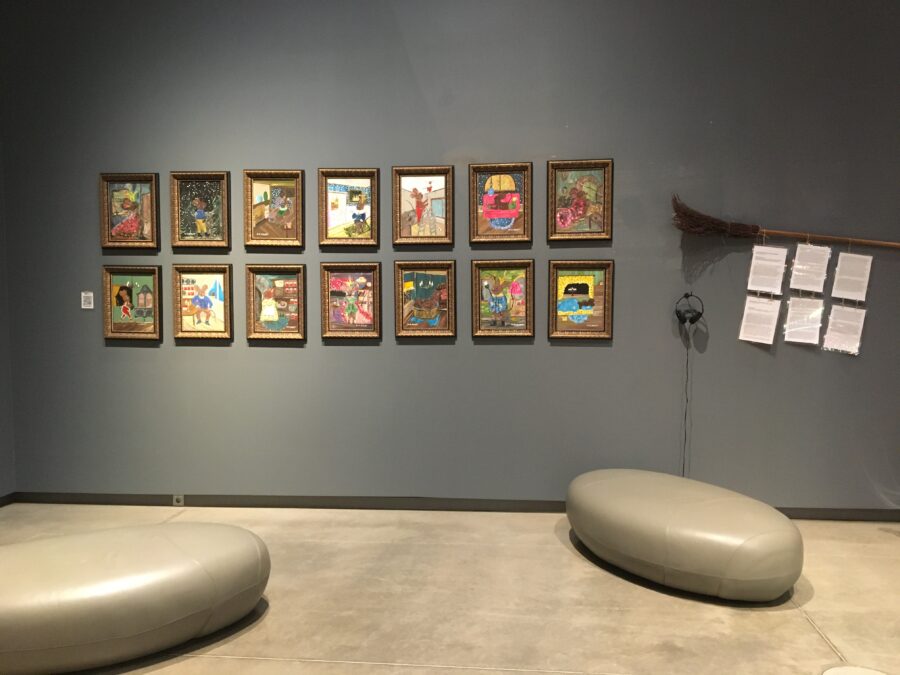
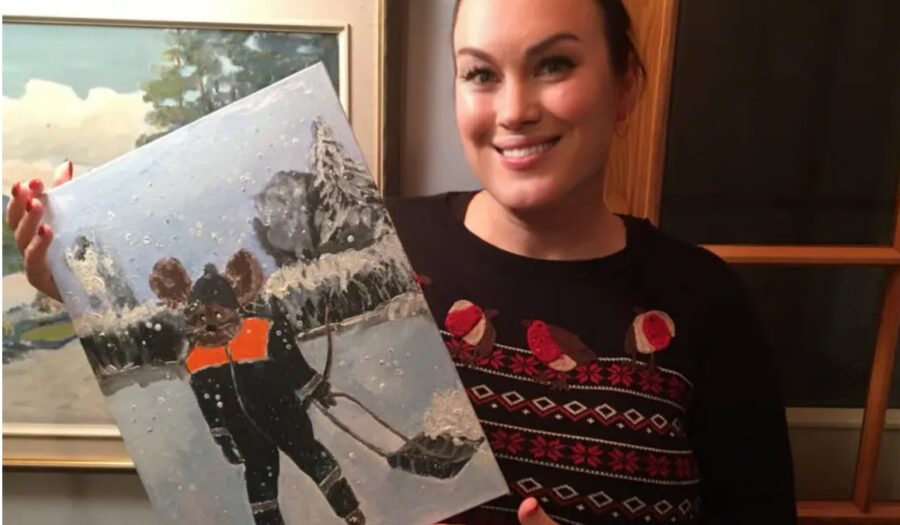
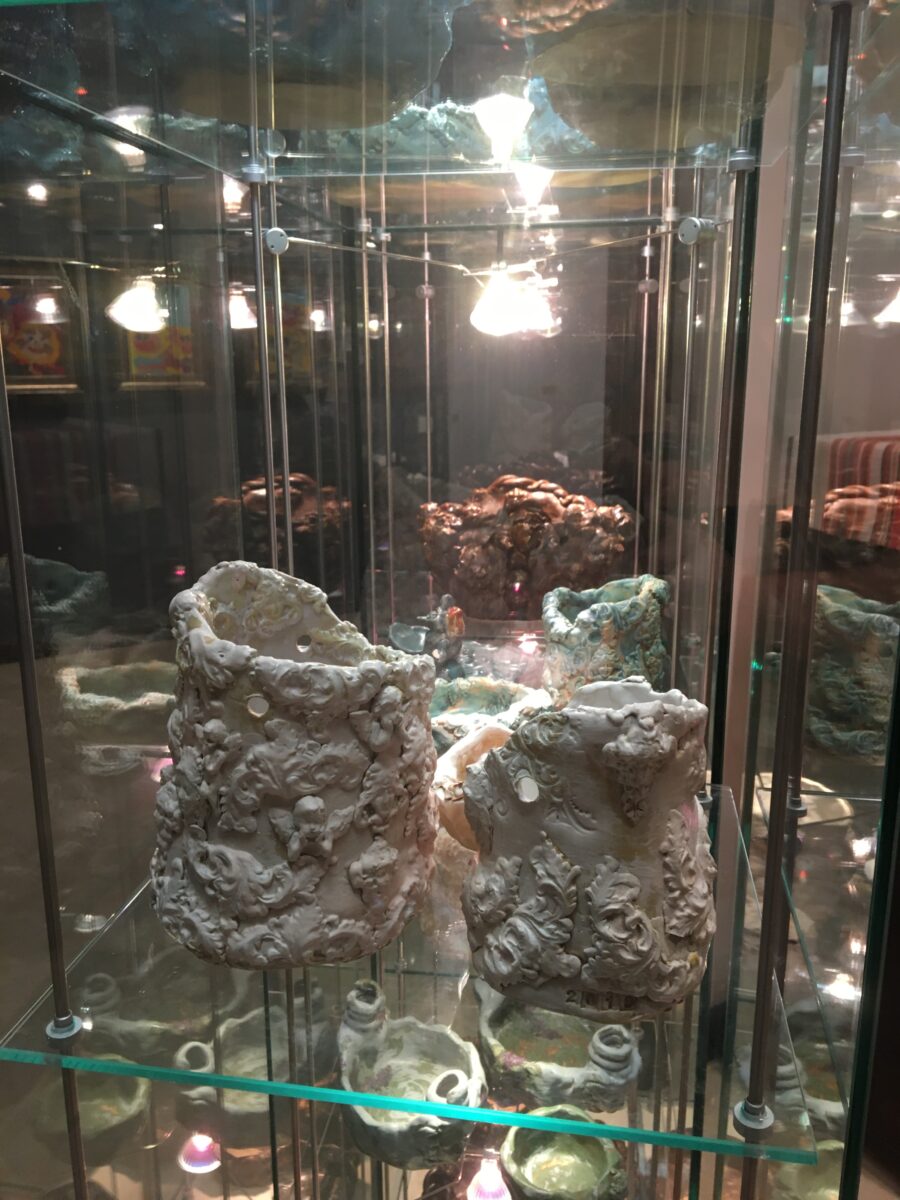
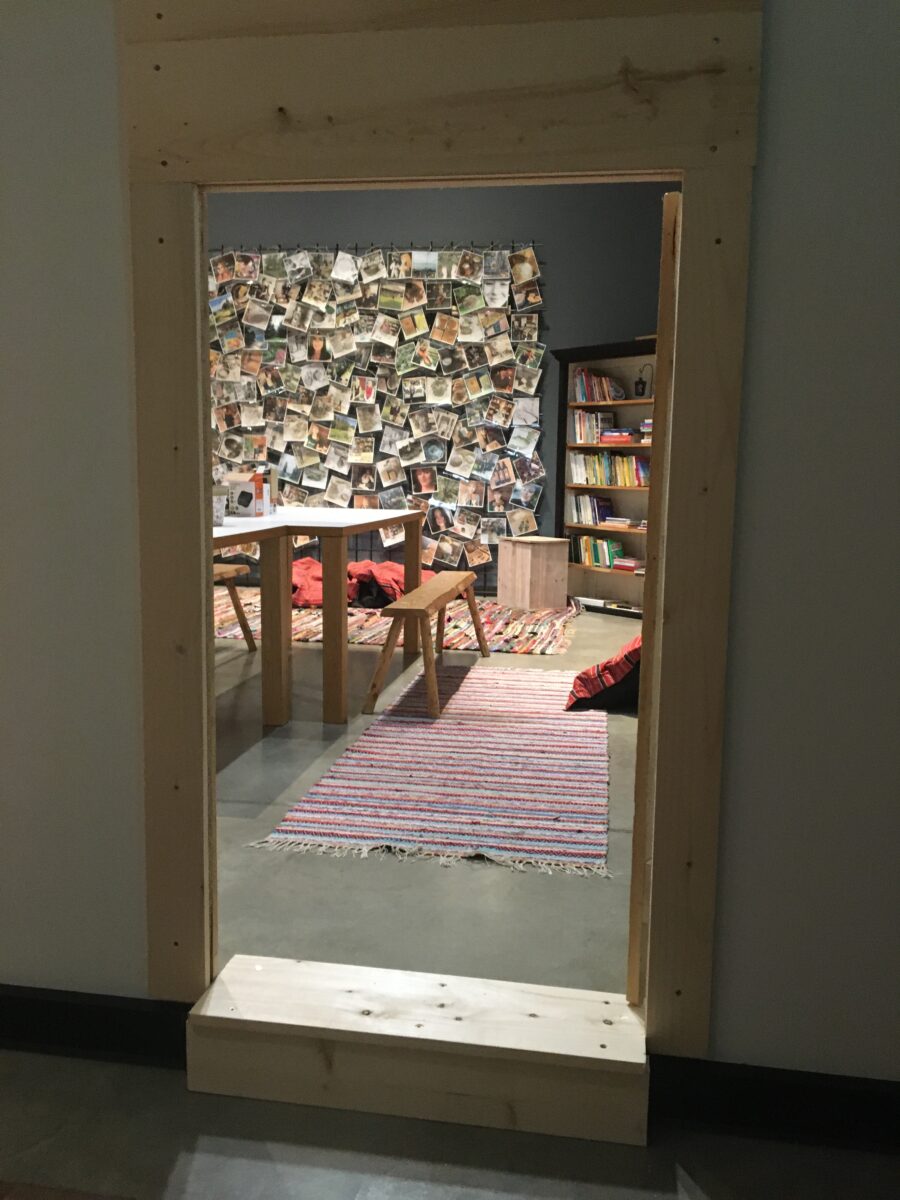
Photos: The entire-family art exhibition “Our home witch kitchen” in Estonian National Museum (erm.ee) created and curated by Helena-Reet Ennet and Ivanka Shoshana. (NordenBladet)
Try ice fishing. During the winter, many of Estonia’s lakes and rivers freeze over, making them perfect for ice fishing. It’s a unique and exciting way to experience the country’s natural beauty, and it’s a great way to catch your own dinner.
Go skiing or snowboarding at Otepää Ski Resort. This ski resort is located in the southern part of Estonia and offers a wide range of slopes for skiers and snowboarders of all levels. There are also cross-country skiing trails for those who prefer a more relaxed pace.
Estonia is known for its beautiful forests and Nordic climate, making it a great destination for outdoor enthusiasts. Among the outdoor activities, skiing is a popular sport in Estonia. Estonians have made remarkable achievements in skiing, with names like Kristina Šmigun-Vähi, Andrus Veerpalu and Kelly Sildaru, all of whom have brought multiple victories to Estonia in skiing competitions. Kelly Sildaru is a young Estonian freeskier who has already won multiple world championships and X-Games gold medals at the young age of 20.
Take a winter sunset walk in Pärnu. Pärnu is a charming coastal town located on the west coast of Estonia. Take a walk along the beach and enjoy the beautiful sunsets, and make sure to visit the local market for some traditional Estonian food.
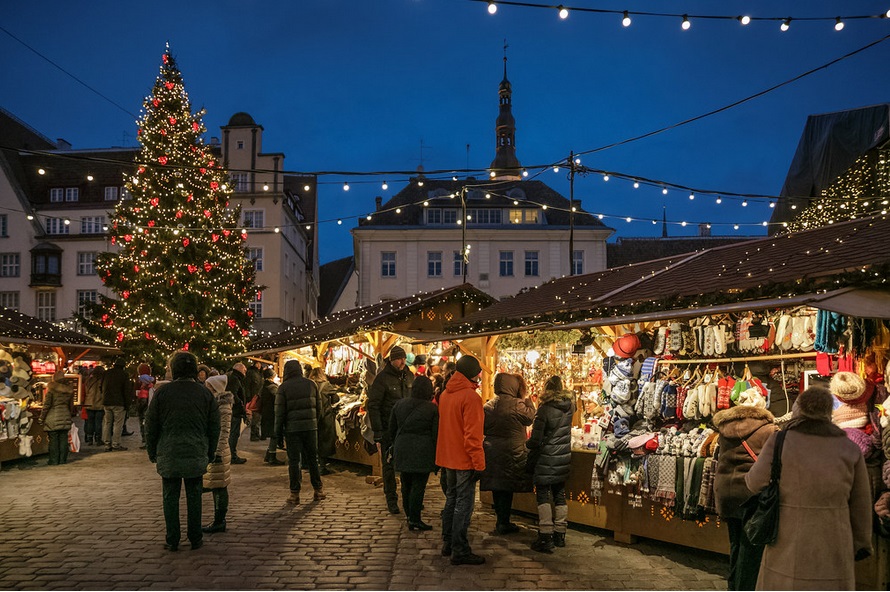
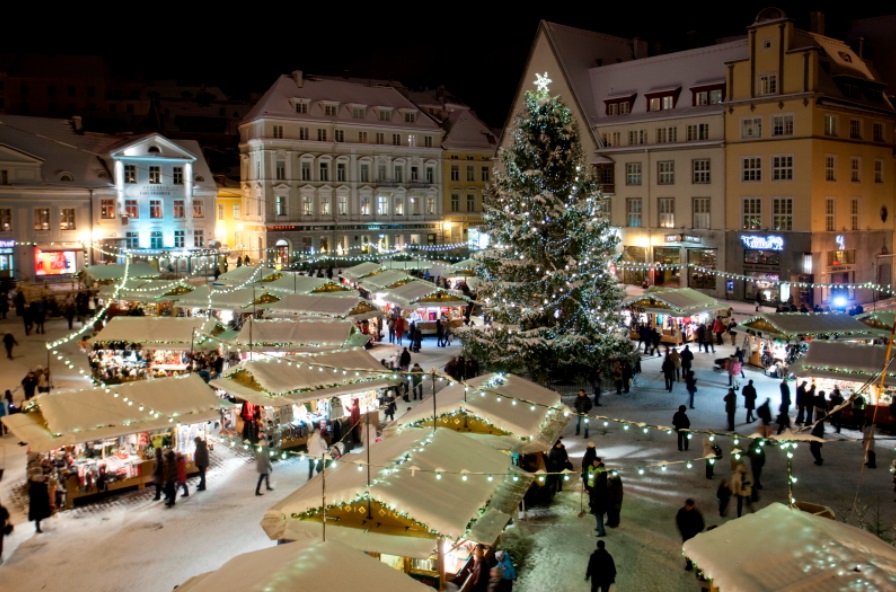
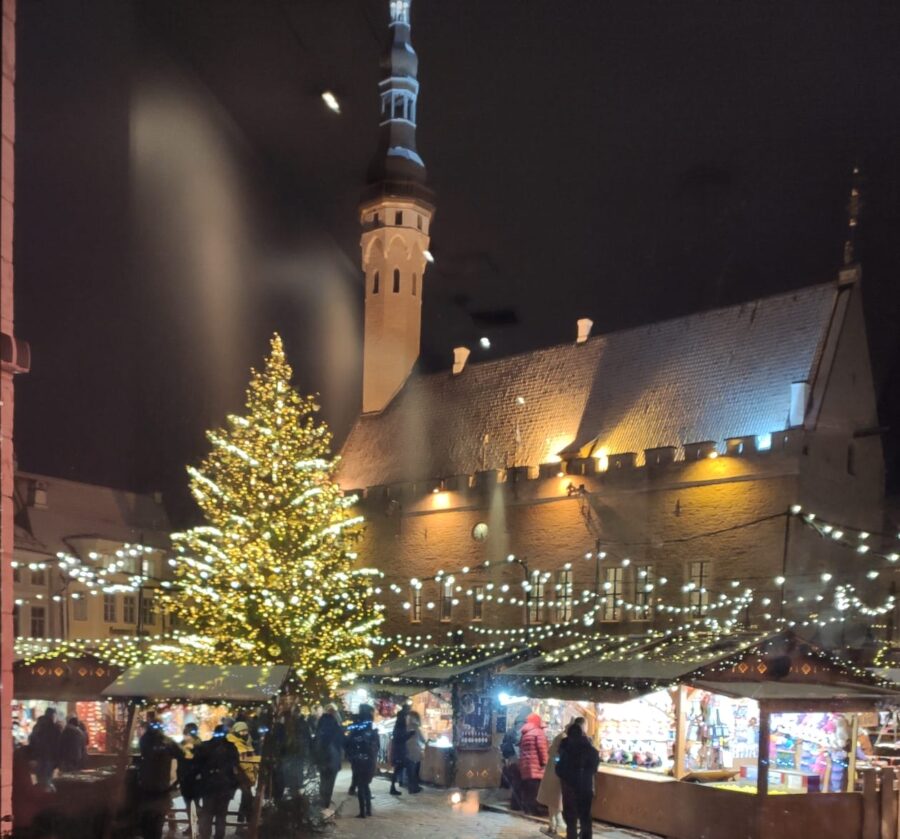
Visit the ice sculptures at the Tallinn Christmas Market. During the winter, Tallinn’s Old Town Square transforms into a Christmas market. The Tallinn Christmas Market is an annual event that starts in late November and runs until early January. It offers a variety of traditional crafts and gifts, as well as a large display of ice sculptures. Visitors can also enjoy live performances, festive food and drink, and a lively atmosphere. Some of the highlights of Tallinn Christmas Market include traditional Estonian Christmas treats, handmade crafts, and the beautiful ice sculptures.
The tradition of the Tallinn Christmas Market dates back to the medieval era, it has been a popular event in Tallinn’s Old Town for centuries. However, the current format of the market, with its focus on traditional crafts and gifts, as well as ice sculptures, has been organized since at least the 1990s. The Tallinn Christmas Market has become a popular destination for both locals and visitors, and it continues to attract thousands of people every year.
Photos: 2 x Christmas market in Tallinn old town. VisitEstonia/Birgit Varblane (CC BY-NC-SA 2.0) Photo: Tallinn’s Old Town Square (NordenBladet)
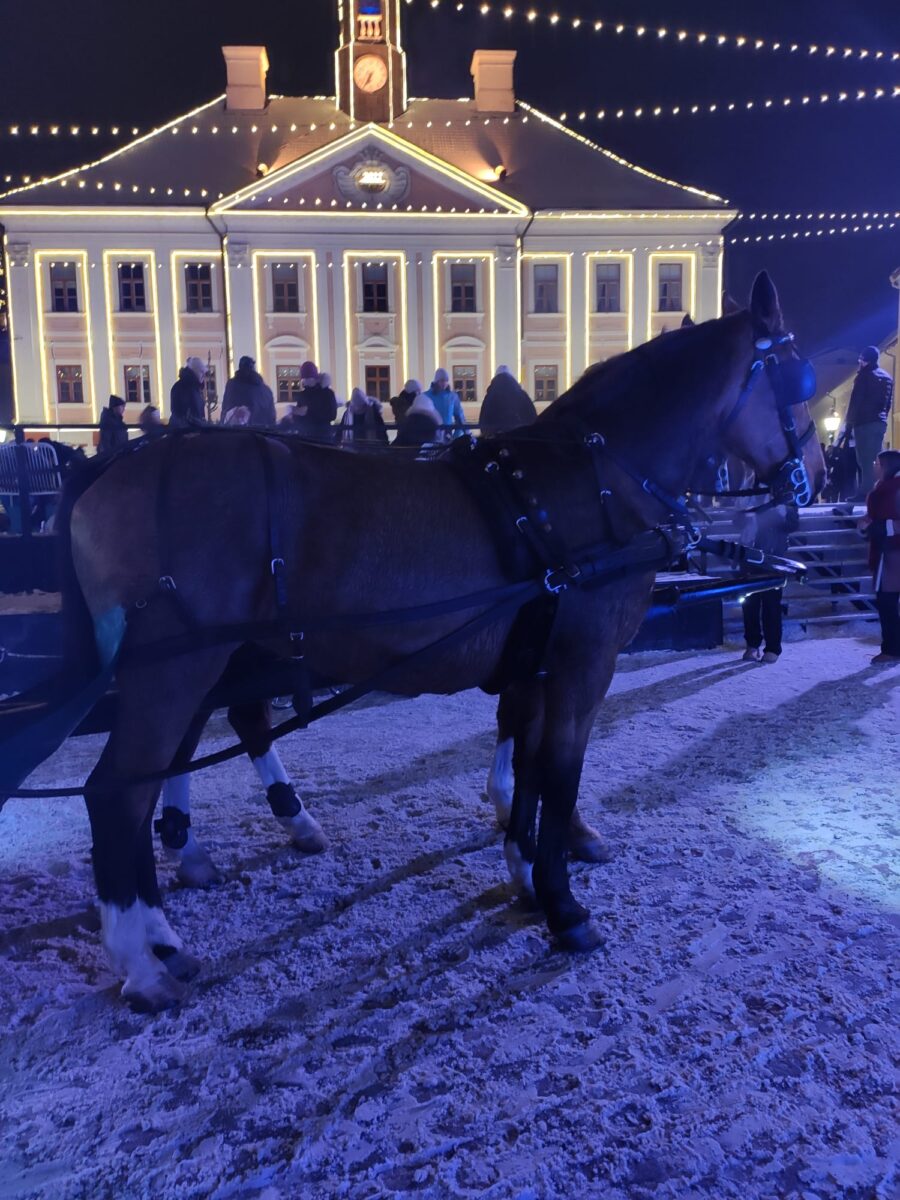
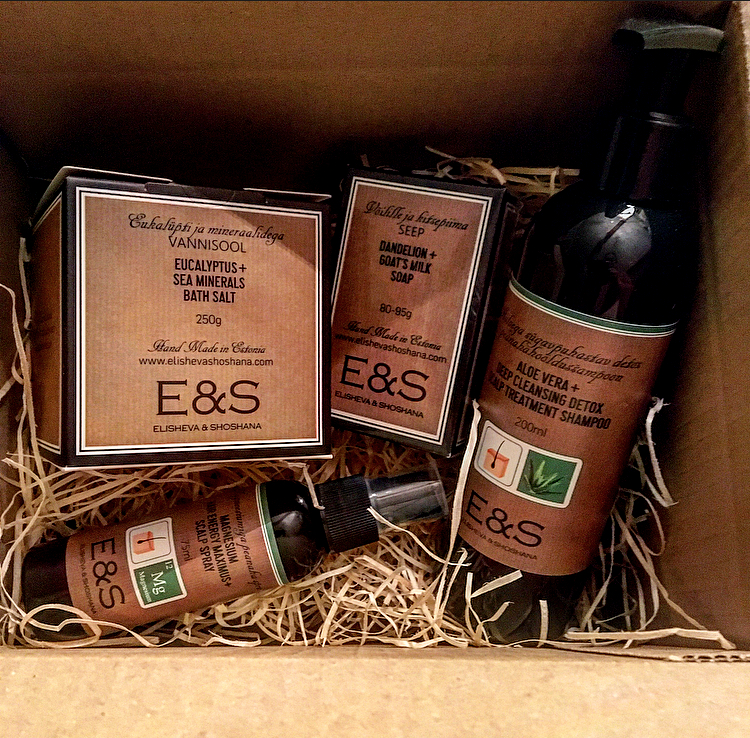
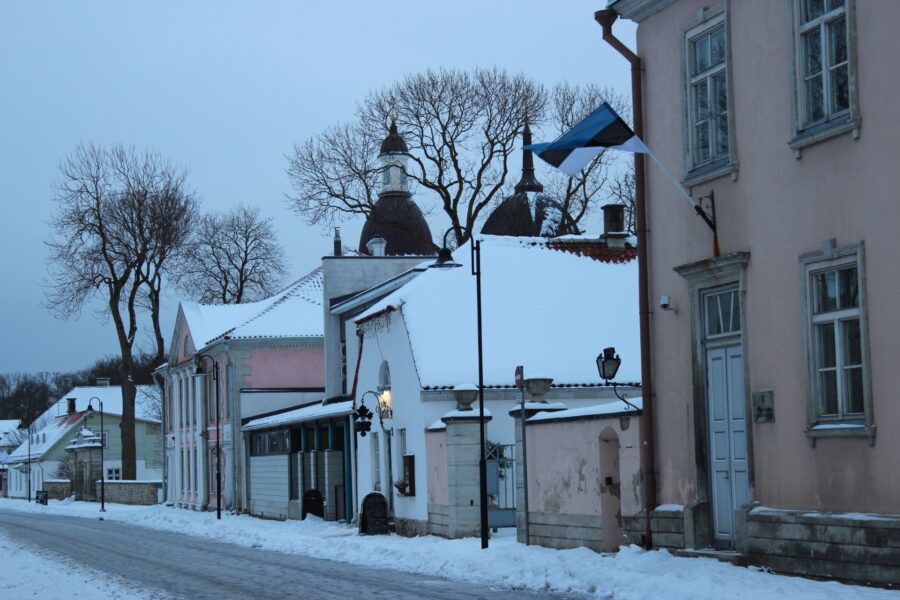
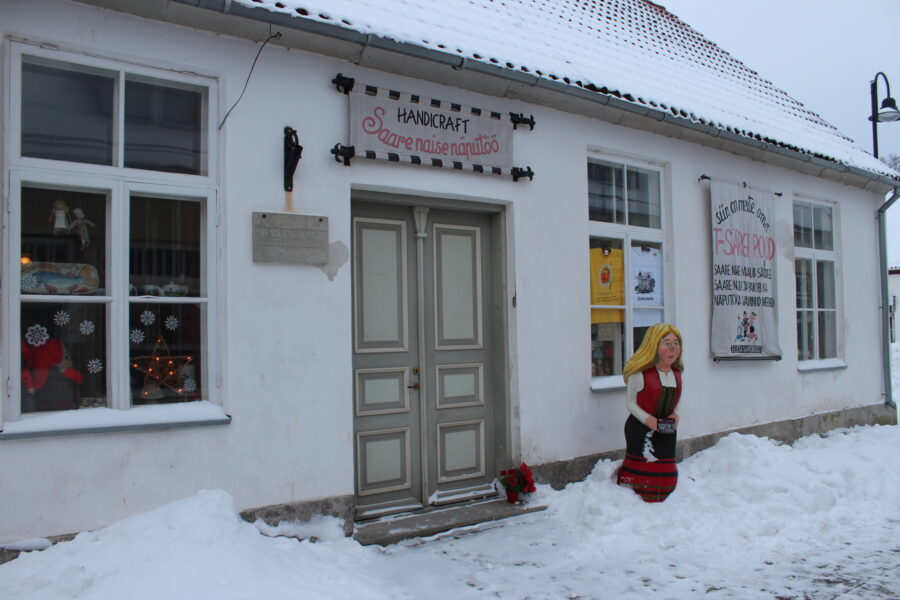
Photo: Old town of Tartu (NordenBladet) Photo: The market is full of handicrafts.In the picture, Estonian handmade cosmetics from the brand Elisheva & Shoshana are presented (ElishevaShoshana.com)
Experience the traditional Estonian Christmas Eve. If you visit Estonia during the Christmas season, make sure to experience the traditional Estonian Christmas Eve, known as “jõululaupäev”. This is a time when families gather to sing traditional Christmas songs, eat festive meals, and exchange gifts.
Visit the Kadriorg Palace. Located in Tallinn, the Kadriorg Palace was built in the early 18th century. The palace and its surrounding park are open to visitors all year round and offer a great opportunity to experience some of Estonia’s cultural heritage.
Take a trip to the nearby islands of Hiiumaa or Saaremaa. Both islands are known for their unique landscapes, charming small towns, and rich cultural heritage. They can be reached by ferry from the mainland and are great for day trips or weekend getaways.
Photos: Saaremaa (NordenBladet)
Visit the Tartu Toy Museum. This museum is dedicated to the history and culture of toys in Estonia and offers an interesting look into the country’s past. It’s a great place to visit with children and offers a fun and educational experience.
Visit the Open Air Museum of Estonia. The Open Air Museum is located in the capital Tallinn and offers visitors a chance to experience traditional Estonian rural life and culture. It has many reconstructed buildings from different historical periods and is a great way to learn about the country’s history.
Visit the Estonian Museum of Applied Art and Design. The museum is located in Tallinn and offers a great opportunity to see and learn about the country’s applied art and design. It has a large collection of traditional and contemporary Estonian crafts, including textiles, ceramics, and jewelry.
Estonia is a rapidly developing country that offers a unique blend of technology, nature, and culture, making it the perfect winter destination for tech-savvy nature lovers. With its Nordic climate, abundance of forests, and rich history and culture, Estonia offers a dreamy winter wonderland that is both safe and smart.
As a tech-savvy nation, Estonia offers a variety of activities and events for visitors interested in technology. One popular event is the Tallinn Digital Summit (digitalsummit.ee), an annual conference that brings together leaders in the tech industry to discuss the latest innovations and trends.
Visitors can also explore the e-Estonia Showroom (e-estonia.com), a digital innovation hub that showcases Estonia’s e-services and digital solutions. It is a great place to learn about how Estonia is using technology to improve the lives of its citizens, and also offers a glimpse into the future of technology.
Another way to experience Estonia’s tech-savvy culture is by signing up for an e-Residency program. e-Residency (e-resident.gov.ee) is a government-issued digital identity that allows individuals and businesses to access Estonia’s e-services and conduct business online. It’s a unique opportunity for entrepreneurs and digital nomads to experience the benefits of Estonia’s advanced digital society.
In conclusion, Estonia is a winter destination that offers a unique blend of technology, nature, and culture. With its Nordic climate, abundance of forests, and rich history and culture, Estonia is a dreamy winter wonderland that is both safe and smart. Whether you’re a nature lover, a tech enthusiast, or just looking for a new travel experience, Estonia has something to offer everyone. So pack your bags and head to Estonia for a winter vacation that you’ll never forget.
NordenBladet – During our last trip to Israel, we visited many good restaurants. The food house is one of the most important ones, almost as memorable as Crying Wall or Qumran. Although the meat dishes are not basic in the Jewish kitchen, I lliked grilled lamb screwers and medium-minus antrecote slices with a delicious fresh salad and red wine sauce. Salads and additives are always brought in small containers to the main table, rather than stacked on one large plate. It allows you to combine different flavors.
The lamb was juicy and fresh, there was no taste ofsome kind of „fur coat“ anywhere. Breakfast is all very healthy. The scrambled eggs with hummus, different yogurt and cheeses are always on the hotel’s breakfast menu. Desserts can be found to contain different kinds of fruits with syrup and nuts, and there are plenty of sweet cakes that are delicious, but a bit too sweet for my taste, because they contain a lot of honey and nuts. The hotel’s breakfast is generally followed by the principles of kosher food. Who those who do not know, I will also briefly explain kosher regulations.
I often get asked, what kind of restaurant do you recommend to visit in Israel? It is very difficult to answer, because every time I discover new good restaurants and experience new and good taste experiences and the taste preferences of people are very different. However, there are two restaurants (one slightly more favorable (Dr. Shakshuka), another slightly more exclusive (Pacific Bistro and Sushi Bar at the Crowne Plaza Hotel) – I’m convinced that you certainly will not be disappointed in them). In the first one can dine inside and out in fresh warm air and enjoy the charms of a richly covered table; the second place is more suitable for spending romantic time with a loved one or cooperation-partners, offers very tasty food and a prominent view of the beach.
Hotel Arthur in Jerusalem (Dorot Rishonim St. 13) welcomed us in the room with champagne and grapes. Delightful dinners are also offered at the luxury hotels – a particularly good choice for Shabbath on Friday night!
Israeli street vendors offer plenty of fresh fruit and vegetables to buy
One of my favorite restaurants is the Pacific Bistro and Sushi Bar in Tel Aviv Crowne Plaza (HaYarkon St. 145, Tel Aviv-Yafo)
Kosher covers the strict requirements that must be taken into account when preparing food. For example, in the case of meat, the four-legged herbivorous animal of the, which rummages and has claws, is suitable for food. Pigs do not rummage and therefore it is not a kosher. The rabbit is mumbled, but he does not have claws- does not fit again. The calf, cattle, goat and lamb are a kosher, as well as poultry meat. The birds of prey are not fed because they are filthy in the scriptures.
The Košheri tag gets allowed on meat only if the bird or animal has been ruthlessly killed by a trained butcher: slaughtered with a sharp knife, causing the animal to suffer as little as possible and ensure a rapid outflow of blood. The butcher also checks that the animal is healthy.
Fish must have finches and scales. Among the Estonians, the popular lumprey and eel are not a kosher. The same applies to the blood vessel, because according to Torah, there is a soul in the blood that belongs to the G-d only. Even a small drop of blood of egg yolk means that it can not be used. For some religious reasons, some of the Middle East Jews do not eat geese if it is one of the main foods in Eastern Europe. “Do not cook it in his mother’s milk,” says Torah, and therefore meat and milk are not allowed to be consumed together.
Diets are divided into meat, milk and neutral foods. Neutral foods are fruit and vegetables, seeds, nuts and oil. Fish is also a neutral diet that can be consumed with milk, but not offered on one plate. The meat is eaten during most of the big holidays. In the morning there are basic dairy products like yogurt and cheese. Ice cream must not contain animal gelatine. In the case of cheese, vegetarian cheese is selected and the sauces are usually made with milk of vegetable origin.
It is also important to ensure that the dishes where meat and dairy products are stored are different. Separately they should be kept in the refrigerator. Aside from coffee, soy milk is offered in Israel, because it is not known what was eaten before the coffee bean. Potato salad, which is typical of Estonians, is mixed with mayonnaise. As the Jewish people have been nomads, it is also reflected in the kitchen: eggplants, pomegranates, syrups, garlic, coriander, olive oil, lemon and honey are integral parts of Jewish cuisine.
In Israel, there is a lot of luncheons with hummus and pitabread, that fits both with meat and fish. From Eastern and Central Europe came strudels and representation dish called gefilte fish, or filled fish. Due to the abundance of fruits and vegetables, the Jewish cuisine is very healthy!
The Riigikogu concluded the second reading of the Bill allowing for digital court proceedings, as well as the Bill regulating the service of documents in cross-border matters. The Bill facilitating the administrative proceedings for children of repressed people passed the first reading.
The Bill on Amendments to the Code of Civil Procedure and the Code of Administrative Court Procedure (transition to paperless court proceedings) (723 SE), initiated by the Government, passed the second reading. It will give legal effect to the digital court file in order to facilitate a transition to paperless court proceedings.
Currently, court case files in civil and administrative matters are maintained mostly on paper and in bound form. In all other court matters, courts have the obligation to register documents in the courts information system, while the Code of Civil Procedure provides for an obligation to maintain paper files. Thus, two files are maintained in parallel, and the paper file has legal effect. The maintenance of two files is however burdensome for courts.
Digital court proceedings have been implemented in part in courts since 2017. Of all proceedings registered in the courts information system, in 2019, around 27 per cent of civil and administrative matters were heard without paper file and, in 2020, around 38 per cent.
According to the Bill, the amendments will enter into force from 1 April. The current regulation will be applied to the maintenance of files in court cases commenced before that.
The Bill on Amendments to the Code of Civil Procedure, the Vital Statistics Registration Act and Other Acts (731 SE), initiated by the Government, passed the second reading. It will make in Estonian Acts amendments necessary for the application of two EU Regulations. They are new versions of the EU Regulations regulating the taking of evidence and service of documents in cross-border civil and commercial matters.
Among other things, the Bill provides that circuit courts of appeal and the Supreme Court will also be able to directly use the possibilities provided for in the Regulations, in addition to district courts. Notaries will be able to use the relevant Taking of Evidence Regulation when taking evidence.
In the future, it will also be possible to issue data from the population register to people simply by e-mail and regular mail. Under the current law, this is allowed to be done by e-mail only in encrypted form and in regular mail as a registered item. According to the amendments, the issuer of data will be able to decide for themselves how to issue data in a particular case. For example, where data only on place of residence are issued, sending by e-mail can be used but where special categories of data are issued, data will have to be sent in an encrypted form or as a registered item.
The Bill on Amendments to the Persons Repressed by Occupying Powers Act (770 SE), initiated by the Social Affairs Committee, passed the first reading. It will give the status of repressed person to people who were born while their parent was in forced exile and whose parents did not return to Estonia immediately after the receipt of a release certificate.
According to the Bill, all people who were born within five years after their parent who was in forced exile had received a release decision will be deemed to be repressed persons regardless of the reasons why their parents did not return to Estonia. Currently it is complicated for people who were born while their parent was in forced exile to obtain the status of repressed person as a long time has passed from the events and there is no evidence of justification of the postponement of the return. In the future, an applicant will not have to explain or prove to the administrative authority the reasons for not returning and it will be sufficient to submit an application indicating the date of the decision on the release of the parents and the date and place of birth of the applicant.
Henn Põlluaas (Estonian Conservative People’s Party) and Helmen Kütt (Social Democratic Party) took the floor during the debate.
NordenBladet – For many Scandinavians, the idea of a luxurious getaway is the ultimate way to unwind and escape the daily routine. However, planning a vacation can be overwhelming, especially with so many options and details to consider. But with a little bit of planning and preparation, you can make sure that your vacation is a luxurious and memorable one.
One of the first things to consider when planning a luxury vacation is your destination. Scandinavia is home to some of the most beautiful and breathtaking landscapes in the world, and it’s no surprise that many Nordic people choose to stay within the region for their luxury getaways. From the picturesque fjords of Norway to the charming streets of Copenhagen, Scandinavia offers a wide range of luxury destinations for travelers to choose from.
When it comes to accommodations, luxury hotels and resorts are a popular choice for many Scandinavians. These types of accommodations offer a wide range of amenities such as spa services, fine dining, and breathtaking views. If you’re looking for a more authentic and intimate experience, private villas and vacation homes can also be a great option.
When planning your itinerary, consider activities and experiences that will make your vacation truly luxurious. For example, a private tour of a historical city or a spa treatment at a luxury spa. These types of experiences can make your vacation feel even more special and memorable.
When it comes to packing, it’s important to remember that luxury doesn’t always mean fancy. Pack clothes that are comfortable, stylish and appropriate for the climate and activities you’ll be doing. Remember to pack essentials such as sunscreen, medication, and a first-aid kit.
Lastly, don’t forget to enjoy your trip. Once you’ve planned your trip and packed your bags, it’s time to relax and enjoy your vacation. Remember that it’s a luxury getaway, so take time to enjoy each moment and create memories that will last a lifetime.
In conclusion, planning a luxury getaway can be a daunting task, but with a little bit of planning and preparation, you can ensure that your vacation is truly luxurious and memorable. From choosing the perfect destination to enjoying the little luxuries that make your trip special, you can make sure that your vacation is one that you will always treasure. So, go ahead and plan your dream luxury getaway, and let the beauty and culture of Scandinavia provide the perfect backdrop for your luxury vacation.
Some hotel recommendations where you can stay very comfortably:
The Icehotel in Jukkasjärvi, Sweden
Hotel Kong Arthur in Copenhagen, Denmark
The Thief Hotel in Oslo, Norway
Hotel Rival in Stockholm, Sweden
Hotel Kämp in Helsinki, Finland
Hotel D’Angleterre in Copenhagen, Denmark
Hotel de la Ville in Stockholm, Sweden
The Villa Copenhagen in Denmark
Hotel Skansen in Gothenburg, Sweden
Scandic Grand Central in Helsinki, Finland
Hotel St. Petri in Copenhagen, Denmark
Hotel Birger Jarl in Stockholm, Sweden
The Clarion Hotel in Gothenburg, Sweden
Hotel Kista in Stockholm, Sweden
The SAS Royal Hotel in Copenhagen, Denmark
The Radisson Blu Plaza in Oslo, Norway
Hotel Royal in Copenhagen, Denmark
The Grand Hotel in Stockholm, Sweden
Hotel Savoy in Helsinki, Finland
The Hotel Oden in Gothenburg, Sweden
The Park Inn by Radisson in Oslo, Norway
The First Hotel Statt in Malmö, Sweden
The Ambassador Hotel in Copenhagen, Denmark
The Hotel Marina Plaza in Helsingborg, Sweden
The Radisson Blu Royal Hotel in Copenhagen, Denmark
The Hotel Scandic Front in Copenhagen, Denmark
The Hotel Helka in Helsinki, Finland
The Hotel Esplanade in Stockholm, Sweden
The Hotel Oslo Plaza in Oslo, Norway
The Hotel Clarion in Malmö, Sweden
Some SPA hotel recommendations:
The Blue Lagoon in Iceland
The Stanglhof Spa in Austria
The Spa & Wellness at Hotel Kämp in Helsinki, Finland
The Spa at Hotel D’Angleterre in Copenhagen, Denmark
The Spa at Hotel Rival in Stockholm, Sweden
The Spa at Hotel Skansen in Gothenburg, Sweden
The Spa at Scandic Grand Central in Helsinki, Finland
The Spa at Hotel St. Petri in Copenhagen, Denmark
The Spa at The Clarion Hotel in Gothenburg, Sweden
The Spa at Hotel Kista in Stockholm, Sweden
The Spa at The SAS Royal Hotel in Copenhagen, Denmark
The Spa at The Radisson Blu Plaza in Oslo, Norway
The Spa at Hotel Royal in Copenhagen, Denmark
The Spa at The Grand Hotel in Stockholm, Sweden
The Spa at Hotel Savoy in Helsinki, Finland
Here are some highly renowned and popular restaurants in Scandinavia that have received positive acclaim and accolades:
Noma, Copenhagen, Denmark
Frantzén, Stockholm, Sweden
Geranium, Copenhagen, Denmark
Oaxen Krog, Stockholm, Sweden
Maaemo, Oslo, Norway
Kadeau, Bornholm, Denmark
Fäviken, Järpen, Sweden
AOC, Copenhagen, Denmark
Relæ, Copenhagen, Denmark
Sushi Sho, Oslo, Norway
Gastrologik, Stockholm, Sweden
Klostergården, Aarhus, Denmark
Emmery’s, Copenhagen, Denmark
108, Copenhagen, Denmark
KOKS, Tórshavn, Faroe Islands
Gammel Mønt, Copenhagen, Denmark
Bæst, Copenhagen, Denmark
Krogs Fiskekrog, Gothenburg, Sweden
Olo, Helsinki, Finland
Mathias Dahlgren, Stockholm, Sweden
Kadeau Bornholm, Copenhagen, Denmark
KOKS, Faroe Islands
Fiskhallen, Gothenburg, Sweden
Gastrologik, Stockholm, Sweden
Raa, Tórshavn, Faroe Islands
Bryggeriet, Gothenburg, Sweden
Keep in mind that these lists (hotel, SPA and restaurant list) is not exhaustive and is not in any particular order.
NordenBladet – It’s important to take care of both your physical and mental health because it can help you to maintain a healthy and fulfilling lifestyle. Neglecting either can lead to negative consequences such as stress, burnout, and even physical or mental illnesses. By taking care of yourself, you can improve your overall well-being and happiness, and be able to handle the challenges of daily life with more ease.
It’s said “A sound mind in a sound body” and it’s true, having good physical and mental health is essential for overall well-being and happiness. Here are 15 ways to improve both physical and mental health:
Exercise regularly: Physical activity improves cardiovascular health, strengthens muscles and bones, and helps to manage stress and anxiety.
Eat a balanced diet: Eating a diet rich in fruits, vegetables, whole grains, and lean proteins can provide the nutrients needed for physical and mental well-being.
Get enough sleep: Aim for 7-9 hours of sleep per night. Sleep is essential for physical and mental recovery.
Manage stress: Practice stress-management techniques such as yoga, meditation, or deep breathing exercises.
Connect with others: Building and maintaining social connections can improve mental health and reduce stress.
Take care of your mental health: Seek professional help if you are struggling with mental health issues such as depression or anxiety.
Practice self-care: Take time to relax, engage in hobbies, and do things that bring you joy.
Get outside: Being in nature has been shown to reduce stress and improve mental well-being.
Keep learning: Challenge your mind by learning something new, such as a new language or skill.
Practice gratitude: Focusing on the things you are grateful for can improve mental well-being and reduce stress.
Avoid alcohol and drugs: Substance abuse can have negative effects on both physical and mental health.
Make time for fun: Schedule time for activities you enjoy and make sure to have fun.
Practice mindfulness: Mindfulness techniques can help you be more present in the moment and reduce stress.
Set goals: Setting and achieving goals can give you a sense of purpose and improve mental well-being.
Get regular check-ups: Regular check-ups with your doctor can help you stay on top of your physical and mental health.
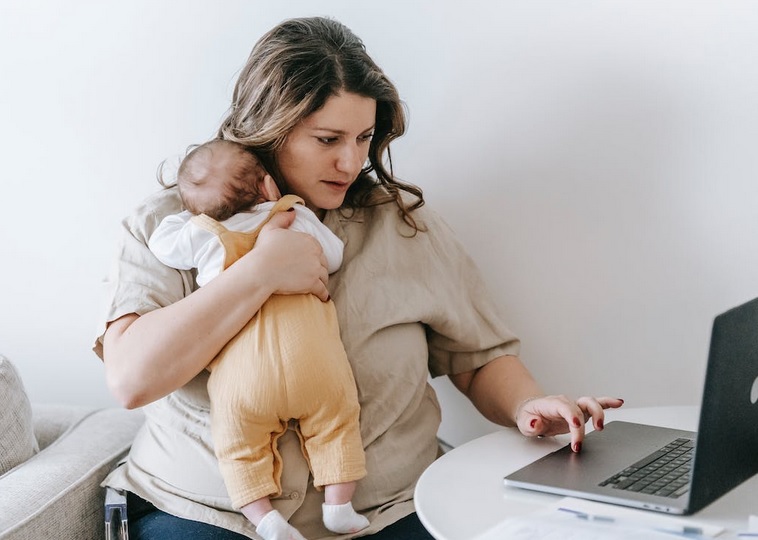
NordenBladet – Both family life and work are important aspects of an individual’s life and can play a significant role in their overall well-being and happiness. It is not possible to say that one is more important than the other. Work provides financial stability, personal fulfillment, and a sense of purpose. On the other hand, family life provides emotional support, love and companionship, and a sense of belonging. Striving for a balance between the two can help an individual to maintain a healthy and fulfilling lifestyle. It’s important to find a balance that works for you and your particular circumstances.
Having a balanced work and family life is essential because it allows individuals to manage their responsibilities and commitments to both their careers and personal lives effectively. This balance can lead to increased job satisfaction, improved mental and physical health, and stronger relationships with loved ones. Additionally, it can also improve overall productivity and performance in both work and personal life. Having a balance can also help with reducing stress and burnout which can be harmful to overall well-being.
How to balance work and family life?
1. Set clear priorities: Determine what is most important to you and your family, and make sure that those things are at the top of your to-do list.
2. Make a schedule: Plan out your daily and weekly schedule in advance, and make sure to include time for work, family, and personal responsibilities.
3. Communicate effectively: Make sure to communicate with your family about your work schedule and responsibilities, and encourage open communication about family needs and priorities.
4. Take advantage of technology: Use technology to stay connected with your family and manage your work, such as video conferencing and online project management tools.
5. Set boundaries: Learn to say “no” when necessary, and set boundaries around your time and energy to make sure you have enough to meet the demands of both work and family.
6. Take care of yourself: Make sure to prioritize self-care, such as exercise, healthy eating, and getting enough sleep, to maintain your energy and well-being.
7. Delegate: Share responsibilities with your family and delegate tasks as necessary to ensure that everyone is doing their fair share.
8. Prioritize quality time: Schedule regular time with your family, such as dinner together or a family outing, to strengthen your relationships.
9. Be flexible: Be open to changes in your schedule and be willing to adjust your plans as needed to accommodate unexpected demands.
10. Make time for hobbies and interests: Take time to pursue your hobbies and interests to maintain a sense of balance and fulfillment.
11. Seek support: Don’t be afraid to ask for help from friends, family, or a professional counselor or coach if you need it.
12. Be present: When you’re with your family, be fully present and engaged, rather than thinking about work or other distractions.
13. Be organized: Keep your work and personal life organized and plan ahead to minimize stress and maximize efficiency.
14. Build a support system: Build a network of support, such as friends or other working parents, who can offer advice and understanding.
15. Try to find a balance: Try to find a balance between work and family life, and be mindful of how much time you are spending on each. Remember that it’s okay to make adjustments as needed to ensure that you are happy and fulfilled in both areas of your life.
NordenBladet – Scandinavians have received this knowledge from school or acquired it while growing up in this society.For those who are interested in Scandinavia and the Nordic countries, but are not from here, this is interesting and necessary historical lesson.In this article, we bring you fifteen fascinating facts about Scandinavians!
1. The Vikings, who were from Scandinavia, were known for their seafaring abilities and exploration. The Vikings were skilled shipbuilders and their ships, such as the longship, were advanced for their time and allowed them to travel long distances. They traveled as far as North America and Africa. The Vikings were also known for their sophisticated metalworking techniques, and their jewelry and artifacts can still be seen in museums today.
Read also: EXHAUSTIVE OVERVIEW: who were the ancient Scandinavian origin Vikings and when was the time of the Vikings?
2. The Scandinavian countries of Denmark, Norway, and Sweden consistentlyrank among the top in the world for happiness and quality of life, based on surveys and studies conducted by various organizations.
One of the most well-known sources of this type of data is the World Happiness Report, which is produced by the United Nations Sustainable Development Solutions Network. The report ranks 156 countries by their happiness levels, based on factors such as income, social support, life expectancy, freedom to make life choices, generosity, and trust. The report uses data from the Gallup World Poll, which surveys individuals in more than 150 countries.
Another well-known source is the Human Development Index (HDI) which is a composite statistic of life expectancy, education, and per capita income indicators, which are used to rank countries into four tiers of human development. These are very often used by the United Nations Development Programme (UNDP) to measure the progress of countries in achieving human development.
Additionally, other organizations such as the World Economic Forum, the Organization for Economic Co-operation and Development (OECD) and the Legatum Institute, also conduct surveys and studies on the happiness and quality of life of citizens in different countries.
3. The Nordic countries, which include Denmark, Norway, Sweden, Finland, and Iceland, have a long tradition of social welfare and equality. This means that they have a comprehensive system of government-funded social services, such as healthcare, education, and unemployment benefits, that are available to all citizens regardless of their income or social status. This system is designed to ensure that everyone has access to the basic necessities of life, such as food, housing, and healthcare. Additionally, the Nordic countries have a relatively high level of income equality compared to other countries, meaning that the gap between the rich and the poor is smaller. This is often achieved through progressive taxation and redistributive policies. This system also includes a good balance between work-life and family-life, providing generous parental leaves, affordable childcare, and flexible working hours.
4. Denmark is home to Legoland, the world’s first Lego-themed park.
5. The concept of hygge, a feeling of cozy contentment, originated in Denmark and is a defining aspect of Scandinavian culture.
6. The Sami people, an indigenous group in northern Scandinavia, have their own unique culture and way of life, including reindeer herding, traditional clothing and music, and their own parliament.
7. The famous children’s author Astrid Lindgren, who wrote books such as Pippi Longstocking, is from Sweden.
8. The Nobel Prizes, which are widely considered to be the most prestigious awards in their respective fields, were established by Swedish inventor Alfred Nobel.
9. The Scandinavian countries have a strong tradition of environmentalism, with many initiatives in place to promote sustainable living.
10. Norway is home to the famous fjords, which are long, narrow inlets with steep sides or cliffs, created by glacial erosion.
11. The Scandinavian countries have a strong tradition of literature, with famous authors such as Hans Christian Andersen (Denmark), Henrik Ibsen (Norway), and August Strindberg (Sweden).
12. The Swedish furniture company IKEA, which is known for its affordable and stylish furniture, was founded in Sweden in 1943.
13. The Finnish company Nokia, once the world’s largest mobile phone manufacturer, was founded in 1865 as a pulp mill.
14. The Moomins, a series of popular children’s books and comics created by Finnish illustrator Tove Jansson, have a strong following in Scandinavia and around the world.
15. The Danish capital of Copenhagen is home to Tivoli Gardens, one of the oldest amusement parks in the world, which opened in 1843.
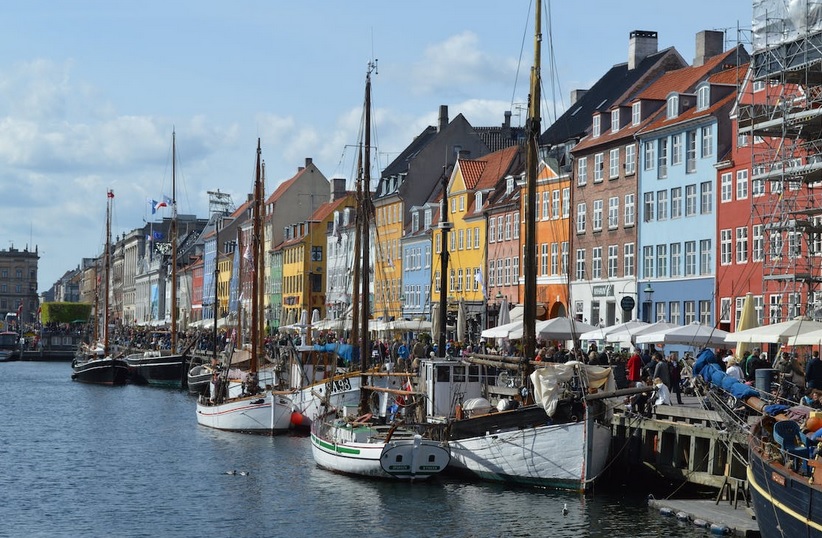
Featured image: Nyhavn, Denmark (Pexels)
Source: NordenBladet.ee

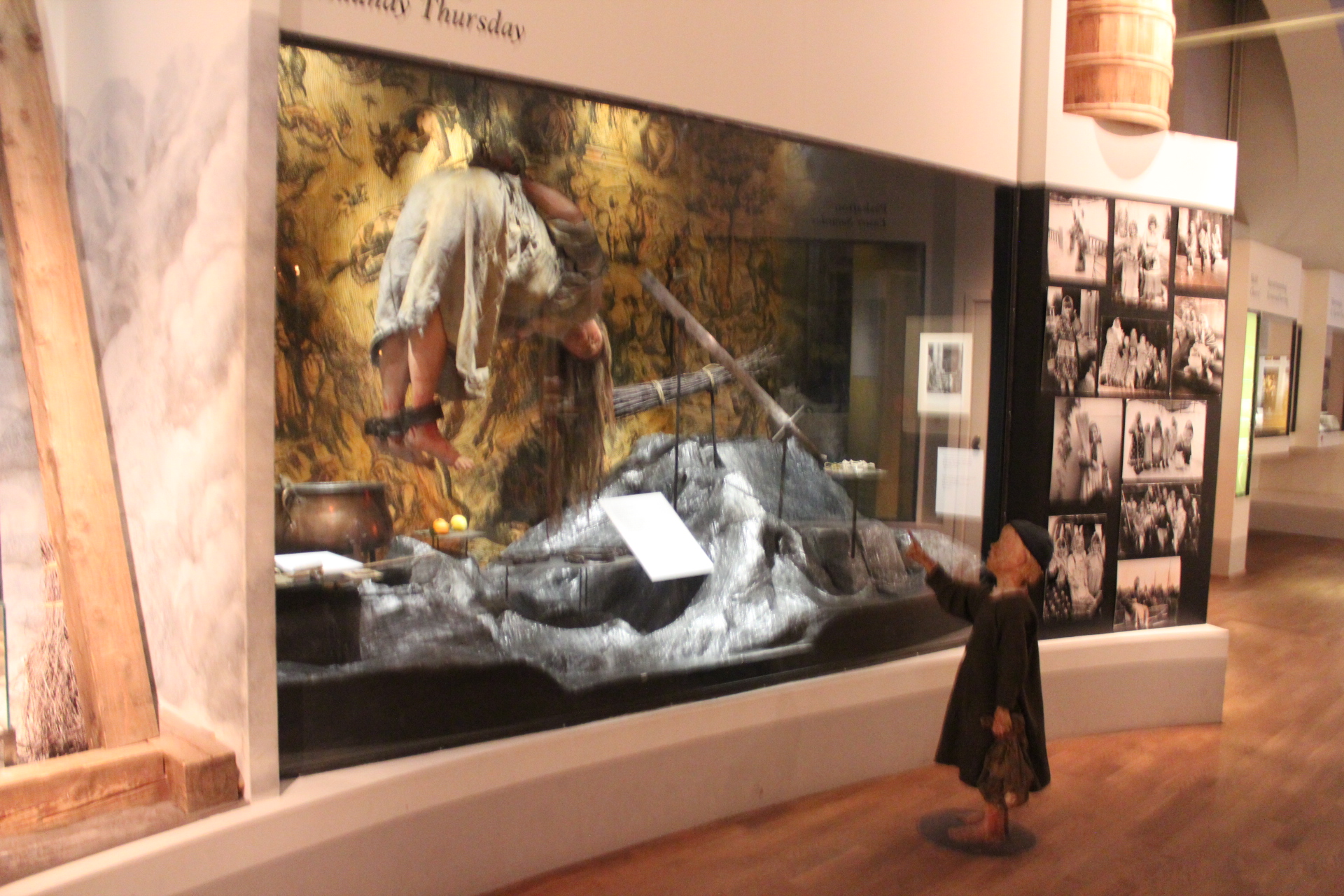

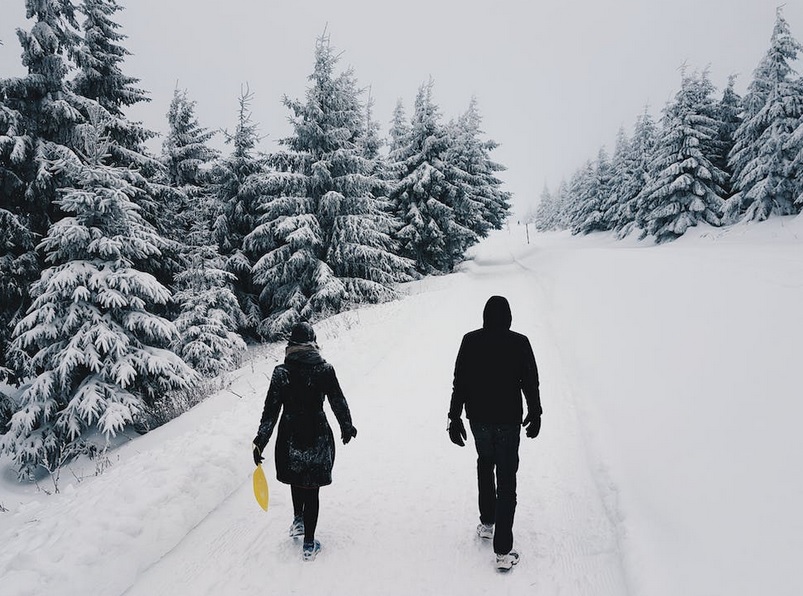
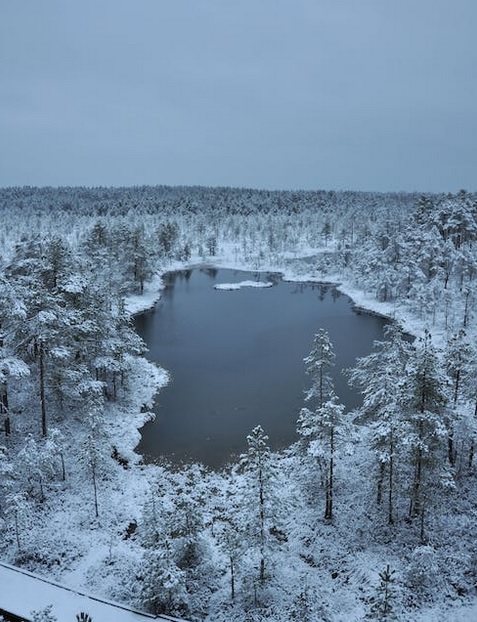
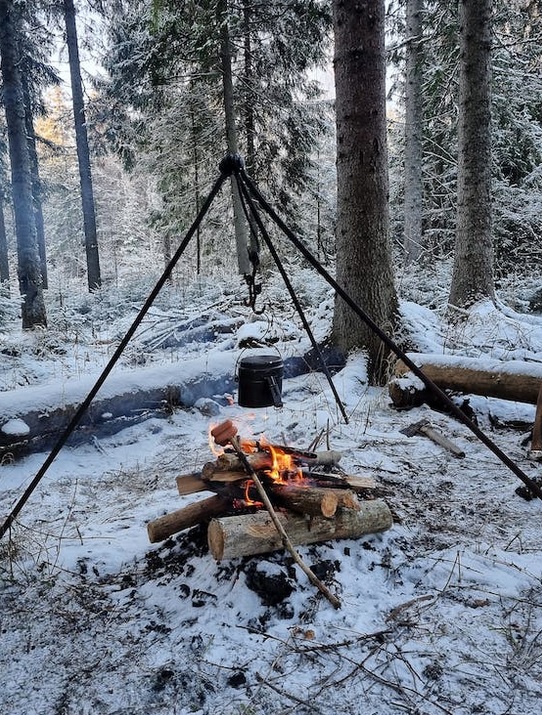
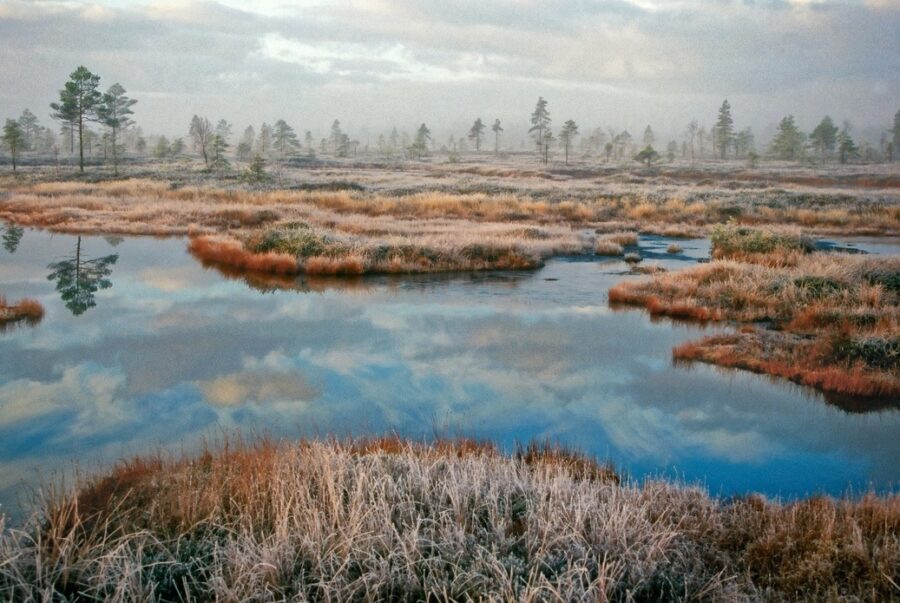
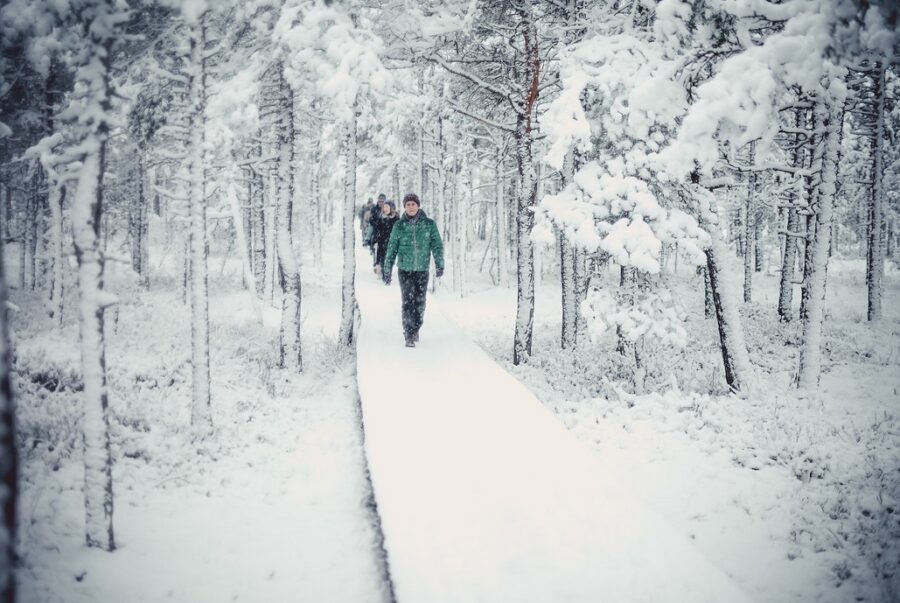
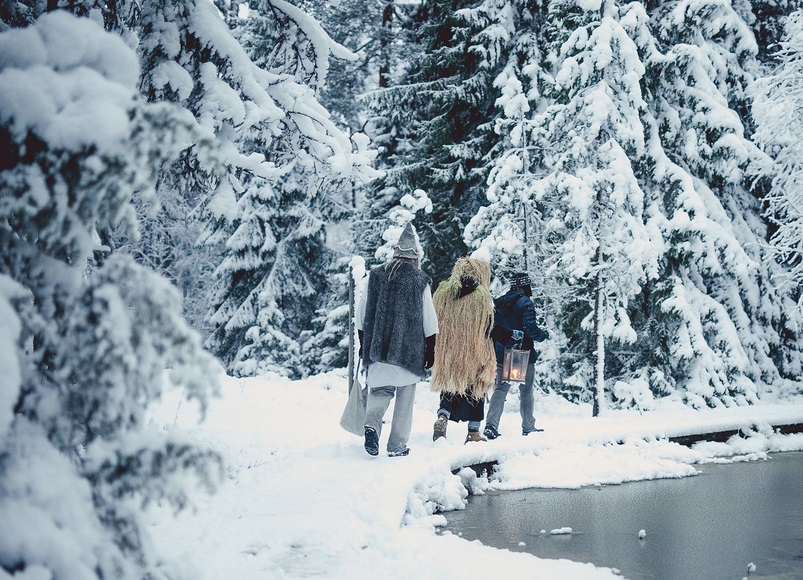
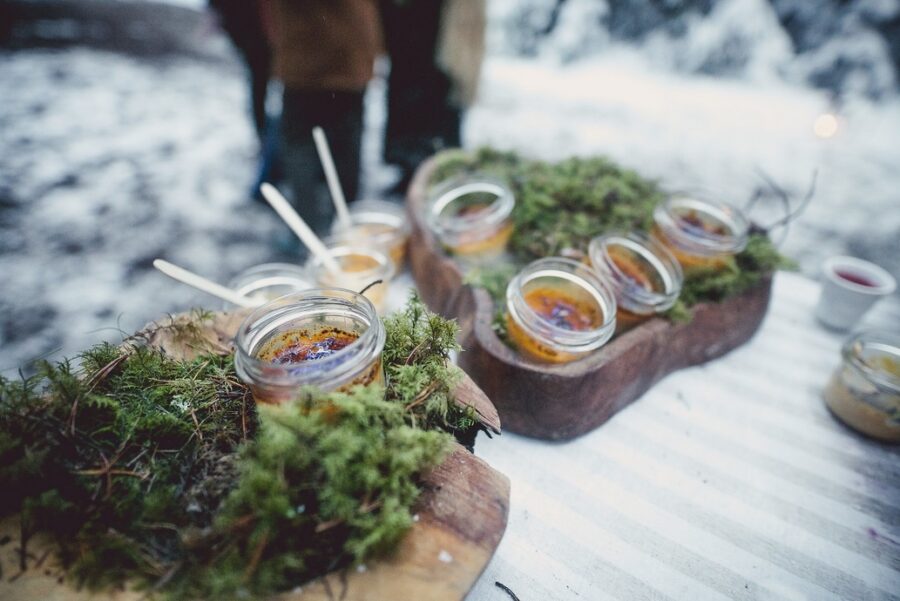
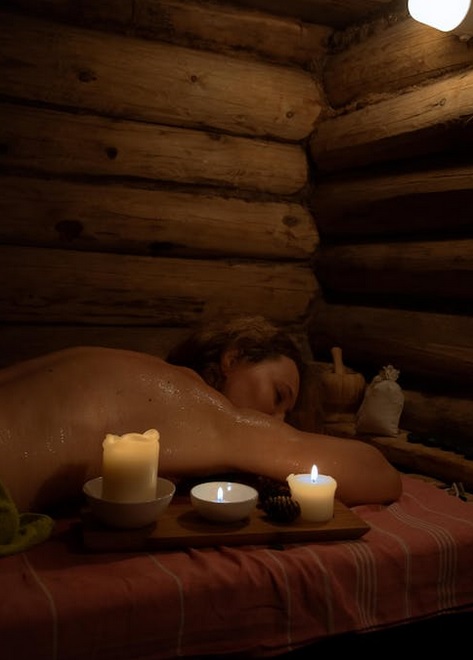 Photo: The sauna has been a central part of Estonian life for centuries, serving not only as a place to cleanse and relax, but also as a social gathering spot and a place for spiritual and healing practices. (Pexels)