
Reklaam

Helena-Reet Ennet

Helena-Reet Ennet
4698 POSTS 0 COMMENTS

Helena-Reet: This how was our the 103rd anniversary of Republic of Estonia + three wonderful recipes!

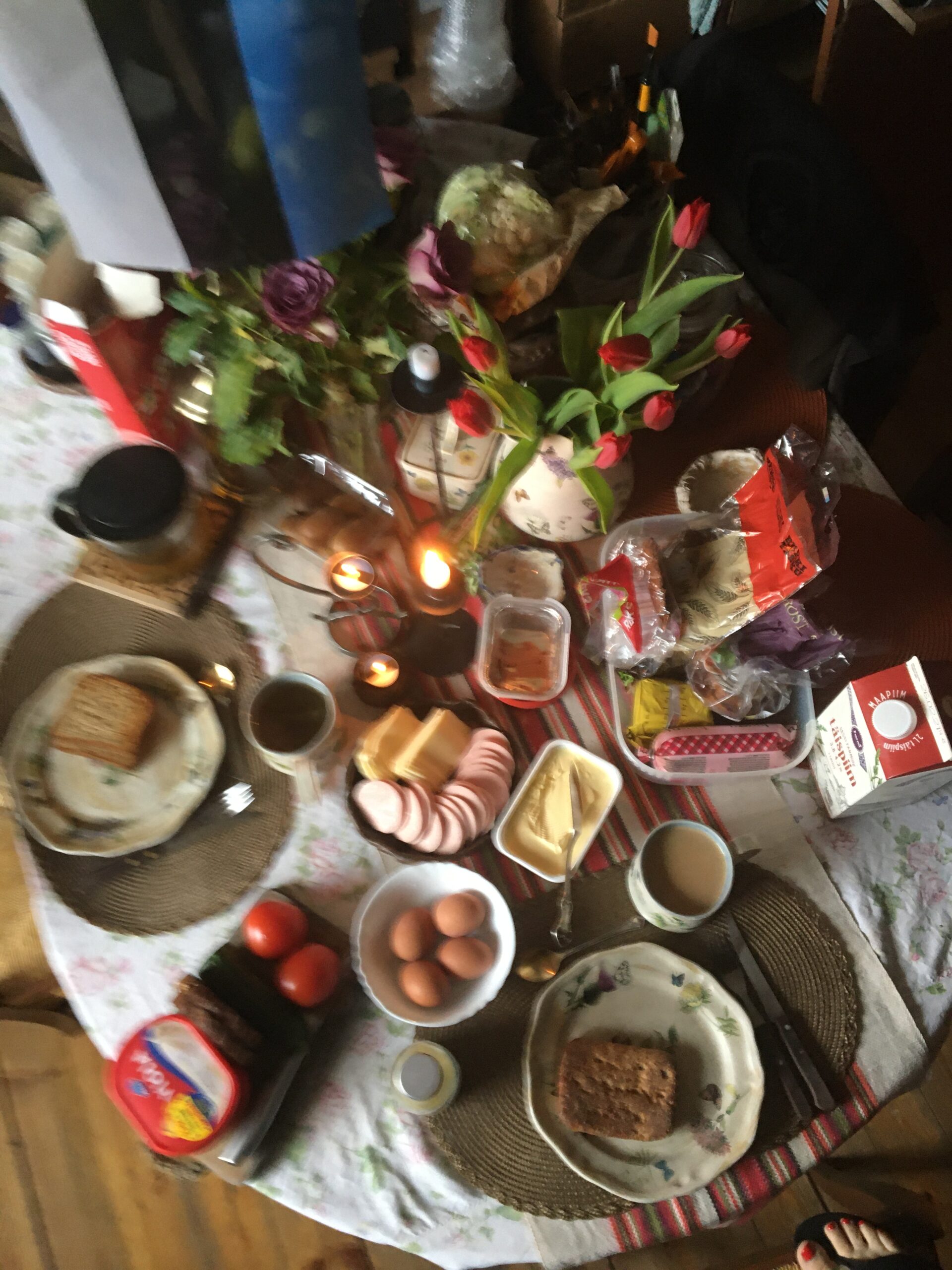
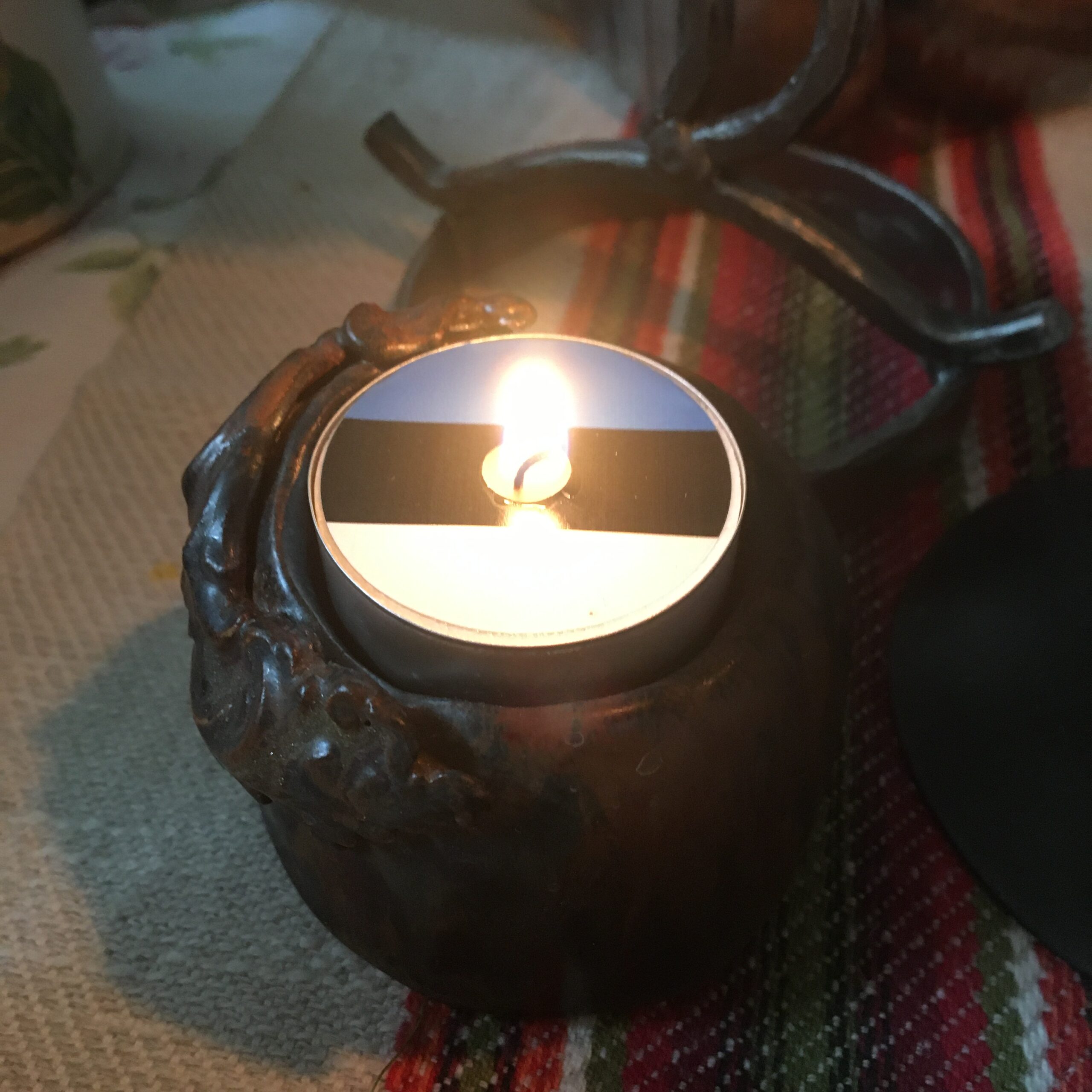
NordenBladet – This year everything has been different (corona pandemic restrictions and many twists in my own personal life). Even Estonian Independence Day* was completely different. Although me just as well as many other fellow inhabitants of Estonia spent an indoorsy peaceful day. The table full of flowers – Valentine’s Day roses and tulips from February the 22nd (a secret landmark which will remain undisclosed at this point). Probably for the first time in my life I didn’t switch on the TV-set during the entire day, to watch the country’s anniversary celebrations (actually I am not even sure if those were held this year). Commonly I have been closely observing the president’s reception gala (along with the so-called “penguin parade”).

MORNING
The day began when the smartphone began beeping and all over many greetings, texts and memes arrived. Quite some time passed as I scrolled the phone to go through the messages and my friends’ social media posts. I noticed that there were very many delightful images and recipes of various dishes. For example I saved one recipe of a black bread cake which I definitely intend to try. Similarly, in my mind I “saved” the idea that next year I wish to gather and dry cornflower blossoms, since it is cool to garnish the dishes with those! After that I looked out of the window and gosh what a hideous-tailed fox was wandering in our garden. I googled for some time to find out what could be the problem of the fox – most likely it was either stress, rabies or scabies. A very bold fox that was indeed, circling the corners of our garden for at least an hour.

Breakfast was very simple and ordinary – coffee, tea, egg, sandwiches. I skipped the sprat sandwich or any other sprat dish, just didn’t feel like it.

LUNCHTIME

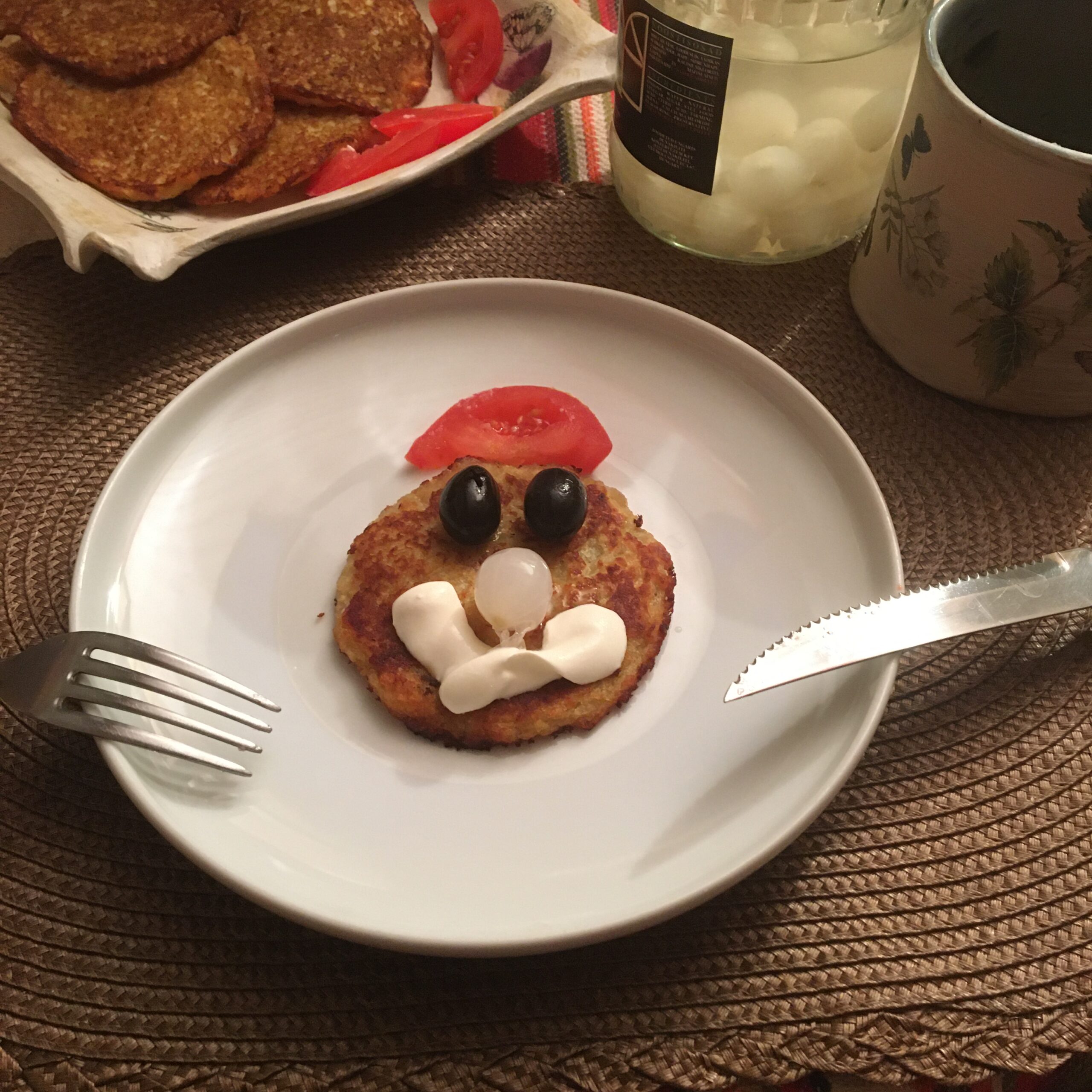
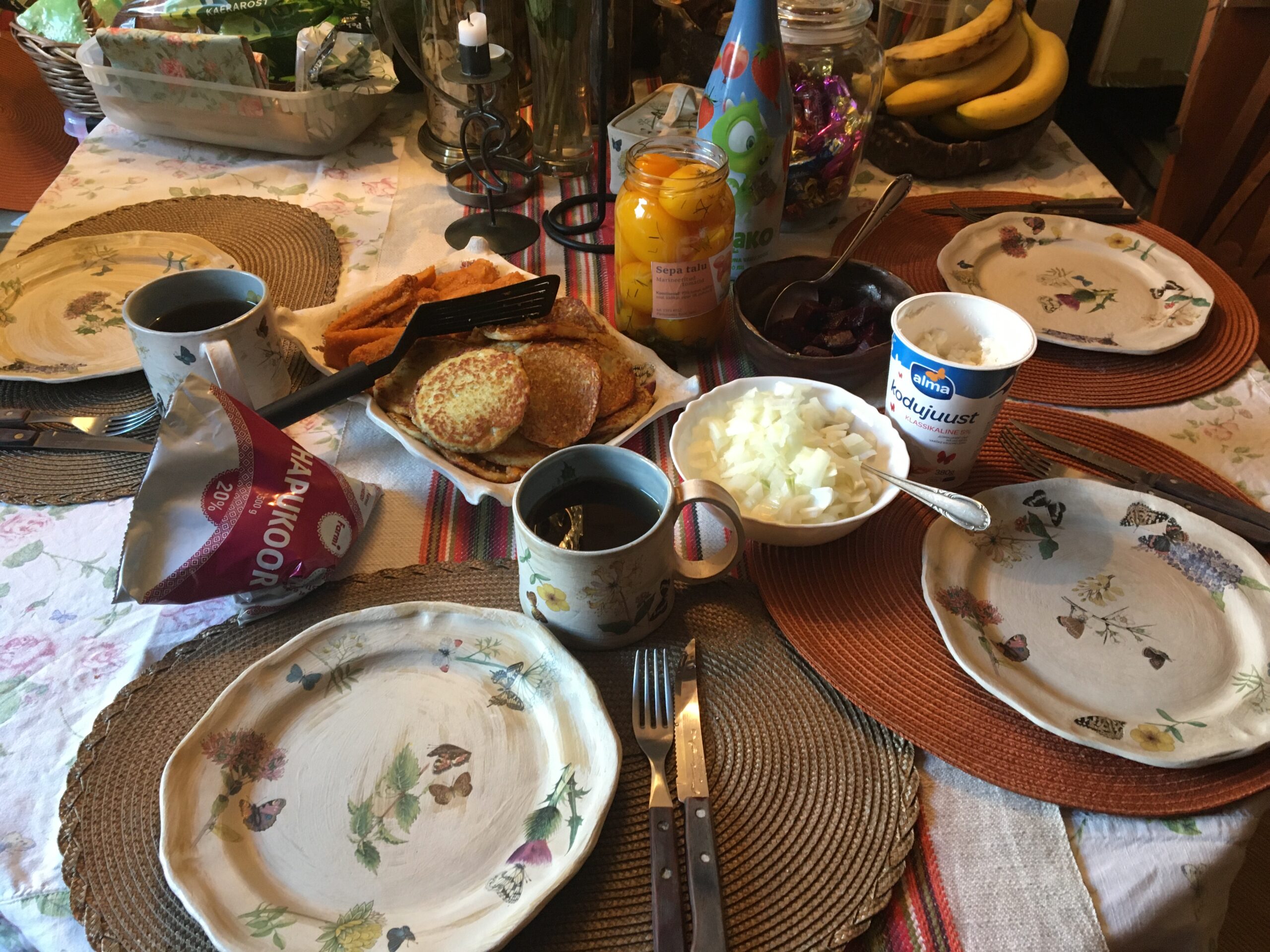
Dinner was jolly – I made potato pancakes (Latkes), with pearl onion, tomato, olives and sour cream, and for dessert I made oat cookies.

Recipe 1 – potato pancakes
You will need:
1 kg potatoes
2 large onions
50g flour
2 tablespoonfuls of baking powder
3 large eggs
Salt, pepper

Preparation:
Clean/peel and grate potatoes and onion (you may even choose to liquidize). Whip the eggs, stir while pouring flour, add baking powder, salt and pepper. Pour egg mix on potato-onion mix and stir both together. With a spoon, place portions of pancakes on the frying pan and fry from both sides in hot oil until they are golden brown, 3-4 minutes each side. Serve with sour cream. The dish matches well with onion/pearl onion, olives, dill, green onion.

Recipe 2 – oat cookies
You will need:
500g whole grain oats
300g flour
200g sugar
200g Taluvõi butter
4 eggs
2 tablespoonfuls of vanilla sugar

Preparation:
Melt butter and mix with sugar until the mass is uniform. Add eggs, vanilla sugar, oats and flour. Bake at 180-200 degrees Celsius ca 15-20 minutes, until the cookies are golden brown on the outside.

EVENING
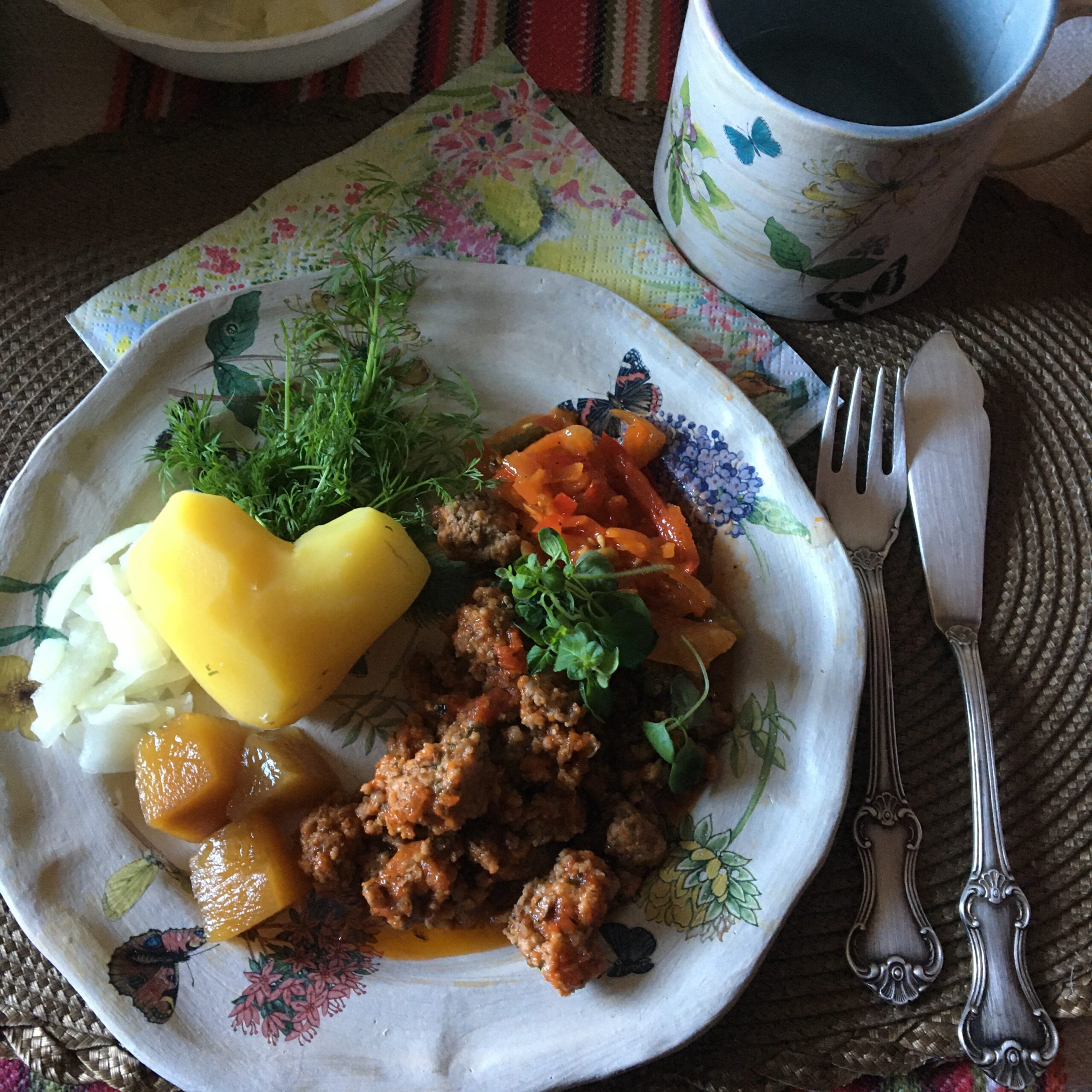
For dinner I made heart-shaped potatoes and minced meat-bolognese sauce, serving it with Letšo salad that I had made in late summer for winter time, and with the pumpkin that I got as a present. For dessert there was vanilla curd (Tere vanilla curd paste), with frozen berries (blueberries and raspberries) and with warm fresh butter cookie.

Recipe 3 – butter cookies

You will need:
250g Taluvõi butter
80-100g sugar
250-300g wheat flour
4 tablespoonfuls of vanilla sugar
(you may choose to add 1 egg, this time I did without an egg)

Preparation:
Melt the butter and stir with sugar, vanilla sugar, flour. Should you desire a harder, cookie-shaped cookie, then add the egg (without the egg the result will collapse out of concrete shape as can be seen on the following picture. That would be good when you head for crushing the cookie to get tiny pieces for coating.


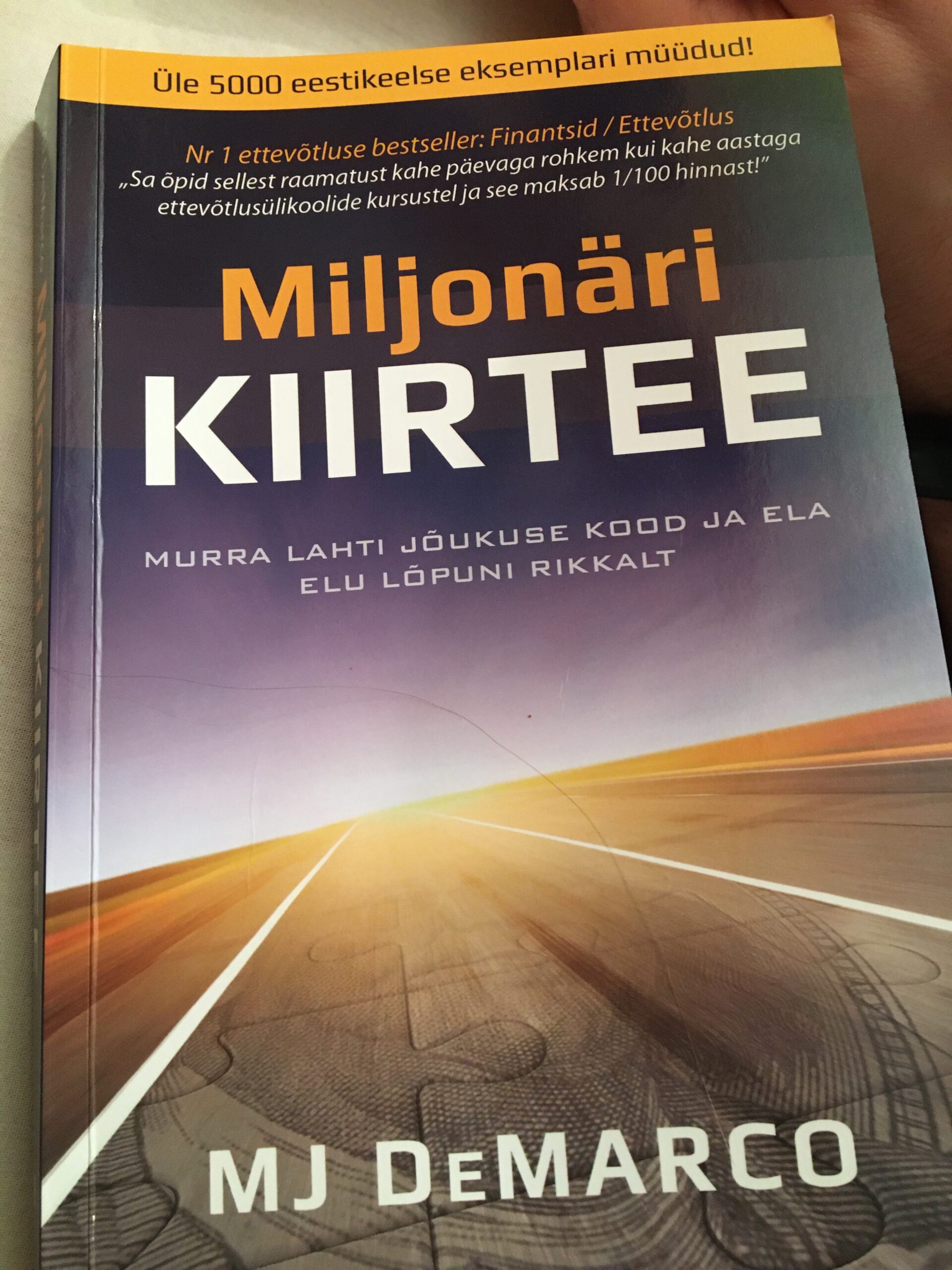
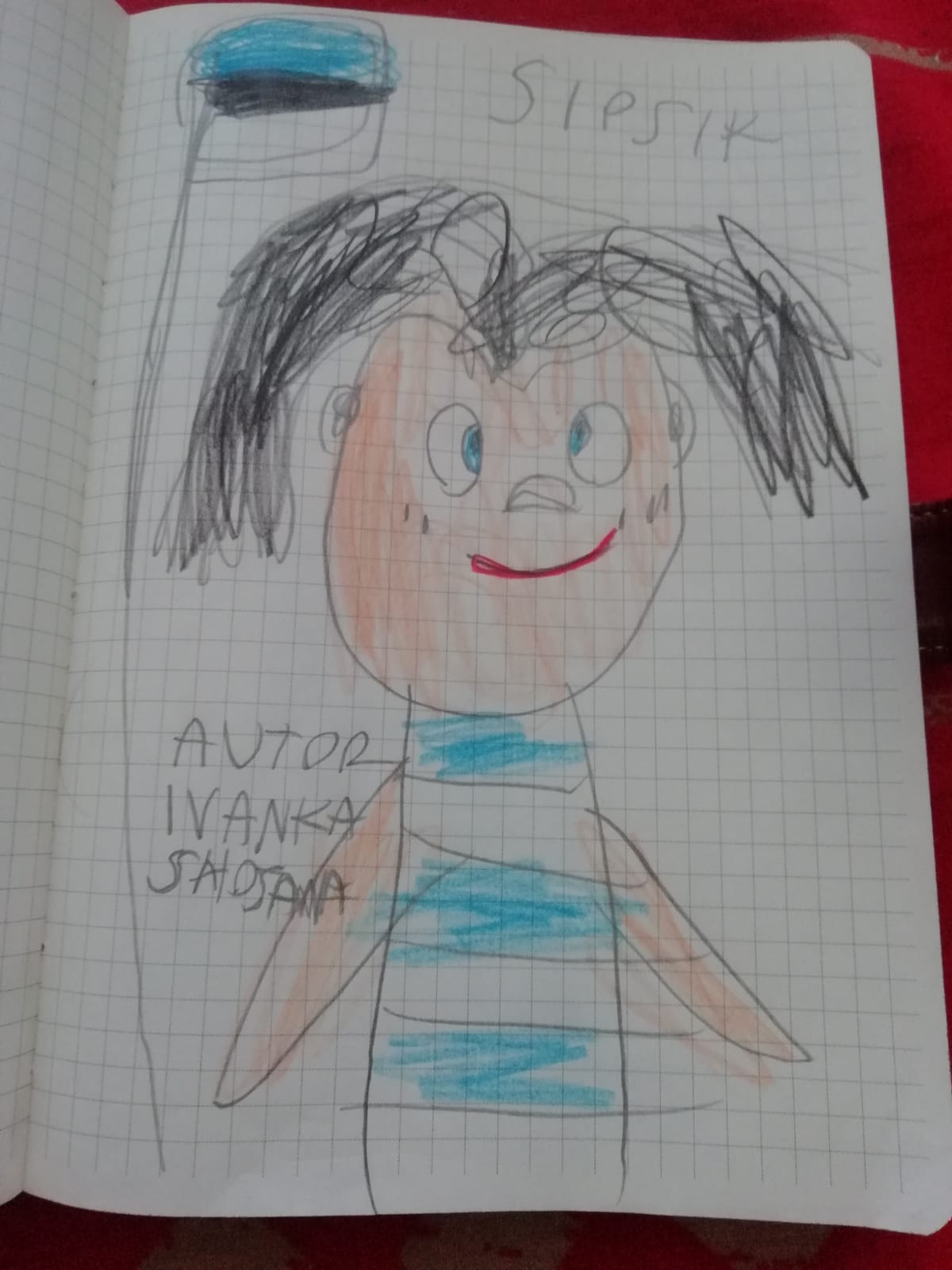
It was EXTRAORDINARILY slippery outside, thus no more outdoorsy action except for fetching the newspapers. The day was spent indoors and in a cozy manner – cooking, dining and reading books. Oh how good it feels to just lay down to read! I read through J.K. Rowling’s children’s book “Ickabog” and browsed, but now reading MJ DeMarco’s “The Millionaire Fastlane“. We talked a lot, and watched a movie (evenings we are re-watching via YouTube the “Magnificent Century” 😀 iccc). Ivanka Shoshana was in Mõigu with her grandma and grandpa and posted to me via WhatsApp two of her lovely drawings – the Sipsik and the Snow White.

Hugs!



_____________________________________

* Estonian Republic’s anniversary is February 24th, which marks the declaration of the Estonain Republic back in the year 1918, on February 24th. On that day in Tallinn the “Manifesto to all peoples of Estonia” was launched, announcing the country to be an independent and democratic Estonian Republic. February 24th is a national holiday in Estonia and is our independence day. Independence Day traditional events begin with festively hoisting the Estonian tricolor flag blue-black-white to the top of the tower Tall Hermann. During the post-Restoration of Independence time the tradition of the initial Independence Day parades by the Estonian Defense Forces has been revived, as they are common in many countries. Also there is the tradition that the Estonian president holds on our independence day a festive reception gala, where national decorations are awarded to people whose names have previously been published in the media.

Do read also my previous blog posts (all posts are available in four languages – Estonian, Finnish, Swedish and English!)

Government submits supplementary budget proposal to Parliament

NordenBladet — The Government submitted the first supplementary budget proposal for 2021 to Parliament on Thursday 25 February. The supplementary budget makes special provisions for needs arising from the COVID-19 situation.The first supplementary budget proposal for 2021 proposes appropriations to secure additional COVID-19 vaccine procurements and safeguard critical transport connections, security of supply and the transport of Finland’s foreign trade as the pandemic continues. Additional appropriations are also proposed to support the arts and culture sector and for children, young people and families. An increase in appropriations is also proposed to ensure that the municipal elections can be carried out safely.Changes arising from COVID-19An increase of EUR 70 million is proposed for COVID-19 vaccine procurement. The increase is targeted at the procurement of additional batches of COVID-19 vaccines and the advance payments needed to secure them.A total increase of approximately EUR 61 million is proposed for the central government’s share of the earnings-related component of the unemployment benefit and job alternation compensation, and for its share of the basic security component of the unemployment benefit. The need for an additional appropriation arises from a proposal to extend the temporary legislative amendments currently in force in unemployment security by three months, i.e. until the end of June 2021, due to the ongoing pandemic. The increase in costs is due to the continuation of the increased exempt amount of the employment benefit and the right of entrepreneurs to receive labour support, among other factors.An allocation of EUR 23.2 million is proposed to support the operation of cargo and passenger vessel shipping companies. The goal of this additional appropriation is to safeguard Finland’s essential transport connections, security of supply and transport of foreign trade as the coronavirus pandemic continues and to guarantee regular freight and passenger transport between Southwest Finland, Åland and Sweden, between Helsinki and Estonia and between Vaasa and Umeå.An additional appropriation of EUR 15 million is proposed for the operating costs of the Arts Promotion Centre. The additional appropriation aims to mitigate the effects of COVID-19 on individuals and others in the arts and culture sector. The appropriation will be allocated in the form of grants. In addition to these, the Government proposes an additional appropriation of EUR 5 million for film production companies to help manage the financial losses caused by COVID-19. The package will be financed by reallocating support for business costs.An increase of EUR 17.6 million is proposed for the operating costs of courts, public legal aid and guardianship districts, the enforcement service and bankruptcy supervision, the Consumer Dispute Board, the National Prosecution Authority and the Criminal Sanctions Agency to cover the costs arising from the COVID-19 situation. An increase of EUR 1.3 million is proposed to ensure that the municipal elections can be carried out safely under the exceptional circumstances caused by the pandemic.Several additional appropriations are proposed to support children, young people and families. A total of EUR 2.5 million is proposed for increasing and developing young people’s recreational and summer activities and to support summer entrepreneurship and working life skills among young people. EUR 17.5 million is proposed for measures to support vocational education and training. These support measures aim to prevent students from dropping out of their studies, improve student wellbeing and to reduce disparities in students’ skills. A further allocation of EUR 17.5 million is proposed for the development of municipal healthcare and social service structures to better support children, young people and families during and after the COVID-19 pandemic.Other changesThe supplementary budget proposal proposes amendments to support for the management of young forest stands and the collection of small-diameter wood under the Act on the Financing of Sustainable Forestry and to the related tasks of the Finnish Forest Centre. An increase of EUR 4.0 million is proposed for increasing the use of small-diameter wood in energy production.An increase of EUR 10 million is proposed for phasing out oil heating.The supplementary budget proposal proposes increasing the budget authority for items under the EU’s regional and structural policy and other cohesion policy programmes by EUR 295 million and increasing the appropriation by EUR 130 million. These increases are due to the REACT-EU funding allocated to Finland’s Structural Funds Programme “Sustainable growth and jobs 2014-2020” for 2021–2023 as part of the EU recovery instrument.Changes in revenue estimatesThe Government proposes increasing the tax revenue estimate by EUR 415 million based on tax receipt data and the macroeconomic forecast updated in December. Economic activity is expected to develop more favourably than previously predicted. Earned income tax and capital income tax revenue is expected to grow by EUR 207 million more than previously anticipated. Based on the most recent trends, the estimate for inheritance and gift tax revenue has been increased by EUR 138 million. Based on tax receipt data, revenue from the asset transfer tax is also expected to increase by EUR 70 million more than previously projected.Impact on central government debt and the balance of central government financesTaking into account the increase of EUR 415 million in actual revenues and the increase of EUR 394 million in appropriations, the first supplementary budget proposal for 2021 reduces the central government’s net borrowing requirement by EUR 21 million. The central government’s net borrowing in 2021 is estimated to be EUR 11.7 billion. The amount of Government debt at the end of 2021 is estimated to be approximately EUR 137 billion, which is around 56 per cent of gross domestic product (GDP).

Source: Valtioneuvosto.fi

Government proposes adoption of amendments to the Vienna agreement on periodical technical inspections

NordenBladet — The Government proposes that Finland adopt and bring into force at national level the amendments to the Vienna agreement on periodical technical inspections. The amendments would facilitate cross-border transport by electric, hybrid and gas vehicles.As a result of the amendments to the agreement, the periodical inspections of electric, hybrid and gas vehicles would include new items for testing, such as the electronic power train or gas installation of a vehicle. The aim is to increase vehicle safety.By acceding to the Vienna agreement, the countries agree to mutually recognise the periodical technical inspections carried out in the signatory countries, which means that there is no need to demonstrate the roadworthiness of a vehicle by any other means. Finland became bound by the agreement in 2001. Finland’s neighbouring countries, Russia and Estonia, are also parties to the agreement.The entry into force of the amendments would promote road safety and the climate objectives in the transport sector as well as support the wider use of alternative power sources in the future.The changes would not have an impact on the inspection intervals or prices.The amendments to the periodical technical inspections in the Vienna agreement prepared by the WP.29 (World Forum for Harmonization of Vehicle Regulations) of the United Nations European Economic Commission entered into force in 2018-2020.Next stepsOn 25 February 2021, the Government proposed that the amendments to the agreement be adopted.A preliminary debate will be held on the proposal now submitted by the Government to Parliament. The timetable for the debate will be listed on Parliament’s website (upcoming plenary sessions).After the preliminary debate, the proposal will be taken to a Parliamentary Committee. After the Committee submits a report, the process will continue in a plenary session.The amendments to the agreement are scheduled to enter into force in spring 2021.

Source: Valtioneuvosto.fi

Changes to value added taxation in e-commerce

NordenBladet — The proposal would remove the tax exemption of small imported online purchases. In future, value added tax would also be collected for shipments valued EUR 22 or less that are imported from outside the EU. Changes would also be made to distance selling within the EU. The government proposal would also reduce the administrative burden on companies regarding value added tax.These legislative changes are being made in Finland to comply with EU regulations. The government submitted its proposal for the amendments on Thursday, 25 February.Fair competition with EU outsidersValue added tax has not been collected for shipments valued EUR 22 or less if the goods were imported to the EU. At the same time, value added tax has been collected for small purchases made within the EU.The tax exemption of shipments from outside the EU would be removed by the amendment, which would improve the competitive position of companies establishedin the EU by making the conditions of competition equal. In online shops where the seller uses the new special scheme for shopping valued EUR 150 or less, customers would pay value added tax as part of a product’s price. This would make the import exempted, and the seller would declare and pay taxes on their sales to the respective Member States through the Member State in which they are registered. This change would reduce the administrative burden on private persons and companies.In the case of online shops not using the special scheme for imports, the transportercould pay the value added tax to Finnish Customs on behalf of the recipient on a monthly basis by using a new simplified special scheme.Changes to distance selling within the EUThe tax for distance-sold goods would be collected in the shipment’s target Member State regardless of the volume of distance sales in said Member State. The annual limit of EUR 35,000 for determining the taxing Member State would be abolished. As a country with high taxation, Finland would benefit from this change.The previous limit of EUR 35,000 would be replaced with an EU-wide limit of EUR 10,000 for distance selling and the sale of certain services. This would reduce the administrative burden on small companies. For sales under this limit, tax would be collected in the Member State where the seller is establishedor where transportation starts.Businesses that enable the sale of goods online, such as marketplaces, would be liable to pay taxes on sales to consumers upon certain conditions. In addition, marketplaces would be obligated to keep records of the sale of goods and services. The aim of this is to ensure effective tax collection.Reduced administrative costsThe administrative costs of companies could be significantly reduced if the current single point of contact reporting and payment systems were expanded. For now, these systems are used for radio and television broadcast services, electronic services, and telecommunication services. The proposal would include all other services sold to consumers in the special systems. In addition, the EU special system would be expanded to include the intra-EU distance selling of goods. 
 
These changes are intended to take effect on 1 July.
Additional information:Suvi Anttila, legislative counsellor, tel. +358 2 9553 0201, suvi.anttila(at)vm.fi
Risto Sakki, ministerial adviser, tel. +358 2 9553 0294, risto.sakki(at)vm.fi

Source: Valtioneuvosto.fi

Government decided not to apply certain exemptions from road transport rules

NordenBladet — The Government has decided how Finland will apply the EU Regulation on the extension of derogations in view of the COVID-19 pandemic.On 18 January 2021, the European Commission issued a proposal for a regulation on specific temporary measures following the continuation of the COVID-19 pandemic. The proposal concerns road, rail and inland waterway transport and maritime safety with regard to certain permits and qualifications. The objective is to facilitate the operations of the transport sector as the pandemic continues.On 25 February 2021, the Government decided that Finland would notify the Commission that it will not apply the following derogations nationally (Articles 3-5, 7 and 8 of the Regulation):– validity of driving licences– periodic checks of the tachograph and renewal of driver cards– periodic roadworthiness testing– Community licences for goods transport– driver attestations– licences for international passenger servicesThe long-term application of road transport derogations would have negative effects, e.g. on traffic safety. On the other hand, based on assessments by authorities and the round for comments, there have been no such difficulties in renewing driving licences and road transport licences that would justify the need for derogations.According to the decision now taken by the Government, the derogations laid down in the Regulation with respect to professional qualifications in road transport, rail transport and maritime safety would be applied at national level.The derogations from rules concerning inland waterway transport are not relevant for Finland, as the EU inland waterway transport rules mentioned in the Regulation are applied in Finland only in certain respects.The Government of the Province of Åland decided on 18 February 2021 that the Regulation would not be applied in the Province. Åland will not apply the derogation on professional qualifications in road transport, the validity of driving licences, periodic checks of tachographs, the renewal of driver cards, and the periodic roadworthiness tests of vehicles (Articles 2 to 5 of the Regulation). In this case, Åland will submit its own notification, which will be included as an annex to Finland’s notification.BackgroundThe EU Regulation enters into force in all Member States without national measures and is, by definition, directly applicable legislation. However, Member States may decide not to apply the exemptions contained in the Regulation.The Government submitted a government communication concerning the proposed Regulation to Parliament on 4 February 2021. Due to the urgency of the changes in the Regulation, the Government first submitted a report on the proposal to Parliament on 28 January 2021.Next stepsThe Regulation entered into force on the day following its release, i.e. 23 February 2021. Application of the Regulation will begin 11 days after this date of entry into force. Notification of the decision not to apply derogations to the Regulation must be made to the European Commission within eight days of the entry into force of the Regulation.

Source: Valtioneuvosto.fi

Government decides on immediate transition to tier 2 of COVID-19 prevention and is prepared to declare a state of emergency

NordenBladet — In its meeting on 24 February, the Government decided to impose more stringent measures to combat the COVID-19 pandemic and to transition to tier 2 of prevention measures.A total of seven hospital districts are being instructed to transition immediately to tier 2 prevention measures, which are the strictest restrictions for areas in the community transmission phase of the epidemic. The same measures are recommended for nine areas currently in the acceleration phase. The Government will issue a resolution on the matter at its plenary session today.The Government is prepared to declare a state of emergency throughout the country. Under section 23 of the Constitution, which lays down provisions on emergency conditions, the Government proposes that food and beverage service businesses be closed for a period of three weeks from 8 to 28 March. The proposed closure will not apply to areas where the epidemic is at a stable level.The aim of all these measures is to prevent the rapid acceleration of the COVID-19 epidemic and to curb the spread of more infectious virus variants. Most stringent restrictions in effect in seven hospital districtsThe relevant authorities and all areas in the community transmission phase are being instructed to implement all measures to address the community transmission phase of the COVID-19 epidemic to their full extent, including the new powers under the Communicable Diseases Act:
•    Extensive recommendation on remote work and the use of face masks
•    Protection of risk groups
•    Distance learning for higher education institutions
•    Closures of or restrictions on the use of public premises (recommendations and decisions)
•    Suspension of adult group hobbies (recommendations and decisions)
•    Possible restrictions on passenger traffic and the number of passengers
In addition to these measures, which are already in place, the following areas are being instructed to implement more stringent additional measures for tier 2 as outlined in the Government Action Plan:
•    Helsinki and Uusimaa 
•    Southwest Finland
•    Satakunta
•    Kanta-Häme
•    Vaasa
•    Åland 
•    Lapland
The additional prevention measures are as follows:
•    Restrictions on gatherings with more than 6 persons
•    Avoiding private events with more than 6 persons
•    Municipalities and joint municipal authorities will intensify their monitoring of quarantine and self-isolation
The same measures and additional measures are also recommended for the following nine areas currently in the acceleration phase:
•    East Savo
•    South Karelia
•    Pirkanmaa
•    Central Finland
•    Päijät-Häme
•    Länsi-Pohja
•    North Ostrobothnia
•    South Ostrobothnia
•    Kymenlaakso
State of emergency and closure of restaurants 8–28 MarchThe Government is prepared to declare a state of emergency throughout the country. The Prime Minister has discussed declaring a state of emergency with the President of the Republic. The parliamentary groups will convene to discuss the situation later on Thursday. The Government is prepared to decide on the transition to emergency conditions next week.The Government proposes closing food and beverage service businesses during the emergency conditions from 8 to 28 March, except for in areas where the epidemic is at a stable level. However, meals may be sold to customers for takeaway.In addition, with effect from 8 March and as part of the additional measures for tier 2, the upper grades of comprehensive school will be instructed to switch to temporary distance learning in areas where the epidemic is in the community transmission or acceleration phase. Group hobbies for young people over 12 years of age may be suspended.

Source: Valtioneuvosto.fi

Significant rise in number of COVID-19 cases and increased need for hospital care

NordenBladet — A total of over 3,400 new COVID-19 cases were reported between 15 and 21 February 2021, which is clearly more than in the previous week. The incidence of new cases was 62 per 100,000 inhabitants in the whole of Finland, while in the preceding week, it was 46 per 100,000 inhabitants.Most of the new cases were reported among working-age adults, particularly among young adults. People under 50 years of age accounted for around 80 per cent of all cases and people under 30 years of age for around 45 per cent of the cases. People aged over 60 accounted for about 9 per cent of all confirmed cases, and people aged over 70 accounted for about 3 per cent of the cases. A total of over 11,000 people were quarantined between 15 and 21 February, which is over 2,700 people more than in the previous week.These figures are from the monitoring report published weekly by the Finnish Institute for Health and Welfare.Monitoring coronavirus (Finnish Institute for Health and Welfare, in Finnish and Swedish)Situation in Hospital District of Helsinki and Uusimaa remains worst in Finland — large clusters of COVID-19 in many areasIn recent weeks, the COVID-19 situation has worsened particularly in the Hospital District of Helsinki and Uusimaa. The incidence of new cases has also risen in nine other areas over the past two weeks. However, the incidence of new cases fell or remained the same in 11 hospital districts.Some of the new cases originated from known chains of transmission whereas others originated from outside these chains.A number of hospital districts reported mass exposures that have resulted in chains of transmission. For example, in the Hospital Districts of Satakunta, South Savo and North Karelia and the Åland Islands, the incidence of cases increased many times over between 15 and 21 February when compared to the previous week.Some of the new transmission chains could have been prevented if the recommendations and restrictions in place had been followed carefully. The fact that people have waited too long to get themselves tested have, in some cases, resulted in large-scale transmission chains.During the winter holiday period, tourism may increase the likelihood of the disease spreading also in areas where the COVID-19 situation is more stable.In the whole of Finland, the number of people requiring hospital care has increased during the past week. The need for intensive care has also increased over the past few weeks, but the capacity of intensive care has not been threatened on the national scale. According to the information available on 24 February, a total of 193 people are receiving hospital care due to COVID-19 in Finland. Of them, 86 are inpatients in specialised healthcare, 72 inpatients in primary healthcare and 35 inpatients in intensive care. A week ago, a total of 132 people were receiving hospital care due to the COVID-19 disease. The number of deaths related to the disease is slowly decreasing. Between 15 and 21 February, the number of deaths was 14, between 1 and 7 February, it was 21, and between 8 and 14 February, the figure was 17.  Effective measures needed to prevent virus variantsSo far, a total of 690 cases of the new virus variants have been confirmed in Finland. Of them, 660 are cases of the UK variant.The current epidemiological situation calls for highly effective measures to curb the spread of the virus in the coming weeks and months. Swift and extensive restrictive measures are also effective against the virus variants. The COVID-19 epidemic: regional situation, recommendations and restrictions (Finnish Institute for Health and Welfare)Coronavirus is transmitted efficiently particularly between people who are in close contact for a longer time. Each of us can do our part to slow down the spread of coronavirus. It is important to reduce close contacts even if you are healthy, and all those with even the mildest COVID-19 symptoms must get tested promptly. Transmission and protection — coronavirus (Finnish Institute for Health and Welfare)

Source: Valtioneuvosto.fi

Europol Regulation on the prevention of cross-border crime to be updated

NordenBladet — International internet crime and mobile crime are constantly evolving. Proposed amendments to the Europol Regulation concern, for example, exchange of information between Europol and private operators to ensure that prevention of serious international crime and terrorism meets today’s requirements.The European Commission has proposed that the legal basis for Europol, the European Union Agency for Law Enforcement Cooperation, should be amended in line with today’s requirements for the prevention of international crime and terrorism. The Government has submitted to the Parliament a so-called Union communication that describes the content and effects of the Commission’s proposals as well as Finland’s positions on the proposals.“Criminals are operating more and more online, and mobile crime is constantly evolving. On a changing playing field, it sometimes becomes evident that the laws and regulations do not meet the current requirements. For this reason, it is proposed that part of Europol’s legal basis should be updated”, says Police Director Hannele Taavila from the Ministry of the Interior.The key objectives of the proposed amendments to the Europol Regulation concern Europol’s cooperation with private parties, the processing of personal data by Europol in support of criminal investigations, and Europol’s role on research and innovation. The aim is to ensure that Europol will be able to better assist the European Union Member States to effectively combat serious and organised crime. The Commission has also adopted another amending proposal concerning Europol’s ability to enter alerts on suspects and convicted criminals to the Schengen Information System (SIS).“Criminals increasingly use cross-border services offered by private parties to communicate and carry out illegal activities. However, private operators do not currently have a point of contact at Union level where they could report information that might be relevant for criminal investigation”, explains Taavila.The legislative amendment would enable Europol to act as the contact point and to examine, in a centralised manner, what Member States the crime or the case under investigation concerns. The Government supports development of necessary cooperation between Europol and private parties.The proposal for a regulation would strengthen Europol’s role in research and innovationThe amendments propose that Europol should play a key role in assisting Member States to develop new technological solutions based on artificial intelligence, which would benefit national law enforcement authorities throughout the EU.“Searching for innovative solutions is an important part of countering international crime to ensure that crime prevention authorities keep up with the evolving landscape. The Government supports Europol’s proactive role in providing centralised support to Member States in the development of innovations and the law enforcement authorities in the development of their competence and capabilities”, says Taavila.More detailed legislation also improves data protectionKeeping regulations up to date improves the data protection of individuals. “Processing of personal data is already very strictly regulated. These changes aim to effectively ensure, however, that privacy protection and fundamental rights are respected in the processing of different types of data”, says Taavila. Data processing is monitored on several levels, and up-to-date and harmonised legislation would allow for more effective examination of issues related to data protection on a consistent basis.The Commission’s proposal also proposes creation of a new alert category of the Schengen Information System (SIS). This proposal is based on the fact that Europol is not able to provide directly and in real time the Member States’ law enforcement authorities with information sourced from third-countries or international organisations on persons who have been suspected or convicted of criminal and terrorist offences. “To address this security gap, it is proposed that a new alert category be created in the system, for exclusive use by Europol in specific and well-defined cases and circumstances”, says Taavila.The draft legislation has been presented in the Government plenary session on Thursday, 25 February. Next, it will be passed to the Parliament.Further information:
Hannele Taavila, Police Director, tel. +358 (0)295 488 568, [email protected] 

Source: Valtioneuvosto.fi

Supplementary budget funds for COVID-19 vaccines, unemployment security and support for children, young people and families

NordenBladet — In the first supplementary budget for 2021, the Government proposes that appropriations be granted to the administrative branch of the Ministry of Social Affairs and Health for COVID-19 vaccine procurement, unemployment security, and services for children, young people and families, among other things.Additional funds for COVID-19 vaccinesThe Government proposes an additional EUR 70 million for the procurement of COVID-19 vaccines. Finland procures COVID-19 vaccines through the EU joint procurement. In the exceptional circumstances caused by the COVID-19 pandemic, procurement decisions must be made within the timetable set by the European Commission, and it is not possible to depart from this timetable. The additional appropriation will ensure that Finland has the opportunity to take part in the possible new rounds of vaccine procurement under the EU joint procurement agreement.Exceptions to unemployment security to be extendedThe Government proposes to extend the exceptions to the unemployment security. The current exceptions will remain in place until the end of March 2021. The Government proposes that the exceptions continue until the end of June 2021. A total of EUR 61 million would be reserved for this purpose. Of that sum, EUR 13 million would be allocated for the increased exempt amount of the unemployment benefit and EUR 48 million for the temporary right of entrepreneurs to labour market support.The increased exempt amount of the unemployment benefit would be extended until the end of June 2021. Thus, the amount would be EUR 500 per month instead of the normal amount of EUR 300 (i.e., EUR 465 per four calendar weeks instead of EUR 279).The aim is to secure the livelihoods of employees in a situation where people are laid off or lose their jobs due to the impact of the COVID-19 crisis on the economy.For more information about the exceptions, see the following press release issued by the Ministry of Social Affairs and Health (available in Finnish and Swedish):Government proposes to extend exceptions to unemployment security until 30 June 2021The Government also proposes that the temporary right of entrepreneurs to labour market support be extended. The act concerning the temporary right of entrepreneurs to labour market support is to remain in force until the end of June 2021. For more information about the temporary right of entrepreneurs to labour market support, see the following press release issued by the Ministry of Economic Affairs and Employment:Government proposes to extend labour market support for entrepreneurs until the end of JuneDiscretionary government grant for supporting children, young people and familiesThe Government proposes additional funding of EUR 17.5 million to support children, young people and families. Funds would be allocated to social welfare services which help children, young people and families cope with everyday life during the COVID-19 pandemic. Funds would also be allocated to mental health services for children and young people. The aim is to ensure sufficient, effective and timely services in these exceptional circumstances and to prevent social problems, for example.

Source: Valtioneuvosto.fi

Chief of Defence speech for Estonia’s 103rd Independence Day

NordenBladet —

Good people of Estonia!

This year we are celebrating the birthday of our country at a rather difficult time. This is not the first time that we have celebrated the anniversary of the Republic of Estonia in trying times, for example, in 1919 and 1920, when the people were fighting for their country in war, but also in 1939 and 1940, when everyone was hoping that a devastating war would not come.

In retrospect, we are able to say that things definitely turned out for the better when there was greater unity among the people. When the common goals of society outweighed personal fears, the ramblings of know-it-alls, individual desires for absolute freedom, or taking offense at the actions of government officials. It is quite likely that the people who pledged their lives in the War of Independence shared a dislike for a number of politicians, reviled officials, or direct superiors. Even one’s neighbour in the trenches was often unsympathetic. Of course, many were not fond of forced mobilisation. Despite all this, they worked towards common goals. For the freedom of their people and of the country.

At the end of last year, Ivo Linna said that the coronavirus pandemic is likely our generation’s war. Every generation before us has had their own experience with war. Considering this last year of restrictions, dangers, ignorance and often loneliness, this is probably something that people can agree with. After all, this is not the usual peacetime experience. True – we have not lost people as we did during the two world wars, but we still witness and experience everyday battles and losses.

The most visible battle is, of course, taking place in healthcare – in this battle, the Republic of Estonia has not been defeated. On the contrary, as was the case 102 years ago, we have now turned defence into offence.

However, a much more covert war is taking place on the front of people’s feelings, perceptions, opinions, and doubts. As tends to be the case in times of uncertainty, there is a great deal of disbelief and mistrust. There is harsh criticism and even hatred towards decision-makers. Who should I trust? Scientists, the government, officials, or myself? Should I think and act as I see fit?

Professor Mati Heidmets has called this situation a ‘natural experiment’, one that reveals how strong the sense of unity of a society or nation is. How much are citizens willing to limit their own desires for the greater good? In the War of Independence, our ancestors were able to do so. Sometimes they spat in each other’s food, yet still went into battle together. Certainly not for Päts, Puskar or Piip, but for a sense of unity, for their home and their people.

The same unity existed in the 1940s, otherwise thousands of men and women would not have been able to fight against and hide from foreign rule for years as Forest Brothers. Although disagreements and betrayals occurred, the Forest Brothers never pulled the trigger lightly and the public never stopped supporting them.

Unlike many other nations, in the late 1980s, our sense of unity proved to be stronger than our mutual hostility or disagreements. This feeling of community concluded with the restoration of the Republic of Estonia, allowing us today to celebrate the 103rd anniversary of our country. In the most difficult of times, our people have found a sense of national unity that has protected us. This was the case on the front lines of the War of Independence, during the fight as Forest Brothers, during the Singing Revolution, and it is also necessary now.

As the Commander of the Defence Forces, I can appreciate our modern war heroes. Those who are defending our country by participating in far-away missions, but also those who are currently fighting on the front line against this unpredictable disease.

Are not our healthcare workers worthy of admiration? They are tirelessly fighting for our lives in hospitals and getting vaccinated, despite personal doubts, but doing so in all of our interests. The police also stand face to face with the coronavirus every day, despite not having any weapons with which to combat it. They do so in spite of fatigue and an invisible danger, standing for the people and the state.

Many volunteers – members of the Defence League and of the women’s organisation Naiskodukaitse – are coming to the aid of the state because … the state needs them and the state is needed.

Government officials and scientists are also doing their best in the interests of society, even when they know that some people question their competence, years of study and sincerity, and mock them on Facebook. Nevertheless, they continue working to protect even these people.

Last spring, we placed the conscripts in the military units of the Defence Forces under lockdown, in an effort to achieve the training goals while also ensuring that they can act as a reserve for the state should something even worse happen. Initially, this decision caused murmurings of discontent. However, as the situation became clearer, the conscripts posed the question: ‘Can we not do something for our country?’ The answer is simple: ‘Yes, you can do your duty, but you can also do much more – keep your loved ones safe, inform them and, if necessary, also warn them.’

A British officer serving among us came to me in the spring and said: ‘I have a problem. My soldiers want to help you in the fight against the virus. What can we do?’ They are our allies… This too is a sense of unity.

Last December, conscripts graduating from a paramedic course were asked just before the Christmas holiday: ‘If there is a shortage of staff in care homes, are you ready to voluntarily return from your leave to serve?’ This was a fair question that most answered in the affirmative.

Based on these few examples, I can confirm that I have seen the sense of unity that we need to defeat our opponent. We possess this sense of unity, it exists in most of us, even if we do not realise it ourselves, even if we doubt it. And I can assure you – we have the will, the desire, and the pride to win this war and the next war, whatever that war may be.

I have a feeling that in a few years, on the anniversary of the Republic of Estonia, we will be able to say that we have won this war and the result of this natural experiment has been good… because today we have a great 103-year old nation and a people with a strong sense of unity.

Long live the Republic of Estonia!

Source: Estonian Defence Forces