

Reklaam

Helena-Reet Ennet

Helena-Reet Ennet
4698 POSTS 0 COMMENTS

Helena-Reet: Saturday + Recipe for juicy cinnamon rolls with cloudberry yoghurt filling!

NordenBladet – Yesterday was Purim* holiday and thus in our home a small celebration. I listened to Purim Dance Mix, sipped up two bottles of champagne, sent some text messages (which most certainly needn’t have been sent, because I have the habit of starting to tell how things are done as soon as I’ve had the booze :D) and then I attended an auction, from where I got an additional beautiful piece to my currently already quite extensive collection of paintings. The evening was chill! In the night I slept like a baby, until this morning at eight Ivanka Shoshana patted me on the shoulder and reminded me that it was time for me to start preparing oatmeal porridge for her. I also made omelette (ahh, those proper eggs from the chickens and geese that have been freely running around in the countryside, those are already something!) and served it with avocado, beet, pickled cucumber and cottage cheese.

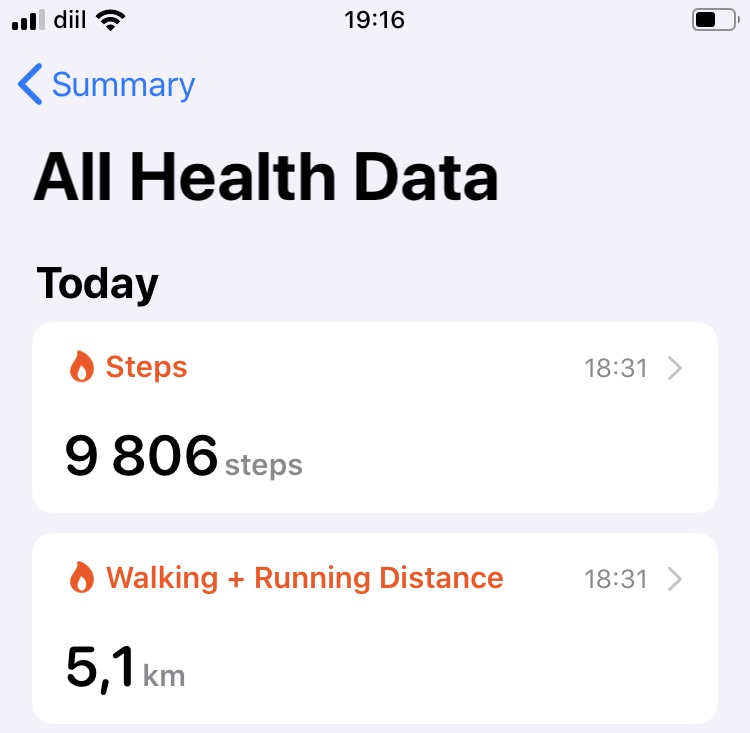
Then – outside I went. Today I went walking even several times. The weather was wonderful, the sun was shining and there was already a hint of spring in the air. I am so keen on seeing the weather get even a bit warmer so that the ice coating would melt from the roads, then I will launch my habitual walking race once again. I have been looking forward to doing that. By this evening I had covered 5 km. As a start, this is quite good, but the goal is to reach again the daily 2-3 hours of outside activities, and to walk 10-15 km. Being physically active gives me a good feeling and it is definitely good for the body weight (which is especially useful for those of us who love to bake something good every day… haha). Today me and Ivanka baked, based on the recipe I created, some really yummy, mellow, and juicy cinnamon rolls. Really yummy! You’ll find the recipe below, after the gallery!



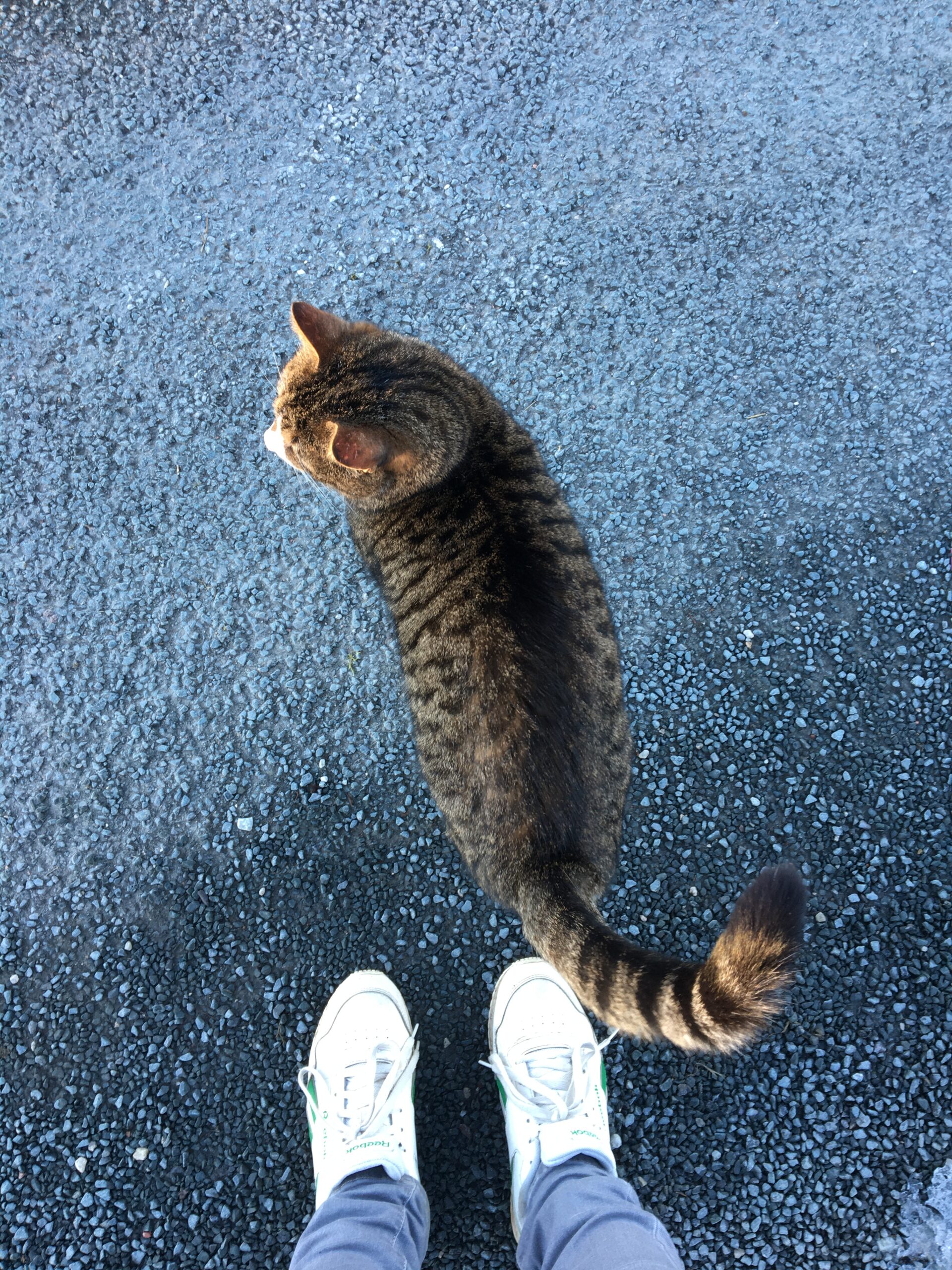

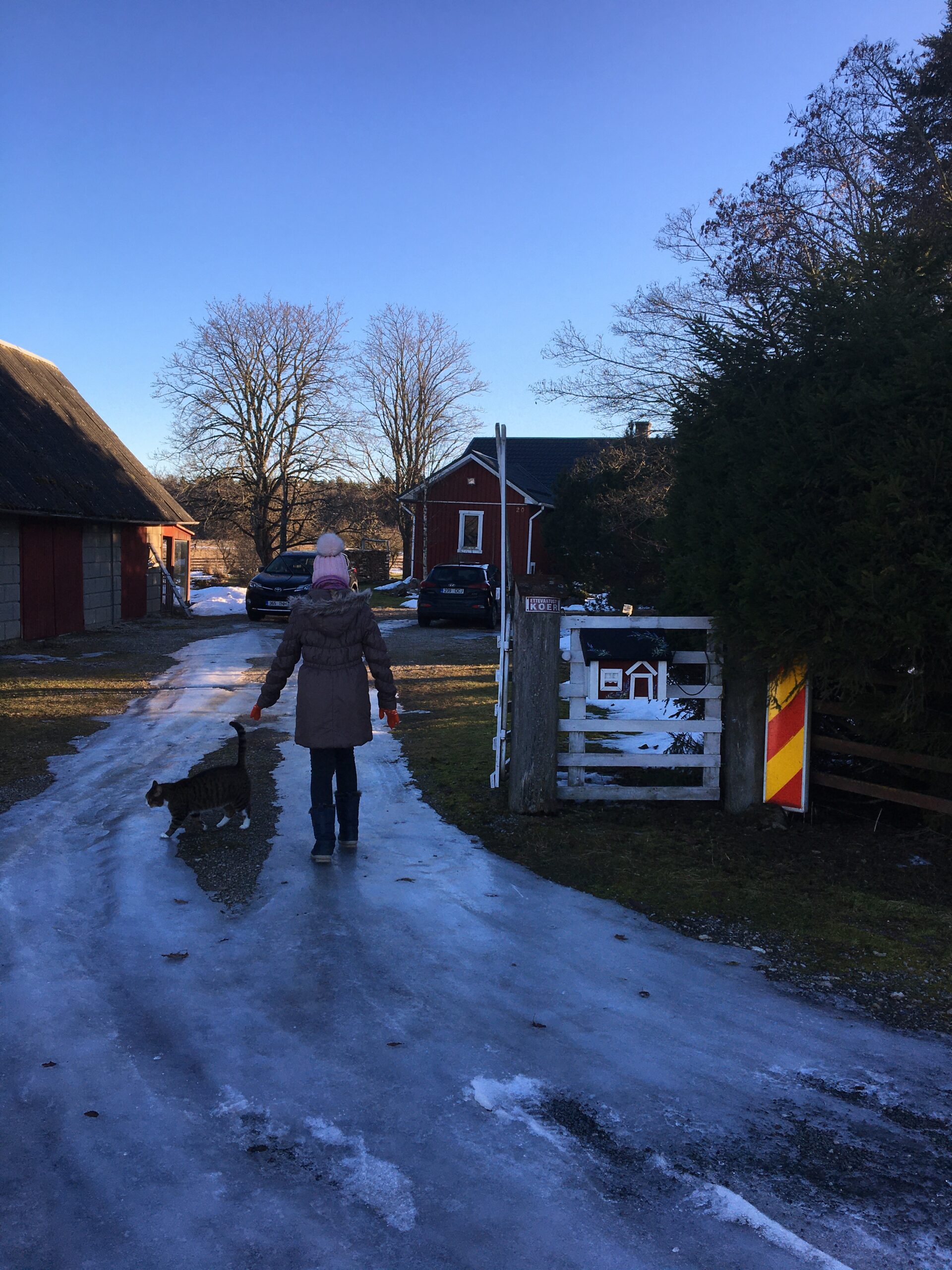
Recipe: Juicy cinnamon rolls with cloudberry yoghurt filling

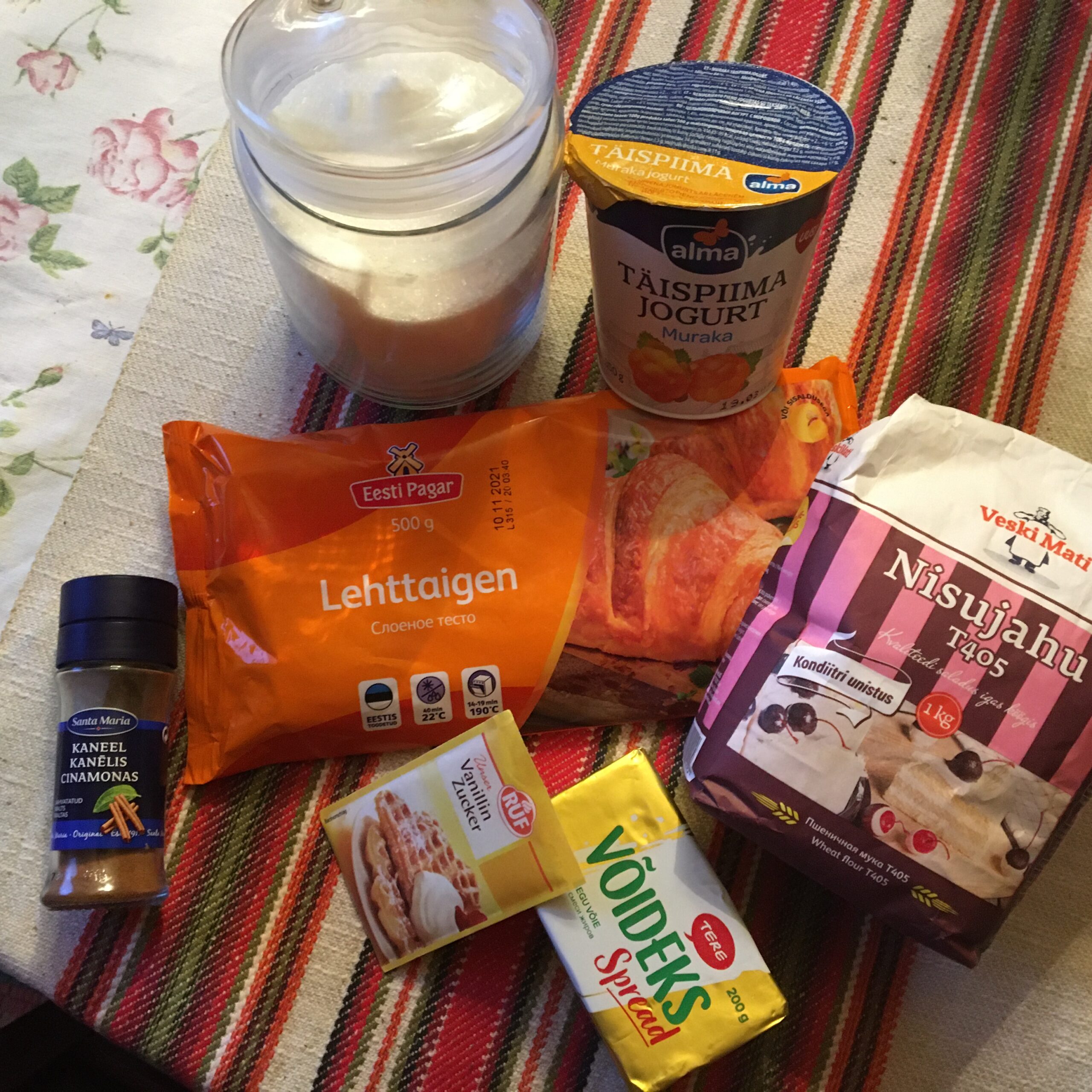
You will need:
500g puff pastry (Eesti Pagar)
200g cloudberry full milk yoghurt (Alma)
100g Võideks butter (Tere)
4 spoonfuls wheat flour (Veski Mati)
4 spoonfuls sugar
vanilla sugar, cinnamon

How to prepare:
Melt the puff pastry and then roll it somewhat slimmer into a rectangular plate shape. Melt the butter and while stirring, add to it flour, sugar, vanilla sugar, and cinnamon (plenty of cinnamon!) and spread the result on the dough. As the next layer, spread on the dough also the yoghurt, then roll up the dough and cut it into 2 cm long units. Bake in the oven at 200 degrees Celsius until the rolls are golden brown.

Bon Appetit!
Hugs!


__________________________
*Purim is a Jewish holiday, celebrated on 14th of Adar.

Purim in a nutshell:

Megillah or Esther’s Book tells a story of how two people put into practice the gifts God had given them – Esther her beauty and Mordechai his wisdom – for the sake of saving the people of God. When the wicked ruler Haman persuaded King Ahasuerus of Persia to destroy the Jews, then Queen Esther and her uncle Mordechai came out with a clever plan how to make the plot fail. The conspiracy was overthrown and Haman was hanged. This story is being read/told every time at Purim. In the synagogues, all of Esther’s Book is read on Purin evening and on Purim day. According to Jewish law and traditions, Purim is the time for celebrations. It is even the only day during the year when people are supposed to drink alcohol, in order to wipe away the memory of the obnoxious Haman. Every time when megillah (Esther’s scroll book) is being read and the name Haman is said, the children will rattle the ratchet to make noise, and grown-ups will bang their feet on the floor. Children wear carnival costumes, carnival masks are being worn, and there is the tradition to give friends, the sick and the poor gifts of food and sweets. A part of the celebrations is food: it is a tradition to eat triangular pies called the Hamantashen.

Read more:
* Three prayers to be said before reading the megillah (Esther’s Book).
* Shoshanat Yaakov “The rose of Jacob” (the Purim hymn)
* Recipe of the Purim cookies (Hamantashen)
* Purim videos for children

Do read also my previous blog posts (all posts are available in four languages – Estonian, Finnish, Swedish and English!)
Finland: European Council members discuss security and defence

NordenBladet — On Friday 26 February, on the second day of their meeting, the members of the European Council exchanged views on security and defence and discussed issues related to the Southern Neighbourhood. Prime Minister Sanna Marin represented Finland at the meeting.

In a statement issued after the meeting, the leaders of the EU Member States reaffirmed their commitment to the Strategic Agenda for 2019 –2024. The Strategic Agenda was adopted at the June 2019 European Council and aims to strengthen the EU’s position in a changing environment. With regard to security and defence, the EU leaders wish to promote the Union’s interests and values and ensure its preparedness to effectively tackle all security threats and challenges. The leaders reaffirmed that, in the face of increased global instability, the EU needs to take more responsibility for its security. At the same time, the EU is committed strengthening its partnerships with the UN, NATO and key regional partners. The EU leaders also look forward to cooperating with the new administration of the United States in this area.

The statement outlines a number of steps to deepen security and defence cooperation amongst Member States, increase defence investment and enhance the development of civilian and military capabilities and operational readiness within the Union. The Union is also working to strengthen its ability to respond to hybrid threats, including cyber threats and disinformation. The Strategic Compass, which will guide the implementation of security and defence cooperation, should be adopted by March 2022 at the latest.

The EU leaders also discussed the political and strategic nature of the EU’s partnership with the Southern Neighbourhood. The leaders would like to renew and strengthen this cooperation and partnership with a view to tackling common challenges and taking advantage of shared opportunities.

Source: Valtioneuvosto.fi

Finland: New Ambassadors to Zagreb and Windhoek and a new Consul General to St Petersburg

NordenBladet — At the presidential session on Friday 26 February, the President of the Republic appointed new Ambassadors and a new Consul General.

The President of the Republic appointed Counsellor for Foreign Affairs Kalle Kankaanpää to serve as Head of Mission at Finland’s Embassy in Zagreb, starting on 15 April 2021. Kankaanpää will transfer to Zagreb from the Ministry, where he has worked as Director of the Unit for Northern Europe since 2015. In the Ministry, he has worked in the Unit for Russia and held positions relating to regional cooperation. His career in the Diplomatic Service includes posts at the Finnish Embassy in Vilnius and at Finland’s Permanent Representation to the European Union in Brussels, where he also served as national specialist at the European External Action Service (EEAS). Kankaanpää joined the Ministry for Foreign Affairs in 1998. He holds a Master’s degree in Social Sciences.

The President of the Republic appointed Counsellor for Foreign Affairs Leena Viljanen to serve as Head of Mission at Finland’s Embassy in Windhoek, starting on 1 September 2021. Viljanen will move to Windhoek from the Asian Development Bank, where she has served as Alternate Executive Director since 2018. In 2014–2018, she served in the Ministry as Director of the Unit for South Asia. In the Diplomatic Service, she has also held posts in Jakarta and Nairobi. Viljanen joined the Ministry for Foreign Affairs in 1990. She holds a Master’s degree in Social Sciences.

The President of the Republic appointed Counsellor for Foreign Affairs Sannamaaria Vanamo to serve as Head of Mission at Finland’s Consulate General in St Petersburg, starting on 15 April 2021. Vanamo will move to St Petersburg from the Ministry where she has been Deputy Director General of the Department for Russia, Eastern Europe and Central Asia since 2017.  In 2014–2017, she served as Director of the Unit for Arms Control. Her career in the Diplomatic Service includes posts in Washington DC, Brussels and Moscow. Vanamo joined the Ministry for Foreign Affairs in 2000. She holds a Master’s degree in Social Sciences.


Finland: New project aims to reform national guidance system for rescue services

NordenBladet — The Ministry of the Interior has set up a project to reform the administration of rescue services. The project will prepare for the implementation of the rescue services reform by developing the national guidance system to meet the requirements of the reform. The goal is to transfer the responsibility for organising rescue services from municipalities to wellbeing services counties in a controlled manner.

The project has been set up to prepare the organisation of the national management and guidance system for rescue services. In addition, it will support regional preparation and provide a basis for work related to developing the operations and funding of the wellbeing services counties.The objective is to create a guidance system that is effective enough to ensure the smooth functioning of the national and regional rescue services system once the rescue services reform enters into force.

Project set up to prepare for implementation of rescue services reform

Currently, the responsibility for organising rescue services lies with municipalities and joint municipal authorities. After the reform, the new wellbeing services counties and the City of Helsinki would be responsible for organising both rescue services and health and social services in their respective areas. Rescue services would, however, continue to be a separate sector working in parallel with healthcare and social welfare.The reform would make it possible to provide more harmonised and thus more equal rescue services in all parts of the country. Rescue services could also better prepare for unforeseen threats, exceptional major accidents, emergencies and natural disasters.

The government proposal for the reform is currently being discussed by Parliament. In line with the proposal, the welfare services counties and the City of Helsinki would be responsible for organising rescue services in their respective areas from the beginning of 2023.


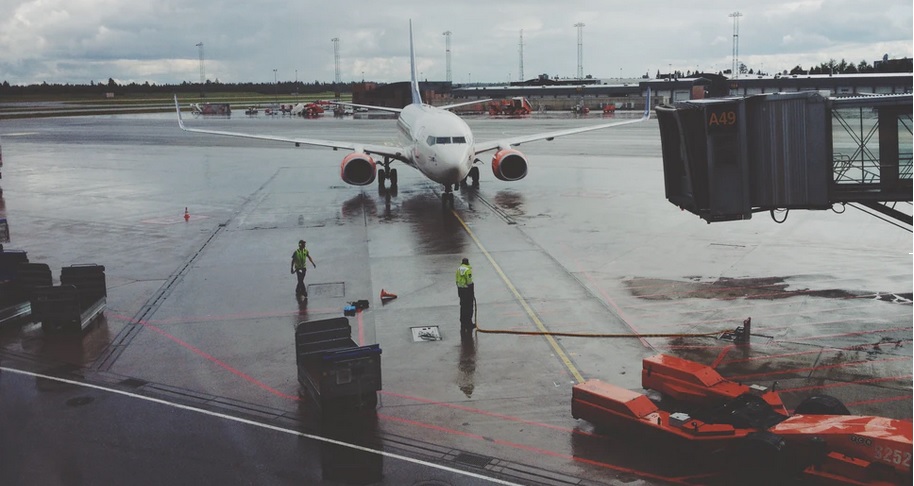
Norway: Oslo Airport trials new electric powered aircraft de-icing truck

NordenBladet – Oslo Airport has welcomed a new electrically operated de-icing unit, the Vestergaard Elephant e-BETA, for the final few weeks of winter. In a first of its kind trial in Europe, the airport believes that the Menzies Aviation operated vehicle will improve the performance of its aircraft de-icing operation and lower its carbon footprint.

Indeed, initial tests indicate that using the electrically driven de-icing truck will reduce greenhouse gases, including carbon dioxide and nitrogen oxides, by 87% per vehicle each year.

Avinor’s director of airport services at Oslo Airport, Ole Petter Storstad, said: “Avinor has a goal that its own operations at Oslo Airport will be fossil-free by 2030.

“We are therefore pleased that our partners are working in the same direction and have a green focus when they further develop their services.”

Menzies is currently operating 11 Vestergaard rigs as part of their de-icing fleet at Oslo Airport, one of the world’s busiest de-icing hubs.

This trial complements Menzies’ ‘Go Green’ project, established in Oslo in 2018, through which Menzies has made significant investment into reduced-emissions ground handling equipment to reduce its carbon footprint, with 90% of ramp equipment replaced with modern, electric units last year.

Should the trial be successful and the Vestergaard Elephant e-BETA rolled out, 97% of Menzies’ Oslo-based ground support equipment would be electric.

Thomas Hoff Andersson, vice president of Northern Europe for Menzies Aviation, said: “The successful trial of this electrically-driven de-icer promises to bolster not only the sustainability of our de-icing operations at Oslo Airport, but the sustainability of the industry at large.”

Featured photo: Unsplash
Source: VacationHunter.online

Finland: Countering disinformation to defend human rights

NordenBladet — The fight against disinformation is important also from the perspective of the realisation of human rights. Disinformation is a challenging issue, because it has not been defined in international law, and there is not a straightforward way to distinguish misleading information from correct information. The Finnish Coalition Chair will pay special attention to the introduction of normative instruments for internet stakeholders.
The Freedom Online Coalition (FOC) is a partnership of governments that are committed to the promotion of an open and safe internet. In February, a public online event was organised to discuss the FOC Joint Statement on the spread of disinformation. The event was part of Finland’s Chairship of the FOC in 2021.At the end of 2020, the FOC issued a Joint Statement on Spread of Disinformation Online, prepared under the leadership of Finland and the UK. Its aim is to counter the use of disinformation for undermining human rights, democracy and the rule of law.


Working group: Placing gambling proceeds within the Budget and beneficiaries under the spending limits procedure

NordenBladet — A study on the effects of diminished proceeds from gambling activities has been completed. The study examines four options for developing the Finnish gambling system. The working group sets as its primary option a comprehensive overhaul that would place gambling proceeds within the scope of universal coverage in central government revenue and existing beneficiaries would be under the spending limits procedure. The report was published on 26 February.BackgroundThe harmful effects of gambling are considered severe in terms of the wellbeing of society. For this reason, it was deemed necessary to intervene by legislative means and to introduce more measures to make gambling more accountable. Moreover, due to the COVID-19 epidemic, slot machines have been kept closed.The Finnish National Lottery, Veikkaus Oy, estimates that the annual central government proceeds from gambling services will fall by around EUR 300 million as a result of these measures. As the harmful effects of gambling are being reduced, it also means that the funding received by beneficiaries from gambling proceeds will diminish. This puts the present system in a challenging situation where we ought to be able to both curb the harmful effects of gambling and safeguard the future of civil society and other beneficiaries.Four options for the Finnish gambling systemThe working group proposes four different options for the future of the Finnish gambling system: Keep the current system and hope that it is sufficient;A one-off solution where the transfer to a universal budget takes place in one go and all earmarking is removed;A comprehensive overhaul starting in early 2024, carefully preparing the transfer of revenue to universal coverage and placing expenditure within the scope of spending limits budgeting;A partial reform, where part of the expenditure is gradually transferred to universal coverage and part remains earmarked and covered by gambling proceeds.In the first scenario, the level of funding for the existing beneficiaries would stay in line with future gambling proceeds (Veikkaus Oy’s estimate being under EUR 700 million annually). Every year, the need to offset the fall in gambling proceeds and possible additional funding requirements would need to be addressed.In the second option, Veikkaus Oy’s revenue would be fully converted into universal coverage, while expenditure would be covered through the ordinary budget procedure; in other words, funding for the beneficiaries would be transferred to the spending limits procedure in one go. Although this solution is clear-cut from the budgetary point of view, it would generate significant and sharp adaptation issues.In the third option, preparatory work would be initiated with the aim of transferring the gambling proceeds to a universal budget and, correspondingly, resources of at least the same magnitude would be included in the spending limits. The preparation work would be initiated immediately with regard to the required legislative amendments. We would also launch preparations for those activities that are financed by Veikkaus Oy’s proceeds to be transferred within the scope of the spending limits procedure. With regard to the timetable, the primary option would be to complete the reform during the current Parliament, which would make it possible to implement it from the beginning of 2024.In the fourth option, some of the current beneficiaries would receive funding from gambling proceeds and some would be transferred to receive funding through the Budget. In this option, the Government would have to decide separately which items of expenditure would be transferred to a universal budget. This could also lead to a situation where amendments would have to be made to the act on the criteria for the distribution of gambling proceeds at every transition stage. Distribution ratios would have to be reconsidered if beneficiaries were to be transferred in uneven ratios within the scope of the ordinary budget under the responsibility of different ministries governing the beneficiaries.The working group sets as its primary option a comprehensive overhaul that would place gambling proceeds within the scope of universal coverage in central government revenue and existing beneficiaries would be under the spending limits procedure. Converting to universal coverage presents challenges too. Understandably, transferring beneficiaries within the scope of central government spending limits would mean that funding for civil society funding would no longer be dependent on uncertain gambling proceeds. On the other hand, it would make the funding dependent on political decisions and uncertainty. Careful preparation and planning are needed to measure, enhance and evaluate the funding for beneficiaries and non-governmental organisations. In principle, spending limits funding should aim to finance existing beneficiaries and non-governmental organisations in such a way that their activities do not become exposed to unreasonable financial uncertainty and instability. Funding for beneficiaries must not be beyond the reach of democracy; instead, it must be protected from abrupt political cycles.Better financial stability for beneficiaries and civil society could be ensured if the magnitude of funding could be determined for a period that is longer than one parliamentary term. Tulevaisuuden vaihtoehtoja (The Finnish gambling system is changing) Future options

Source: Valtioneuvosto.fi

Denmark: Countess Alexandra of Frederiksborg, the former wife of Prince Joachim of Denmark, to move into an apartment

NordenBladet – Countess Alexandra of Frederiksborg, the former wife of Prince Joachim of Denmark, is to move out of her villa and into an apartment in the capital of Copenhagen.

The Danish Magazine “Se og Hør” reported the moving plans, and the news has also been confirmed by Countess Alexandra’s press adviser. The Countess is moving to Copenhagen this summer, where she has bought an apartment in the city centre, only a short walk from Amalienborg Palace. The new apartment is located in the street of “Klerkegade” and is 168 square meters large. The Countess has not yet sold her villa in Charlottenlund.

The Countess will move into the apartment on 1 July, and by that time, her youngest son, Prince Felix, has become a student at Gammel Hellerup Gymnasium, and he will have to move away from home. This is why Countess Alexandra has decided to say goodbye to her home north of Copenhagen. The Countess still has her dog, Baily, who from the summer will be her only roommate since she is also divorced from her second husband, Martin Jørgensen.

The Countess and her two sons lived in the villa for the last three years. Countess Alexandra moved to the villa so that Prince Nikolai and Prince Felix could be close to their father, Prince Joachim, who has a house close by. However, after Prince Joachim and his second wife, Princess Marie, moved to Paris and Prince Nikolai’s purchase of his own apartment in Copenhagen, Alexandra no longer needs a big house.

Since Prince Felix turned 18 last summer, Countess Alexandra has not received an allowance from the Danish government. The Countess was supposed to receive an allowance all her life, but she has chosen not to receive any more money from the state after her youngest son turned 18 years old. The Countess is working and active in the Danish business community.

Recovery of tourism after COVID-19 pandemic on the agenda of EU tourism ministers

NordenBladet — In their video conference on 1 March 2021, EU tourism ministers will discuss ways of helping the tourism sector recover from the crisis caused by the coronavirus pandemic. State Secretary Kimmo Tiilikainen will represent Finland at the meeting on behalf of Minister of Economic Affairs Mika Lintilä.The informal meeting will be held at the initiative of the Portuguese Presidency of the Council of the EU. The meeting will discuss the effects of the pandemic on the tourism sector and consider joint EU measures to ensure a sustainable, digitalised and competitive tourism sector in the short and medium term.“The coronavirus pandemic has set health security against economic and social activity. This is the case in tourism in particular. It is therefore important to develop tourism in a more sustainable direction by renewing tourism services,” Tiilikainen says.Collecting and utilising data forms the basis for the development of tourism.
“Decision-making within tourism must be based on up-to-date and timely information. We need more tools, funding and networking opportunities at EU level to develop knowledge-based management, also within tourism,” Tiilikainen says.
“It is also important for the recovery of tourism that we are able to maintain a positive attitude towards it during the pandemic, even if the opportunities for travel are limited at the moment,” he adds.Tourism is one of the sectors most severely affected by the coronavirus. About 11.7 million people in the European Union, or 9% of the area’s workforce, earn a living from tourism. In Finland, the tourism sector employs more than 140,000 people.

Source: Valtioneuvosto.fi

Estonia accedes to the Faro Convention, which values cultural heritage as a resource

NordenBladet —

Today, on February 25th, the government approved Estonia’s accession to the Council of Europe Framework Convention. The Faro Convention emphasizes that cultural heritage is a valuable resource for society and an inherent part of sustainable development.
 

“By acceding to the Convention, Estonia affirms that cultural heritage plays an important role in modern society and that Estonia bases its heritage policy on international principles,” Minister of Culture Anneli Ott said. “Cultural heritage is a resource that only increases as it’s used,” Ott added.

The Faro Convention is an international agreement that provides a new approach to cultural heritage. Unlike other conventions, it does not focus on heritage conservation, but deals with the values attributed to heritage. The text emphasises that cultural heritage is a valuable resource for society because, in addition to its cultural dimension, it also has environmental, economic and social dimensions. It also stresses that cultural heritage improves people’s quality of life, diversifies the living environment, is a source of creative activity, and plays a role in sustainable development.

Another central idea of the Convention is the right of everyone to participate in cultural heritage, as the responsibility for cultural heritage is both individual and collective.

The framework convention does not create specific obligations for action by the signatories, but rather is a set of principles. The member states can choose the approaches that best suit their legislation, principles and practices.

The Convention was opened for signature to the member states in Faro, Portugal on 27 October 2005 and entered into force internationally on 1 June 2011. The Faro Convention has been ratified by 20 member states of the Council of Europe. And six have signed it, but not ratified it. For Estonia, the Convention shall enter into force three months after the date of deposit of the instrument of accession with the Secretary General of the Council of Europe.

Source: Ministry of Culture – Republic of Estonia