NordenBladet – Einar Hansberg Árnason this weekend broke a world record when he deadlifted a total of 528,090 kilogrammes in one day. He dedicated his world record to the fight for children’s welfare.
Einar spent most of the 24-hour slog with 60 kg on his barbell, but reduced it to 45 as the early morning approached. He completed 9,287 reps in total and his achievement is now in the process of being approved for inclusion in the Guinness Book of World Records for the most weight lifted in a single day. Einar completed his final lift at lunchtime on Sunday, to the loud delight of those gathered at CrossFit Reykjavík. The previous record stood at around 521 tonnes, which Einar broke by some seven tonnes.
Einar said after the record was broken that he is grateful for the support, both from those directly involved, and from the public.
“With hindsight, it was a lot of fun, but it was really tough and there were difficult periods, like at 09.00 this morning when the ship really stranded for a while, but we found a way around that. If you just put the right foot in front of the left and then the left foot in front of the right, you can get places,” Einar said.
He says he wants to use his achievement to direct people’s attention to child welfare: people need to listen to their children and work to improve communication with them.
Einar says that while the record was a challenge, his body remained in good shape: “I’m fine, though there’s surely a lot of endorphins rushing around my body and I’m very stiff.” Was he planning to train on Monday? “No. But I think that’s mainly because my wife wouldn’t let me!”
NordenBladet — The Climate Policy Roundtable met on 8 February to discuss low-carbon roadmaps for individual sectors. The meeting highlighted that there is a need to take a more comprehensive account of just transition and to update and coordinate the sectoral roadmaps.In accordance with the Government Programme, 13 different sectors have drawn up a roadmap towards carbon reduction. Most of the roadmaps were completed last summer, and they identify a good number of ways to reduce emissions.
“It is most important that the Finnish industry and other sectors take an active part in building a carbon-neutral Finland. Roadmaps are a key tool as we aim for more effective climate policy and economic recovery after the coronavirus crisis”, said Prime Minister Sanna Marin, who chairs the Roundtable.An analysis by the VTT Technical Research Centre of Finland shows that the roadmaps have helped sectors to better understand their possibilities to reduce emissions and make it easier for them to commit to the common goal. However, it is difficult to compare individual sectors’ roadmaps because of differences in starting points, targets and approaches. Just transition was hardly discussed in the roadmaps.
“The sectoral roadmaps mainly focus on technical means to reduce emissions, and touch on innovation, research and development, all of which are essential elements of low-carbon goals. From now on the sectors should expand their roadmaps so that citizens, employees, organisations and others would feel they have been heard and that just transition would be included in the roadmaps,” said Tiina Koljonen, Research Team Leader at VTT.
“Justness is a condition for a successful transition to a low-carbon economy. Employees must have better opportunities for upskilling and reskilling. The social security system, too, must support a just transition, and we must ensure people’s livelihoods and faith in the future,” said Jarkko Eloranta, President of the Central Organisation of Finnish Trade Unions (SAK).The Climate Policy Roundtable noted that many sectors continue to work on their roadmaps. It emphasised that individual sectors should take a more systematic approach to examining not only the social dimensions of climate measures, but also their effects on biodiversity and resource efficiency. A cross-cutting and cross-sectoral approach should be taken to matters of social justice.
Finland has the chance of a bigger carbon handprint by offering solutions internationallyThe Climate Policy Roundtable agreed that the sectoral low-carbon roadmaps are internationally groundbreaking. It also highlighted that Finland can increase its global influence by growing the positive climate impacts of its measures, its carbon handprint.“We have world-class expertise in a number of fields, including smart energy systems, fossil-fuel free industrial processes and energy-efficient construction,” said Helena Soimakallio, Executive Director at Technology Industries of Finland.
The Roundtable emphasised the need to integrate the sectoral roadmaps and the export potential of Finnish solutions into the Sustainable Growth Programme for Finland and into European and global coronavirus recovery efforts.To follow the work of the Roundtable in social media use #ilmastonpyöreäpöytä and #hiilineutraali2035. To follow the discussion on low-carbon roadmaps use #tiekartat.
NordenBladet — On 4 February 2021, the UN Committee on the Rights of the Child adopted its Views on the primacy of the best interests of the child in a matter concerning asylum. The Committee found that there had been violation of Articles 3 (primacy of the best interests of the child), 19 (protection of the child from violence) and 22 (right of the child to protection and humanitarian assistance; refugees and asylum seekers) of the UN Convention on the Rights of the Child (CRC).
The case is about the expulsion of a same-sex parent family to Russia, where they had returned through voluntary return in August 2017 following a negative asylum decision. The appellant is the child of the family. The Committee considers that the State party has neglected its obligation to take sufficient account of the primacy of the best interests of the child when assessing the appellant’s asylum appeal.
NordenBladet — At the request of Minister of Employment Tuula Haatainen, Director General of Finnish Customs Hannu Mäkinen has formulated a proposal to improve the opportunities of people with partial work ability to find employment. Mäkinen proposes that Finland should take Sweden’s Samhall company as a model, but adapt it to the Finnish needs.
The new intermediate labour market operator would improve the transition of people with partial work ability to the open labour market. By combining adequate services and actual work, the intermediate labour market would provide jobs for those who otherwise would not be able to achieve this transition.
“The new Finnish model proposed by Rapporteur Hannu Mäkinen is needed,” Minister of Employment Tuula Haatainen said at the publication of the report on 9 February 2021.
“Prime Minister Sanna Marin’s Government wants to significantly increase the employment opportunities of people with partial work ability and disabilities,” she added.
The Government is set to make decisions on the intermediate labour market in its spending limits discussion in spring 2021. The operations would start during 2022 at the latest.“Samhall employs 25,000 people with partial work ability, and based on the number of employees, it is the largest public company in Sweden. Finland should go in the same direction,” Haatainen said.
The most important reform of the proposal would entail the founding of a new business operator to employ people with partial work ability. The Finnish model would combine work in an employment relationship and services required by the jobseeker based on their work abilities.
The model proposed by Mäkinen would solve the main obstacles to the employment of people with partial work ability:
• Even though the need for services among people with partial work ability is common, it often goes unrecognised, and the existing services usually do not relate to working life.
• The demand for labour among people with partial work ability is not as high as among other jobseekers. This is due to discrimination and inadequate services offered to employers, in part.
Intermediate labour market would have a complementary role
Reforms to improve the employment of people with partial work ability have already been launched in the Government’s working capacity programme. These include developing employment services, introducing conditions on employment in public procurement projects, and developing the operating conditions of social enterprises.
Mäkinen’s proposal emphasises that the new intermediate labour market operator must complement the existing employment services. It is not the intention of the new intermediate labour market to employ people who could be employed elsewhere. The new operator and the public support it receives also should not distort competition.
According to Minister Haatainen, it is also important that the expertise of organisations, foundations and associations is utilised in creating the Finnish intermediate labour market.The Employment and Economic Development Offices (TE Offices) would direct jobseekers to the new intermediate labour market operator, which would have three tasks:
1. ensure and complement the services offered to people with partial work ability who are in the most disadvantageous position,
2. employ people with partial work ability who are in the most disadvantageous position, and
3. organise the employment of groups with a high employment threshold elsewhere.
“In order for the Finnish model to be successful, it is important we reach a situation in our society where different communities and companies want to bear their social responsibility by employing people with partial work ability who are in a disadvantaged position,” said rapporteur Hannu Mäkinen.
The Government’s reform of employment policy has three parts. One of them involves municipal experiments and the transfer of employment services to the local level. The second part builds a Nordic model of close and individual employment services with a reasonable system of sanctions. The creation of an intermediate labour market as proposed by Mäkinen would form the third part of Finland’s new employment policy.
NordenBladet — The Prime Minister’s Office sent a draft of Finland’s Arctic policy strategy for a broad round of consultations on 8 February 2021. The consultation period will continue until 12 March 2021, and the finalised strategy will be published in March. Drawing up an Arctic policy strategy is an integral part of Finland’s Arctic policy.
The strategy, which aims to strengthen Arctic cooperation, has been drawn up in line with the objectives set in the Programme of Prime Minister Sanna Marin’s Government. As stated in the Government Programme, all activities in the Arctic must be based on the carrying capacity of the natural environment, the need to protect the climate, sustainable development principles and respect for the rights of indigenous populations.The strategy covers two parliamentary terms, meaning it extends until 2030. The Arctic policy strategy defines Finland’s key objectives in the Arctic region and outlines the main priorities for achieving them. The preamble to the strategy presents the objectives and guiding principles of Finland’s Arctic policy over the next ten years. Finland emphasises the importance of the principles of sustainable development, gender equality and non-discrimination as cross-cutting themes in all Arctic cooperation. The preamble also touches on the international operating environment and security issues related to Arctic policy. The strategy highlights the importance of international cooperation.
The strategy focuses on the following priority areas:
1. Climate change mitigation and adaptation
2. Inhabitants, promotion of welfare in the region and the rights of indigenous peoples
3. Arctic expertise, livelihoods and leading-edge research
4. Infrastructure and logistics It presents the current state of play with regard to each priority area, along with the targets for development in the Arctic region and the concrete actions needed to achieve the desired outcome. The main responsibility for drawing up the strategy lies with the Prime Minister’s Office. The strategy steering group and the working group of officials responsible for Arctic policy include representatives from all ministries. The Arctic Advisory Board is also supporting the preparation of the strategy and will help in monitoring its implementation later on. The members of the advisory board represent Finland’s Arctic competence in a wide variety of ways. Both the steering group and the advisory board are chaired by State Secretary to the Prime Minister Henrik Haapajärvi. Even before the consultation round, experts and stakeholders were widely consulted during the preparation process. All of the Arctic countries and several third countries interested in the region have recently published or are publishing Arctic strategies. Sweden and Norway have already published their own strategies, while the Danish strategy will be published in the first part of this year.
NordenBladet — In their meeting on Friday 5 February, the President of the Republic and the Ministerial Committee on Foreign and Security Policy discussed topical issues concerning Russia.
Topics on the agenda included the imprisonment of opposition politician Alexei Navalny and the resulting protests, relations between the EU and Russia and bilateral issues between Finland and Russia.
The President and the Committee received a briefing on Finland’s candidacy to become a member of the UN Human Rights Council for the 2022–2024 term. The themes of the Finnish campaign are the rights of women and girls, new technologies and the digital transformation, sustainable development and climate change, and education.The President and the Committee also discussed the implementation of the civilian and military intelligence priorities set for 2020.
NordenBladet – Húsavíkurkirkja* church in Húsavík, North Iceland, is in need of major repair. Many people consider it to be the most beautiful church in Iceland. It was designed in the so-called Swiss chalet style by Iceland’s first architect, Rögnvaldur Ólafsson, who had been educated in Denmark. Not only was he an excellent architect, but a good carpenter as well, and the church was considered a major success. It was built in the shape of a cross, using wood imported from Norway, and consecrated in 1907.
Since then, a lot of water has passed under the bridge, and now the wood in the church tower and elsewhere is rotting, Morgunblaðið reports. Repairs are badly needed, but they will be costly, and the church council is wondering how to fund the project. The congregation hall, designed, too, by Rögnvaldur Ólafsson and located next to the church, is in need of repair as well.
“Every crossbeam on the outside of the church tower is rotten and in need of replacement,” states Guðbergur Rafn Ægisson, caretaker of the church. “Many decorative trims are badly damaged from rot and need to be replaced.” The list goes on and on, and it is clear that extensive repairs are needed.
While the church windows are in a relatively good condition, those of the congregation hall are leaking and in need of replacement. On the latter building, all the corrugated iron needs to be replaced – on the walls as well as on the roof.
The church council met in January to discuss the problem and agreed that tens of millions of Icelandic krónur were likely needed for repairs. The idea of founding an association in support of the church was discussed. Such an association would then seek funding from friends of the church, including former residents of Húsavík. The possibility of the municipality’s participation was discussed as well.
Much is at stake, because for more than a century, the church has been the town’s pride and center of attraction.
___________________________ * The Húsavíkurkirkja is an early 20th century church in Húsavík, Iceland. The wooden church was built in 1907 by Icelandic architect Rögnvaldur Ólafsson, who designed the building in line with the Swiss chalet style.The church hosts marriages, baptisms, funerals, and an annual general meeting.
NordenBladet — The Ministry of Social Affairs and Health has launched a project programme to reform the legislation governing social and health care information management.
The reform seeks to formulate integrated legislation governing the processing of social and health care client data that will include statutes on data protection, document handling, national information system services and information management guidance. The legal framework for social and health care information management would thereby form a clear, coherent and comprehensive package that satisfies the requirements of the Constitution of Finland and the General Data Protection Regulation, while supporting development of the social and health services system and its services, and integration of social and health care.
The first stage of the project programme will reform such aspects as the provisions governing the manner of archiving the documents of private social and health care providers that have ceased trading, and who serves as controller in relation to these documents, and the manner of processing patient information recorded by social care services. Regulations governing patient records, such as document archiving periods, would also be prescribed by law.
The second stage will involve a more detailed review of the needs for using patient and client information and the purpose of such use as part of the process of enhancing services and associated legislation.
Timetable for the reformThe reform will be a broad package implemented over at least two terms of government with a view to processing the first stage amendments during the term of the present government. The reform will be prepared under the official purview of the Ministry, while requiring extensive consultation with social and health care organisations and specialists. The Ministry of Social Affairs and Health will arrange working meetings and hearings with stakeholders during 2021.
Why pursue this reform?
Current legislation is fragmented and partly outdated, and problems have arisen in applying and harmonising various laws. The new opportunities afforded by technological progress have also brought about novel needs for regulation. Changes are required in particular with respect to processing client and patient information, and releasing information between social and health care services and in joint services.For further details, please contact:
Anna Kärkkäinen, Senior Specialist, tel. +358 29 516 3702
Marja Penttilä, Senior Specialist, tel. +358 29 516 3682
Joni Komulainen, Senior Ministerial Adviser, tel. +358 29 516 3453
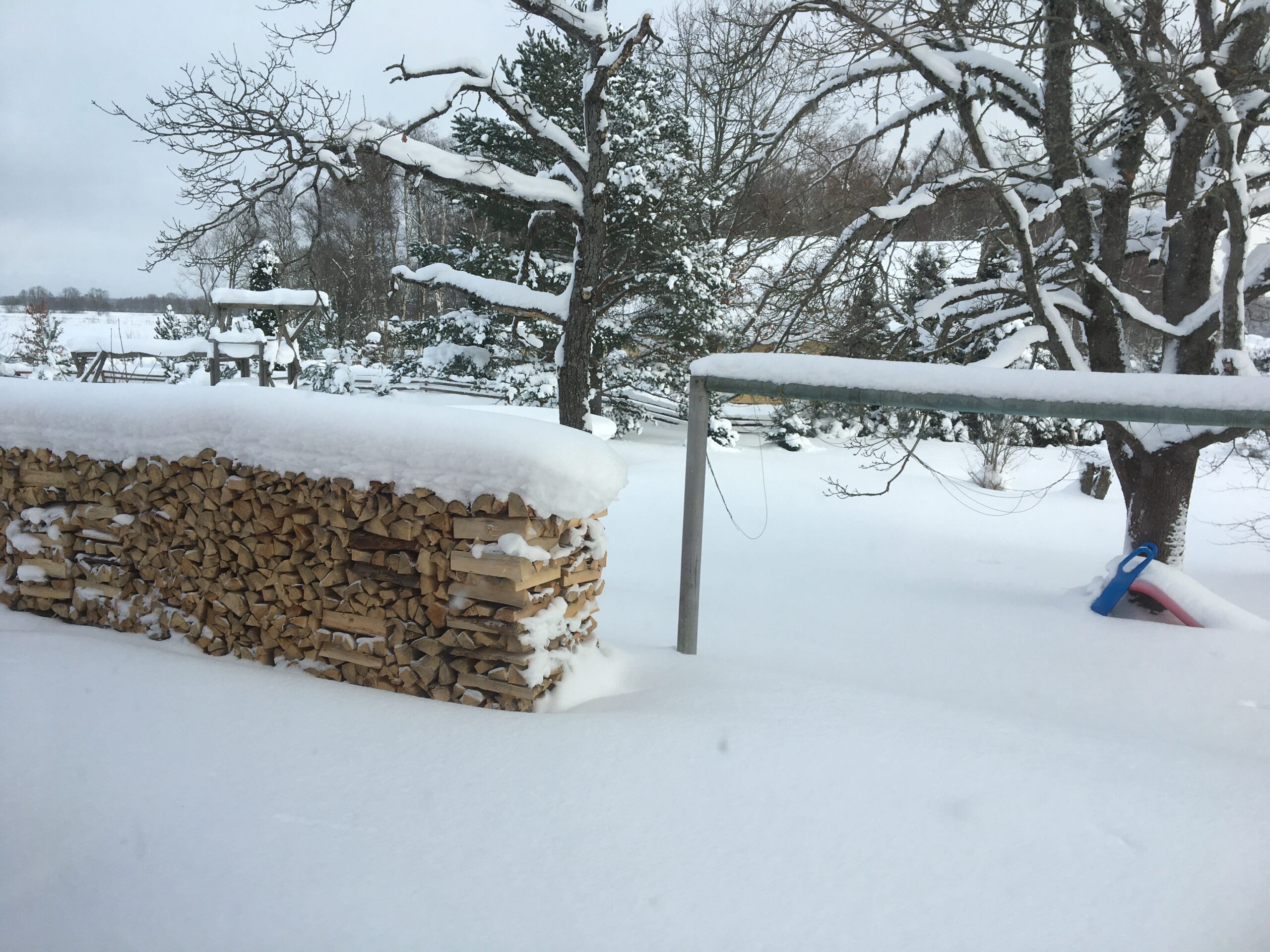
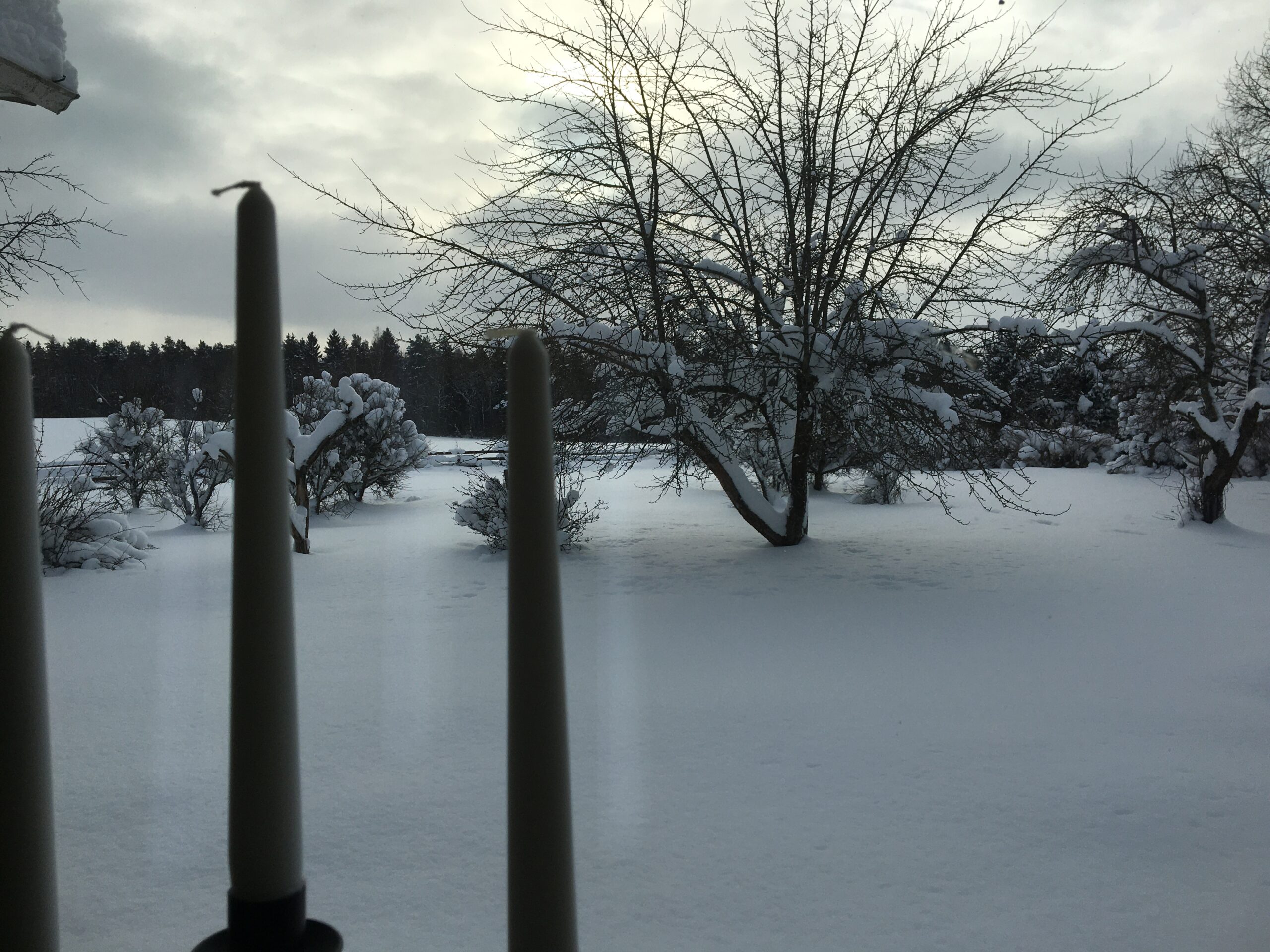
NordenBladet – Good morning! What a magical snowy day! A gardener need not train extra, since the workout happens at home – in the wintertime the snow plowing will do the trick and in the summertime the same with lawn mowing. The only worry is that there is so much snow that the bulk may begin to do damage to the roof and will be a great burden to trees and bushes. We have already ordered from Bauhof the snow collector (27 EUR) with a telescope handle, for the purpose of cleaning the roof – we’ll find out if the tool is suitably functional for that task.
The weekend accommodated work as well as recreation.
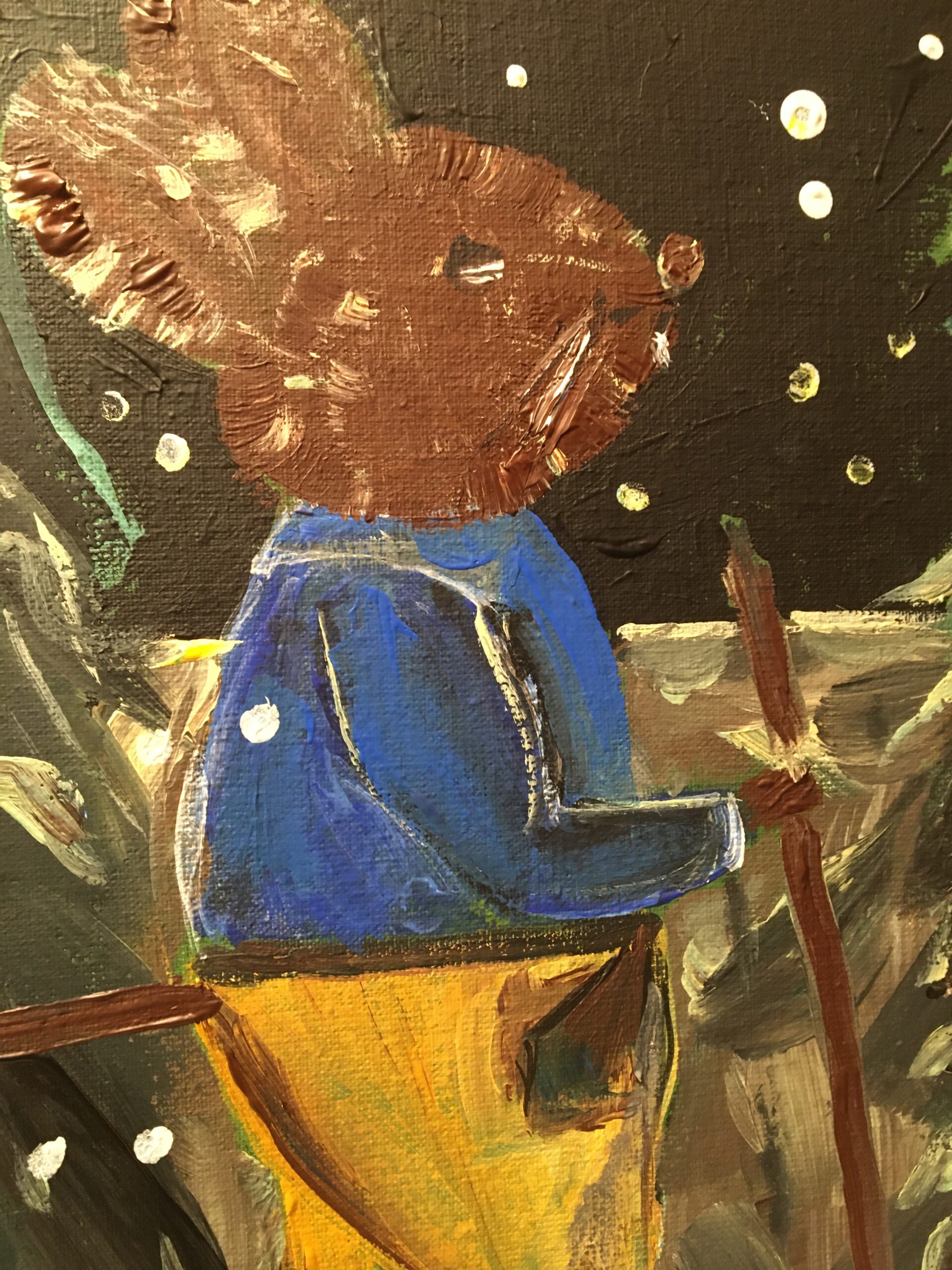
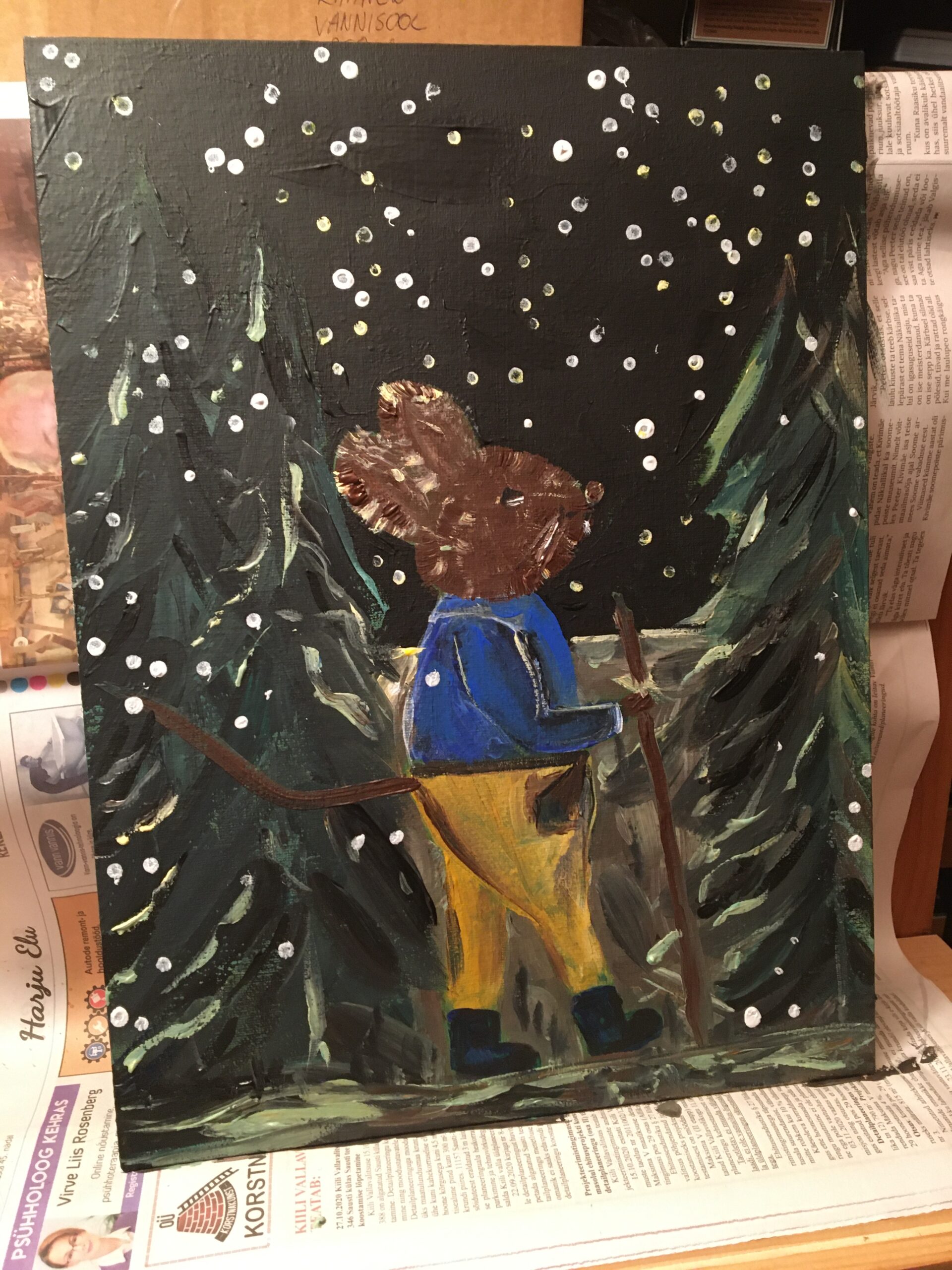
The tasks that were completed: ✓ Many hours of snow ploughing ✓ cleaning and doing the laundry ✓ writing a book – I finished the second chapter of the children’s book “His Highness Mouse the First”! Yeeah! ✓ I also painted – for the above mentioned children’s book a dozen illustrations-paintings have now been completed (posting a few photos of the recent painting also here, see below) ✓ I also took some more pictures of the ceramics works handmade by myself for the upcoming exhibition in Estonian National Museum (ERM) (see images at Elisheva & Shoshana blog HERE). ✓ Articles and translations for NordenBladet + OHMYGOSSIP site pages
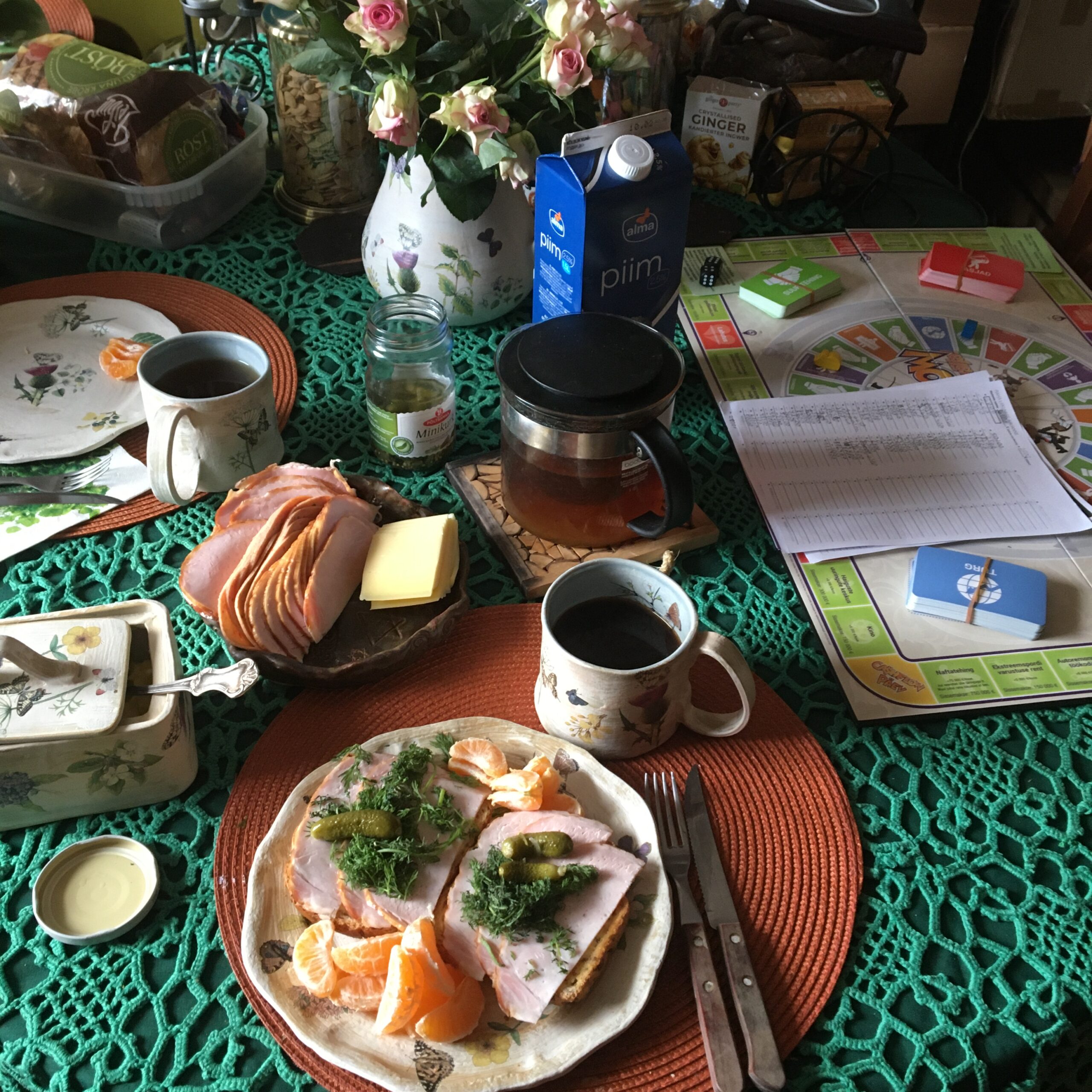
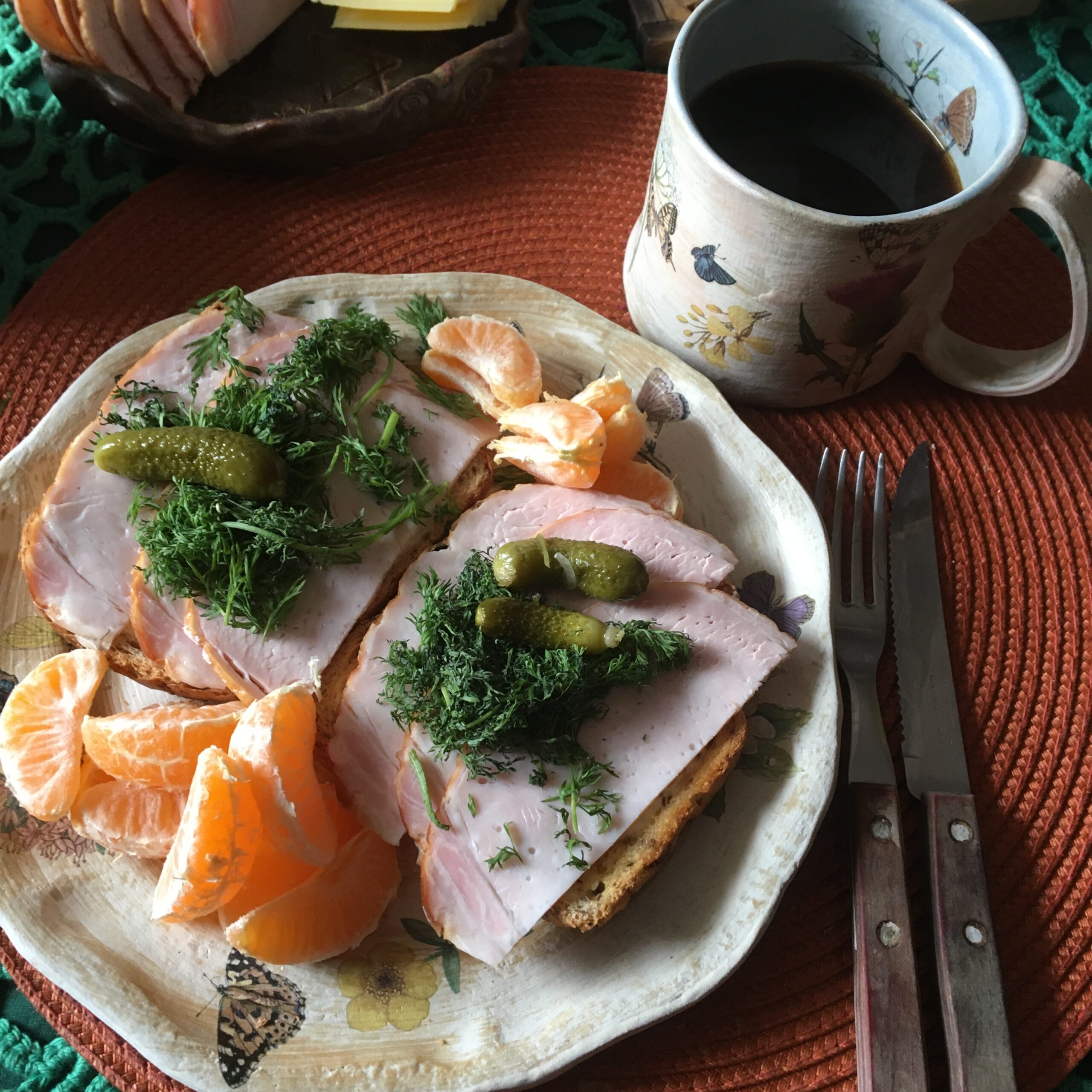
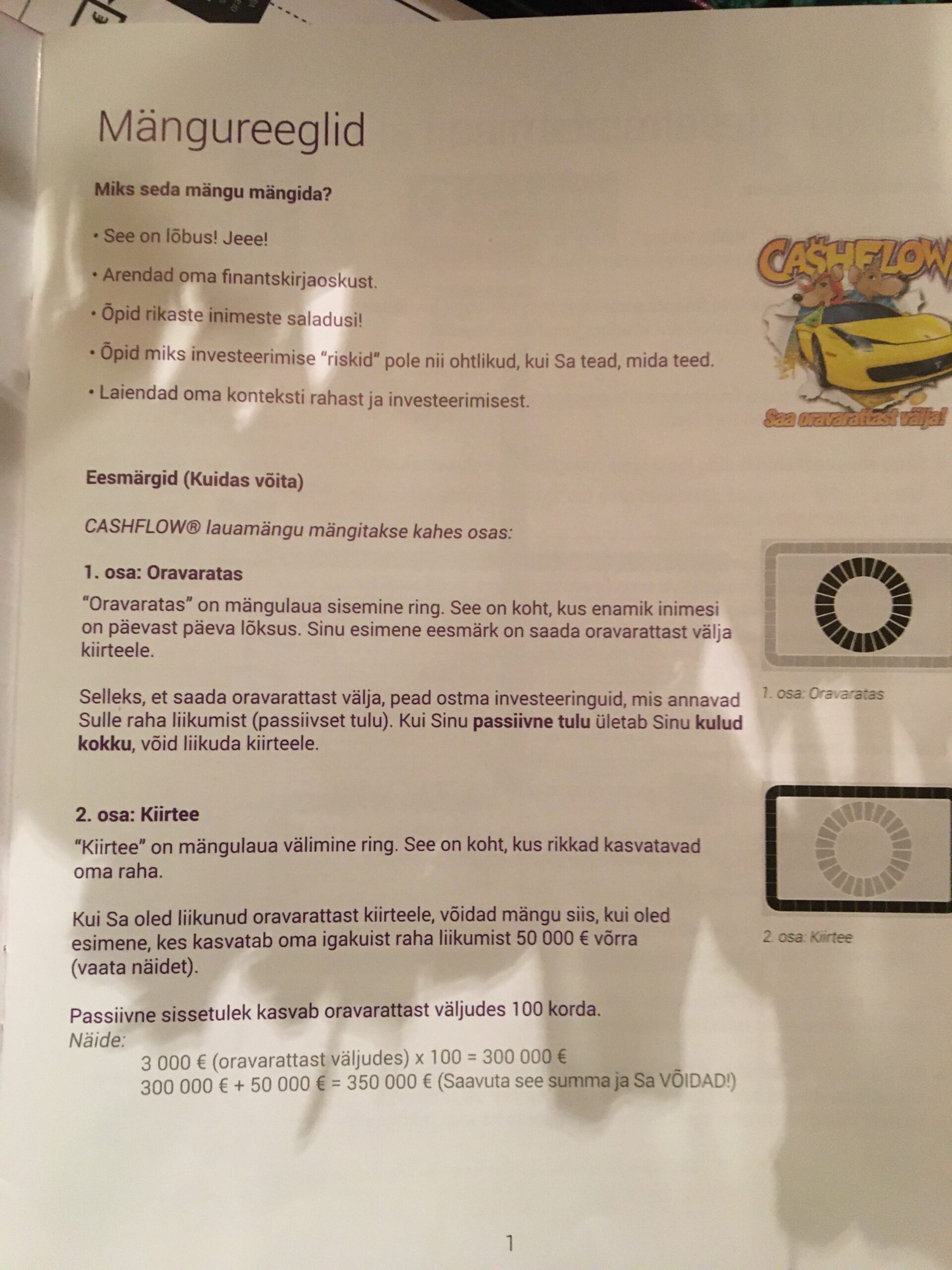
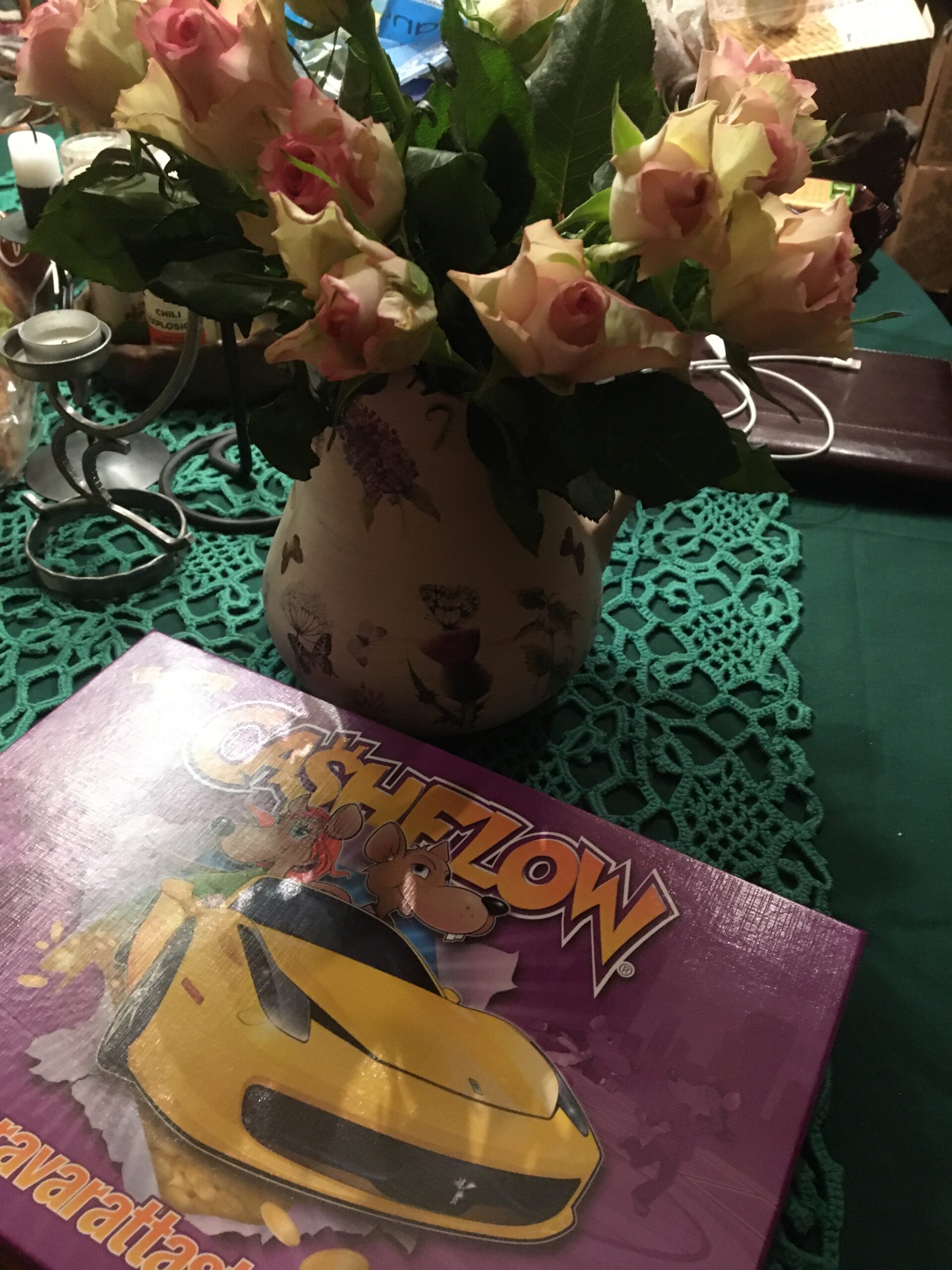
Fun: ✓ We bought the CashFlow game! It is even cooler than Monopoly! CashFlow is a social board game for grownups, creating skills for exiting the squirrel’s running wheel. It teaches you how to develop a strategy for investments, using real estate, entrepreneurship, stock and precious metal. Briefly, it builds knowledge for handling finances and accumulating wealth! The task of participating players is to exit the 9 to 5 working life and attain a regular passive income. One must accumulate property and remove duties and make money work! A delightful game! I made coffee with whipped cream, also some sandwiches, bought some eclairs, and we kept playing for several hours! We didn’t get to the end, but we surely continue on at some point. ✓ A visiting dinner (seafood evening with friends). That made an entire separate blog. It is available here: Helena-Reet: PHOTOBLOG + RECIPES! This is exactly what the dinner table looks when two top chefs invite you over for a Friday night! ✓ I visited my parents in Mõigu borough, and also my younger sister from the town of Tartu was visiting them, she had prepared rice-chicken salad and blueberry pie. By the way, my sister has a birthday today, the 8th of February! Congratulations! This weekend I am planning a journey to Tartu, a visit to ERM (Estonian National Museum) is pending, as well as birthday celebrations!. Already very much looking forward to it!
I shall now commence writing the third chapter for the children’s book “His Highness Mouse the First”. Then I’ll do one pile of laundry, collect my children from school, and then some more of the snow ploughing is awaiting!
Have a nice Monday and have a great week ahead!
Hugs!
NordenBladet – It crossed my mind that I could write one combined post about last week and the weekend, but it can’t be done. This blog section needs a post of its own! My blogs actually oftentimes depict food topics, food recipes, etc. but this current blog will be 100% a food blog! More precisely, I wish to share with you the positive impression that befell me this weekend.
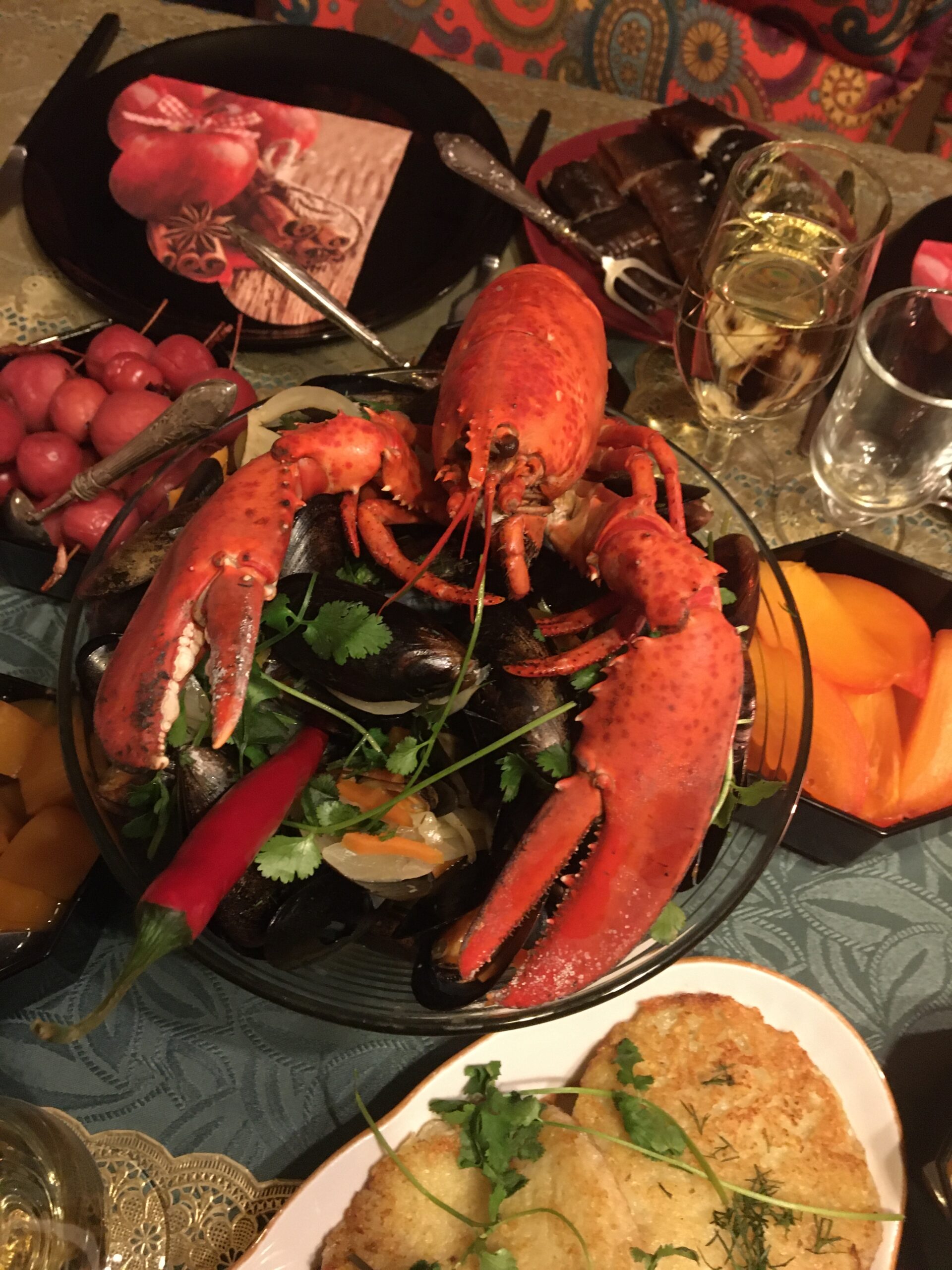
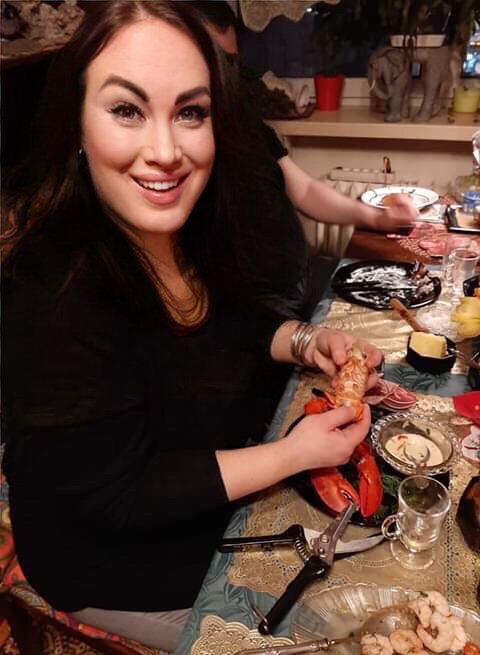
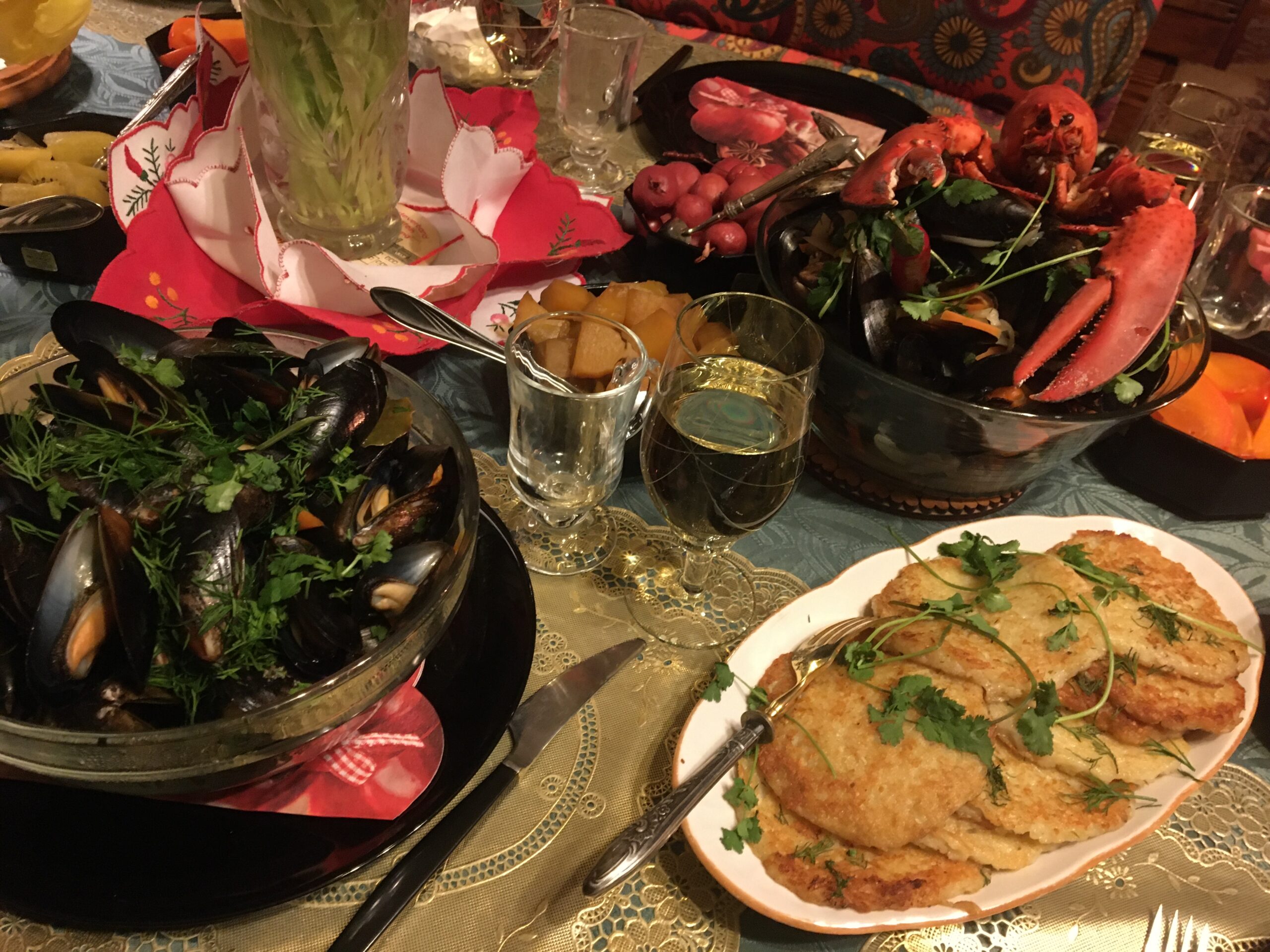
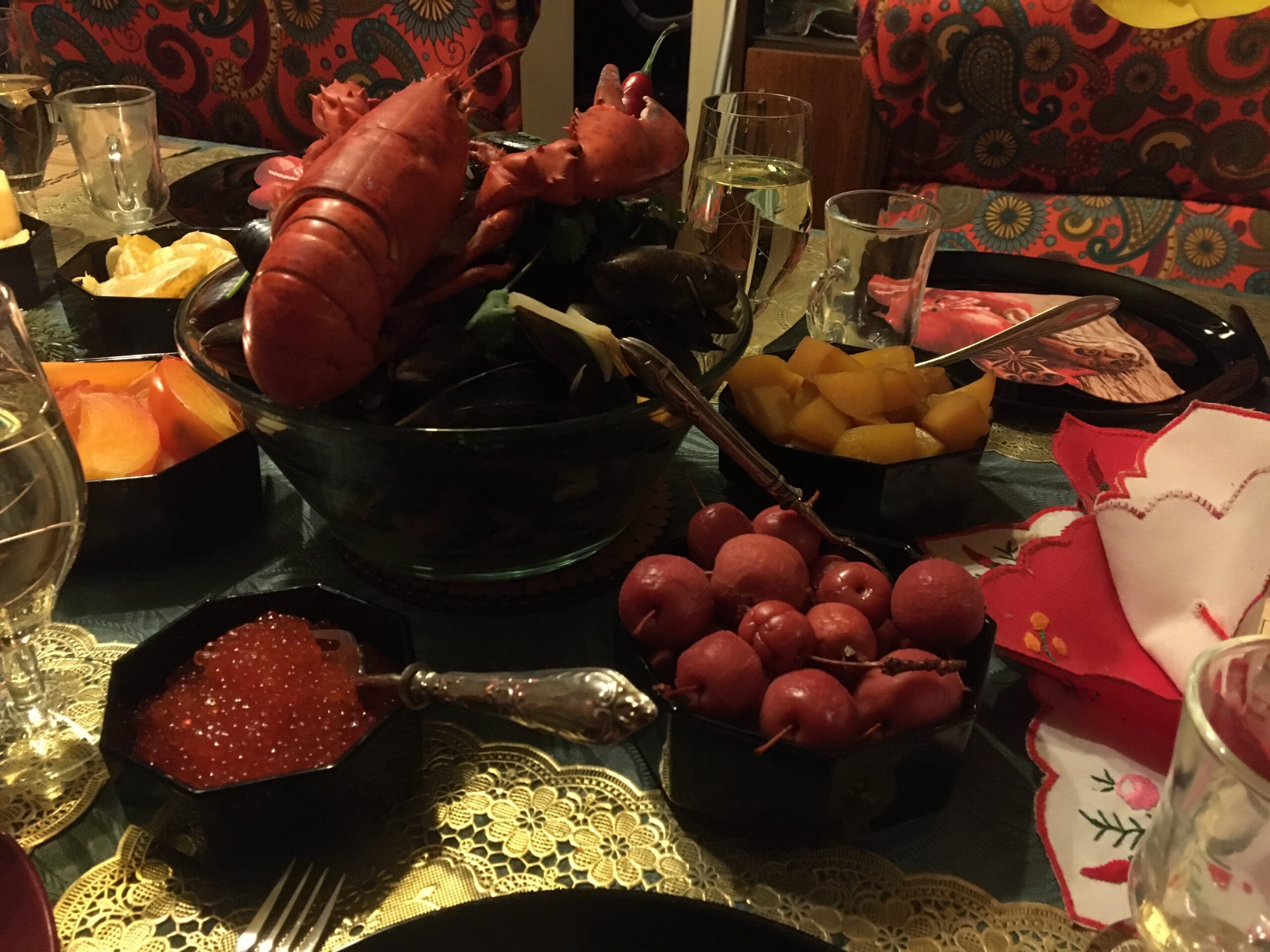
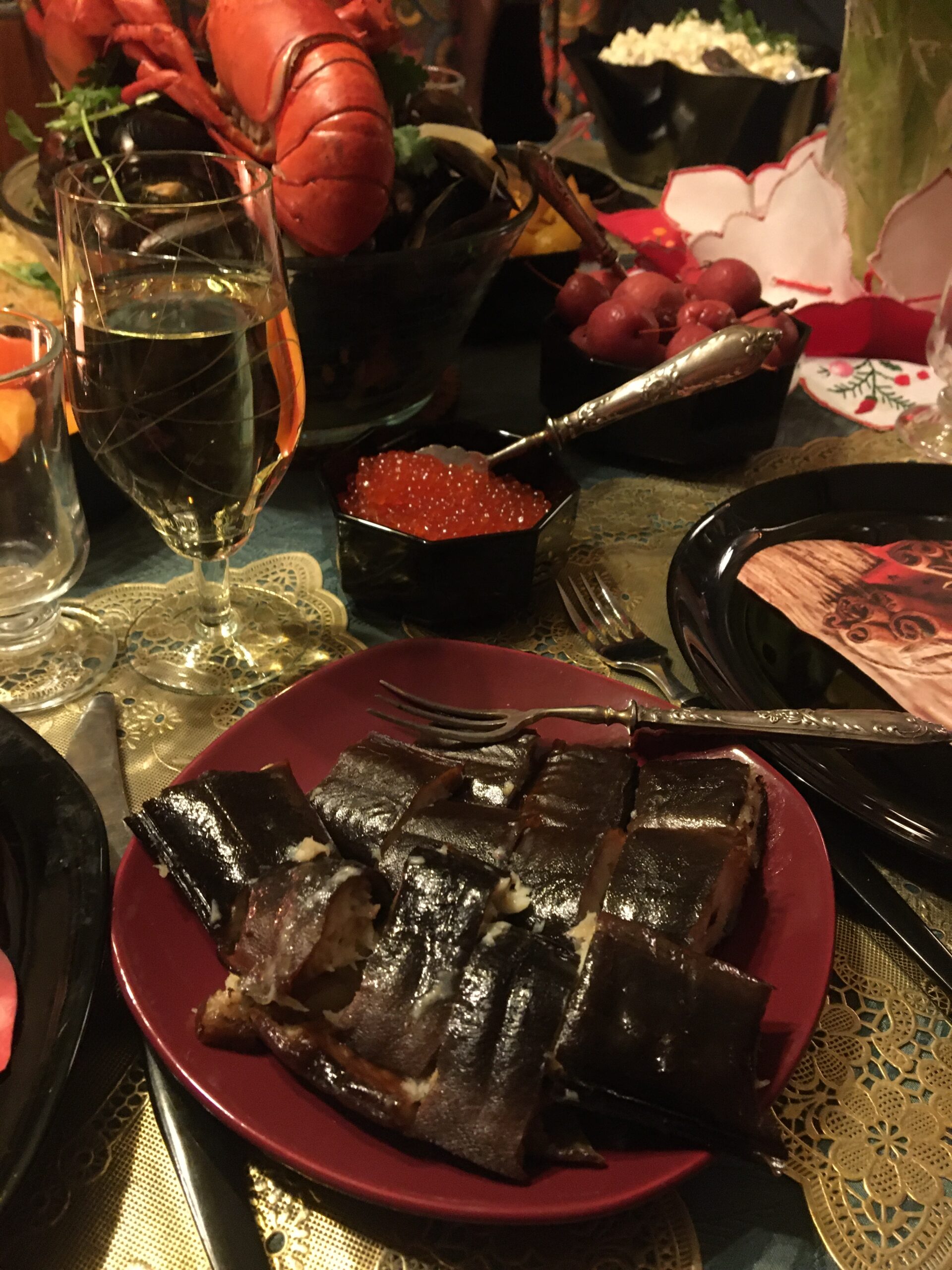
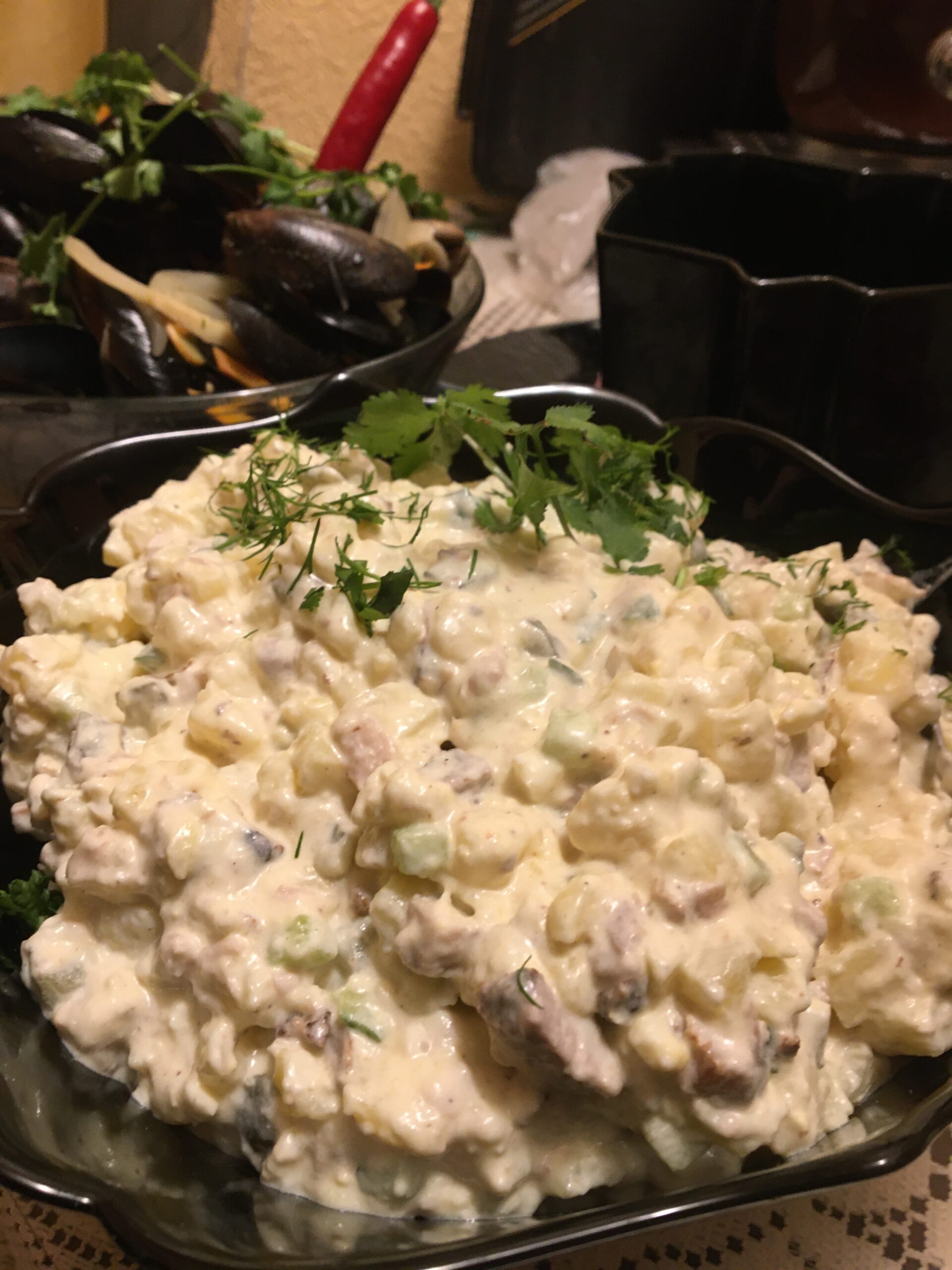
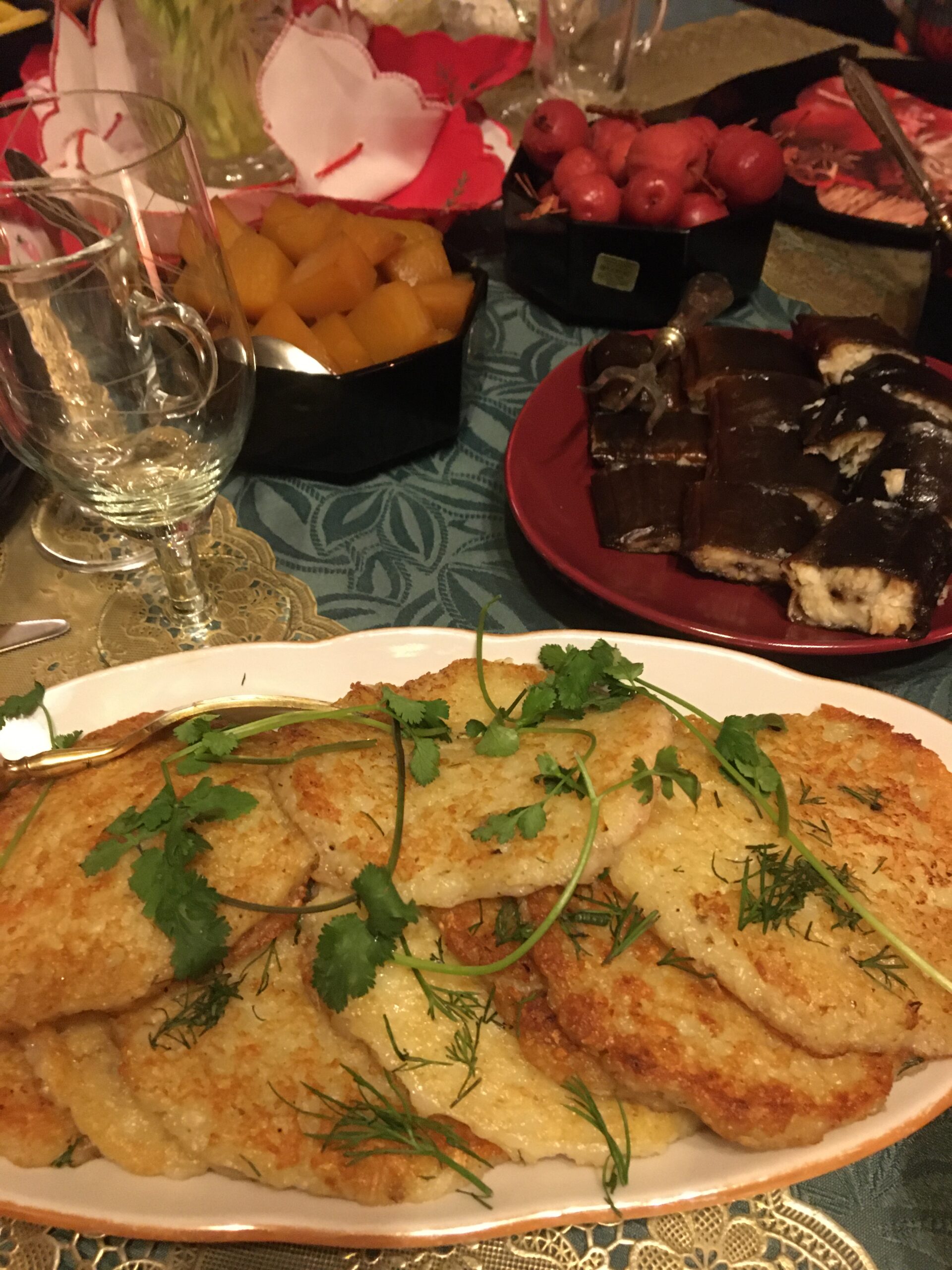
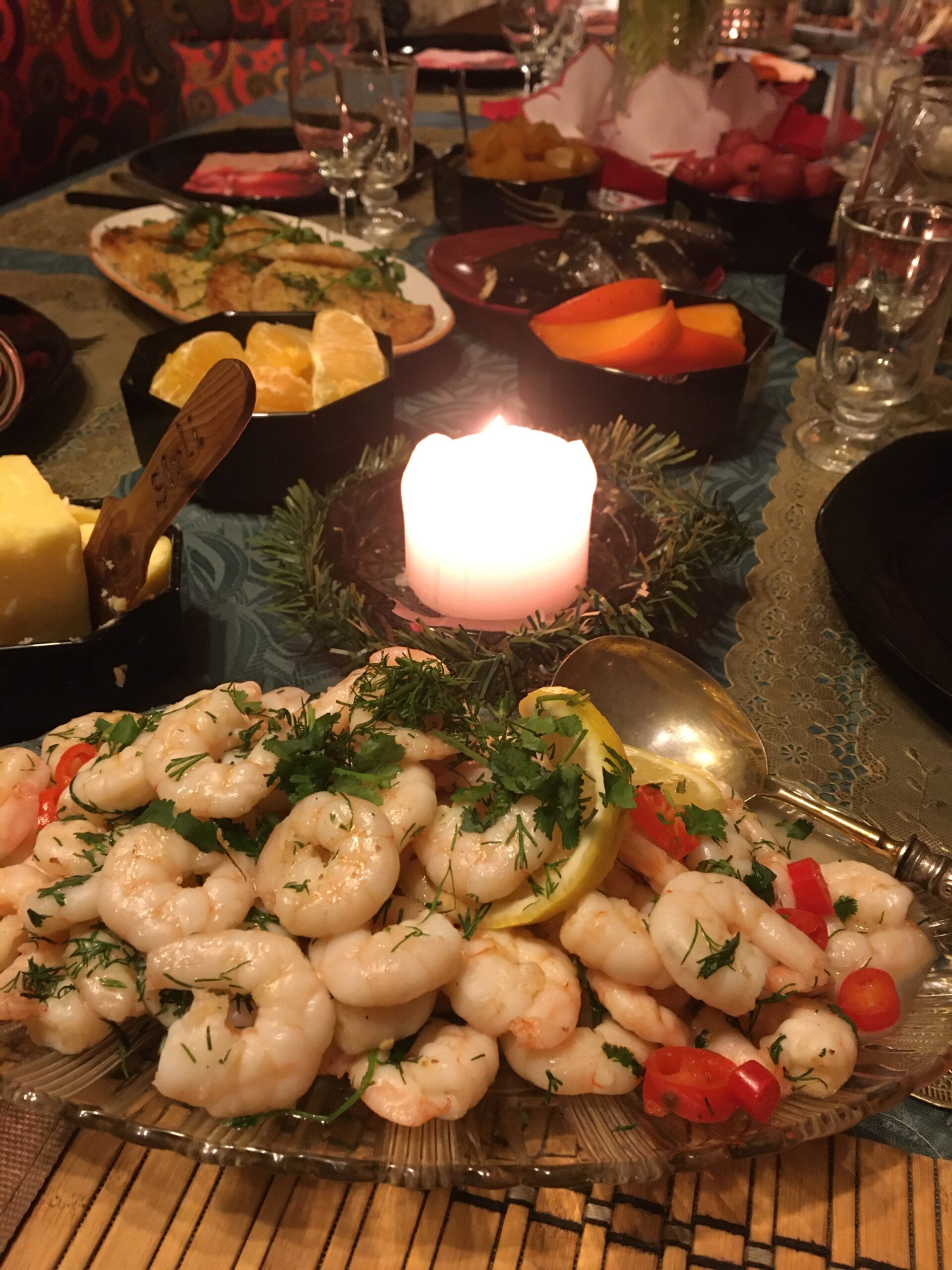
My circle of friends has considerably changed during the past year and a delightful new friendship in the closer circle is a married couple who are both top chefs, and this Friday marked another milestone when they demonstrated their great gift in gastrology. Namely, I was invited to a cozy family-centered evening with seafood. I find seafood very tasty, the casual scattering of seafood dishes on the dinner table is already a positive vibe… yet once they are skillfully and magnificently prepared, and served along with the best of sauces so that it also pleases the eye, then it is a rough task to really describe the feeling you get and the taste experience when you’re around the table!
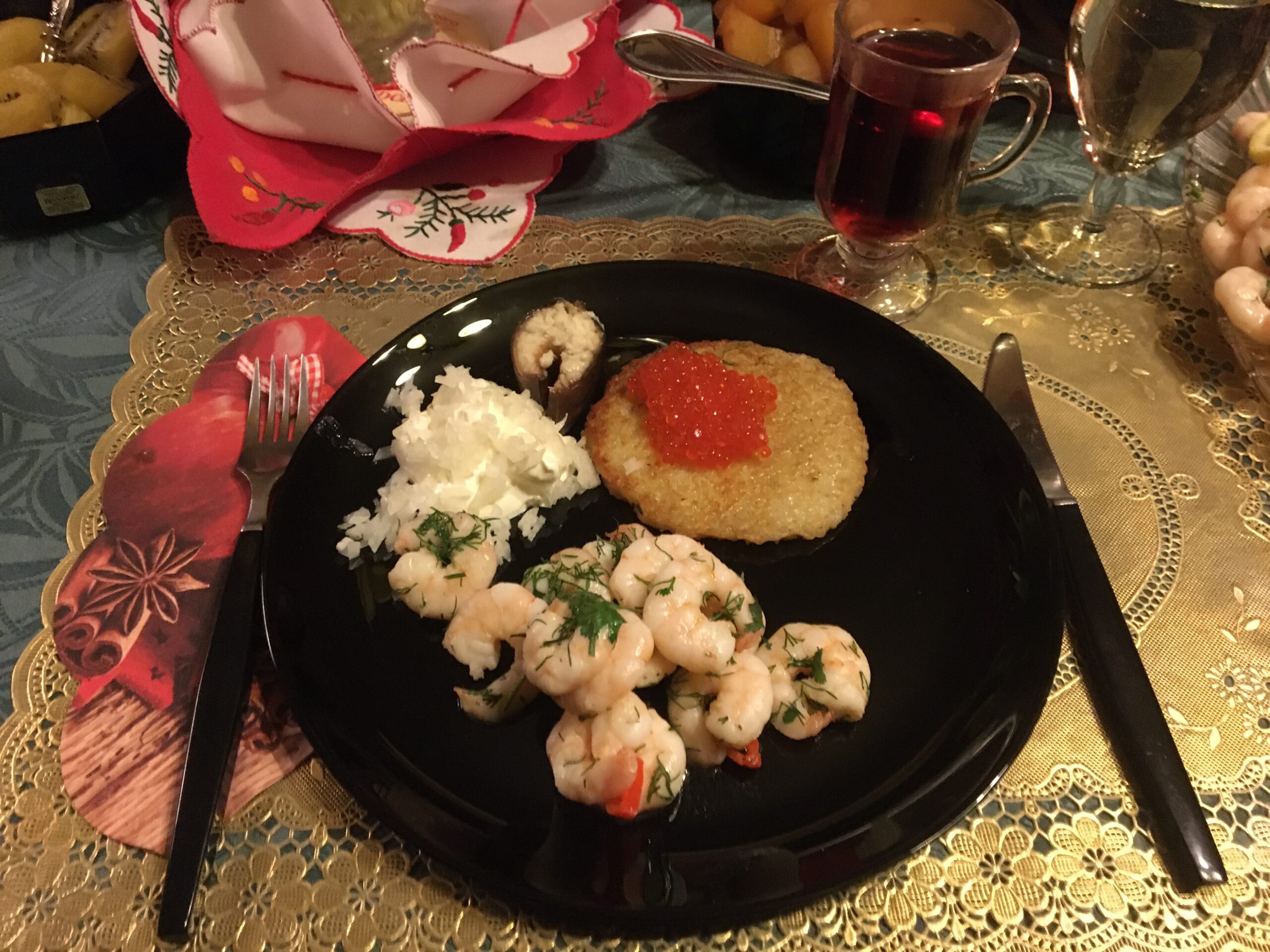
Lobster; delicious blue mussels with a special spicy herbal wine dressing; shrimps seasoned with coriander, dill and pepper; wonderful smoked eel; caviar with pleasant potato cutlets (Latkes), served with sour cream and onion; light seafood soup, etc. On top of all that the salads (potato-meat salad, pumpkin salad, cherry apples, etc.) for the guest that doesn’t have a fondness for seafood. My-oh-my!! So super!
I enclose a gallery about the Friday night dinner table and of my own recipes (blue mussels in white wine dressing and dark chocolate cake). Following my current recipe you will definitely attain a good result, but for the sake of giving it all a final touch as miraculous as with the experience I had, one would need to practice that a couple hundred times before:)) Besides, I am convinced that the chefs have their one hundred little tips and secrets that they apply in the process!
(my recipes are indicated after the gallery)
I prepare the blue mussels as follows.
You will need these ingredients:
1 kg blue mussels
5 spoonfuls of oil
4 cloves of garlic
1-2 fresh chilli
ca 10 plum tomatoes
250 ml white wine
1 lime
And for seasoning chopped parsley, coriander, pepper and salt.
How to prepare:
Pour oil to pot, add chopped garlic, plum tomatoes and chilli, season, and let slightly boil in low heat. Pour wine into the same pot, as well as the blue mussels (PS! only closed ones, because the ones that are open have already gone bad and you may end up with food poisoning!), then season and stir. Now boil until all shells have opened. Then once more check each mussel individually and now throw away those that did not open. These, too, are not edible! Then, serve the blue mussels that are open, and season (press lime, add parsley, coriander).
(blog continues after the pictures)
Now for the dessert the dear hosts served chocolate volcanoes or chocolate fondants with home-made ice cream (all previous food as well was of course prepared by themselves!). Chocolate fondants are also known under the name “Molten chocolate cake” and “Chocolate lava cake”). The classic fondant contains dark chocolate, butter, sugar, wheat flour, and egg. Not quite sure what exactly was the full variety of ingredients in those fondants but they tasted sooo good… but here I add my own home-made strong chocolate fondant‘s recipe.
You will need:
250g dark chocolate
220g butter
230g sugar
110g wheat flour
6 large eggs
cocoa powder
Preparation is really simple:
The fondant is easy to prepare in ceramic containers that can take high temperatures (for example ramekin dishes), or they can also be prepared in ordinary multi-slot muffin plates. Cover the dish with butter and pour over with cocoa powder. Melt the dark chocolate together with butter. In a separate container, whip eggs with sugar, and then mix result with the melted butter and chocolate. Then whip all of the previous together once more. The whipped mixture done, add flour and stir carefully. Once the dough is done, pour it to the dishes prepared as previously mentioned, and cook at 180-200 degrees Celsius in the oven for ca 10 minutes. Make sure that the cake is not in the oven more than necessary! Given the portions in my dishes, this food will suffice for eight people. When serving, add powdered sugar, ice cream, and nothing can beat a cherry on top!
I have visited many good restaurants in my lifetime and I have been honoured to be able to participate in several food festivals and food presentations, but this level of GOOD FOOD DAY can be counted just on the fingers of the two hands that I have. This dinner was among those few! Many thanks to the chefs! Yummmm!!!