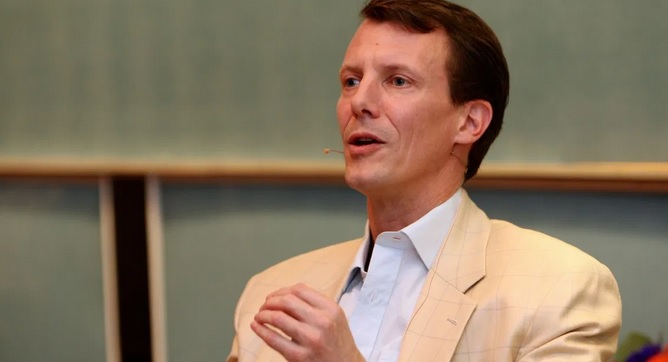
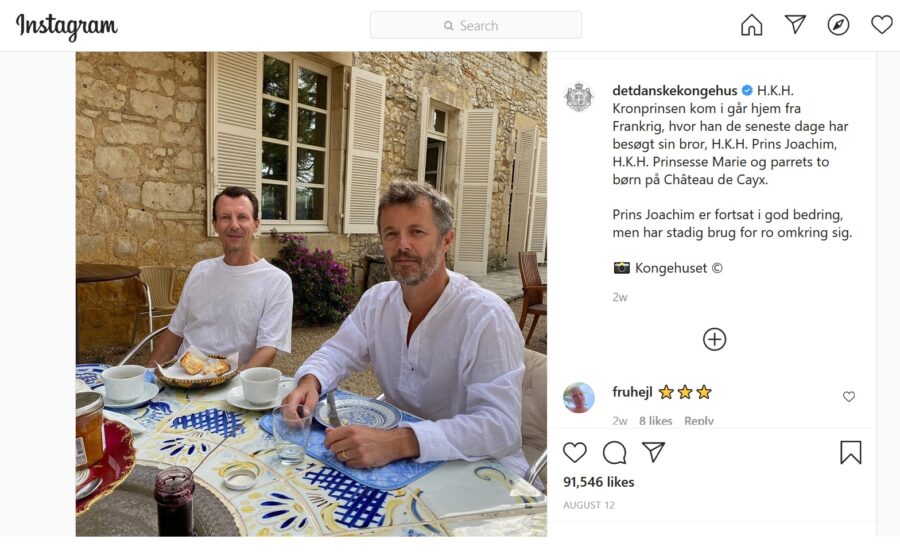
NordenBladet – Prince Joachim of Denmark has been seen for the first time since undergoing emergency surgery for a blood clot on his brain last month. The prince was photographed with his older brother, Crown Prince Frederik, who has spent several days in France with Joachim and his family.
In a post on the official Danish royal Instagram page, the brothers are seen smiling while enjoying the summer sun at the Chateau de Cayx where Joachim is staying with his wife, Princess Marie, and their children, Prince Henrik and Princess Athena.
The short message with the photo says that Frederik is now back in Denmark having spent time with his brother. It adds that Joachim is doing well but still needs peace and quiet as he continues his recovery.
Prince Joachim, younger son of Queen Margrethe II, was rushed to hospital on July 24th 2020 in nearby Cahors before being moved quickly to the University Hospital of Toulouse where he underwent emergency surgery for a bloodclot on his brain. He spent over a week in hospital recuperating with Princess Marie at his side. He returned to the Chateau de Cayx on August 3rd.
The prince and his family moved to France in 2019 so that Joachim could complete military training there. He is set to take up a role as Military Attache in Paris this autumn although the exact timetable of that appointment may yet be altered to allow him to continue to recover from his operation.
Featured image: Prince Joachim of Denmark (Alex Berger/CC/Flickr)
NordenBladet — In their Joint Statement, the Chairs of the Foreign Affairs Committees of the Parliaments of Estonia, Latvia, Lithuania and Poland call on the Belarusian authorities to release all political prisoners as well as those illegitimately detained in recent days, and to initiate a social dialogue for the much-expected changes.
“We follow with regret the events in Belarus and the repressions against the citizens and media there during the presidential elections,” Chairman of the Foreign Affairs Committee of the Riigikogu (Parliament of Estonia) Enn Eesmaa said. “By depriving the citizens of the right to free elections, the general standards of democracy and human rights are ignored. With colleagues, we condemn such activities and underline that we are consistently ready to support the well-being of Belarusian society as well as the sovereignty of the Belarusian state,” Eesmaa said.
The Joint Statement of the Chairs of the Foreign Affairs Committees points out that the right of free election is a fundamental value of democracy, and freedom of speech and assembly are among the fundamental human rights. “The activities that we are observing do not fit within the democratic standards,” the Statement says.
“We are convinced that following the path of dialogue and reforms will contribute to the development of Belarus, further deepening of good-neighbourly relations between Belarus and the countries of our region, as well as the revival of fruitful relations with the European Union. We are ready to support these efforts by seeking constructive solutions for our common future,” the Chairs of the Foreign Affairs Committees emphasise in their Joint Statement.
Full text of the Statement of the Chairmen of the Foreign Affairs Committees.
NordenBladet – There is an ongoing dispute over inheritance within the Danish Royal Family according to the Danish weekly magazine Billed Bladet. Prince Gustav Frederik Philip Richard of Sayn-Wittgenstein-Berleburg, the son of Danish Princess Benedikte and nephew of Queen Margrethe, is involved in the ongoing dispute.
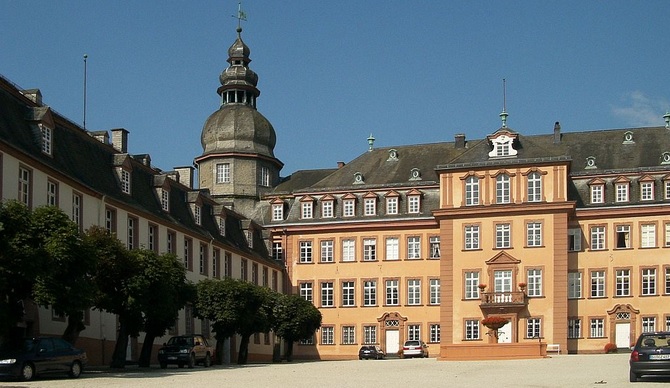
The Danish media has said that, for several years, there has been an inheritance dispute in connection with the family castle of Berleburg, which is located near Dortmund in Germany.
For three years, the 51-year-old Prince has been in conflict with his great-uncle and his late grandfather, who, in their own way, have made it difficult for the royal to inherit the palace that the family has owned for several generations.
In his will, the Prince’s grandfather, Prince Gustav Albrecht, left his castle and property to his first grandson. At that time, he did not have any grandchildren, but he was sure that his son, Prince Richard, would eventually have a son. He did so, with Danish Princess Benedikte.
Prince Gustav Albrecht’s death during World War II resulted in issues with his family. A will cannot be changed once someone has died, and the writing of the will has now haunted the family for several generations. Prince Gustav Albrecht’s last will and testament required that his unborn grandson be forced to marry a Protestant, Aryan noblewoman. If he did not, he was not to get the castle. In 1940s Germany, it may not have been a particularly problematic requirement, but a lot has happened since then.
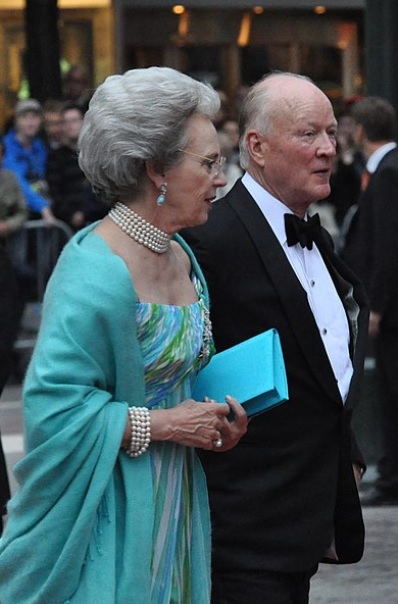
Photo: Princess Benedikte of Denmark and Prince Richard of Sayn-Wittgenstein-Berleburg. Photo: By Holger Motzkau 2010, Wikipedia/Wikimedia Commons (cc-by-sa-3.0)
For around 15 years, Prince Gustav has dated Swedish-Mexican Carina Axelsson – whom he cannot marry according to his grandfather’s will. If he does, he forfeits his right to inherit the castle.
Right after Prince Gustav’s father, Prince Richard died in 2017, a new problem arose. Prince Gustav’s great-uncle, Prince Ludwig-Ferdinand, saw his chance to claim the castle.
Prince Ludwig-Ferdinand believed that the castle had to go to him since the heir in the will did not meet the decedent’s requirements for inheritance. The case has now gone through a number of lawsuits in Germany.
The Court of Appeal immediately concluded that the castle belonged to German-Danish Prince Gustav. However, it has not been decided whether he can marry his Swedish-Mexican girlfriend. The couple have not had any children. Questions have, therefore, been raised about who will inherit the castle in the future.
In the future, the castle will probably go to the Prince’s nephews. The will excludes women from being able to inherit. Thus, the sons of his sisters are at the top of the list.
There is still much discussion in Germany regarding whether the inheritance of the castle will end up in court again or if the family has finally reached an agreement.
Featured image: Berleburg Castle (Wikimedia Commons)
NordenBladet —The COVID-19 pandemic, which is re-emerging, is causing concern for cultural and sports organisers. The experience in the spring, when the value chains of many sectors simultaneously ceased to function overnight, is still very fresh in our minds. And the recovery has yet to be completed, even under the restrictions that continue to apply.
The crisis package provided by the Ministry of Culture to ensure that cultural and sports institutions could continue their work and hold events totalled €25 million. With the supplementary budget, we tried to ensure the sustainability of cultural organisations, and to cover their essential costs. We needed to support unemployed freelance creative people, coaches and leaders of folk culture groups.
There has been a great deal of discussion and argumentation regarding whom the aid package should definitely reach. At the same time, the cultural organisers had to keep their heads above water, look for new innovative solutions for reaching their audience, in order to survive. After all, the state budget cannot pay for one’s entire future. And in the digital age, these new approaches have been well received by the public. New innovative ways of working have been introduced and entire new online environments have been developed.
From the outset, it was clear to the Ministry of Culture that the criterion for the distribution of crisis aid, for example, in the case of institutions, could not be based only their form of ownership or administrative jurisdiction. Culture is created everywhere. The impact of some smaller events on a community or on the economic life of a region as a whole can be extremely significant. And yet, choices had to be made, since those in need included both cultural organisations set up by the state, and at the other end of the scale, freelance creative people, such as musicians, actors, artists composer and writers. The former received around €20 million in support, the latter €5 million, with the government increasing its budget for creative people several times after the true scale of the crisis became apparent.
I would hereby like to thank our creative associations for their extremely fast action and smooth cooperation in processing the creative grants and delivering them to the applicants. I would also like to thank the Cultural Endowment of Estonia, whose endowments responded quickly and also allocated their own activity-scholarships.
The crisis package grants have now been disbursed. The preparation of these kinds of measures was a first for Estonia. Despite intense and sometimes pointed exchange of views with the representatives of different areas of activity, all the needs could still not be foreseen. Sensing the budgetary limits, we had to start rather conservatively. Thus, in some areas a surplus developed, which could partially be expected.
This money – and we are talking about €2.5 million – will not be lost to culture and sport. In the near future, the Ministry of Culture will announce additional funding rounds. One of them will definitely deal with the field of folk culture. Excluded from the initial appropriation were the makers and preservers of national handicrafts, as well as our community centres, i.e. the gathering places of community cultural life. In addition, we want to provide additional support to the organisers of large musical events, for whom financial uncertainty is particularly high due to the cancelled events. We can provide even stronger support for our film industry, the different sectors of which employ people from all walks of life, and not to mention the importance of the international dimension of filmmaking. The exact terms of the new funding rounds will be worked out and the applicants will be informed in a timely manner.
In addition to the aforementioned €25 million, the state also supported the home delivery of publications, and especially county newspapers, as well as helped sports clubs pay for the maintenance of sports infrastructure. The VAT on publications, as well as digital books, was reduced from 20% to 9%. The Ministry of Culture will initiate a similar tax reduction on concert tickets, in order to help safeguard Estonian concert activity, which is in strong competition with Riga and Helsinki.
The crisis had been kind of a paradoxical. And although the lockdown was so complete in the spring, that at times it seemed that even the birds were not flying, these weeks and months have been exceptionally intensive for both cultural institutions and organisers, as well as the ministry. Uncertainty will certainly continue for some time and even now planning for the future is still impacted by a feeling in the back of one’s mind that everything can change again. At the same time, everyone must be commended for their good and accurate actions under these special conditions because, despite the fact that public cultural life became very active and diverse during the summer, no infections were recorded so far at these concerts, theatre performances and even festivals. Thank you for a safe Estonia!
What should we learn from the current crisis? After all, there must be some hope. Perhaps the fact that the crisis has helped to clarify what we are doing, why we are doing it, and who benefits from it. In all fields of activity. Of course, the crisis also tested the relationships between the state and the creators, carriers and preservers of culture, as well as everyone with each other. But we managed and we have proven that we are all standing together for the good of the entire field of culture and its continuity. Estonian cultural life will emerge from this crisis at least as strong as when it entered it.
NordenBladet – The details of the last will of the late Princess Lilian of Sweden are once again being debated by the country’s press. And the details show that siblings Crown Princess Victoria, Prince Carl Philip and Princess Madeleine were treated very differently by their aunt when it came to inheritance.
Princess Lilian died in 2013, at the age of 97, in her home, Villa Solbacken on Djurgården in Stockholm. Princess Lilian was married to Prince Bertil, uncle of Sweden’s King Carl XVI Gustav. When Princess Lilian died, she left a fortune of 78 million Swedish kroner, about 7.6 million Euros. This summer, Swedish media is again looking at where her possessions went.
Princess Lilian and Prince Bertil were especially close to Carl Philip. He was their godson and Carl Philip and Bertil shared a great passion for cars. Princess Lilian was very fond of Carl Philip. It therefore quickly became known in 2013 that the prince was to inherit the property Villa Solbacken from the widow of his father’s uncle.
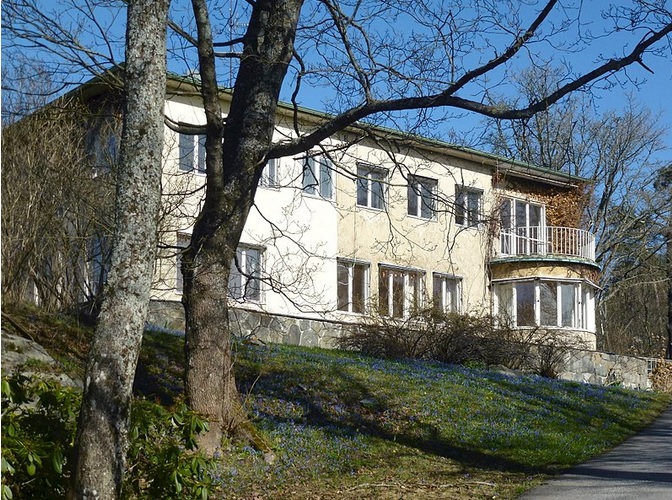
Villa Solbacken is a villa on Djurgårdsbrunnsvägen 67, located just north of Djurgårdsbrunnskanalen by Djurgårdsbrunnsbron on Södra Djurgården in Stockholm.The villa was built in 1930 and was owned from 1949 by Prince Bertil who bequeathed it in 1997 to Prince Carl Philip.Djurgårdsbrunnsvägen is a street on Gärdet in Stockholm.Djurgårdsbrunnsvägen begins at Dag Hammarskjölds väg in Diplomatstaden and extends east along the northern shore of Djurgårdsbrunnsviken to Djurgårdsbrunnsbron by the Djurgårdsbrunn canal, a distance of approximately 1.7 km. Photo: Wikimedia Commons.
The newspaper Expressen managed to obtain the essential information from the will and the estate register, and was therefore able to reveal who got what. King Carl Gustaf inherited Princess Lilian`s collection of photographs, art and some objects of great family value. Queen Silvia, who was one of Lilian’s closest friends, received five million Swedish crowns and several valuable pieces of jewellery.
Crown Princess Victoria and Prince Carl Philip were very close to Lilian and Prince Bertil. They regarded Lilian and Bertil as a kind of grandparents. Crown Princess Victoria received Lilian’s favourite tiara, which formerly belonged to Princess Margaret of Connaught, Bertil’s mother. It was made by the French jewellery company Boucheron in Paris and consists of silver, gold and diamonds. Victoria wore the tiara to Madeleine’s wedding in June 2013, three months after Lilian’s death.
Princess Madeleine’s relationship with Princess Lilian wasn’t as well known. She inherited from her great-aunt an antique ring.
However, a year after the death of the princess, it was Madeleine who honoured her by naming her first child in her memory. Her elder daughter is Princess Leonore Lilian Maria of Sweden.
Featured image: Princess Lilian of Sweden, the Duchess of Halland (Wikimedia Commons)
NordenBladet – Good morning! Time flies so incredibly fast, the last blog post was ages ago, don’t even remember. So much has happened meanwhile, so many places have been visited, so many things done and the phone is packed with pictures waiting to be published. Don’t even know where to begin.
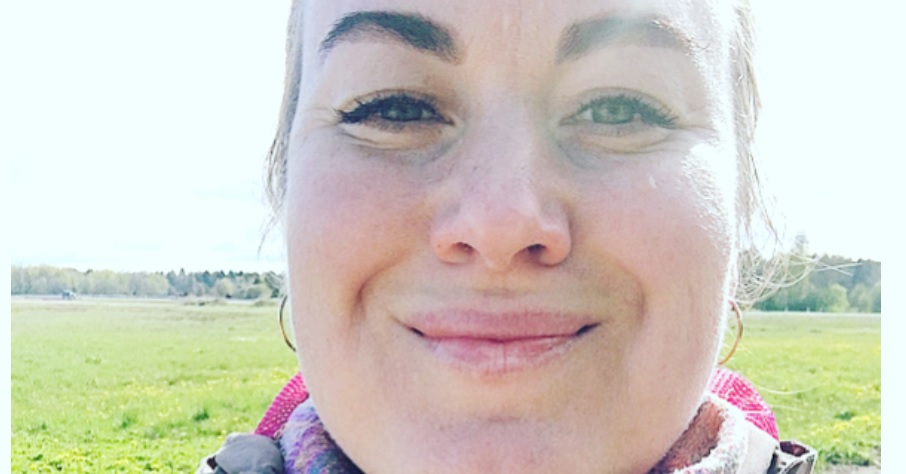
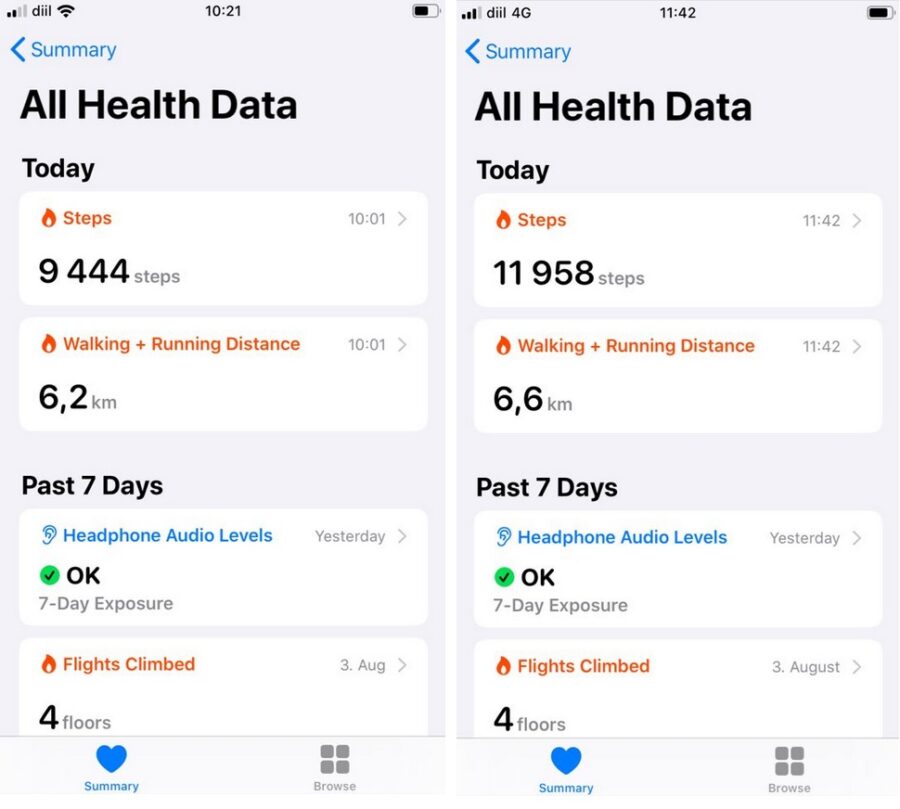
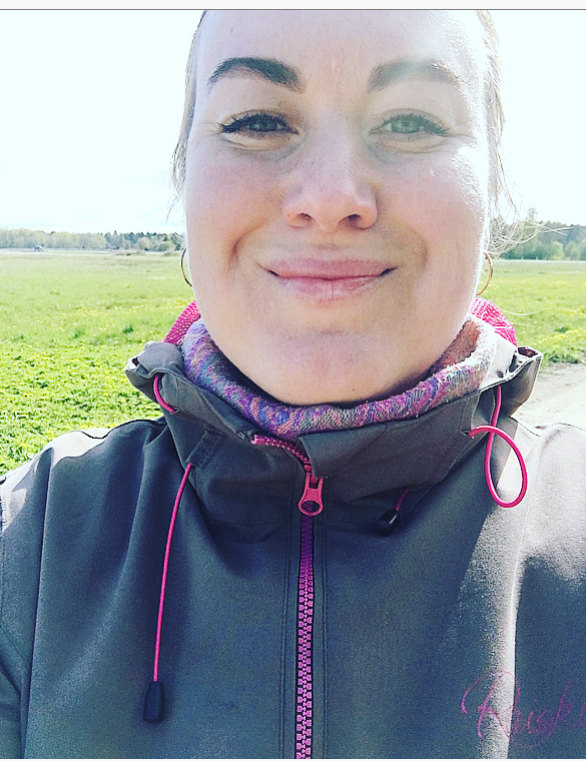
Didn’t sleep so well tonight, a lot of thoughts about work and my private life were going round in my head that kept me awake. Besides also the messages that come beeping during the night. Thus this morning I slept long – until half past seven. Usually I am up early, I like to wake half past five or six in the morning, then the day will be longer and I get more things done. In the mornings I am very productive. I made myself coffee, had a banana and went for a walk. Since the beginning of this year I have been walking practically every day (or at least 4-5 times a week), the minimum of 5-6 km (the picture below has been taken earlier this spring). On the best days there is 10-13 km of movement (ca 8000-20 000 steps). What great feeling this gives! It has already become my great routine. With sunny weather I walk in the forest and on the meadows, plenty of steps I get also by mowing the lawn. I enjoy nature so much that I cannot even imagine an urban life. Every day I see with my own eyes the plants growing and changing, the animals on their way, the face of time. I have learned to notice and to love the little things, I talk to the plants, the elves, I am thanking nature. This is what makes me happy. Whenever it rains I walk indoors on the walking tape, at the same time watching a movie or listening to an inspiring podcast.
iPhone has this free Health app, I use it. This shows my movement (steps and kilometres). Before noon I try to collect 10 000 steps from walking. The best time to walk is after the first morning coffee (it wakes me up and boosts the energy) and before a strong breakfast. After that during the day I also get some movement – mow the lawn, do this and that in the garden, gather herbs, etc. Another thing that has become a routine is how I serve the meals. No more do I grab something to eat on the run, hastily. I always serve a nice meal, this gives a good feeling. For many years now I have been doing ceramics and also have been growing and gathering herbs, this, too, has had an impact on the creation of my daily routines. The food tastes so good when served from your handmade clay plates, and the tomatoes that you have grown, the herbs and the homemade and farm food is tasty, healthy and great! By the way, I also have good news for you! For many years now I have been collecting, drying and preparing herbal tea mixtures as well as mixtures of flavourings for my own use as well as for gifts. From this autumn (possibly already from September) I offer products based on pure Estonian nature, gathered, or even grown in my own garden – mixtures of herbal teas and mixtures of herbs for seasoning on dishes, in limited edition also on Elisheva & Shoshana website also for sale! Jeah! In the coming days I begin with the design process of the packaging… So much fun! 🙂
Today’s breakfast:
1 banana and milk coffee before a walk, and after the morning walk:
2 cups of coffee with milk
200g Farm cottage yoghurt (silky creamy berry yoghurt with black cherries)
2 bread sandwiches
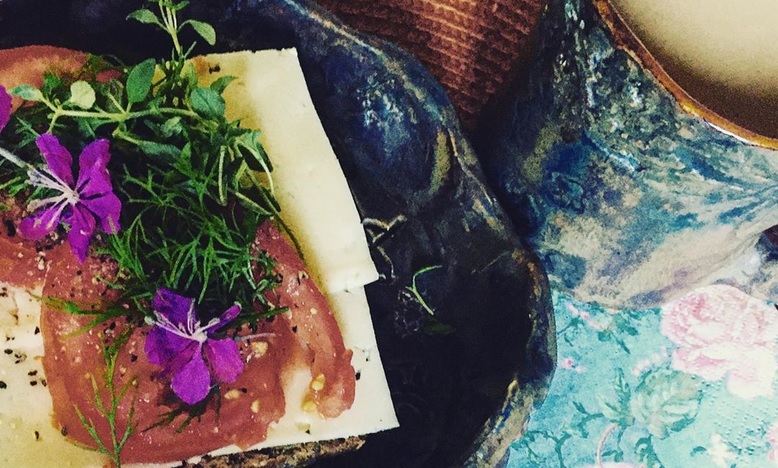
I prepared the sandwiches from Eesti Pagar (Estonian Baker) multigrain softy, covering it with Valio Atleet cheese slice, a tomato from my own garden, dill, thyme, and Fireweed (also called as Chamaenerion, Willowherbs or in some cases “elk hemps”) blossoms for extra power and visual pleasure. Such sandwiches I consumed two. About Fireweed I will be posting some more another time, since that deserves a separate chapter – it is my latest favourite herb! Super power, super effect – works to prevent and cure a thousand health problems! I use the entire herb above the ground – blossoms, leaves and stems, in dried version as well as straight from the flower bed (picked from the ditch side in the garden’s egde). To accompany these sandwiches, I drank Löfbergs Lila french press coffee with Alma full milk. Löfbergs that is prepared in Karlstad Sweden has been my favourite coffee already for years!
And yes… also the matter of fact that I at all eat breakfast is my new routine. When the year began and when I consciously started changing my life (nutrition and exercise), I decided to quit the habit common in many weight-struggling people – the habit of not eating anything in the morning and then filling it up before bed. For many years I had two jugs of coffee each morning and it wasn’t until lunch or dinner that I had a bite at all. Luckily, I have now let go of this unhealthy habit already eight months down the road. Actually even sandwiches are not in the daily breakfast menu any more – I reduce the sandwiches to the minimum and I prefer porridge (I like oat porridge, or also I make buckwheat porridge), and for a rather long time I have prepared a dish from the following components: lightly salted salmon or trout, pickled tomato and pickled cucumber, fresh tomato or cucumber, cottage cheese, grated beet, avocado, radish, egg, herbs. The dish gives a full feeling and is very healthy!
My health and wellbeing tips: Wake early
Walk in the nature
Have strong and healthy breakfast
Serve the meals that please you
Smile and find happiness in the little things
NordenBladet – Juha Tuominen, the CEO of the Hospital District of Helsinki and Uusimaa (HUS), said on YLE’s A-studio on Wednesday that the second wave of the new coronavirus has already hit Finland.
“I’m personally of the view that the second wave has already started. It started after the first week of July. Before that, infections were dropping steadily, but after that infections have been rising steadily,” he stated.
Tuominen estimated that the increase stems from people moving, travelling, meeting and communicating with each other more often. “We’re seeing that the increase in infections is linked especially to these kinds of activities,” he told. “You don’t have to be much of a predictor to guess that if we continue on the same track, the number [of infections] will continue growing.”
He reminded that the early stages of the epidemic demonstrated that the virus is capable of spreading at a considerably higher rate than currently, meaning some counter-measures are required to prevent the situation from getting out of control.
“If we continue on the current track, we’ll have a problem on our hands in a month. We have to do something to break the upward trend,” he underlined.
The guests of the topical talk show also included Krista Kiuru (SDP), the Minister of Family Affairs and Social Services. The Finnish government, she assured, will issue a recommendation that people wear face coverings in public places but added that wearing one will unlikely be made mandatory.
The Finnish Institute for Health and Welfare (THL) will need a few more days to formulate the recommendation carefully, according to Kiuru.
NordenBladet – Many medical theories today estimate that nearly 70% of all diseases are caused by negative thoughts or emotional stress. Diseases caused this way are called psychosomatic, and these health concerns include both your mind and body.
Even short-term intense stress can lead to stomach ulcers, and in just a few years, stress can cause diabetes or heart disease, not to mention poor general health, reduced ability to function and constant unhappiness. Doctors and scientists agree that our thoughts directly affect the work of the organs and the general condition of the body.
Ancient medicine is classified as holistic medicine because it takes care not only of the body but also of the mind, taking into account the lifestyle of the person. This method eliminates the cause of the disease, and does not just treat the symptoms, stopping the disease from returning. Because modern medicine is more concerned with the consequences of a disease—physical disorders—the disease can come back because the cause has often not been treated.
Ancient Ayurvedic* health science has not only proved the existence of psychosomatic diseases, but has also provided a list of specific diseases caused by certain characteristics.
Here are 15 characteristics that may explain the causes of a disease in you or those close to you:
1. Jealousy causes oncological diseases and weakens the immune system.
2. Vengeance brings about insomnia and laryngeal diseases.
3. Inability to resolve situations leads to lung diseases.
4. Lack of moral principles brings on chronic diseases, infectious diseases and skin diseases.
5. Excessive resoluteness or stubbornly adhering to one’s beliefs leads to diabetes, migraines and inflammation.
6. Lying causes alcoholism, fungal infections and weakens the immune system.
7. Aggressiveness results in stomach ulcers, heartburn and salt warts.
8. Withdrawnness brings about schizophrenia and kidney diseases.
9. Meanness leads to epilepsy, asthma and anemia.
10. Conflict proneness causes the thyroid gland to dilate.
11. Sluggishness leads to diabetes.
12. Inconsistency or moodiness brings about infertility.
13. Cruelty and the tendency to offend others cause diabetes and heart disease.
14. Anxiety and worrying lead to digestive problems, heart and skin diseases.
15. Greed entails oncological diseases, obesity and heart diseases.
On the positive side, if you can improve your character, the related diseases will disappear without a trace!
______________________________________________ * Ayurveda (Sanskrit आयुर्वेद āyurveda, ‘science of life’) is a system of traditional Indian medicine. Ayurveda uses nutritional therapy, massage, yoga techniques, complex medicines consisting of herbs, minerals and metals.
The founding texts of Ayurveda the Suśrutha Saṃhitā and the Charaka Saḿhitā (about 700 BC—500 AD).
The three most important principles in Ayurveda are the three doshas: vata, pitta, kapha. Doshas are subtle energies that affect all aspects of life. The imbalance of doshas brings on good health, whereas the imbalance of doshas causes a disease.
NordenBladet —Chairs of ten Foreign Affairs Committees of the European Union made a joint statement to express their concern and disappointment at the People’s Republic of China’s recent decision to impose the Law of the People’s Republic of China on Safeguarding National Security in the Hong Kong Special Administrative Region without the consent of the people of Hong Kong.
Enn Eesmaa, Chair of the Foreign Affairs Committee of the Riigikogu, said that, since the law had been adopted by Beijing and not by Hong Kong, it constituted a direct breach of the 1984 Sino-British Joint Declaration lodged with the United Nations. “The Declaration set out that Hong Kong would retain its autonomous executive, legislative and independent judicial power until at least 2047. China’s recent step however disregarded the agreement, and my colleagues from other parliaments and I can in no way agree to such a breach. Quite the contrary – we condemn it,” Eesmaa stated.
The Chairs of the Foreign Affairs Committees note that the law raises significant concern that judicial independence is being undermined by empowering Hong Kong’s Chief Executive rather than its Chief Justice is to appoint judges to hear national security cases. The signatories find that this threatens civil rights and the commercial stability.
“Allowing China jurisdiction further violates the Joint Declaration as well as the United Nations International Covenant on Civil and Political Rights. The legislation also goes against China’s own Basic Law for Hong Kong which states that Hong Kong is to bring forward its own national security legislation”, the statement reads.
The statement also says that Hong Kong’s autonomy and independent judiciary have guaranteed the personal rights and freedoms of its people for decades and have made the territory an important keystone in the international trading system. “Given their rights and the importance of Hong Kong, this cannot be seen as a purely domestic affair. In breaching a legally binding agreement and undermining the rule of law, this also undermines the good faith among nations who enter into international agreements.”
The Chairs of the Foreign Affairs Committees say that article 38 causes further concern as it seeks to violate the sovereignty of other nations. “In claiming extraterritorial jurisdiction it infringes freedom of speech in countries like ours that place a high value on civil rights. It is hard to see how an extradition treaty with either Hong Kong or China could be agreed when the demands of Beijing infringe so directly on basic human rights in our nations,” it is stated.
“We urge the People’s Republic of China to rethink its decision to impose this law, and to uphold its commitments to the people of Hong Kong as well as the international community,” the signatories say to conclude their joint statement.
The joint statement has been signed by the Chairs of the Foreign Affairs Committees of the parliaments of Belgium, Estonia, the Netherlands, Luxembourg, Latvia, Norway, Germany, Denmark and the United Kingdom, and the European Parliament.
NordenBladet —Today we commemorate the 80th anniversary of the Sumner Welles Declaration, which condemned the forced occupation and annexation of the Baltic States into the Soviet Union, and served as the foundation of the United States’ five-decade long non-recognition policy of Soviet occupation of the Baltic States.
Enn Eesmaa, Chair of the Foreign Affairs Committee of the Riigikogu, emphasised that the declaration, issued by acting Secretary of State Sumner Welles on July 23, 1940, was an exceptional sign of our shared commitment to freedom, sovereignty, and territorial integrity. “From 1940 until the full restoration of Baltic countries’ independence half a century later, the flags of Estonia, Latvia, and Lithuania continued to fly in Washington, just as our peoples continued to believe in a future in which liberty would be returned and sovereignty – restored,” Eesmaa said.
In Eesmaa’s words, the Welles Declaration set out an international framework for the existence of the Baltic States de jure throughout the entire period of Soviet occupation and for the restoration of statehood of Estonia, Latvia and Lithuania that followed later.
Eesmaa affirmed that, today, too, the Declaration is a stark, inspiring and an important reminder of the need to uphold the principles of international law and to oppose, as was stated in the declaration, “predatory activities, whether they are carried out by the use of force or by the threat of force”. “As we move deeper into the 21st century, our shared commitment to democratic values, secure borders, and the territorial integrity of sovereign states remains as unwavering as ever,” Eesmaa said.
Chair of the Foreign Affairs Committee recalled that the United States’ Crimea Declaration on July 25, 2018, reaffirmed the same principles as in the Welles Declaration, emphasising its policy of refusal to recognise illegal annexation of territory seized by force, and this stance is welcomed and fully supported by the Baltic States.
“On this important anniversary, we celebrate independence, pay tribute to those who suffered and sacrificed to ensure it. We recognise the importance of the United States’ significant contributions both historically and on this day, thus playing an irreplaceable part in ensuring security in the Baltics and Europe. Estonia is proud to be among those NATO member states that commit at least 2% of their GDP for defense, so that, along with our partners, we can fulfill the shared vision of a Europe peaceful, united and free,” Enn Eesmaa said.