
Reklaam

Helena-Reet Ennet

Helena-Reet Ennet
4698 POSTS 0 COMMENTS

Scandinavian history and culture: WHAT were gender roles like during Viking times? What happens when a Viking dies?

NordenBladet – What were gender roles like during Viking times? A Norwegian archaeologist Marianne Moen thinks we often misinterpret the past based on our current cultural assumptions. Men and women had more similarities than differences, she says. Moen studied the contents of Viking graves for her doctoral dissertation. “I think we need to move away from distinguishing between men’s and women’s roles during the Viking times,” she said. Moen has completed her PhD on Viking Age gender roles at the University of Oslo. Her research shows that upper-class men and women generally were buried with the same types of items — including cooking gear.

Moen went through the contents of 218 Viking graves in Vestfold*, a county on the southwest side of Oslo Fjord, and sorted the artefacts she found according to type. Many of the graves were richly equipped with everything from cups and plates to horses and other livestock. Archaeologists often assume that Viking women were responsible for the house and home, while men were merchants and warriors. However, tools and items associated with housekeeping were fairly equally distributed between men and women in the Vestfold graves. “The key is a good example. It is often considered to be the symbol of a housewife,” Moen said. Nonetheless, almost as many men’s graves had keys as women’s graves. “It might be time to change the story a bit,” she said.

Men were just as likely to be buried with cooking equipment as women. Ten graves containing cookware were men’s graves, while eight were women’s. Moen likes that fact. It means that men also made food, she thinks. “My interpretation is that cooking equipment indicates hospitality. This was very important during Viking times,” she said, although others interpret it differently.

The Gokstad Ship**, the large ship displayed at the Viking Ship Museum in Oslo, was part of a man’s grave and also contained a large array of cooking equipment. “These finds were often excused as being because men needed to make their own food on long voyages,” Moen says.

Not everyone agrees with Moen’s interpretation. Just because men chose to bring cookware into the afterlife doesn’t necessarily mean that they did the cooking in their own home, says archaeologist Frans-Arne Stylegar. Stylegar was previously the county conservator for Vest-Agder, the southernmost county in Norway. He currently works with cultural preservation and urban planning at the consulting firm Multiconsult. “It is difficult to translate the persona who is idealized in burial customs into actual historical reality. It’s almost a philosophical question,” he says.

Moen also thinks there is a stark difference between life and death when it comes to gender roles. But she also thinks that the items that people were buried with have some relation to what real life was like during those times.

She reminds us that tools and equipment aren’t just something that Vikings were buried with. These items were also found in houses, although without the ability to determine who used them.

Stylegar thinks that Moen’s PhD thesis was well done and that she makes a convincing case that there wasn’t much difference between the way upper-class Viking men and women were buried. He has studied several Viking graves in Vestfold previously, and isn’t very surprised by this conclusion. “I’ve gotten this impression previously, but she shows it very clearly,” he said.

However, from his own work in Vestfold, he had the impression that farmers were much more concerned with marking gender in their graves than the upper-class citizens, although he points out that this was not the focus of his research.

There are still a few clear differences between genders for the elite. Men generally have weapons in their graves, while women have jewellery and textile tools, as Moen’s work shows.

Here’s what Vikings were buried with
Viking men and women still had more similarities than differences in their graves, Moen said. More than 40 per cent of the male graves contained jewellery such as brooches and beads. The men also have what seem to be toiletries in their graves, including tweezers and razors likely used for personal grooming.

Interpreting the past through a modern lens
Moen wonders where the idea that there was clear gender differentiation in the past comes from. Other researchers have pointed out that many of the items retrieved from graves in the early 1900s were interpreted based on the cultural perspectives of those times, in the same way that Moen now sees the artefacts from her modern perspective. She calls herself a gender archaeologist, and wants to challenge other archaeologists’ interpretations of Viking culture. But entrenched perceptions among experts can be difficult to change, she says. “I encounter quite a bit of scepticism. There are quite a few researchers who are very set in their opinion on gender when it comes to work-related roles,” Moen said.

She thinks part of the reason for this is that it is much easier to relate to a version of history that is in keeping with our modern expectations, “a version of history where men and women have specific roles in society,” she said. “In general, in Viking Age studies, artefacts found in graves are interpreted as being connected to the person buried in the grave. This shouldn’t change for cases where artefacts don’t meet modern expectations of what a man or woman would have in their grave,” Moen said.
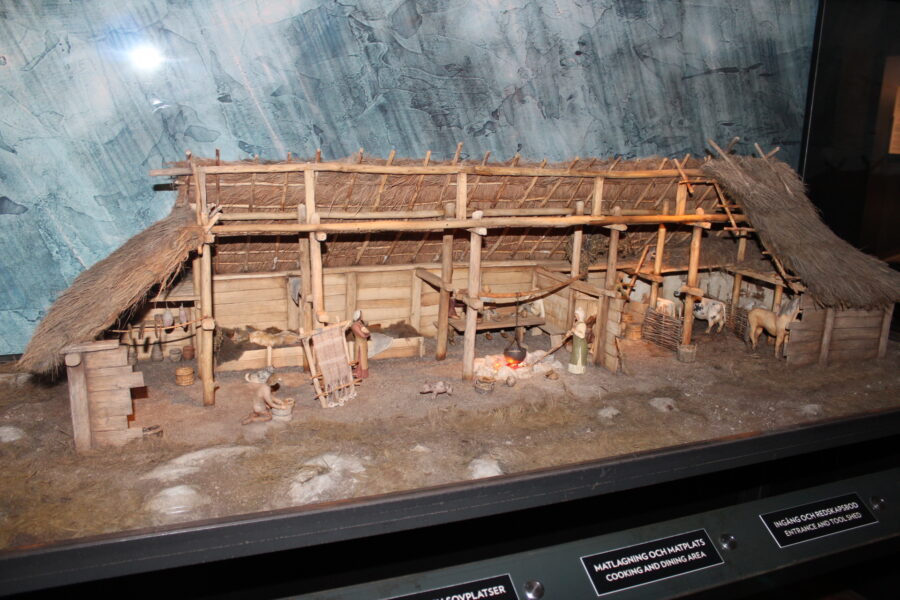
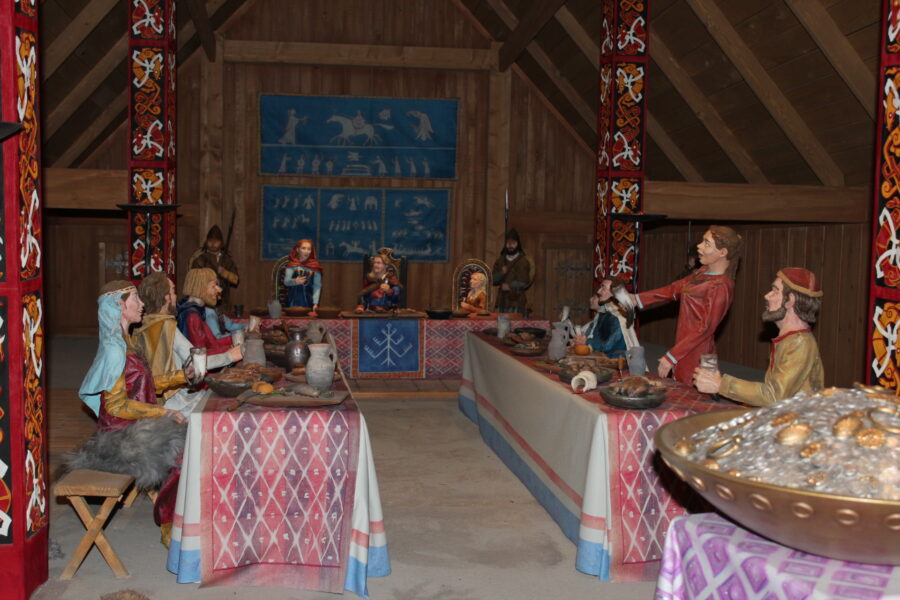
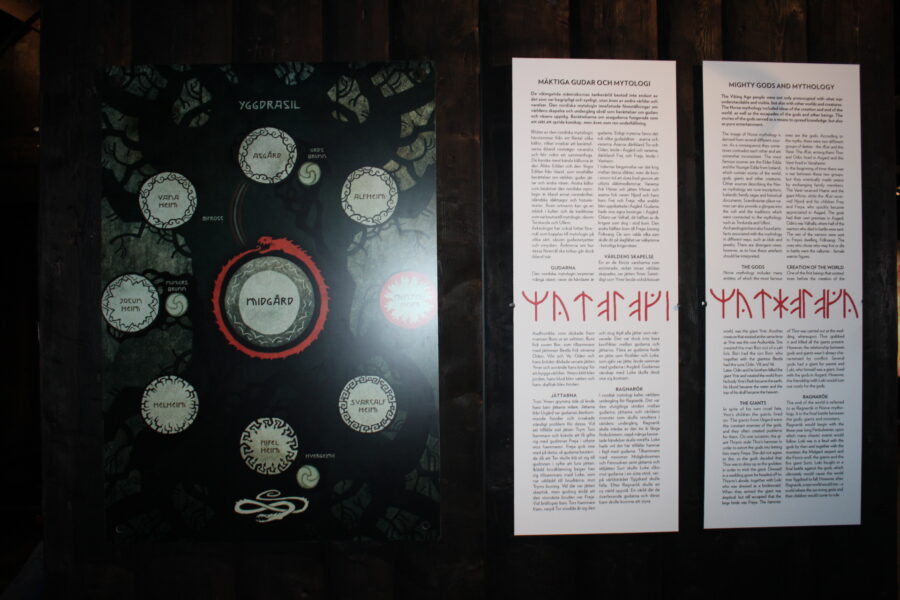
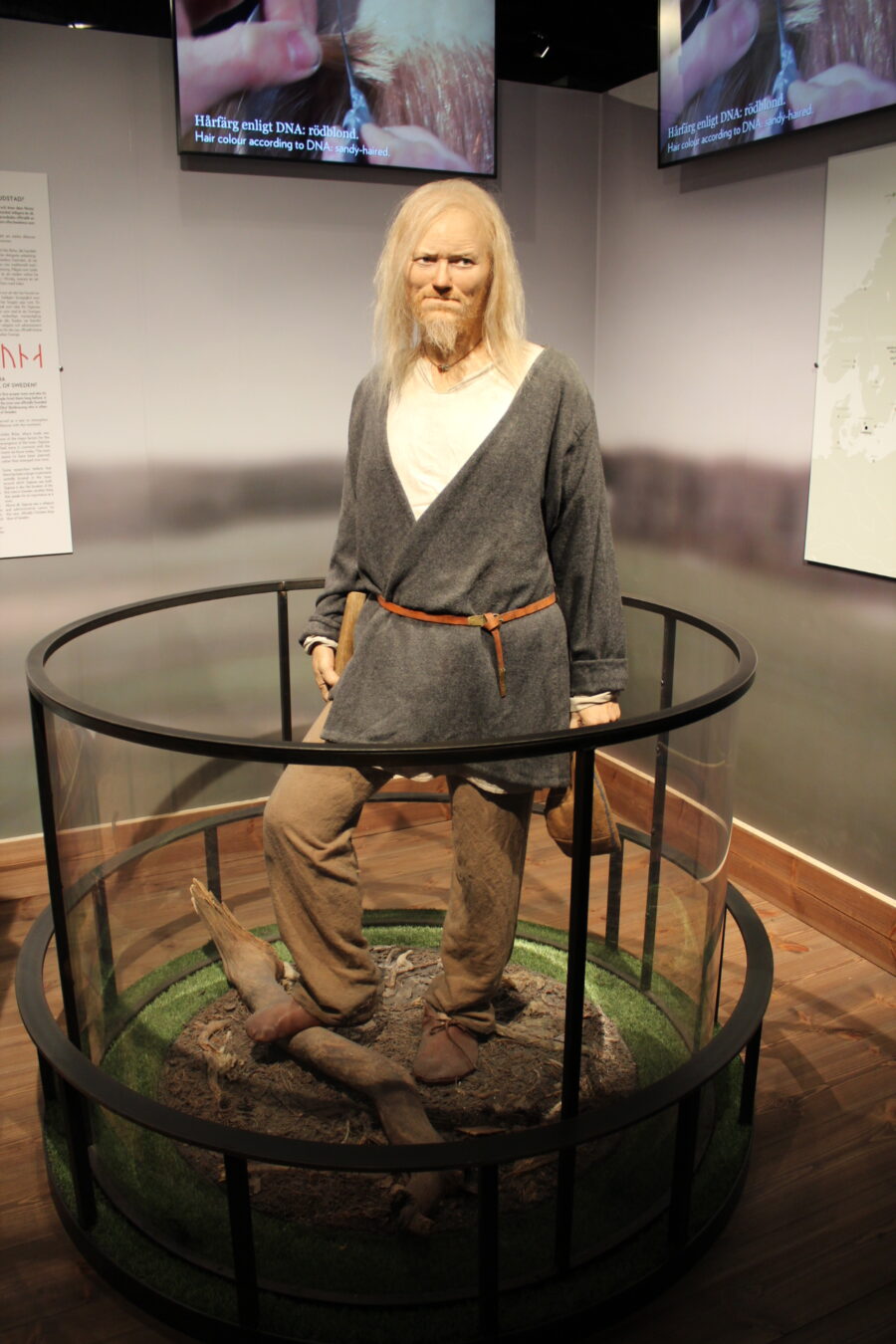

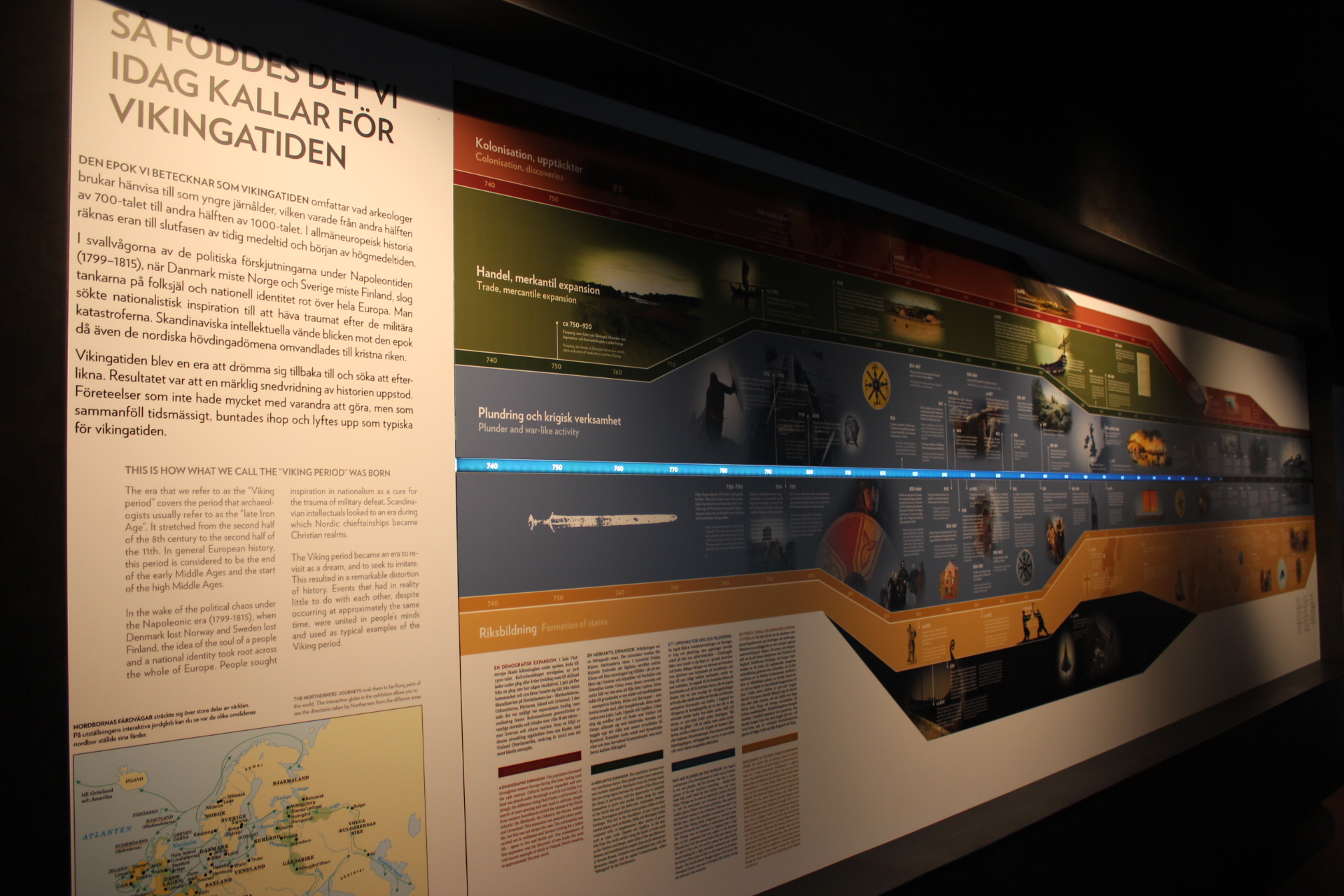
Photos: The Viking Museum, Stockholm, Sweden. 4x  NordenBladet/Helena-Reet Ennet

What people ask about the death and funeral of the Vikings

What is a Viking funeral called?
A Norseman could also be buried with a loved one or house thrall, or cremated together on a funeral pyre. The most sumptuous Viking funeral discovered so far is the Oseberg Ship burial, which was for a woman (probably a queen or a priestess) who lived in the 9th century.

What is a Viking boat grave?
Two Viking boat graves have been uncovered in Sweden in what archaeologists are describing as a “sensational” discovery. One grave, which was intact, contained the remains of a man, a horse and a dog, according to archaeological service Arkeologerna (The Archaeologists), which announced the finds.

Why would a viking be buried?
When it comes to the burial, the Vikings would bury the ashes of their dead in graves or even under piles of rocks. Goods and belongings would be buried with the deceased, suitable to match their life.

Is a Viking funeral legal?
Burial at sea is legal under certain circumstances, subject to various rules. … Scattering ashes at sea is perfectly legal though people might want to inform the coastguard that they’re sending a small burning vessel into open water…just in case! Real Viking funerals, however, are perfectly legal.

Did Vikings burn their dead in boats?
The dead were burnt or buried in their daily clothes, and are usually buried along with his or her personal belongings. Sometimes the dead were buried lying in a boat or a wagon.  Cremation was the more common of the two burial practices in the early Viking Age.

What happens when a Viking dies?
Vikings: Afterlife and Burial. When Vikings died they believed they would go to Valhalla***, where they would spend their afterlife. Warriors who had died bravely would be carried by the Valkyries to Valhalla. There they would be welcomed to the afterlife by the god Odin, with whom they would feast every night.

What is a funeral boat?
A ship burial or boat grave is a burial in which a ship or boat is used either as a container for the dead and the grave goods, or as a part of the grave goods itself. If the ship is very small, it is called a boat grave.

When was the Oseberg ship discovered?
1904. The famous Norwegian Viking ship, the Oseberg ship, was built in AD 820, buried in a grave mound 14 years later, and excavated in 1904. Shortly after the excavation, the 21.5m long and 5.0m wide ship was re-assembled and exhibited at the Viking Ship Museum, in Bygdøy, Oslo.

How did Vikings honor their dead?
How Did The Vikings Honor Their Dead? Most Vikings were sent to the afterlife in one of two ways—cremation or burial. Cremation (often upon a funeral pyre) was particularly common among the earliest Vikings, who were fiercely pagan and believed the fire’s smoke would help carry the deceased to their afterlife.

How did Vikings say goodbye?
Etymology. Originally a Norse greeting, “heil og sæl” had the form “heill ok sæll” when addressed to a man and “heil ok sæl” when addressed to a woman. Other versions were “ver heill ok sæll” (lit. be healthy and happy) and simply “heill” (lit. healthy). The Norwegian adjective heil (also hel) is related to the English adjective whole/hale. The Norwegian verb heile (also hele) is related to the English verb heal through their common origin, the Germanic word stem haila-, from which also the German verb heilen and the adjective „heile“, i.e. functioning / not defect descends. The Norwegian adjective sæl, meaning happy or glad, is in Old English documented only in the negated variant unsǣle, meaning evil.

___________________________________________________________
* Vestfold is mentioned for the first time in a written source in 813, when Danish kings were in Vestfold to quell an uprising amongst the Fürsts. There may have been as many as six political centers in Vestfold. At that time Kaupang, which was located in Tjølling near Larvik, had been functioning for decades and had a chieftain. Kaupang, which dates from the Viking Era, is believed to be the first town in Norway, although Tønsberg (which dates from ca. 900) is the oldest town in Norway still in existence. At Borre, there was a site for another chieftain. That site held chieftains for more than one hundred years prior to 813.

The stone mounds at Mølen have been dated to the Viking Age. The mounds at Haugar in present-day Tønsberg’s town centre have been dated to the Viking period. At Farmannshaugen in Sem there seems to have been activity at the time, while activity at Oseberghaugen and Gokstadhaugen dates from a few decades later.

An English source from around 890 retells the voyage of Ottar (Ottar fra Hålogaland) “from the farthest North, along Norvegr via Kaupang and Hedeby to England”, where Ottar places Kaupang in the land of the Dane – danenes land. Bjørn Brandlien says that “To the degree that Harald Hårfagre gathered a kingdom after the Battle of Hafrsfjord at the end of the 9th century – that especially is connected to Avaldsnes – it does not seem to have made such a great impression on Ottar”. Kaupang is mentioned under the name of Skiringssal (Kaupangen i Skiringssal) in Ottar’s tales.

By the 10th century, the local kings had established themselves. The king or his ombudsman resided in the old Royal Court at Sæheim i Sem, today the Jarlsberg Estate (Jarlsberg Hovedgård) in Tønsberg. The farm Haugar (from Old Norse haugr meaning hill or mound) became the seat for Haugating, the Thing for Vestfold and one of Norway’s most important place for the proclamation of kings. The family of Harald Fairhair, who was most likely the first king of Norway, is said to have come from this area.

The Danish kings seem to have been weak in Vestfold from around the middle of the 9th century until the middle of the 10th century, but their rule was strengthened there at the end of the 10th century. The Danish kings seem to have tried to control the region until the 13th century.

** The Gokstad ship is a 9th-century Viking ship found in a burial mound at Gokstad in Sandar, Sandefjord, Vestfold, Norway. It is currently on display at the Viking Ship Museum in Oslo, Norway. It is the largest preserved Viking ship in Norway. The site where the boat was found, situated on arable land, had long been named Gokstadhaugen or Kongshaugen (from the Old Norse words konungr meaning king and haugr meaning mound), although the relevance of its name had been discounted as folklore, as other sites in Norway bear similar names. In 1880, sons of the owner of Gokstad farm, having heard of the legends surrounding the site, uncovered the bow of a boat while digging in the still frozen ground. As word of the find got out, Nicolay Nicolaysen, then President of the Society for the Preservation of Ancient Norwegian Monuments, reached the site during February 1880. Having ascertained that the find was indeed that of an ancient artifact, he liaised for the digging to be stopped. Nicolaysen later returned and established that the mound still measured 50 metres by 43 metres, although its height had been diminished down to 5 metres by constant years of ploughing. With his team, he began excavating the mound from the side rather than from the top down, and on the second day of digging found the bow of the ship.

*** In Norse mythology, Valhalla (Old Norse Valhöll “hall of the slain”)is a majestic, enormous hall located in Asgard, ruled over by the god Odin. Chosen by Odin, half of those who die in combat travel to Valhalla upon death, led by valkyries, while the other half go to the goddess Freyja’s field Fólkvangr. In Valhalla, the dead warriors join the masses of those who have died in combat (known as the Einherjar) and various legendary Germanic heroes and kings, as they prepare to aid Odin during the events of Ragnarök. Before the hall stands the golden tree Glasir, and the hall’s ceiling is thatched with golden shields. Various creatures live around Valhalla, such as the stag Eikþyrnir and the goat Heiðrún, both described as standing atop Valhalla and consuming the foliage of the tree Læraðr.

Valhalla is attested in the Poetic Edda, compiled in the 13th century from earlier traditional sources, in the Prose Edda (written in the 13th century by Snorri Sturluson), in Heimskringla (also written in the 13th century by Snorri Sturluson) and in stanzas of an anonymous 10th century poem commemorating the death of Eric Bloodaxe known as Eiríksmál as compiled in Fagrskinna. Valhalla has inspired various works of art, publication titles, and elements of popular culture, and has become a term synonymous with a martial (or otherwise) hall of the chosen dead.

More about Norse and Scandinavian mythology:
EXHAUSTIVE OVERVIEW: who were the ancient Scandinavian origin Vikings and when was the time of the Vikings?

Stockholm´s museums: The Viking Museum – tourist info, guides, pictures

Viking is ‘forefather to British royals’? Norwegian-French investigation hopes to reveal that Norwegian Viking noble Ganger Hrólf was the same person as Rollo, the first Duke of Normandy

Featured image: Viking age. The Viking Museum, Stockholm, Sweden.  (NordenBladet/Helena-Reet Ennet)
Reference: Marianne Moen: Challenging Gender. A reconsideration of gender in the Viking Age using the mortuary landscape. Doctoral thesis at the Department of Archaeology, Conservation and History, University of Oslo, 2019

Swedish history and culture: The Vasa Museum (Vasamuseet) + GALLERY!

NordenBladet – The Vasa Museum (Swedish: Vasamuseet) is a maritime museum in Stockholm, Sweden. Located on the island of Djurgården, the museum displays the only almost fully intact 17th century ship that has ever been salvaged, the 64-gun warship Vasa that sank on her maiden voyage in 1628. The Vasa Museum opened in 1990 and, according to the official web site (vasamuseet.se), is the most visited museum in Scandinavia. Together with other museums such as the Stockholm Maritime Museum, it belongs to the Swedish National Maritime Museums (SNMM). 

Visiting address:
Galärvarvsvägen 14, Stockholm
(The Vasa Museum is situated a few hundred meters from the temporary museum Wasavarvet wich is now the Aquaria museum and a tram garage. The new Vasa Museum lies in the royal parkland, Djurgården, in Stockholm.)

Opening hours:
1 September – 31 May:
Daily 10:00-17:00
Wednesdays 10:00-20:00

Admission:
Adults: SEK 150
18 years and under: Free of charge


Photos: 20 x NordenBladet/Helena-Reet Ennet

Planning your visit:
The Vasa Museum personnel suggest that you view the Vasa Film and then go on a guided tour explaining the ship. The times of film screenings and guided tours are displayed at the information desk on Level 4 (entrance level).  MP3 guides are available in different languages. Please contact the information desk. Exhibitions located around the ship tell of Vasa and her times. Explore the exhibitions in whatever sequence you choose. All of them have explanations in Swedish and English. If you would like to delve more deeply into Vasa´s history there is a number of quality publications, on sale at the museum shop.

If you are short of time, you can either watch the film about Vasa (17 minutes) or take the guided tour around the ship (25 minutes). If you are bringing children along to the Vasa Museum, there is a “on board” model gun deck in the exhibition Life on Board. Don´t miss the diving bell in His Majesty´s Ship, and watch out for the model topgallant in The Sailing Ship. There is a game on the 6th floor where you can try to sail a ship as it was done during Vasa´s time. There is a family trail that you can do on your own, for children accompanied by adults. It is available in different languages.

The Museum Shop
The Museum Shop has a wide range of facinating goods on sale for all ages and interests – from copies of objects found on board Vasa, through models and catalogues, to postcards and posters. Most credit cards are accepted and also notes in the following currencies: GBP, USD, DKK, NOK and EUR. All change is given in Swedish kronor. The shop is on Level 4.

The Vasa Restaurant
The Vasa Restaurant serves Swedish- style plain fare, coffee, open sandwiches and pastries. The restaurant is on Level 4, alongside the stern of Vasa.

History:
From the beginning of 1961 to 1988, Vasa was housed in a temporary structure called Wasavarvet (“The Vasa Shipyard”) where she was treated with polyethylene glycol. Visitors could only view the ship from two levels and the maximum distance was only 5 m (17 ft). In 1981, the Swedish government decided that a permanent Vasa museum was to be constructed and a competition for the design of the museum building was organized. A total of 384 architects sent in models of their ideas and the final winners were Marianne Jakobbäck and Göran Månsson with Ask (“box”). The construction of the new building began on and around the dry dock of the old naval yard with an inauguration ceremony hosted by Prince Bertil on 2 November 1987. Vasa was towed into the flooded dry dock under the new building in December 1987, and during the summer of 1989, when visitors were allowed onto the construction site, 228,000 people visited the half-finished museum. The museum was officially opened on 15 June 1990. So far, Vasa has been seen by over 25 million people. In 2017, the museum had a total of 1,495,760 visitors.

The main hall contains the ship itself, and various exhibits related to the archaeological findings of the ships and early 17th-century Sweden. Vasa has been fitted with the lower sections of all three masts, a new bowsprit, winter rigging, and has had certain parts that were missing or heavily damaged replaced. The replacement parts have not been treated or painted and are therefore clearly visible against the original material that has been darkened after three centuries under water.

The new museum is dominated by a large copper roof with stylized masts that represent the actual height of Vasa when she was fully rigged. Parts of the building are covered in wooden panels painted in dark red, blue, tar black, ochre yellow and dark green. The interior is similarly decorated, with large sections of bare, unpainted concrete, including the entire ceiling. Inside the museum the ship can be seen from six levels, from her keel to the very top of the sterncastle. Around the ship are numerous exhibits and models portraying the construction, sinking, location and recovery of the ship. There are also exhibits that expand on the history of Sweden in the 17th century, providing background information for why the ship was built. A movie theatre shows a film in alternating languages on the recovery of the Vasa.

The museum is in the process of publishing an 8-volume archaeological report to commemorate the 50th anniversary of the salvage. Vasa I: The Archaeology of a Swedish Warship of 1628 was published at the end of 2006. Subsequent volumes will be published annually.

The museum also features four other museum ships moored in the harbour outside: the ice breaker Sankt Erik (launched 1915), the lightvessel Finngrundet (1903), the torpedo boat Spica (1966) and the rescue boat Bernhard Ingelsson (1944).

Questions and answers:
What wood is the Vasa made of?
Vasa was almost exclusively built from oak, chosen of course for its exceptional strength and resistance properties. Decks not carrying any canons – the weather and orlop decks – were built from pine, except for the aft section on orlop deck where two canons were placed and oak was used to take the load. As for the sculptures and other decorative elements, these are often linden which is a softer wood species, easily worked and formed into shape.

What is the Condition of Vasa?
Considering that Vasa is nearly 400 hundred years old and has been resting in polluted water for more than 300 years, she is doing pretty well. But like every other material, Vasa’s wood is slowly deteriorating with time. At the museum we are constantly trying to find solutions for this problem and find a way to keep Vasa as she is today for as long as possible. That is why we make sure to keep a stable temperature and humidity level inside the museum at all times, constantly improve and maintain the way the ship is supported and do research for new effective treatments of the ship’s objects.

How much of Vasa is original?
Vasa is actually 98% original. The Vasa Museum´s head of research Mr Fred Hocker did a new calculation a few years ago and it came to only 2% is done in modern time. Deck plants are new. When it comes to the stern castle, the inside is new and then they attached the sculptures after they had been preserved with PEG.

When were the color pigments retrieved?
Paint and gilding were noticed on many of the sculptures when they were first recovered during the salvage work in 1956-1961, and one famous bit of painting, a life-size image of a king,was seen on the foremast by divers before the mast was recovered. Samples were taken as objects were recovered, but these proved difficult to analyze. A separate project in the 1990s, led by Peter Tångeberg (a conservator), collected samples of paint and gilding and subjected them to chemical analysis in order to identify the pigments. We have continued this work in our recent documentation of the interior panelling and furniture from the cabins, and it has been one of staff conservators, Emma Hocker, who has carried out the work of cleaning and sampling surfaces.

How much did it cost to salvage the Vasa and what would that equate to today?
It is impossible to say what the salvage cost, except to say that it cost the people of Sweden next to nothing. All of the preparatory diving work, digging the tunnels under the ship, rigging the lift, etc. was carried out by the divers of the navy and coastal artillery as part of their annual proficiency training, which was already budgeted by the navy. The lift itself was carried out by the Neptune Salvage Company at no cost (they were allowed to use the project in their advertising). The project spent a small amount of money on a handful of salaries and the purchase of incidentals, but the majority of the cost was never accounted.

Modern estimates of what it would take to raise a similar ship from a similar depth typically range between 50 and 100 million euros, but no one really knows what it would take until someone tries it!

Featured image: The Vasa Museum is one of Scandinavia’s most visited museums. It is here that you will find in all its glory, the unique and well preserved warship Vasa from 1628, embellished with hundreds of wooden sculptures. Around 1.5 million visitors every year enjoy the exhibitions in the museum, which describe the warship Vasa’s history and life at the time; how, after 333 years at the bottom of Stockholm bay, the ship was rediscovered and salvaged; and the research which is now underway to preserve Vasa. (NordenBladet/Helena-Reet Ennet)

Estonia votes on UN Security Council (UNSC) for first time

NordenBladet – The reauthorization of a cross-border aid mechanism for Syria was put to a vote on Friday ahead of its expiration at midnight, marking the first time that Estonia voted as a non-permanent member of the UN Security Council (UNSC).

The council voted to extend the cross-border authorization, although to a reduced extent, facing pressure from permanent council member Russia, who vetoed one draft resolution extending it last month.

Two options were on the table at the Security Council, one of which was sponsored by Germany, Belgium and Kuwait and the other by Russia.

A compromise resolution was passed with 11 votes in favor and none against. Four permanent council members, Russia, China, the U.S. and the U.K., abstained from the vote.

Under this resolution, which was approved for just half a year, humanitarian aid will be transported via two existing border crossings on the Syria-Turkey border. Under a previous mandate, which expired at midnight, humanitarian aid was passed through four border crossings in total.

Belgian and French representatives expressed disappointment over the outcome.

“Eleven million Syrians need humanitarian assistance,” said Belgian Ambassador to the UN Marc Pectseen de Buytswerve.

“Syrians will die as a result of this resolution,” said U.S. Ambassador to the UN Kelly Craft.

Denmark’s Queen Margrethe II joined by her younger sister Princess Benedikte for a special anniversary

NordenBladet – Denmark’s Queen, Margrethe II*, was accompanied by her younger sister, Princess Benedikte**, as she oversaw the beginning of commemorations of a major anniversary for their country. The two royals attended a special concert marking the centenary of the reunification of South Jutland with Denmark.

The gala evening was hosted by the Danish government as events for the 100th anniversary get under way. The performance, which included music and dance, took place at the Royal Theatre in the heart of Copenhagen.

Queen Margrethe (79) and Princess Benedikte (75), both dressed in patriotic red, were presented with flowers as they arrived at the theatre. They then took their seats in the Royal Box for the show which featured performances from children’s choirs as well as a world premiere of a special German-Danish pas-de-deux.

South Jutland is the modern Danish name for part of what, for centuries, was known as the Duchy of Schleswig. In the 19th century, two wars were fought over Schleswig which culminated in Prussia defeating Denmark and taking control of the area. Following the First World War, Danish authorities asked for a referendum over the future of the area. The area now called South Jutland chose to be part of Denmark and the reunification took place in 1920.

Commemorations will take place throughout 2020 with special events planned for February and March to mark the centenary of the referendum itself. The most high profile celebrations will come in July to mark exactly 100 years since King Christian X rode, symbolically, across the border between Denmark and South Jutland to show they were now one again.

Queen Margrethe and her family are expected to play a major part in the ongoing commemorations.

______________________________________

* Margrethe II (full name: Margrethe Alexandrine Þórhildur Ingrid; born 16 April 1940) is Queen of Denmark, as well as the supreme authority of the Church of Denmark and commander-in-chief of the Danish Defence. Born into the House of Glücksburg, a royal house with origins in northern Germany, she was the eldest child of Frederick IX of Denmark and Ingrid of Sweden. She became heir presumptive to her father in 1953, when a constitutional amendment allowed women to inherit the throne. Margrethe succeeded her father upon his death on 14 January 1972. On her accession, she became the first female monarch of Denmark since Margrethe I, ruler of the Scandinavian kingdoms in 1375–1412 during the Kalmar Union. In 1967, she married Henri de Laborde de Monpezat, with whom she has two sons: Crown Prince Frederik and Prince Joachim.

** Princess Benedikte of Denmark, Princess of Sayn-Wittgenstein-Berleburg RE, SKmd, D.Ht. (Benedikte Astrid Ingeborg Ingrid, born 29 April 1944) is the second daughter and child of King Frederick IX and Queen Ingrid of Denmark. She is the younger sister of the reigning Queen of Denmark, Margrethe II, and the older sister of Queen Anne-Marie of Greece. Princess Benedikte often represents her elder sister at official or semi-official events. She and her late husband, Richard, 6th Prince of Sayn-Wittgenstein-Berleburg, have three children. Princess Benedikte is currently 11th in the line of succession to the Danish throne.


Featured image: Denmark’s Queen, Margrethe II (NordenBladet)

Foreign Affairs Committee: Estonia supports resolution of the Iraq conflict on the basis of international law

NordenBladet — The extraordinary sitting of the Foreign Affairs Committee of the Riigikogu (Parliament of Estonia) today focused on the situation in Iraq and the possibilities for relieving tensions in the region. The Committee was given an overview of Estonia’s positions for the upcoming extraordinary meeting of the Foreign Affairs Council of the European Union in Brussels.

In the opinion of Chairman of the Foreign Affairs Committee Enn Eesmaa, it is important to cool tensions in the Middle East and to prevent escalation of the conflict. He said that Estonia supported its ally, the United States of America, and followed developments in the region.

Eesmaa pointed out the need to observe and follow international law. “It is necessary to avoid the risk of interpreting and implementing international law selectively,” he added.

Deputy Chairman of the Foreign Affairs Committee Marko Mihkelson also emphasised the importance of international law and the world order based on it. “The rules-based world order and adherence to international law can ensure stability in the Middle East,” Mihkelson said. “Estonia as a small country is interested that our own security would not be threatened through the erosion of international law.”

Representatives of the Ministry of Foreign Affairs presented to the Foreign Affairs Committee Estonia’s positions for the extraordinary meeting of the Foreign Affairs Council of the European Union, due to be held in Brussels on 10 January.

Riigikogu Press Service
Liisa Johanna Lukk
Phone: +372 631 6456, +372 5331 0789
E-mail: liisajohanna.lukk@riigikogu.ee
Questions: press@riigikogu.ee


Source: Parliament of Estonia


Estonia: HennPõlluaas: We owe our sovereignty to those who fought and fell in the War of Independence

NordenBladet — Speaking today in Nõmme Rahu (Peace) Church to commemorate the War of Independence Armistice Day and the War of Independence Veterans Day, the President of the Riigikogu Henn Põlluaas said that we still needed the courage, bravery and inextinguishable striving for freedom now, when one hundred years have passed since the weapons fell silent on our battlefronts.

“Exactly one hundred years ago today, the weapons fell silent and the armistice between the Republic of Estonia and the Bolshevist Russia entered into force,” Põlluaas said. One month later, the armistice extended into the Tartu Peace Treaty that ended all military activities.

“The endless noise of the battlefields ceased and suddenly everything became so silent. But there was a great power in that silence… The power that took us to the stabilisation of our independence,” noted the President of the Riigikogu.

Põlluaas said that today we bow our heads in memory of the fallen, and thank the fighters and victims of the War of Independence for our sovereignty. “We promise to be worthy of these men and women, and to defend our country and our people. If necessary, with a weapon in hand, as did our freedom fighters in World War II, and our Forest Brothers for long years after that,” Põlluaas said.

“In the battles of the War of Independence, we saw courage, bravery and inextinguishable striving for freedom. We still need all that now, when one hundred years have passed since the weapons fell silent on our battlefronts,” Põlluaas added.

The President of the Riigikogu also said that we must be strong and stand united. “Unanimously, and together with our friends and allies, we can ensure stability and lasting peace for our country and our nation.”

Riigikogu Press Service
Veiko Pesur
Phone 631 6353, 55 590 595
e-mail veiko.pesur@riigikogu.ee
Questions press@riigikogu.ee


Source: Parliament of Estonia


Norway’s Prime Minister Erna Solberg praises the Norwegian royals in her New Year’s speech

NordenBladet – On the first day of the New Year, it is a tradition that Norway’s Prime Minister gives a New Year’s speech. This happens exactly one day following the speech of His Majesty King Harald. Both the King and the Prime Minister had to change and re-record their speeches following the suicide of Ari Behn, the former husband of Princess Märtha Louise.

The Prime Minister highlighted suicide and mental health in her New Year’s speech. She praised the Royal Family in what has been described as the most royalist New Year’s speech given by a Norwegian prime minister for many years.

Prime Minister Erna Solberg said the following about Ari Behn: “Norway has lost an innovative artist and writer. The Family and those who are left behind have lost a dear family member and a close friend.”

The Prime Minister is encouraging people to be transparent and used the opportunity to promote an initiative to identify the reasons why more young people, especially girls, have mental health challenges.

The Prime Minister highlighted King Harald and Queen Sonja as two people who care for all Norwegians. The Prime Minister said: “Together, with the rest of the Royal Family, the King and Queen are making a formidable effort. For Norwegian business abroad. To include everyone in our community. For the environment and climate, which new generations of royalty are so keen on. I want to thank His Majesty the King and the rest of the Royal Family for everything they do for Norway”.

King Harald of Norway delivered his annual New Year’s Eve address after a tragic Christmas Day where his former son-in-law, Ari Behn, committed suicide. “We are strongly influenced by Ari Behn’s death this Christmas. It has been warm to experience people’s compassion and lit candles at the Palace Square. There is comfort in all the good memories and beautiful words that have been conveyed about the father of three of our dear grandchildren,” was the words of His Majesty the King.

Denmark: Danish royals attend first New Year reception of 2020 + VIDEO!

NordenBladet – The Danish Royal Family has attended their first reception of 2020. Queen Margrethe was joined by Crown Prince Frederik, Crown Princess Mary, Prince Joachim, Princess Marie, and Princess Benedikte at Christian VII’s Palace in the Amalienborg Palace complex last night. The annual reception was in honour of the Danish government, Parliament, members of the Royal Court and official Denmark.

Others in attendance included Prime Minister Mette Frederiksen, Finance Minister Nicolai Wammen, Minister for Defence Trine Bramsen, Minister for the Environment Lea Wermelin, Supreme Court President Thomas Rørdam, and Mayor of Copenhagen Municipality of Frank Jensen.

Guests dined on pheasant with apple and pickled mushrooms, deer fillet “Crepine”, cabbage, French fries and pepper sauce, baked Brillat-Savarin, truffle and frisée salad, Charlotte a la Russe, and blackcurrant from Marselisborg Palace. Tables were decorated with flowers that “mainly consist of white roses, eucalyptus, silver-grey tillandsia as well as carnations and snowflake-like bridal veils, which together remind the guests of the cold winter months,” according to the Royal House.

Music was provided by The Royal Life Guards Music Corps.

Another reception will take place tonight and on Friday night.

Video: Den kongelige familie ankommer til nytårskur- og taffel 2020 (Det danske kongehus)

Sweden: Microsoft Tech Summit Stockholm (05 – 06 May 2020)

NordenBladet – Microsoft Tech Summit Stockholm provide the attendees with opportunities to learn new ways to code, optimize their cloud infrastructure, and modernize their organization with deep technical training. It is the platform where developers and tech professionals continue learning alongside experts and it also helps to explore the latest developer tools and cloud technologies and learn how to put the skills to work in new areas.

When: 05 – 06 May 2020; 09:00 AM-06:00 PM (expected)
Where: Stockholm, Sweden (Venue to be announced)
Organizer: Microsoft, USA

More Microsoft events


Sweden: The Solar Future Nordics (01 Apr 2020)

NordenBladet – The Solar Future Nordics is the first regional conference fully dedicated to solar energy* in the Nordic region and it features a unique set-up, in which the regional authorities, as well as both local and international associations, institutions, and private entities, meet up, get market updates, debate, and learn. Attending the event is a vital enabler to be part of the future development of the Nordics’ solar energy future.

When: 01 Apr 2020; 09:00 AM-06:00 PM (expected)
Where: Stockholm Waterfront Conference Centre, Stockholm, Sweden (Nils Ericsons Plan 4 111 64 Stockholm
Sweden)
Participants (Estimated Count):
100 – 500 Delegates
10 – 50 Exhibitors
Organizer: Solarplaza International BV, Netherlands

_____________________________________

* Solar energy is radiant light and heat from the Sun that is harnessed using a range of ever-evolving technologies such as solar heating, photovoltaics, solar thermal energy, solar architecture, molten salt power plants and artificial photosynthesis.

It is an important source of renewable energy and its technologies are broadly characterized as either passive solar or active solar depending on how they capture and distribute solar energy or convert it into solar power. Active solar techniques include the use of photovoltaic systems, concentrated solar power and solar water heating to harness the energy. Passive solar techniques include orienting a building to the Sun, selecting materials with favorable thermal mass or light-dispersing properties, and designing spaces that naturally circulate air.

The large magnitude of solar energy available makes it a highly appealing source of electricity. The United Nations Development Programme in its 2000 World Energy Assessment found that the annual potential of solar energy was 1,575–49,837 exajoules (EJ). This is several times larger than the total world energy consumption, which was 559.8 EJ in 2012.

In 2011, the International Energy Agency said that “the development of affordable, inexhaustible and clean solar energy technologies will have huge longer-term benefits. It will increase countries’ energy security through reliance on an indigenous, inexhaustible and mostly import-independent resource, enhance sustainability, reduce pollution, lower the costs of mitigating global warming, and keep fossil fuel prices lower than otherwise. These advantages are global. Hence the additional costs of the incentives for early deployment should be considered learning investments; they must be wisely spent and need to be widely shared”.