NordenBladet —The investment protection agreement between the European Union and Singapore, passed in the Riigikogu today, aims to improve the investment climate between the EU and Singapore.
According to the explanatory memorandum, the agreement benefits European investors, ensuring the protection of high-level investments in Singapore, at the same time reserving the parties the right to regulate the sector and to establish legal provisions. The agreement establishes an investment tribunal system of two instances which aims to ensure better legal protection to investors and to consider their disputes more quickly and transparently. The agreement also ensures the protection of Singaporean investors in Europe.
The draft agreement was approved at the sitting of the Government on 4 October 2018. Estonia signed the agreement in Luxembourg on 15 October 2018. The EU and Singapore signed the agreement at the Asia-Europe Meeting Summit in Brussels on 19 October 2018. The agreement enters into force after all countries have ratified the agreement according to their national procedures.
According to the data of the Bank of Estonia, Singapore’s direct investments in Estonia totalled 136.2 million euro as at June last year. That accounted for 0.6% of direct investments in Estonia. Investments have mainly been made in processing industry, and they make up 83% of the investments. Estonia’s direct investments in Singapore totalled 2.5 million euro. Investments have been made in processing industry, wholesale and retail trade, the information and communications sector, financial and insurance activities, real estate, and vocational, research and technology activities.
In 2018, Estonian exports to Singapore totalled 47 million euro, and Estonian imports from Singapore totalled 5 million euro. More than 10,000 EU companies have been established in Singapore, and they service the whole Pacific region from there. In 2016, the volume of mutual investments amounted to 256 billion euro.
80 members of the Riigikogu voted in favour of the passage of the Act on the Ratification of the Investment Protection Agreement between the European Union and its Member States, of the one part, and the Republic of Singapore, of the other part (104 SE).
NordenBladet – The European Commission published 09.01.2020 the latest report on protection and enforcement of Intellectual Property Rights (IPR) in third countries. While developments have taken place since the publication of the previous report, concerns persist and a number of areas for improvement and action remain to be addressed. Intellectual property rights infringements worldwide cost European firms billions of euros in lost revenue and put thousands of jobs at risk. Today’s report identifies three groups of countries on which the EU will focus its action.
Commissioner for Trade Phil Hogan said: “Protecting intellectual property such as trademarks, patents, or geographical indications is critical for the EU’s economic growth and our ability to encourage innovation and stay competitive globally. As much as 82% of all EU exports is generated by sectors which depend on intellectual property. Infringements of intellectual property, including forced technology transfer, intellectual property theft, counterfeiting and piracy threaten hundreds of thousands of jobs in the EU every year. The information gathered in the report will enable us to become even more efficient in protecting EU firms and workers against intellectual property infringements like counterfeiting or copyright piracy.”
The geographical and thematic priorities for the EU action to protect intellectual property rights are based on the level of economic harm to EU companies. The report will help to further focus and target efforts. The updated list of priority countries in the report remains split in three categories reflecting the scale and persistence of problems: 1) China; 2) India, Indonesia, Russia, Turkey, Ukraine; 3) Argentina, Brazil, Ecuador, Malaysia, Nigeria, Saudi Arabia and Thailand.
China is at the origin of a dominant share of counterfeit and pirated goods arriving in the EU, in terms of both value and volume. More than 80% of counterfeit and pirated goods seized by EU customs authorities come from China and Hong Kong.
A high level of intellectual property protection is a standard element of all EU trade agreements. The Commission also engages in dialogues, working groups and technical programmes with key countries and regions, such as China, Latin America, Southeast Asia or Africa. Specific actions in the past two years included:
Technical support for the accession to international treaties in the area of IPR
Awareness-raising seminar for small businesses on the importance of IPR
Training for customs officers, judges and the police on IPR enforcement
Training for patent examiners
Training on licensing of protected plant varieties
The Commission is also an active contributor to intellectual property rights protection and enforcement at multilateral levels such as the World Trade Organization (WTO), the World Intellectual Property Organization (WIPO) and the Organisation for Economic Cooperation and Development (OECD).
The report also puts intellectual property related to plant varieties in the spotlight. Plant breeding can play an important role in increasing productivity and quality in agriculture, whilst minimising the pressure on the environment. The EU wants to encourage investment and research in this area, including in the development of new crops resistant to drought, flood, heat and salinity to better respond to the negative consequences of climate change. Protection of plant varieties becomes therefore one of the Commission priorities in the coming period.
Background
Efficient, well-designed and balanced Intellectual Property (IP) systems are key in promoting investments, innovation, growth and the global business activities of our companies. In this context, the European Commission is actively involved in strengthening the protection and enforcement IP rights, including through its trade agenda, in third countries.
Industries that use intellectual property intensively accounted for some 84 million European jobs and 45% of the total EU GDP in the period 2014-2016. 82% of EU exports were generated by the industries intensively using intellectual property. In these sectors, the EU has a trade surplus of around 182 billion euros. Also, an estimated 121 billion euros or 6.8% of all imports into the EU, are counterfeit or pirated.
NordenBladet – The European Commission released the results (13.01.2020) of a Eurobarometer survey on passenger rights in the European Union (EU). According to the survey, 43% of EU citizens who have travelled by air, long-distance rail, coach, ship or ferry in the previous 12 months (‘travellers’) know that the EU has put in place rights for passengers.
Commissioner for Transport Adina Vălean said: “The European Union is the only area in the world where citizens are protected by a full set of passenger rights. However, these rights need to be better known and easier to understand and enforced. Our rules should also provide more legal certainty to passengers and the industry. This is why the Commission proposed to modernise air and rail passenger rights.We now need Council and the European Parliament to swiftly reach agreement on them to ensure that people travelling in the EU are effectively protected.”
Passenger rights are defined at EU level. They are applied by transport providers and enforced by national bodies. Disparities between national practices can make it hard for passengers to get a clear picture of what to do and to whom to turn, especially as passengers often move across EU borders.
The Commission has already stepped up efforts to make passenger rights clearer, and to raise awareness about these rights. The Commission has done so through legislative proposals for air and rail passenger rights, through guidelines, and through regular communication about relevant case law. The Commission also launched an awareness-raising campaign.
More results from the survey:
32% of all respondents (including those who did not travel with one of the transport modes referred to above in the last 12 months) know passenger rights exist in the EU, for air, rail, coach or ship or ferry transport. But only 14% are specifically aware for air travel, 8% for rail, 5% for coach and 3% for travel by ship or ferry. Respondents who have travelled by at least one of these modes are more likely to be aware of passenger rights (43% vs 32%), although this remains below 50%.
The percentage of travellers who feel they were well informed about their rights by transport companies before travelling varies by transport mode: 40% for air passengers, 29% for ship or ferry passengers, 26% for rail passengers and 26% for coach passengers. Percentages are even lower for information received during and after travel.
Respondents who have experienced disruption during air travel are more likely to have complained than those using other modes: 37% of air passengers vs 26% of coach passengers, 24% of rail passengers, and 18% of ship or ferry passengers complained. All modes combined: 26%. Among respondents who experienced a travel disruption but did not make an official complaint (72%), the most likely reason for not complaining was the feeling that it was useless to do so (45%), followed by the amount of money involved being seen as too small (25%).
Of those who have experienced air travel disruption over the last 12 months, 53% indicated that the airline offered some form of help (either food and drinks or alternative flight, reimbursement, financial compensation, accommodation, etc.), whether passengers complained or not. Only 43% of rail passenger respondents, and 38% who had travelled by coach, ship or ferry indicated that transport companies offered help in case of disruptions.
55% of respondents who complained to the transport company about disruption say they were satisfied by the way their complaint was dealt with, but only 37% of those who had experienced a disruption claimed to be satisfied with the way the transport company informed them about complaints procedures.
A large majority (81%) of those who have at some point requested assistance for a person with a disability or reduced mobility (i.e. 8% of respondents) declare themselves satisfied with the transport company’s response. Fewer (60%) expressed satisfaction when more than one mode was used.
Next steps
The survey results will feed into two ongoing legislative procedures, on rail and air passenger rights, as well as evaluations of the rights of bus & coach passengers, the rights of ship and ferry passengers, and the rights of air passengers with disabilities or reduced mobility (view HERE). Accessibility to multimodal transport for these passengers, as well as other travellers, will also be considered in this context.
Background information
The survey was conducted between 19 February and 4 March 2019, and involved interviewing 27,973 EU citizens.
EU legislation to protect passenger rights and ensure they are not lost in a myriad of national rules has been introduced for all transport modes – this is unique in the world, no other continent offers passengers of all modes such protection.
NordenBladet —A Bill passed the second reading in the Riigikogu. It will create the possibility to apply for citizenship under a simplified procedure for minors who were born in Estonia and whose parents or grandparents have resided here before the restoration of the independence of the Republic of Estonia.
The Bill on Amendments to the Citizenship Act (58 SE), initiated by the Government, concerns minors one of whose parents is of undetermined nationality and whose other parent is a citizen of a foreign country. According to the Bill, a minor will acquire Estonian citizenship at the request of his or her legal representative if his or her parent or grandparent was a resident of Estonia as at 20 August 1991. If a minor who wishes to acquire Estonian citizenship is a citizen of another country, he or she will first have to renounce citizenship of the relevant country. A Resolution of the Government on the granting of Estonian citizenship will enter into force on the day following the day on which the certificate to the effect that the person has been released from citizenship of the other country is submitted to the governmental authority authorised by the Government.Jevgeni Ossinovski (Social Democratic Party) took the floor during the debate, and on behalf of his faction moved to suspend the second reading of the Bill. 33 members of the Riigikogu voted in favour of the motion and 52 were against. Thus, the motion was not supported and the second reading of the Bill was concluded.
NordenBladet – The European Union is committed to becoming the first climate-neutral bloc in the world by 2050. This requires significant investment from both the EU and the national public sector, as well as the private sector. The European Green Deal’s Investment Plan – the Sustainable Europe Investment Plan – presented today will mobilise public investment and help to unlock private funds through EU financial instruments, notably InvestEU, which would lead to at least €1 trillion of investments.
While all Member States, regions and sectors will need to contribute to the transition, the scale of the challenge is not the same. Some regions will be particularly affected and will undergo a profound economic and social transformation. The Just Transition Mechanism will provide tailored financial and practical support to help workers and generate the necessary investments in those areas.
The President of the European Commission, Ursula von der Leyen, said: “People are at the core of the European Green Deal, our vision to make Europe climate-neutral by 2050. The transformation ahead of us is unprecedented. And it will only work if it is just – and if it works for all. We will support our people and our regions that need to make bigger efforts in this transformation, to make sure that we leave no one behind. The Green Deal comes with important investment needs, which we will turn into investment opportunities. The plan that we present today, to mobilise at least €1 trillion, will show the direction and unleash a green investment wave.”
Executive Vice-President for the European Green Deal, Frans Timmermans, said: “The necessary transition towards climate-neutrality is going to improve people’s well-being and make Europe more competitive. But it will require more efforts from citizens, sectors and regions that rely more on fossil fuels than others. The Just Transition Mechanism will help support those most affected by making investments more attractive and proposing a package of financial and practical support worth at least €100 billion. This is our pledge of solidarity and fairness.”
Valdis Dombrovskis, Executive Vice-President for an Economy that Works for People, added: “For Europe to transition to a climate-neutral economy, we need both political commitment and massive investments. The Green Deal shows our determination to tackle climate change, which we are now backing up with a funding plan. First, we will use the EU budget to leverage private funds for green projects across Europe and support the regions and people most affected by transition. Second, we will create the right regulatory incentives for green investments to thrive. Last but not least, we will help public authorities and market players to identify and develop such projects. The European Union was not built in a day. A Green Europe will not happen overnight. Putting sustainability at the heart of how we invest requires a change of mindset. We have taken an important step towards achieving this today.”
The European Green Deal Investment Plan
The European Green Deal Investment Plan will mobilise EU funding and create an enabling framework to facilitate and stimulate the public and private investments needed for the transition to a climate-neutral, green, competitive and inclusive economy. Complementing other initiatives announced under the Green Deal, the Plan is based on three dimensions:
Financing: mobilising at least €1 trillion of sustainable investments over the next decade. A greater share of spending on climate and environmental action from the EU budget than ever before will crowd in private funding, with a key role to be played by the European Investment Bank.
Enabling: providing incentives to unlock and redirect public and private investment. The EU will provide tools for investors by putting sustainable finance at the heart of the financial system, and will facilitate sustainable investment by public authorities by encouraging green budgeting and procurement, and by designing ways to facilitate procedures to approve State Aid for just transition regions.
Practical support: the Commission will provide support to public authorities and project promoters in planning, designing and executing sustainable projects.
The Just Transition Mechanism
The Just Transition Mechanism (JTM) is a key tool to ensure that the transition towards a climate-neutral economy happens in a fair way, leaving no one behind. While all regions will require funding and the European Green Deal Investment Plan caters for that, the Mechanism provides targeted support to help mobilise at least €100 billion over the period 2021-2027 in the most affected regions, to alleviate the socio-economic impact of the transition. The Mechanism will create the necessary investment to help workers and communities which rely on the fossil fuel value chain. It will come in addition to the substantial contribution of the EU’s budget through all instruments directly relevant to the transition.
The Just Transition Mechanism will consist of three main sources of financing:
1) A Just Transition Fund, whichwill receive €7.5 billion of fresh EU funds, coming on top of the Commission’s proposal for the next long-term EU budget. In order to tap into their share of the Fund, Member States will, in dialogue with the Commission, have to identify the eligible territories through dedicated territorial just transition plans. They will also have to commit to match each euro from the Just Transition Fund with money from the European Regional Development Fund and the European Social Fund Plus and provide additional national resources. Taken together, this will provide between €30 and €50 billion of funding, which will mobilise even more investments. The Fund will primarily provide grants to regions. It will, for example, support workers to develop skills and competences for the job market of the future and help SMEs, start-ups and incubators to create new economic opportunities in these regions. It will also support investments in the clean energy transition, for example in energy efficiency.
2) A dedicated just transition scheme under InvestEU to mobilise up to €45 billion of investments. It will seek to attract private investments, including in sustainable energy and transport that benefit those regions and help their economies find new sources of growth.
3) A public sector loan facility with the European Investment Bank backed by the EU budget to mobilise between €25 and €30 billion of investments. It will be used for loans to the public sector, for instance for investments in district heating networks and renovation of buildings. The Commission will come with a legislative proposal to set this up in March 2020.
The Just Transition Mechanism is about more than funding: relying on a Just Transition Platform, the Commission will be providing technical assistance to Member States and investors and make sure the affected communities, local authorities, social partners and non-governmental organisations are involved. The Just Transition Mechanism will include a strong governance framework centred on territorial just transition plans.
Background
On 11 December 2019, the Commission presented the European Green Deal, with the ambition of becoming the first climate-neutral bloc in the world by 2050. Europe’s transition to a sustainable economy means significant investment efforts across all sectors: reaching the current 2030 climate and energy targets will require additional investments of €260 billion a year by 2030.
The success of the European Green Deal Investment Plan will depend on the engagement of all actors involved. It is vital that Member States and the European Parliament maintain the high ambition of the Commission proposal during the negotiations on the upcoming financial framework. A swift adoption of the proposal for a Just Transition Fund Regulation will be crucial.
The Commission will closely monitor and evaluate the progress on this transition path. As part of these efforts, every year the Commission will hold a Sustainable Investment Summit, involving all relevant stakeholders, and it will continue to work for promoting and financing the transition. The Commission invites the investment community to make full use of the enabling regulatory conditions and ever-growing needs for sustainable investments, and authorities to take an active role in identifying and promoting such investments.
NordenBladet – The Commission today presents a Communication on building a strong social Europe for just transitions. It sets out how social policy will help deliver on the challenges and opportunities of today, proposing action at EU level for the months to come, and seeking feedback on further action at all levels in the area of employment and social rights. Already today the Commission launches the first phase consultation with social partners – businesses and trade unions – on the issue of fair minimum wages for workers in the EU.
Valdis Dombrovskis, Executive Vice-President for an Economy that Works for People, said: “Europe is going through a momentous shift. As we go through the green and digital transformation, as well as an ageing population, the Commission wants to ensure that people remain centre stage and that the economy works for them. We already have an instrument, the European Pillar of Social Rights. Now we want to ensure that the EU and its Member States, as well as stakeholders, are committed to its implementation.”
Nicolas Schmit, Commissioner for Jobs and Social Rights, said: “The working lives of millions of Europeans will change in the coming years. We need to take action to allow the future workforce to flourish. Europe’s innovative and inclusive social market economy must be about people: providing them with quality jobs that pay an adequate wage. No Member State, no region, no person can be left behind. We must continue to strive for the highest of standards in labour markets, so that all Europeans can live their lives with dignity and ambition.”
Europe today is a unique place where prosperity, fairness and a sustainable future are equally important goals. In Europe, we have some of the highest standards of living, best working conditions and most effective social protection in the world.That said, Europeans face a number of changes such as the move to a climate-neutral economy, digitalisation and demographic shifts. These changes will present the workforce with new challenges and opportunities. The European Green Deal – our new growth strategy – must ensure that Europe remains the home of the world’s most advanced welfare systems and is a vibrant hub of innovation and competitive entrepreneurship.
Today’s publications build on the European Pillar of Social Rights, proclaimed by EU institutions and leaders in November 2017. The Commission asks all EU countries, regions and partners to present their views on the way forward as well as their plans to deliver on the Pillar’s objectives. This will feed into the preparation of an Action Plan in 2021 that reflects all contributions, and that will be submitted for endorsement at the highest political level
For its part, the Commission today sets out planned initiatives that will already contribute to the implementation of the EU Pillar. Key actions in 2020 include:
Fair minimum wages for workers in the EU
A European Gender Equality Strategy and binding pay transparency measures
An updated Skills Agenda for Europe
An updated Youth Guarantee
Platform Work Summit
Green paper on Ageing
Strategy for persons with disabilities
Demography Report
European Unemployment Re-insurance Scheme
These actions build on work already done by the EU since the Pillar’s proclamation on 2017. But action at EU level alone is not enough. The key to success lies in the hands of national, regional and local authorities, as well as social partners and relevant stakeholders at all levels. All Europeans should have the same opportunities to thrive – we need to preserve, adapt and improve what our parents and grandparents have built.
Consultation on fair minimum wages
The number of people in employment in the EU is at a record high. But many working people still struggle to make ends meet. President von der Leyen has expressed her wish that every worker in our Union has a fair minimum wage that should allow for a decent living wherever they work.
Today the Commission launches a first phase consultation of social partners – businesses and trade unions – on the issue of a fair minimum wage for workers in the EU. The Commission is in listening mode: we want to know whether social partners believe EU action is needed, and if so, if they wish to negotiate it between themselves.
There will not be a one-size-fits-all minimum wage. Any potential proposal will reflect national traditions, whether collective agreements or legal provisions. Some countries already have excellent systems in place. The Commission wishes to ensure all systems are adequate, have sufficient coverage, include thorough consultation of social partners, and have an appropriate update mechanism in place.
Background
Social justice is the foundation of the European social market economy and at the heart of our Union. It underpins the idea that social fairness and prosperity are the cornerstones for building a resilient society with the highest standards of well-being in the world.
The moment is one of change. Climate change and environmental degradation will require us to adapt our economy, our industry, how we travel and work, what we buy and what we eat. It is expected that artificial intelligence and robotics alone will create almost 60 million new jobs worldwide in the next 5 years, while many jobs will change or even disappear. Europe’s demography is changing; today we live longer and healthier lives, thanks to progress in medicine and public health.
These changes, opportunities and challenges affect all countries and all Europeans. It makes sense to face them together and address change upfront. The European Pillar of Social Rights is our answer to these fundamental ambitions. The Pillar expresses 20 principles and rights essential for fair and well-functioning labour markets and welfare systems in 21st century Europe.
NordenBladet —At its today’s sitting, the Foreign Affairs Committee of the Riigikogu (Parliament of Estonia) heard the overview on foreign relations by the President of the Riigikogu, and recommended him to keep his personal opinion and his party’s position apart from representing the Parliament in his statements on the Estonian-Russian border agreement.
President of the Riigikogu Henn Põlluaas explained the Foreign Affairs Committee his positions on the Estonian-Russian border treaty and the Tartu Peace Treaty. He said that his remarks had been based on his own clear views and the Constitution of the Republic of Estonia.
Chairman of the Foreign Affairs Committee Enn Eesmaa said that the Committee heard the explanations of the President of the Riigikogu, and wished to clarify Põlluaas’s recent statements on the Estonian-Russian border issues, which Russia had interpreted as the position of the Estonian Parliament. “Today’s debate was really necessary, we specified our positions and recommended the President of the Riigikogu to underline when he is expressing his personal opinions in his statements,” Eesmaa added.
Eesmaa also said that legal continuity was very important, and that all earlier resolutions of the Riigikogu and the Government on the Estonian-Russian border treaty were valid, as they had not been amended. “Although the present composition of the Riigikogu has not adopted any resolutions in this issue, this does not mean that the resolutions of the previous composition are not in force,” Eesmaa emphasised.
Deputy Chairman of the Foreign Affairs Committee Marko Mihkelson said that the Parliament had to proceed from the law, and pursuant to the Foreign Relations Act, the Foreign Affairs Committee of the Riigikogu coordinated the foreign relations of the Riigikogu. “The rules of procedure say that the President of the Riigikogu represents the Riigikogu, and the good practice in democratic parliamentary countries is that the principles and the positions that have been formulated at the debates in the Parliament must be adhered to,” Mihkelson pointed out.
According to him, it is unacceptable that the President of the Riigikogu does not proceed from the earlier resolutions of the Parliament and presents his personal and his political party’s opinions in his statements and interviews in such a way that they may be interpreted as the Parliament’s position.
Mihkelson emphasised that nobody was attacking the personal positions of Henn Põlluaas, but it was necessary to clarify which resolutions of the Riigikogu were the basis for the statements Põlluaas as the President of the Riigikogu had expressed in the media on the issues regarding the border treaty.
Riigikogu Press Service
Epp-Mare Kukemelk +372 631 6356, +372 515 3903
epp-mare.kukemelk@riigikogu.ee
Questions: press@riigikogu.ee
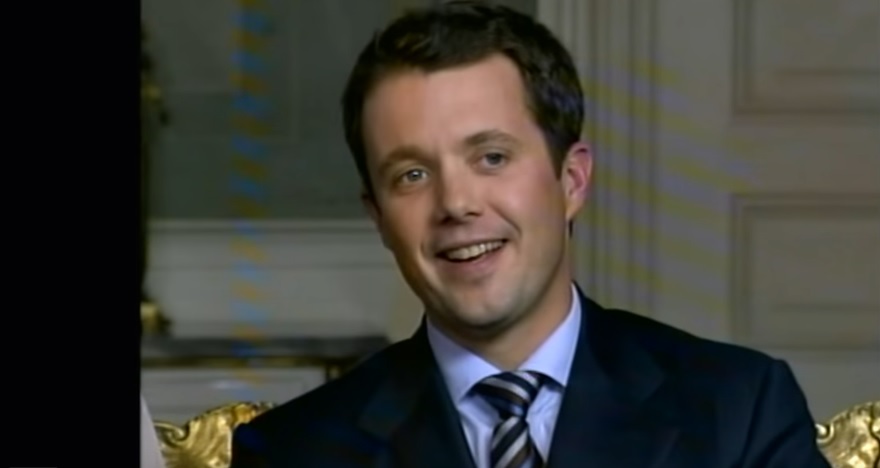
NordenBladet – Crown Prince Frederik* of Denmark has accepted a new patronage. His Royal Highness has agreed to become patron of HCØ2020**, the Danish nationwide celebration of the 200th anniversary of the discovery of electromagnetism, according to the Danish Royal House in a statement on Tuesday (07.01.2020).
The 200th anniversary of the discovery is celebrated this year under the name HCØ2020 with a number of exhibitions, new teaching materials, lectures and debates, and the Crown Prince has agreed to become patron for the entire anniversary year.
Crown Prince Frederik (51) has long been strongly interested in science and technology. Despite this, the Crown Prince does not have any natural science education, only political science. The Crown Prince is expected to attend a number of events related to his new patronage.
The Danish heir to the throne is already a protector of a number of foundations and organisations. Aarhus Student Singers, The Blood Donors in Denmark, Danish-Chinese Business Forum, The Danish Hunters’ Association, Danish Military Sports Association, The Greenlandic Company, The Foreign Policy Society, Danish Railway Museum, Save the Children and the Maritime Safety Council are just some of the groups that have the royal support of Crown Prince Frederik.
The purpose of HCØ2020 is to promote technical and scientific education across all ages. Likewise, the initiative must help increase interest in science and the future of technology. HCØ2020 is highlighted through a wide range of dissemination efforts, which include 12 signature projects covering the three main areas of the initiative: teaching, culture and science.
In 1820, the Danish physicist and chemist Hans Christian Ørsted discovered electromagnetism. It was a natural science event that enabled the development of modern society. Ørsted’s discovery that electric current causes magnetism spurred the Englishman Michael Faraday to try to do the opposite, to convert magnetism into electricity. Eleven years after Ørsted’s discovery, Faraday succeeded in inducing an electric current with the help of magnetism. Hans Christian Ørsted is also known as the first man ever to make aluminium in 1825.
____________________________________
* Frederik, Crown Prince of Denmark, Count of Monpezat, RE, SKmd (Frederik André Henrik Christian; born 26 May 1968) is the heir apparent to the throne of Denmark. Frederik is the elder son of Queen Margrethe II and the late Henrik, Prince Consort.
Frederik was born at Rigshospitalet the Copenhagen University Hospital in Copenhagen, on 26 May 1968, to the then Princess Margrethe, oldest daughter of Frederick IX and heir presumptive to the Danish throne, and Prince Henrik. At the time of his birth, his maternal grandfather was on the throne of Denmark and his matrilineal great-grandfather was on the throne of Sweden.
He was baptized on 24 June 1968, at Holmens Kirke, in Copenhagen. He was christened Frederik after his maternal grandfather, King Frederick IX, continuing the Danish royal tradition of the heir apparent being named either Frederik or Christian. His middle names honour his paternal grandfather, André de Laborde de Monpezat; his father, Prince Henrik; and his maternal great-grandfather, Christian X. Frederik’s godparents include Count Etienne de Laborde de Monpezat (paternal uncle); Queen Anne-Marie of Greece (maternal aunt); Prince Georg of Denmark; Grand Duchess Joséphine-Charlotte of Luxembourg (his maternal grandfather’s first cousin’s daughter; Baron Christian de Watteville-Berckheim and Birgitta Juel Hillingsø.
He became Crown Prince of Denmark when his mother succeeded to the throne as Margrethe II on 14 January 1972.
Frederik attended primary school at Krebs’ Skole during the years 1974–1981, from 1974–1976 as a private pupil at Amalienborg Palace, and from the third form at Krebs’ Skole. In the period 1982–1983, he was a boarder at École des Roches in Normandy, France. In 1986, Frederik graduated from the upper secondary school of Øregaard Gymnasium.
His mother tongue is Danish. In addition he is fluent in French (his father’s language), English, and German.
In 1986 he began a course in Political Science at Aarhus University. This included a year at Harvard University (1992–1993) under the name of Frederik Henriksen, studying political science. He then took up a position for three months with the Danish UN mission in New York in 1994. In 1995, he obtained his MSc degree in Political Science from Aarhus University. He completed the course in the prescribed number of years with an exam result above average, thus becoming the first royal to obtain a master’s degree. His final paper was an analysis on the foreign policy of the Baltic States, which he had visited several times during his studies. The prince was posted as First Secretary to the Danish Embassy in Paris from October 1998 to October 1999.
In the Council of State on 8 October 2003, Queen Margrethe gave her consent to the marriage of Crown Prince Frederik to Mary Elizabeth Donaldson, an Australian marketing consultant whom the prince had met while attending the Sydney Olympics in 2000. Their wedding took place on 14 May 2004 at Copenhagen Cathedral, Copenhagen.
The couple have four children: Christian (born 15 October 2005); Isabella (born 21 April 2007), Vincent (born 8 January 2011), and Josephine (born 8 January 2011).
** About HCØ2020. In 1820, Hans Christian Ørsted discovered electromagnetism when he saw a compass needle move when moving a live wire over it. H.C. Ørsted’s discovery of the connection between electricity and magnetism is one of the world’s largest scientific discoveries. A discovery that has enabled the development of modern society and is to be celebrated.
The celebration of the 200th anniversary of H.C. Ørsted’s discovery of electromagnetism takes place through the nationwide dissemination initiative HCØ2020, which, through a wide range of activities, spread throughout 2020, highlights the importance of electromagnetism, science, technology and curiosity to our society.
H.C. Ørsted’s discovery of electromagnetism was a natural science event in 1820 that enabled the development of modern society. Even today, electromagnetism continues to play a major role in our daily lives, where it is everywhere around us.
In the future, electromagnetism also plays an essential role as researchers continue to work on the basis of H.C. Örsted’s pioneering discovery. Among other things, in the development of better batteries, so we can store green energy until we need it. For example, when the sun is not shining or knowledge is not blowing.
H.C Ørsted’s now 200-year-old discovery is therefore both today and in the future an important part of our daily lives, as well as the work of researchers and entrepreneurs in solving the world’s challenges and thus driving the green transition.
Featured image: Crown Prince Frederik of Denmark (NordenBladet)
NordenBladet – In 2019, the annual cargo volumes of listed Estonian port operator Port of Tallinn (Tallinna Sadam) totaled 19.9 million tons, down 3.3 percent on year, while the number of passengers served increased by 0.2 percent on year to a record 10.64 million passengers.
In the fourth quarter of 2019, 5.6 million tons of cargo and 2.3 million passengers passed through ports operated by Port of Tallinn. Compared with the same period the previous year, cargo volumes increased by 12.3 percent due primarily to liquid bulk. Passenger volumes increased by 1.2 percent, and the number of ship calls increased by 2.8 percent to 1,893 calls, Tallinna Sadam told the Tallinn Stock Exchange (TSE).
In 2019, the Port of Tallinn’s annual cargo volume totaled 19.9 million tons, decreasing by 3.3 percent on year due primarily to a decrease in liquid bulk volumes in the third quarter which, on the other hand, was balanced by growth in dry bulk.
The number of passengers, meanwhile, increased by 0.2 percent on year, reaching a record of 10.64 million passengers. This growth was driven by passenger traffic between Estonia and Finland on the Tallinn-Helsinki and Muuga-Vuosaari routes, bu was also supported by another annual record of 660,000 cruise ship passengers.
According to Port of Tallinn CEO Valdo Kalm, it is positive that the strong growth in liquid bulk in the fourth quarter, which was driven by increased demand for storage and the blending of dark petroleum products due to the International Maritime Organization’s (IMO) requirements for marine fuels entering into effect in the beginning of 2020, helped significantly reduce the drop in annual cargo volumes compared with the resul for the first nine months of the year. At the same time, liquid cargo business remains volatile, and growth in the fourth quarter should not be interpreted as a continuing trend.
The on-year decrease in liquid cargo was also compensated by the growth of dry bulk, due primarily to the export of Estonian grain and the import of crushed stone.
“For the number of passengers, we set a record for the 12th consecutive year, thanks to the recovery of passenger traffic between Estonia and Finland, which was also strongly supported by the addition of servicing passengers with vehicles and the addition of a new ship on the Muuga-Vuosaari route,” Kalm noted. “In the cruise business, we have once again achieved a record, and Tallinn remains one of the most attractive cruise destinations in Europe.”
NordenBladet – Last year, the State Forest Management Centre (RMK) sold altogether 610,000 cubic meters of firewood worth €18.5 million. Compared with 2018, the amount of firewood sold increased 7.9 percent, or by 45,000 cubic meters. The monetary value thereof, however, increased by 19.4 percent, or by €3 million, RMK Timber Marketing Department director Ulvar Kaubi told BNS.
Altogether 62 percent of firewood sold last year was hardwood, with coniferous woods making up the other 38 percent.
RMK sold 17,000 cubic meters of firewood to private persons in 2019, down from 22,000 cubic meters in 2018.