NordenBladet – Nordregio will join Åland’s Statistical Bureau for the celebration of their 25th anniversary.
What does Åland’s journey look like in the future? What does youth think about the opportunities they have? How has the population of Åland developed during the 2000s and where does it stand within the Nordic context?
To celebrate the 25th anniversary of Åland’s Statistical Bureau, Head of GIS department at Nordregio, Julien Grunfelder, will give a presentation, focusing on the future of Åland within the Nordic context. The maps accompanying the talk will portray the trends that population development on the island has experienced throughout the years.
NordenBladet – New participatory EU hub for contributing to shaping future policies and research for rural areas was launched in Bruxelles in October.
One of the most ambitious public participation projects ever funded by the European Commission has just been launched, and it is called the SHERPA project.
The Sustainable Hub to Engage in Rural Policies with Actors (SHERPA project) is a four-year project funded by the European Union’s Horizon 2020 research and innovation programme. The project aims at engaging citizens, stakeholders, scientists, and decision-makers in formulating recommendations with the ambition to redefine European development policies and research agenda for rural areas. The interaction between research, policy and citizens will take place in up to 40 Multi-Actor Platforms (MAPs) placed in 20 Member States and in a MAP at EU level.
The SHERPA rural citizens-science-policy hub will contribute to policy development in three areas:
• providing inputs for the design of future research policies, with a focus on preparation of work programmes under Horizon Europe;
• supporting the implementation of policies relevant to rural areas in the 2021-2027 programming period;
• helping set the direction of rural policy in the next programming period (after 2027).
Nordregio’s role is to develop the framework for the science-society-policy interface in the MAPS by collecting methods for engaging the stakeholders and establishing conditions for processes leading to learning and formulation of recommendations. Nordregio will also organise MAPs in Denmark, Finland (start 2019/2020), Sweden and Estonia (start 2021/22). Nordregio’s senior research Fellows Elin Slätmo and Soren Qvist Eliasen are leading Nordregio’s activities in the project.
SHERPA’s implementation approach will follow four guiding principles: flexible programming of activities to enable timely and responsive contributions to policymaking, impartiality and transparency; recognition of the diversity of EU rural territories and multi-level interactions; and co-construction.
“The project will adopt a new inclusive approach to facilitate the establishment of lasting interfaces between society, science and policy stakeholders dedicated to strengthening the resilience of rural areas.”
— Olivier Chartier, Project Coordinator
At its core, SHERPA is designed to ensure the effective use of knowledge gained from previous investment in research, and empower key actors in the development of public policy in rural areas. The project will set a new standard for shaping a common vision for the future of rural areas and public participation through scoping and stock-taking of past research results, development and assessment of solutions for addressing challenges and opportunities for the next two decades.
During the kick-off meeting, the MAPs of the project expressed the interest to work on a variety of policy issues related to service provision and well-being, climate change, digitisation, sustainability and agriculture. A key outcome from the project will be the development of position papers that will provide policy recommendations on a specific thematic area, on the basis of previous research and the local input of the MAPs.
By uniting 17 partners from all over Europe, SHERPA will build strong capacities in the field – inspiring for future engagement and evidence-based policy-making processes.
What is next?
Early next year, SHERPA will pilot the methodology in a number of selected MAPs in different Member States to develop the first SHERPA position papers. The official website of SHERPA will be launched very soon together with the Social Media channels.
________________________________________________ Nordregio is an international centre for research on regional development established by the Nordic Council of Ministers in 1997.
Organisation
Nordregio has an international research environment with over 40 staff members from around the world. We are a flat organisation and work in project teams of junior and senior researchers along with a number of specialists. Nordregio is involved in a variety of projects running in parallel – usually 50 or more commitments at any given time – and we produce research papers and other policy relevant publications under all our fields of studies.
Board of Directors
The Nordregio Board of Directors is responsible for long-term strategic planning. It consists of one member from each of the five Nordic states (Denmark, Finland, Iceland, Norway and Sweden) plus one observer from each of the three autonomous territories (the Faroe Islands, Greenland and the Åland Islands) as well as a member elected by the staff of Nordregio. The board is appointed by the Nordic Council of Ministers.
Statutes, “Grant letter” and the Nordregio Strategy 2020
Nordregio’s current statutes were passed on 17 December 2014. Article 1 states that Nordregio shall enhance Nordic co-operation on regional development, planning and policy; contribute to sustainable regional development (both urban and rural), in the Nordic countries; and maintain and develop its role as a leading European research centre, facilitating knowledge transfer between the Nordics and the EU. As of 2015, Nordregio receives an annual “Grant letter” from the Nordic Council of Ministers, which defines the expected performance goals and budget. This also reflects Nordregio’s role in the implementation of the new Nordic Co-operation Programme for Regional Development and Planning 2017-2020.
In December 2016, an additional, internal steering document was published: Nordregio 2020 Strategy. This was developed mainly for the staff of Nordregio itself, but also gives an overview of our activities in general. It includes our main research themes, methods and competencies as well as our vision and more concrete objectives towards 2020 and beyond.
Finance
Nordregio’s yearly turnover is about 40 million SEK. The annual funding from the Nordic Council of Ministers (NCM) covers 30-40% of the turnover. The balance comes from contract work for national and regional authorities and competitive bids on national and European research programmes such as Horizon 2020, the ESPON Programme and the INTERREG Programmes.
History
Nordregio was established by the Nordic Council of Ministers on 1 July 1997. However, Nordregio is built on over 40 years of Nordic collaboration as Nordregio took over a range of tasks that had previously been assigned to the three separate Nordic institutions Nordplan (1968), NordREFO (1967) and NOGRAN (1979).
NordenBladet – The Atlas of Population, Society and Economy in the Arctic provides an in-depth overview of the changes that are affecting populations in the circumpolar North.
Continuous environmental, economic and social changes are currently underway in the Arctic regions. Global warming, for example, is challenging traditional livelihoods, accessibility and economic activities. The atlas presents a collection of standardised indicators that illustrate the state of the Arctic regions focusing on demography, society, economy, production, accessibility and infrastructure as well as physical conditions and resources in the Arctic.
As part of Nunataryuk’s research, this working paper examines the environmental challenges related to permafrost by combining geographical data with demographic data in order to describe coastal and inland settlements. Permafrost thaw is a challenge for many Arctic communities, as it has an impact on infrastructure, economy and the health of Arctic populations.
Authors: Leneisja Jungsberg, Eeva Turunen, Tim Heleniak, Shinan Wang, Justine Ramage and Johanna Roto
Publication date: 2019 September 18
More info and download: nordregio.org
________________________________________________ Nordregio is an international centre for research on regional development established by the Nordic Council of Ministers in 1997.
Organisation
Nordregio has an international research environment with over 40 staff members from around the world. We are a flat organisation and work in project teams of junior and senior researchers along with a number of specialists. Nordregio is involved in a variety of projects running in parallel – usually 50 or more commitments at any given time – and we produce research papers and other policy relevant publications under all our fields of studies.
Board of Directors
The Nordregio Board of Directors is responsible for long-term strategic planning. It consists of one member from each of the five Nordic states (Denmark, Finland, Iceland, Norway and Sweden) plus one observer from each of the three autonomous territories (the Faroe Islands, Greenland and the Åland Islands) as well as a member elected by the staff of Nordregio. The board is appointed by the Nordic Council of Ministers.
Statutes, “Grant letter” and the Nordregio Strategy 2020
Nordregio’s current statutes were passed on 17 December 2014. Article 1 states that Nordregio shall enhance Nordic co-operation on regional development, planning and policy; contribute to sustainable regional development (both urban and rural), in the Nordic countries; and maintain and develop its role as a leading European research centre, facilitating knowledge transfer between the Nordics and the EU. As of 2015, Nordregio receives an annual “Grant letter” from the Nordic Council of Ministers, which defines the expected performance goals and budget. This also reflects Nordregio’s role in the implementation of the new Nordic Co-operation Programme for Regional Development and Planning 2017-2020.
In December 2016, an additional, internal steering document was published: Nordregio 2020 Strategy. This was developed mainly for the staff of Nordregio itself, but also gives an overview of our activities in general. It includes our main research themes, methods and competencies as well as our vision and more concrete objectives towards 2020 and beyond.
Finance
Nordregio’s yearly turnover is about 40 million SEK. The annual funding from the Nordic Council of Ministers (NCM) covers 30-40% of the turnover. The balance comes from contract work for national and regional authorities and competitive bids on national and European research programmes such as Horizon 2020, the ESPON Programme and the INTERREG Programmes.
History
Nordregio was established by the Nordic Council of Ministers on 1 July 1997. However, Nordregio is built on over 40 years of Nordic collaboration as Nordregio took over a range of tasks that had previously been assigned to the three separate Nordic institutions Nordplan (1968), NordREFO (1967) and NOGRAN (1979).
NordenBladet – How strong is the urbazination trend in the Nordics in the long haul? Will the rural areas be depopulated by 2040? This is the executive summary of the report The Nordic Population in 2040 – Analysis of past and future demographic trends.
The findings show that the rural areas in the Nordic region face several demographic challenges, but at the same time the rural future does not seem as grim as often predicted. The population and the working age population will continue to grow in the Nordic Region, but the fastest growth will occur in the old-age depency ratio challenging the Nordic welfare model with a growing group of pensioners compared to the working age population. The report is divided into three sections: projections of total urban and rural populations, projections of the age structure of the population, and projections of the working age populations.
If the expected future differs from what is desired, policy interventions can be designed and implemented to attempt to achieve the desired population outcome. This research examines the future size and age composition of the populations in the Nordic region at the national, regional, and municipal levels. The national statistical offices of all the Nordic countries and autonomous areas regularly produce projections of their populations which differ in detail, assumptions, and length of the projection period. To allow comparison across the Nordic regions, a typology of urban and rural regions is used with five different types of regions 1) predominantly urban regions, 2) intermediate regions, close to a city 3) intermediate regions, remote 4) predominantly rural regions, close to a city and 5) predominantly rural regions, remote. This classification is adopted from the OECD and is used throughout the report.
Authors: Nora Sánchez Gassen and Timothy Heleniak
Publication date: 2019 June 18
More info: nordregio.org
________________________________________________ Nordregio is an international centre for research on regional development established by the Nordic Council of Ministers in 1997.
Organisation
Nordregio has an international research environment with over 40 staff members from around the world. We are a flat organisation and work in project teams of junior and senior researchers along with a number of specialists. Nordregio is involved in a variety of projects running in parallel – usually 50 or more commitments at any given time – and we produce research papers and other policy relevant publications under all our fields of studies.
Board of Directors
The Nordregio Board of Directors is responsible for long-term strategic planning. It consists of one member from each of the five Nordic states (Denmark, Finland, Iceland, Norway and Sweden) plus one observer from each of the three autonomous territories (the Faroe Islands, Greenland and the Åland Islands) as well as a member elected by the staff of Nordregio. The board is appointed by the Nordic Council of Ministers.
Statutes, “Grant letter” and the Nordregio Strategy 2020
Nordregio’s current statutes were passed on 17 December 2014. Article 1 states that Nordregio shall enhance Nordic co-operation on regional development, planning and policy; contribute to sustainable regional development (both urban and rural), in the Nordic countries; and maintain and develop its role as a leading European research centre, facilitating knowledge transfer between the Nordics and the EU. As of 2015, Nordregio receives an annual “Grant letter” from the Nordic Council of Ministers, which defines the expected performance goals and budget. This also reflects Nordregio’s role in the implementation of the new Nordic Co-operation Programme for Regional Development and Planning 2017-2020.
In December 2016, an additional, internal steering document was published: Nordregio 2020 Strategy. This was developed mainly for the staff of Nordregio itself, but also gives an overview of our activities in general. It includes our main research themes, methods and competencies as well as our vision and more concrete objectives towards 2020 and beyond.
Finance
Nordregio’s yearly turnover is about 40 million SEK. The annual funding from the Nordic Council of Ministers (NCM) covers 30-40% of the turnover. The balance comes from contract work for national and regional authorities and competitive bids on national and European research programmes such as Horizon 2020, the ESPON Programme and the INTERREG Programmes.
History
Nordregio was established by the Nordic Council of Ministers on 1 July 1997. However, Nordregio is built on over 40 years of Nordic collaboration as Nordregio took over a range of tasks that had previously been assigned to the three separate Nordic institutions Nordplan (1968), NordREFO (1967) and NOGRAN (1979).
NordenBladet — The President of the Riigikogu Henn Põlluaas spoke at the European Conference of Presidents of Parliament at the Parliamentary Assembly of the Council of Europe (PACE) in Strasbourg, focusing on the restoration of Russia’s right to vote in the Assembly.
Põlluaas said that when the PACE restored the voting rights of the Russian delegation in June, it overrode the fundamental principle of the Council of Europe: protection of the universal human rights.
“Russia has committed aggressive acts against Ukraine and refrained from following internationally negotiated guidelines to resolve the conflict,” Põlluaas said. “We need to keep the pressure on the perpetrator and demand the violations of the basic human rights in Eastern Ukraine to cease.”
Põlluaas said that this agreed framework of international law is supposed to provide us with a certain safety net of trust, applied universally by every Member State. “Equality before the law encourages a small state to instinctively trust the principle of the rule of law and to believe in active international cooperation. This trust can be easy to lose,” Põlluaas admonished.
Põlluaas said that Russia’s systematic destabilising and aggressive behaviour affects not only its neighbours but the whole Euro-Atlantic region. “We have to unite our efforts to counter this gravely dangerous development,” Põlluaas reminded his colleagues. “We are under obligation to consolidate our Common European Home. Nobody is going to do it instead of us.”
Põlluaas believes that the PACE decision in June did not do justice to the countries facing aggression by their neighbour, or to efforts to solve frozen conflicts.
The PACE unites the delegations of 47 national parliaments. The President of the Riigikogu is taking part in the European Conference of Presidents of Parliament in Strasbourg today and tomorrow. The main topic of the Conference is the future of the Assembly. Other topics include the UN Sustainability Action Plan, and the role that the national parliaments could play in fighting the ever intensifying harassment and hate speech directed at female politicians and parliamentarians.
The President of the Riigikogu has also scheduled in a meeting with the Presidents of the Nordic and Baltic parliaments (NB8), as well as a bilateral meeting with the President of the Ukrainian Parliament.
NordenBladet — Today, the Riigikogu passed an Act that allows holders of UK driving licences to drive on Estonian roads for one year after Brexit.
The Act on Amendments to the Traffic Act relating to the Withdrawal of the United Kingdom from the European Union (61 SE), initiated by the Government, allows UK citizens who are permanently residing in Estonia since before the Brexit to use their UK driving licence for 12 months starting from a no-deal withdrawal or the end of the transition period. In addition, after Brexit goes through, the parking cards issued by a competent UK authority for vehicles servicing people with a mobility disability or blind people will remain valid in Estonia.
After one year at most, the UK driver’s licence must be exchanged for an Estonian one to keep the right to drive.
The potential target group of the Act are the 1,397 citizens of the United Kingdom who hold a valid ID-card (data of the Police and Border Guard Board as of 1 August).
The Act will come into force on the day following the UK’s withdrawal from the European Union.
82 members of the Riigikogu voted in favour of the Act.
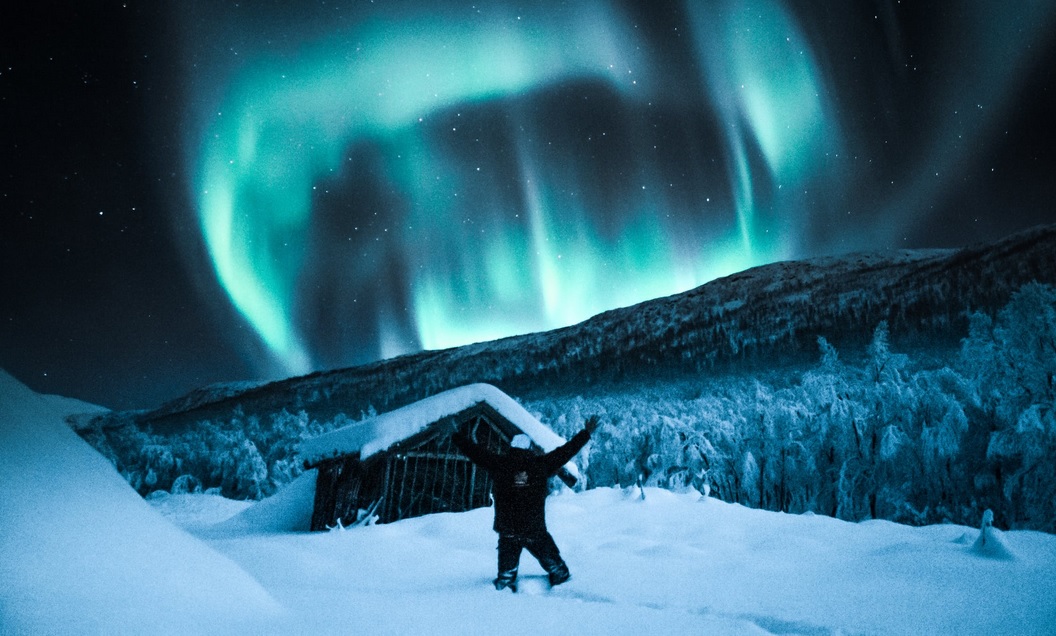
NordenBladet – North Norway’s polar night* is about to begin. In late November, the sun will set in Tromsø and won’t be seen again until January. Other parts of North Norway above the Arctic Circle will see similar months of the annual polar night. In Longyearbyen on Svalbard, the polar night lasts from the last week of October until mid-February.
The people of Northern Norway have lived with the dark months for the past 10,000 years or so. They go to work and to school as usual, and the range of leisure activities available in the evenings is broad and varied. Cafés, restaurants and nightspots fill up night after night with talkative, good-humoured people, and many entertaining festivals are held during this period. Outdoor activities are far from impossible. There are illuminated ski runs in even small resorts in Northern Norway, and some operators organise dog-sledding and scooter trips where participants wear head-lights.
Here are all the facts you need to know about the ‘dark time’ above the Arctic Circle in Norway:
The polar night — defined as the period in which the sun is below the horizon 24 hours a day — occurs both north of the Arctic Circle and south of the Antarctic Circle (at opposite times of the year).
In the northern hemisphere, the polar night occurs due to the northern part of the earth tilts away from the sun during this time.
The Latin name for the Northern Lights, Aurora Borealis, means ‘red sky at morning in the north’.
The Northern Lights occur as a result of particles from the sun hitting the earth’s atmosphere, or changes in the magnetosphere caused by solar wind.
Norwegian folklore says you shouldn’t wave at the Northern Lights. Doing so will cause the lights to come and take you away, so the myth goes.
People who live north of the Arctic Circle often find it harder to sleep during the polar night. This is because melatonin, a hormone which helps regulate circadian rhythms, is stimulated by light.
Darker days mean the body finds it harder to regulate its melatonin levels, which can wreak havoc on sleeping patterns.
Although the olar night is associated with pitch black, it’s not completely dark by definition. In fact, only small areas close to the poles experience complete darkness.
Since ‘night’ is considered to be when the centre of the Sun is below a free horizon, some level of light is often present, particularly when skies are cloudless.
Although many find the long absence of the sun a daunting prospect, others embrace it and even prefer it to its summer opposite, the polar day. Incidentally, the Norwegian term for polar day is fargetid (colour time).
Common questions with answers:
What is the polar night? The polar night is the term for when night lasts for more than 24 hours inside the polar circles. In this case, ‘night’ is defined as when the centre of the Sun is below the horizon. Not all latitudes are situated north enough to experience sustained total darkness; instead their brightest moments are levels of polar twilight that occur in the early afternoon before evening approaches and the darkness intensifies.
What causes the polar night? The polar night is caused by the rotation of the earth in relation to the position of the sun. The earth rotates on a titled axis of around 23.5 degrees. As a result of this axial tilt, there are periods of the year where the Arctic Circle and the Antarctic Circle are either completely exposed or obscured from the sun. When they are obscured it causes the prolonged darkness known as the polar night, while when they are exposed it creates a prolonged period of daylight known as the midnight sun.
How long does the polar night last? The full length of the polar night depends on your latitude. The average duration for most destinations is around 30 days, but more northerly locations can enjoy as almost two months of darkness. If you were situated at one of the poles this would last for around 11 weeks.
Where can I experience the polar night? In Sweden’s most northern city of Kiruna, the polar night lasts for approximately 28 twenty-four-hour periods. In the Norwegian city of Tromsø, the dark hours can last for up to a month a half. If you visit Hammerfest, both the northernmost city in the world and one of the two oldest towns in Norway, the polar night lasts for almost two months.
Can you visit Northern Norway in the dark months?
Absolutely! To visit Northern Norway during the dark months is to meet us Northerners at home. It is a great time for cultural events, festivals, good food, shopping and outdoor activities. Bring your friend or family for a nice long weekend in the far north – it is the perfect setting for spending quality time together by the light of flickering candles. The spawning cod swim in close to the shore, and your taste buds rejoice. Snow scooter trips, dog-sledding and sleigh rides are organised in many places in Northern Norway and on Svalbard, and this is a great time of year to see the Northern Lights.
Here is a list of places that experience dark months. The dates indicate when the sun is below the horizon. In practice, however, the periods are often longer because mountains block the view to the south.
Svolvær: 7 December–5 January
Harstad: 2 December–10 January
Bardufoss: 30 November–12 January
Andenes: 29 November–13 January
Tromsø: 27 November–15 January
Alta: 25 November–17 January
Vardø: 23 November–19 January
Hammerfest: 22 November–20 January
Berlevåg: 21 November–21 January
North Cape: 20 November–22 January
Longyearbyen: 26 October–16 February
The North Pole: 25 September–18 March
___________________________
* The polar night occurs in the northernmost and southernmost regions of the Earth when the night lasts for more than 24 hours. This occurs only inside the polar circles. The opposite phenomenon, the polar day, or midnight sun, occurs when the Sun stays above the horizon for more than 24 hours.
The polar shortest day is not totally dark everywhere inside the polar circle, but only in places within about 5.5° of the poles, and only when the moon is well below the horizon. Regions located at the inner border of the polar circles experience polar twilight instead of polar night. In fact, polar regions typically get more twilight throughout the year than equatorial regions.
For regions inside the polar circles, the maximum lengths of the time that the Sun is completely below the horizon varies from zero a few degrees beyond the Arctic Circle and Antarctic Circle to 179 days at the Poles. However, not all this time is classified as polar night since sunlight may be visible because of refraction. The time when any part of the Sun is above the horizon at the poles is 186 days. The preceding numbers are average numbers: the ellipticity of the Earth’s orbit makes the South Pole receive a week more of Sun-below-horizon than the North Pole.
NordenBladet – A new tax on plastic carrier bags could see your Swedish grocery bill increase sharply. In order to get to grips with increasing plastic waste, the government has proposed a new tax which could double the price of standard single-use plastic carrier bags offered at supermarket checkouts.
The bags, which usually cost between two and three kronor in the store, will get slapped with a three-kronor tax according to the proposal – which could bring the customer’s cost to around five kronor ($0.52).
Lightweight transparent plastic bags, which are handed out for free in grocery stores and used to pack fruit and vegetables, for example, will get a 0.30 kronor – or 30 öre – tax.
The tax would be paid by those who import or produce the bags. But according to the proposal, the cost is expected to be passed on to consumers to the tune of 3.1 billion kronor a year, or 310 kronor per person.
However, if the target for reduced use of plastic bags is met, the cost for the individual consumer would instead fall to 175 kronor a year, according to the government proposal, outlined in Swedish here.
Multiple-use bags usually have a greater impact on the environment at the time of production than single-use bags, with cotton bags needing to be reused 130-400 times to compensate, according to the agency. But the proposal still finds that reduced use of plastic bags will be good for the environment and lead to less littering.
Swedish plastic carrier bags are fairly sturdy and are often used as bin bags in households after they’ve served their time, whenever they are not reused for a grocery run or for wrapping a lunch box to take to work.
But Swedes still use 770 million plastic bags measuring 15-50 micrometres in thickness per year – the standard carrier bags you get at the checkout counter in supermarkets or alcohol chain Systembolaget – according to a report by the Swedish Environmental Protection Agency in 2016.
The proposal is part of Sweden’s cross-bloc budget proposal, worked out by the ruling Social Democrat-Green coalition in collaboration with the Centre and Liberal parties. It has been referred to Sweden’s Council on Legislation for consultation. If it goes ahead it is expected to come into force on May 1st, 2020.
NordenBladet – The number of passengers taking domestic flights in Sweden has fallen by eight percent so far this year, but airlines hope they can reverse the trend by working on sustainability. There are several possible reasons behind the reduced number of flyers, including flight tax, rising fuel prices, and increased airport fees.
The ongoing climate debate is also thought to have encouraged some people in Sweden to ditch domestic flights. In September this year, 1,125,000 people took a domestic flight, which was a reduction of five percent compared with the same month last year, new figures from Swedish airport operator Swedavia show. Over 2019 as a whole, domestic flight traffic has fallen by eight percent at Swedavia’s airports.
The same trend has also been observed in the other Scandinavian countries. In Denmark, domestic flights have fallen by seven percent year-on-year and the number of passengers is at a 14-year low according to industry publication Check-in.dk.
But airline SAS bucked the trend in September, seeing an increase in domestic journeys. “During this year we have seen something of a slowdown in demand, but in September there was an increase in comparison with last year. It’s hard to say what this is due to, but we work a lot with sustainability and the chance to buy biofuel, which might affect travellers’ choice of flight,” said SAS Sweden head of press Freja Annamatz.
Airline BRA said it had adapted to consumer desires by regularly reviewing the routes it offers to see which have most passengers and are most profitable. For example, the Jönköping-Stockholm route was recently closed down. At Stockholm’s Bromma airport, where BRA is the only airline offering domestic routes, the total number of passengers fell by two percent in 2018.
BRA Head of communication Jim Hofverberg said there were several reasons for the decline in interest.
“To a certain extent, it’s due tot somewhat more expensive ticket prices, pushed up by increased costs for airlines – more expensive fuel costs, the weak Swedish krona and the government’s new flight tax,” he explained.
The Legal Affairs Committee decided today to initiate a Bill that would simplify the options of foreign investors to invest into Estonian start-ups, and thus improve the attractiveness of the Estonian business environment.
The Chairman of the Legal Affairs Committee Jaanus Karilaid said that the amendment should help to avoid situations where foreign investors decide not to invest into Estonia because transactions with a private limited company are simply too complicated and costly. “Compared to our neighbours, we have too much red tape. A busy foreign investor might not find the time to come and sign a document at a notary’s office in Estonia. This is why we are legislating for the option to do it from a distance if all the partners agree,” Karilaid explained.
Member of the Committee Kaja Kallas said that the cumbersome nature of the current system is to blame for many transactions going to our neighbouring countries instead. “Rigid formal restrictions have set massive obstacles on the path of fledgling companies, and this money is lost for Estonia. The amendments will increase the attractiveness and competitiveness of Estonian limited companies as a form of enterprise in the European Union,” Kallas said.
The amendment would enable the shareholders of private limited companies to opt for unattested written forms that did not require notarial authentication to conclude certain disposal transactions. These amendments were already planned with the review of the company law prepared by the Ministry of Justice, but as these are seen more urgent, the goal is to enforce these much earlier. The Bill is a response to the request of the Estonian start-up community to resolve the situation where Estonia loses millions of euros worth of investments because these are never made here in the first place, or are withdrawn from here.