NordenBladet – At the opening sitting of the new Riigikogu, Henn Põlluaas was elected the President of the Riigikogu, and Helir-Valdor Seeder and Siim Kallas were elected the Vice-Presidents.
The President of the Republic Kersti Kaljulaid opened the first sitting and also made a speech.
Kaljulaid presented her recommendations to the new Riigikogu. “Let us keep what we have and speak honestly about what to do better from now on by building, not by tearing down. Let us recognise our success as an e-state. We are proud of our role in the European Union and NATO, not merely as a member but as an active and dutiful contributor. Let us recognise and thank all those Estonian politicians who have led us so far. But let us also be honest about how to improve the functioning of society,” the President said.
“Today, the 14th composition of the Riigikogu commences work. Everyone who is here is here as a result of democratic processes. Estonia’s democracy works. Still, we should ask why, a month after the elections, a large portion of the people feel as if something has been broken in our society. Certain agreed limits no longer seem applicable. It is not a matter of world views but often of elementary politeness and respect. Of respect towards each other and the people,” Kaljulaid noted.
Then the members of the Riigikogu took their oath of office. The eldest member of the Riigikogu Enn Eesmaa read aloud the text of the oath.
After the members of the Riigikogu began to perform their duties, the elections of the Board of the Riigikogu were held, which were organised by Meelis Eerik, Chairman of the National Electoral Committee.
Member of the Riigikogu Martin Helme nominated Henn Põlluaas as a candidate for the President of the Riigikogu, and member of the Riigikogu Jevgeni Ossinovski nominated Sven Mikser.
100 members of the Riigikogu took part in the secret ballot. 55 members of the Riigikogu voted in favour of Henn Põlluaas, who was elected the President of the Riigikogu, and 45 members of the Riigikogu voted in favour of Sven Mikser.
Member of the Riigikogu Aivar Kokk nominated Helir-Valdor Seeder as a candidate for a Vice-President, and Member of the Riigikogu Jürgen Ligi nominated Siim Kallas.
100 members of the Riigikogu took part in the secret ballot. 55 members of the Riigikogu voted in favour of Helir-Valdor Seeder, and 44 members of the Riigikogu voted in favour of Siim Kallas. One ballot paper was invalid. Thus, Helir-Valdor Seeder was elected the First Vice-President of the Riigikogu and Siim Kallas was elected the Second Vice-President.
After the election of the Board of the Riigikogu, Prime Minister Jüri Ratas announced the resignation of the Government in accordance with the Constitution.
At the festive opening sitting of the new Riigikogu, Ellerhein Girls’ Choir conducted by Ingrid Kõrvits performed.
NordenBladet – While long ago every corner and every village had its own healer who treated people’s wounds and gout with ointments, oils and herbal elixirs and who skillfully prepared herbal tea, then today people know less and less of this craft. “Hamburgers are being eaten and a handful of medicine administered on top of that” – I’d hereby quote the hostess of Karepa Herbal Garden, Katrin Luke, whose course on preparing herbal ointments I recently completed.
My grandma from the father’s line was an expert herbalist and great nature lover – against every ailment there was cure to be found in the nature. From very early on grandma took us kids along into the forests and to the meadows and introduced to us various plants. And it wasn’t rare when friends from school came to visit and she offered us nettle soup or herbal pie and I used to be ashamed of this from head to toe. Now however I long for those days and I feel that there would be so much I still wished to ask her, but sadly it is not possible anymore.
I live in the countryside near the town and for 5-6 years I have been studying herbs with close attention as well as growing and collecting them from my garden, from the forests and from the meadows. Earlier on I have repeatedly posted blogs about gathering herbs, but the golden rule is that you should only gather the plants that you know 100%, and only from the unpolluted nature and with a big heart – never rip the plants out carelessly nor exhaust the plant completely from the selected spot. When I am about to gather herbs I ask permission from the Earth, I talk to plants and afterwards I thank the Earth for its gifts. There is nothing more pleasant than having a cup of herbal tea from plants that you have gathered yourself, or retrieving from the freezer frozen organic food stored during the summer. A great acknowledgement for me is also when people come to visit and ask for a cup of herbal mix tea. There is cure in herbal tea against a hundred ailments – mostly these being depression, common cold, sleep problems, liver problems, joint problems, yet I also have a recipe for unlucky love and against trouble with sexual function. People sometimes ask whether it actually works? And they will be convinced that it does!
Earlier I have also prepared healing tinctures and healing oils and I also use herbs and tinctures in Elisheva & Shoshana (E&S) soaps and bathing salts, yet the preparation of ointments is something I will be doing anew. I am really excited and there are so many ideas about healing recipes already ripening in my head! Preparation of salves is actually uncomplicated in itself, yet one must have a solid base in the knowledge of herbs (naturally one must not mistake the poisonous plants for medical herbs based on similar looks). Also, you must be patient – you must collect the herbs beforehand and the preparation/boiling of salves requires precision and time.
For fans of nature and herbs the School of Traditional Wisdom and Folk Healing created an interesting course named “Preparation of Healing Ointments“, a course which I completed this Sunday. The course was carried out by Katrin Luke who has studied herbal medicine (phytotherapy) in Tallinn School of Alternate Medicine and who manages Karepa Garden of Medical Herbs. It was a great course!
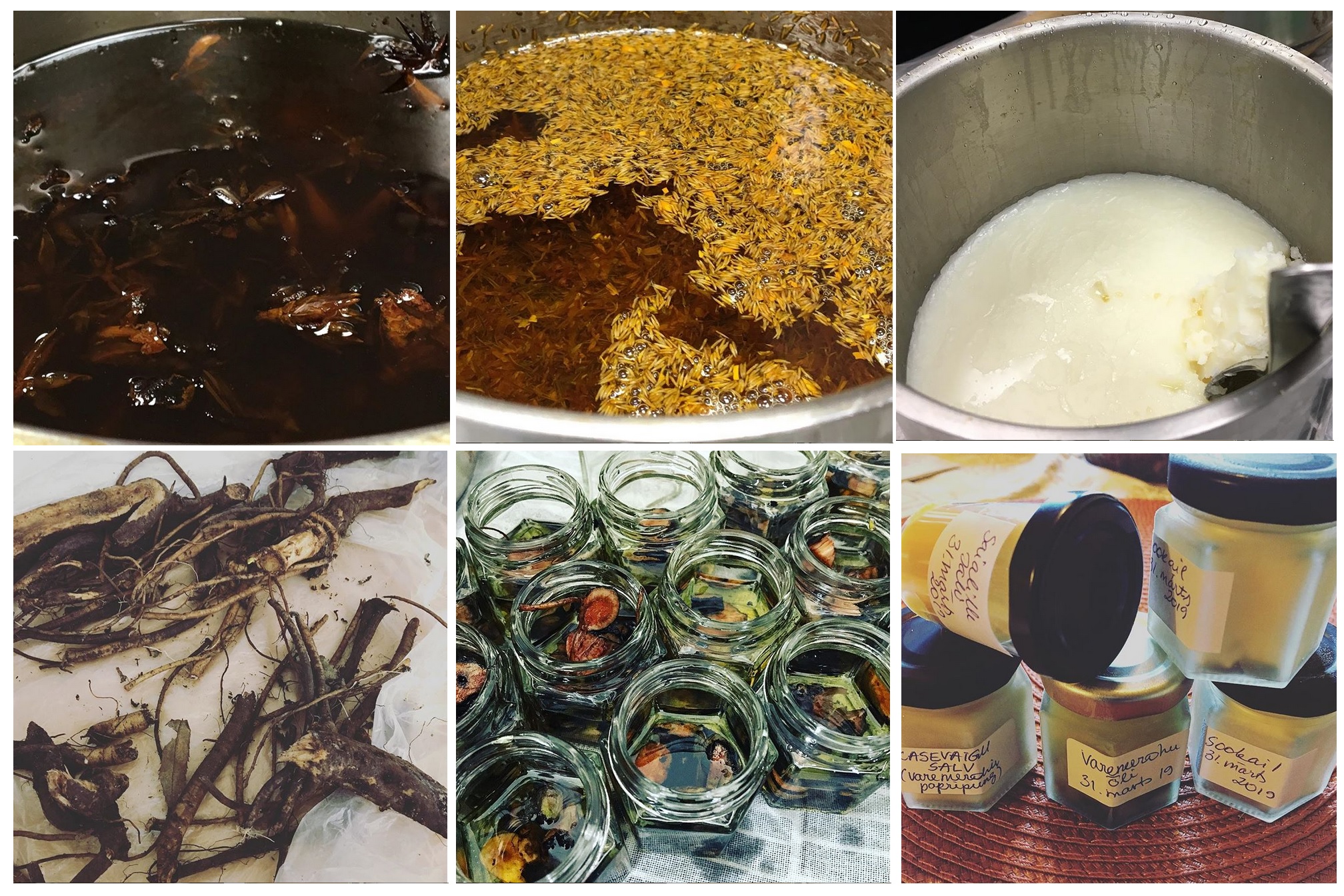
During the course four great products were prepared: Natural spruce resin ointment, Marsh Labrador (Rhododendron tomentosum) salve, Calendula ointment and Symphytum root (Symphytum officinale) oil. During tea breaks the participants were offered barley bread (Karask – barley bread is traditional Estonian food) with Ramsons (Allium ursinum L.) herbal butter, Filipendula syrup, Jerusalem artichoke chips, rose jam and other pleasant things.
I guess that from early on children should be taught phytotherapy and herbs. As for myself, I set the goal to introduce to my own children all the plants one by one with the opportunities of use.
On Thursday, 4 April at 11 a.m., the 14th Riigikogu (Parliament of Estonia) will hold its opening sitting and elect the Board.
President of the Republic of Estonia Kersti Kaljulaid will deliver the opening speech. Members of the Riigikogu sign the oath of office, which will be read out by the oldest member of the Parliament Enn Eesmaa.
The Riigikogu elects the President of the Riigikogu and two Vice Presidents from among its members.
Pursuant to the Constitution of Estonia, after the election of the Board of the Riigikogu, Prime Minister Jüri Ratas announces the resignation of the Government of the Republic.
Ellerhein Girls’ Choir, conducted by Ingrid Kõrvits, will perform at the festive opening sitting of the Riigikogu.
Dear members of the press,
You are kindly invited to attend the opening sitting of the Riigikogu and the press conference of the new Board, which will be held 15 minutes after the end of the sitting in Room L240 (next to the White Hall).
Journalists wishing to cover the opening sitting and attend the press conference are asked to register by 12 o’clock on 3 April at the latest on the web page of the Riigikogu.
Please note that the permanent accreditations of the Riigikogu are not valid on the day of the opening sitting. Unregistered representatives of media publications are not allowed entrance to the Riigikogu.
NordenBladet —Finland’s broad-based working group on biodiversity has approved the sixth national report on the conservation of biodiversity in Finland. According to the report, Finland has engaged in rigorous, well-coordinated work to halt the decline in biodiversity, but the changes in practices throughout society have not been sufficient. As a result, we will not reach our target of halting biodiversity loss in Finland by 2020.
The sixth National Report on Biodiversity in Finland provides a comprehensive description of nature conservation and the sustainable use of natural resources in the country. The report assesses the implementation of the 105 measures detailed in Finland’s Biodiversity Action Plan. According to the assessment, progress could be seen in all areas of the action plan, but the work still needs to be intensified.
“Along with climate change, the dwindling of biodiversity is one of the most important environmental challenges we face. With this in mind, Finland and other countries around the world have committed to halting biodiversity loss by 2020. Unfortunately, it now appears that we will not achieve this target. The National Report on Biodiversity in Finland and the new assessments of threatened species and habitats in Finland provide a strong knowledge base for our activities moving forward. A long-term road map for conserving biodiversity is now very much needed,” says Minister of the Environment, Energy and Housing Kimmo Tiilikainen.
When it comes to achieving the twenty global Aichi Biodiversity Targets, the report states that Finland has implemented the administrative measures required to achieve them, but that changes in practices have so far been insufficient. Finland’s National Biodiversity Strategy and Action Plan, entitled Saving Nature for People, has been an important tool for highlighting the conservation of biodiversity at all levels of Finnish society.
The Convention on Biological Diversity is one of the Rio conventions
The Convention on Biological Diversity is one of the three conventions decided on at the Earth Summit held in Rio de Janeiro in 1992. The Convention on Biological Diversity is the first global convention that aims to conserve the diversity of life on earth at all levels, including species’ genetic variation, populations and the diversity of their habitats. Finland ratified the convention in July 1994.
National biodiversity strategies and action plans play an integral role in implementing the convention. The convention requires its parties to draw up national biodiversity strategies and action plans that set targets and measures for its implementation. The objective is to integrate the conservation and sustainable use of biodiversity into all sectors and functions of society.
Finland’s national report was submitted to the Secretariat of the Convention on Biological Diversity on the 21st of March and will be part of the broader international Global Biodiversity Outlook.
Inquiries:
Marina von Weissenberg, Environment Counsellor, Ministry of the Environment, firstname.lastname @ym.fi, tel. +358 295 250 321
Ari-Pekka Auvinen, Researcher, Finnish Environment Institute, firstname.lastname@ymparisto.fi, tel. +358 50 4113 403
Finland’s broad-based working group on biodiversity has approved the sixth national report on the conservation of biodiversity in Finland. According to the report, Finland has engaged in rigorous, well-coordinated work to halt the decline in biodiversity, but the changes in practices throughout society have not been sufficient. As a result, we will not reach our target of halting biodiversity loss in Finland by 2020.
Members of the Estonian Delegation to the OSCE Parliamentary Assembly are in Ukraine to observe the presidential elections held on Sunday.
Head of the Estonian delegation Mart Nutt said that the situation in Ukraine was unpredictable and most probably the President would not be elected in the first round of the elections. In that case, a second round will be held on 21 April. Three candidates, Volodymyr Zelensky, who is the leading candidate, incumbent president Petro Poroshenko and former prime minister Yulia Tymoshenko, have a real chance of progressing to the second round of voting.
Nutt added that the President of Ukraine was elected directly, and as Ukraine was a semi-presidential republic, its president had relatively extensive powers. “Election of the president may make Ukrainian-Russian relations tenser. The relations between Estonia and Ukraine are good, and the presidential elections probably will not have any impact on them,” Nutt said.
The presidential elections in Ukraine are also observed by members of the Estonian Delegation to the OSCE Parliamentary Assembly Jaanus Marrandi and Mati Raidma. The members of the Estonian delegation will be staying in the capital of Ukraine Kiev and its surroundings.
Deploying of election observation missions has been an important part of OSCE’s activities since 1993. The missions monitor whether the elections are conducted legitimately and according to democratic standards. Nearly 110 observers participate in the OSCE mission in Ukraine.
NordenBladet – How often you find yourself forgetting things? Whether it is the date of a friend`s birthday, the name of someone from the past, or a word you want to use. This might have felt troublesome and uncooperative. But, you can get relax now as according to recent studies, forgetfulness is a sign of higher intelligence. Some people`s brain is more capable at remembering, others` is capable in other sectors, whether it is music, mathematics, or other. These people have a great memory* as nature has provided them with an efficient brain.
But, as humans it isn`t always possible to memorize every tiny detail, apart from that it is also difficult to remember things you learned in school, particularly for a long time period.
You might wonder why such things happen and why minor brain lapses occur in the first place, but this is completely normal as researchers Paul Frankland and Blake Richards from the University of Toronto have discovered that old memories in the brain are “overwritten” by new memories. It is even more difficult for us to remember the old impressions, or forget them entirely.
According to the research, just because a person has a better memory, it doesn’t mean that the person is highly intelligent. In fact, the study discovered that the opposite appears to be correct. There are people who memorize all details in their heads, which is useful, but it is even more useful and healthier to remember a larger scale of everything and forget tiny facts.
“It’s important that the brain forgets irrelevant details and instead focuses on the things that will help you make decisions in the real world,” Richards explained in an interview with CNN.
There is a mechanism is the brain called hippocampus that stores memories in our minds. But, it will delete the less important memories in our heads in order to focus on what really is important. This mechanism helps us to make better and wiser decisions.
When the brain is overwhelmed with unimportant memories or too many of them, it will lead to mind conflicts and prevent us from making good decisions. For instance, a brain with too many memories can be indecisive as it accounts for too many variables.
“We know that sport increases the number of neurons in the hippocampus,” said Richards. “It’s these very details from your life that are not important, and maybe keep you from making good decisions.”
It is far more acceptable sometimes to forget small details as you can now easily look up at any fact you need at any time.
But, do you find yourself forgetting large segments of important information? If yes, there might be a more serious issue and it is critical to get help from a medical practitioner. Otherwise, it is absolutely fine to forget minor details. Therefore, there is no need to feel stupid when you cannot remember because it means that your mind is working properly!
_______________________________
* Memory is the faculty of the brain by which information is encoded, stored, and retrieved when needed.
Memory is vital to experiences, it is the retention of information over time for the purpose of influencing future action. If we could not remember past events, we could not learn or develop language, relationships, or personal identity.
Often memory is understood as an informational processing system with explicit and implicit functioning that is made up of a sensory processor, short-term (or working) memory, and long-term memory. This can be related to the neuron. The sensory processor allows information from the outside world to be sensed in the form of chemical and physical stimuli and attended to various levels of focus and intent. Working memory serves as an encoding and retrieval processor. Information in the form of stimuli is encoded in accordance with explicit or implicit functions by the working memory processor. The working memory also retrieves information from previously stored material. Finally, the function of long-term memory is to store data through various categorical models or systems.
Explicit and implicit functions of memory are also known as declarative and non-declarative systems. These systems involve the purposeful intention of memory retrieval and storage, or lack thereof.
Declarative, or explicit, memory is the conscious storage and recollection of data. Under declarative memory resides semantic and episodic memory. Semantic memory refers to memory that is encoded with specific meaning, while episodic memory refers to information that is encoded along a spatial and temporal plane. Declarative memory is usually the primary process thought of when referencing memory.
Non-declarative, or implicit, memory is the unconscious storage and recollection of information. An example of a non-declarative process would be the unconscious learning or retrieval of information by way of procedural memory, or a priming phenomenon. Priming is the process of subliminally arousing specific responses from memory and shows that not all memory is consciously activated, whereas procedural memory is the slow and gradual learning of skills that often occurs without conscious attention to learning.
Memory is not a perfect processor, and is affected by many factors. The ways by which information is encoded, stored, and retrieved can all be corrupted. The amount of attention given new stimuli can diminish the amount of information that becomes encoded for storage. Also, the storage process can become corrupted by physical damage to areas of the brain that are associated with memory storage, such as the hippocampus. Finally, the retrieval of information from long-term memory can be disrupted because of decay within long-term memory. Normal functioning, decay over time, and brain damage all affect the accuracy and capacity of the memory.
Memory loss is usually described as forgetfulness or amnesia.
NordenBladet – Did you know that our face tells a lot about our internal health? Face mapping*, an ancient technique in Chinese medicine, gives an insight into internal health and what can be done or changed in our daily lives in order to improve it.
What your skin defects say about your health?
The face and skin tell a lot about physical and emotional health. Clear skin is indicative of a healthy human, and any skin defect gives clues to the medical problems that are going on within the body.
Dark Circles and Bags Under the Eyes
Puffiness under the eyes is a common sign of aging, and it is typically harmless. Namely, the tissues and muscles under the eyes weaken with age, forming mild swelling and causing the lids to appear fluffy.
Other issues that might contribute to dark circles include water retention, allergies, dermatitis and lack of sleep. It might be indicative of kidney-related problems, as this part of the eye is associated with the kidneys, according to Chinese medicine.
Forehead Acne
The forehead is linked to digestion. Specifically, the upper forehead is linked to the bladder while the lower forehead is linked to the intestines. Acne on the forehead or large amount of lines on the forehead might indicate that your digestive system is having difficulties processing the food that you consume.
Thinning of Eyebrows and Eyelashes
Eyebrows are related to the adrenal glands, so any lines stemming from the start of the eyebrows are associated with adrenal stress. In addition, thinning of the eyebrows and eyelash is indicative of stress linked to the adrenal glands.
Red Nose
There are many blood vessels on the nose and their expansion often leads to discoloration. The expansion can be caused by respiratory stress, sinus problems, and allergies. According to Chinese medicine, the nose is associated to the lungs, so any sinus problems often take their toll on the lungs.
Butterfly Rash on the Cheeks
A small rash on the face is typically a result of bad selection of cosmetic products, excessive consumption of sweets, or climate change. Once you eliminate the provoking product, the rash disappears. However, if the rash persists for an extended period of time and spreads over the cheeks, it may be indicative of lupus. Other symptoms of lupus include fatigue, joint pain, chest pain, and fever.
Cracked Lips
While cracked lips which are result of exposure to sun are normal, cracking and dry lips are also associated with gastric/ stomach stress, according to Chinese medicine.
Acne Breakout on the Chin
The chin is linked with the reproductive organs, so a breakout on the chin if often a result of menstrual cycle. Therefore, there is no need to freak out, ladies!
Excess Hair on the Face
Excess hair is hereditary for most people. However, for some people it is the result of a condition known as hirsutism. The chin is linked with the reproductive organs in ancient Chinese medicine, which means that excess hair on the face could be indicative of a hormone imbalance or a hormonal change in life, such as pregnancy, post-childbirth, or menopause.
____________________________________
* Face mapping or reading, traditionally stems from ancient Chinese and Ayurvedic medicine.
Back in the day, it was used as a diagnostic tool for prominent leaders and scholars. They believed that the face represented the fortune, health and energy of a person and that by closely examining the condition of the skin and facial shape, like a sleuth you could suss out a person’s character including their physical, mental and emotional state. You could also have the necessary tools and requirements to change your fate and direction.
Face mapping and reading is a lot deeper than just the epidermis and is way more involved than just being concerned about aging.
The face is divided into three main zones – upper, middle and lower. Any malfunctions within the organs and the systems – immune, excretory, endocrine, digestive, circulatory, nervous and respiratory – will show up on the face in the form of breakouts, redness, dryness or irritation.
It’s believed that if the energy of a person was optimal, the complexion would be clear and in good condition. Any malfunctioning or illness would be reflected by a change in colour, texture and appearance.
A brief overview of how to read your face and what you can do:
Forehead – Bladder and Intestines The upper part of the forehead reflects the bladder, and the lower part, the intestines and digestion. Issues in this area could relate to constipation, irritable bowel syndrome and urinary tract infections.
Checklist:
Change sleep cycle, this is ideal for your liver. Ideally go to bed regularly before 10pm and wake up early around 6am
Drink plenty of water to flush out toxins
Eliminate alcohol or consume less
Eliminate sugar and carbonated beverages
Eat more raw food and take prebiotics and probiotics – think kimchi, sauerkraut
Digestive enzymes may be required with meals
Drink kombucha and kefir
Chew food well to improve digestion
Practice 30 minutes of light exercise every day – outdoors is particularly beneficial. Yin Yoga is ideal.
Practice relaxation or meditation techniques for 20 minutes each day
Keep a daily food diary to see if break outs relate to breakouts
Make sure hair products are not irritating the hairline
Ears and Temples – Kidneys Dehydration, poor lymphatic circulation. When the kidneys are involved, it indicates a deeper level of aging and stress. Nourish the kidneys with proper hydration.
Checklist:
Drink plenty of water – add a squeeze of lime or lemon
Avoid smoking and alcohol
Eliminate sweetened and caffeinated beverages
Make the salt switch from processed table salt to sea salt
Cooling foods like cucumbers and melon are ideal
Eliminate processed food, fast food and junk food
Practice better skin hygiene – cleanse regularly especially during summer and when perspiring.
Between the Brows – Liver and stomach Too much boozing, fatty liver, diseases like hepatitis, jaundice, gallbladder problems and dehydration could show up here. Acne in this area can also be the result of eating too late at night, especially heavy, fatty foods. Flaking and dry skin are linked to dehydration and overworked kidneys. The liver is working too hard to remove toxins from consumption and pollution.
Checklist:
Exercise, but avoid overly strenuous exercise that can be heating
Yoga is ideal and brisk walking
Get more sleep 7-8 hours
Avoid alcohol and smoking
Eat lighter foods and cut back on dairy and red meat
Avoid late night snacks
Get plenty of fresh air
Nose & Upper Cheek – Heart and Cardiovascular system Acne and oiliness can be connected to circulation, blood pressure and cholesterol. Skin conditions like rosacea tend to show up in this zone. Indoor and outdoor air pollution, bad circulation, and high blood pressure can all play havoc with this area of the face. Maintain healthy cholesterol levels and blood pressure.
Checklist:
Increase cayenne, garlic, and reishi mushroom
Increase green tea and chlorella
Eat less pungent foods
Eat less meat and salt
Eat temperate foods that are not too hot or cold
Get more exercise and fresh air every single day
Massage the area around your nose to improve circulation
Check vitamin B levels and maybe take a practitioner recommended supplement.
Right Cheek – Lungs and respiratory system Relate to issues with sinuses and allergies. Pollution, smoking, and asthma will damage this part of the skin. Get plenty of exercise, stay away from pollution, and stop smoking.
Checklist:
The lung meridian is strongest at 7-9 AM so this is the ideal time for cardio exercise
Drink lots of green vegetable juices including dark leafy greens kale, cucumber, celery
Drink lots of water with lemon
Avoid fast food and junk food and hydrogenated fats
Avoid sugar, mango, taro root, wine, and seafood or other foods you may be sensitive to
Get more fresh air
Use a toxin free and fragrance free laundry detergent
Change pillow cases frequently and ideally sleep on a silk pillowcase
Clean cell phones regularly
Practice proper cleansing hygiene, especially if you live in a polluted city
Left Cheek – Liver and stomach Exposure to air pollution and smoke, gum issues or inflammation in the mouth or tooth sockets. Lower left cheek acne could represent dental health, so have your teeth professionally cleaned every six months and keep your gums and teeth healthy by flossing and brushing after you eat.
Checklist:
Maintain a normal daily routine
Keep a positive mood by practicing meditation and relaxation techniques for 20 minutes each day
Eat more cooling foods such cucumber, melons, and green beans
Don’t overeat and avoid processed and junk foods
The liver is the strongest from 1-3 AM so this is when you should be sleeping
The liver is weakest at 1-5 PM so make your workload easier at this time
Rest your eyes by palming them for 5 minutes every hour if you work in the afternoons
Practice proper cleansing hygiene, especially if you live in a polluted city
Use a toxin free and fragrance free laundry detergent
Change pillow cases frequently and ideally sleep on a silk pillowcase
Clean cell phones regularly
Mouth & Lip Area – Endocrine system Breakouts are associated with hormonal imbalances and issues. Menstrual problems or increased stress levels will trigger the release of cortisol.
Checklist:
Consider food sensitivities and toxic build up
Eat more fibre by including more fresh fruits and vegetables in your diet
Avoid spicy and fried foods
Massage the abdominal area in a clockwise motion
Use a natural and organic toothpaste and lip balm
Jawline and Chin – Stomach, kidney and reproductive organs Pimples in the middle of the chin are associated with the digestive system. Eating too much fat and sweet food can cause problems in this area as well as excessive caffeine and alcohol consumption. Try to maintain a balanced diet and eat plenty of fruits and demulcent fibre (chia, marshmallow, slippery elm, aloe vera) to improve stomach health.
Checklist:
Reduce the habit of eating before bed
Avoid hydrogenated fats and processed sugar
Eat plenty of fibre from fresh fruit and vegetables
Get adequate rest and nap during the day if possible
Reduce stress as much as possible by practicing yoga and meditation
Get 20 minutes of exercise each day
Sleep early and wake up early and get at least 7-8 hours of sleep each night
Massage your body for relaxation, particularly the abdomen
Practice proper hygiene
Check toothpaste, mouthwash and lip products
Drink spearmint and peppermint tea
Neck – Thyroid Good cholesterol production from saturated fats is the precursor of your most important hormones. Eating the wrong foods, being under artificial lights and disconnected from nature can disturb healthy hormone levels and balance.
Checklist:
Get fresh air and avoid artificial lights
Eat grass fed meat and avoid hormone injected meat
Increase saturated fats like organic ghee
Drink adequate water
Sun gazing every day in the early morning barefoot on the grass or sand is beneficial for grounding
Get your hormones checked for imbalances
Take omega 3 supplement to help regulate hormones
Take vitamin D and magnesium supplements both are needed for proper hormone function
Avoid hormone disrupting chemicals like phthalates
NordenBladet – Sciatica is the name given to pain caused by irritation of the sciatic nerve. Anything that irritates this nerve can cause pain, ranging from mild to severe. Sciatica is usually caused by a compressed nerve in the lower spine. Often, the term “sciatica” is confused with general back pain. However, sciatica is not just limited to the back. The sciatic nerve is the longest and widest nerve in the human body. It runs from the lower back, through the buttocks, and down the legs, ending just below the knee.
This nerve controls several muscles in the lower legs and supplies sensation to the skin of the foot and the majority of the lower leg. Sciatica is not a condition, but rather a symptom of another problem involving the sciatic nerve. Some experts estimate that up to 40 percent of people will experience sciatica at least once in their life.
Causes of sciatica Sciatica is a common symptom of several different medical conditions; however, an estimated 90 percent of cases are due to a herniated (slipped) disk. The spinal column is made up of three parts:
– vertebra (individual bones in the spine that protect underlying nerves)
– nerves
– disks
Disks are made of cartilage, which is a strong and resilient material; the cartilage acts as a cushion between each vertebra and allows the spine to be flexible. A herniated disk occurs when a disk is pushed out of place, putting pressure on the sciatic nerve.
Other causes of sciatica include:
– Lumbar spinal stenosis – narrowing of the spinal cord in the lower back.
– Spondylolisthesis – a condition where a disk slips forward over the vertebra below it.
– Tumors within the spine – these may compress the root of the sciatic nerve.
– Infection – ultimately affecting the spine.
– Other causes – for instance, injury within the spine.
– Cauda equina syndrome – a rare but serious condition that affects the nerves in the lower part of the spinal cord; it requires immediate medical attention.
In many cases of sciatica, there is no single obvious cause.
Symptoms of sciatica The main symptom is a shooting pain anywhere along the sciatic nerve; from the lower back, through the buttock, and down the back of either leg.
Other common symptoms of sciatica include:
a) numbness in the leg along the nerve
b) tingling sensation (pins and needles) in the feet and toes
This pain can range in severity and may be aggravated by sitting for long periods.
Treatment Sciatica can be managed with a number of different treatments with the goal of restoring a person’s normal functional status and quality of life. When the cause of sciatica is lumbar disc herniation (90% of cases), most cases resolve spontaneously over weeks to months. Initially treatment in the first 6–8 weeks should be conservative. More than 75% of sciatica cases are managed without surgery. Physical activity is often recommended for the conservative management of sciatica for persons that are physically able. However, the difference in outcomes between physical activity compared to bed rest have not been fully elucidated. In persons that smoke who also suffer from sciatica, smoking cessation should be strongly considered. Treatment of the underlying cause of nerve compression is needed in cases of epidural abscess, epidural tumors, and cauda equina syndrome.
Medication
There is no one medication regimen used to treat sciatica. Evidence supporting the use of opioids and muscle relaxants is poor. Low-quality evidence indicates that NSAIDs do not appear to improve immediate pain and all NSAIDs appear about equivalent in their ability to relieve sciatica. Nevertheless, NSAIDs are commonly recommended as a first-line treatment for sciatica. In those with sciatica due to piriformis syndrome, botulinum toxin injections may improve pain and function. While there is little evidence supporting the use of epidural or systemic steroids, systemic steroids may be offered to individuals with confirmed disc herniation if there is a contraindication to NSAID use. Low-quality evidence supports the use of gabapentin for acute pain relief in those with chronic sciatica. Anticonvulsants and biologics have not been shown to improve acute or chronic sciatica. Antidepressants have demonstrated some efficacy in treating chronic sciatica and may be offered to individuals who are not amenable to NSAIDs or who have failed NSAID therapy.
Surgery
If sciatica is caused by a herniated disc, the disc’s partial or complete removal, known as a discectomy, has tentative evidence of benefit in the short term. If the cause is spondylolisthesis or spinal stenosis, surgery appears to provide pain relief for up to two years.
Alternative medicine
Acupuncture has been shown to improve sciatica-related pain, though the supporting evidence is limited by small study samples. Low to moderate-quality evidence suggests that spinal manipulation is an effective treatment for acute sciatica. For chronic sciatica, the evidence supporting spinal manipulation as treatment is poor. Spinal manipulation has been found generally safe for the treatment of disc-related pain; however, case reports have found an association with cauda equina syndrome, and it is contraindicated when there are progressive neurological deficits.
Piriformis syndrome occurs when the sciatic nerve goes through the muscle, leading to pain in the hips and the lower back. As the pain is intolerable, most people reach for muscle relaxants, aspirin, and ketoprofen. Trying some specific exercises that can alleviate the pain without any side effects is the best approach, though.
Check out these 10 piriformis stretches:
1. Standing Piriformis Stretch
Stand up, with the hurt leg over the knee of the other leg. Lower the hip at 45 degrees, tilt the torso, and extend the arms at the same line with the ground. Stay in this position for half a minute and repeat with the other leg.
2. Supine Piriformis Stretch
Lie down on the floor and tilt the knees. Then, cross one leg towards the chest and use your hands to hold the knee and ankle, respectively. Draw the leg to the front and keep it at the same angle with the ankle. Hold for about half a minute.
3. Outer Hip Piriformis Stretch
Lie down, bend the hurt leg, and keep the foot near to the other knee. Tilt the leg to the opposite side as you touch the floor with the knee. Extend your left leg, place the right hand on the knee, and lift the left hand. As you try to feel the ground with the shoulder, lower the arm on the opposite side of the knee. Stay in this position for twenty seconds and repeat with the other leg.
4. Piriformis Side Stretch
Lie down, keeping the back straight and the legs flat. Tilt the hurt leg and put the foot on the outside of the other leg. The knee of the hurt leg should be place in the middle line of the body. Stay in this position for thirty seconds and repeat with the other leg.
5. Short Adductor Stretch
Sit down and place the feet upfront. Hold the right ankle with the left hand and the left hand with the right one. Push down the knees and hold for about thirty seconds.
6. Side-Lying Clam
Lie on the side of the hurt hip, with the legs in an L shape. Keep one foot on the other and the legs parallel. Lift the top knee and hold for a couple of seconds. Repeat fifteen times.
7. Hip Extension
Put the hands and knees on the floor, making sure the hands are on the same line with the shoulders. Keep the knee tilt and lift the hurt leg. Lower the leg and repeat fifteen times.
8. Long Abductor Stretch
Sit on the floor, keeping the legs extended out and far apart. Tilt the torso and place the hands on the floor in front of the body. Hold twenty seconds.
9. Seated Stretch
Take a chair, sit, and cross the hurt leg over the other leg. The chest should be kept upfront and the back straight. Take a deep breath twice and bend slowly. Hold for thirty seconds and repeat with the other leg.
10. Bottom Stretch for the Piriformis Muscle
Stay on all four and put the foot of the hurt leg under the belly. Bend it toward the opposite side near to the hip, keeping the knee directed toward the shoulder.
Touch the floor with the forehead and extend the other leg. The pelvis should be kept straight and the hips pushed to the floor. Stay in this posture for thirty seconds and repeat three times.
Note: Please do take into consideration that this site is for information only. You are still supposed to consult your doctor for further medical advice/treatment.
NordenBladet – While most people turn to conventional medicine to address bacterial and viral infections, this only adds to the problem related to antibiotic resistance. If you are interested in boosting lung health, healing infections and even repairing lung damage naturally, read on!
1. Licorice Root
Liquorice or licorice is the root of Glycyrrhiza glabra from which a sweet flavour can be extracted. The liquorice plant is a herbaceous perennial legume native to the Middle East, southern Europe, and parts of Asia, such as India. Licorice is said to harmonize the activity of other herbs. It has a soothing effect and it is capable of softening the mucous membranes of the throat, cleansing inflamed mucous membrane, and reducing the irritation in the throat. Licorice is a potent antiviral and antibacterial agent which helps fight of viral and bacterial strains in the body. There are more than 300 different compounds in licorice, some of which have antiviral and antimicrobial properties. Licorice is available in many forms, including herbal teas, candies, capsules of dried herb, and liquid extract.
ATTN: Liquorice extracts have been used in herbalism and traditional medicine. Excessive consumption of liquorice (more than 2 mg/kg/day of pure glycyrrhizinic acid, a liquorice component) may result in adverse effects, such as hypokalemia, increased blood pressure, and muscle weakness.
2. Coltsfoot (Tussilago farfara) The leaf is used to make medicine. Despite serious safety concerns, people take coltsfoot for lung problems such as bronchitis, asthma, and whooping cough (pertussis). They also take it for upper respiratory tract complaints including sore mouth and throat, cough, and hoarseness. Coltsfoot has been long used to strengthen the lungs and clear out excess mucus from the bronchial tubes and the lungs. It also soothes the mucous membranes in the lungs an assists with coughs, asthma, bronchitis, and other lung ailments.
ATTN: Tussilago farfara contains tumorigenic pyrrolizidine alkaloids. Senecionine and senkirkine, present in coltsfoot, have the highest mutagenetic activity of any pyrrolozidine alkaloid, tested using Drosophila melanogaster to produce a comparative genotoxicity test. There are documented cases of coltsfoot tea causing severe liver problems in an infant, and in another case, an infant developed liver disease and died because the mother drank tea containing coltsfoot during her pregnancy. In response the German government banned the sale of coltsfoot. Clonal plants of coltsfoot free of pyrrolizidine alkaloids were then developed in Austria and Germany. This has resulted in the development of the registered variety Tussilago farfara ‘Wien’ which has no detectable levels of these alkaloids.
3. Cannabis Cannabis, also known as marijuana among other names, is a psychoactive drug from the Cannabis plant used for medical or recreational purposes. The main psychoactive part of cannabis is tetrahydrocannabinol, one of 483 known compounds in the plant, including at least 65 other cannabinoids. Vaporizing cannabis stimulates body`s immune response and reduces infections` ability to spread. Vaporizing high amounts of cannabinoids opens up the airways and sinuses and even helps treat and reverse asthma.
ATTN: Medical cannabis (or medical marijuana) refers to the use of cannabis and its constituent cannabinoids, to treat disease or improve symptoms. Cannabis is used to reduce nausea and vomiting during chemotherapy, to improve appetite in people with HIV/AIDS, and to treat chronic pain and muscle spasms. Cannabinoids are under preliminary research for their potential to affect stroke. Short-term use increases both minor and major adverse effects. Common side effects include dizziness, feeling tired, vomiting, and hallucinations. Long-term effects of cannabis are not clear. Concerns including memory and cognition problems, risk of addiction, schizophrenia in young people, and the risk of children taking it by accident.
4. Osha Root (Ligusticum porteri) Osha root helps increase circulation to the lungs, which in turn helps the person to take deep breaths easier. While it isn’t an actual antihistamine, it also helps produce a similar effect and calms respiratory irritation when seasonal sensitivities flare up the sinuses.
ATTN: Osha grows in the same habitat in areas of the Mountain West of North America with poison hemlock and water hemlock, highly poisonous members of the same family. Osha particularly resembles poison hemlock, but is easily distinguished from it by its “spicy celery” odor, hair-like material on root crowns, and dark chocolate-brown, wrinkled root skin. Hemlock roots are white and fleshy and thin-skinned; they are typically heavily branched rather than carrot-like, but this is not always the case. Poison hemlock roots have little or no odor; the plants themselves smell “musty” or “mousy” or rank. Osha leaves have an intense fragrance when bruised and are typically larger than those of poison hemlock. Most poison hemlock plants have purple blotches or shading on the lower stem if they are fairly mature, but again, this is not always the case. Unlike its poisonous cousins, osha does not tolerate overly moist soils (because it depends on mycorrhizal fungi) and is never found growing in standing water. Nevertheless, osha and poison hemlock can be found only a few feet from each other.
5. Thyme Thyme is a potent antiseptic, anti-fungal, and antibiotic, which helps fight and eliminate bacteria and viruses. It has been long used as lung remedy to both prevent and treat respiratory tract infections and bacterial infection pneumonia.
Oil of thyme, the essential oil of common thyme (Thymus vulgaris), contains 20–54% thymol. Thyme essential oil also contains a range of additional compounds, such as p-cymene, myrcene, borneol, and linalool. Thymol, an antiseptic, is an active ingredient in various commercially produced mouthwashes such as Listerine. Before the advent of modern antibiotics, oil of thyme was used to medicate bandages.
6. Oregano Oregano is packed with nutrients needed by the immune system to function at optimal level. Its natural compounds act as natural histamine reducers and natural decongestants, positively affecting the respiratory tract and nasal passage airflow.
Oregano contains polyphenols, including numerous flavones. The essential oil of oregano is composed primarily of monoterpenoids and monoterpenes, with the relative concentration of each compound varying widely across geographic origin and other factors. Over 60 different compounds have been identified, with the primary ones being carvacrol and thymol ranging to over 80%, while lesser abundant compounds include p-cymene, γ-terpinene, caryophyllene, spathulenol, germacrene-D, β-fenchyl alcohol and δ-terpineol. Drying of the plant material affects both quantity and distribution of volatile compounds, with methods using higher heat and longer drying times having greater negative impact. A sample of fresh whole plant material found to contain 33 g/kg dry weight (3.1 g/kg wet) decreased to below a third after warm-air convection drying. Much higher concentrations of volatile compounds are achieved towards the end of the growing season.
7. Lobelia Lobelia stimulates the adrenal glands to release epinephrine, which promotes easier breathing, relaxes the muscles, and helps treat coughs and cold remedies. It is an extremely powerful healing agent, and should be a part of everyone`s respiratory support protocol.
ATTN: Many members of the genus are considered poisonous, with some containing the toxic principle lobeline. Because of lobeline’s similarity to nicotine, the internal use of lobelia may be dangerous to susceptible populations, including children, pregnant women, and individuals with cardiac disease. Excessive use will cause nausea and vomiting. It is not recommended for use by pregnant women and is best administered by a practitioner qualified in its use. It also has a chemical known as lobellicyonycin, which may cause dizziness.
8. Elecampane Elecampane (Inula helenium, also called horse-heal or elfdock) is a natural antibacterial agent which helps reduce infection, especially for those who are prone to lung infections. It is recommended to take a teaspoon of the herb per cup of boiling water and drink three times a day.
9. Eucalyptus Eucalyptus contains cineole, a compound which acts as an expectorant, alleviates a cough, soothes irritated sinus passages, and fights congestion. Additionally, its antioxidant content boosts the immune system during a cold or other ailment.
10. Mullein (Verbascum) Mullein helps clear excess mucus from the lungs, reduces inflammation in the respiratory tract, and cleanses the bronchial tubes. You can either make it into tea or take a tincture form of it.
11. Lungwort (Pulmonaria) Lungwort has been long used to clear congestion and promote respiratory and lung health. It contains potent compounds that work against detrimental organisms that impact respiratory health.
12. Chaparral
This plant is packed with antioxidants that fight irritation and resist NDGA, known to combat histamine response. The benefits of chaparral are most available in a tincture extraction.
13. Plantain Leaf (Plantago major)
Most of the active ingredients in this plant exhibit antimicrobial and antibacterial properties as well as antitoxic and anti-inflammatory. It helps relieve a dry cough and lung irritation y spawning mucus production in the lungs.
The leaves are edible as a salad green when young and tender, but they quickly become tough and fibrous as they get older. The older leaves can be cooked in stews. The leaves contain calcium and other minerals, with 100 grams of plantain containing approximately the same amount of vitamin A as a large carrot. The seeds are so small that they are tedious to gather, but they can be ground into a flour substitute or extender.
Plantain is found all over the world, and is one of the most abundant and accessible medicinal herbs. It contains many bioactive compounds, including allantoin, aucubin, ursolic acid, flavonoids, and asperuloside. Scientific studies have shown that plantain extract has a wide range of biological effects, including “wound healing activity, anti-inflammatory, analgesic, antioxidant, weak antibiotic, immuno modulating and antiulcerogenic activity”.
14. Peppermint (Mentha) Peppermint contains menthol, an ingredient that relaxes the smooth muscles of the respiratory tract and allows easier breathing. Dried peppermint typically contains cineol, menthol, menthone, menthyl acetate, and menthofuran.
Peppermint has a high menthol content. The oil also contains menthone and carboxyl esters, particularly menthyl acetate. Dried peppermint typically has 0.3–0.4% of volatile oil containing menthol (7–48%), menthone (20–46%), menthyl acetate (3–10%), menthofuran (1–17%) and 1,8-cineol (3–6%). Peppermint oil also contains small amounts of many additional compounds including limonene, pulegone, caryophyllene and pinene.
Peppermint contains terpenoids and flavonoids such as eriocitrin, hesperidin, and kaempferol 7-O-rutinoside.
15. Sage (Salvia) Sage`s essential oils, including thujone, camphor, terpene and salvene are the source of the countless benefits of sage tea for lung and respiratory ailments. You can either brew a strong pot of tea or inhaling sage tea’s vapors to dispel lung disorders.
Note: Please do take into consideration that this site is for information only. You are still supposed to consult your doctor for further medical advice/treatment. Featured image: Pexels/Pixabay
NordenBladet – The shape and look of the face is the first thing that others notice, regardless of the rest of the body. This makes it difficult to ignore the excess fat or the resemblance of excess fat in the face. Additionally, it is difficult to feel confident when your face looks puffy and fat. Another thing that makes things even worse is the fact that the face is a difficult place to slim down. There aren`t many exercises to do at the gym, and fewer calories rarely help.
Why our faces store Stubborn Fat? The face tells a lot about your diet and the overall lifestyle, probably even more than any other part of the body. In fact, the face is pretty much like a road map to all the good and bad habits. So, it is wonder that many positive lifestyle changes have to be made to decrease face fat.
Causes
A double chin can be caused by a number of factors, including age, diet, and genetics. A double chin is caused by an extra layer of fat that develops beneath the chin. A few different factors combine in the body to create a double chin. Understanding these factors may help with understanding ways to get rid of the double chin itself.
Age
The skin can start to lose its elasticity as the body ages, which can lead to the appearance of extra or saggy skin that may contribute to a double chin.
Diet and weight
While weight gain is not always the cause of a double chin, it can contribute to it. A diet high in calories, processed foods, and unhealthful fats may influence weight gain and a double chin as well.
Genetics
Genes may play a role in people developing a double chin. Anyone with a family history of skin with little elasticity or double chins might be more likely to develop one themselves.
Posture
Poor posture can weaken the muscles of the neck and chin. This may contribute to a double chin over time, as the surrounding skin loses its elasticity when the muscles are not used.
3 Face Exercises
1. Exercise Your Face Muscles
As mentioned in the very beginning, there isn’t any particular exercise for the face that can be done at the gym. However, exercising the face muscles as well as strengthening and toning them does make a difference. It is recommended to begin with blasting the double chin, which is probably the most visible and annoying fat on the face.
2. Chin Raises
This is a very simple exercise which involves movement of the lips. Begin by tilting the head toward the ceiling, and then purse the lips like a fish. Hold for a few seconds and repeat over time to see results.
3. Cheek Exercises
Such in the cheeks as you purse the lips, then try to smile, without changing the position of the face. The benefit can be noticed in the cheeks, jaw, and the amount of fat in the face in general.
Here are some commonly asked questions with answers:
1. Can double chins go away?
Decreasing a double chin through diet and exercise. If your double chin is due to weight gain, losing weight may make it smaller or get rid of it. The best way to lose weight is to eat a healthy diet and exercise regularly.
2. Does chewing gum help get rid of double chin?
You may not have thought that something as simple as chewing gum can help with a double chin, but it can. It works the muscles in the face and jawline, making tighter and promoting more calorie expenditure. This can help tighten the area under the chin, as well.
3. How can I lose face fat?
Ways To Lose Cheek Fat:
Reducing your overall body fat. You need to lose weight in order to make your face look slimmer.
Staying hydrated.
Doing the jaw release exercise.
Try the blowing air exercise.
Exercise and eat healthy.
Stretch those facial muscles.
Reduce your salt and sugar intake.
Smile more.
4. What causes a double chin on a skinny person?
But the common condition can be caused by a number of factors, not just weight gain. A double chin occurs when a layer of fat around your neck sags. When it sags it causes a wrinkle, which gives the illusion of having two chins. If the skin loses its elasticity it cannot hold the fat around the chin firmly.
5. Can you get rid of a genetic double chin?
If you notice that many members of your family have a double chin, chances are that it is genetically caused. These two genes are responsible for double chins in many people. While some people believe that it is impossible to get rid of a genetically caused double chin, exercise and diet can play a huge part.
6. What is the loose skin under your chin called?
The “turkey neck” or waddle is a commonly talked about area as most women get it as they age. It refers to the loose skin underneath the chin that hangs down over the neck, said to resemble the red skin underneath the neck of a turkey.
7. How do I tone up my neck?
Lift your chin toward the ceiling while moving your jaw forward. You’ll feel a little tightening under your chin. As your neck extends, the muscles in front relax while the side sternocleidomastoid muscles get a workout. Hold for 5 seconds then repeat the movement 10 times.
8. How do you get rid of neck skin?
Make sure you engage your neck, keeping the mouth closed. Secondly, sit back on a chair with your back straight and slowly lean your head back until you’re staring at the ceiling. Pout your lips as though you are kissing the ceiling and hold the pose for a few seconds. Repeat 10 times.
9. How do you get rid of fat in your full body? Overall weight loss is the key to losing fat in the face because when you lose fat from the arms or the stomach, there is a corresponding loss of facial fat. Here are a few ways to achieve full body fat loss:
a) Reduce Calories Per Day
Reducing the number of calories you eat every day is the best way to achieve weight loss, although most people underestimate this. Cutting back on your calorie intake as well as burning more calories than you eat is imperative!
b) Start The Day With Breakfast
It has been scientifically shown that men and women who eat breakfast are slimmer compared to those who don’t. Breakfast is the most important meal of the day, as it prepares the body for a proper food intake during the day. Complex carbs like oatmeal and a protein shake are a great idea.
c) Cut Out Sweets and Sugars
Much of what impacts the shape of the face is associated with water and water retention, and the face is a great place for water to accumulate. Sugars and salts are the two major causes of a bloated face. Start by eliminating processed foods, such as lunch meats and canned goods, and swap them with healthier, low-sodium options.
d) Reduce Alcohol Intake
Alcohol affects the major glands around the face, causing them to swell. This makes the face look fatter and wide. Reducing alcohol intake helps change the shape and look of the face drastically.
Look also:
Featured image: The simple truth is you don’t have to be overweight to get a double chin, age and genetics play a role in your skin sagging. Pexels/Jennifer Enujiugha