NordenBladet —The Government of Estonia decided to declare a defence readiness exercise Okas (Quill). 830 members of territorial defence units are expected to participate the snap exercise (snapex). According to the proposal of the Commander of the Estonian Defence Forces, 658 reservists from territorial defence units of Pärnumaa, Saaremaa and Lääne districts, Territorial Defence Region West, Estonian Defence League, are ordered to participate the exercise. In addition, 172 members of the Defence League are invited to the exercise by commanders of …
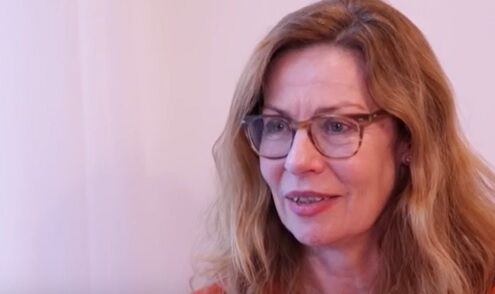
NordenBladet – Birgitte Bonnesen, the former CEO of Swedbank, has been acquitted of all charges in a case stemming from a money laundering scandal involving the bank’s Baltic operations. The Stockholm District Court found her not guilty of aggravated fraud, serious market manipulation, and unlawful disclosure of insider information. The accusations related to $40 billion in suspect funds handled by the bank between 2007 and 2019, which ultimately led to Bonnesen’s dismissal from her position.
A Swedish court has cleared the former CEO of Swedbank, Birgitte Bonnesen, of all charges in a case related to a money laundering scandal involving the bank’s Baltic operations. The Stockholm District Court found her not guilty of aggravated fraud, serious market manipulation, and unlawful disclosure of insider information.
The accusations related to $40 billion in suspect funds handled by the bank between 2007 and 2019, which ultimately led to Bonnesen’s dismissal from her position as CEO. The prosecutor had sought a minimum sentence of two years in prison for Bonnesen.
The case against Bonnesen also included accusations of publishing misleading information about money laundering in the Estonian branch of Swedbank. The prosecution claimed that Bonnesen spread misleading information about Swedbank’s anti-money laundering measures in the bank’s Estonian branch during the period from autumn 2018 to February 2019. This was after the Danske Bank audit, in which extensive suspicions of money laundering in the Estonian branch of Danske Bank were brought up.
Bonnesen was also suspected of fraud and illegal securities trading, but the court acquitted her of all charges. Bonnesen pleaded not guilty throughout the trial. This was the first time in decades that a former chief executive of a major Swedish bank had been prosecuted.
The acquittal of Bonnesen in the case is a significant development in the ongoing scandal surrounding money laundering at Swedbank’s Baltic operations.
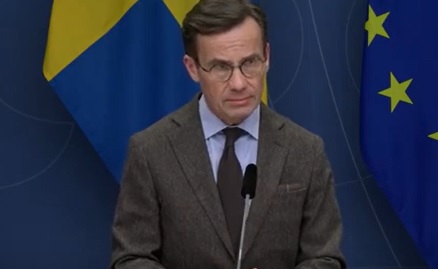
NordenBladet – Sweden is a country that values freedom of speech as one of its fundamental principles. This is why Stockholm cannot ban the burning of the Koran, even though state leaders personally disapprove of it, as stated by Swedish Prime Minister Ulf Kristersson. This article will explore the burning of the Koran in Stockholm and the stance of the Swedish government on the matter.
Listen to the conversation on this topic also on SverigesRadio.se:
Recently, Rasmus Paludan, a far-right Danish-Swedish politician, burned the Koran during a demonstration held at the Turkish embassy in Stockholm. The act of burning the Koran is considered disrespectful and unacceptable by many, but the Swedish government is unable to ban it due to the principle of freedom of speech.
Swedish Prime Minister Ulf Kristersson stated that “we have complete freedom of speech in Sweden, which also applies to the burning of holy books. Everything that is permitted by law, in my opinion, is not respectable and appropriate.” He also expressed that he shared this view with the US State Department, the Secretary General of NATO, and the Finnish government.
Kristersson emphasized that while the burning of the Koran may be considered disrespectful, it is still a legal act in Sweden. He also stated that it is important for society to respect each other’s beliefs and opinions, even if they may not agree with them. He also added that it is legitimate to be against Sweden’s NATO ambitions and to be critical of those who are currently doing everything possible to sabotage the joint NATO talks between Sweden and Finland. He also said that his position is exactly the same as Finland, the US and NATO.
In conclusion, the burning of the Koran in Stockholm, although considered disrespectful and unacceptable by many, is a legal act in Sweden due to the principle of freedom of speech. The Swedish government, represented by Prime Minister Ulf Kristersson, has stated that it shares this view with other countries and organizations such as the US State Department, the Secretary General of NATO, and the Finnish government. Despite this, the government also emphasizes the importance of respecting each other’s beliefs and opinions.
Photo: In Sweden, freedom of speech is a fundamental principle. This is the position of the Swedish government, as stated by Prime Minister Ulf Kristersson. The government encourages respect for different beliefs and opinions. (NordenBladet)
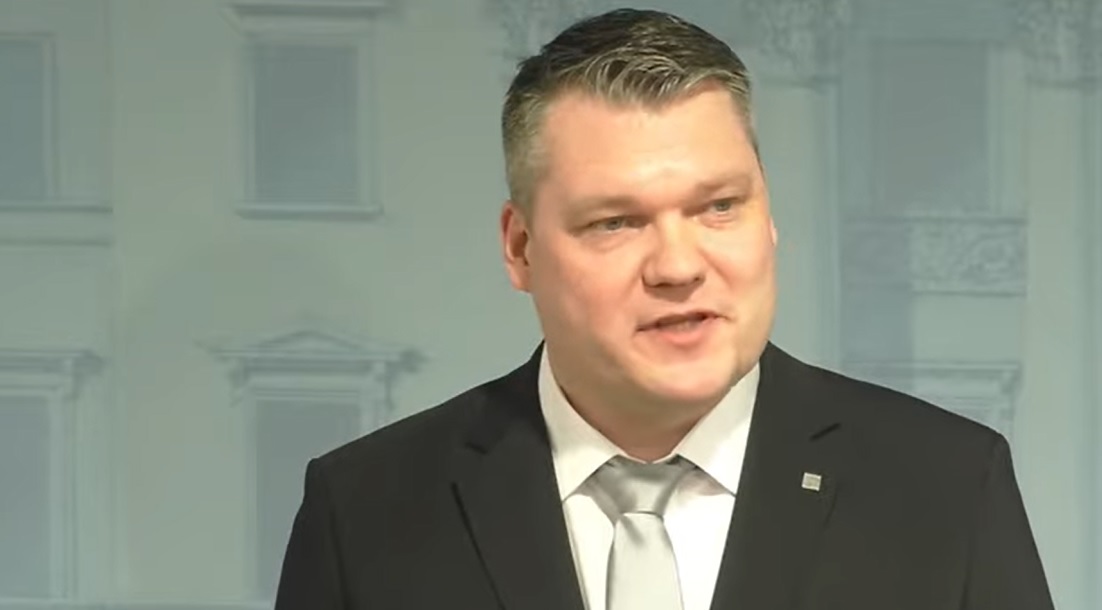
NordenBladet – Finland has granted a new defense equipment export permit to Turkey, despite criticism from the Left Alliance. On Tuesday, Minister of Defense Mikko Savola approved an export permit for protective steel used to protect vehicles to Turkey. Riikka Pitkänen, a negotiating official from the Ministry of Defense, confirmed the decision and stated that it did not require a decision from the general session of the government.
Turkey has been requesting that Finland lift restrictions on the export of defense equipment to the country. Turkey and Hungary are the only NATO countries that have not yet accepted Finland’s and Sweden’s NATO membership. Defense Minister Mikko Savola defended the decision, stating that it was made with the foreign and security policy assessment of the Ministry of Foreign Affairs, which was positive. Savola also stated that “Turkey is Finland’s future ally” and that this fact was taken into account in the overall assessment. It was first reported by Hufvudstadsbladet and then commented by Savola to Helsingin Sanomat.
This is not the first defense export permit granted to Turkey by Finland. In May 2022, Finland granted a permit for the technology and drawings of Patria’s armored wheeled vehicles. Additionally, a license for the export of target aircraft transmission platforms was granted to the Robonic company in September 2019.
However, the decision has been met with criticism from Li Andersson, Chairman of the Left Alliance and Minister of Education. Andersson stated on Twitter that the Left Alliance does not support the export of defense material to countries that are at war or that violate human rights. He also stated that in their opinion, Finland should not have granted an export permit for protection steel to Turkey.
NordenBladet – A recent poll conducted by the Levada Center in Moscow and commissioned by the Estonian Ministry of Foreign Affairs (MFA) has revealed that residents of Russia consider their relations with Estonia, Latvia, and Lithuania to be strained, and view the Baltic countries as hostile and a threat to Russia. The poll, which surveyed 1,600 people and included focus group interviews in five cities, found that on a scale of 1-16, with 1 being the most positive and 16 being the most negative, respondents gave the Baltics a score of 4-8 in terms of the level of threat they pose to Russia.
The poll (here: levada.ru) also found that the general attitude towards Estonia has not changed much, but residents of Russia have become more critical of the Estonian government. Respondents in the focus group interviews were critical of the Baltic countries for joining NATO, suggesting that they have surrendered their independence in doing so, and that Estonians hate Russia and are rewriting World War II history and removing monuments.
In terms of relations with other western neighbors, respondents were the most positive about Belarus, scoring it 1-2 on the scale, with Finland and Norway receiving scores of 7-8. Relations with Ukraine received the maximum negative score of 16 from most respondents.
Additionally, the poll found that support for the war in Ukraine has fallen slightly, with 81% of respondents supporting the Russian invasion in March, falling to 75% in June, and 71% in December.
The presentation of the survey results was organized by the Estonian Ministry of Foreign Affairs on Tuesday.
NordenBladet – The preliminary investigation into the disappearance of a Finnish man in his twenties from the Baltic Princess cruise ship in November has been completed, and the ship’s captain is now suspected of neglecting good seamanship and rescue operations. The incident occurred during a PeIsKä cruise organized by Turku University economics students, and the man was last seen on top of the night club structures on the ship.
The Baltic Princess, operated by the shipping company, was on a PeIsKä cruise organized by Turku University economics students when a Finnish man in his twenties disappeared from the ship in November. The shipping company was notified of the man’s disappearance at three o’clock in the morning by an informant who had last seen the man on top of the night club structures.
According to the shipping company, after the announcement, the ship began to examine surveillance camera recordings and search for the man inside the ship. However, the Coast Guard was not alerted until four hours later, after seven in the morning.
According to the Coast Guard of Western Finland, the man had climbed onto the railings on the outer roof of the ship’s night club and fell into the sea almost immediately. Neither the ship’s master nor the ship’s staff had a definite observation about the man falling into the sea.
Because of this, alerting the authorities was delayed, leading to the suspicion that the ship’s captain neglected good seamanship and rescue operations. The matter has now been transferred to the prosecutor’s district of Åland for prosecution consideration.
Additional information:
* MS Baltic Princess is a cruiseliner owned by the Estonia-based ferry operator Tallink and operated under their Silja Line brand. She was built by Aker Finnyards Helsinki New Shipyard in Helsinki, Finland in 2008. The ship began service on the cruise route between Helsinki, Finland to Tallinn, Estonia on 17 August 2008. From 1 February 2013 the ship began service on the Turku–Mariehamn–Stockholm route. It features a variety of amenities, including restaurants, bars, a spa, and a variety of entertainment options.
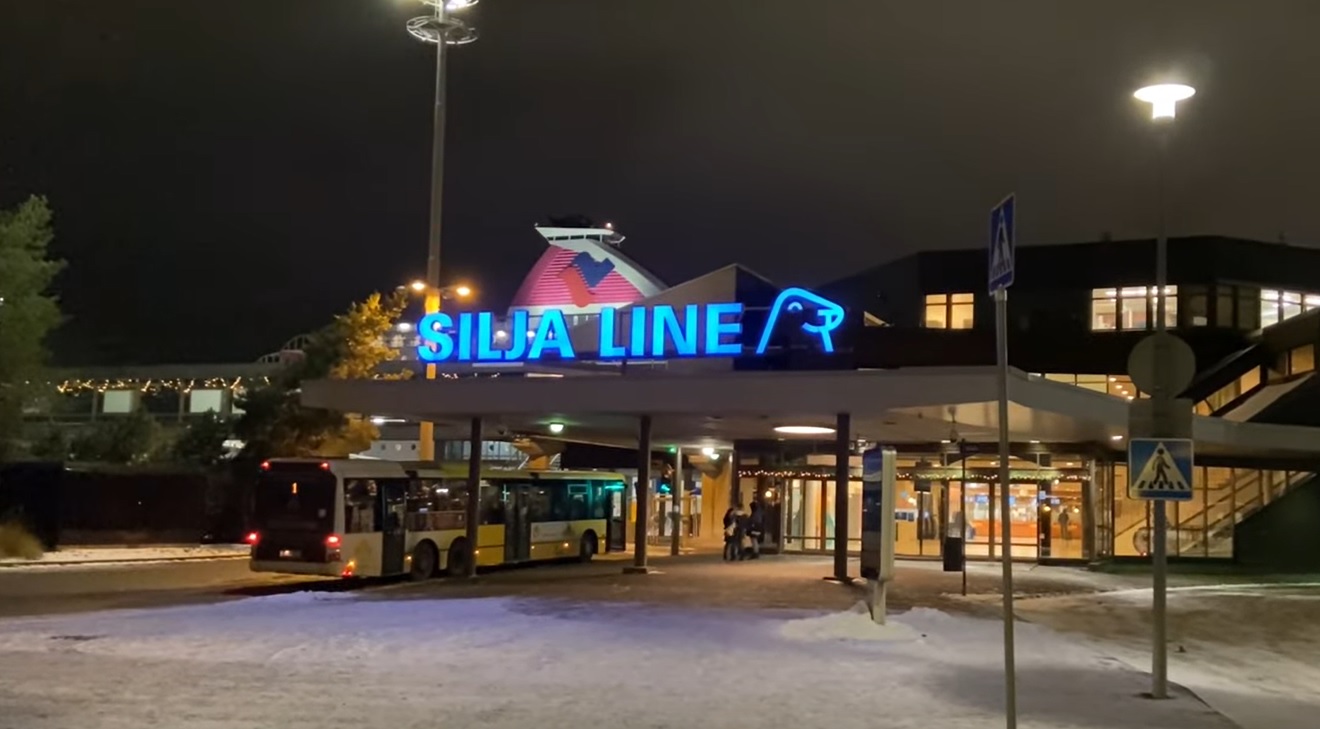
Featured image: Silja Line terminal (NordenBladet)
NordenBladet – Finnish businessman Toivo Sukari, the founder and largest shareholder of Maskun Kalustetalo and Ideapark, recently opened up about his health struggles after a heart operation. Sukari, who is 68 years old and also owns the shopping mall chain stores Masku Koti and Sukarin Lomarakennus, was diagnosed with sepelvaltimotauti (coronary artery disease) last December during a routine health checkup.
Businessman Toivo Sukari, 68, recently opened up to Helsingin Sanomat about his health struggles after a heart operation. Sukari had a heart procedure called pallolaajennus (balloon angioplasty) on January 11th, which went well and he was able to return home to recover the same evening. However, just two days later, Sukari felt well enough to go for an eight-kilometer walk. Despite feeling good after the walk, the next morning he woke up feeling dizzy and with high blood pressure. He took a couple of sprays of nitroglycerin and soon lost consciousness. His wife Nadja Eerola called an ambulance and he was rushed to the hospital.
“My values changed instantly. My businesses vanished into the horizon as soon as I realized this was serious,” Sukari said.
A week later, on Monday, Sukari had to undergo a second pallolaajennus. “As far as I understand, it’s quite exceptional for someone to have two balloon angioplasties within a week,” he said.
Sukari has sepelvaltimotauti, which was diagnosed during a routine checkup in December. According to Helsingin Sanomat, the disease did not show any symptoms. Sukari requested to have an angiogram to check his coronary arteries.
However, Sukari’s struggles did not end with the second pallolaajennus. He experienced pain and discoloration in his hand, which was a side effect of the operation. He also received counseling while in the hospital.
“But I have someone at home with whom I can talk,” Sukari said. He also reflects on what could have happened if the disease had not been detected in December. “Would I have died on a walking trail? Or would I have lived happily thinking I was healthy and fit? Did I bring this on myself?”
Sukari, who comes from a Laestadian family and has seven siblings, is the founder and largest shareholder of Maskun Kalustetalo and Ideapark, as well as the owner of the shopping mall chain stores Masku Koti and Sukarin Lomarakennus.
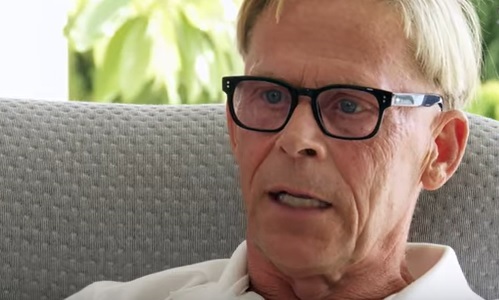
Featured image: Toivo Sukari (NordenBladet)
__________________________________________
More info about balloon angioplasty:
Angioplasty is a procedure to open narrowed or blocked arteries caused by deposits of plaque. If the blockage is not major, the problem may be corrected by inflating the balloon several times to compact the plaque against the arterial wall, widening the passage for the blood to flow through. Typically, a device called a stent is placed within the coronary artery to keep the vessel open.
NordenBladet – Foreign Minister Urmas Reinsalu of Estonia has stated that the country has no plans to close the Russian Embassy in Tallinn. This statement comes in response to Russia’s announcement earlier this week that it would be expelling Estonia’s ambassador. Reinsalu emphasized that having diplomatic representation in Russia is rational for the protection of Estonian citizens and consular interests.
Estonia’s Foreign Minister Urmas Reinsalu has clarified that the country has no intention of closing the Russian Embassy in Tallinn. Russia has also made no announcements of doing so. Appearing on a politics show “Esimene stuudio” , Reinsalu stated “Our embassy [in Moscow] will remain in place. We have not set as an intention closing down the Russian embassy on the territory of the Republic of Estonia, while Russia has not announced such an intention either.”
Reinsalu further explained that Estonia’s response to diplomatic measures is based on the principle of parity and that Russia must take that into account. This means that as of now, there is no intention to expel or recall all diplomats on the part of either state. Reinsalu also noted that maintaining diplomatic ties with Russia is not irrational and that the reduction in the diplomatic corps does not mean a reduction in the information flows Estonia will have access to regarding its eastern neighbor.
Reinsalu also highlighted that the countries share a common body of water and border each other, making communication on some level “inevitable”. He also clarified that Estonia’s position on Russian aggression in Ukraine has not changed.
Establishing diplomatic parity with Russia is set to be completed next month and has been a topic of discussion for a long period of time at the Ministry of Foreign Affairs, given the number of times Estonia has had to expel Russian diplomats from its soil due to inappropriate activity. Latvia is also reported to be following suit in establishing diplomatic parity.
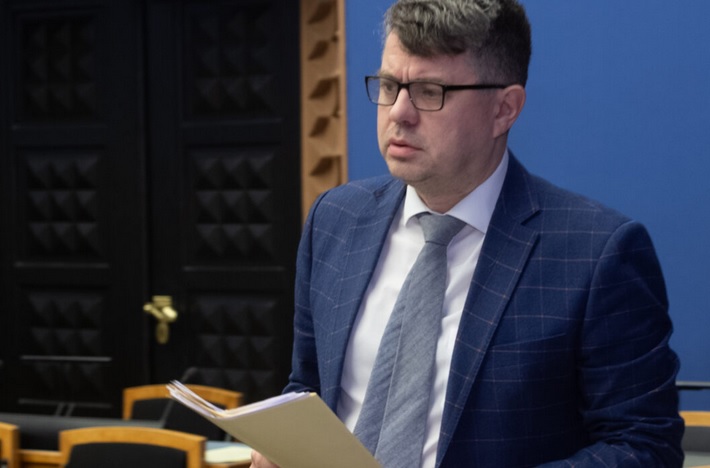
Photo: Urmas Reinsalu (Riigikogu fotoarhiiv/Erik Peinar)
NordenBladet – Estonian Minister of Culture, Piret Hartman, had long discussions with both the employees of the Ministry of Culture and his social democratic party colleagues before promising emergency money to the theaters.
The Riigikogu adopted a new law on performance institutions in the summer of last year, with the goal of making funding for theaters clearer and making the theater landscape more diverse, sustainable, and accessible to all people.
However, the application round for funding did not take place until mid-December, which caused concern. The Tallinn City Theater, as well as the VAT Theater, would have lost about half of their support from last year, while Tartu Uus Teater and ten other performance institutions would get more money.
Hartman decided to come up with additional funds and put 850,000 into this round of applications, half of which was money from the theaters themselves that was intended for experimental projects in previous years, and the other half was from the reserve of the Ministry of Culture. He stated that the reserve of the Ministry of Culture is too small to address all concerns, but it serves as a quick solution for urgent issues. Hartman plans to make a new round of applications for next year’s operating support, so performance institutions have as much time as possible to reorganize their operations if necessary.
You can read Madis Hindre’s long interview (with the original title: Hartman alles jäänud reservist: meie võimalused on väga väikesed) with Culture Minister Piret Hartman on ERR.
The Prime Minister noted that the decisive factor in achieving of the goals set in the strategy “Estonia 2035” would be our ability to direct the local research and development in such a way that it would support the need of Estonian people and society in the best way. “In addition to the fundamental research based on researcher’s curiosity, we will need more applied research that would support society and economy. No one else in the world will undertake to study the challenges of Estonian society, economy and environment in order to improve the standard of living of our people. We will have to do it ourselves,” the Prime Minister said.
According to Kallas, we have been increasing the budget planned for research and development continuously for several years already. “Never have more funds been allocated for research and development from the state budget than this year, in 2023 – 386 million euro. It is 51 million more than last year. This year, we have directed 45% of the research and development funds in the state budget to increase the capabilities of society and economy,” the Prime Minister said. In her words, we will have to take care that the desired change does not bring about excessive fragmentation and bureaucracy of research funding. “Even more importantly, we also decided to raise extraordinarily the state budget funding of higher education within the framework of the budget strategy in order to make up for the underfunding of higher education institutions that has developed over the years. This is one of the most important agreements of today’s government coalition,” Kallas noted. She explained that, without strong higher education, we could not meet the labour market demand for educated employees or to increase the competitiveness of the Estonian state. In a four years’ time, we are planning to increase the higher education activity support by nearly 130 million euro. Due to underfunding, universities have had to cover the lacking funds for instruction from research funding resources. It will no longer be so in the future.
The Prime Minister pointed out that, in 2021, 551 million euro had been spent on research and development in Estonia which was 15% more than a year earlier. Estonia’s investments in research and development grew considerably faster than those of their neighbours. “We could see a great increase in research spending for a second year in a row and in all sectors, above all in businesses and universities. Public sector research and development spending was 237 million euro in 2021, which was an increase of 13%. In 2021, Estonian businesses contributed 314 million euro to research – 42 million euro more than a year earlier and fifty per cent more than as recently as three years earlier,” the Prime Minister noted.
Growth in R&D expenditure in the private sector is no longer being driven by ITC companies, as was the case for so many years, but by the processing industry, which is responsible for the lion’s share of our export turnover. Processing industry companies have increased their spending on research and innovation by two and a half times in three years.
Kallas noted that the level of our academic research was higher than could be presumed on the basis of our size and wealth. For the first time, the University of Tartu has made it among the 250 best universities in the university ranking created by the journal Times Higher Education. Among educational institutions in ‘New Europe’, this equates to the highest ranking.
The Prime Minister said that turning research results into innovation and thereby a competitive advantage for a business was complicated and time-consuming. In terms of the proportion of applied research funding, we will have to make efforts to catch up with the European innovation leaders. The examples of other countries show that each euro a state invests in applied research generates three to four euro in tax revenue.
The Research and Development Council has recommended that Estonia establish its own centre for applied research, guided by the needs of and options available to local companies. The aim of such a centre would be to support companies in undertaking applied research and to consult them on technological issues, making it possible to systematically transfer the results of scientific work out of the laboratory and into production.
Kallas noted that the Riigikogu had started the deliberation of a major regulation for the research and development and innovation management: the Organisation of Research and Development and Innovation Bill. “It is the result of a complicated and long-drawn-out compromise achieved between the parties. For the first time, we will regulate at the level of Act the mechanisms to support innovation in businesses, and the principles for the organisation of research ethics and open research. I hope that the Riigikogu will deliberate this Bill quickly and think along constructively,” Kallas said.
The Prime Minister emphasised the importance of education to a small country. “Good education will ensure the protection and development of the Estonian culture and language and the competitiveness of the Estonian state and citizens and will save the costs on social aid, health care and security. All talents must be developed, and education must meet the needs of future work,” Kallas said.
During the debate, Marko Šorin (Centre Party), Jaak Juske (Social Democratic Party), Margit Sutrop (Reform Party) and Mihhail Lotman (Isamaa) took the floor.
The Riigikogu passed two Acts
The Act on Amendments to the Water Act (709 SE), initiated by the Government, transposes the EU directive on the quality of water intended for human consumption. The purpose of the Act is to reduce the risks to health and environment related to the supply of drinking water, to optimise the costs of handling drinking water and to ensure safe drinking water to inhabitants. Another purpose of the amendments is to increase consumers’ confidence in tap water, to reduce the manufacture of plastic and waste generation and thereby to protect the environment.
The Act introduces a risk assessment-based approach to the water supply chain. It will also improve people’s access to drinking water and the related information and lay down the requirements for materials that come into contact with drinking water and for water treatment chemicals as well as for reducing water leakages. Obligations are provided for drinking water suppliers, owners of public premises, local governments, the Health Board, the Environmental Board, and the Ministry of the Environment.
59 members of the Riigikogu voted in favour of passing the Act and 16 voted against.
The Act on Amendments to the Release into Environment of Genetically Modified Organisms Act (744 SE), initiated by the Government, brings the Act into conformity with the European Union regulation that aims to ensure increased transparency and to provide citizens and scientists access to all information concerning food safety that the business operator has submitted during the risk assessment process, except for information that can be classified as confidential business information.
With a view to improving transparency, all EU regulations and directives on food, feed and genetically modified organisms have been reviewed and the data that can be classified as confidential business information have been harmonised in the regulation. Earlier, data that may be or must not be confidential business information were listed in various laws and regulations. In the future, only data that can be classified as confidential business information will be listed in all laws and regulations relating to food and genetically modified organisms. The same amendments also need to be made in Estonian legislation.
While the current Act lists the information that must not be classified as confidential business information, now a list of data that can be classified as confidential business information is established. So the amount of information that can be classified as confidential business information will become more limited and defined. This will increase transparency because all information that is not considered confidential business information will be available to the public. The Act is also amended by adding the requirement that, where international standard data formats exist, data will have to be submitted| in accordance with such data formats in an application. This will simplify the comparison of various data and thus the assessment of applications will take less time. The need to inquire additional information from applicants will also decrease.
60 members of the Riigikogu voted in favour of passing the Act and 16 were against.
The Riigikogu concluded the second reading of one Bill
The Bill on Amendments to the State Assets Act, the Land Reform Act and the Local Government Organisation Act (712 SE), initiated by the Government, will make the acts relating to land between local governments and the state simpler and more transparent.
The Bill will harmonise the possibilities to mutually ascertain and exercise public interest upon transfer of lands of the state and local governments, and the state will be given the right to intervene to acquire lands in the event of public interest. When a local government begins to transfer land or constitute the right of superficies on land that it has previously received from the state without charge, it will have the obligation to ascertain whether the immovable property has utility for the state. Upon the return of land to the state, the state will compensate to the local government for beneficial costs incurred on the immovable, provided that these have significantly improved the immovable.
Under the Bill, the compensation and consideration that local governments pay to the state will be reduced from 65 per cent to 50 per cent of the usual value of the land upon further transfer of immovable property received without consideration as well as upon the transfer of immovable property that is suitable for developing the business environment or for use as residential land. At the same time, any beneficial costs incurred on the immovable by the local government can be deducted from the consideration paid to the state. In addition, the term for payment will be extended from five to seven years upon the transfer of immovable property that is suitable for developing the business environment or for use as residential land.
During the debate, Rene Kokk (Estonian Conservative People’s Party) took the floor.
The Riigikogu concluded the first reading of one Bill
The idea of the Bill on Amendments to the Estonian Health Insurance Fund Act and Amendments to Other Associated Acts (renaming of the Estonian Health Insurance Fund as the Estonian Health Fund) (772 SE), initiated by the Social Affairs Committee, is to change the name of the Estonian Health Insurance Fund into“ the Estonian Health Fund”. According to the explanatory memorandum to the Bill, at the time the Estonian Health Insurance Fund was established, its main function of was to administer the solidary health insurance system and to enable health insurance benefits to insured people. However, by today the fund has acquired more functions compared to the time it was established. It is also responsible for the emergency care and the services related to the protection of public health provided to people not covered by health insurance. Due to the changed tasks, it is relevant to change the name of the legal person governed by public law. The new name will be “the Estonian Health Fund”, which emphasizes the final objective of the activities of the fund – to maintain and restore the health of the people. The name “Estonian Health Fund” was considered already at the time the health insurance system was established in 1990-1991. Back then, the name of the Estonian Health Insurance Fund that had been used historically was opted for. 30 years later we are adopting a name that stresses the result of the work of the fund.
During the debate, Henn Põlluaas (Estonian Conservative People’s Party) took the floor.
The Estonian Conservative People’s Party Faction moved to reject the Bill at the first reading. The result of voting: 15 votes in favour and 30 against. The motion was not supported. The first reading was concluded.
During the open microphone, Tarmo Kruusimäe took the floor.
Video recordings of the sittings of the Riigikogu can be viewed at https://www.youtube.com/riigikogu.
(Please note that the recording will be uploaded with a delay.)