Reklaam

Helena-Reet Ennet

Helena-Reet Ennet
4698 POSTS 0 COMMENTS

Estonia: Covid TRAVEL RESTRICTIONS on arrivals from Monday, November 15

NordenBladet – Estonia’s three-tier arrivals Covid restrictions lists coming into effect Monday remain virtually unchanged on the previous week, with Andorra the only state to change its status, being downgraded from the ‘Yellow’ to ‘Red’ list.

Arrivals should fill in an online passenger declaration form before arrival.

The revised lists, which cover the EU, the EEA and equivalent, including the U.K. and Switzerland, and the Schengen Area, as announced Friday, November 12, and in force from Monday, November 15, together with each country’s 14-day coronavirus rate per 100,000 as reported by the Estonian foreign ministry, are as follows.

Green list – No restriction on movement

States with a 14-day coronavirus rate of 75 per 100,000 inhabitants and below.

Holy See 0*
Malta 71.52
Spain 49.00

*In practice, arrivals coming from the Vatican are likely to have had to pass through Italian territory anyway, meaning they would be subject to Italy’s coronavirus travel status.

Yellow list – arrivals must present proof of vaccination or of recovery from the virus

States with a 14-day coronavirus rate of 75 – 200 per 100,000 inhabitants.

Finland 166.56
France 131.18
Italy 94.48
Monaco 127.41
Portugal 122.68
Sweden 106.35

Arrivals from yellow list countries must present proof of vaccination, a negative test or recovery from the virus.

PCR tests must have been taken within 72 hours of arrival and antigen tests within 48 hours.

Arrivals without a negative test certificate can take a test on arrival and quarantine while awaiting results.

Red list – non-vaccinated arrivals must quarantine 10 days and take two Covid tests

States with a 14-day coronavirus rate of 201 per 100,000 inhabitants and over.

Andorra 367.57
Austria 1,026.81
Belgium 943.37
Bulgaria 912.51
Croatia 1,393.83
Cyprus 268.02
Czechia 820.23
Denmark 478.05
Germany 373.52
Greece 649.82
Hungary 608.88
Iceland 392.16
Ireland 858.49
Latvia 1533.33
Liechtenstein 407.77
Lithuania 1,401.60
Luxembourg 421.65
Netherlands 680.8
Norway 309.58
Poland 357.39
Romania 724.42
San Marino 258.32
Slovakia 1,382.22
Slovenia 1,747.87
Switzerland 366.36
United Kingdom 776.13

Non-vaccinated arrivals from Red-list countries must quarantine for 10 days on arrival.

Tests must be taken on arrival and on day six. If both are negative, quarantine can be shortened.

Vaccinated people do not need to test.

More information is available on the Ministry of Foreign Affairs’ website: vm.ee/en.

The data is compiled by the European Centre for Disease Prevention and Control and released on Friday morning. The list is updated every Friday and takes effect from the following Monday.

As of Friday, November 12, Estonia’s 14-day coronavirus infection rate stood at 1,531.7 per 100,000 inhabitants, down from 1,798.98 per 100,000 inhabitants the previous Saturday.

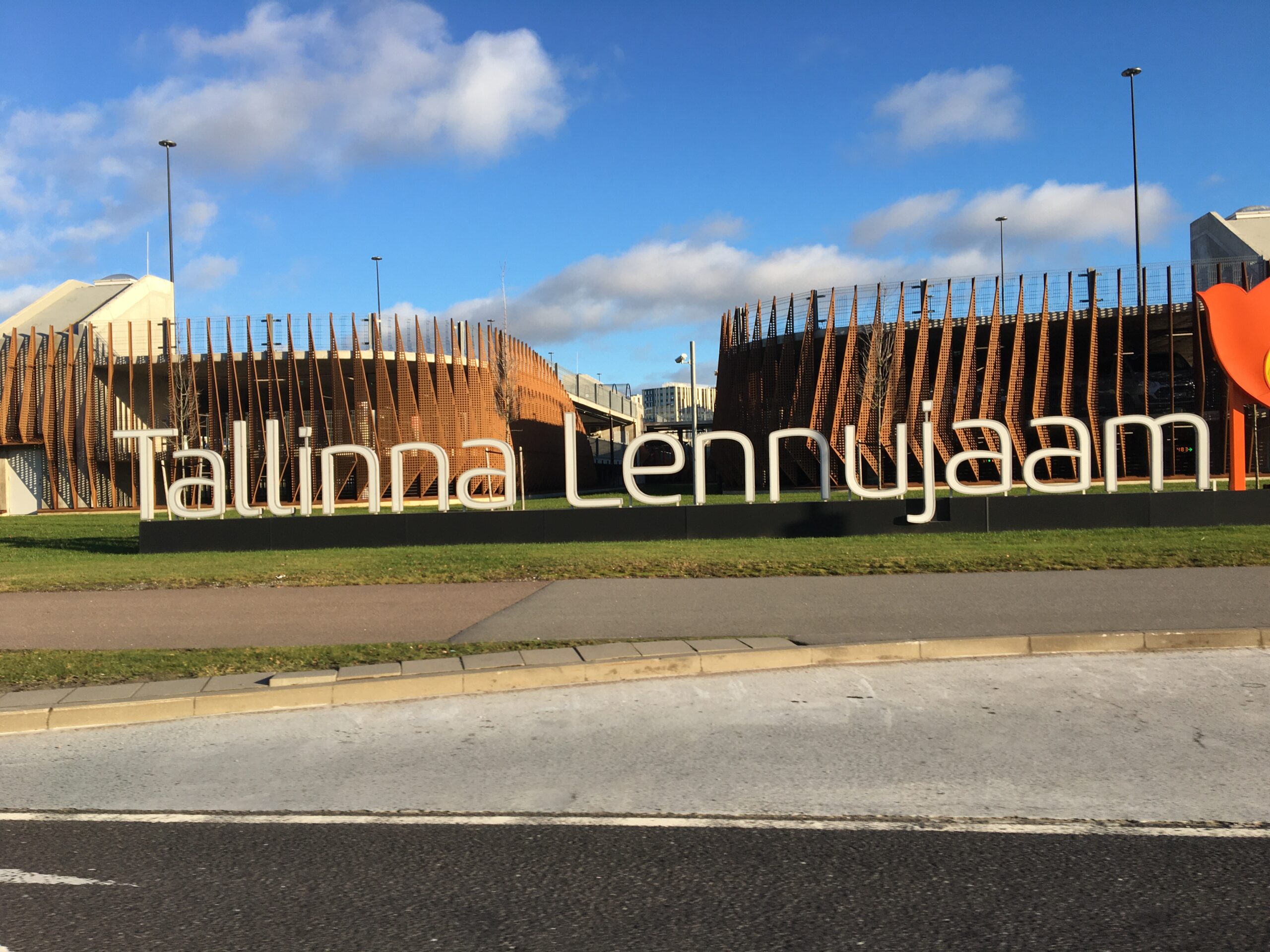
Featured image: Estonian airport (Photo: NordenBladet)

The European Union Affairs Committee approved Estonia’s positions on EU forest strategy with amendment

NordenBladet —

The European Union Affairs Committee of the Riigikogu (Parliament of Estonia) got an overview of the views of the Government of Estonia on the new European Union forest strategy for 2030 at its sitting today, and decided to support the positions in accordance with the opinion of the Environment Committee of the Riigikogu, with one amendment.

Chairman of the European Union Affairs Committee Siim Kallas said that the topic of forestry was vital and the communication of the Commission for the new forest strategy was a very meaningful document that contained many issues where it was necessary to find a balance. “After hearing the positions and discussing them, the European Union Affairs Committee decided to support the positions of the Government, amending the first of them so that the climate and biodiversity objectives outlined in the strategy would be given more weight,” Kallas explained.

Deputy Chair of the European Union Affairs Committee Riina Sikkut thinks that changes in forestry are needed to ensure biodiversity, and Estonia’s current approach to forestry cannot be fitted within the framework of the strategy. “Bringing the growth of welfare to the whole Europe is the underlying precondition for the European Commission’s green transition package. It means additional jobs, innovation and economic growth, but smaller environmental footprint. Estonia has a competition advantage over those countries that do not have forests, because we already have a good instrument for removal of greenhouse gases,” Sikkut underlined. “Countries that are poor in forests have more serious concerns with reducing emissions: they have yet to start with large-scale planting of forests.”

The new forest strategy of the EU for 2030 aims to ensure healthy and resilient forests that increase biodiversity, contribute to achieving climate targets, improve the livelihoods of people and support circular economy and bioeconomy.

It was confirmed at the sitting that the EU forest strategy is in line with the EU biodiversity strategy. According to the Roadmap annexed to the strategy, at least 3 billion new trees have to be planted by 2030. Estonia’s positions set out that the foresting and tree-planting activities should be first of all implemented on damaged lands, like industrial or mining areas. Speaking of using wood of low value for energy production, Estonia’s positions point out that it should take place in accordance with the biomass sustainability criteria. Estonia’s positions also underline the importance of subsidiarity, so that each country could develop its forestry by taking into account the local circumstances. It was also mentioned at the sitting that the new version of the Estonian Forestry Development Plan would be ready this month.

The sitting of the Environment Committee was attended by Head of the Forest Department Meelis Seedre and Adviser of the Forest Department Rauno Reinberg from the Ministry of the Environment.

The Council of the European Union will adopt conclusions on the communication for forest strategy at the sitting of the Agriculture and Fisheries Council on Monday. The strategy will form a basis for preparing draft legislation, which in its turn will be submitted to the Riigikogu for discussion.

Source: Parliament of Estonia

Minister Tuppurainen meets with German-colleague in Helsinki

NordenBladet — Minister for European Affairs Tytti Tuppurainen and German Minister of State for Europe Michael Roth met today in Helsinki. During their meeting, the ministers discussed topical EU matters, such as the rule of law and climate issues, as well as migration and the situation at the external border. Their discussion also touched on the ongoing Conference on the Future of Europe.During the visit, Minister Tuppurainen and Minister Roth visited the Helsinki German School, where they discussed the future of Europe with students. The ministers also visited the Helsinki Central Library Oodi.

Source: Valtioneuvosto.fi

Estonia: Nominees of Betti Alver literary award now disclosed

NordenBladet – On 23 November the laureate of this year’s Betti Alver literary award will be announced in the Library of the University of Tartu. There are brand new authors among the nominees, but there are also names that have already been heard of earlier.

The Betti Alver literary prize is based on Betti Alver’s last will that indicated the wish to award the author of a noteworthy debut piece in poetry or prose in Estonian language that has been published during the year from one All Souls’ Day to the next.

There are also those authors considered that have previously published non-fiction texts or drama works, and those who have previously published in other languages. This year the prize will be awarded for the 26th time.

This year the jury was represented by Taavi Eelmaa (laureate in 2020), Helle Maaslieb, Berit Petolai, Triin Ploom-Niitra and Mihkel Samarüütel, and 33 works were evaluated. The jury selected seven nominees from the debutants:

Aliis Aalmann, poetry collection “Verihaljas” (Kultuurileht)

Anna Kaare, poetry collection “InteГрация” (Kultuurileht)

Ilmar Lehtpere, poetry collection “Kodutud luuletused” (Verb)

Natalja Nekramatnaja, poetry collection “Sinine pojeng” (Tuum)

Olav Osolin, novel “Kus lendab part” (Varrak)

Rait Piir, prose collection “Hinged mõõgateral” (Lummur)

Ave Taavet, prose collection “Valerahategija” (Kultuurileht)

The literary award will be granted by the Estonian Writer’s Union Tartu division, with the support of the Cultural Endowment of Estonia. The volume of the prize is 2000 euros and it comes with the respective certificate.

Source: NordenBladet.ee

THESE ARE winners of the Estonian Theatre Agency’s drama contest 2021

NordenBladet – In the Estonian Writers’ Union’s hall with the black ceiling, winners of the Estonian Theatre Agency’s drama contest 2021 were announced on Wednesday. There were 47 plays submitted to the Estonian Theatre Agency for the drama contest. The jury, represented by the translator Varja Arola, producer Elise Metsanurk, head of literature Ene Paaver, author-producer Tiit Palu, actor Jaak Prints, playwright Priit Põldma and artist-film director Hardi Volmer, decided to highlight five of them.

The jury awarded one first prize and two second prizes, and highlighted two plays as noteworthy:

I prize (3750 euros): Katariina Libe “Võrsed” (Seedlings)

II prize (1875 euros): Mart Aas “Kaksindus” (Twinned) and Kadri Lepp “Koju” (Home)

Noted (625 euros): Heneliis Notton “Emesis” and Liis Sein “Kutse” (Call)

The Grand Prix was awarded to Katariina Libe (née Ratasepp) for the powerful psychological drama “Võrsed”, which, in addition to a sharp and fresh approach to close relationships and the sensitive topic of procreation, allows each of the play’s characters their individual perspective.

Source: NordenBladet.ee

Jüri Ratas discussed energy and security with the Hungarian Speaker 

NordenBladet —

The President of the Riigikogu Jüri Ratas met with the speaker of the National Assembly of Hungary László Kövér. The two colleagues discussed topical foreign policy and security issues of the region, energy, and opportunities for further improving our close bilateral relations.

Discussing the Belarus hybrid crisis, the parties agreed that an immediate and efficient European Union level solution is a must. “It is not acceptable that third countries use migrants for their political aims, as is happening today in Belarus,” Ratas said. “The situation on the European Union external border – Poland, Lithuania, and Latvia – is not simply a migration crisis, but also a security threat and hybrid attack against the entire European Union.”

A lot of emphasis was placed on the excellent relations of the two countries. “Cultural relations between Estonia and Hungary are excellent. I’m sure the Finno-Ugric dimension is an important factor here,” Ratas said. Our defence cooperation is also outstanding, while our bilateral economic relations have room to grow. Ratas acknowledged Hungary’s contribution to Baltic security and thanked it for taking part in the NATO air policing mission.

The President of the Riigikogu then paid a visit to the President of Hungary János Áder, to discuss the results of the Glasgow Climate Conference and Estonia’s objectives in funding the Recovery Plan for Europe.

On the first day of the visit to Hungary, the President of the Riigikogu met with the Minister of Justice Judit Varga, discussing digitalisation and cyber security. The two also shared their experiences on topics around the COVID crisis and vaccination. Other topics included the work of the Conference on the Future of Europe and its possible outcomes. Both sides expressed concern over the events in Poland and on the EU border in Lithuania. 

At the meeting yesterday with the President of the Hungary-Estonia Friendship Group Attila Tilki, the focus was on cooperation between the parliamentary groups. At the meeting with the Honorary Consul András Bereczki, who is also the Head of the Chair of Finno-Ugric Languages at the Budapest Eötvös Loránd University, the talk was about teaching Estonian language and culture.

The Chairman of Estonia-Hungary Parliamentary Group Anti Poolamets was also present at the meetings. Still this year, our Parliamentary Group is planning to visit Hungary.  

Photos of the visit

Source: Parliament of Estonia

Nobel Peace Prize laureate Nadia Murad to visit Finland

NordenBladet — Nobel Peace Prize laureate Nadia Murad will visit Finland at the invitation of Prime Minister Sanna Marin. Prime Minister Marin and Murad, who received the Nobel Peace Prize in 2018, will meet at the Prime Minister’s official residence Kesäranta on Monday 22 November.At their meeting, Prime Minister Marin and Murad, who is known as an advocate for victims of sexual violence, will discuss issues related to promoting human rights, protecting the most vulnerable people and, in particular, defending the position and rights of women and girls in crises and violent conflicts.Nadia Murad will also meet with Minister for Foreign Affairs Pekka Haavisto and Minister of Equality Affairs Thomas Blomqvist, and with the Advisory Board for International Human Rights and its Chair, Member of Parliament Eva Biaudet. In addition, Murad will speak at the International Gender Equality Prize award ceremony on Monday 22 November in Tampere. Promoting the engagement of civil society and strengthening the position and rights of women, girls and minority groups are key elements of Finland’s foreign and development policy. Finland will also work to keep these goals on the agenda at the UN Human Rights Council. Finland’s three-year term on the council will begin in 2022.Nadia Murad was awarded the Nobel Peace Prize in 2018 for her work to promote the rights of victims of sexual violence and survivors of genocides. 

Source: Valtioneuvosto.fi

Persons in need of international protection could be admitted on grounds of work or studies – Finland explores the possibilities of testing the model

NordenBladet — At the initiative of the Ministry of the Interior, the Finnish Government commissioned a study examining the types of complementary pathways for legal migration available in different countries for use by people in need of international protection. The focus of the study was on labour-based and study-based complementary pathways. The results confirm that there is a need for legal pathways, as has been discussed in Finland, and they support the EU in seeking new solutions to migration.Examples of labour-based and study-based complementary pathways include recruitment channels and scholarship programmes, through which people in need of international protection can be admitted as workers and students, rather than as asylum seekers or quota refugees. The routes are referred to as complementary because they are not meant to substitute the refugee resettlement systems of different countries but rather complement them. Their purpose is to enable legal and safe admission. Complementary pathways combine humanitarian admission and competence-based migrationThe study shows that so far the labour-based or study-based complementary pathways in use in different countries are just isolated programmes and experiments. However, their number is growing rapidly, and complementary pathways have the potential of meeting the needs of both those qualifying for the arrangement and the host countries. In some cases, complementary pathways have helped countries address their shortage of healthcare labour.EU encourages Member States to develop complementary pathwaysThe European Commission issued a communication on a new pact on migration and asylum in 2020. It highlights the importance of developing complementary pathways to legal migration as part of the EU’s comprehensive approach to migration. The Commission also issued a separate recommendation on legal pathways to protection. It urges Member States to explore the possibilities of admitting those in need of international protection for labour purposes or for studies and encourages countries to share their experiences. Study supports joint EU effortsThe research team consisted of experts from the Rehabilitation Foundation, Oxford Research AB and the Migration Institute of Finland, along with an independent researcher, Dr Joanne van Selm, who specialises in migration and refugee matters. The steering group of the research project included representatives from the Ministry of the Interior, the Ministry for Foreign Affairs, the Ministry of Economic Affairs and Employment, the Ministry of Education and Culture and the Ministry of Social Affairs and Health.The research report was drawn up in English so that other countries, too, can make use of the information produced. Therefore, it will support the EU Member States’ joint efforts to find new solutions to migration.

Source: Valtioneuvosto.fi

Ministry of Social Affairs and Health issues circular to regions on full application of action plan for hybrid strategy

NordenBladet — The Ministry of Social Affairs and Health has sent a circular to the regions that guides them in taking the action plan for the revised hybrid strategy into full use and in exercising the powers under the Communicable Diseases Act starting on 15 November.The action plan for the revised hybrid strategy will be taken into full use when the vaccination coverage for people aged 12 or over has reached the minimum of 80 per cent or all of them have had the opportunity to get vaccinated twice. According to the Finnish Institute for Health and Welfare, the national target of 80 per cent vaccination coverage was reached on 10 November 2021.The Ministry of Social Affairs and Health will guide the regions in monitoring the development of the epidemic and in deciding on the recommendations and restrictions needed to curb it.Instead of the earlier phase-based criteria, the Ministry of Social Affairs and Health has drawn up epidemiological characteristics for areas in the community transmission phase that are better suited to the current epidemiological situation. They can be used by the regions as an indicative tool when assessing the need for measures. The Finnish Institute for Health and Welfare will publish information on the areas that meet these epidemiological characteristics on its website starting on 15 November.The guiding principle for the new strategy is that the various functions of society should remain open. The strategy emphasises the importance of local and targeted measures in combating the epidemic.The Ministry of Social Affairs and Health stresses that the epidemic continues in Finland but it varies locally, having diverse effects. In addition, the epidemic continues to spread rapidly among unvaccinated people. Vaccination coverage alone is not enough to curb the epidemic, even though it slows down the spread of the epidemic. For this reason, it is necessary to take targeted and enhanced measures at the local level, if there are or it seems that there may be large local infection clusters where the spread of the disease among population groups poses an undeniable risk to the health and wellbeing of those susceptible to the disease and where, through its indirect effects, the spread of the disease may also cause large-scale societal harm. Circular issued by the Ministry of Social Affairs and Health: Full application of the action plan implementing the revised hybrid strategy to control the COVID-19 epidemic (in Finnish and Swedish)Annex: Epidemiological characteristics for areas in the community transmission phase (in Finnish and Swedish)Action plan for implementing the hybrid strategy to control the COVID-19 epidemic 2021–22, description sheet in EnglishThe COVID-19 epidemic: regional situation, recommendations and restrictions (Finnish Institute for Health and Welfare)

Source: Valtioneuvosto.fi

Foreign Minister Haavisto to the EU Foreign Affairs Council and meeting of foreign ministers on the Eastern Partnership in Brussels

NordenBladet — EU foreign ministers will meet in Brussels on Monday 15 November. The main topics on the meeting agenda will be the Sahel, the Western Balkans and the Strategic Compass for security and defence cooperation in the EU. Topical issues on the agenda will include Belarus, the geopolitical dimensions of energy prices, Ethiopia, Sudan and the outcome of the COP26 summit. The meeting of foreign ministers on the Eastern Partnership (EaP) will discuss the future priorities of the cooperation and prepare for the Eastern Partnership summit, on 15 December.The Foreign Affairs Council will discuss the situation in the Sahel, especially recent events in Mali. Finland emphasises the inclusion of civilian activities, such as the provision of basic services and education, and peace-building, alongside the EU’s crisis management efforts among the key priorities of the EU. The ministers will also discuss the EU’s role in the Western Balkans. The discussion will explore opportunities for continued cooperation with the countries in the region. The situation in Bosnia and Herzegovina and the dialogue on the normalisation of relations between Serbia and Kosovo will also be on the agenda.In a joint discussion of the foreign and defence ministers, the High Representative Josep Borrell will present the first draft of the Strategic Compass, aimed to further define the direction of the EU’s security and defence cooperation. The aim of the Strategic Compass is to elaborate on the jointly agreed goals in respect of crisis management, support of partners, and protection of the European Union and its citizens. Finland’s objective is to reach a comprehensive, concrete Strategic Compass that develops and strengthens the EU’s Common Foreign, Security and Defence Policy.Foreign Minister Pekka Haavisto will also attend a meeting of foreign ministers on the Eastern Partnership. The coming Eastern Partnership Work Programme is designed to support the recovery of partner countries’ economies and to strengthen social resilience and reforms.“Finland supports the Eastern Partnership, and the upcoming summit is important for strengthening our common commitments. Finland considers fundamental rights and common values and related reforms as important foundation for establishing social stability. It is positive that the EaP will also increasingly support the partner countries’ efforts to combat climate change,” says Minister for Foreign Affairs Haavisto.

Source: Valtioneuvosto.fi