NordenBladet – The 9th Arctic Business Forum Yearbook is an overview of the European High North investments and business development published in association with the Arctic Business Forum.
The Yearbook 2018 by Lapland Chamber of Commerce addresses Arctic cooperation, policies and business, as well as an estimation of European High North investment potential for the same time frame. Regionally the Yearbook covers the Northern parts of Finland, Sweden and Norway as well as Murmansk and Arkhangelsk regions in Russia.
NordenBladet — The Government seeks to strengthen Danish resilience against foreign attempts to influence our democracy and society. Uncovering influence campaigns, a high level of preparedness and a closer dialogue with media and political parties on how to manage the threat posed by influence campaigns; these are some of the elements from the Government’s new action plan.
Certain countries use influence campaigns targeting the domestic political environments in Western countries as a tool to reach their own foreign policy goals. In recent years, a number of examples of Russian attempts to influence elections and referendums in both Europe and the United States have been uncovered. According to the Danish Defence Intelligence Service, it is very likely that foreign states will also have the ability to conduct influence campaigns targeting Denmark, for instance relating to the upcoming parliamentary elections.
The Government takes this threat posed against Danish interests and democratic values very seriously. Therefore, the Government presents a plan with 11 initiatives aimed at strengthening Danish resilience against influence campaigns.
An influence campaign can for instance include attempts to spread untrue information and stories in the media or to create a distorted coverage of a topic in order to influence an important political decision. These kind of campaigns are often designed to create discord amongst the population and seek to undermine the trust in for instance elections or public institutions.
Minister of Justice Søren Pape Poulsen:
“With the risk of influence campaigns, we are facing a threat against our liberal democracy which we need to firmly address. We therefore now launch this action plan to ensure that our government authorities, democracy and media are better prepared if foreign countries attempt to influence important decisions of high significance to Denmark. Denmark’s security and safety is the top priority for me as Minister of Justice, and today we take another step to protect these particular values.”
Minister of Foreign Affairs Anders Samuelsen:
“It is basically a question of defending our liberty and democracy. Russian influence campaigns targeting elections in the United States and France show the importance of staying abreast of this development. That is why we act now. The Danish people must remain completely confident in our democracy. Many of our allies are in the same situation. It is important to me that we also draw on their experiences to ensure that we stand united and as strong as possible against the threat.”
Minister of Defence Claus Hjort Frederiksen:
“We have by now seen a number of examples of Kremlin attempts to influence democratic elections in the West with campaigns focusing on creating discord and disagreement in the population. They focus on existing political dilemmas or even seek to amplify points of views on both sides on a conflict – solely with the purpose of creating discord and undermine trust in in our political institutions, authorities and ultimately within the population itself. I am not particularly nervous for the polling itself or the counting of votes in this country because we have a robust system which is difficult to “hack” so to speak. However, we have seen how Russia has interfered with democratic elections in the United States and France. Which effect it has had, we can only imagine. But it must never happen in Denmark. The Government’s action plan is therefore an important element in strengthening our ability to counter influence operations against Denmark – including, but not limited to, the upcoming parliamentary election.”
The elections action plan consists of 11 initiatives, which concern the general work by public authorities to counter influence campaigns, secure the election itself, council the main actors of the election and initiate closer cooperation with relevant actors in the media and social media:
1. The Government has set up an inter-governmental task force, which has strengthened the authorities’ coordination and efforts in countering influence campaigns, including with regard to Danish elections. Drawing on experiences from abroad, a number of initiatives have been launched in order to increase capacities in the relevant authorities and to develop concrete countermeasures.
2. The Ministry of Foreign Affairs has launched a strengthened monitoring of disinformation in the media directed at Denmark and will – inspired by other Nordic countries – initiate training for communication officers from government authorities on the ongoing handling of disinformation.
3. The Danish Security Intelligence Service (DSIS) and the Danish Defence Intelligence Service (DDIS) strengthen their focus on hostile foreign actors targeting Denmark with influence campaigns, including with regard to the upcoming parliamentary elections.
4. The Ministry for Economic Affairs and the Interior will in cooperation with DSIS and DDIS/The Centre for Cyber Security (CFCS) ensure that the necessary threat and vulnerability assessments are conducted in relation to the election.
5. The Ministry for Economic Affairs and the Interior’s response with regard to the election will have an increased focus on threats posed by potential foreign influence. The work will be organised in close cooperation with the appointed inter-governmental task force, especially DSIS and DDIS/CFCS.
6. The Government will offer all political parties eligible to be elected to Parliament counselling on the risk of foreign influence in relation to the upcoming parliamentary elections, including cyber-attacks, and on the options for countering such influence and attacks. The counselling will be offered through the national security authorities (DSIS and DDIS/CFSC).
7. The Government will invite all political party leaders to a meeting to inform about the risk of foreign influence with regard to the upcoming parliamentary elections.
8. The Government will invite representatives from the media to a dialogue on possible models for cooperation on countering potential foreign attempts to influence the upcoming parliamentary elections. This will happen with full respect for the central principles of a free and independent press.
9. The Government will invite representatives from prevalent social media platforms to a dialogue on possible models for cooperation on countering potential foreign attempts to influence the upcoming parliamentary elections. This initiative will amongst other things be based on experiences from other countries.
10. The Government will invite media with public service obligations to a dialogue on models for cooperation on countering potential foreign attempts on influencing the upcoming parliamentary elections. One of the aims being to raise awareness about the threat amongst the population.
11. The Government will present a bill to ensure that the criminal code is up to date to protect Denmark against the threat from influence campaigns launched by foreign intelligence services.
Facts:
In its Intelligence Risk Assessment from 2017, Danish Defence Intelligence Service assesses that it is likely that Russian influence campaigns will pose an increased threat against Denmark. Denmark could with short notice or no notice at all be target of Russian influencing attempts. It is highly likely that Russia will be able to target and tailor influence campaigns against Denmark. Russian influence could for instance happen in relation to an election campaign or as a result of a broader Russian interest in influencing the state of affairs in the Baltic Sea Region to its own advantage. It is in this regard likely that Russia’s strengthened influence operations in for instance the Baltic states, Sweden and Finland also will lead to an increased focus on Denmark.
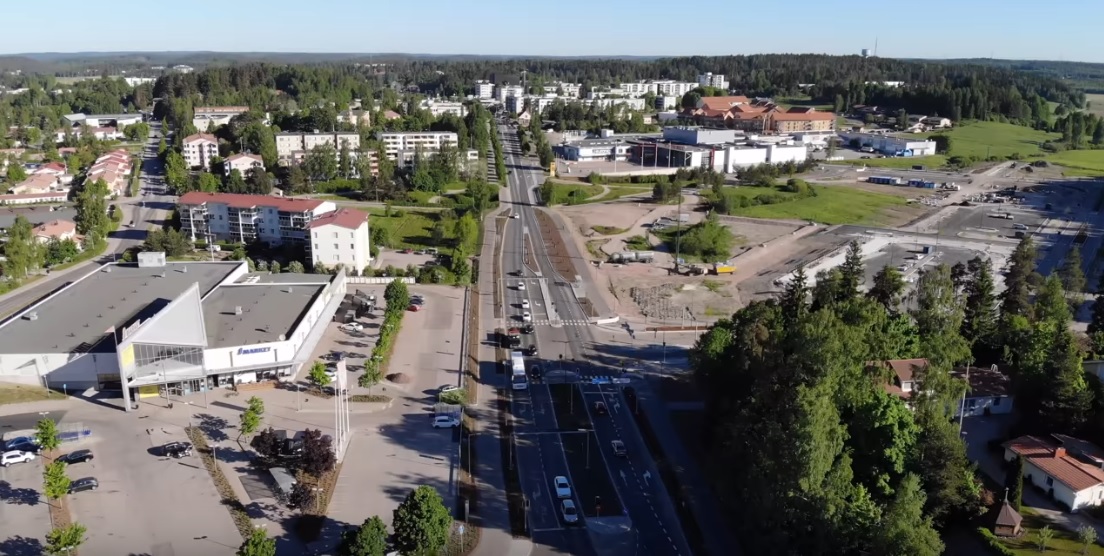
NordenBladet – Klaukkala (Swedish: Klövskog) is a village in the southern part of the Nurmijärvi municipality of Finland, near the Valkjärvi lake. Klaukkala is the largest of the villages in Nurmijärvi and is often mistakenly thought of as a separate city. Lepsämä, an area belonging to Klaukkala, is the place where the former Prime Minister of Finland Matti Vanhanen currently resides.
Klaukkala has a population of about 20,000 and is the fastest-growing area of Nurmijärvi. Klaukkala has significant migration mainly from the Helsinki conurbation, because as a rural village a half hour’s drive away from the Helsinki center, it especially attracts families with children. The distance from Klaukkala to the border of Espoo and also the border of Vantaa is about 5 km and the distance to Helsinki is less than 30 km. The increased traffic, resulting from the increase in population causes problems. Because of this, a highway bypassing the village is being planned, and possibly also a rail traffic connection to Helsinki, probably as a continuation of the Vantaankoski rail.
Klaukkala includes many primary schools, of which the largest is Isoniitun koulu, which includes all 9 grades of the Finnish primary school system. In 2017 a new multipurpose building called “Monikko” was built, to the Klaukkala sports area. Klaukkala also has one of the three gymnasiums of Nurmijärvi, Arkadian yhteislyseo. A possible tourism sight is the Klaukkala church, built in 2004. The village also has a wooden Orthodox church.
Nurmijärvi is Finland’s largest rural municipality in terms of population and one of the fastest growing in the Greater Helsinki area. Nurmijärvi’s current population of 41,000 is expected to approach 45,000 over the next decade.
Neighboured by Espoo, Vantaa, Tuusula, Hyvinkää and Vihti, Nurmijärvi is only 30 minutes away from Helsinki, and 25 minutes from Helsinki-Vantaa International Airport, by motorway.
The municipality was named after Lake Nurmijärvi, although this was partially drained for farmland in the 1920s and fully dried in the early 1950s.
Finland’s national author Aleksis Kivi was born into a tailor’s family in the province of Uusimaa in Finland, at a village named Palojoki which is in the parish of Nurmijärvi, on October 10th, 1834.
Aleksis Kivi ( born Alexis Stenvall, (10 October 1834 – 31 December 1872) was a Finnish author who wrote the first significant novel in the Finnish language, Seven Brothers (Seitsemän veljestä). Although Kivi was among the very earliest authors of prose and lyrics in Finnish, he is still considered one of the greatest.
Life
Aleksis Kivi was born in Nurmijärvi, Grand Duchy of Finland, into a tailor’s family. In 1846 he left for school in Helsinki, and in 1859 he was accepted into the University of Helsinki, where he studied literature and developed an interest in the theatre. His first play was Kullervo, based on a tragic tale from the Kalevala. He also met the famous journalist and statesman Johan Vilhelm Snellman who became his supporter.
During his time at school Kivi read world literature from the library of his landlord, and during his University studies, he saw plays by Molière and Schiller at the Swedish Theatre in Helsinki. Kivi also has friends such as Fredrik Cygnaeus and Elias Lönnrot.
From 1863 onwards, Kivi devoted his time to writing. He wrote 12 plays and a collection of poetry. The novel Seven Brothers or The Brothers Seven). took him ten years to write. Literary critics, especially the prominent August Ahlqvist, disapproved of the book, at least nominally because of its “rudeness” – Romanticism was at its height at the time. Ahlqvist wrote “It is a ridiculous work and a blot on the name of Finnish literature” The Fennomans also disapproved of its depiction of not-so-virtuous rural life that was far from their idealized point of view, and Kivi’s excessive drinking may have alienated some.
In 1865 Kivi won the State Prize for his still often performed comedy Nummisuutarit (‘The Cobblers on the Heath’, translated as Heath Cobblers by Douglas Robinson). However, the less than enthusiastic reception of his books was taking its toll and he was already drinking heavily. His main benefactor Charlotta Lönnqvist could not help him after the 1860s.
Kivi’s health had failed completely in 1870. The collapse was accelerated by typhoid and attacks of delirium and in 1871 he was admitted to the New Clinic, from where he was transferred to the Lapinlahti psychiatric hospital. The doctor treating him, A. T. Saelan, diagnosed him as suffering from melancholia resulting from “injured dignity as a writer”. On the basis of the available documents, Kalle Achté concludes that it was a classic case of schizophrenia, triggered by severe states of anxiety. It has also been suggested, however, that Kivi’s mental illness may have been caused by advanced borreliosis). Kivi died in poverty at the age of 38.
Legacy
In the early 20th century young writers Volter Kilpi and Eino Leino raised Kivi to the status of national icon. Eino Leino – and later Väinö Linna and Veijo Meri – also identified with Kivi’s fate as an author.
In 1939 the Aleksis Kivi Memorial, a bronze statue of Kivi by Wäinö Aaltonen, was erected in front of the Finnish National Theatre.
In 1995 to 1996, Finnish composer Einojuhani Rautavaara wrote an opera about Kivi’s life and works. In 2002, director Jari Halonen’s film The Life of Aleksis Kivi (Finnish title: Aleksis Kiven elämä) premiered in Finnish cinemas.
NordenBladet – Yesterday with Estella Elisheva (12) we got the idea to begin doing vlog posts. After all, we are planning to go on a 3500km road trip to Finland towards the end of October (read about it HERE), and we would wish to prepare a few mini movies about the journey. As for ourselves, we have been following various YouTubers and have decided to give it a try in Youtube ourselves. So for the first time I took some videos with my photo camera (using Canon EOS 600D) and uploaded them. Soon we were facing the question – how can one edit the video to assemble it into a narrative – never done a similar thing before.
For quite a while I was searching for a program to use and decided to use Movavi Video Suite. It is a fee-based program and cost 69 EUR. By the way, visiting the page at different times the site displays a new price every time… Anyway. Having purchased the video program, I looked at it as if it were a wonder of the world. Didn’t understand a thing. After browsing YouTube and viewing a tutorial, I decided to get started. And quite as a surprise everything went rather smoothly. Not yet am I so skilled that I could use special effects, and cropping the video to the suitable size also still need practicing, but for the first try I managed quite well, I think. A major problem actually, I guess, is the fact that my camera has very narrow zoom, and also I yet haven’t got a tripod – this beautifully illustrates how my hand is shaking… iccc. So, as a result we have this nice little homemade video 😀
It is really cool how we actually already learned during the first vlog – during the filming as well as during the assemble.. Next time we are already smarter in a few aspects and more long-sighted. My dream is to learn filming at a level that allows to use the green screen and add special effects. Should anybody know a super fine instruction course about it or agrees to “shed light on this world”, please drop me an email! Further on, for Estella Elisheva this is going to be a proper stage training – there is nothing above that than seeing oneself from the other side of the screen. Should she for example wish to start giving lectures or speak in front of a large auditorium, then compiling these videos would develop that skill largely. I am rather convinced that once we get as far as the 30th vlog post and then look back at this first vlog, we would laugh at how rough it started out. However, a beginning of something is always difficult – one must not be scared of that. When I was younger, I often did that – never were willing to upload anything or come out with anything unless it were at its perfection, but seeking perfection in everything might bring along the situation when many great projects remain undisclosed. So my recommendation for my child is that we learn by doing and we must not be excessively critical towards ourselves.
Anyway, I do hope that you might like this vlog! Please add comments (below this video or directly to me on FB), what it is that you would most of all like to see Estella Elisheva upload the vlogs about!
NordenBladet – U – July 22, this year’s film about Anders Breivik’s 2011 massacre, is one of three contenders to be put forward for an Academy Award for Best Foreign Language Film.
The Norwegian Oscar Committee on Wednesday announced a shortlist of three films, ahead of picking its final candidate next Tuesday.
U – July 22, directed by Erik Poppe, is vying against What Will People Say, by the Norwegian-Pakistani director Iram Haq, and Blind Spot, a film directed by the Swedish-Czech actress Tuva Novotny.
In its announcement, the committee said that Poppe’s film had brought the tragedy to life.
“A large number of facts from AUF’s summer camp on July 22 2011 have already been published,” it said. “But few of us know a lot about the unimaginable panic and confusion that occurred or the impossible choices the victims were faced with.”
But the film faces stiff competition from What Will People Say, with Haq’s previous film I Am Yours put forward as Norway’s entry in 2013.
Her new film follows a Norwegian-Pakistani girl precariously balancing her life as a normal teenager with a traditional Pakistani family existence at home. When her father catches her in bed with her Norwegian boyfriend, he has her kidnapped and sent home to Pakistan, where she discovers her parents’ culture in a new way.
Finally, Blind Spot is the directoral debut for Novotny, who played Mariana Simionescu, the Wimbledon tennis champion who married Björn Borg, in the film Borg vs McEnroe. The film is a story about the grey zones in mental illness.
From October 1, the Foreign Language Committee at the Academy of Motion Picture Arts and Sciences (AMPAS), will begin assessing countries’ submissions, reducing them to a shortlist of six. Three other films will then be added by an executive committee.
Two further committees, one of the US East Coast and one on the US West Coast, will then select the five best to be nominated for the Oscar.
The nominations will be announced on Tuesday 22 January, and the 2019 winner will be announced on Sunday, February 24.
NordenBladet – Yesterday I started planning a major road trip – office tour + vacation. Last year the OHMYGOSSIP sites joined the Scandinavian media group NordenBladet – a lot of changes took place in the company internally as well as online as well as de jure. The initially 3-month “moving” of the web and the offices have for various reasons been lagging until this day – the Finnish and Swedish NordenBladet page is yet not open as of today (we are assuming to still open them within the coming six months).
NordenBladet had 4 offices in Sweden, 3 offices in Finland and one in Norway – since last year all these have been closed up, yet many of them still accommodate stuff belonging to NordenBladet and so I am “drawing conclusions” until the present day. Temporarily NordenBladet HQ is the office in Tallinn, Estonia (more precisely the right side of my bedroom with the desk 😀 ), the accounting is in Scandinavia and the meetings are held over the internet, in hotel lobby bars or in exceptional cases in the offices that we partly still maintain up until the beginning of 2019. Not yet have I decided the location of the new offices – one will probably be in Finland (currently I am contemplating Vantaa), the other in Sweden (apparently in Kalmar county). Now towards the end of October I am planning to go on an extensive road trip in Finland – I am determined to gather a lot of ideas there and then after the trip it is perhaps easier to decide the pace for future action.
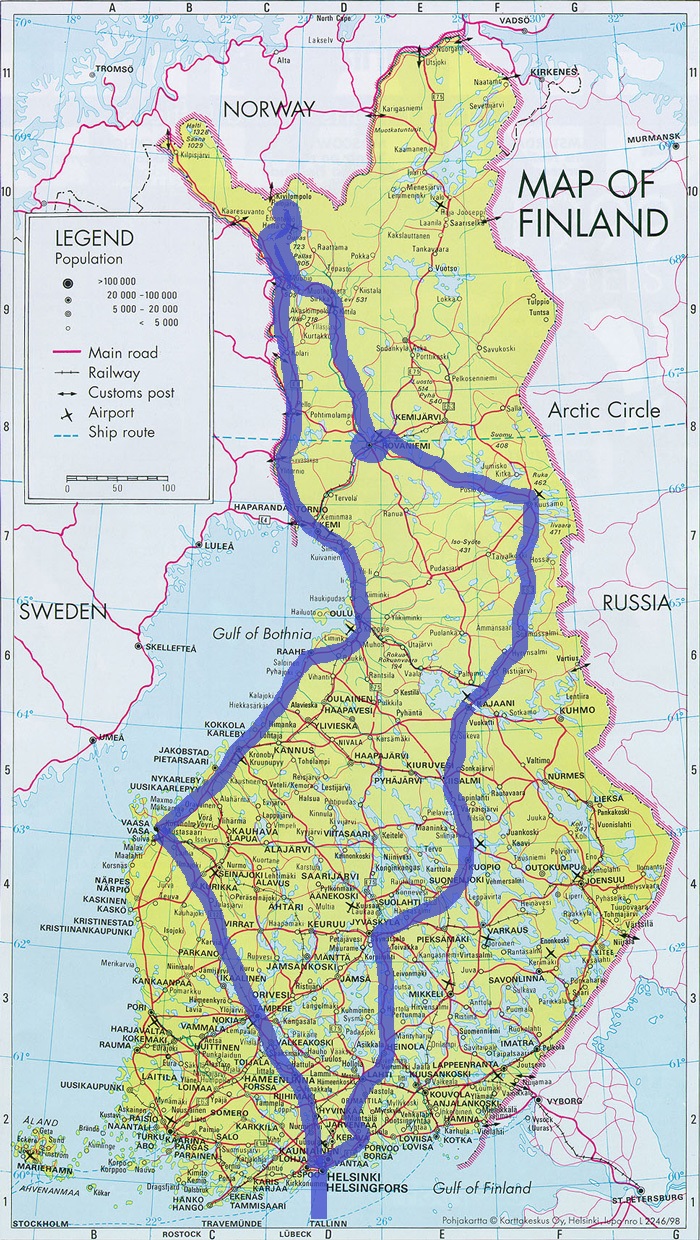
Now back to the road trip… The exact route is yet to be finalised, but roughly the journey will be the following:
During the tour I will collaborate with several tourism agencies and premium hotel groups. Some of the deals and visits are already fixed, for some I am still seeking funding. Currently I am doing the preparations – searching what is where and which places I would like to see and visit. According to the present schedule I am intending to cover 3000-3500km within ca 8 days. Possibly the travel will turn out to be longer. There will be a lot of fascinating destinations to be visited, also besides the hundreds of daily kilometres in the vehicle I am planning to furnish the trip with some luxury (a cosy retaurant or a relaxing SPA), and plenty of sightseeings, history, museums, culture and photoshoot sessions embracing the entire journey in picture and video. Certainly I will take with my my children – 12-year-old Estella Elisheva and 10-year-old Ivanka Shoshana. It is promising to be a fiercely cool, thriling and memorable journey, wild and luxurious simultaneously!
NordenBladet – Apparently in Scandinavia there is not a single child who wouldn’t know the Swedish children’s author Astrid Lindgren’s* main character from the book “Pippi Longstocking” – the wealthy, naughty, strong and kind-hearted Pippi. For many a kid in the northern countries this girl with two red braids has brought an abundance of splendid emotions to their childhood. I recall how much I enjoyed the Pippi character as a child and just how my own children got the Pippi thrill a few years back.
In Sweden, going by car from Stockholm through Linköping 350 km along E4 road heading South (ca 4 hours driving) or from Göteborg along road 40 via Jönköping heading East (ca 3 hours driving) there’s Vimmerby where back in 1981 initially under the name Sagobyn the “Astrid Lindgren World” was open (address: Fabriksgatan 59840, Vimmerby / home page astridlindgrensvarld.se) – an actual fairy tale land that continues to fascinate children as well as their parents. An ideal place to visit with the entire family! It is an exciting theme park open from May to August where you can meet lots of well-known characters from Astrid Lindgren’s book for children.
The theme park with the Swedish name “Astrid Lindgren’s Värld” (with a more common name “Pippi Longstocking Värld”) is situated on a 180 000 square metre territory and there you can find everything – a cinema, theatric spectacles, a large fairy tale town full of doll houses, cafes, shops, playing grounds, a museum, a mini zoo, etc. The park offers employment to more than 50 actors depicting various characters from the book. it is possible to stroke Pippi’s horse and step inside her great yellow “Villa Villekulla” or Villekulla Cottage. Many times a day plays are performed in Swedish language.
I like to travel with children – be it then a children-centered travel or my own business travel. When possible I always take my children along. Ivanka Shoshana (10) who has been diagnosed with autism has as a result of my continuous effort grown to be very brave. Despite the fact that usually a child with autism is very tough to be travelling with (you will never know when the tantrums occur and when they would lay down screaming so that there is nothing else to do than take the child in your arms and quickly flee from the scornful icy glances of people around you), travelling actually has been a factor that has helped broaden her horizon and has facilitated her socialisation. Today I am able to take her along with a light heart – the embarrassing moments are less, next to none. Oooh, but what happened in Pippi-land. Estella Elisheva (during the trip 9 years of age), who is usually a super obediant child and who has from birth been very easy to raise, dashed off to one direction, driven from excitement and joy of discovering the place, and Ivanka Shoshana (during the travel 7 years of age) dashed to the opposite direction – but I can fully understand the children. The entire theme park was just amazing that even a grown person will be overwhelmed! And of course we could not leave without clothing from head to toe into Pippi brand garments.
I add a few photos from that journey (summer 2015).
__________________________
Astrid Anna Emilia Lindgren (14 November 1907 – 28 January 2002) was a Swedish writer of fiction and screenplays. She is best known for children’s book series featuring Pippi Longstocking, Emil i Lönneberga, Karlsson-on-the-Roof, and the Six Bullerby Children (Children of Noisy Village in the US), as well as the children’s fantasy novels Mio, My Son, Ronia the Robber’s Daughter, and The Brothers Lionheart. In January 2017, she was calculated to be the world’s 18th most translated author, and the fourth most-translated children’s writer after Enid Blyton, H. C. Andersen and the Brothers Grimm. Lindgren has so far sold roughly 165 million books worldwide.
Biography Astrid Lindgren grew up in Näs, near Vimmerby, Småland, Sweden, and many of her books are based on her family and childhood memories and landscapes.
Lindgren was the daughter of Samuel August Ericsson and Hanna Jonsson. She had two sisters, Stina and Ingegerd, and a brother, Gunnar Ericsson, who eventually became a member of the Swedish parliament.
Upon finishing school, Lindgren took a job with a local newspaper in Vimmerby. She had a relationship with the chief editor, who was married and a father, and who eventually proposed marriage in 1926 after she became pregnant. She declined and moved to the capital city of Stockholm, learning to become a typist and stenographer (she would later write most of her drafts in stenography). In due time, she gave birth to her son, Lars, in Copenhagen and left him in the care of a foster family.
Although poorly paid, she saved whatever she could and traveled as often as possible to Copenhagen to be with Lars, often just over a weekend, spending most of her time on the train back and forth. Eventually, she managed to bring Lars home, leaving him in the care of her parents until she could afford to raise him in Stockholm.
In 1932 she married her employer, Sture Lindgren (1898–1952), who left his wife for her. Three years later, in 1934, Lindgren gave birth to her second child, Karin, who would become a translator. The character Pippi Longstocking was invented for her daughter to amuse her while she was ill in bed. Lindgren later related that Karin had suddenly said to her, “Tell me a story about Pippi Longstocking,” and the tale was created in response to that request.
The family moved in 1941 to an apartment on Dalagatan, with a view over Vasaparken, where Lindgren remained until her death on 28 January 2002 at the age of 94, having already become blind.
Astrid Lindgren died in her home in central Stockholm. Her funeral took place in the Storkyrkan (Great Church) in Gamla stan. Among those attending were King Carl XVI Gustaf with Queen Silvia and others of the royal family, and Prime Minister Göran Persson. The ceremony was described as “the closest you can get to a state funeral.”
Career Lindgren worked as a journalist and secretary before becoming a full-time author. She served as a secretary for the 1933 Swedish Summer Grand Prix.
In 1944 Lindgren won second prize in a competition held by Rabén & Sjögren, a new publishing house, with the novel Britt-Marie lättar sitt hjärta (Britt-Marie Unburdens Her Heart). A year later she won first prize in the same competition with the chapter book Pippi Långstrump (Pippi Longstocking), which had been rejected by Bonniers. (Rabén & Sjögren published it with illustrations by Ingrid Vang Nyman, the latter’s debut in Sweden.) Since then it has become one of the most beloved children’s books in the world and has been translated into 60 languages. While Lindgren almost immediately became a much appreciated writer, the irreverent attitude towards adult authority that is a distinguishing characteristic of many of her characters has occasionally drawn the ire of some conservatives.
The women’s magazine Damernas Värld sent Lindgren to the United States in 1948 to write short essays. Upon arrival she is said to have been upset by the discrimination against black Americans. A few years later she published the book Kati in America, a collection of short essays inspired by the trip.
In 1956, the inaugural year of the Deutscher Jugendliteraturpreis, the German-language edition of Mio, min Mio (Mio, My Son) won the Children’s book award.(Sixteen books written by Astrid Lindgren made the Children’s Book and Picture Book longlist, 1956–1975, but only Mio, My Son won a prize in its category.)
In 1958 Lindgren received the second Hans Christian Andersen Medal for Rasmus på luffen (Rasmus and the Vagabond), a 1956 novel developed from her screenplay and filmed in 1955. The biennial International Board on Books for Young People, now considered the highest lifetime recognition available to creators of children’s books, soon came to be called the Little Nobel Prize. Prior to 1962 the Board cited a single book published during the preceding two years.
On her 90th birthday, she was pronounced International Swede of the Year 1997 by Swedes in the World (SVIV – Svenskar i Världen), an association for Swedes living abroad.
In its entry on Scandinavian fantasy, The Encyclopedia of Fantasy named Lindgren the foremost Swedish contributor to modern children’s fantasy. Its entry on Lindgren summed up her work in glowing terms: “Her niche in children’s fantasy remains both secure and exalted. Her stories and images can never be forgotten.
Translations By 2012 Astrid Lindgren’s books had been translated into 95 different languages and language variants. Further, the first chapter of Ronja the Robber’s Daughter has been translated into Latin. Up until 1997 a total of 3,000 editions of her books had been issued internationally, and globally her books had sold a total of 150 million copies. Many of her books have been translated into English by the translator Joan Tate.
NordenBladet – Do you sometimes feel that you need extra inspiration, new kind of emotions, something different. As for myself, I find inspiration mostly in blogs-vlogs. Oftentimes I surf the web, from one blog to another (or from vlog to vlog), yet finding something inspiring is not that easy. Today I have been browsing the sites from various Swedish bloggers and stumbled upon the blog from Janni Olsson Deler, and from there on to her husband Jon’s vlog – what an amazing couple of bloggers! Their way of vlogging – simply super cool! Love it so much!
It is curious that I have not noticed their blogs earlier, since I often read various Swedish blogs. By the way, for those who love blogs, Sweden has very many super great bloggers! I am fond of blogs-vlogs that are quality-based – where you can see devotion, enthusiasm and effort – quality photos, a coherent narrative, etc. Now, today I would bring out these two blogs.
Jon’s and Janni’s blogs (see: jonolssondeler.com and janniolssondeler.com) are steeped in POSITIVITY! I immediately liked the pages – I like “Yes” people – the positively minded folks who see the bright side of life, not the troubles. Who live a full life and yet can apprecite the little things in it, are supportive and loving towards each other, also somewhat vane and able to find pleasure in living. Besides, it won’t go unnoticed when people have hobbies. You can usually perceive if things are done with passion or just for the sake of it – the posts reveal that there is the person’s soul in the thing – new cameras are tested, there is dialogue with the fans, people open up, give out their energy – not to mention active and healthy lifestyle that both practice.
I have spent the entire day today in the company of Jon and Janni Olsson Deler – I just couldn’t stop. At the moment it feels as if we were long time friends. I even brought my laptop to the treadmill, to keep viewing Jon’s vlogs.. Hehe.. I did a lot of sports as a result – time was flying. Thank you for the cool vlog posts! You are most positive and inspiring!
Today’s blog will be concluded by Jon’s idea, I quote: “When you think it’s enough, double it!” A word of wisdom that well suits every situation. Sunny hugs to all!
NordenBladet – I continue the two-day Setomaa and Southern Estonia blog (read the first part HERE). In the travel blog I was last describing Saatse – a tiny town near the Russian border. It was already past five o’clock and the only village shop was already closed. This got us rather anxious since we knew that there might not be any other places on the way where we might get food, yet we wanted to buy the food and drinks for the evening. We drove to Saatse village square up to the museum but those, too, had already been closed. It was rather weird though that also in the gardens, in the entire village we didn’t meet anybody, not a single soul!
The village was very small – there was the village square, museum, tiny shop, a church and a cemetery. The latter we needn’t have visited by the end of the day with my younger daughter Ivanka Shoshana (10), especially since none of our relatives have been buried there, the visit annoyed her. Just lately we had been to a funeral, also we had visited the cemeteries in Viljandi – there might have been just a little too much of the death topic – Ivanka is still young and cannot completely grasp it. The visit slightly got her out of balance and I regretted it afterwards. Yet I also know that I cannot raise her in a “pink bubble”, despite her being an autist I wish her to see and to experience everything as much as possibe just the way regular kids do. Life is as it is and death is a part of life.
Saatse done, we suddenly realized we already wished to stay somewhere for the night and to peacefully spend the evening – we had been dashing around for quite a while already. However, since were so to say “behind the tree” and passing small settlements, there had for long miles been nothing really – not a shop, not a house, to say nothing about accommodation. We were already slightly in despair and had already had enough of driving the car towards the evening. Then suddenly we were in Koidula border crossing point on Estonian-Latvian border. We dashed on – the only aim was to find a shop and accommodation. In spite of the exhaustion the emotions were high and we had enjoyed the visit to Setomaa – I got more interested in Setomaa when we visited Tallinn tourism fair “Tourest 2018” with my daughter Estella Elisheva for a story for NordenBladet about tourism objects in Estonia (see more pictures HERE), we met many nice people and representatives of village societies. One name that immediately comes to mind is Elin Priks (in the picture on the right) – a spirited nice woman who is working to develop tourism in Setomaa – she told many interesting stories about Setomaa, and later in Facebook invited to visit Setomaa. Such warm introductions won’t go unnoticed! 🙂
And it didn’t take long until in the middle of nowhere there was Orava A&O food shop and a few kilometres further hidden in the wood there was Väike-Orava recreation centre (Orava village, Põlva county). We called the cell number written on the street sign near the road and booked a room. In ten minutes the hostess and host of the centre arrived and handed us the keys – we were the only guests on a large picturesque territory. We lit a fire in the fireplace and settled on the first floor to watch TV and enjoy the supper – just at the time when Football World Championship was on and England was playing against Columbia (3 July).
Often when I speak about accommodation options in Estonia with NordenBladet staff in Sweden, Norway or Finland, they would listen to me as if my story were “a tale about wonderland”. And Estonia really is a wonderland! At times it is sad, since many of the people living here lack money, yet mostly it is joyous – nowhere else is there such beautiful nature and sincere people that in the countryside in Estonia. I could go on praising them forever! I have travelled a lot in the Nordic countries, been in the countryside, talked to people, listened to their worries and sympathized with their achievements – travelling like this you see a completely different world, with completely different thoughts, different worries and different joys.
Our accommodation cost 25 EUR for three people – we had a two-floor private house and ca 10000-15000+ m2 well-groomed garden around the house. There was no particular luxury, yet everything was neat and clean and PRIVATE! We were thinking to ourselves that merely mowing the lawn in this place takes so much time and care, to say nothing about the cleaning of the sauna, the house, etc. It was a very good price, the place was private, a good change! Very suitable for those who wish to get away from the urban noise. Since we didn’t have cash with us, we even got such a deal that we could leave the money in Orava shop in the morning – this is how the good people in Southern Estonia trust their guests! No passport copies, no annoying procedures. Most heart-warming!
We watched the football game. There were two World Championship games and the two quarter finalists were concluded. Sweden subordinated Switzerland 1:0 and England, after the 1:1 normal and extra time subordinated Columbia 4:3 in the penalty series! The last one we predicted. To be exact, we spelled it – haha… but I won’t tell this today. Myself as well as my sisters have strong sensitive power and spell power and these are especially visible when we are together or do something together. Sometimes it is nice and sometimes it can be quite scary, as weird as it may seem (even if we don’t want that), we see and can change the future, on many occasions can read people’s mind, control energies, see the aura. Sometimes it scares me, sometimes I try to ignore it, sometimes I just take it as one part of my life.
Around ten p.m. I put Ivanka Shoshana to bed and when she was asleep – we chatted with my sister for hours…
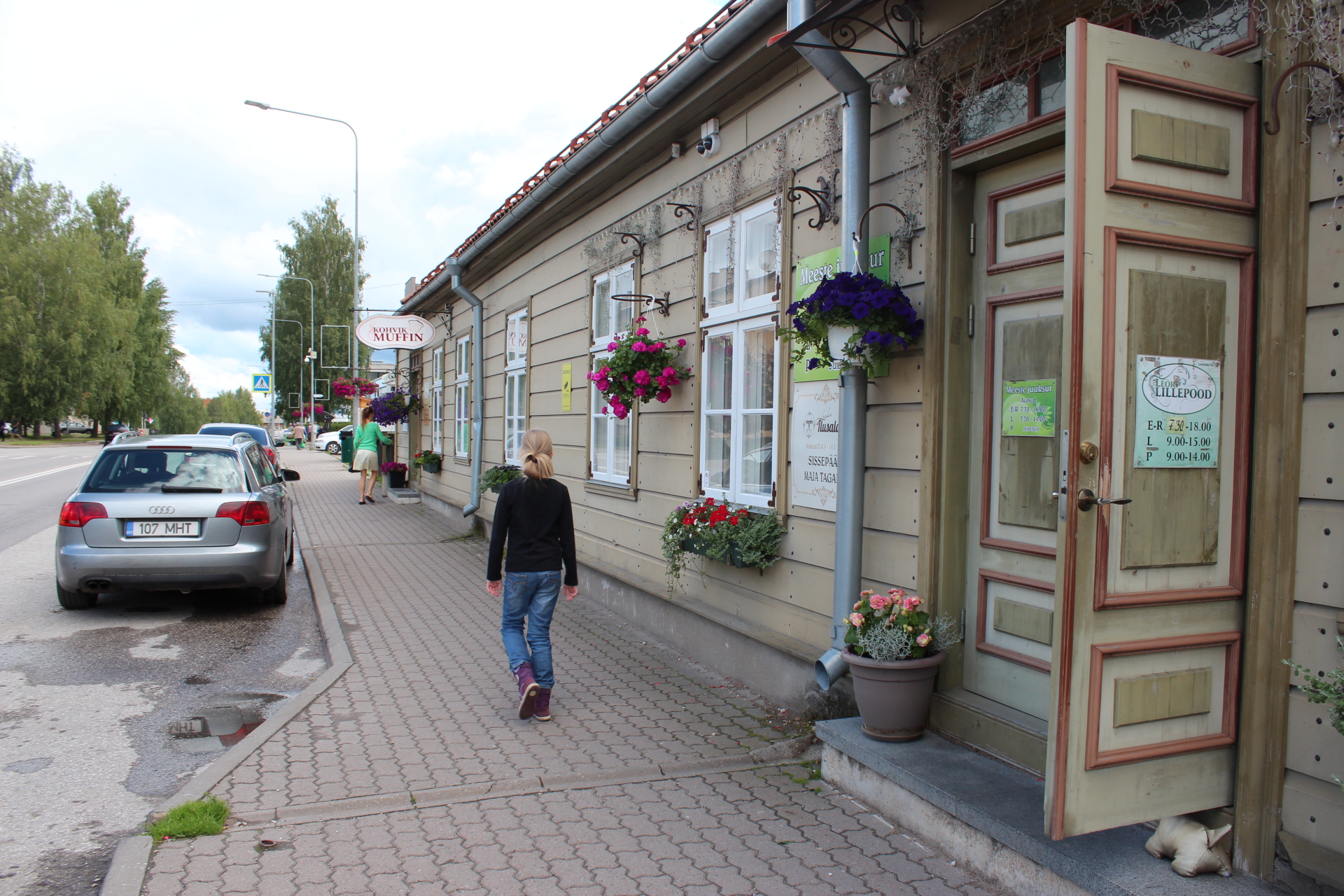
In the morning when we had left the money for the night to Orava shop, we headed towards Võru. Stomachs empty, we soon found a cozy small cafe. I guess it was named “Muffin cafe” if I remember it right. The cafe was OK, but it seems Võru is not a nice place – I mostly mean the city centre. No looks, no use. Usually small places are beautiful and with character – but Võru, for me, says nothing. Yet the surroundings – Haanja, Rõuge etc.. are among the most beautiful places in Estonia!
From Võru we headed towards Otepää and Pühajärve.
Otepää is again a wonderful place. Otepää is a place for active life around the year – with snow it is named the Winter capital city, in summertime the town attracts you with hillside forest paths and lake orbits.
Opportunities for an active holiday in the best known winter sports centre in the Baltics and Nordic countries are limitless. There are tracks for cross country skiiers, downhill skiers, skiboarders, motorcar racers, sledging friends and hikers. We stretched our feet, Ivanka was playing for a while, my sister brought her son from the sports camp and then we drove through Tartu everyone to their own home. Nice! Road trips are my favourites lately – they won’t take a lot of time and are a nice change for the working day.
In September-October there is a longer visit ahead to NordenBladet offices and a journey in Finland – I want to take both Estella Elisheva (12) and Ivanka Shoshana (10) along with me. But this all will follow in the forthcoming blogs! Hugs to everyone and I wish you a nice continuation of the beautiful month of August!
NordenBladet – This summer we have been doing plenty of short road trips across Estonia (see the blog about Central Estonia and Southern Estonia on the route Tallinn – Rapla – Türi – Imavere – Tartu – Tõravere – Elva – Nõo – Rõngu – Koruste – Pikasilla – Suislepa – Tarvastu – Mustla – Holstre – Paistu – Viljandi – Suure-Jaani – Lahmuse – Vändra – Järvakandi – Kehtna – Saku HERE and Northwest Estonian blog, where I visited Tallinn – Ääsmäe – Laitse – Riisipere – Turba – Risti – Palivere – Taebla – Linnamäe – Sutlepa – Pürksi – Österby – Hosby – Riguldi – Nõva – Vihterpalu – Hatu – Pae – Harju-Risti – Padise – Rummu – Vasalemma – Keila – Saue – Tallinn HERE).
Now in this blog I’m gonna take you to Setomaa! Estella Elisheva (12) had a violin camp in Värska and thus I gathered that taking my child to the camp might actually be accommodated into a splendid little Setomaa sightseeing tour. Like always we started off from Saku on the outskirts of Tallinn where we have a lovely home – I am so happy that I can raise my kids in this peaceful, safe and picturesque environment. When driving I like to take the smaller and still roads – therefore I headed from Kajamaa to Viljandi road and from there through Rapla and Türi to Kabala village in South-Järvamaa. In Kabala we did the first stop and took pictures of Kabala manor house and the local A&O shop. A tiny sweet Estonian village, whenever I drive through it, I get a good feeling. Although I actually like the sea view, I must truly be an inland person at heart. All the lengthy fields, thick forests, hills and valleys are very close to the heart.
Kabala manor (with the name Cabbal in Pilistvere pastorate books) was a manor in Pilistvere parish, Viljandimaa. Nowadays the manor territory greatly overlaps with Türi municiplaity in Järva county. In the year 1905 Kabala was housing the manor owners self protection headquarters. Since the year 1923 the main building of the manor houses Kabala school, later on a kindergarten also followed. Historically the heart of the manor was tunneled by Türi-Viljandi road (today it is Türi-Arkma road), now as a result of straightening the road runs its course a few hundred meters to the West.
From Kabala we headed to Imavere where we stumbled upon a really nice sight – namely there was Sassi ostrich farm on our way! Children were very excited to see the ostriches. The fields and meadows around the farm were neat and nicely maintained – as would great Estonian folks do. A few kilometers from Sassi farm there is Imavere Knight’s Manor – I have written about it in depth HERE, but since I didn’t take photos that time then I post these now! When driving to Tartu or Southern Estonia I especially like taking this road – although passing the village houses the journey is more time consuming, but at the same time it is great to have a look around. Even though Imavere manor is halfway to ruins, left without care and the newly built part of the edifice is plainly horrible, the surroundings of the manor are private and beautiful. Not like many other manors in Estonia it has plenty of land around – fields and forest – before the neighbour can start peeping into your window. It would make a wonderful location to found a SPA or a hotel complex.
From Imavere we headed through Adavere to Tartu where my elder sister accompanied us in the car. The plan was to take Estella Elisheva to the Värska camp and then me, Ivanka Shoshana and Maris would go further on to an adventure in Setomaa and Southern Estonia. The road from Tartu to Värska is rather dull – perhaps this is because we had to be there on time and we didn’t take a good look on the signs by the road leading to various sightseeings nearby. The mood was elevated, however, so we sang in the car and were making jokes so that the eyes nearly ached from laughter. In Põlva we took photos from the Karl Kikas monument (a memorial).
For those who are not that familiar with the Estonian history of music: Kikas (born on 4 November 1914, lived in Põlva district, Valgjärve collective farm) was a legendary accordion player. Kikas is considered to be the second most influencial figures in Estonian accordion playing culture after the musical instrument inventor August Teppo. With his innovative and fascinating style of playing the instrument he made the accordion, initially known only in the Southern part of the country, well known all around Estonia.
It didn’t take long before we arrived at Lobotka village – the bus stop was so cool that I took a photo of it. By the way, the “Ancient Lights’ Night” with the main message of joining the nations around the Baltic Sea for a productive collaboration, celebrates its 25th anniversary on August 25th – as usual, along with musicians playing as well as enjoying the local cuisine. All around Estonia there are thousands of bonfires lit, and so it was also in Lobotka harbour on the banks of Värska Bay. The bonfires are lit once a year to remind people of the historical signalling lights. At the times of the Vikings this used to be a practical necessity, nowadays it conveys positive ideas and positive messages.
So why would I bring out The Ancient Lights Night in connection to Lobotka village? For that we would need to know a few background details about the village.There are 75 people living in the village and the territory of the village is roughly 500 hectars. Lobotka village people organized the first Village Day in 1998 with financial support from Värska rural municipality government. The Village Day was attended by former and current village people, all in all more than a hundred people. The village society was created in 1999 in order to divide the duties and responsibilities regarding the events organised in the village. In cooperation with Värska municipality a new setting for the village square was found. The big village swing was built together and the square was taken care of. The first event ever to take place on this little square that had been fought for so ardently, was “Ancient Lights’ Night”. It is really great that even in the more distant places in Estonia the old traditions and the culture is kept alive, showing that there can be life outside the capital city! I like it!
Once we had taken Estella Elisheva to the camp we thought we might look around a bit in Värska. From earlier times I had heard a great deal about Värska Sanatorium – once this had been a really popular destination. We decided to check it out with our own eyes. We didn’t have to go very close to see that there was nothing that popular left from those times.- it was just a memory of earlier times. The sanatorium badly needs a renovation – even better to be pulled down completely and the starting from scratch. In the current sanatorium I personally would become even more sick – the beautiful pine tree forests and then suddenly this horrific stagnation period crap. So ugly that I even didn’t wish to take a photo. However, a slightly better impression was made by Värska Water Park. For once I even thought we might stay overnight there, but no — I had intended to go to the extreme and visit some strange unfamiliar place. That was the right decision!
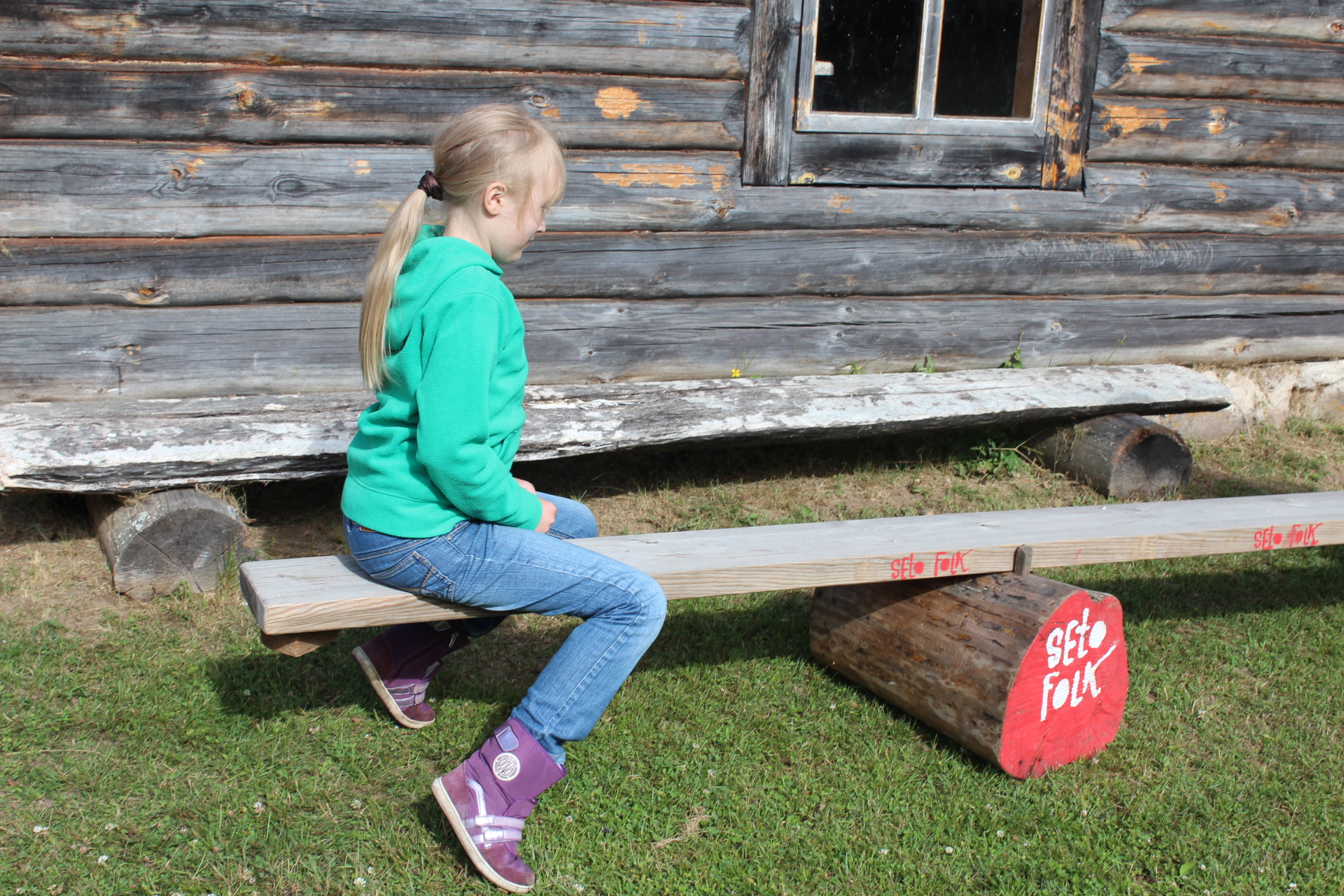
Further on we decided to visit Saatse – I wanted to see with my own eyes what are the events there and how does the South-Eastern town in Estonia that is the closest to Russia, look like. It can be reached only when one crosses the border twice. On the way there was Üüklubi (an alphabetical joke), the advertising sign of which amused us a lot (in Estonian mainland the discotheque is ordinarily called Ööklubi) and the Setomaa Farm Museum, there in the courtyard we also had a meal. We didn’t understand much from what we read in the menu, it seemed as if we were abroad – Seto language is so different from the Estonian language. For example, suulliim means cold soup… I also dug into the newspaper on the cafeteria’s table, and that, too, seemed much like Chinese language. Some parts of it I certainly understood, but it was really weird to read. Like another Estonia. While in Võru they have just a minor dialect – instead of warm (soe) they say hot (lämmi), and a few other examples – then in Setomaa it is rather a different language. Surely it would be possible to get used to it, but as someone coming from the capital it does seem strange.
The food was delicious and service was delightful, the prices were suitable, yet slightly higher than near Võrtsjärv in Mustla or not far from Võru in Rõuge, however still a great deal cheaper than in Tallinn. The menu that stood out from the ordinary ones as well as the names of the dishes in Seto language gave a good impression and wouldn’t be forgotten easily.
Seto Museum was open on July 17 1998. In Seto Farmhouse Museum one can have a look at farm house architecture from the end of the 19th century to the beginning of the 20th century. The exposition accommodates a half closed courtyard, a dwelling house, a storehouse for clothing, a granary, a storeroom for food, a stable and a hay barn, a working area, several shelters, smoke sauna, a pottery workshop, a blacksmith’s workshop, a barn and a teahouse (dinner on the farmyard). Most of the buildings are original, from Northern Setomaa. The branch of the Farmhouse Museum is located Saatse, founded by the local schoolmaster Viktor Veeber and open since 1974. From May 2004 the unique teahouse (tsäimaja) stands there.
After the meal we headed toward Saatse. It was somewhat frightening to drive via Russia twice. There was nothing we could do, but I thought to myself – is it really so difficult to build the new road (gravel road) with a slight bend, and why would i have to read – whiled driving to a small Estonian village – that soon you will be trespassing the Russian territory and therefore stopping the vehicle and walking outside is prohibited. Before Saatse there was even a police patrol asking us where we were going. So that’s where we answered: “We are discovering Estonia!” 🙂
Saatse (in Seto language Satserina; also Satserinna, Satseri, Korki and Gorki are used) is a village in Võru County, Setomaa municipality. The village hosts a middle school, a folk house, Saatse Great Martyr Paraskeeva Church, a cemetary and a border crossing point. Saatse postal office was closed in 2007. Saatse Orthodox Church is a memorial building. It has been consecrated in the honour of the Great Martyr Praskeeva. The stone church was erected in 1801 near the earlier wooden church. In 1839 a wooden belfry was added that in turn was substituted by a new belfry in 1884. The history of the school dates back to 1895 when it was open as a parish school in Linnaste village. From there it was soon shifted to Saatse and was there changed into a national elementary school in 1918. In Saatse cemetary one can find a few historical stone crosses. Close to the village in Samarina there is a museum of local history – the Saatse Seto Museum. Saatse-Petseri Road passes through Vassili (Solovski) village and within the area is joined by Saatse-Pattina Road and Saatse-Perdaku Road. Near the village on Värska-Ulitina Road between Sesniki and Lutepää there the so-called Saatse boot where the road continues through the Russian territory for an entire 1 kilometer.