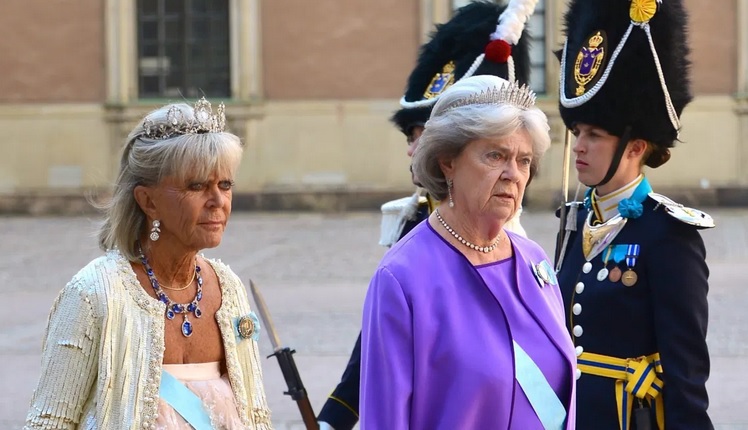
NordenBladet – Since the beginning of the pandemic last year, Princess Birgitta has stayed in Sweden. Princess Birgitta of Sweden and Hohenzollern, the second oldest sister of the Swedish monarch King Carl XVI Gustaf, was prevented from going home to Spain. In an interview with the Swedish magazine Svensk Damtidning, the Swedish and German princess confirmed that she returned to Spain.
For almost a year, the Swedish princess was unable to return to her Spanish home because of the coronavirus epidemic raging in Europe and the world. Over the last 30 years, the sister of Sweden’s King has been living on the Spanish island of Mallorca. However, because COVID-19 has impacted Spain so hard, the 83-year-old Princess stayed with her Swedish family in Sweden.
When the Princess came to Sweden in March of last year, she said she was glad to be back in Sweden. Princess Birgitta remarked to the newspaper that she has appreciated the time with her brother and sister-in-law. She stated: “Obviously, it has been very nice. I have seen a lot of Sweden. It is very gratifying because I have been away from Sweden for almost 60 years, so that was very positive.”
Her Royal Highness described the uncertainty on when she can return home as “horrible” to the Swedish newspaper Expressen. When COVID-19 broke out in Sweden, the Princess travelled to Sweden. Since then, she then lived for almost a year with her brother, the King, and his family at Stenhammar Palace. She has visited her son in Germany several times, but now she has travelled back to her home in Spain.
In her normal life, Princess Birgitta lives a social life with a lot of socialising, restaurant visits and nice events. Now all that is on hold, and the Princess spends the majority of her time at home. Fortunately, she still gets to play golf daily. Princess Birgitta said: “I am not the one who worries unnecessarily, but it is a serious situation, and we must comply with it. Nevertheless, I am basically a positive person and believe that we will ride out this storm.”
Featured image: Frankie Fouganthin – Own work, CC BY-SA 3.0, Wikimedia Commons
NordenBladet —Minister of Culture Anneli Ott confirmed the thematic years in the field of culture for the next three years. 2022 will be dedicated to libraries, 2023 will be the year of exercise, and 2024 will focus on cultural diversity.
“Next year is noteworthy because, based on user needs, libraries are in the process of changing. And this has motivated the choice of next year’s theme. The role of libraries is increasingly changing from being a repository to being an adviser, guide and educator. Also, the ever-increasing amount, and faster pace, of information, as well as the digital revolution, are assigning completely new responsibilities to libraries in both the social and educational sphere,” noted Minister of Culture Anneli Ott. “Libraries are becoming community information and counselling centres that benefit all of us – be it in terms of more available services and information, or simply as a way to improve and educate ourselves,” added Ott.
The National Library of Estonia will start preparing and implementing the programmes for the library theme years. In 2023, sports will pick up the baton for the library theme year, so as to increase people’s interest in exercise and healthier lifestyles. The year dedicated to exercise will draw attention to the fact that, despite improved statistics, we still lag about 20% behind the Nordic countries, where at least 75% of the population engages in regular exercise. In 2024, the diverse cultures and traditions of the various nationalities living in Estonia will be introduced, as will Estonia’s own unique cultural spaces and communities. The executors of the plans for 2023 and 2024 will be announced at a later date.
The Ministry of Culture has been organising thematic years since 2000, when the Estonian Book Year was celebrated. The aim of the thematic years is to bring attention to a cultural field or theme each year. The thematic years that have been organised to date include: the Year of Art, the Year of the Estonian Theatre, the Year of the Museum, the Year of Reading, the Year of Estonian Film, the Year of Cultural Heritage, the Year of Music, the Year of Maritime Culture, the Year of Children and Youth, the Year of Digital Culture. Descriptions of all the thematic years to date are available on the Ministry of Culture website.
NordenBladet — Prime Minister Sanna Marin and Indian Prime Minister Narendra Modi will hold a remote bilateral meeting on 16 March 2021. The theme of the meeting will be deepening partnerships between Finland and India in fields including digitalisation, education and sustainable development.The prime ministers will discuss a wide range of issues related to intensifying economic relations between the countries in future-oriented sectors. Topics on the agenda include the utilisation of new technologies in education and cooperation in the development of 5G and 6G technologies, quantum computing and artificial intelligence. There are also plenty of concrete opportunities for bilateral cooperation in the sphere of sustainable development.
NordenBladet — The Sustainable Growth Programme for Finland will boost investment in emissions reducing solutions, accelerate sustainable growth in the economy, and create long-term growth potential. Half of the funding involved will be for promoting a green transition, and about a quarter will be for digitalisation. The Programme will also boost public investment in research, development and innovation by approximately EUR 700 million.The Programme will renew employment services, health and social services and services for continuous learning, making them more effective and improving their quality. Productivity and service accessibility will be improved through digitalisation funding of around EUR 540 million.The ministerial working group on sustainable growth for Finland has focused on strong public-private partnerships in order to leverage investment. The aim of the Programme is to reduce carbon dioxide emissions in Finland in a fair and just way, but also to obtain new markets for Finnish companies and to gain a position at the leading edge internationally.“Provisional estimates suggest we could mobilise more than EUR 3 billion in private investment. This would give the Programme a total impact of more than EUR 5 billion. The investments being made will accelerate emissions reduction measures in line with the low-carbon roadmaps for industrial sectors. The investments will potentially bring a substantial reduction of three million tonnes annually in Finland’s carbon dioxide emissions. This equates to about six per cent of Finland’s emissions,” says Minister of Finance Matti Vanhanen, chair of the ministerial working group.“Finland’s gross domestic product in 2023 is estimated to be 0.5 per cent higher than the forecast figure when the impact of recovery elsewhere in the EU is also taken into account. More significantly, though, the reforms and investments will improve productivity and long-term growth potential throughout the current decade,” says Minister Vanhanen.Funding for individual projects to be decided laterOn Monday 15 March, the Ministerial Committee on Economic Policy gave its support to Finland’s preliminary Recovery and Resilience Plan, which outlines Finland’s use of funding from the EU’s Recovery and Resilience Facility. At this point, no position has been taken on the funding for individual projects. The time for project decisions will be after the transfer of funding to Finland’s national Budget during the current year.Overall, the preliminary total for 2021–2023 is approximately EUR 2.1 billion at current prices. The final amount of funding for Finland from the EU’s Recovery and Resilience Facility will not be known until summer 2022, as the performance of the economy in 2021 and 2022 will affect the figures. Finland will also receive funding for other programmes under the EU’s recovery package, such as those under the Just Transition Mechanism and the European Agricultural Fund for Rural Development. The content of these will be coordinated with the plan that has now been approved. This increases the overall amount of EU funding for Finland to an estimated total of EUR 2.9 billion at current prices (EUR 2.7 billion at 2018 prices).Green transition will support structural change in the economyThe ‘green transition’ priority provisionally includes funding of approximately EUR 820 million at current prices. Some of the measures under the other priorities will also promote the green transition, and so, overall, the green transition accounts for about EUR 1,040 million at current prices, which is around half of the total.The aim is to bring forward solutions that can reduce emissions both in Finland and worldwide. Putting into effect the low-carbon roadmaps for industrial sectors will be a significant component of the overall package.The green transition will create new technologies for accelerating the move away from fossil energy. New jobs will be created across the country, replacing work being lost as a result of structural change. New skills will also emerge that boost the competitiveness of Finland’s export industry. Additional funding will help to build up the skills needed, by supporting education, training and research, and this will open up new study opportunities.Support will be available for households switching from oil heating to renewable energy, for example. Financial support will also be available for businesses, municipalities and parishes.Digitalisation will improve productivity and make services available to allThe ‘digitalisation’ priority provisionally includes funding of approximately EUR 220 million at current prices. If all projects promoting digitalisation are included, even where they are under other priorities, digitalisation accounts for about EUR 540 million at current prices, which is around a quarter of the total.Digitalisation in rail transport will enable more efficient use of rail capacity, reduce disruption and improve safety. This project will make train travel smoother and will improve flexibility in goods transport – while also supporting climate objectives.The Sustainable Growth Programme for Finland will bring fast internet connections to areas which are not served by the market. With fast internet access throughout the country, work can be done conveniently in the workplace, at home or even at a summer cottage or other secondary residence. The same applies to studying.Businesses especially will benefit from the development of new leading edge technologies such as 6G and artificial intelligence. The aim is to create expertise in these sectors in Finland, which will generate jobs, open up study opportunities and improve Finland’s competitiveness.In the future, receipts and invoices could be saved in electronic form online in a standard, machine-readable format. This means customers will be able to find their receipts in a single location and business operators can conveniently get an overall picture of their financial situation. This will also reduce the grey economy, as the tax authorities will readily have access to information on purchases.Employment and skills will boost sustainable growthThe ‘employment and skills’ priority provisionally includes funding of approximately EUR 640 million at current prices.Jobseekers and businesses will benefit from a customer-oriented service when the online services of the Employment and Economic Development Offices are improved and additional staff hired. Work-based immigration will operate more smoothly through the creation of convenient digital services. The Ohjaamo one-stop guidance centres will offer a wider range of youth services. People with impaired capacity for work will be able to find employment more successfully when structural reforms supporting this are brought forward.Study opportunities will be improved, as higher education institutions will have more student places available. The Programme will accelerate the development of digital, location-independent learning environments in higher education institutions. Considerable investment in continuous learning will support the acquisition of new skills needed in the workplace, boosting employment. Additional and more diverse opportunities will be created for continuous learning, and it will be easier to find these. There will be more equitable participation.Research, development and innovation will bring improved productivity and boost the international competitiveness of businesses. Additional funding will focus especially on promoting innovation and the national research infrastructure in support of the green transition.Reform in travel and tourism and in the creative and cultural sectors will also be supported on the basis of competency and research.Availability of health and social services will improveThe ‘health and social services’ priority provisionally includes funding of approximately EUR 400 million at current prices.The reforms will mean people have quicker access to care, rehabilitation and other healthcare and social welfare services. Quicker access to mental health services will be made possible throughout the country. It is important to receive help at an early stage so that minor problems do not become more serious.Improved availability of primary-level services will reduce the need for specialised medical care and demanding special services. This will curb the growth of health and social services expenditure.The availability of healthcare and social welfare services and the accessibility of these services will improve as more digital service options are offered, such as online discussions with professionals and remote appointments. Mobile services can be brought to people’s homes or to shopping centres, for example. This will also support locally accessible services. It will be easier to meet people’s needs when professionals in different fields cooperate more closely and information is transmitted more effectively.Final version of Plan ready in AprilThe Ministry of Finance is submitting the preliminary version of Finland’s Recovery and Resilience Plan to the European Commission. The Ministry will continue discussion of the Plan’s contents with the Commission, and will consult stakeholders during further preparation.“The Plan as currently presented can still be changed. The Government aims to make it as effective as possible and to work transparently and in consultation with the different stakeholders. We welcome feedback and comments on the detailed programme now published,” says Minister Vanhanen.The Government is to approve the final Recovery and Resilience Plan on 30 April, after which the Ministry of Finance will submit the Plan to the EU. The European Commission will assess the Plan, and the Council of the EU will approve it in the summer.
NordenBladet — The home affairs ministers and foreign affairs ministers of EU member states will meet at an informal video conference on 15 March 2021. Finland will be represented by Minister for Foreign Affairs Pekka Haavisto and State Secretary Olli-Poika Parviainen. The announced theme of the meeting is the external dimension of the EU’s migration and asylum reform. The debate will focus on mutually beneficial migration partnerships between the EU and non-EU countries, and enhanced coordination between the different parties.
“The political, economic and social developments in our neighbouring countries also have a direct impact on the stability and security of the EU. Equal and sustainable partnerships with the countries of origin and transit are therefore needed to promote the EU’s objectives and also to influence the root causes of forced migration,” says Foreign Minister Haavisto.
“We must strive to ensure that the immigration and asylum policy of the partner countries would also be respectful of international law and human rights,” State Secretary Parviainen notes.In September 2020, the European Commission issued a comprehensive communication on the reform of migration and asylum policy. With respect to the external aspects of EU migration policy, the Commission aims to strengthen partnerships more strategically and more comprehensively.
“We need a broader dialogue with our partner countries, and migration issues should be discussed as part of the EU’s overall relations with third countries. To be a credible partner, we also urgently need to advance the finalisation of the reform on the EU asylum system by resolving the issues that divide the Member States,” Parviainen says.
Better coordination of bilateral cooperation and EU-level partnerships
The Commission has moreover noted that bilateral cooperation between Member States and non-EU countries on the one hand and EU-level partnerships on the other must be effectively coordinated to ensure the consistency of the efforts. Coordination should be intensified at the EU level, at the national level, and across these two levels. “To make our work more effective, coordination between EU actors must also be improved in the field. For example, cooperation between Justice and Home Affairs agencies, such as Frontex, and EU crisis management operations should be strengthened,” says State Secretary Parviainen.
NordenBladet — Today marks ten years of the conflict in Syria. Countless violations of human rights and international humanitarian law have caused enormous suffering.
Around 60 % of the Syrian population lacks food security. 5.6 million Syrians are refugees, and 6.2 million people are displaced within Syria. Finland strongly calls on the parties of the conflict for a political resolution. Read also the Syria declaration of the high representative on behalf of the EU on the website of the Council of the European Union.
NordenBladet — During this spring, a Citizens’ Jury on Climate Action will be convened to find out the people’s views and proposals for solutions concerning Finland’s emission reduction measures. A total of 8,000 Finns will receive an invitation letter to participate in the Citizens’ Jury, which is the first nation-wide Jury on climate issues in Finland. Of those invited, a maximum of 50 persons will be selected to the Jury.The task of the Citizens’ Jury is to assess how fair and effective the actions envisaged to be taken in Finland would be in reducing climate emissions. A particular focus will be on measures concerning the citizens that are related to food, housing and mobility.
“In most cases just a small number of people have the opportunity to participate in policy preparation. The only way to succeed in climate actions is by keeping everybody involved. It is also imported to hear people who normally do not participate in consultations. Through the Citizens’ Jury we will get the views of a representative group of Finns on the fairness of climate actions,” Minister of the Environment and Climate Change Krista Mikkonen says.
During March people from different parts of Finland will receive an invitation to the Citizens’ Jury. Of those invited, a group of a maximum of 50 persons will be selected in such a way that it represents the Finnish population as well as possible.
Informed views from the JuryThe Citizens’ Jury was commissioned by the Climate Policy Roundtable together with the Ministry of the Environment, and it will be implemented by the University of Turku. The Jury will convene three times in April via remote connections. The participants will be remunerated for their contribution. No previous knowledge on the topic is required.“The participants will receive information on climate work done in Finland in advance, and during the meetings they will hear introductions to the topic from various experts. As an outcome the Jury will provide informed and carefully considered views in support of climate policy preparation,” says Maija Setälä, Professor of Political Science at the University of Turku.
The Citizens’ Jury continues the process of public consultations for the preparation of the Medium-term Climate Change Policy Plan. The online consultation held early this year brought about 18,000 responses. The Citizens’ Jury will also discuss the themes raised in these.Citizens’ Jury tested as the voice of the peopleThe Citizens’ Jury will sum up the views raised into a joint statement. In addition, the researchers will compile a summary and final report of the work done by the Jury. The results will be discussed at the Climate Policy Roundtable later this spring.
The Climate Policy Roundtable is composed of a broad spectrum of stakeholders from different sectors of society. With is work it supports the national preparation and implementation of climate policy by creating a common understanding on how the transition into a carbon-neutral society can be made in a way that is fair and just. The outcome of the Citizens’ Jury will be published on the website of the Ministry of the Environment later this spring. The results will also be used for the preparation of the Medium-term Climate Change Policy Plan.
NordenBladet – Careful hand hygiene helps keep infectious diseases at bay, therefore especially during seasons when infectious diseases are spreading, it is useful to clean hands properly. Paying too little attention to hand hygiene is the most common reason for the spread of infectious diseases. In order to avoid infectious diseases it would be wise to keep hands clean at home, at school, at work, at the restaurant, and anywhere else.
A few years back a survey that was carried out in Great Britain, based on observing 20 000 adults during three years, proved that when one washes hands regularly and correctly, it is possible to prevent catching an infectious disease up to 15-20 percent. Hands must be properly washed in the beginning of the working day or in case hands are visibly dirty. When one washes hands with soap and running water for 15 seconds, the amount of foreing microflora decreases ten times, and during 30 seconds the amount decreases already 1000 times. Nevertheless, hands must be washed just about a reasonable amount of times every day, since excessive washing may disturb the natural protective barrier of the skin, and also the strains of some bacteria may multiply in the micellar solution. Along with daily hand hygiene, especially during the time of high season for infectious diseases, also hand antiseptics and skin care are of importance.
Sanitary and surgical handwashing
The purpose of handwashing is to mechanically remove dirt, microorganisms and spores.
During sanitary handwashing hands are washed with the direction from the fingertips towards the wrist. The recommended time to wash hands is 40-60 seconds.
How and when the hygienic/sanitary handwashing is done:
– when hands are visibly dirty or have been in contact with blood or other bodily fluids
– when hands have been in contact with microorganisms that form spores
– before the working shift begins and after the working shift ends
– before meals
– before feeding the patients/clients
– after waste management
– after using the bathroom (toilet), or after changing the diaper
– after blowing the nose, after coughing, or after sneezing.
During surgical handwashing hands are washed with the direction from fingertips towards the elbow. The duration to wash hands is at least 3-5 minutes. Surgical handwashing is always followed by surgical hand antiseptics.
How and when surgical handwashing is done:
– before surgical procedures (operations and invasive procedures).
Hands are mechanically rubbed with the handwashing agent, this is followed by rinsing and drying. An important step is drying the hands, because the amount of microbes on moist hands is larger than on dry hands, and applying the sanitizing agent to wet hands will bring down its effect.
How to properly wash hands?
1. Moisten the hands and wrists and apply soap.
2. Place one palm on the back of the other hand, rub hands, and then repeat with the reverse position.
3. Place both palms against each other, fingers spread and braided, and rub.
4. Using circular movements, rub the closed and folded fingers against the other hand’s palm.
5. Using circular movements, grab the thumb into the other hand and rub, then repeat with the reverse position.
6. Make rotating movements with tips of fingers in the other hand’s palm, then repeat with the reverse position.
Go over these steps up to 6 times until your hands are clean. Rinse and dry.
Which are the mistakes made during handwashing?
The common mistake is that while washing, the backside of the thumbs will be forgotten, or the nails, fingertips, and intermediate part of the fingers. Also, hands would need to be washed from underneath the ring if you are wearing any, since on the skin under the rings the bacteria have a fine moist place to live and grow. The soap would need to be washed off under running water from fingertips towards elbows.
What can we wash our hands with?
The most common and best known agent for washing hands is soap. The effect from the soap stems from the water solubility of fatty acid salts. The quality of the soap depends on the fatty substance ingredients and additives used in making the soap. Nowadays allergies are widespread, pollution (including air pollution) is common, and thus people value quality care products more and more, because there is nothing more important than the health and wellbeing of our own selves as well as others.
What kind of soaps could be used?
Best quality can be found in handmade soaps – these have been produced in small amounts, which entails constant control regarding quality. However not all handicraft soaps are in line with the standards set for cosmetics products (either they do not have the right pH level, may contain allergens, or by the time you start using them, have already gone bad). Therefore not any amateur handmade cosmetics product need be automatically trusted.
What kind of soap could be used by a person with sensitive skin?
Elisheva & Shoshana products have specifically been developed for the Northerners with sensitive skin. All E&S products pass strict quality control and each product batch is tested in NordenApothecary lab in order to guarantee top quality and fit with the requirements. Should the batch not pass the control it is not launched to the market. All E&S products are listed and approved by European Cosmetics Products Notification Portal (CPNP). E&S products are skin friendly and efficient, suitable also fof pregnant women and small children.
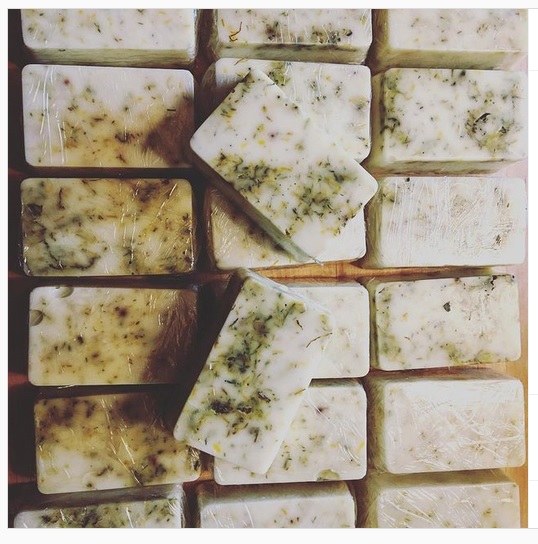
Elisheva & Shoshana (E&S) handmade “Dandelion and Goat´s Milk Soap” is delicate, odorless, skin purifying, protecting and nourishing bathing aid for hands and body. Blossoms of dandelion gathered from the fine fields of Estonia add to the soap the fair yellowish and greenish natural patches, thus making each one a petite masterpiece. Dandelion (Taraxacum officinale) is considered a most powerful Nordic medical herb. Goat milk is known to be nature’s elixir, containing plenty of A, B6, B12 and E vitamins that carry the role of rejuvenating skin cells, and proteins that help free the skin from acne breeding bacteria.
NordenBladet – This Friday I had myself vaccinated. I received the first shot of the AstraZeneca vaccine. I was quite nervous, since news of all kinds is available to us and you no longer know, what you can believe and what you cannot. The authenticity of the global media tends to be of rather poor quality. The reliability of news is an issue that we invest great effort into in NordenBladet, we do not publish a single article where the source has not been checked threefold. Nowadays it is more and more difficult to find reliable sources. By the way, this is a topic that we would wish to tackle in depth some day. But now, back to the vaccination I had.
Friday morning at 11 a.m. I got the vaccine shot in my left arm, along with the paperwork that the next shot will be administered in June. So how did it go after I got the shot? In the afternoon I became drowsy and dozed off for a couple of hours. Then I was awake for a few hours until I developed a fever. The fever ranged from 37.3 up to 38.0 degrees Celsius. In the night I developed achy joints and bones. The degree of pain was such that it reminded me of being driven over by a tractor or being beaten up around the clock. Furter, in the night I felt sick and threw up. In the morning, still in pain when waking, I took ASA Grindex (500mg) and Melox (15g). The first of these is basically the same as aspirin (I took this as a back-up to fluidify the blood and avoid blood clots) and the other one was prescribed some time ago by my doctor after I encountered elbow pain from plowing the snow. I am not sure anymore if this was a prescription drug or not. However it removed the pain and during Saturday I swallowed two more of those. ATTENTION! This was based on my individual decision, not the guidelines from a medical doctor, thus please do not follow my example! Just now I am learning that it is recommended to take only 15g of Melox within 24 hours (i.e. one pill)… therefore I exceeded the dose by two pills. But it helped. By Saturday evening I was already feeling OK.
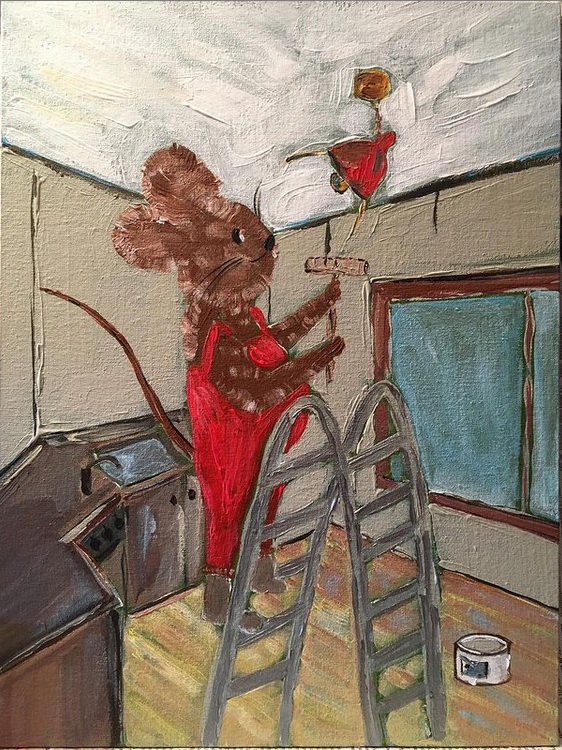
Today, Sunday, I woke up as usual. No pain, no side effects so far. I took a walk outside 6000+ steps, painted a new piece from my mice series for the children’s book in progress “His Highness Mouse the First”, made cinnamon rolls together with Ivanka Shoshana once again (you can find the recipe HERE), chatted with my kindergarten time friend about men, about divorce and children, then I read some of my favourite blogs, updated my Instagram feed and now I am blogging. Today my home has a specifically great vibe.. Estella Elisheva played the violin for a long time, Ivanka Shoshana was in a good mood, I feel that inspiration has been building up in me, that things are beginning to go fluently again and work is going great. I am happily anticipating the springtime arriving — spring is the time for UNLOCKING, WAKING, NOTICING and the TIME FOR LOVE!
Big hugs!
Below a brief synopsis of the “highs” of this weekend (the highs and lows) with little side notes and a photo gallery 🙂
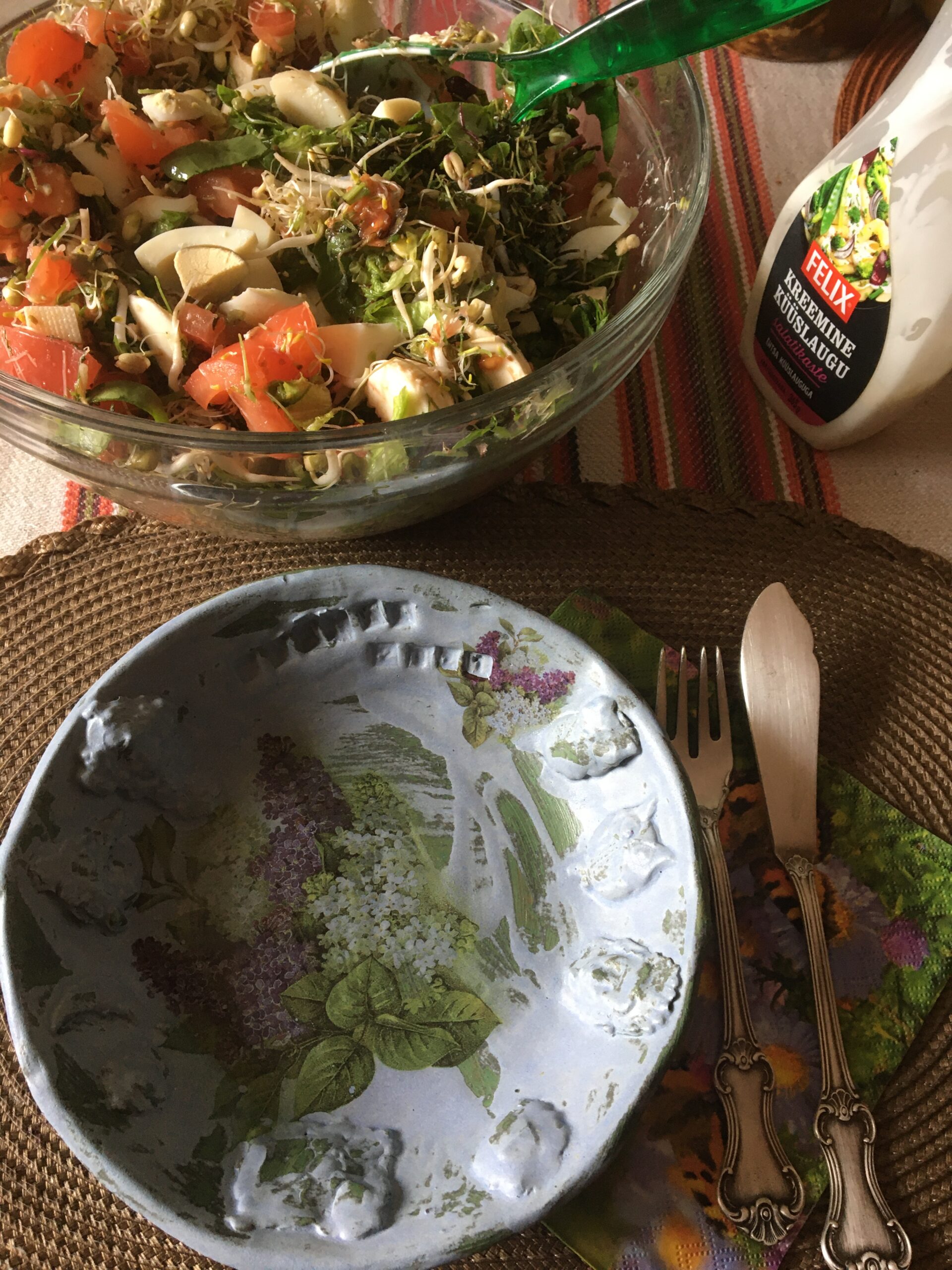
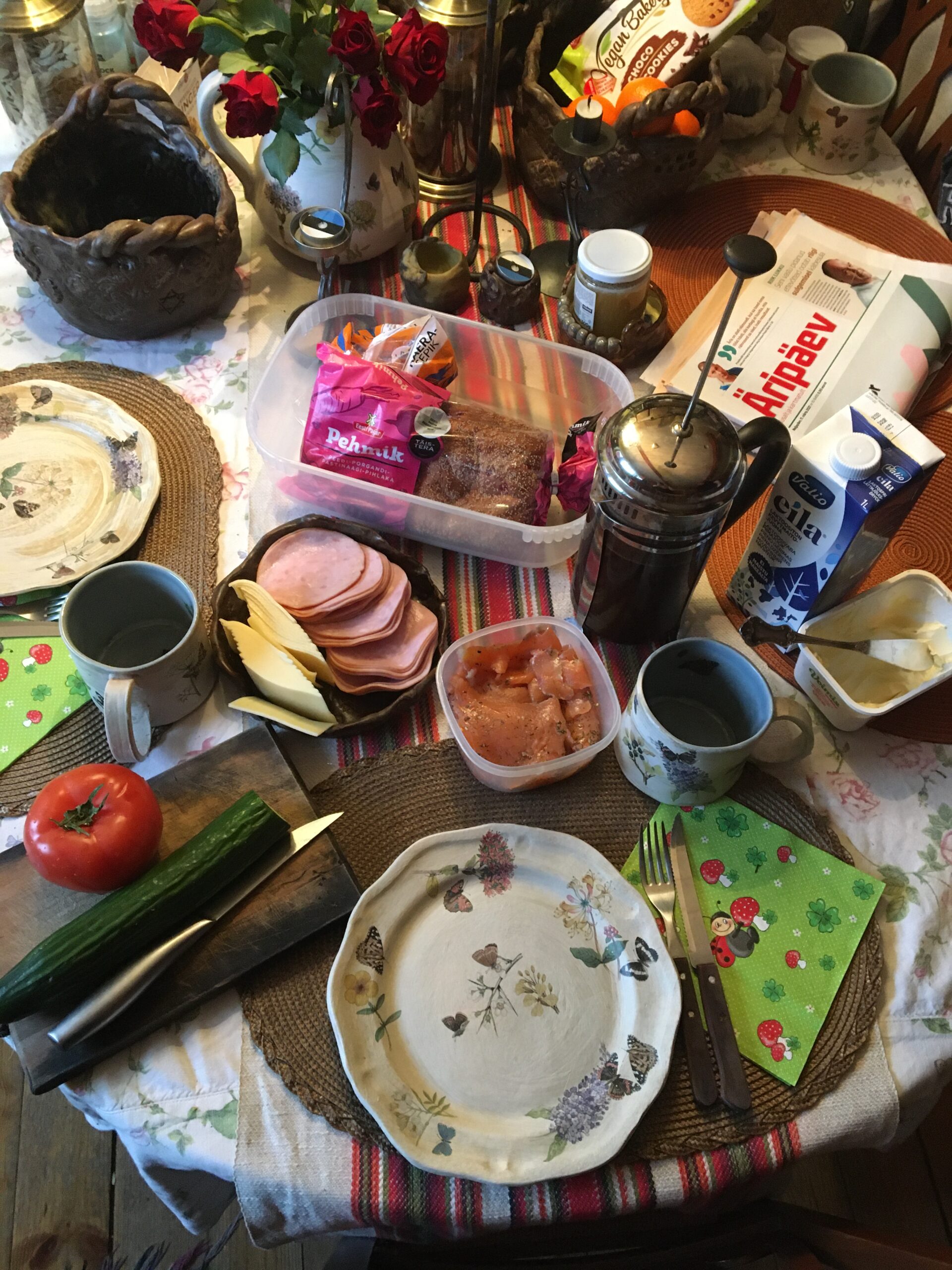
A nice and calm Sunday morning – for some the salmon sandwiches, for some black bread with ham, for some the fresh salad. It always gives me pleasure to know that me and my family are eating healthy. I aim to include fresh salad in the menu at least every other day. By the way, this beautiful blue ceramic clay bowl with lilacs on it was made as handicraft work by Ivanka Shoshana! I find it sooo beautiful. She has by today been attending the clay classes for two years and has such a great signature style! Although young (12 yrs), but to my mind already today a serious ceramic artist. Extra to that she is following my footsteps in the kitchen and in her age is already a wonderful cook – a few hours later we made delicious cinnamon rolls together – this time with brown sugar and vanilla yoghurt.
Nice and slow also my mice series paintings are seeing daylight, these will be the book illustrations for the children’s book I am writing, “His Highness Mouse the First“. To be honest, I am already in great hurry with this. In the Estonian National Museum (ERM) me along with my daughters will be holding a joint exhibition titled “Our home witch kitchen”, where in the participation hall we will present paintings, pottery, herbs, as well as our Elisheva & Shoshana brand. Launching the children’s book has also been scheduled for June when the exhibition opens… however, as of today I have completed two chapters and 14 paintings… Yeees, panic is slightly already settling!! Haha… Mega responsibility, mega expectations are placed on me … but.. well here I am somewhat stuck in the artistic hindrance. 🙁 I would love to be telling you that the life events obstructing my artistic flow are the past, but, alas, this is not the case. On a daily basis I must be involved in far more mundane worries than would be the exhibition, art, and creative work. I must stay alive! I must fight to keep my children alive! I must manage my individual life first of all. And still… nice and slow. The painting, indexed 14, is a sign that things are still advancing… nice and slow. Moving in the direction where light is coming!
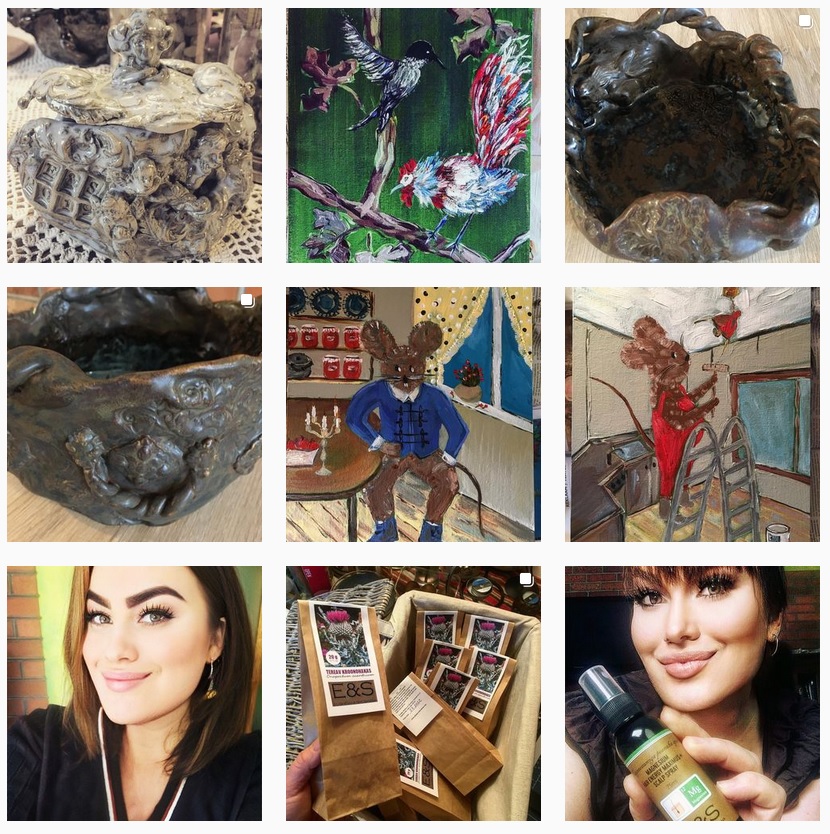
I am telling you, social media addresses me less and less lately and for example in Instagram I often feel as if I had lost my head. I post irregularly, and even if I post, then it is several pictures at a time, and then follows a long break. For some reason or other Instagram doesn’t entail such a clear vision “what I should do or what I could”, as I am used to with any other thing. Should any of you have good guidelines “How to navigate Instagram” or “How to make the most out of Instagram”, then you are most welcome to share these with me!!! Haha. Anyway, the Insta to follow is available here: https://www.instagram.com/helenareetennet/ (I will be posting pictures of myself, of my paintings, my ceramics, herbs, of Elisheva & Shoshana cosmetics products, also E&S brand’s herbal tea that is on sale, etc).
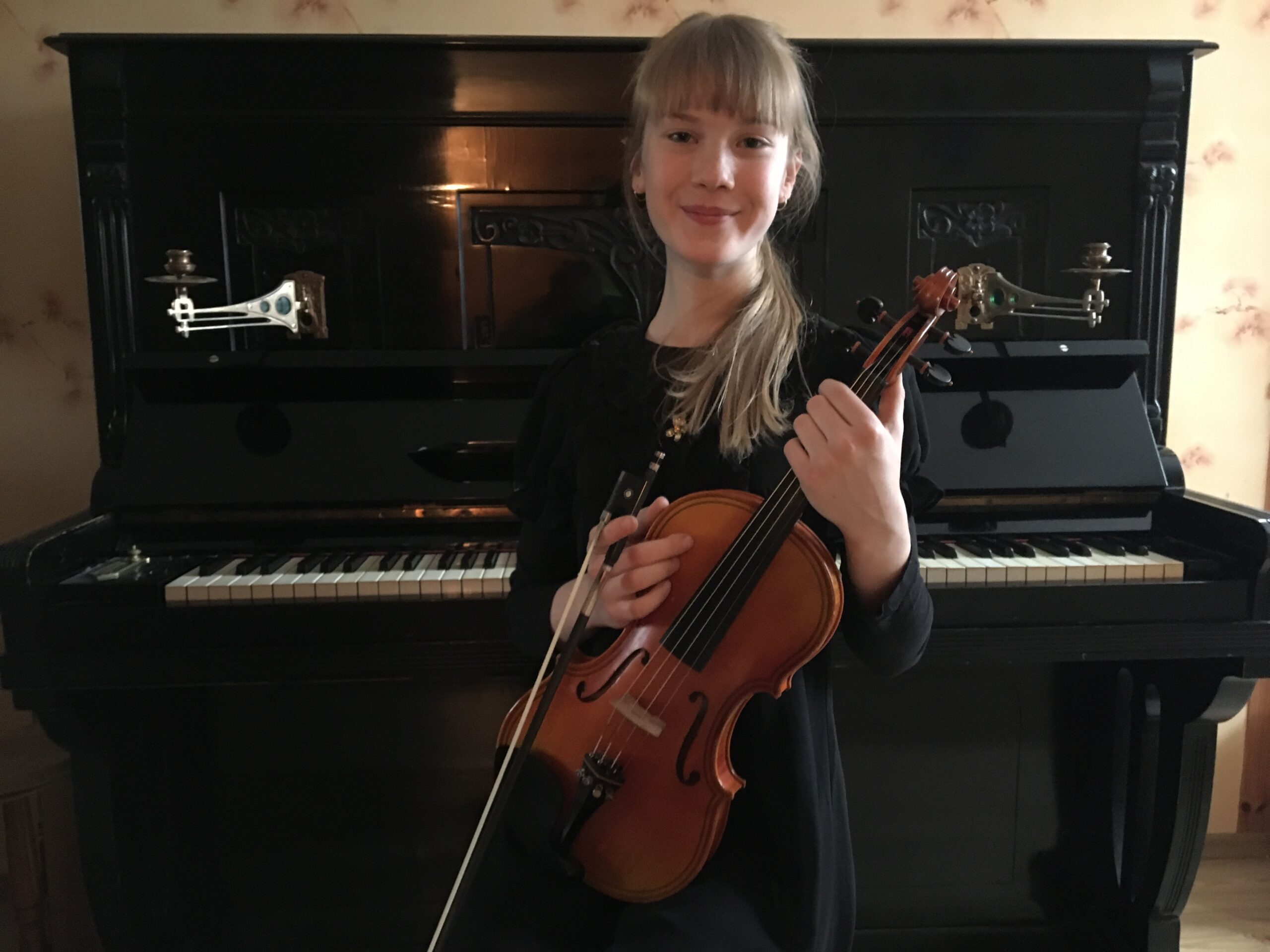
Estella Elisheva (14) has been playing the violin the entire weekend. The sounds are more peaceful and more sad this time. This week, while still very young, her long time piano accompanist Veronika Tamm passed away. ? Veronika will be kindly remembered by very many youths and their parents. She was an unparalleled, friendly, talented woman!
To commemorate her, I wish to post here two videos, where Estella and Veronika are together. The 8-year-old Estella in Saku performing, and the other, in 2019 while giving her violin exam/on a contest. The music and the memories in us last forever!
NordenBladet —The UK-led Joint Expeditionary Force is conducting a joint naval operation on southern part of the Baltic Sea from March 10 to 14. Additionally to the Royal Navy, Estonian, Latvian and Lithuanian navies take part of the operation.
The joint force practices guarding waterways and escorting transport vessels by countering different air, submarine and ship attacks, also conducting mine countermeasures operations and naval surface fire training.
Units participating the operation are UK frigates HMS Lancaster, HMS Westminster, auxiliary ship RFA Tiderace together with helicopters from UK frigates, patrol vessel Jelgava from Latvia, minehunter Selis and auxiliary ship Jotvingis from Lithuania and auxiliary ship Wambola from Estonia.
“Security and defense of the waterways are our priorities during times of crises,” says Maj. Gen. Indrek Sirel, Deputy Chief of Defense of the Estonian Defense Forces. “The majority of our allies’ military equipment and other goods is transported by the sea. This exercise strengthens deterrence at sea in the same way as NATO Enhanced Forward Presence strengthens deterrence on the land.”
The UK-led naval operation is part of Joint Expeditionary Force´s activities. The coalition of British, Estonian, Latvian, Lithuanian, Finnish, Swedish, Norwegian, Danish and Netherlands forces was formed on 2014.
“Some of the UK’s closest and most steadfast Allies are found in the Baltics. This deployment is both the latest example of a long and proud history of defence cooperation and a clear demonstration of the capability of the UK-led Joint Expeditionary Force (JEF),” said Ben Wallace, UK-s Defence Secretary. “As the first maritime patrol of made up of exclusively JEF nations, we are ensuring our ships and people are ready to operate in challenging conditions alongside our Estonian, Latvian, Lithuanian and Swedish Allies.”
JEF is determined to maintain the security and to react rapidly to crises in the northern Europe, Baltic States, northern Atlantic or anywhere in the world. JEF complements its member states’ and NATO´s deterrence posture in the region – planning, training and operating together enables member nations to react rapidly to any hostile activities and to prevent early the escalation of possible crises.