NordenBladet – Today we had a long sleep – until half past nine. After breakfast (today a toast with cheese, sausage, fresh salad, tomato and basil + coffee and a tiny bit of yesterday’s homemade glorious cookie cake) I went for a walk. It was windy outside and there was no great wish to stay outside for very long, so I cleaned the house a bit and decided that I will take some time for blogging. For the past two weeks we have been working on our home, or more precisely, homes. We have more than one. Soon more about this, but first our breakfast pictures.
Let us start from children. There’s a plan to renovate their rooms (paint the walls white) and change the furniture and lamps. I have grown tired of the pinecone-pattern wallpaper and the old red sofas (see the pictures HERE). Also I’d like to replace some of the curtains and most of the paintings. I have now been painting a lot together with Ivanka and thus prefer to see our own paintings on the walls. Hopefully the renovations will not take more than a few weeks, because I plan to renovate ON MY OWN! This is how awesome a woman I am, hahaaa 😀
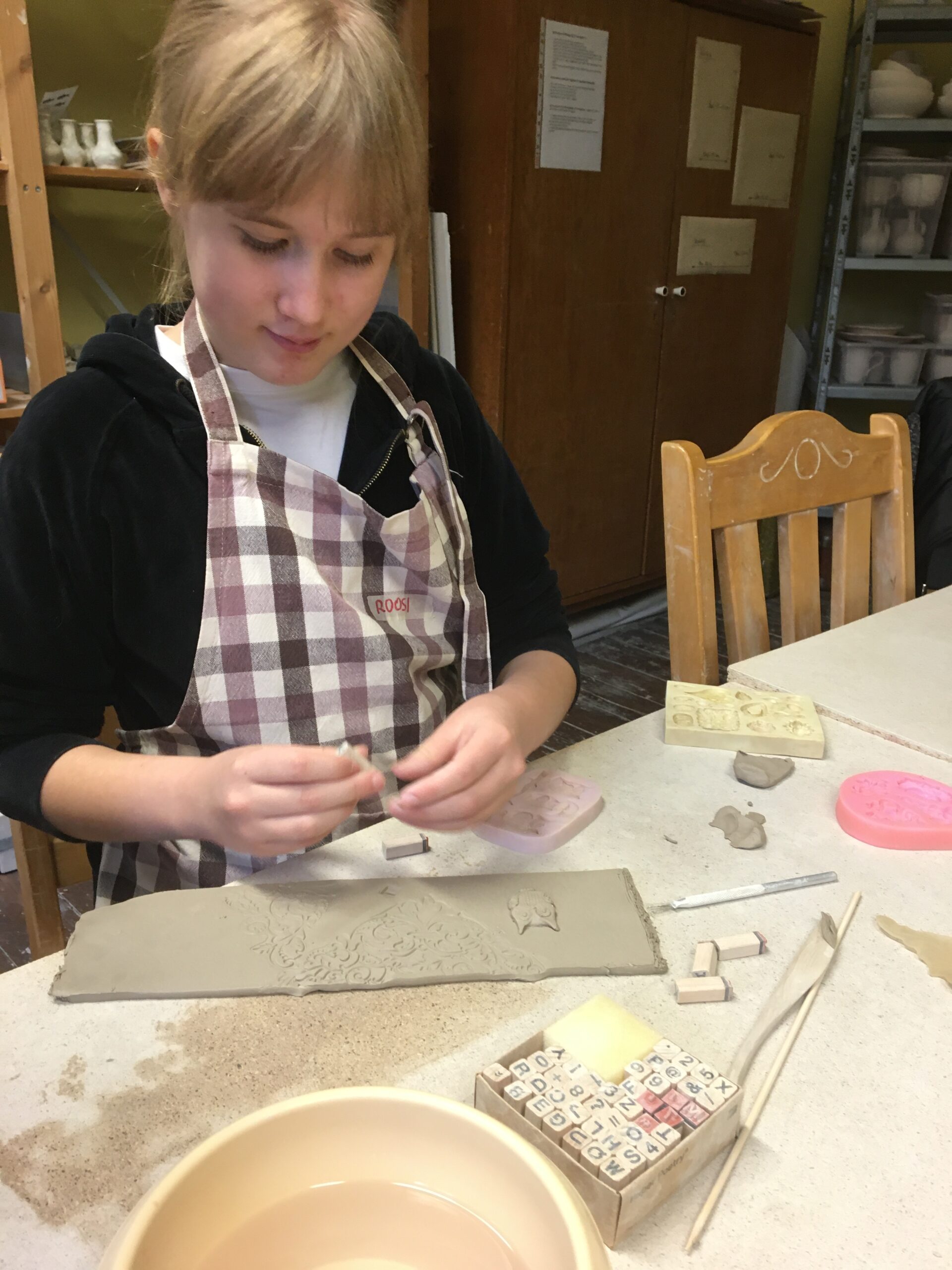
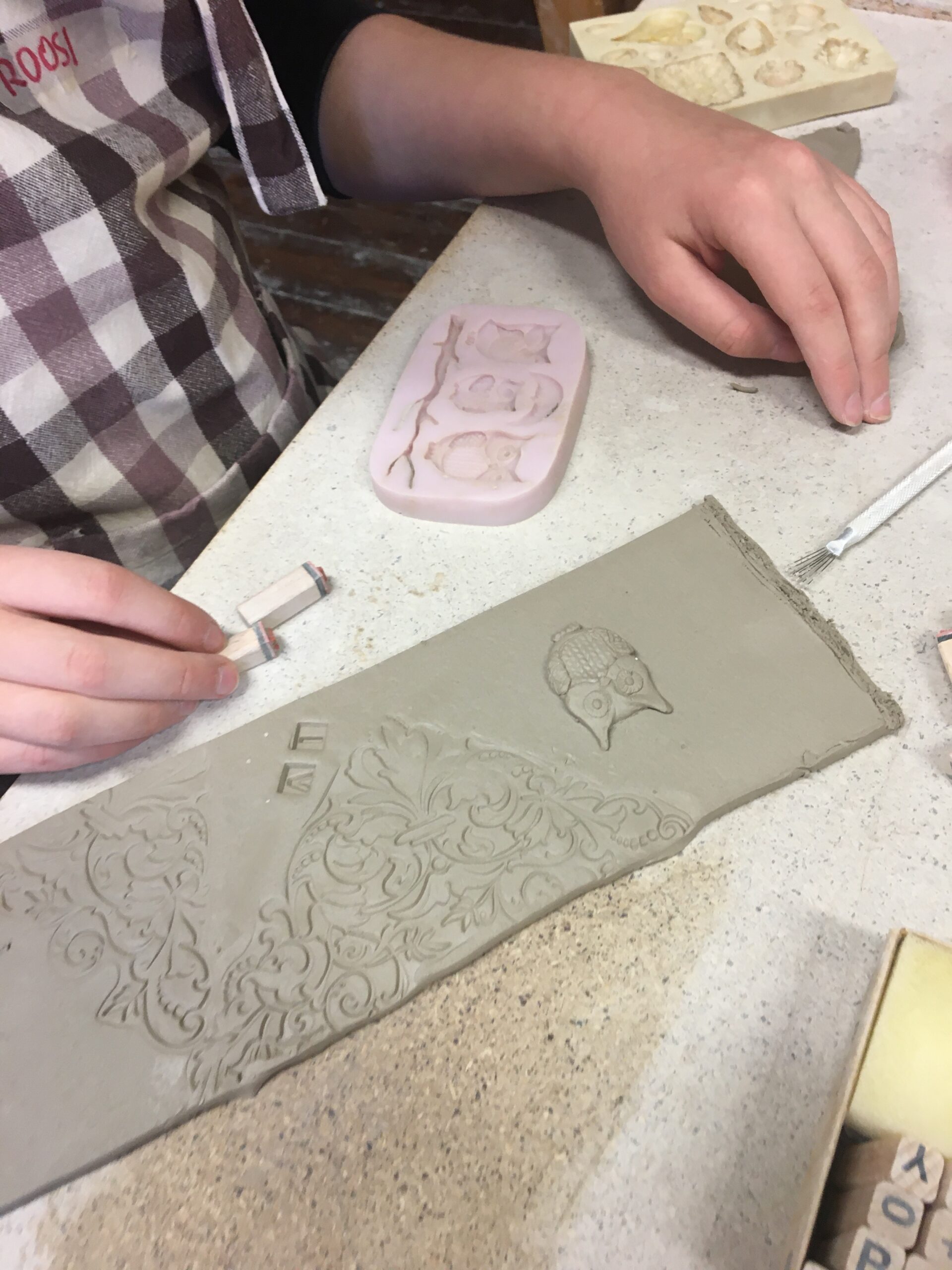
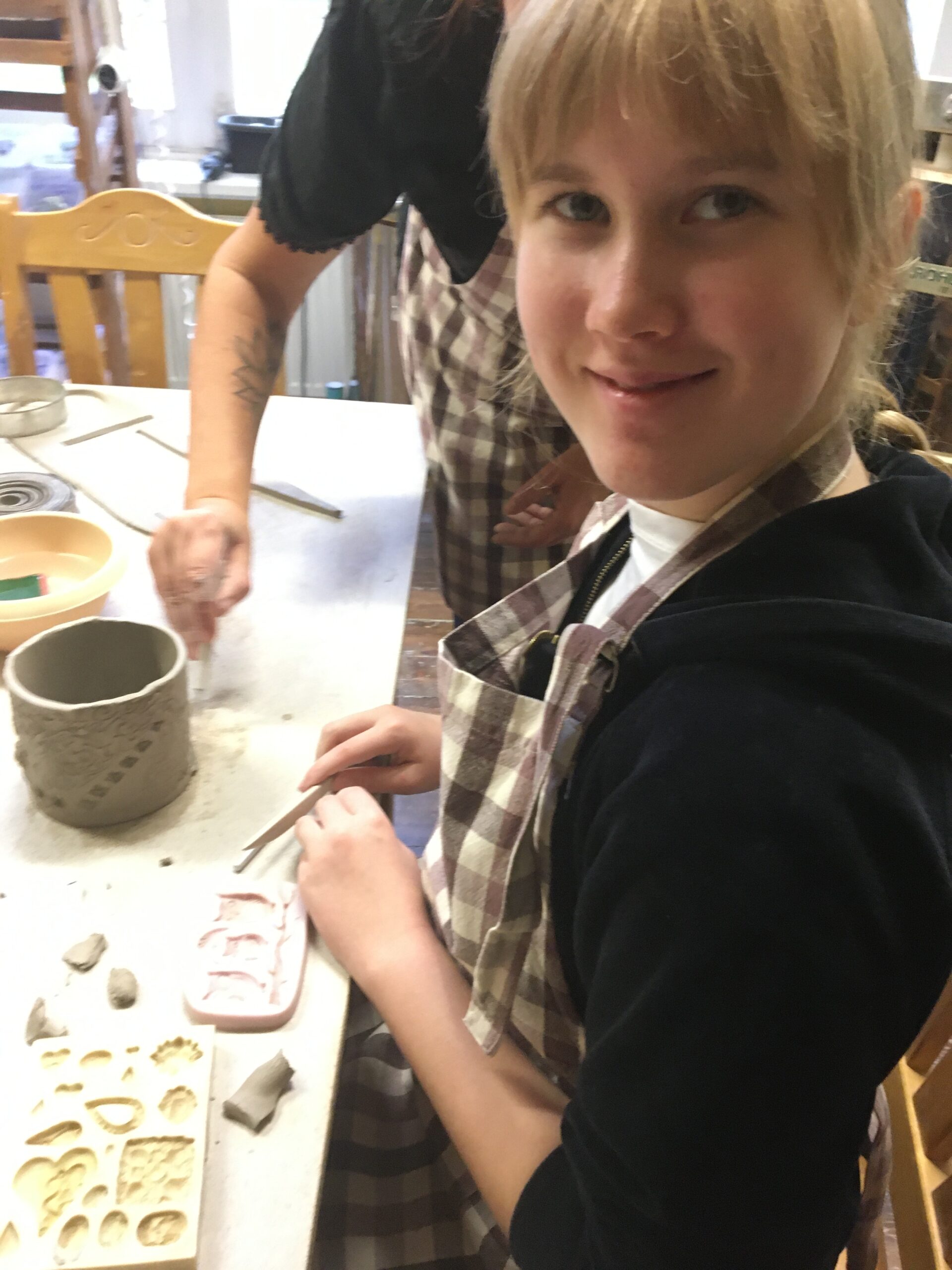
Children are in the middle of an active school year. Both of my daughters have been vaccinated with one shot (I wrote more about their vaccinations HERE), and they will now be receiving the second shot on October 30. This year Ivanka Shoshana has an especially busy schedule. Since her school (Tallinn Tondi School) offers from this year a great variety of different hobby groups, then we selected something for her for each day. Now, besides the current extracurricular individual ceramics class (that she already attends for years), she additionally attends swimming classes, horseback riding classes and folk music group, liberating dance class, crafting group and ballroom dance training. This is quite a serious workload. At home I practice mathematics with her – with the help of hands she can already calculate quite well until twenty. It is, however, sad that the dose (Rispolept 1 mg) has had to be doubled. When earlier she received a quarter of the medication and then in March already a quarter in the morning and in the evening (how distance learning affects an autistic child and how our lives are impacted by her puberty, can be read HERE), then today we give half the pill in the morning an half in the evening. First I was quite scared of any kind of medicine, but today my view is that they actually cure and help treat the condition. You need not feel bad when your child has to take medication (to be honest, it still isn’t easy)… yet only natural treatment, a calm environment and good words won’t help… even as much as you so hope.
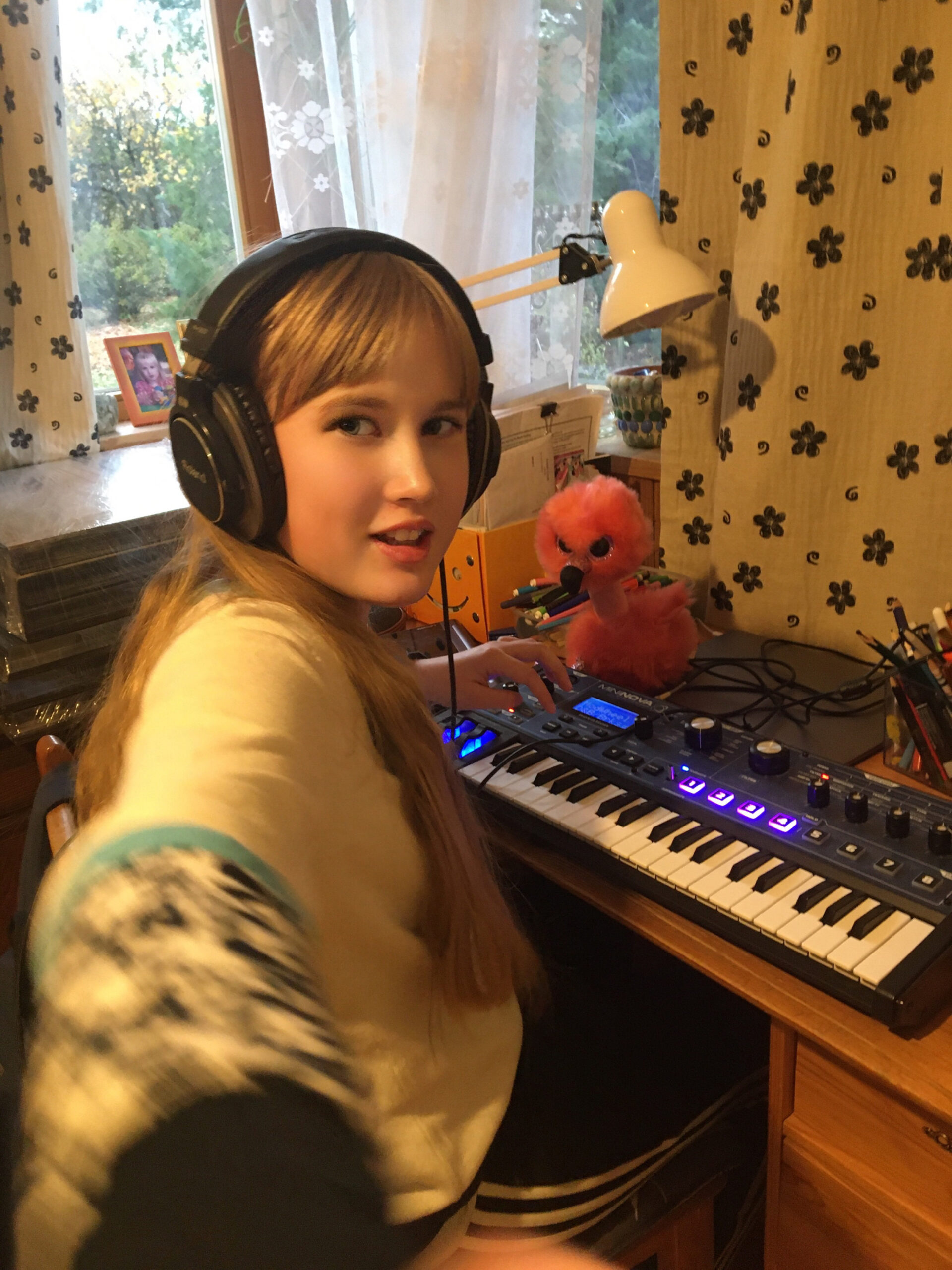
Estella Elisheva continues to be committed to the violin (this week she had two performances and there will soon be a new big contest) and also to football. I am happy to hear beautiful violin music at home almost every day. Ivanka also likes music and since we have quite many instruments at home (piano, violin, synthesizer, drums, music workstation etc) then she, too, often takes a seat behind the synthesizer, puts on the headphones and mixes some music. How cool is that?
This week Estella applied for the AIS (American Councils for International Education) program to become an exchange student in America. Let’s see how it will turn out. There is great interest towards the program and the competition is intense. For the first round the candidates had to fill in a few applications and submit two essays, each one up to 300 words.
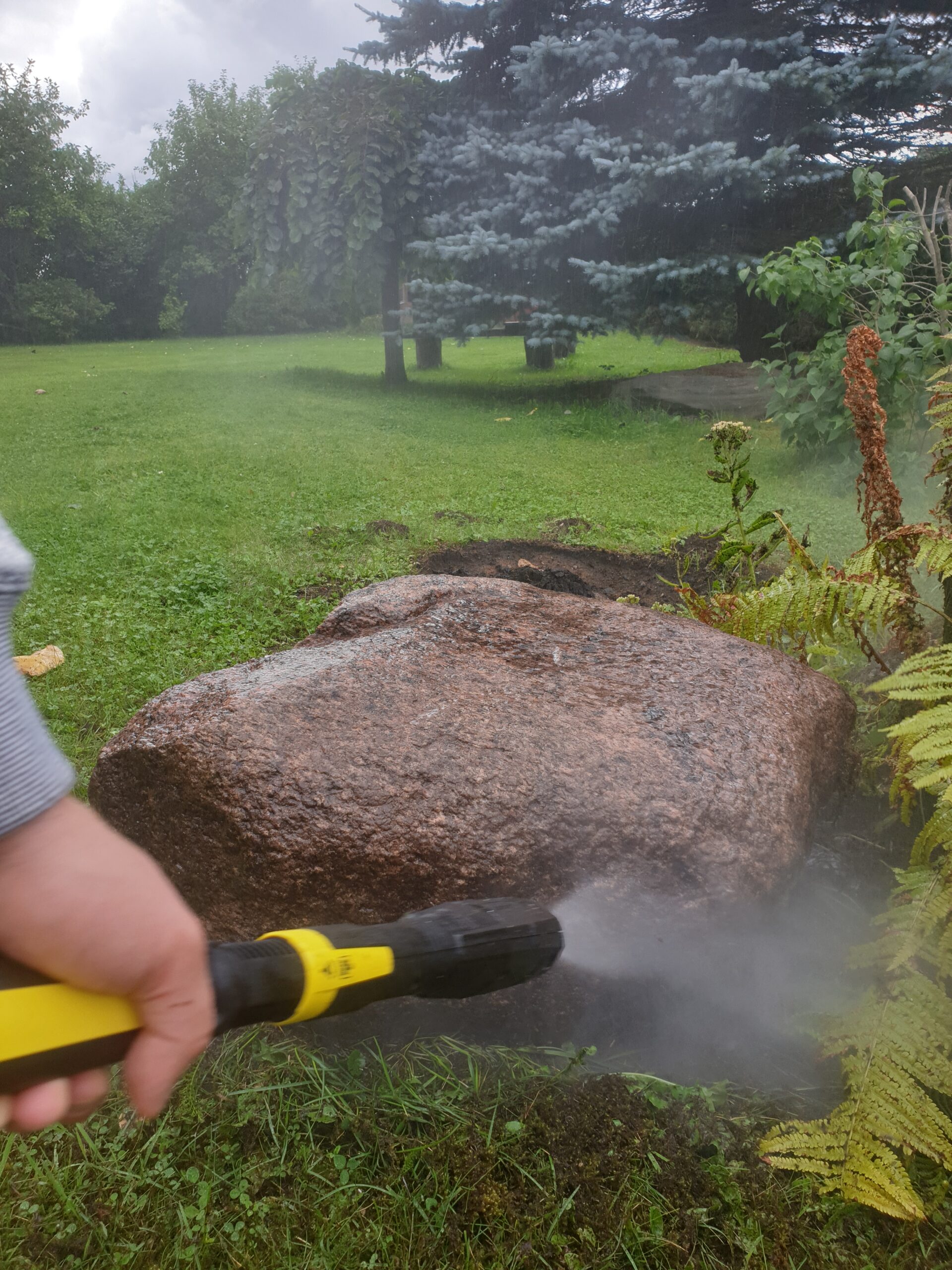
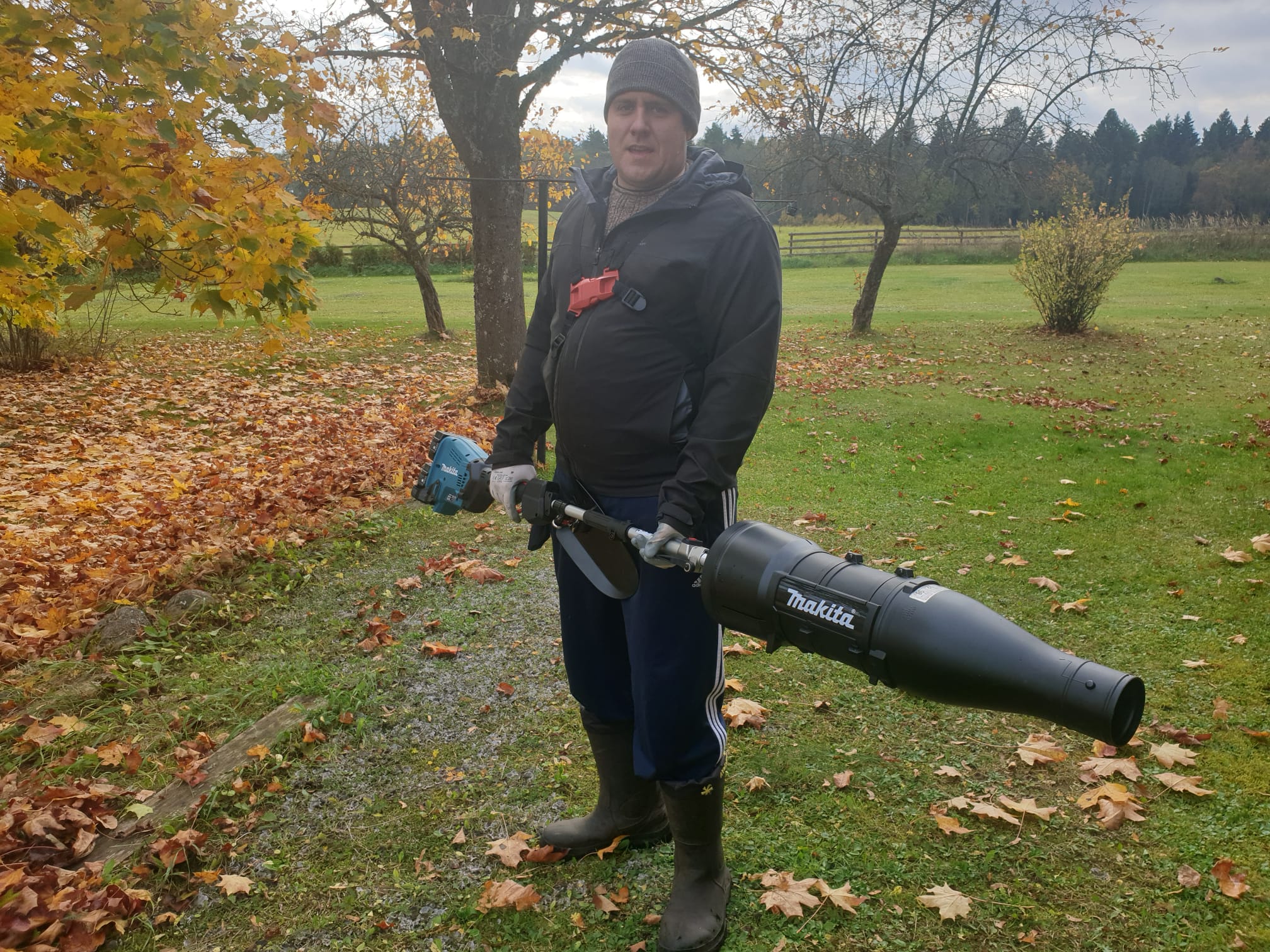
Now about my activities. We have been working in the garden with Allan a lot, and have made plans for renovating the house and the apartment. We purchased two cool tools – Kärcher K 7 PREMIUM SMART CONTROL pressure washer (it cost ca 450.- EUR) and Makita leaf blower (price ca 270.- EUR).
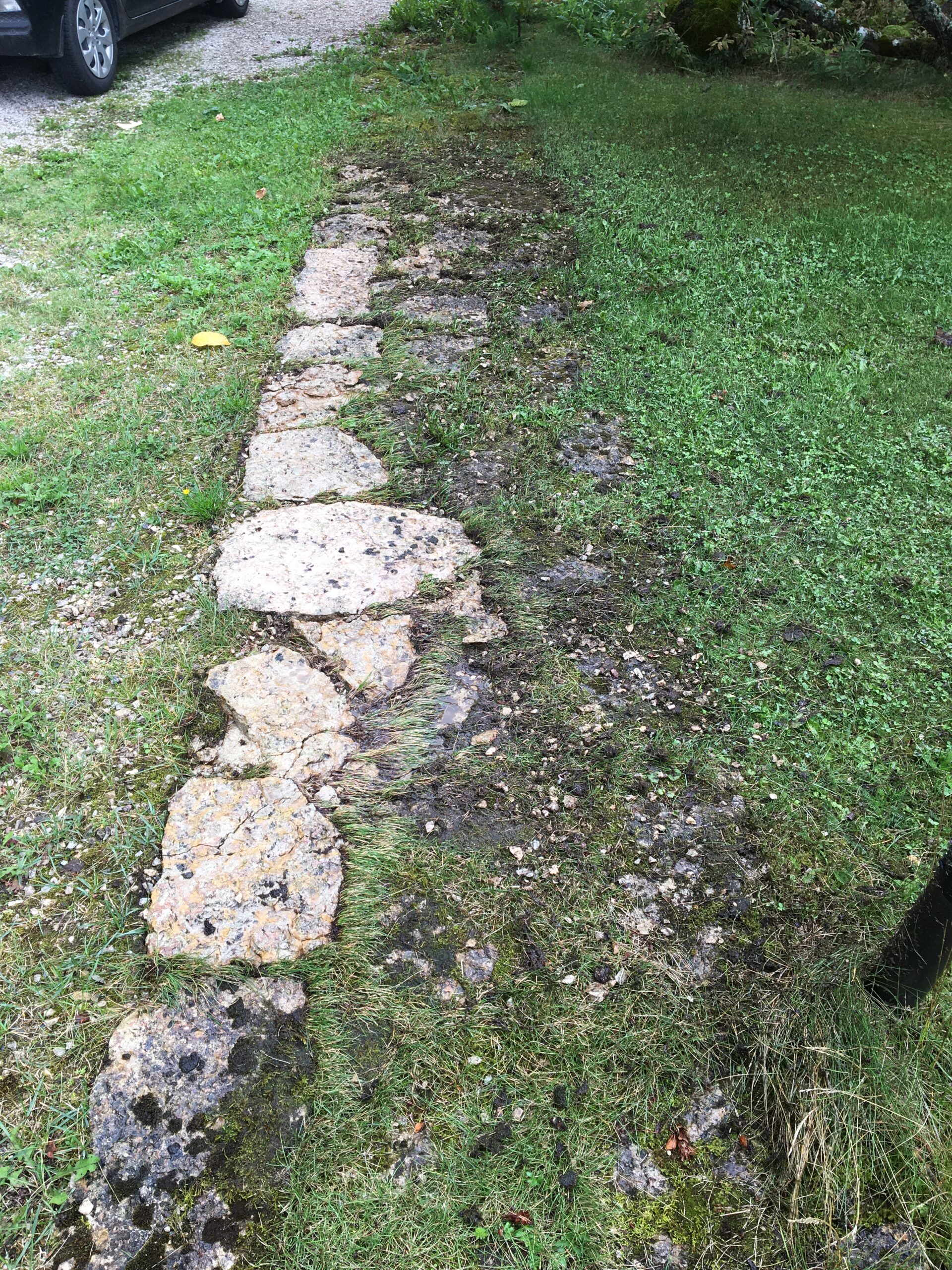
In just a second I will describe the ups and downs of both! First the pressure washer. Indeed, a straight A, really. It is possible to complete so many different types of tasks with this tool – starting from car wash, up to cleaning the roof of the house. We made the old limestone path shine and with playful effortlessness eliminated moss from the stones. Extra to that we also removed the paint from old chairs, etc. This is indeed a multifunctional tool. I recommend it!
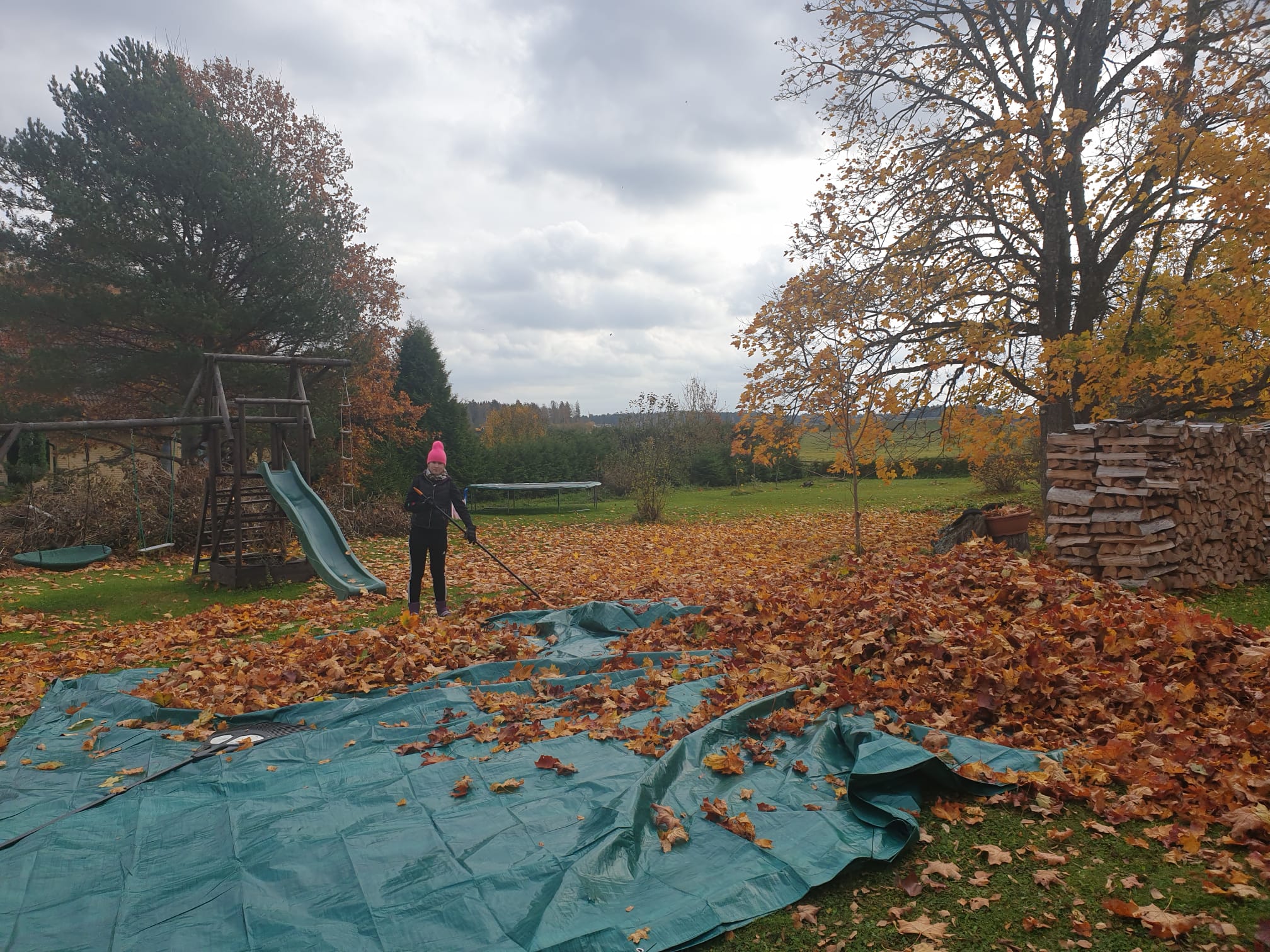
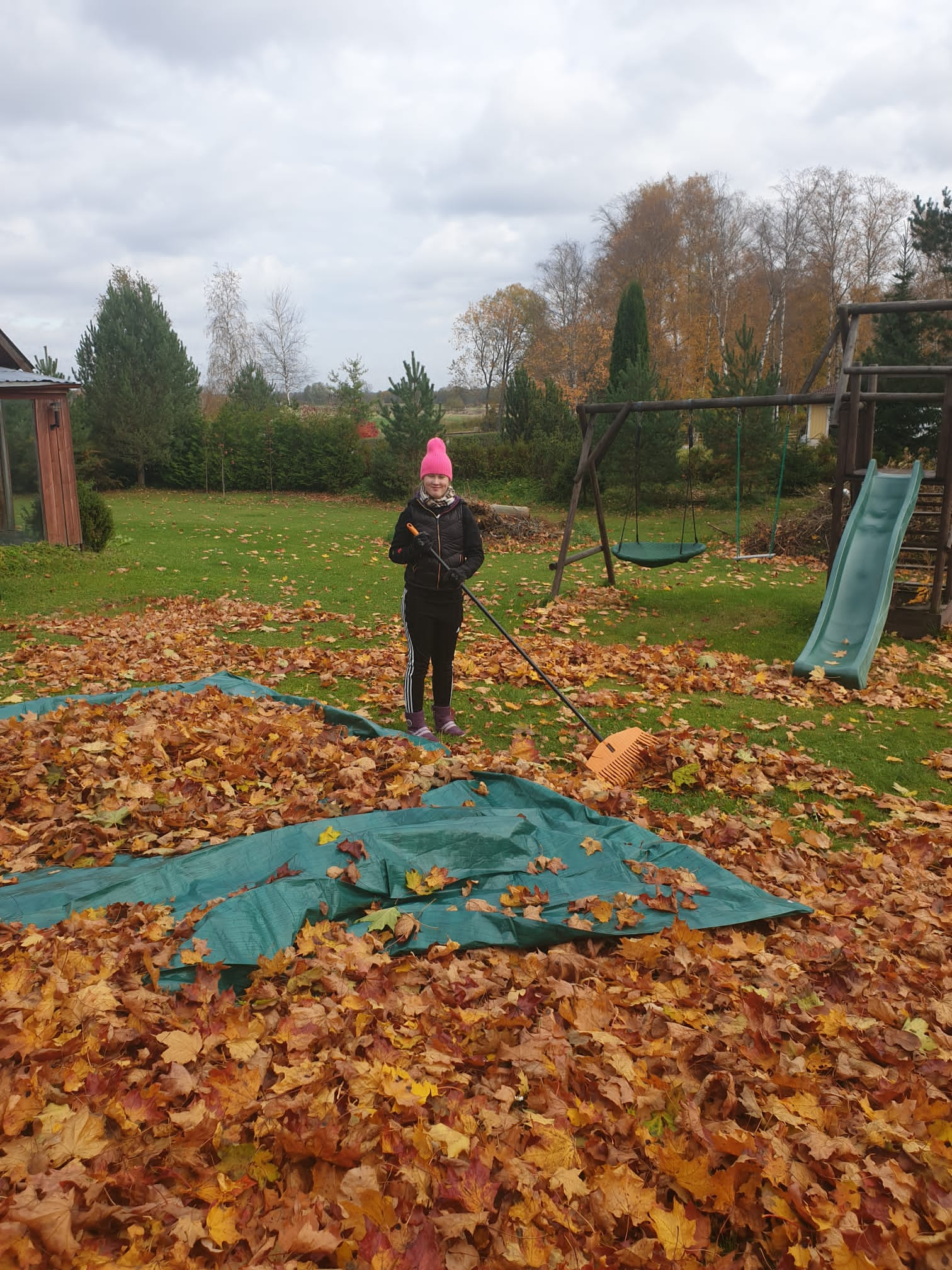
Regarding the leaf blower I am slightly more skeptical, yet I must admit that we also didn’t test it for very long (so far). It is more pleasant to use the leaf blower in places that are more difficult to reach with the rake (bushes, flower beds, etc), yet with a big rake it takes just as long or even less time to collect the leaves. The negative side is definitely the battery (18V 6AH Makita battery), that does not last so long. Those who wish to use the leaf blower, make sure to also have the second spare battery at hand. Besides, due to its size, it is a tool for men rather than for women. We have a large garden, and a lot of leaves. Thus there is plenty of work for the rake, for the leaf blower, for children… However, it is super fun to work together! The fresh air and the workout in your own garden is the best! We have also developed our own tricks… For example, we do not use a wheelbarrow (wheelbarrows) to transport the leaves, this effort is all in vain. We rake all the leaves onto a large piece of plastic and then drag it all to the compost pile. This way everything will be clean very quickly!
That’s all for now! I just prepared dinner (boiled sweet potato, minced meat sauce, tomato salad and sweet lettuce with sour cream) and we are about to dine. Soon there will be guests and in the evening we will go to Viru Hotel cabaret night “Creme de la Creme”.
Nearly 2000 UK, French and Estonian soldiers were conducting field training exercise Bold Panzer on the Central Training Area near Tapa this week. The purpose of the exercise was to complete the process of integrating the new UK-led NATO battlegroup into the 1st Estonian Brigade, thereby creating a cohesive battleforce.
“The integration into the 1st Infantry Brigade is of course our primary goal, so the process really began as soon as we arrived in Tapa and completed our takeover,” says Lieutenant Colonel Simon Worth, Commander of the UK Army´s Royal Tank Regiment, which deployed to Estonia last month, and now leads the NATO Battlegroup. “Leading up to our arrival, the Regiment completed six weeks of intensive training in Germany. This week we have been building on that training and adapting to the demands of the Estonian terrain. The training has certainly paid off. We´re now well underway to being fully integrated into the Estonian 1st Brigade, and will stand ready with our French collegues to contribute to the collective defense of Estonia.”
Exercise Bold Panzer began last week and ended today. Using predetermined areas and battlefield scenarios, the NATO soldiers were conducting operations in the Central Training Area near Tapa, with their colleagues from the EDF´s Scouts Batallion posing as adversaries.
„Allied battlegroup is a part of our territorial defence plan and operates on the same principles as other 1st infantry brigade battalions and companies. Bold Panzer laid a strong foundation for following cooperation and delvelopment,“ said major Dimitri Kondratenko from 1st infantry brigade. NATO battlegroups in the Baltics are led by the United Kingdom, Canada, Germany and the United States. NATO´s enhanced Forward Presence was established in Estonia, Latvia, Lithuania and Poland in 2017.
At today’s sitting, the Riigikogu passed an Act that gives employees with caring responsibilities the right to ask for flexible working conditions and eliminates the mandatory waiting period upon recruitment of 13-14-year-old minors.
The Act on Amendments to the Employment Contracts Act and Amendments to Other Associated Act (361 SE), initiated by the Government, transposes the European Union directive specifying the right of workers and officials with caring responsibilities to ask for flexible working or service conditions, e.g. part-time work or flexible working schedules or remote working arrangements.
The right to ask for flexible working conditions will not bring about an obligation for employers and administrative agencies to offer the conditions asked for, but employers will have to provide reasons for a refusal in such situations. Workers and officials with caring responsibilities are also provided additional protection upon cancellation of an employment contract or release from service and a reverse burden of proof in disputes on cancellation of employment contract or release from service.
Under the Act, upon entry into an employment contract with a 13-14-year-old minor, the waiting period of ten working days from the registration of the minor with the employment register no longer applies. In the future, this obligation will remain in place only upon the employment of 7–12-year-olds. The purpose of the amendment is to reduce both employers’ and the Labour Inspectorate’s workload in respect of recruitment of 13-14-year-old young people. The amendment will help create more flexible working opportunities, while at the same time ensuring effective protection of minors in employment relationships.
The child leave regulation adopted with the amendments to the parental leave and benefit system in October 2018 is also improved. From 1 April 2022, all parents of children under 14 years of age will be entitled to a child leave of ten working days for each child under 14 years of age. It will be calculated from the end of a parental benefit period and the amount of the remuneration paid for it will be 50 per cent of the average salary of the parent.
An automated notification system for the working life information system will be developed that will notify the employer, the registered minor as well as the legal representative of the child of the mandatory conditions and risks related to the specific work that should be taken into account.
During the debate, Siret Kotka took the floor on behalf of the Centre Party Faction.
83 members of the Riigikogu voted in favour of passing the Act.
The Riigikogu passed another Act
The Act on Amendments to the Product Conformity Act and Amendments to Other Associated Acts (372 SE), initiated by the Government, extends the surveillance competences of market surveillance authorities in connection with products offered for sale in e-commerce. Authorities will get access to communication data in order that they would have the opportunity to identify owners of webpages and, where necessary, to restrict access to online interfaces and to require the removal of information content or the display of a warning. The aim of the amendment is to ensure that dangerous products are removed from sale as quickly as possible.
The supervision of products from third countries will also be enhanced. For this, a new requirement for making construction products, personal protective equipment, appliances burning gaseous fuels, and toys available on the European Union market will be introduced. In the case of such products, there will have to be an interlocutor established in the European Union mandated by the manufacturer who can be addressed in the event of additional questions or problems and who is responsible for the availability and verification of declarations and, where necessary, for taking corrective action.
In cross-border cooperation, digital operation and information exchange will be introduced between European Union surveillance authorities. The competence of market surveillance authorities in respect of personal transporters used in traffic and unmanned aircraft system (UAS) intended to be operated in the ‘open’ category is specified. According to the amendments, the Consumer Protection and Technical Regulatory Authority, and not the Transport Administration, will carry out market surveillance of such appliances. For the purpose of more effective sanctioning, the amount of the fine for legal persons is increased from 3200 euro to 32,000 euro.
68 members of the Riigikogu voted in favour of the passage of the Act and 17 voted against.
Seven Bills passed the first reading
The Bill on Amendments to the National Defence Act and Amendments to Other Associated Acts (417 SE), initiated by the Government, will create better preconditions for the use of civil resources for independent defence capability and the hosting of allies, and will comprehensively update the regulation of national defence duties.
The Bill will clarify the imposition of the duty to grant use of items and the expropriation of items, and the relevant powers will be granted to the Defence Resources Agency and the Defence Forces or an agency of executive power authorised by the Government. The current National Defence Duties Act will be repealed, and the issues relating to the duties will be set out in the National Defence Act.
During the debate, Minister of Defence Kalle Laanet took the floor.
The Bill on Amendments to the Land Reform Act and Other Acts (418 SE), initiated by the Government, will make amendments to Acts, in order to help complete the land reform and to reduce the burden of the state in the administration of the agreements entered into in the course of the land reform.
The Bill will resolve problems that have emerged in connection with the land reform. In the course of the land reform, thousands of plots and strips of land that cannot be used independently emerged between immovables. Under the current law, time-consuming land reform proceedings involving a high administrative burden need to be conducted to form separate immovables of these land strips in order to join them to the immovables bordering on them. Under the Bill, such a plot of land can be joined with the immovable bordering on it by a simple land consolidation act, without having to form a separate immovable. Non-reformed plots of land will no longer be entered in a separate register part in the land register, but the boundaries of an existing immovable will be changed.
As at June, according to the data of the Land Board, around 21,000 land units with an area extending to 18,400 hectares have not yet been reformed on the Estonian landmass.
The Bill will also create an opportunity to reform the land under the apartment building if the owner of the dwelling fails to submit an application for the establishment of an apartment ownership by the deadline. It will also be possible to transfer a large share of immovables encumbered with the right of superficies, which are mostly residential buildings, to the superficiaries thereof.
According to the Bill, the administration of the instalment agreements in respect of land entered into upon the privatisation and return of land and the establishment of apartment ownerships, and the performance of the duties of the mortgagee on behalf of the state will be consolidated to the Land Board who is the organiser of the privatisation of land. Thus, the duties of mortgagee that are currently performed by the State Shared Service Centre and the debt proceedings activities will also be transferred to the Land Board.
The Bill on Amendments to the Electronic Communications Act, the Building Code and the State Fees Act (437 SE), initiated by the Government, will transpose into Estonian law the directive of the European Parliament and of the Council establishing the European Electronic Communications Code (the Communications Directive).
The explanatory memorandum notes that, compared to 2002 when the telecommunications market had been liberalised and a new legal framework had been adopted, the electronic communications market has developed rapidly and consumers’ behavioural habits have changed. New data-transmission-based “OTT services” (Over The Top service), such as Skype, WhatsApp and Viber are increasingly more used instead of traditional communications services and telephone and mobile telephone services. In order to ensure equitable protection of the rights of consumers, as is the case with traditional communications services, OTT services will also be brought under the concept of communications service. When all communications companies operating in the communications market are brought under the communications regulation, all electronic communications services companies operating in the communications market will be treated equally.
The Bill will increase consumer rights, in particular with the requirement to provide the pre-contractual information and the contract summary of the communications service contract. With pre-contractual information, the consumer is provided with as detailed an overview as possible of the communications service offered, which should prevent misunderstandings regarding the communications service laid out in the contract and the actual service. With the contract summary, the consumer is provided with an overview of the most important clauses in the communications contract – a description of the communications service, the charge, the duration, renewal and termination of the contract, etc.
For the purpose of ensuring a single European Union communications market, the rules for the deployment of radio frequency bands are harmonised in the EU. Common deadlines for deployment of new radio frequencies are also set.
For the purpose of the construction of very high capacity communications networks, the Bill will facilitate the deployment of small-area wireless access points (small cells) for construction works owned or used by the state or local authorities, for example public construction works, street lamps and traffic lights. In terms of technology, very high capacity communications networks need deployment of a large number of small-area wireless access points (small cells) that ensure the availability of the communications network and uninterrupted coverage. This amendment will be provided for by an amendment to the Building Code.
The Bill will specify the requirements for the use of hardware and software in communications networks so that using them would not endanger national security.
The Bill on Amendments to the Ports Act, the Maritime Safety Act and the State Fees Act (425 SE), initiated by the government, will transpose the relevant directive of the European Parliament and of the Council on port reception facilities for the delivery of waste from ships, amending a directive and repealing an earlier directive.
The definition of “waste from ships” will be introduced, which means all waste, including cargo residues, which is generated during the service of a ship or during loading, unloading and cleaning operations. The obligation of ships upon notification of waste from ships and keeping records on waste from ships will also be amended.
Waste fished passively in the course of commercial fishing that is caught in fishing gear during fishing, for example derelict fishing gear and other marine litter, will be included under waste from ships. No separate fee may be charged in the port for delivery of such waste, but they can be delivered on account of the fee for receiving the waste from ships included in the port dues. This amendment should help prevent the waste caught during commercial fishing from being discarded back into the sea.
The Bill on Amendments to the Electricity Market Act and the State Fees Act (426 SE), initiated by the Government, will transpose the relevant Directive of the European Parliament and of the Council concerning the amendments made in respect of common rules for the internal market in electricity.
The amendments will increase opportunities for distributed generation through a regulation concerning active users of network services. This will give consumers an opportunity to participate more actively in the electricity market and to benefit in particular from changing their consumption habits. The Bill also provides for a regulation relating to the creation, development and management of energy communities, as well as a regulation concerning aggregation and demand response, in order to increase the flexibility of networks, and energy efficiency for consumers.
An obligation to procure flexibility mechanisms from the market through tendering procedures will be provided for for network operators. The Bill also sets requirements for network operators to develop market-based charging networks for electric vehicles.
The Bill on Amendments to the Financial Supervision Authority Act and Other Acts (422 SE), initiated by the Government, will make amendments to the current financial sector legislation. They are related to the implementation and transposition of European Union legislation.
First, it provides for the bases according to which crowdfunding service providers will be able to start to apply for authorisation from the Financial Supervision Authority, and the Financial Supervision Authority will be able to start to exercise supervision over them. The amendment will concern only crowdfunding platforms offering opportunities to invest in businesses, and they will be able to apply for authorisation from 21 November. In addition, the Bill provides for the bases under which crowdfunding service providers will start to pay a supervision fee to the Financial Supervision Authority.
The Financial Supervision Authority will be given the authority to exercise supervision over the information on environmental sustainability and on sustainability risks that banks and other financial market participants submit.
The Bill will also specify what information will have to be provided to foreign listed companies regarding their shareholders located in Estonia, and what information to share to the Estonian shareholders of such companies.
The Bill on Amendments to the State Budget for 2021 Act (431 SE), initiated by the Government, has been drafted in accordance with the State Budget Act under which, in order to amend the state budget without amending the total amount of funds, the Government may initiate a draft State Budget Amendment Act not later than two months before the end of the budgetary year.
Considering that the State Budget for 2021 Act was prepared in the autumn of the preceding year and some of the funding needs have changed, it is expedient to initiate an amendment of the state budget to achieve more effectively the aims set by state agencies. The motions to amend will amend the distribution between expenditure and investments.
During the debate, Heiki Hepner (Isamaa) took the floor.
NordenBladet — The EU Digital COVID Certificate will be introduced nationally. In practice, this means that in Finland the COVID-19 passport can be used in situations and premises which are subject to restrictions. In addition, the temporary provisions of the Communicable Diseases Act which help prevent COVID-19 infections of foreign origin from spreading into Finland will remain in force.On Friday 15 October 2021, the President of the Republic approved the amendment to the Communicable Diseases Act concerning the EU Digital COVID Certificate and entry into the country. The amendment will enter into force on 16 October 2021.COVID-19 passport as an alternative to restrictions on activitiesThe COVID-19 passport refers to the EU Digital COVID Certificate, which is available in the My Kanta Pages (a vaccination certificate, a test certificate or a certificate of recovery). If necessary, the Certificate is also available as a paper version from the healthcare service. As an alternative to the COVID-19 restrictions issued by the Government, the Regional State Administrative Agencies and the municipalities, operators, such as entrepreneurs, who are subject to these restrictions could require their customers to present a COVID-19 passport. The COVID-19 passport will serve as an alternative in situations where the event or premises in question are subject to restrictions. Such restrictions can include restrictions on opening hours or on the number of participants at events. The COVID-19 passport will not, however, serve as an alternative to restrictions in situations where the authorities have closed the premises or prohibited the public event altogether owing to the COVID-19 situation.The COVID-19 passport can be required in the following settings: restaurants, nightclubs and public events, gyms and other indoor facilities for sports or physical activity, swimming centres and spas, dance halls, spaces used for group leisure activities, amusement and theme parks, indoor facilities for zoos, indoor playgrounds and play centres, and museums, exhibition spaces and other similar cultural venues.People aged 16 and over can be required to present a COVID-19 passport but the testing of 16–17-year-olds for the purpose of issuing the passport should be secured in public healthcare, if the person has not received the COVID-19 vaccine doses.In accordance with the current COVID-19 restrictions, the COVID-19 passport can currently be required by restaurants in areas which are subject to COVID-19 restrictions, i.e. the Greater Helsinki area, Southwest Finland, Satakunta, Ostrobothnia and Päijät-Häme. It is possible to introduce the COVID-19 passport more widely if restrictions need to be imposed on other areas, too.A mobile app to scan the COVID-19 passportEvent organisers requiring customers to show a COVID-19 passport can scan the passport using the COVID certificate reader app approved by the Finnish Institute for Health and Welfare, which is downloaded on a mobile device. It will be available free of charge from the app store. The COVID certificate reader will not collect or store data shown on the Certificates.Stakeholder event on the introduction of the COVID-19 passport held on 15 OctoberThe Ministry of Social Affairs and Health, together with the Finnish Institute for Health and Welfare, the Social Insurance Institution of Finland and the Regional State Administrative Agencies, held a stakeholder event on the introduction of the COVID-19 passport on Friday 15 October. The event was meant for stakeholders, such as public and private operators and event organisers, i.e. for those who could require their customers to present a COVID-19 passport. Provisions on entry into the country to remain in forceThe temporary provisions of the Communicable Diseases Act aim to protect the health of the population by preventing COVID-19 infections of foreign origin from spreading into Finland. Similar health security measures are in place in many EU countries. People arriving in Finland who were born in 2005 or earlier will still be required to have a certificate of recovery from COVID-19 within the past six months, of a completed and approved course of COVID-19 vaccination or of a negative COVID-19 test taken before arrival in Finland. Those who have a certificate of a reliable COVID-19 test taken before arrival in Finland indicating a negative result or a certificate of their first COVID-19 vaccine dose must undergo a second test within 72-120 hours of their entry into the country. Alternatively, people must undergo a COVID-19 test after arriving in Finland and a second test within 72–120 hours of their arrival. The obligation to show proof or be tested for COVID-19 will not apply to people who have, for the last 14 days prior to their arrival in Finland, stayed only in countries or regions where the incidence of COVID-19 or the prevalence of virus variants does not pose a particular risk of spreading the epidemic. Provisions on such countries and regions are issued by government decree.In addition, a supplementary provision on executive assistance will be permanently added to the Communicable Diseases Act. The provision will include Customs as an executive assistance authority. This amendment will enable Customs to provide executive assistance in checking health certificates.
At today’s sitting, the Riigikogu discussed the Cohesive Estonia Development Plan 2021–2030, which aims to make Estonia more cohesive and inclusive over the coming decade. The development plan focuses on the promotion of adaptation and integration, Global Estonia, the civil society and population accounting.
Minister of Culture Anneli Ott and member of the Cultural Affairs Committee Signe Kivi presented the development plan and the proceedings relating to it.
Minister of Culture Anneli Ott stated that, although social integration had been consistent, and there was more understanding in society, and people of different nationalities had a strong national identity, there was still a lot of language-based separation and consequent inequality. In the opinion of the minister, inequality and a lack of a sense of unity may however bring about a polarisation of society and increase the probability of value conflicts between people of different linguistic and cultural backgrounds.
In the minister’s words, over the coming years, the adaptation and integration policy is intended to support local governments who will have the opportunity and capacity to contribute more to integration. Ott emphasised that it was necessary to shape a common, understandable and reliable communication space, and the digital transition was inevitable. At the same time, it is necessary to facilitate the establishment of contacts fostering the sense of solidarity and to ensure an opportunity for people to improve their Estonian language skills. “This way we will be more likely to achieve a more cohesive and stable society,” Ott said. “This will be an Estonia where people of different linguistic and cultural backgrounds carry Estonian identity, participate actively in social life, share democratic values and a common cultural, information and communication space, and equal opportunities for successful independent living and wellbeing have been created for them.
In the opinion of the Minister of Culture, the civil society is the key issue; its influence must be strengthened, at the same time also supporting the development of NGOs. “The civil society is one of the mainstays of a cohesive and inclusive society. It is a pledge of the sustainability and security of a country,” Ott said. In the minister’s words, communities are not engaged and empowered systematically and on a daily basis in local governments. Therefore it is planned to implement a co-creation development programme directed at local governments and communities, and on the basis of its results, a model for co-creation of communities will be drawn up.
The minister also drew attention to the problem of the small proportion of permanent donors in Estonian society and called for looking for ways to promote donating.
The minister considered the promotion and upholding of Estonian identity abroad one of the important tasks for the next decade. She noted that the Estonians living abroad were part of the cohesive Estonian society regardless of their location. In order that they would not lose contact with Estonia, it is necessary to continue to communicate with the Estonian community abroad and to involve them systemically. “It is important that the people living abroad maintain their Estonian identity, feel the support of our country and get an opportunity to participate in the life of Estonian society. Only then can they help promote our country and reinforce its good reputation, thereby contributing to ensuring the Estonian economy and security,” Ott noted.
She added that big steps needed to be taken to facilitate the return of Estonians to their native country. “For smoother return and adaptation to life in Estonia, we will ensure services supporting the return, we will consolidate the knowledge about the people who return, and we will increase awareness of society. We will involve more local governments and improve their capability in supporting the people who return,” Ott said.
The minister also highlighted the digital transition as a key topic of the development plan. She said that the heart of the Estonian electronic governance was smart population accounting that supported a cohesive society as well as undoubtedly all other sectors of national life. In the words of the Minister of Culture, the software of the population register is outdated and does not allow for the creation and development of up-to-date services, nor do the current data collection procedures ensure the quality of data that would meet the users’ expectations. She noted that the development plan was intended to keep pace with technological development, to take account of the changing needs and habits of people, and to simplify procedures for everyone. As the most tangible change for the citizen, the minister pointed out the plan to create more proactive government services where, in the case of a life event, a person can conduct their affairs with the state in a once-only communication and mostly automatically. For example, when submitting a marriage application, it will be possible to apply for new identity documents, or when using the online service relating to the birth of a child, the birth will be registered immediately.
Member of the Cultural Affairs Committee Signe Kivi gave an overview of the discussion that had been held at the joint sitting of the Cultural Affairs Committee, the Foreign Affairs Committee and the Legal Affairs Committee.
During the debate, Jüri Jaanson (Reform Party), Jaak Valge (Estonian Conservative People’s Party), Marko Šorin (Centre Party), Eduard Odinets (Social Democratic Party), Heiki Hepner (Isamaa), Tarmo Kruusimäe (Isamaa), Peeter Ernits (Estonian Conservative People’s Party) and Paul Puustusmaa (Estonian Conservative People’s Party) took the floor.
A Bill was dropped from the proceedings of the Riigikogu
The Bill on Amendments to the Estonian Public Broadcasting Act (393 SE), initiated by Member of the Riigikogu Viktoria Ladõnskaja-Kubits, was intended to ensure that the appointment of the acknowledged experts in the field of activity of the Estonian Public Broadcasting to the Estonian Public Broadcasting Council would be more independent of political procedure.
The Bill would have amended the regulation of the appointment of the acknowledged experts in the field of activity of the Estonian Public Broadcasting to the Council. Under the current Act, the Riigikogu appoints experts to the Estonian Public Broadcasting Council on the proposal of the Cultural Affairs Committee of the Riigikogu. The Bill proposed to establish a system where the authorities, institutions or representative organisations specified in the Act, such as Universities Estonia, the Association of Journalists, the Employers’ Confederation and the Bar Association, appoint members to the Council.
According to the Bill, the procedure for the appointment of the members of the Council who are members of the Riigikogu would have remained unchanged – the Riigikogu appoints a representative from each faction of the Riigikogu.
During the debate, Mihhail Stalnuhhin (Centre Party), Peeter Ernits (Estonian Conservative People’s Party) and Eduard Odinets (Social Democratic Party) took the floor.
The Cultural Affairs Committee as the lead committee moved to reject the Bill at the first reading. 64 members of the Riigikogu voted in favour of the motion, 12 voted against and there was one abstention. Thus, the Bill was rejected and it was dropped from the proceedings.
NordenBladet — The Ministry of Agriculture and Forestry has adopted the updated Management Plan for the Lynx Population in Finland and confirmed the hunting quota for lynx for the period 2021–2022. The management plan is a key element of the policy on large carnivores and management of their populations.The lynx population in Finland is at a favourable conservation status. As a species, lynx is included in the category ‘Least Concern’. Under the Habitats Directive lynx is a strictly protected species, but it can be found in all parts of Finland. For the most part people’s views regarding lynx are either neutral or positive, and for hunters it is a highly valued game animal species. Lynx is being hunted every year by virtue of special permits for population management purposes. The measures of the management plan adopted today aims to respond to the needs of both the people living in or close to lynch habitats and those related to the protection of the lynx population, taking into account the social and economic requirements and the special characteristics of different areas.“In the management of the lynx population, the aim is to maintain a favourable conservation status for the population while continuing the measures that have proven effective. The measures of the management plan include the monitoring and study of the lynx population, preventing damages caused by lynx and compensating for any damage caused, and population management,” says Vesa Ruusila, Senior Ministerial Adviser at the Ministry of Agriculture and Forestry.The management plan also supports multi-species population management, which means that interaction between large carnivores and their prey is also taken into account. In Finland, for example, lynx preys on many kinds of animals. Their range varies from region to region and, besides hares and rabbits, especially in western Finland lynx also preys on small deer. In some areas lynx may kill large numbers of small deer, but this is not necessarily enough to regulate the populations of the species it preys on.“In areas with dense white-tailed deer and roe deer populations, what is needed the most to reduce these populations is the commitment and valuable efforts of hunters. In multi-species population management – including lynx – more information from research and coordination between the different management plans of the game administration are needed,” Vesa Ruusila says.Implementation of the management planThe main responsibility for the implementation of the Management Plan for the Lynx Population in Finland rests with the Finnish Wildlife Agency, the Natural Resources Institute Finland and the Ministry of Agriculture and Forestry. A person to be designated at the Finnish Wildlife Agency will coordinate and monitor the implementation of the management plan. The previous Management Plan for the Lynx population dates back to 2006. The process to update the management plan was led by the Finnish Wildlife Agency, and the management plan and its background material were circulated for comments at the turn of the year 2017–2018. The opinions received (14 statements) were taken into account when finalising the management plan. In September 2021, the Ministry of Agriculture and Forestry organised a stakeholder event to discuss the finalised draft management plan.Lynx population is regulated by huntingThe population management measures in the management plan also include hunting of lynx for population management purposes. According to the decree adopted by the Ministry of Agriculture and Forestry, the hunting quota for lynx for the hunting season 2021–2022 outside the reindeer herding area in Finland is 320 individuals. The quota is 13 individuals higher than in the previous period, and it means that the population will be reduced by about 15 %. The objective of the quota set by the decree that enters into force today is to control the population in areas with a dense lynx population, thus ensuring the social sustainability of the population. Even if quite abundant, the lynx population does not have similar negative impacts on people’s livelihoods in the rest of Finland as it does in the reindeer herding area.“The aim of lynx hunting and regulation of its population is to make sure that lynx continue to be afraid of humans. A denser lynx population in a certain area means that they may start to move and prey closer to people’s homes. Another objective of hunting is to reduce damage to reindeer caused by lynx and its predation on Finnish forest reindeer,” says Minister of Agriculture and Forestry Jari Leppä.The lynx population has been growing for the past two years. According to the latest population estimate, i.e. that for 2021, the lynx population had grown by about 4% from the previous year. Between 2019 and 2020 the population had grown by 11 %. The damages to reindeer caused by lynx every year amount to about one million euros. In 2020 they totalled about EUR 1.22 million. No specific quota for lynx is set for the reindeer herding area. The Finnish Wildlife Agency decides on the more detailed regional allocation of the special permits in other parts of Finland.
NordenBladet — EU foreign ministers will convene in Luxembourg on Monday 18 October. The main items on the agenda will be the EU’s Eastern Partnership, Ethiopia, the Persian Gulf and Nicaragua. Topical issues on the agenda will include Afghanistan, climate diplomacy, Tunisia and the Western Balkans.The Foreign Affairs Council will discuss the Eastern Partnership summit (EaP summit) to be held in December, which is expected to agree on the priorities for the Eastern Partnership in the coming years. Finland considers the success of the summit important and stresses that, in addition to a comprehensive economic and investment programme, the work programme should emphasise the rule of law, anti-corruption activities, good governance, fundamental rights, and a common value base as well as the related conditionality. Foreign ministers will also discuss the current situation in Ethiopia and explore ways in which the EU can promote a ceasefire and dialogue between the parties to the crisis. The Foreign Affairs Council will also discuss the situation in the Persian Gulf. It is in Finland’s interests to strengthen regional stability and to promote dialogue in the Persian Gulf. Concerns have been expressed regarding the presidential elections in Nicaragua in November, which is why foreign ministers will discuss the EU’s approach to Nicaragua’s future governance and look into ways to support the democratic opposition. The Foreign Affairs Council is expected to adopt conclusions on Bosnia-Herzegovina and the ongoing Operation EUFOR Althea.
NordenBladet — Finland bears its responsibility as part of the climate finance pledge of the Paris Agreement. At the United Nations Climate Change Conference, Finland will announce support for adaptation measures in developing countries in particular. The COP26 United Nations Climate Change Conference will be held in Glasgow from 31 October to 12 November 2021.As part of responsible climate policy, Finland participates in supporting climate action in developing countries. In addition to climate finance, Finnish innovations and expertise are also important in this context.Finland has increased its international climate finance during the current government term by 80%, almost doubling it from the previous four-year period. Around two-thirds of climate finance is investment finance in the form of loans and equity, which is also used to leverage a significant amount of private finance. The financing model helps to multiply the climate impact.Finland will return as a donor to the Adaptation Fund (AF) under the United Nations Framework Convention on Climate Change with EUR 7 million and continue to support the Least Developed Countries Fund (LDCF). In addition, a financial package of EUR 30 million will be announced to support weather and early warning services in developing countries.Weather services and early warning systems are one example of the significant results achieved with Finnish finance. An estimated 1.4 million people in the least developed countries have lost their lives in various weather and water-related natural disasters since 1970. Finland has responded to these needs by strengthening the ability of its partner countries to cope with extreme weather phenomena. Ongoing projects allow nearly 300 million people in Nepal, Sudan, Vietnam, Kyrgyzstan, Tajikistan and Ethiopia to benefit from improved weather and early warning services.Finland’s support also strengthens the capacity of people, communities and small and medium-sized enterprises to adopt clean basic energy solutions, especially in rural areas. Energy and Environment Partnership Programme EEP Africa has invested EUR 50 million in 270 early-stage renewable energy companies since 2010. The business generated by the programme has created almost 9,000 jobs – 3,500 of them for young people – and it generates a total of 263 GWh of energy per year for a total of 900,000 households. Finland ensures that renewable energy solutions benefit women and girls in particular.Finland has been promoting carbon pricing globally for many years. Carbon pricing is one of the most important means of reducing emissions globally. Finnish finance has helped develop carbon pricing mechanisms in seven countries and supported a total of 28 emissions trading systems, carbon taxes and carbon offset mechanisms globally.“Finland has vast research and business expertise in many areas that are crucial to climate action. In addition to the meteorology and energy sectors, the soil carbon sequestration and circular economy sectors also provide new solutions and technologies for climate action in developing countries. However, the fact is that the public sector alone will not solve the climate issue. We need everyone’s contribution, and it is essential that citizens can also support climate action,” says Ville Skinnari, Minister for Development Cooperation and Foreign Trade.Finnfund is a significant actor in the Finnish impact investing and developing country investment ecosystems. In its recent Climate and Energy Statement, Finnfund commits itself e.g. to make 1 billion euros worth of new climate investments by 2030 and to keep its investment portfolio net carbon negative. Currently, about half of Finnfund’s funding is targeted to climate actions.The significant increase in our international climate finance is in keeping with the statement in the Government Programme that Finland will scale up climate finance as a part of its development finance, taking due account of its contribution based on the Paris Agreement. The objective is a balanced distribution of finance for mitigation and adaptation. Finland’s finance is part of a joint commitment by developed countries to support developing countries’ climate action with USD 100 billion per year from 2020 to 2025. During this period, Finland will support developing countries’ climate action with a significant financial contribution of approximately EUR 900 million. Finland’s international climate finance as a whole will be reported to Parliament annually in connection with the annual climate report.Examples of the results of climate finance can be found in the ongoing #munvaikutus campaign of the Ministry of Foreign Affairs. More information on Finland’s international climate action is available on the website of the Ministry of Foreign Affairs.
NordenBladet — The first phase of a meeting of parties to the UN Convention on Biodiversity provided good prospects for further negotiations aimed at halting biodiversity loss. Hosted by China in Kunming and partly arranged as a virtual event, the main achievement of the meeting was a unified message concerning the level of ambition in necessary measures. The Declaration stresses the need for swift action in all areas of society to halt the loss of biodiversity.“The environment is a cornerstone of our existence. The common message from the countries assembled in Kunming was clear: we must finally raise the issue of halting biodiversity loss and protecting ecosystems at the core of all of our economic activities,” explains Krista Mikkonen, Minister of the Environment and Climate Change.Biodiversity loss recognised as a crisis threatening the existence of mankindBiodiversity loss means a decline and disappearance of habitats and species that threatens many ecosystem services provided by the natural environment as it worsens. The second part of the UN Biodiversity Conference in April-May 2022 is due to agree on the common goals, objectives and measures of countries to halt global biodiversity loss. The main aim of the first stage was to seek a common policy in support of the preparations. This policy took the form of the Kunming Declaration adopted on Wednesday by all 196 countries involved in the UN Convention on Biodiversity and the European Union. The USA is not a party to the Convention.The Kunming Declaration states that biodiversity loss threatens the existence and wellbeing of mankind, our societies and our cultures. The Declaration also includes a 17-point list of principles to which the parties are committed. These include mainstreaming biodiversity into all aspects of society and strengthening resources to safeguard the environment. The Declaration is strongly based on scientific assessments.“The Declaration is precisely what the European Union and Finland were seeking. It provides a strong mandate to promote an ambitious global environmental policy. The target of protecting 30 per cent of the world’s land and sea areas enjoyed a great deal of support at the Conference. Restoration efforts were similarly supported. We shall negotiate further on these aspects in January,” says Chief Negotiator Marina von Weissenberg.The countries state in the Declaration that reversing the course of biodiversity change will require a combination of measures. These include protecting and restoring biodiversity, sustainably using natural resources, soil, waters and seas, mitigating climate change, controlling invasive alien species, eliminating environmentally harmful subsidies, and reorienting post-pandemic recovery policies towards solutions that are sustainable with respect to climate and the environment.“It was also considered important for indigenous peoples and local communities to be involved in promoting environmental conservation and sustainable use. The role of women, girls and young adults in this work was also stressed,” Chief Negotiator Marina von Weissenberg continues.Highlighting the link between biodiversity loss and climate changeBiodiversity loss is closely linked to climate change. Climate change is a major threat to biodiversity, and loss of biodiversity accelerates the climate crisis. Safeguarding biodiversity correspondingly promotes mitigation of climate change and adaptation to such change. The link between biodiversity loss and the fate of climate change was also highlighted in Kunming.New financing commitments from such parties as the European Union, France, Japan and the host country, China were heard at the Conference. China is establishing its own fund for biodiversity, and France proposed the use of 30 per cent of the country’s emissions trading revenues for biodiversity.“Biodiversity is now mainstreaming at a rapid pace in all areas of society. The private sector is also committed to halting biodiversity loss, with many international financial institutions placing biodiversity loss on their agendas, for example,” von Weissenberg notes.Geneva will be the venue for further negotiations in January, with decisions prepared for the April-May meeting of parties. The May Conference in Kunming will seek to confirm concrete and numerical targets to halt biodiversity loss.
NordenBladet — The centenary of Finland’s independence in 2017 showed that small-scale everyday matters with positive aspects that are characteristic of Finnishness can also be celebrated in connection with official anniversaries. This emerges from a study produced by the Center for Cultural Policy Research Cupore, Owal Group and Demos Helsinki. The three thematic reports of the study assessed the impacts of Finland’s centenary year.The open call for projects and the thousands of project proposals submitted for the centenary were a phenomenon that differed from previous official anniversaries. With this approach, citizens and actors in society were able to define the content of the anniversary year through their own activities. The democratic way of implementing the centenary events is characteristic of Finnish society in 2017 and the model of extensive inclusion can also be applied in future national celebrations and anniversaries.A broad range of different topics connected with Finnishness were covered during the year but no specific themes concerning Finnish society were highlighted during the centenary. Many of the centenary programme projects discussed such themes as equality and non-discrimination and in addition to history and the present, the focus was also on the future in general. However, there were no attempts to present any visions for Finland as a society. The debate on social issues was left to individual programme projects and the parties behind them.According to the study, the anniversary year did not have any major impacts on the diversity of Finnish society. Citizens experienced the centenary as an inviting but brief phenomenon. According to the study, the sense of togetherness among Finns seems to have weakened somewhat during the three years following the anniversary year.The programme projects of the anniversary year provided an opportunity to look back at major national narratives and spectacular heroic acts but also to reflect on such matters as daily life, work and events of local importance during the decades of independence. During the anniversary year, joy coexisted with dignity, and this change was welcomed by the citizens. It seems that there was a stronger emphasis on the joyful aspects of the celebrations than during past anniversaries.It also emerges from the study that the centenary year did not change the way in which Finns celebrate their country’s independence or the key themes of national identity and Finland’s country image. The focus remained on the traditional themes of Finnishness and national independence. The film ‘Unknown Soldier’, war veterans and the Independence Day reception at the Presidential Palace still play a key role in the celebrations.Thus, according to the study, the diversity of the centenary year did not give rise to any new national narratives of major importance. Nevertheless, potential new themes and traditions reflecting the national identity in such areas as joy, daily life and diversity emerged during the centenary year. The programme and tone of the anniversary year will provide building blocks for a multifaceted Finnish national identity well into the future. The social situation in 2017 in the aftermath of the refugee crisis of 2015 was one reason why the anniversary year was presented as a cheerful celebration characterised by openness. The third sub-report on the impacts of Finland’s centenary year discusses national identity and image. The fourth sub-report sums up the results of the report series examining the impacts of the centenary year. The first report, discussing cooperation and organisation, was published in September 2020. The second report, focusing on participation and inclusion, followed in December 2020.