NordenBladet —Head of the Estonian delegation to the Baltic Assembly, Chairman of the Cultural Affairs Committee of the Riigikogu (Parliament of Estonia) Aadu Must and Chairman of the Foreign Affairs Committee of the Riigikogu Enn Eesmaa attend the celebrations of the 30th anniversary of the Baltic Way in Riga.
“The Baltic Way, whose 30th anniversary we are celebrating today, was a wonderful thing! It changed every one of us, as well as the world around us,” Must said. “It made us all understand that our three nations – Estonians, Latvians and Lithuanians – are not alone in their desire for freedom, and that together we are much, much stronger. The world also learned that the freedom of the three Baltic states was something everyone in our countries desired. People in different countries of the world sympathised with the Baltic Way,”
Must emphasised that the values of the Baltic Way were carried forward among others by the Baltic Assembly, which united the three Baltic Parliaments, because there was more energy in doing things together and it gave better result.
Eesmaa recalled that 30 years ago the people of Estonia, Latvia and Lithuania stood side by side and hand in hand, forming a human chain from Tallinn to Vilnius. “The striving for freedom and right to self-determination of the three nations and their belief in democracy bore fruit,” said Eesmaa.
In Eesmaa’s opinion, this is a living memory of the past, and we will never forget the support of the international community to the Baltic States. “Now we are ready to share our experience with those who are about to make or have already made similar decisions on the development of their countries,” Eesmaa said, keeping in mind first of all the Eastern Partnership countries Ukraine, Moldova and Georgia.
The members of the Presidium of the Baltic Assembly and the Prime Ministers of the Baltic States meet in Latvia today. A festive ceremony will be held at the Freedom Monument in Riga, an exhibition on the Baltic Way can be viewed at the Freedom Square, and a room dedicated to the Baltic Way will be opened in the Latvian Parliament. The evening will culminate in a concert, where essays by Winners of the Baltic Assembly Prize in Literature Māris Bērziņš (Latvia), Hasso Krull (Estonia) and Vladas Bražiūnas (Lithuania) will be read out.
NordenBladet —President of the Riigikogu (Parliament of Estonia) Henn Põlluaas met with Vice-President of India Muppavarapu Venkaiah Naidu today. They discussed e-governance and intensifying of bilateral parliamentary cooperation.
“The excellent relations between Estonia and India have become closer in recent years,” Põlluaas emphasised. He said that although Estonia and India were different, they still had very many common interests. Among other things, he mentioned international cooperation to combat terrorism in the changed security situation.
Speaking of practical cooperation, Põlluaas said that Estonia was ready to share its experience and know-how in building up digital governance. Estonia is also looking for more possibilities for cooperation in higher education, business diplomacy and promoting tourism between the two countries.
Reform of the United Nations Security Council was also spoken about at the meeting, and both sides expressed hope for good cooperation. Estonia is a non-permanent member of the UN Security Council in 2020–2021. If India is elected, we will have the possibility to cooperate in 2021.
President of the Riigikogu called on India to open its embassy in Tallinn.
Põlluaas congratulated India on its Independence Day, which was celebrated on 15 August. Vice-President of India Naidu congratulated Estonia on the Restoration of Independence Day yesterday. He acknowledged the development of Estonia and said that both countries should share their best practices.
Vice-President of India invited the President of the Riigikogu to visit India.
Chairman of the Foreign Affairs Committee of the Riigikogu Enn Eesmaa and Chairman of the Estonia-India Parliamentary Group Sven Sester also participated in the meeting. Sester underlined the long-time excellent cooperation of the Estonia-India Parliamentary Group of the Riigikogu with the representatives of the Indian Embassy.
NordenBladet —The August 20 Club held its traditional festive meeting in the White Hall of Toompea Castle today. President of the Riigikogu (Parliament of Estonia) Henn Põlluaas and Prime Minister Jüri Ratas spoke at the meeting.
Põlluaas emphasised in his speech that the resolution passed by the Supreme Council of the Republic of Estonia 28 years ago today was one of the top moments in the history of Estonia, and it was not possible to diminish its importance.
The President of the Riigikogu recalled the complicated times full of political tension. “A reactionary coup attempt had taken place in Moscow, the armoured vehicles of Pskov air assault division had reached Tallinn and the communist Intermovement was very active,” Põlluaas said. “Passing of that resolution at that moment shows courage, bravery and commitment to the Republic of Estonia and the future of Estonia.” He acknowledged the contribution of all the members of the August 20 Club and thanked them from all his heart.
Põlluaas asserted that the Estonian people had preserved their democratic attitude through all times. “We have proven that we deserve freedom, we have experiences which show that we will never again surrender silently and we will firmly stand for our freedom,” he added.
Prime Minister Ratas said that he very much appreciated how 69 members of the Supreme Council at that time put the interests of our people and our country higher than their personal fate. “At that moment, there could be no full assurance that the decision that had been passed would remain in place,” Ratas said. “You could only believe and hope. By disregarding yourself, you shaped a much better fate for us all with your brave decision. Besides loving your fatherland, you did a huge work.”
Member of the August 20 Club and the Constitutional Assembly Liia Hänni delivered a report “The Choices Then and Now”. Hänni pointed out that our life consisted of choices we make every day. “These choices shape the lives of us ourselves and those close to us, but there are also choices that influence the future of the whole nation,” Hänni said. “Today, Estonia is decorated with flags to acknowledge the historical choice the Supreme Council made 28 years ago.”
On 20 August 1991 at 11.03 p.m., the Supreme Council of the Republic of Estonia adopted the Resolution to restore the national independence of Estonia with 69 votes in favour.
The President of the Riigikogu presented the blue-black-white flags that had flown on the Tall Hermann Tower to the four persons who had hoisted the flag on 24 February 1989. The flags were given to Helen Lepalaan, Sille Tamm, Madis Laansalu and Rauno Tagel.
NordenBladet –Travelling in the Nordic countries is safe and within a short time you are able to visit several sightseeings. The Nordic people themselves prefer to travel more and more in the home country and other Nordic countries since the native culture, the beautiful nature, the high quality services and modern opportunities outmatch any distant journey.
NordenBladet journalists bring the best travel blogs and the most interesting events throughout Scandinavia as well as more broadly the Nordic countries to the Nordic reader in four languages (English, Finnish, Swedish, Estonian). Our travel rubrics are read by more than 750 000 readers monthly. So what is it that makes the Northern countries so mystical and interesting? The answer is simple – the many centuries of local culture and intact nature! The affection towards your cultural heritage and the desire to preserve it for your children is ingrained deep inside every long time Nordic inhabitant. The weather is less and less the object of whining since there are plenty of exciting things to do around the year in the Nordic countries.
In this blog I give a glimpse and an overview about the two-week holiday travel in Finland. A similar travel would be easy to plan for Estonian, Swedish, Norwegian as well as Finnish citizens themselves, because the departure need not be just Helsinki but also elswhere. The Nordic countries enjoy well built roads and crossing the borders inside Scandinavia is convenient when you are local.
Why choose travelling by car?
When travelling with children there will always be a lot of luggage and since the car carries the luggage you have less worries. Travelling by car you will be able to plan the time and make stops whenever you feel like. I also like that you will be able to see places that the typical tourist won’t visit. The brightest and most memorable recollections are from completely random places where as a member of a group of tourists you would never end up. HERE I have brought out eight reasons why it is great to travel by car in the Nordic countries.
How to plan a road trip?
The planning of a road trip is by large like the planning of any other travel. Settle the destinations that you wish to visit. Find out more about those places – what are the sightseeings, where they are located, what do they cost, where you can dine and where you can find accommodation. It is reasonable to write down the most important information, this makes it easy to grasp everything while on the road. One thing I have repeatedly realized is that though it might seem comfortable just in case to take along as many things as possible, it is still wiser to make a list and bring with you only the inevitable – the less the easier! It is also reasonable to pack the suitcases so that when going to the hotel in the evening you needn’t bring with you the entire luggage every time – sort all the clothes and things so that you can leave some in the luggage room of the car. During the road trip it is also important to keep an eye on the gas display – in the countryside the distances are greater and there are less petrol stations and shops – not to remain on the road you would rather need to refuel often.
For these two weeks I made the following schedule:
Day 1, October 20, Helsinki-Tampere
2 hrs 26 min (2016.8 km) via Route 25 or E12
accommodation: hotel booked in advance
sightseeings and noteworthy spots to be visited on the way: a printed list prepared
lunch: on the road (approximate cost XX)
dinner: in the hotel or in Tampere town (approximate cost XX)
This way I prepared information for each day (how long to drive every day, how long it will take and what we could visit. When driving alone it is wise to drive no longer than five hours daily, and sometimes it is wise to take days off to stay at the same place for many days. Even when driving just a couple hundred kilometres per day it will become boring for yourself as well as the kids. I divided the travel distance so that along the driving part we also spent time off the road in the same location for some time. Besides the distances from one town to another you would need to also consider the driving around in the settlements, and also on the road you might like to digress from time to time to side streets. As we took pictures practically on every step then we also preplanned the time for taking selfies and making posts to Instagram. The best kind of travel is one where you needn’t be stressed about the time schedule and thus is is reasonable not to overbook the days and even leave extra time for each activity.
How much does it cost to travel in Finland for two weeks?
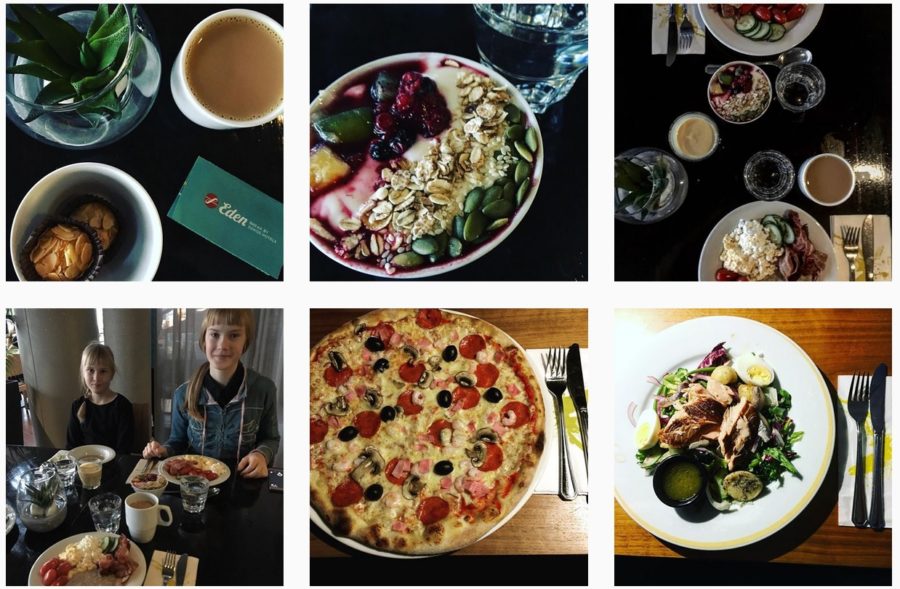
That’s a good question. By and large the cost is built up in the following way: transport (gas), accommodation (hotel* or airbnb*), meals (breakfast in the hotel or the food you have taken along, lunch on the road, dinner in a restaurant), the sightseeings and the spare time (museum tickets, visits to tourist attractions, SPA tickets), shopping (souvenirs, clothes, etc). Shopping is often not a preplanned part of travelling, but it tends to be that it rarely happens that one travels without any shopping, especially during a vacation travel. In my travel blogs I have outlined the petrol prices, the hotel costs, the restaurants expenditures, etc. Since obviously the maximum cost may vary from traveller to traveller, then I suggest setting the minimum costs: daily food (ca 20-30 EUR per person/daily), hotel accommodation 150 EUR (two adults and one child or one adult with two children). In the restaurants the price levels are roundly the following: main course (from 20-40 EUR); salad (from 15-25 EUR), in the cafes and department store dining places the prices are better.
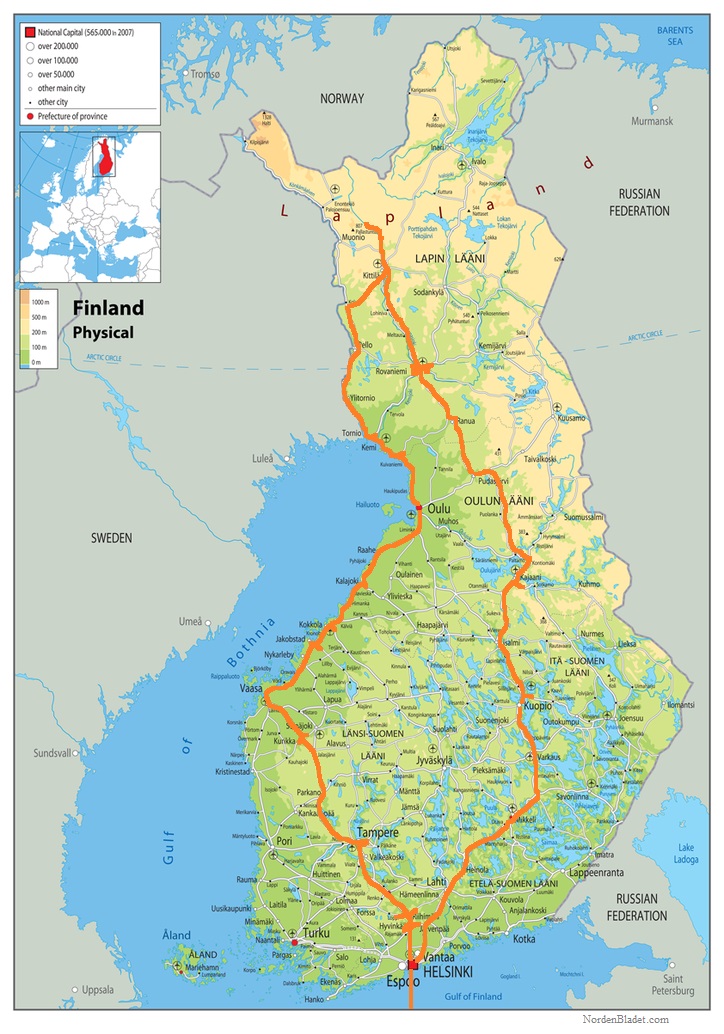
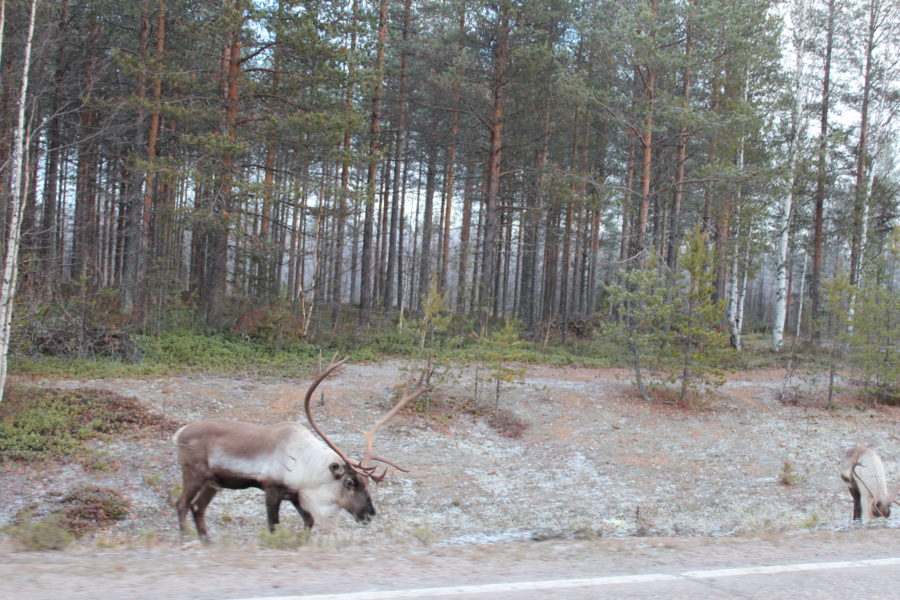
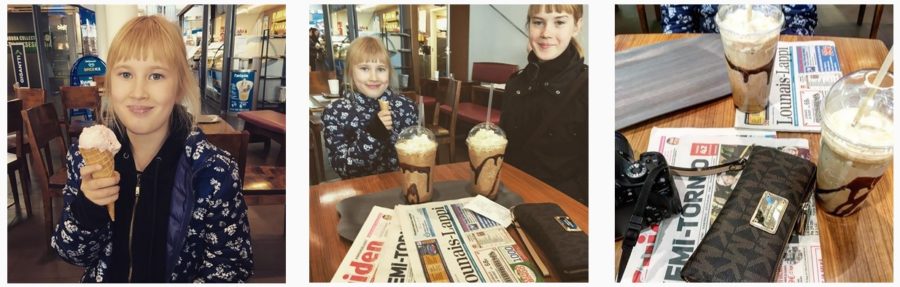
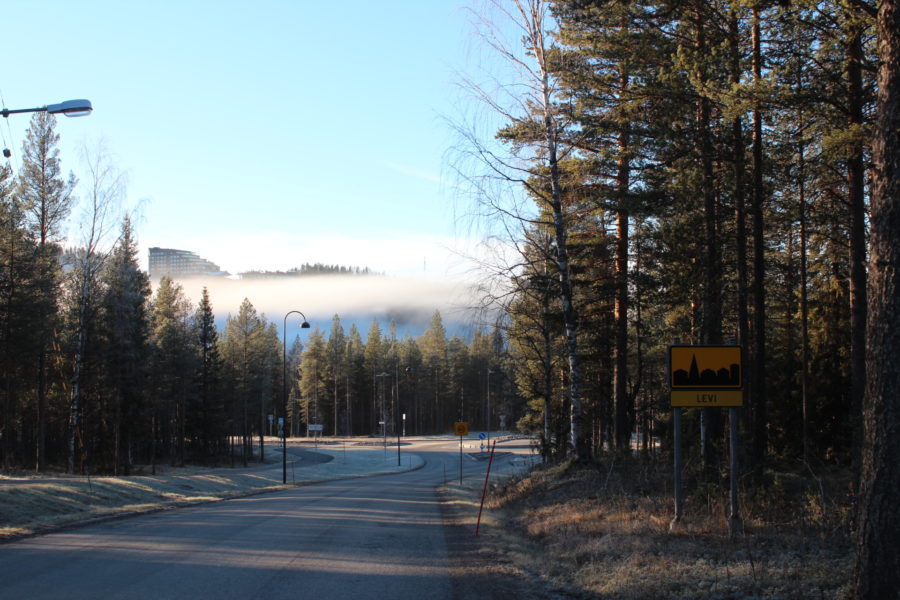
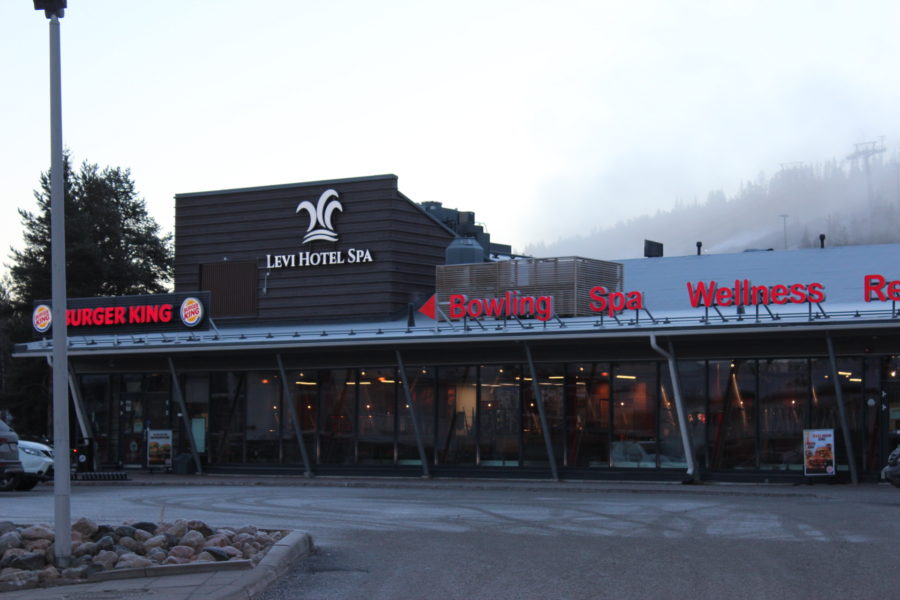
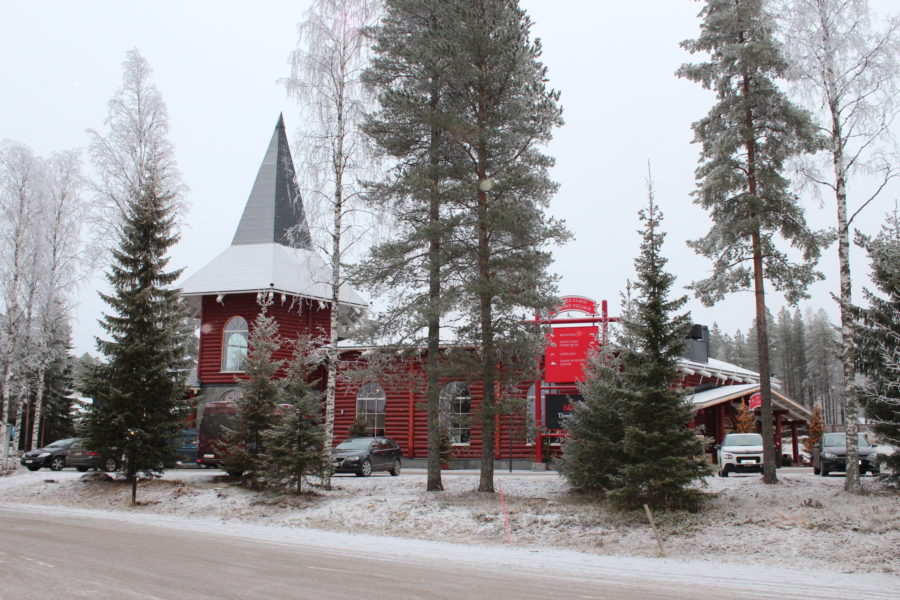
The three of us practically circled Finland withing these 12 days, taking stops in Levi, Rovaniemi, and Kuopio for two nights, in other destinations one night. On this image you’ll see our exact travel route. Below there are all the travel blog posts made during the journey. The blog posts, as usual, can be read in four languages (see NordenBladet.ee; NordenBladet.com; NordenBladet.se and from NordenBladet.fi the Helena-Reet blog section)!
NordenBladet – This year Helsinki Fashion Week took place from 19th to 22nd of July, in four locations in Helsinki. The fashion shows took place in the Palace of Nobility, Wanha Satama and Clarion hotel Helsinki. Talk panels were also held in these places and keynotes were held at Elisa Kulma, witch is an official partner of HFW.
A “Bio-Playground”, including photographs, clothes and sustainable fabrics was showcased at Wanha Satama where among others, a hundred percent vegan “leather” was displayed by Ultrafabrics inc.
The process and material for making this special leather like fabric were displayed as well, and attendants had a chance to view the fabric under a microscope.
Clarion Hotel Helsinki was the venue of a designer showroom, where this years designers had put their clothes on display, allowing the audience a closer look and touching the fabrics of what had just been showcased on the runway.
A combination of activities were provided at the garden of Palace of Nobility, nicknamed “Ecosphere” for this event, where anyone could sit on a garden bench and enjoy tea, or participate in a yoga session or a kombucha workshop. Kombucha is a tea based drink that is brewed using Scoby yeast. Participants were given a bottle of kombucha that they could flavour with ingredients like lemon, ginger, strawberries, mint and spruce sprouts to mention a few.
Designers based in Berlin, London, Taipei, Seoul and other fashion capitals, put on amazing shows, displaying their innovative clothing, which of course, were all sustainably made.
The very first show of the fashion week was by Finnish designer Veera Konga. Therapy Recycle + Exorcise from Berlin had a collection with a lot of straps, neon colours and camouflage print presented later that day.
Saturdays last show by Patrick McDowell was memorable both for the set up and the designs. The show was held outdoors at seaside at Clarion Hotel, with an amazing sea view. A drag queen was dancing on a sea scout boat. The theme of the show was firefighters, with one of the models was wearing a firefighter helmet decorated with rhinestones.
Sunday started with a show from Kata Szegedi at Wanha Satama, and later that day a Finnish designer duo Burlesque Tsunami, impressed the audience with a unique, colourful and playful style of design. The HFW presented five shows a day with over 17 designers presenting their collections. Mondays was the exception with 3 shows, the first of which was by Sanikai, known for its simple and elegant style. The fashion week was closed with a runway show from Bleu Chose.
Helsinki Fashion week is a pioneer in sustainable fashion. All the clothes on display were made from recycled and sustainable materials, the makeup and hair products used were also vegan. The food was made from food waste and the water was brought by HSY, the waste management and recycling arm of the city of Helsinki. People and the staff could ride Voi scooters, which was collaboration partner of the event, from one place to another. Helsinki Fashion Week proved once again that fashion and sustainability can go hand in hand. All it takes is conscious everyday choices and the passion to have a lifestyle better for the environment.
NordenBladet – The 2011 terror attacks in Oslo and the nearby island of Utøya that killed 77 people are to become part of the curriculum in Norway’s schools in future.
Children and teenagers should learn about the acts of terrorism, Norwegian newspaper Verdens Gang reported, following an anniversary event of the terrorist attacks on Sunday.
In 2011, Norwegian right-wing extremist Anders Behring Breivik killed 77 people in gun and bomb attacks in Oslo and at a Labour Party youth camp on Utoya.
It is not only important to understand the attacks but to put the attacks into a bigger context, said Education Minister, Jan Sanner, according to the newspaper.
Therefore, the material needs to be introduced into schools, the newspaper reported him as saying, without saying when the new material would be added.
_____________________________
Utøya is an island in the Tyrifjorden lake in Hole municipality, in the county of Buskerud, Norway. The island is 10.6 hectares (26 acres), situated 500 metres (1,600 ft) off the shore, by the E16 road, about 20 km (12 mi) driving distance south of Hønefoss, and 38 km (24 mi) northwest of Oslo city centre.
On 22 July 2011, a mass shooting took place at the AUF’s summer youth camp, where 650 young people were staying. Anders Behring Breivik arrived alone on Utøya dressed as a police officer and told those on the island that he was there for security reasons following the explosions in Oslo which took place a few hours before. He then began shooting at individuals, continuing until the police arrived one hour after the first alarm call. The suspect immediately surrendered. Combined, the attacks in Oslo and Utøya left 77 dead, with 69 killed on the island, 33 of whom were under the age of 18.
NordenBladet – The Scandinavian Folk Festival will be held on July 19-21, 2019. Come celebrate the region’s rich Scandinavian Heritage. It’ll include musical entertainment, performances, lectures, exhibits, Scandinavian food and much more.
Where:
Jamestown Community College
525 Falconer St
Jamestown, NY 14701
Date of Event:
July 19, 2019 1:00PM –
July 21, 2019 4:00PM
Hours: Fri 1pm-9pm, Sat 10am-9pm, Sun 10am-4pm
NordenBladet – The GDP of Norway ranks as the second largest in the world. Back in 2017, Norway’s GDP registered as 74,571 USD and 2018 by Worls Bank report Norway was the richest.
By looking at the GDP per capita, or gross domestic product per capita, of each country around the globe, it is possible to rank countries based on wealth and then compare them to each other. From there, you can determine which countries are wealthiest and then list the countries in descending order, from richest to poorest. Here is the conclusive list of the top fifty richest countries in the world, starting with the wealthiest country… (The Nordic countries are highlighted in blod letters)
TOP50
1. Luxembourg (GDP per capita: $119,719) 2. Norway (GDP per capita: $86,362)
3. Switzerland (GDP per capita: $83,832)
4. Ireland (GDP per capita: $81,477) 5. Iceland (GDP per capita: $78,181)
6. Qatar (GDP per capita: $65,062)
7. The United States of America (GDP per capita: $64,906) 8. Denmark (GDP per capita: $63,434)
9. Singapore (GDP per capita: $62,690)
10. Australia (GDP per capita: $58,824) 11. Sweden (GDP per capita: $57,945)
12. The Netherlands (GDP per capita: $56,415)
13. Austria (GDP per capita: $54,606) 14. Finland (GDP per capita: $52,320)
15. Germany (GDP per capita: $51,642)
16. Hong Kong (GDP per capita: $50,216)
17. Belgium (GDP per capita: $49,095)
18. Canada (GDP per capita: $48,604)
19. France (GDP per capita: $45,586)
20. The United Kingdom (GDP per capita: $45,491)
21. Japan (GDP per capita: $41,834)
22. The United Arab Emirates (GDP per capita: $38,961)
23. Italy (GDP per capita: $36,061)
24. Korea (GDP per capita: $33,495)
25. Spain (GDP per capita: $33,151)
26. Puerto Rico (GDP per capita: $32,705)
27. Malta (GDP per capita: $32,130)
28. Brunei (GDP per capita: $30,297)
29. Cyprus (GDP per capita: $29,224)
30. Kuwait (GDP per capita: $28,394)
31. Slovenia (GDP per capita: $28,247)
32. Taiwan (GDP per capita: $26,309)
33. Bahrain (GDP per capita: $26,083)
34. The Czech Republic (GDP per capita: $25,468)
35. Portugal (GDP per capita: $24,312) 36. Estonia (GDP per capita: $24,043)
37. Saudi Arabia (GDP per capita: $22,368)
38. Slovakia (GDP per capita: $21,278)
39. Greece (GDP per capita: $21,274) 40. Lithuania (GDP per capita: $20,644) 41. Latvia (GDP per capita: $18,861)
42. Trinidad and Tobago (GDP per capita: $18,018)
43. Uruguay (GDP per capita: $17,772)
44. Oman (GDP per capita: $17,668)
45. Chile (GDP per capita: $16,914)
46. Hungary (GDP per capita: $16,852)
47. Poland (GDP per capita: $16,782)
48. Panama (GDP per capita: $16,576)
49. Croatia (GDP per capita: $15,878)
50. Romania (GDP per capita: $13,229)
Location is a major main player in the overall wealth of a country. Third-world countries in Asia, for example, do not rank very well when GDP is the variable in consideration. If access to certain items and necessities is restricted, then people are already working with a strong disadvantage. Places that are not war-stricken or already burdened with a less-than-ideal economy are not set up to do well in the competition of gross domestic products between countries.
This is why, when looking at the list of the wealthiest countries in the world, you’ll find that places where trade or massive production is a main source of income rank higher on the list. The poorer countries are less involved in global trading, and they are more independent in the sense that their direct involvement in international affairs is lesser than the wealthier countries. This is because money and power are so naturally interwoven, which contributes to the overall wealth and GDP of a country.
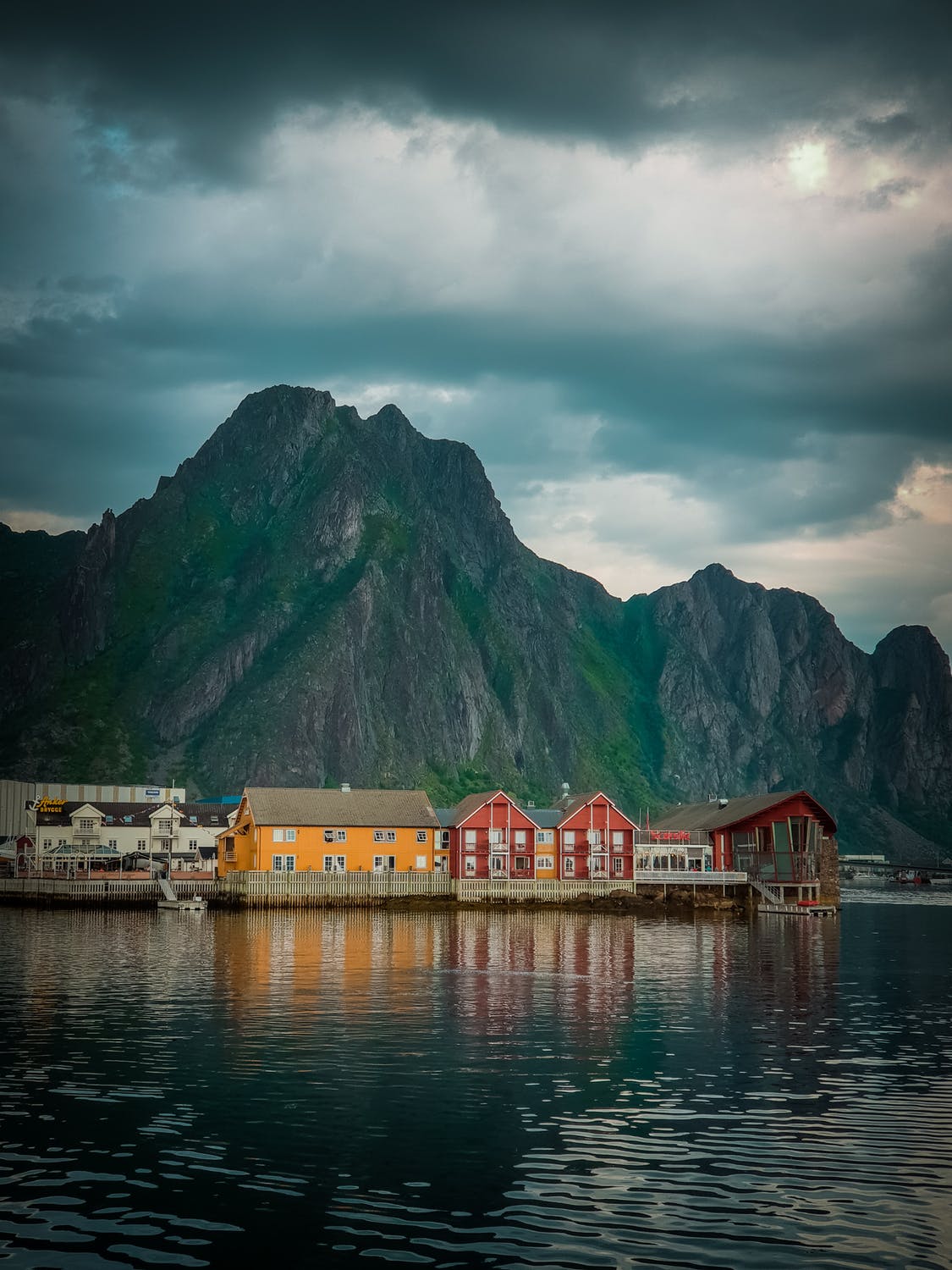
Featured image: Vågan, Norway (Pexels/Tobias Bjørkli)
NordenBladet – Chess experts think Norwegian chess grandmaster Magnus Carlsen* (28) may have damaged his reputation by allegedly trying to influence voting on a major financing issue for Norway’s national chess federation. It failed Sunday night, blocking the effort that could have ended the state lottery’s monoply on betting in the country.
Norwegian authorities have allowed the state-sanctioned Norsk Tipping to have a monopoly on betting for years, in return for funneling most of Norsk Tipping’s money into funding for sports. Revenues from various Norsk Tipping gambling ventures are allocated among Norwegian sports federations including the one for chess (Norges Sjakkforbund).
Carlsen hasn’t been impressed with the funding provided to the chess federation, however, and thus supported a bid by the gaming company Kindred, which owns Unibet. It offered to provide the equivalent of NOK 50 million over five years in return for support to effectively bust Norsk Tipping’s monopoly.
Gave up delegates
The offer was up for a vote at a chess federation meeting on Sunday, just after Carlsen established a new chess club and personally financed membership fees for the first 1,000 people to join it. That in turn would have given him the delegates needed to influence voting at the meeting.
In the end, however, Carlsen seemed to bow to criticism that he was threatening Norwegian sports federation’s democracy by giving up 35 of the delegates his new club’s membership would have allowed. A total of 132 delegates voted against Kindred’s financing offer Sunday night, while just 44 voted in favour.
Carlsen’s new club, Offerspill SK, issued only a short statement afterwards, noting that the chess federation’s meeting “unfortunately voted ‘no’ to the Kindred agreement.” The club would now move forward, it stated, with “several” events in store. It had no futher comment on the defeat.
Split the federation
The financing issue deeply split the federation, with Carlsen’s own former coach in his childhood Simen Agdestein, coming out hard against him. “Magnus has suffered a serious setback on this,” said Agdestein, whose brother has long served as Carlsen’s manager, told state broadcaster NRK. “It had looked like he wanted to carry out a coup against a democratic process. Magnus has enormous power, and can carry with him thousands of folks sitting at home.”
Simen Agdestein declared that “chess players won’t let themselves by bought, we’re not terribly concerned with money.” He said it was “just great that there was such a large majority” at the chess federation meeting against the funding from Kindred.
He and others had claimed that the federation would have been “in crisis” if it had accepted Kindred’s offer, since it likely would have been excluded from Norway’s national athletics federation.
The uproar within the chess federation had also prompted a lack of confidence vote in the federation’s president, Morten L Madsen. He survived it, however, and will continue as president after of vote of 87 in favour of his leadership and 62 against.
________________________________________
* Sven Magnus Øen Carlsen (born 30 November 1990) is a Norwegian chess grandmaster and the current World Chess Champion. In addition to his success in classical chess, he is also a two-time World Rapid Chess Champion and four-time World Blitz Chess Champion. Carlsen first reached the top of the FIDE world rankings in 2010, and trails only Garry Kasparov at time spent as the highest rated player in the world. His peak classical rating of 2882, achieved in May 2014, is the highest in history.
A chess prodigy, Carlsen tied for first place in the World U12 Chess Championship in 2002. Shortly after turning 13, he finished first in the C group of the Corus chess tournament, and earned the grandmaster title a few months later. At age 15, he won the Norwegian Chess Championship, and at 17, he finished joint first in the top group of Corus. He surpassed a rating of 2800 at age 18 and reached number one in the FIDE world rankings aged 19, becoming the youngest person ever to achieve those feats.
Carlsen became World Chess Champion in 2013 by defeating Viswanathan Anand. In the following year, he retained his title against Anand, and won both the 2014 World Rapid Championship and World Blitz Championship, thus becoming the first player to simultaneously hold all three titles. He defended his classical world title against Sergey Karjakin in 2016, and against Fabiano Caruana in 2018.
Known for his attacking style as a teenager, Carlsen has since developed into a universal player. He uses a variety of openings to make it more difficult for opponents to prepare against him and reduce the effect of computer analysis. He has stated the middlegame is his favourite part of the game as it “comes down to pure chess”. His positional mastery and endgame prowess have drawn comparisons to those of former World Champions Bobby Fischer, Anatoly Karpov, Vasily Smyslov, and José Raúl Capablanca.
NordenBladet —At the meeting of the President of the Riigikogu Henn Põlluaas and the President of Latvia Egils Levits, the mutual relations between the two countries as well as cooperation within the framework of the European Union were discussed.
Põlluaas congratulated Levits on his election as the President of Latvia, and recognised his decision to make his first foreign visit to Estonia immediately after he had assumed office.
Levits said that the aim of his first foreign visit was to strengthen good-neighbourly relations between the two countries and to develop regional cooperation.
At the meeting, it was stated that Estonia and Latvia had common interests and understanding in many areas that were important to the whole Baltic region. “The Baltic cooperation is a historically established and well-functioning institutional network which mainly aims at promoting the development of the region,” Põlluaas said.
Põlluaas and Levits considered it important to tighten the cooperation between Estonia and Latvia in protecting the common interests in the European Union when developing common positions and protecting them in the EU decision-making process.
At the meeting, the cooperation in the Parliamentary Assembly of the Council of Europe in connection with Russia’s activities was touched upon. Levits said that, in the near future, the Latvian parliament was going to discuss further action and would consult with other countries on how to respond to Russia’s activities.
Põlluaas and Levits gave a brief overview of the activities of the parliaments that had commenced work. The issues relating to the excise duty on alcoholic beverages which have been topical in the mutual relations between the two countries in recent times were also mentioned. It was stated that it was necessary to improve the exchange of information on the issues relating to excise duties as well as on other issues of interest.
In the afternoon, Levits also met Vice-President of the Riigikogu Siim Kallas and members of the Riigikogu Kadri Simson and Indrek Saar.